
Patient guide · Women's health in Korea
Seeing a Gynecologist in Korea: A Guide for International Women
Seeing a gynecologist in Korea is straightforward: you can book directly with an OB/GYN clinic (산부인과) without a referral, bring your passport or residence card, and usually have tests such as an ultrasound or Pap smear in the same visit. At Hommage Clinic in Gangnam, Seoul, visits are led by female OB/GYN specialist Dr. Park Yuna.
Gynecology in Korea at a glance
| Key fact | Details |
|---|---|
| Referral needed? | No. You can book an OB/GYN clinic directly |
| What to bring | Passport or residence card, medication list, date of your last period |
| Insurance | Residents enrolled in National Health Insurance pay a co-payment for medical care |
| Visitors | Pay the clinic directly; ask for receipts and documents for travel insurance |
| Typical tests | Pelvic ultrasound, Pap smear, HPV and STD tests, blood tests |
| Cosmetic procedures | Not covered by National Health Insurance |
This guide is for you if you are
- A foreign resident in Korea looking for a gynecologist
- Visiting Seoul and need a check-up, test or prescription
- Unsure what a Korean gynecology visit involves
- Comparing medical and cosmetic gynecology options in Seoul
Go to an emergency room instead if you have
- Severe abdominal or pelvic pain, or fainting
- Very heavy bleeding, or bleeding in pregnancy with pain
- High fever with pelvic pain. In Korea, call 119 for an ambulance
How women's health care works in Korea
Most women in Korea see a gynecologist at a local clinic rather than a hospital. OB/GYN clinics are marked 산부인과 (sanbuingwa) and handle check-ups, screening, infections, contraception, period problems and menopause care. You do not need a referral from a family doctor to book.
Hospitals are used for major surgery, childbirth and complex cases. A clinic doctor will refer you if you need hospital care. Many women prefer a female gynecologist; you can ask for one when booking, and at Hommage Clinic's gynecology service visits are led by a female OB/GYN specialist.
How do I book, and what should I bring?
Book by phone, messaging app or online form; walk-ins may face a wait. Bring:
- Your passport, or your residence card (ARC) if you live in Korea.
- A list of medicines, supplements and allergies.
- The first day of your last period, and any previous test results.
For a Pap smear , try to book outside your period. Most other concerns, such as pain or a possible infection, can be checked at any time.
Does insurance cover gynecology for foreigners?
Foreigners who live in Korea for six months or longer are generally enrolled in National Health Insurance (NHIS). Insured patients pay a co-payment for medically necessary care, such as tests and treatment for symptoms. Visitors without NHIS pay the clinic directly and can claim from their travel insurance.
Cosmetic procedures, including cosmetic gynecology , are not covered by NHIS. Ask the clinic for receipts and an itemized statement if you plan to claim from private insurance. Your doctor or the front desk will explain costs before any test.
Common reasons women visit a gynecologist in Seoul
- Routine check-ups and screening: a well-woman exam , cervical cancer screening and STD testing .
- Symptoms: discharge, itching or odor ( vaginal infections ), pelvic pain, or irregular periods .
- Contraception: pills, IUDs and emergency contraception.
- Hormonal health: PCOS, fertility questions and menopause care .
What happens during a gynecology visit in Korea
The visit starts with a conversation about your symptoms and history. If an examination is needed, you change into a gown and sit in an examination chair; a curtain often separates you from the doctor's desk. Korean gynecologists commonly use a transvaginal ultrasound because it gives a clear view of the uterus and ovaries. If you are not sexually active or prefer not to have an internal scan, ask for a transabdominal ultrasound instead.
You can ask the doctor to explain each step before it happens, and you can stop the exam at any time.
Privacy and confidentiality
Medical information in Korea is protected by law. Your test results, including STD results, are shared only with you unless you give permission. If you are an adult, your family, school or employer is not informed about your visit.
Gynecology at Hommage Clinic
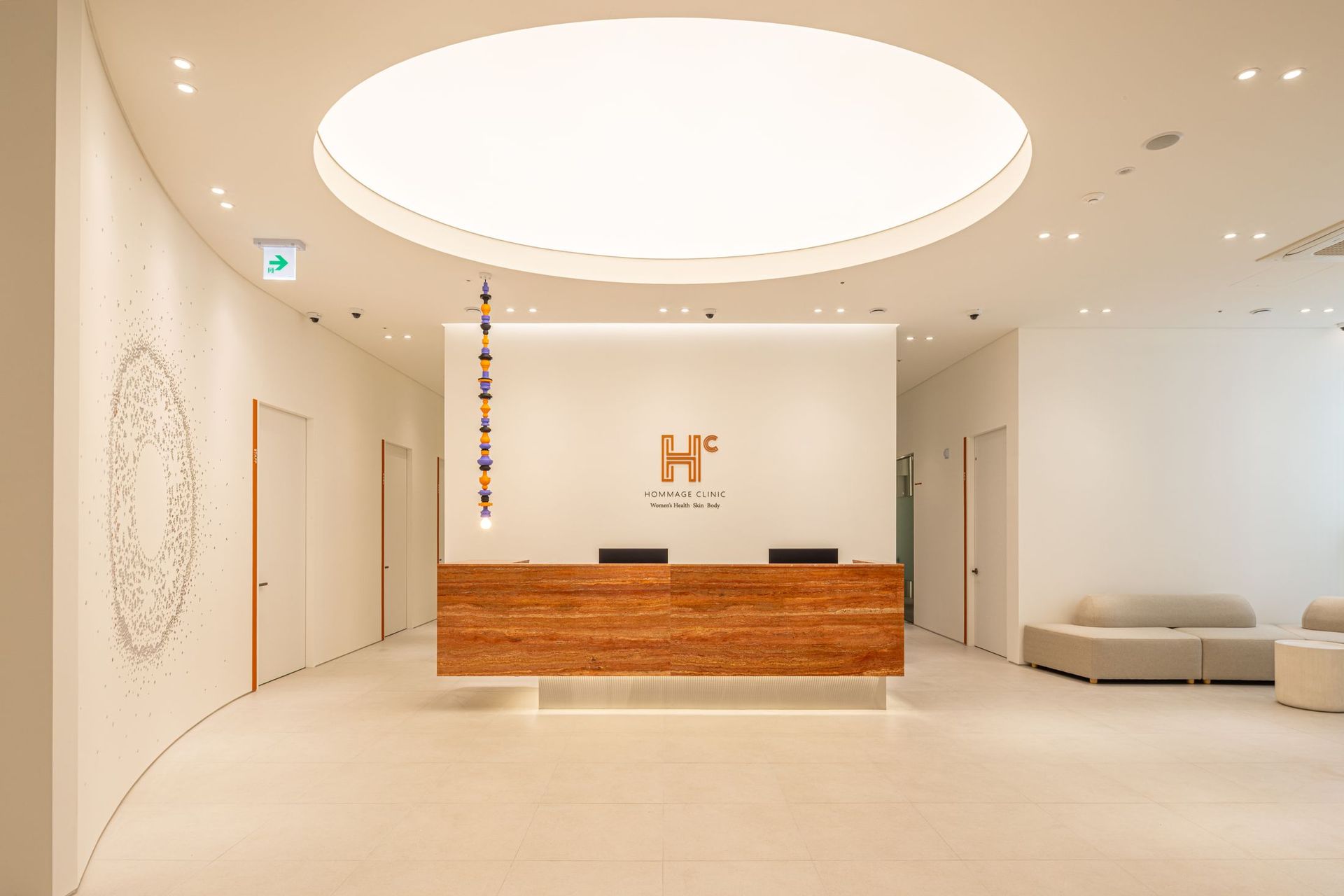
Hommage Clinic is a women's clinic in Gangnam, a short walk from Sinnonhyeon Station. Dr. Park Yuna, a female OB/GYN specialist, sees patients for medical gynecology and cosmetic gynecology , with ultrasound and common tests available in the same visit. The clinic is open on weekday evenings on Mondays and Fridays and on Saturday mornings. Please contact us before your visit if you would like to arrange language support.
Your first visit
Your first gynecology visit, step by step
01
Book
Call, use KakaoTalk or send the online form. Tell us your main concern and the date of your last period.
02
Register
Show your passport or residence card at reception and fill in a short health questionnaire.
03
Consult and examine
The doctor discusses your concern and performs an exam or ultrasound only with your consent.
04
Results and plan
Some results are immediate; lab results usually follow within days. You leave with a clear plan.
Your doctor
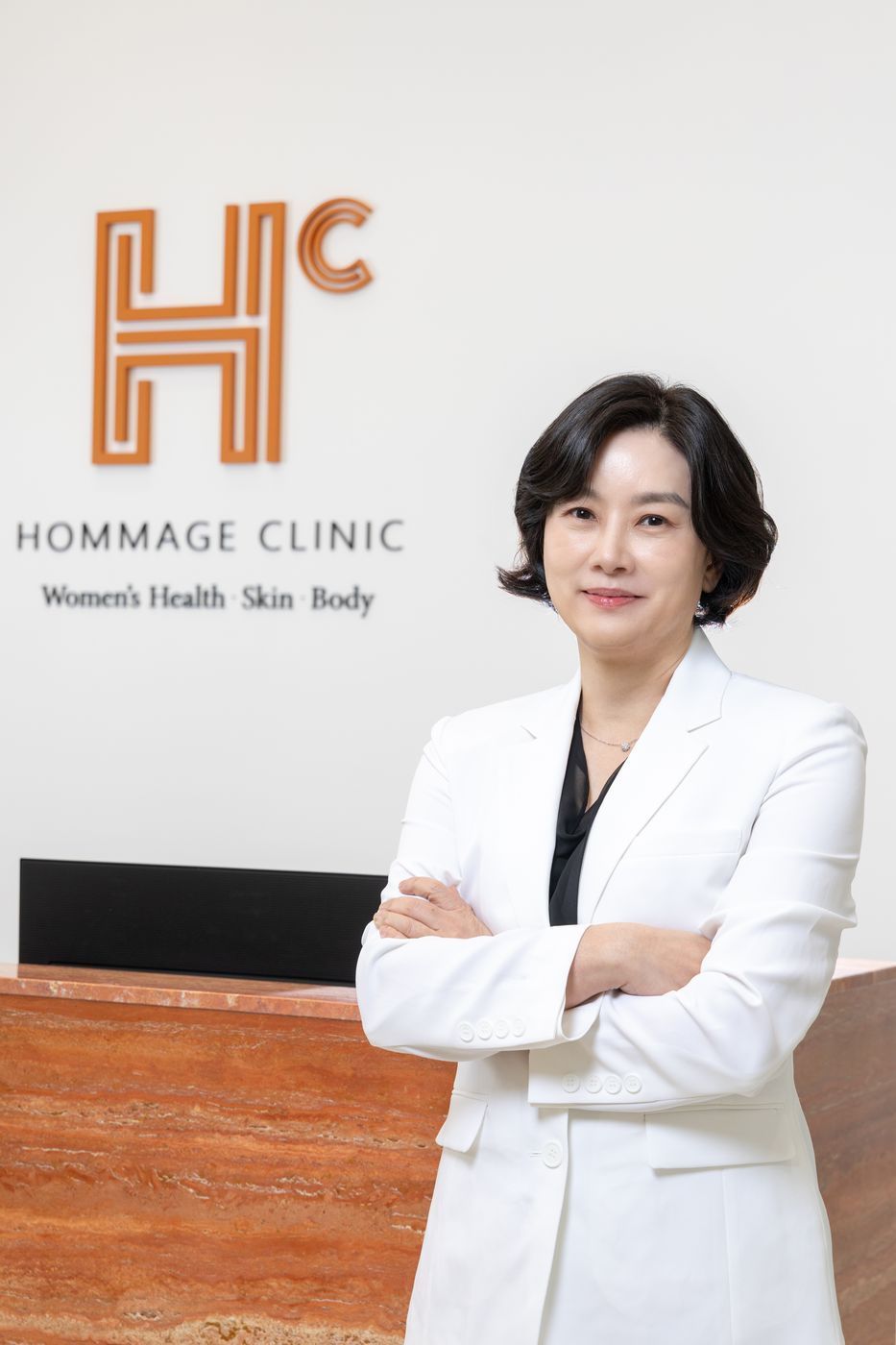
Dr. Park Yuna
Medical Director · OB/GYN Specialist
Dr. Park sees many women who are new to the Korean medical system. She explains each step of the exam in advance, offers a transabdominal scan when an internal one isn't right for you, and makes sure you leave knowing what happens next.
Board-certified obstetrician-gynecologist (OB/GYN specialist, Korea). Leads women's health and cosmetic gynecology at Hommage Clinic.
Gynecology in Korea: frequently asked questions
Do I need an appointment to see a gynecologist in Korea?
Many clinics accept walk-ins, but booking ahead shortens your wait and makes sure the right tests can be arranged. At Hommage Clinic, you can book by phone, KakaoTalk or the online contact form.
Can I see a female gynecologist in Seoul?
Yes. Many OB/GYN clinics in Seoul have female doctors, and you can ask for one when you book. At Hommage Clinic, gynecology care is led by Dr. Park Yuna, a female OB/GYN specialist.
Can I get birth control pills without a prescription in Korea?
Many combined birth control pills are sold at pharmacies in Korea without a prescription, while emergency contraception requires a doctor's prescription. A consultation helps you choose a method that suits your health; see our guide to birth control in Korea.
Is a Pap smear covered by insurance for foreigners?
Foreign residents enrolled in National Health Insurance may be eligible for the national cervical cancer screening program, which covers screening at set intervals. Visitors without insurance pay for the test directly. The clinic will confirm what applies to you before the test.
Can I get documents for my travel insurance claim?
Yes. Ask at reception for a receipt and an itemized statement of your fees. If your insurer needs a doctor's note describing your diagnosis or treatment, ask for it when you visit.
Can I have a gynecology exam during my period?
You can be seen for pain, infection symptoms or other concerns during your period. A Pap smear is usually scheduled for a few days after your period ends, because blood can affect the sample.
Popular women's health services
Well-Woman Exam
A complete gynecology check-up with ultrasound and screening tests, planned for your age.
STD Testing
Confidential testing for chlamydia, gonorrhea, HPV, HIV and other infections.
Pap Smear
How the Pap test works in Korea, how to prepare and what your results mean.
Birth Control
Pills, IUDs and other contraception options available in Seoul.
Vaginal Infections
How to tell bacterial vaginosis, yeast and other infections apart, and how they are treated.
Cosmetic Gynecology
Labiaplasty, vaginal rejuvenation and intimate treatments planned by an OB/GYN specialist.
Book a gynecology visit in Gangnam
See female OB/GYN specialist Dr. Park Yuna near Sinnonhyeon Station. Evening hours on Mondays and Fridays, and Saturday mornings.
Hommage Clinic · 4F, Building A, 509 Gangnam-daero, Seoul (near Sinnonhyeon Station) · Mon & Fri 10:00–20:00 · Tue–Thu 10:00–19:00 · Sat 10:00–15:00