
Skin & Aesthetics · Acne scars
RF Microneedling for Acne Scars: A Scar-Specific Plan in Seoul
RF microneedling for scars is a treatment in which fine needles deliver radiofrequency heat directly into scar tissue in the dermis, breaking up stiff collagen and triggering new, more even collagen so depressed acne scars become shallower over a series of sessions. At Hommage Clinic in Gangnam, Seoul, Dr. Hwang Seonhwa maps each scar type and combines RF microneedling with other methods where needed.
Quick answer
RF microneedling for acne scars uses fine needles to deliver radiofrequency heat into scar tissue in the dermis, breaking up stiff collagen and prompting new collagen so rolling and boxcar scars become shallower. At Hommage Women's Clinic in Gangnam, Seoul, Dr. Hwang Seonhwa maps each scar type and combines RF with subcision or TCA CROSS where needed. Expect 3–5 sessions about 4–6 weeks apart, 2–4 days of redness, and a final result 3–6 months after the series.
Key takeaways
- Best for rolling and shallow to medium boxcar scars; ice pick scars usually need TCA CROSS first.
- Heat is delivered under the surface, so pigment risk is lower than with ablative CO2 laser in Asian skin.
- Combination plans with subcision usually do better than any single method.
- Scars are softened, not erased; breakouts should be controlled before starting.
Infographic
RF microneedling for scars in numbers
Sessions
About 4–6 weeks apart, adjusted to your scar map.
Depth over scars
Deeper than general skin treatment, set area by area.
Redness
Grid marks or bruising can last up to about a week.
First changes
Gradual softening after the first session.
Final result
Judged after the series as collagen matures.
Patients reviewed
In 16 studies of RF microneedling alone for acne scars (2025 review).
RF microneedling for scars at a glance
| Key fact | Details |
|---|---|
| Treatment time | About 30–40 minutes of treatment, after 40–60 minutes of numbing cream |
| Comfort | Numbing cream, with local anesthetic for combined subcision; heat and pressure |
| Sessions | Typically 3–5 sessions about 4–6 weeks apart |
| Downtime | Redness and swelling 2–4 days; grid marks or bruising up to about a week |
| Results visible | Gradual change from about 1–2 months; final result 3–6 months after the series |
| How long results last | Scar improvement is long-lasting; scars soften but are not erased |
| Performed by | Dr. Hwang Seonhwa or another Hommage Clinic physician |
RF microneedling for scars may suit you if you have
- Rolling scars or shallow to medium boxcar scars on the cheeks or temples
- Mixed acne scars with uneven texture and enlarged pores
- Asian or darker skin and want lower pigment risk than ablative laser
- Acne that has been under control for a few months
Wait or discuss another option if you have
- New breakouts still forming, or cold sores or infection in the area
- Pregnancy, or a pacemaker or other implanted electrical device
- A keloid tendency or raised (hypertrophic) scars
- Taken isotretinoin recently (timing is decided with your doctor)
How does RF microneedling treat acne scars?
Depressed acne scars form when inflammation destroys collagen in the dermis and the skin heals with stiff, uneven scar tissue that pulls the surface down. RF microneedling targets that layer directly. The needles reach the scar tissue, and radiofrequency heat at the tips breaks up the disorganized collagen and triggers a healing response that lays down new collagen and elastin.
For scars, the settings differ from a general skin-quality treatment. Depths are usually deeper, often about 1.5–3 mm over scarred cheeks, sometimes with more than one depth in the same pass, and energy is concentrated over scar clusters. Because the heat is delivered under the surface, the risk of pigment change is lower than with ablative lasers, which matters for Asian and darker skin.
For how the technology works in general, including insulated and non-insulated needles, see RF microneedling .
Which scars respond to RF microneedling?
RF microneedling is most useful for broad scars in the dermis and less useful for very narrow or very deep ones. Most people have a mix, so the plan follows the scar map.
- Rolling scars: respond well, especially after the fibrous bands are released with subcision . See rolling scar treatment .
- Boxcar scars: shallow and medium boxcar scars soften well; deep, sharp-edged ones usually need added treatment. See boxcar scar treatment .
- Ice pick scars: too narrow and deep to respond much on their own. They are usually treated first with TCA CROSS . See ice pick scar treatment .
- Raised scars and keloids: not treated with RF microneedling.
Why is RF microneedling combined with other treatments?
No single method treats every acne scar type, so combination treatment is the standard approach in current scar guidelines. RF microneedling remodels the dermis across the whole area, while targeted methods deal with what it cannot reach.
- Subcision releases tethered rolling scars. It is often done in the same session as RF microneedling or a few weeks before.
- TCA CROSS raises individual ice pick and narrow boxcar scars from the base, usually in separate sessions spaced several weeks apart.
- Fractional laser may be alternated with RF microneedling to smooth the surface of boxcar scars.
- Collagen-stimulating injections or skin boosters may be added for volume loss or to support healing.
Compared with classic microneedling , RF microneedling usually gives more change per session in moderate scars. For sensitive skin or active acne alongside scars, gold RF microneedling with insulated needles may be chosen.
What happens during a scar treatment session?
A session usually takes about 1.5–2 hours, including numbing time and any combined procedure.
- Your skin is cleansed and, with your consent, photographed so progress can be compared between sessions.
- A topical anesthetic cream is applied for about 40–60 minutes. If subcision is combined, a small amount of local anesthetic is injected into those areas.
- The physician treats the face in passes, using deeper settings over scarred areas and gentler settings elsewhere.
- If planned, subcision is done in the same session.
- The skin is cooled and soothed, and you receive written aftercare instructions.
How long does RF microneedling for scars take to work?
Scar remodeling is slow. Most people see gradual change from 1–2 months after the first session, and the full result of a series is usually judged 3–6 months after the last session, as new collagen matures.
A series of 3–5 sessions about 4–6 weeks apart is typical. Scars become shallower and less noticeable in most people, but they are improved rather than erased, and some may need further sessions or targeted methods. Recovery usually involves:
- Redness and swelling for 2–4 days, with grid marks or tiny scabs up to about a week.
- Bruising for 1–2 weeks where subcision was combined.
- Gentle cleansing and moisturizing only; makeup after 24–48 hours, longer if bruised.
- Daily broad-spectrum SPF 30+ and no retinoids or acids for about a week.
Risks and possible side effects
RF microneedling for scars uses deeper, stronger settings than general skin treatment, so recovery and risks are slightly greater. Dr. Hwang will explain these before you consent:
- Redness, swelling and pinpoint bleeding , usually settling within a few days.
- Grid-pattern marks or scabbing that may last a week or more at deep settings.
- Post-inflammatory hyperpigmentation , more likely in darker skin. It usually fades over weeks to months with sun protection.
- Bruising, lumps or temporary numbness where subcision is combined.
- Acne flares, milia, infection or cold sore reactivation .
- Rarely, burns or new scarring .
Call the clinic if pain increases after the third day, or if you notice pus, blisters, spreading redness, a hard painful lump or a fever.
RF microneedling for scars at Hommage Clinic
Hommage Clinic is a women's health and skin clinic in Gangnam, a short walk from Sinnonhyeon Station. Every scar plan starts with a scar map, and the physician who assesses you sets the depth and energy for each area. Scar treatment is planned only once breakouts are controlled; if they are not,acne treatmentcomes first, and hormone-related acne can be assessed by our OB/GYN team under the same roof. See ourskin and aestheticsservices for related care.
Cost depends on the number of sessions, the area and any combined methods. Cosmetic scar treatment is not covered by Korea's National Health Insurance, although many medical tests and treatments are for enrolled patients. You receive a written quote for the whole plan before starting, and walk-ins are welcome during opening hours.
Mechanism
How RF microneedling remodels an acne scar
A depressed acne scar is not simply missing skin. Underneath it there is usually a stiff band of disorganized scar collagen, and in rolling scars fibrous strands tether the surface to deeper tissue. Simply adding new collagen on top does little while that stiff tissue stays in place, which is why heat at the right depth matters.
RF microneedling places the needle tips inside the scar layer and releases heat there. The heat loosens and breaks up the stiff scar collagen, and the healing response that follows lays down new, more evenly arranged collagen. When subcision is combined, the tethering strands are released mechanically as well, so the scar floor can rise more freely.
 Hommage · Gangnam
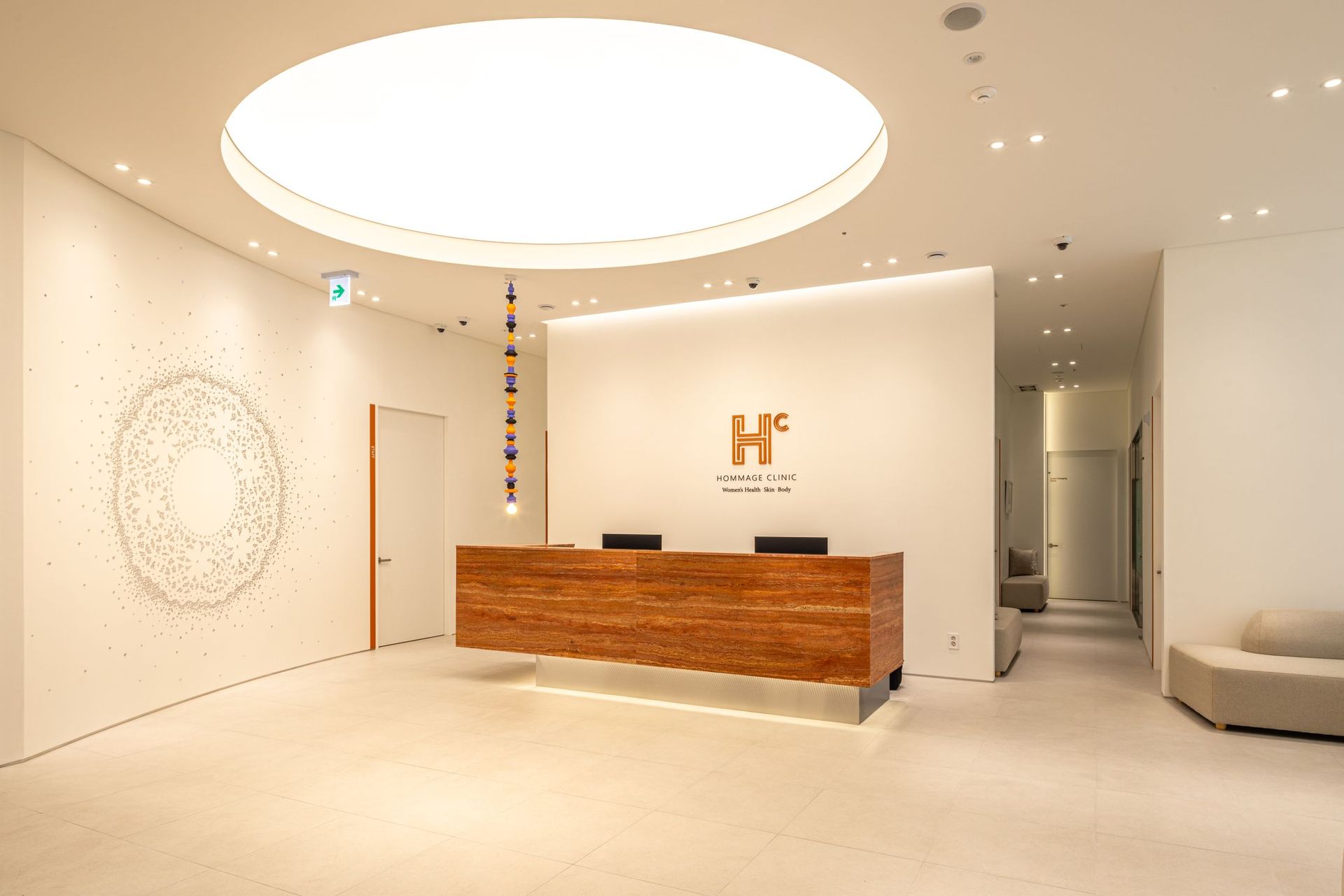
Hommage Women's Clinic · Gangnam, Seoul
A scar map decides which scars get RF, subcision or TCA CROSS. Illustrative photo.
Scar map
Your acne scar treatment map: which method for which scar
Most faces with acne scars have two or three scar types, often clustered on the cheeks and temples. Treating them all the same way wastes sessions. The map below shows how scar types are usually matched to methods in a combined plan built around RF microneedling.
| Scar type | Main method | Often added |
|---|---|---|
| Rolling | RF microneedling | Subcision to release tethers |
| Shallow boxcar | RF microneedling | Alternating fractional laser |
| Deep boxcar | Targeted methods first | RF microneedling for the surrounding area |
| Ice pick | TCA CROSS | RF microneedling for texture |
| Raised or keloid | Not RF microneedling | Discussed separately |
Compare
RF microneedling vs CO2 laser for acne scars in Asian skin
The most common question at a scar consultation is whether RF microneedling or fractional CO2 laser is better. In a 2021 study of 50 patients with skin types III–V, both reduced scar scores by about 60% after four sessions, with no significant difference on blinded photo grading. The differences were in recovery: the CO2 group had crusting in every patient and pigment change in 16% at two months, while the RF microneedling group had more short-lived swelling but no pigment change at two months. A 2026 meta-analysis of eight randomized trials found CO2 laser more effective overall, but with more pain and more hyperpigmentation.
In practice, the choice depends on how deep your scars are, how much downtime you can take and how easily your skin darkens. Some plans alternate the two.
Timeline
A combined acne scar plan, session by session
A typical combined plan runs over four to six months. Each step is spaced so the skin can heal and remodel before the next one, and the plan is reviewed at every visit. The example below shows one common sequence; yours may have fewer or more steps depending on your scar map.
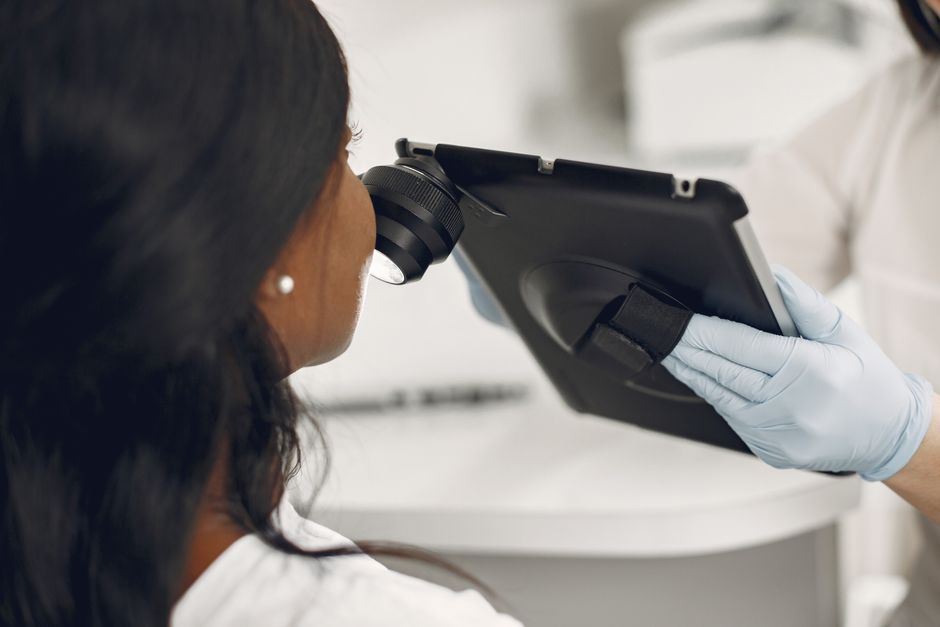
 Hommage · Gangnam
Hommage Women's Clinic · Gangnam, Seoul
Each area is treated at its own depth and energy. Illustrative photo.
Before your session
How to prepare for RF microneedling for acne scars
A little preparation makes sessions safer and recovery smoother. You receive personal instructions after your consultation, but most people are asked to:
- Stop retinoids, exfoliating acids and scrubs a few days before treatment.
- Avoid tanning and strong sun for at least two weeks beforehand, since tanned skin is more likely to darken.
- Tell the clinic about cold sores; an antiviral may be prescribed before treatment.
- Mention blood thinners or supplements that increase bruising, especially if subcision is planned. Do not stop prescribed medicines without asking your doctor.
- Arrive with clean skin and no makeup, and allow time for numbing cream.
- Plan important events or photos at least a week after a combined session.
Aftercare
Aftercare for RF microneedling for scars: do's and don'ts
Scar settings are deeper than a general skin treatment, and subcision adds bruising, so aftercare matters a little more. The goals are to keep the skin calm and clean, protect it from sun while it is reactive, and avoid anything that could cause a new mark. You receive written instructions and can message the clinic with photos during recovery.
Do
- Use cool compresses for swelling in the first day
- Cleanse gently and use a plain, fragrance-free moisturizer
- Apply SPF 30+ daily for several weeks
- Expect bruising for 1–2 weeks if subcision was done
- Report a hard, painful lump, pus or fever straight away
Don't
- Pick scabs or grid marks
- Use retinoids or acids for about a week
- Wear makeup for 24–48 hours, or longer over bruises
- Use saunas, pools or do hard workouts for a few days
- Massage or press firmly on treated scars
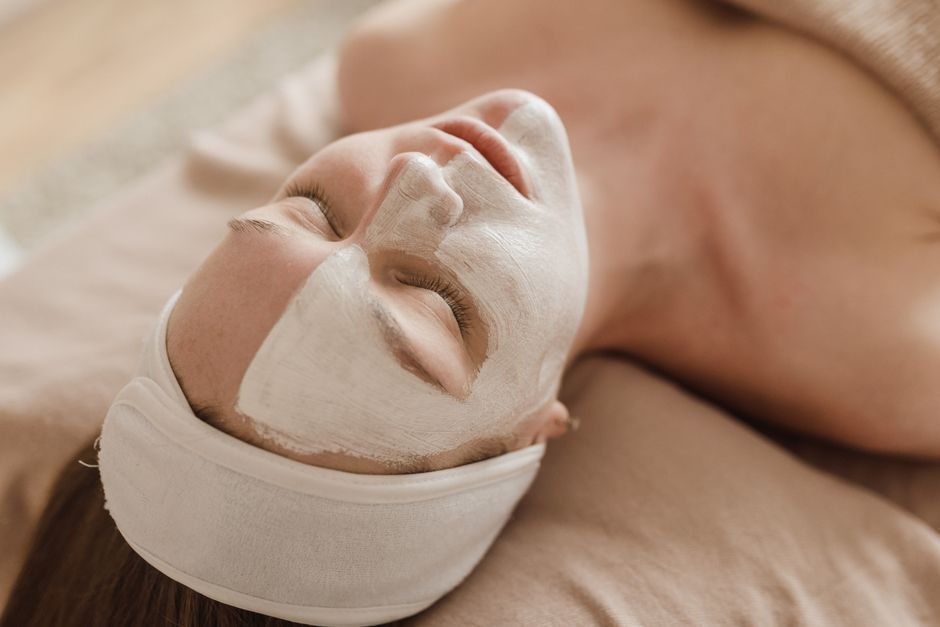 Hommage · Gangnam
Hommage Women's Clinic · Gangnam, Seoul
Cool compresses and gentle skincare help swelling settle. Illustrative photo.
Evidence
Does RF microneedling work for acne scars? What the research says
RF microneedling is one of the better-studied scar treatments, including in Asian and other skin types III–V. The research supports it, alone and especially in combination, but studies are mostly small, use different devices and scoring systems, and rarely follow patients beyond six months. The figures below are reported averages, not a promise of your own result.
Studies, 481 patients
RF microneedling alone judged “likely effective” for acne scars; most patients skin types III–V.
Niaz et al., Clin Cosmet Investig Dermatol, 2025Adding RF to laser
Scar score reduction with laser plus RF microneedling vs laser alone; randomized split-face, 26 Korean patients.
Kwon et al., Acta Derm Venereol, 2017Downtime
Average downtime with the combined treatment in the same split-face study.
Kwon et al., 2017Pigment change at 2 months
RF microneedling vs fractional CO2 in 50 patients with skin types III–V.
Rajput et al., J Cutan Aesthet Surg, 2021 Hommage · Seoul
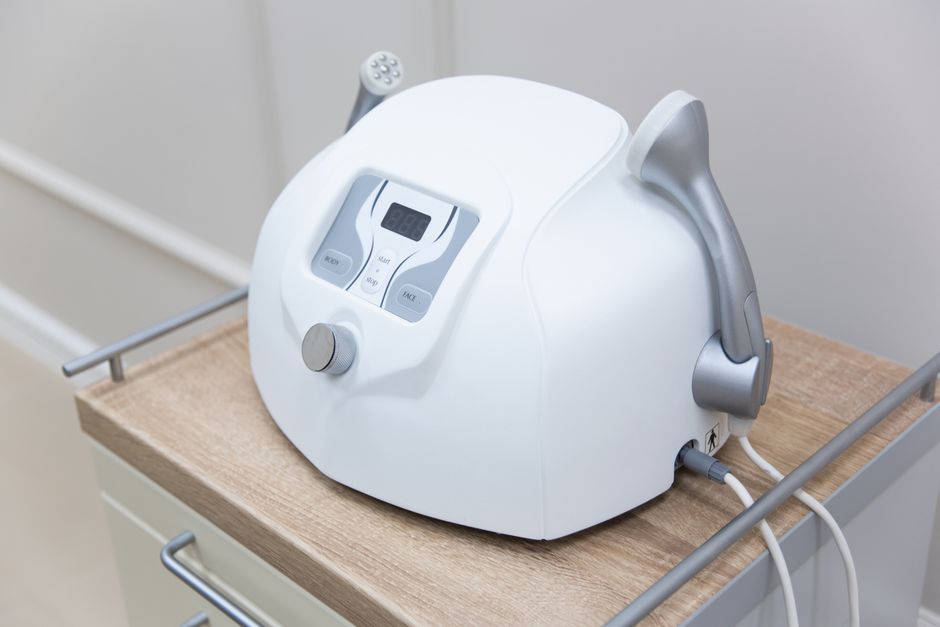
Hommage Women's Clinic · Gangnam, Seoul
Allow about a week of recovery before flying home after a combined session. Illustrative photo.
Traveling to Seoul
RF microneedling for acne scars in Seoul for international patients
A scar plan needs 3–5 sessions about 4–6 weeks apart, so it rarely fits a single trip. Visitors usually come for the scar map and first session, then return for later sessions, or stay longer for the whole series. If subcision is combined, allow about a week in Seoul so swelling and bruising can settle before you fly.
Before you book
- Send daylight photos of your scars from the front and both sides by WhatsApp, KakaoTalk or the contact form.
- Mention isotretinoin in the past year, blood thinners, cold sores, keloids, pregnancy or implanted devices.
- Bring your passport, a medicines list and notes from previous scar treatments.
- Ask for language support if you need it.
After you fly home
Keep up sun protection and gentle skincare, and send follow-up photos to the clinic. See a local doctor promptly for fever, pus or a hard, painful lump.
Choosing well
How to choose an acne scar clinic in Seoul
Scar treatment rewards planning more than any single device. Use these questions at any consultation, including ours:
- Will a physician map my scar types? Rolling, boxcar and ice pick scars each need a different method.
- Can they offer subcision and TCA CROSS, not only RF? Combination plans usually do better than one device.
- Do they take standardized photos? Same-light photos are the only fair way to judge change.
- Do they check active acne and isotretinoin first? Timing affects both safety and results.
- Do they explain pigment risk for my skin? Ask how settings are adjusted for Asian skin.
- Is the whole plan quoted in writing? Include sessions, add-ons and follow-up.
What affects the cost of acne scar treatment?
The total depends on how many RF sessions you need, the area treated, and whether subcision, TCA CROSS, fractional laser or PRP are part of the plan. Numbing and follow-up reviews are explained in your quote. Cosmetic scar treatment is not covered by Korea's National Health Insurance, and you receive a written quote for the whole plan before starting.
 Hommage · Gangnam
Hommage Women's Clinic · Gangnam, Seoul
You receive a written plan for every step before starting. Illustrative photo.
Your visit
What to expect at your acne scar consultation
01
Scar mapping
The physician examines your skin under angled light and records rolling, boxcar and ice pick scars area by area.
02
Acne check
Any active acne, recent isotretinoin use and your skin's pigment tendency are reviewed before deciding timing.
03
Combined plan
You receive a written plan and quote: RF microneedling sessions plus any subcision or TCA CROSS.
04
Treatment and review
Sessions are spaced 4–6 weeks apart, with progress reviewed and settings adjusted each time.

Your doctor
Dr. Hwang Seonhwa
Physician · Skin & Aesthetic Treatments
Dr. Hwang plans scar treatment from a scar map, using deeper RF settings over rolling and boxcar scars and reserving targeted methods such as subcision or TCA CROSS for scars that RF alone cannot lift. Progress is reviewed before each session so the plan can be adjusted.
Physician for face and skin procedures, including lifting, laser and skin-improvement treatments, planned around facial proportions and skin condition.
RF microneedling for scars: frequently asked questions
Does RF microneedling work for acne scars?
Yes. RF microneedling is one of the most widely used treatments for rolling and boxcar acne scars, and studies show meaningful improvement over a series of sessions. It improves scars rather than removing them, and narrow ice pick scars usually need TCA CROSS as well. A scar assessment tells you how much change is realistic for your scar types.
How many RF microneedling sessions do I need for acne scars?
Most people need 3–5 sessions spaced about 4–6 weeks apart. Mild scars may need fewer, while deep or mixed scars often need more sessions or combination with subcision or TCA CROSS. Collagen keeps building for months after the last session, so final results are judged at about 3–6 months.
Is RF microneedling better than fractional CO2 laser for acne scars?
Neither is better for everyone. Ablative fractional CO2 laser can give stronger resurfacing per session for some boxcar scars but has longer downtime and a higher risk of pigment change in Asian and darker skin. RF microneedling has shorter recovery and lower pigment risk, so it is often preferred for darker skin. Many plans use both. See fractional laser for acne scars.
Does RF microneedling for scars hurt?
It is uncomfortable but manageable for most people. Numbing cream is applied for 40–60 minutes, and you feel heat, pressure and prickling, which is stronger at the deeper settings used for scars. If subcision is combined, a local anesthetic injection numbs those areas first.
Can I get RF microneedling while I still have acne?
Scar treatment is most effective once breakouts are controlled, because active acne can create new scars and inflamed skin heals less predictably. Mild acne can sometimes be treated at the same time with insulated gold RF microneedling, but moderate or severe acne should be treated first. Tell your doctor if you have taken isotretinoin in the past year so timing can be planned safely.
Can foreigners get RF microneedling for scars in Seoul?
Yes. International patients and foreign residents can book scar treatment at Hommage Clinic; bring your passport for registration. Because a series of 3–5 sessions about 4–6 weeks apart is typical, plan return visits or a longer stay, and allow about a week of recovery before flying home. Please contact us before your visit to arrange language support.
How much improvement can I expect from RF microneedling for scars?
Most people see scars become shallower and less noticeable, but the amount varies with scar type and depth. In one study of patients with skin types III–V, scar scores fell by about 60% after four sessions. Scars are improved rather than erased, and ice pick scars respond less without TCA CROSS.
Can subcision be done in the same session as RF microneedling?
Often, yes. Subcision releases the fibrous bands under rolling scars and can be done in the same visit or a few weeks before RF microneedling. Expect more bruising and swelling, usually 1–2 weeks, when the two are combined.
How long is the downtime after RF microneedling for scars?
Redness and swelling usually last 2–4 days, with grid marks or tiny scabs up to about a week. If subcision is combined, bruising can last 1–2 weeks. Most people return to office work within a few days, using makeup after 24–48 hours where skin is not bruised.
Will RF microneedling darken my skin?
Temporary darkening is possible, especially in darker skin or with sun exposure, but the risk is lower than with ablative lasers because heat is delivered under the surface. In one study, no RF microneedling patients had pigment change at two months, compared with 16% after CO2 laser. Daily sunscreen is essential.
Do results from RF microneedling for scars last?
Yes. Scar improvement comes from new collagen replacing stiff scar tissue, so it is long-lasting. Skin still ages, and new acne can create new scars, so keeping breakouts under control protects your result.
Can RF microneedling help ice pick scars?
Only a little on its own, because ice pick scars are too narrow and deep. They usually respond better to TCA CROSS, with RF microneedling used for the surrounding texture. See ice pick scar treatment.
When should I start scar treatment after acne clears?
Scar treatment usually starts once breakouts have been under control for a few months. If you have taken isotretinoin, tell your doctor when you stopped; timing is decided individually based on your skin and the depth of the planned treatment.
References
Sources used for this page, reviewed by Dr. Hwang Seonhwa. Read our editorial and medical review policy.
- Niaz G, Ajeebi Y, Alshamrani HM, Khalmurad M, Lee K. Fractional radiofrequency microneedling as a monotherapy in acne scar management: a systematic review of current evidence. Clin Cosmet Investig Dermatol. 2025;18:19–29. Full text
- Kwon HH, Park HY, Choi SC, Bae Y, Jung JY, Park GH. Combined fractional treatment of acne scars involving non-ablative 1,550-nm erbium-glass laser and micro-needling radiofrequency: a 16-week prospective, randomized split-face study. Acta Derm Venereol. 2017;97(8). Full text
- Rajput CD, Gore SB, Ansari MK, Shah SM. Fractional CO2 laser versus fractional microneedling radiofrequency in acne scars: a prospective, nonrandomized, open-label study. J Cutan Aesthet Surg. 2021;14(2):177–183. PMC
- Argobi Y, et al. Fractional CO2 laser versus microneedling radiofrequency for post-acne scarring: a meta-analysis of randomized controlled trials. J Cosmet Dermatol. 2026. doi:10.1111/jocd.70765.
This page is general information and does not replace a personal consultation. Illustrations are original works of Hommage Women's Clinic, Gangnam, Seoul; photos marked illustrative are not of patients.
Related acne scar treatments
Subcision for Acne Scars
Releases the fibrous bands under rolling scars, often combined with RF microneedling.
TCA CROSS Treatment
A focused acid technique for narrow ice pick scars that RF alone cannot lift.
Fractional Laser for Acne Scars
Laser resurfacing for boxcar scars and texture, sometimes alternated with RF.
RF Microneedling
How RF microneedling works and what else it treats, from pores to mild laxity.
Gold RF Microneedling
Insulated needles for sensitive or darker skin and mild active acne with scars.
Boxcar Scar Treatment
How sharp-edged boxcar scars form and how scar depth decides which method suits them.
Get a scar map and a realistic plan
Book an appointment with Dr. Hwang Seonhwa in Gangnam to have your scar types mapped and receive a written plan for RF microneedling and any combined treatment.
Hommage Clinic · 4F, Building A, 509 Gangnam-daero, Seoul (near Sinnonhyeon Station) · Mon & Fri 10:00–20:00 · Tue–Thu 10:00–19:00 · Sat 10:00–15:00