
Skin & Aesthetics · Acne
Blue Light Acne Therapy: How It Works and Who It Helps
Blue light acne therapy is a drug-free light treatment in which visible blue light (about 405–420 nm) shines on the skin to reduce acne-causing bacteria and calm inflamed pimples. At Hommage Clinic in Gangnam, Seoul, Dr. Hwang Seonhwa checks whether your acne is the type that responds to light and, when needed, combines sessions with prescription treatment or other procedures.
Quick answer
Blue light acne therapy shines visible blue light (about 405–420 nm) on the skin to reduce acne bacteria and calm red, inflamed pimples, without drugs or needles. At Hommage Women's Clinic in Gangnam, Seoul, Dr. Hwang Seonhwa uses it for mild to moderate inflamed acne, typically 1–2 sessions a week for 4–8 weeks, each about 15–20 minutes under the light. It is gentle, but its benefit is modest and it works best alongside proven skincare or medicine.
Key takeaways
- Blue light targets porphyrins made by acne bacteria near the skin surface, so it helps inflamed papules and pustules, not blackheads alone or deep cysts.
- Adding red light tends to work better than blue light alone.
- A 2019 meta-analysis of 14 trials found no clear reduction in lesion counts overall, so expectations should be realistic.
- Blue light does not tan or carry UV risks, but it can deepen pigment in medium to dark skin, so sun and light protection matter.
Infographic
Blue light acne therapy in numbers
Blue light wavelength
Visible light, not ultraviolet.
Under the light
About 30 minutes in total with cleansing.
Session frequency
Over a course of about 4–8 weeks.
First changes
Fewer red pimples typically appear by this point.
Downtime
Possible mild dryness or redness for a few hours.
In the latest meta-analysis
698 participants; trials small and short (Scott et al., 2019).
Blue light acne therapy at a glance
| Key fact | Details |
|---|---|
| Treatment time | Usually 15–20 minutes under the light, plus cleansing |
| Comfort | Generally comfortable; mild warmth, no needles or numbing needed |
| Sessions | Often 1–2 sessions a week for about 4–8 weeks |
| Downtime | Minimal: possible mild redness or dryness for a few hours |
| Results visible | Fewer red pimples typically after 3–4 weeks of regular sessions |
| How long results last | Weeks to a few months; maintenance or other treatment is often needed |
| Suited to | Mild to moderate inflamed acne, not blackheads alone or deep cysts |
Blue light therapy may suit you if you have
- Mild to moderate red, inflamed pimples on the face, chest or back
- Acne that flares despite good skincare and you prefer a drug-free add-on
- Side effects from, or a reason to limit, some topical or oral acne medicines
- A busy schedule and want a treatment with minimal downtime
Wait or choose another option if you
- Have deep, painful nodules or cysts, or acne that is scarring
- Have a light-sensitive condition such as porphyria or lupus
- Take light-sensitizing medicines (some antibiotics, diuretics or retinoids)
- Are pregnant or have recently taken isotretinoin: discuss with the doctor first
How does blue light kill acne bacteria?
Blue light works by activating natural light-sensitive compounds called porphyrins that acne bacteria ( Cutibacterium acnes ) produce inside the pore. When blue light reaches them, they release reactive oxygen molecules that damage and kill the bacteria, which lowers inflammation in the follicle.
Blue light is visible light, not ultraviolet, so it does not tan the skin and does not carry the skin cancer risk of UV light. It penetrates only the upper layers of the skin, which is why it works on surface inflammation rather than on deep cysts or on oil gland size. Devices in clinics are usually LED panels or lamps placed a short distance from the face.
Blue light is often paired with red light (about 630–660 nm), which reaches slightly deeper and has an anti-inflammatory effect. Combined blue and red light tends to work better than blue light alone. Our LED light therapy facial page explains red and other wavelengths in more detail.
Who is blue light therapy for?
Blue light is most effective for mild to moderate inflammatory acne: red papules and pus-filled pustules. It has little effect on closed comedones (whiteheads) or blackheads on their own, and it is not enough for nodular or cystic acne.
Moderate to severe acne usually needs prescription treatment as the base of the plan. That may include topical retinoids, benzoyl peroxide, topical or short courses of oral antibiotics, hormonal treatment for women, or isotretinoin for severe and scarring acne. Blue light can then be added to speed up improvement or to reduce how much medicine you need, but it rarely replaces medical treatment.
If your breakouts follow your cycle or come with irregular periods or new hair growth, a hormonal cause such as PCOS may be involved. Hommage Clinic can assess this in the same clinic, and our guide to skin care for hormonal changes explains why.
What happens during a blue light session?
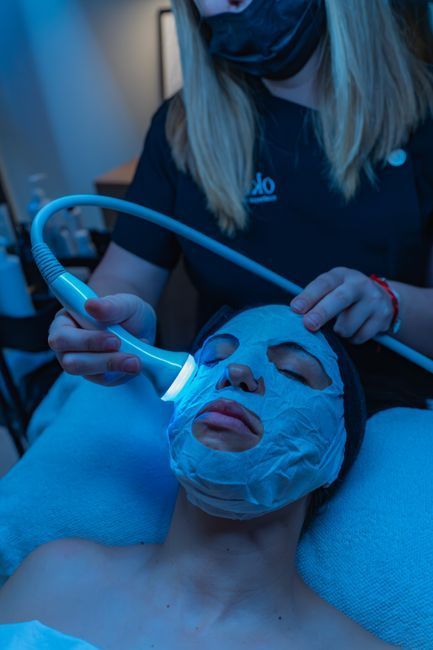
A session is simple and takes about 30 minutes including preparation. You can usually return to your day straight after.
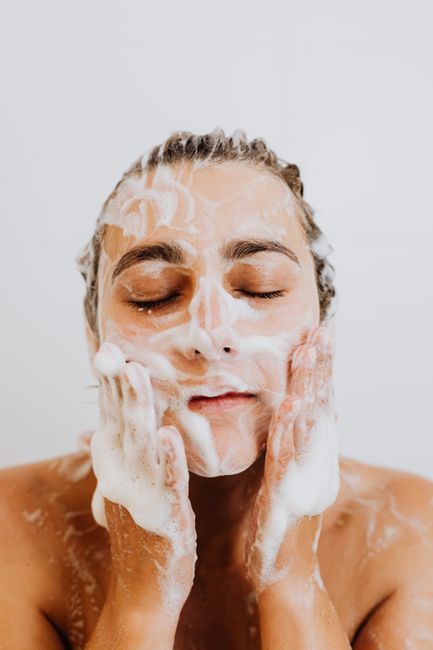
- Your skin is cleansed so makeup, oil and sunscreen do not block the light.
- If you have many clogged pores, gentle extraction or a light peel may be done first to help the light reach the follicles.
- You wear protective eye shields while you lie under the light panel for about 15–20 minutes.
- A light moisturizer and sunscreen are applied before you leave.
Most people feel only mild warmth. Because the light is bright, the eye protection stays on for the whole session.
How long does blue light therapy take to work?
Most people need regular sessions for several weeks before inflamed pimples clearly settle, usually once or twice a week for 4–8 weeks. Improvement tends to show after about 3–4 weeks.
Blue light does not stop new acne from forming, so breakouts can return within weeks to months after the course ends. To keep results, you may need maintenance sessions, a suitable home routine with non-comedogenic products, or prescription treatment. Results vary from person to person, and clinical studies show a modest, rather than dramatic, average benefit.
Aftercare is light: use a gentle cleanser and moisturizer, wear sunscreen daily and avoid picking at spots.
Risks and possible side effects
Blue light therapy has a low risk of side effects compared with most acne procedures. The most common effects are temporary dryness, tightness, mild redness or slight swelling, which usually settle within hours to a day.
Less often, people notice temporary darkening of the skin, which is more likely in medium to dark skin tones. Bright light can strain the eyes, which is why eye protection is required. Light-sensitizing medicines can make the skin react more strongly. When a light-sensitizing solution is added (photodynamic therapy), redness, peeling and sun sensitivity are stronger and you must avoid sunlight for about 48 hours.
Contact the clinic if you develop blistering, a rash, marked swelling or pain after a session.
Blue light vs acne laser or peels: which is right for you?
Blue light is the gentlest option, with minimal downtime and a modest effect on inflamed spots. Acne laser treatment can also target redness and oil glands, which helps when post-acne marks or oiliness are a big part of the problem. Chemical peels for acne are better for blackheads, whiteheads and congested pores, which blue light does not clear. Many plans combine two of these, for example a salicylic acid peel to unclog pores with blue light for inflamed spots.
Blue light acne therapy at Hommage Clinic
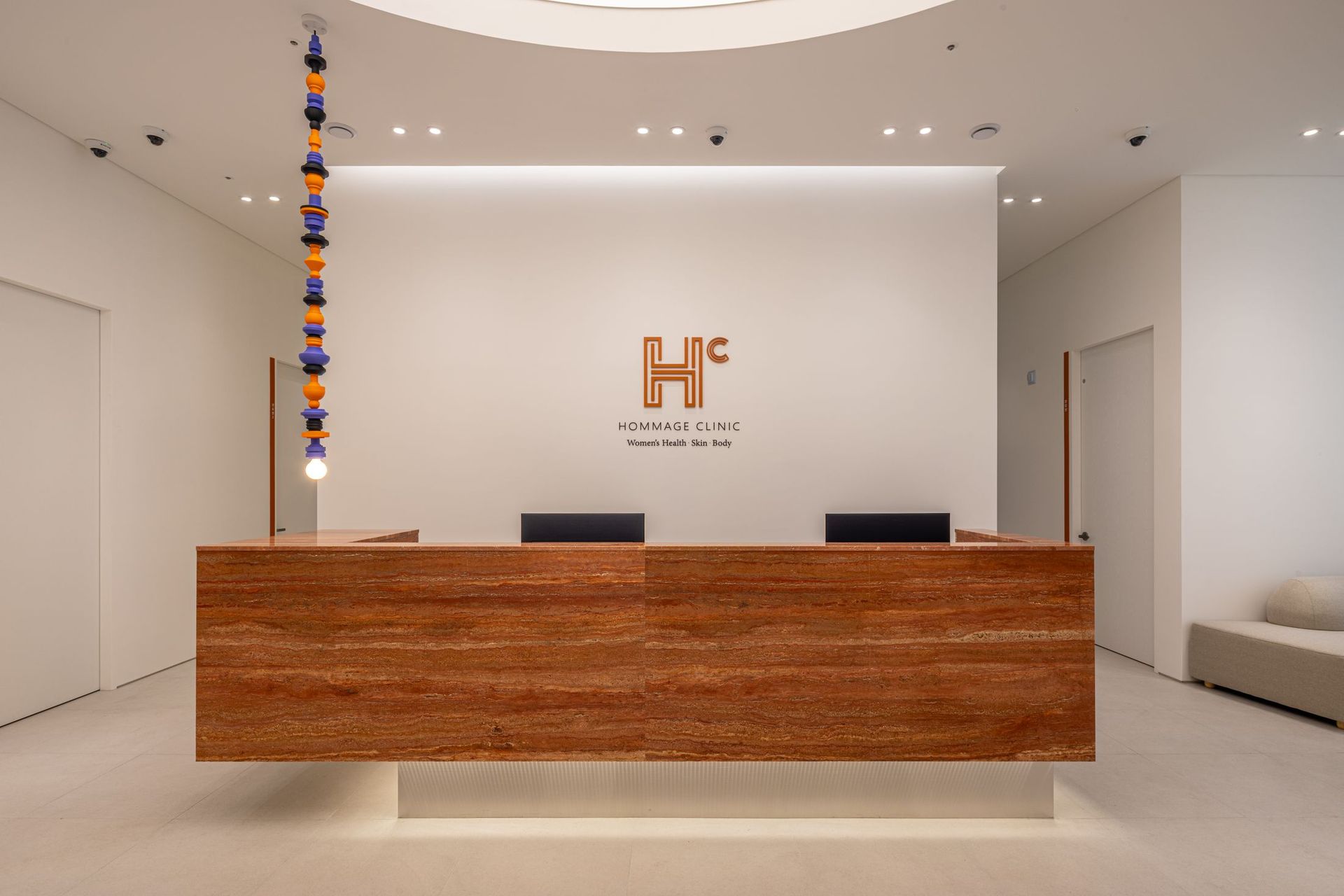
Hommage Clinic is a women's health and skin clinic in Gangnam, about a three-minute walk from Sinnonhyeon Station. Acne is assessed by a physician before light therapy is recommended, and the plan can include prescription care, peels or laser where these fit better. Hormonal acne can be reviewed with the gynecology team under the same roof. You can browse allskin and aesthetic treatmentsfor related options.
Cost depends on the number of sessions and whether other treatments are combined. Medical consultations and prescriptions for acne may be covered by Korea's National Health Insurance for enrolled patients, while light therapy sessions are generally not covered. The clinic gives you a written quote before treatment and welcomes walk-ins during opening hours.
Mechanism
How blue light acne therapy works, step by step
Acne bacteria (Cutibacterium acnes) living in oily pores make natural light-sensitive molecules called porphyrins. Blue light around 405–420 nm is the wavelength these molecules absorb most strongly. Once they absorb it, they release reactive oxygen that damages the bacteria from the inside, and fewer bacteria means less inflammation in the follicle.
This is why the treatment is drug-free and does not encourage antibiotic resistance. It is also why it works mostly on red, inflamed spots near the surface: blue light only reaches the upper skin, and it does not unblock pores or shrink oil glands.
Compare
Blue light vs red light for acne: what is the difference?
Blue and red light do different jobs. Blue light acts on acne bacteria near the surface. Red light (about 630–660 nm) reaches a little deeper and is used mainly for its calming, anti-inflammatory effect. In one trial included in a 2019 meta-analysis, 75% of people treated with combined blue and red light reported clear or marked improvement, compared with 57% for blue light alone and 35% for benzoyl peroxide, although that study was small and did not report statistical testing. Many clinics, including ours, therefore combine the two.
| Compare | Blue light | Red light | Blue + red |
|---|---|---|---|
| Wavelength | About 405–420 nm | About 630–660 nm | Both, in the same or alternating sessions |
| Main action | Acne bacteria (porphyrins) | Anti-inflammatory, supports healing | Bacteria and inflammation |
| Depth | Upper skin | Slightly deeper | Both levels |
| Pigment risk | Can deepen pigment in darker skin | Not shown to cause pigmentation in studies | Sun protection still advised |
Good candidates
Is blue light therapy right for your acne?
Blue light suits a fairly specific group of people. It is a reasonable choice if your acne is mostly red, inflamed spots, if you want to avoid or reduce oral antibiotics, or if topical treatments irritate your skin. A 2019 meta-analysis concluded that blue light is best seen as a secondary option after first-line treatments such as benzoyl peroxide, and possibly as an alternative to oral antibiotics.
Mild to moderate inflamed acne
Red papules and pustules on the face, chest or back.
Want to limit antibiotics
A drug-free option that does not drive antibiotic resistance.
Blackheads and whiteheads
Pair with a peel or extraction; light alone does not unclog pores.
Nodules, cysts or scarring acne
Prescription treatment comes first; a single cyst may need an injection.
 Hommage · Gangnam
Hommage Women's Clinic · Gangnam, Seoul
Blue light is a gentle, drug-free option for red, inflamed pimples. Illustrative photo.
Your course
Blue light therapy sessions: an 8-week schedule
Blue light works through repeated exposure, so regular visits matter more than the length of any single session. A typical plan is one or two sessions a week for 4–8 weeks, with a review at around four weeks. If inflamed spots are not settling by then, Dr. Hwang will change the plan rather than simply add more sessions.
 Hommage · Gangnam
Hommage Women's Clinic · Gangnam, Seoul
Clean, makeup-free skin lets the light reach the pores. Illustrative photo.
Between sessions
Blue light therapy aftercare: do's and don'ts
There is no real downtime, but what you do between sessions decides how well the course works. These are the instructions Dr. Hwang gives most patients; you receive a written version at your first visit.
Do
- Arrive with clean skin, or allow time for cleansing
- Keep every session in your schedule; regularity matters
- Use a light, non-comedogenic moisturizer
- Wear broad-spectrum sunscreen every day
- Tell the doctor about any new medicine
Don't
- Look at the light without the eye shields
- Pick or squeeze spots between sessions
- Start light-sensitizing medicines without telling the clinic
- Use harsh scrubs if your skin feels dry or tight
- Expect blackheads or cysts to clear with light alone
Your skin tone
Blue light and pigmentation in Asian and darker skin
Blue light does not tan the skin the way ultraviolet light does, and it does not carry UV-related cancer risk. However, research on visible light has shown that blue-violet light can trigger longer-lasting pigmentation in medium to darker skin types, while lighter skin types showed little or no pigment response. In one study, 415 nm blue-violet light produced dose-dependent darkening, while 630 nm red light did not.
For most patients this is a small, manageable risk, but it matters if you already have melasma or brown post-acne marks. Dr. Hwang may shorten exposure, add red light, or suggest a different approach. Tinted sunscreens containing iron oxides help block visible light; plain sunscreens mainly block UV. If brown marks are your main concern, see melasma treatment or pigment correction peel.
 Hommage · Gangnam
Hommage Women's Clinic · Gangnam, Seoul
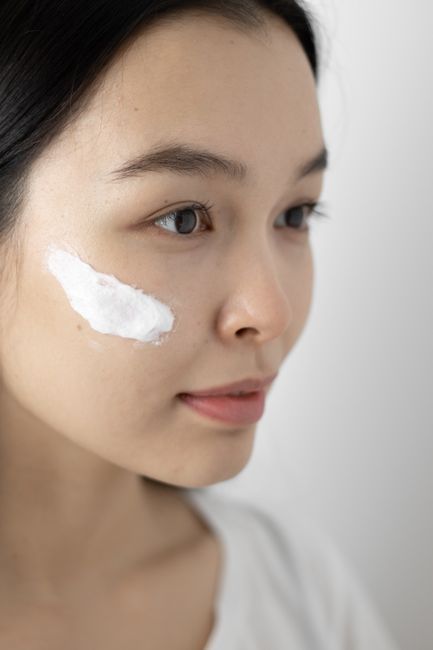
A simple routine with moisturizer and sunscreen supports each session. Illustrative photo.
Evidence
Does blue light therapy work for acne? What the research says
Blue light is safe and well tolerated, but the evidence that it clears acne is weaker than many advertisements suggest. Most trials are small, short and at high risk of bias. Some show that patients and doctors see improvement; pooled lesion counts, however, did not show a clear difference. We share this so you can decide with realistic expectations.
Blue light meta-analysis
698 participants; no trial longer than 12 weeks.
Scott et al., Ann Fam Med, 2019Doctor-rated improvement
Trials reporting global improvement that found blue light better than no treatment or sham.
Scott et al., 2019Pooled lesion counts
No statistically significant difference in inflamed or non-inflamed lesion counts.
Scott et al., 2019All light therapies
Cochrane could not draw firm conclusions; evidence mostly low or very low certainty.
Barbaric et al., Cochrane, 2016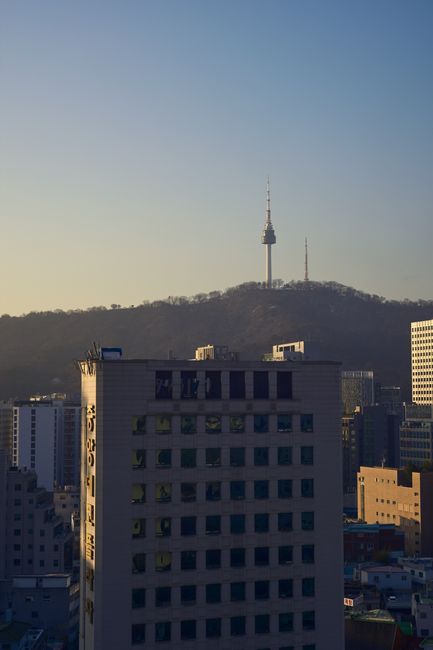 Hommage · Seoul
Hommage Women's Clinic · Gangnam, Seoul
Longer stays in Seoul make a full blue light course practical. Illustrative photo.
Traveling to Seoul
Blue light acne therapy in Seoul for international patients
Because blue light works through a series of sessions, it suits foreign residents, students and visitors staying several weeks better than a short holiday. On a one-week trip you could have an acne assessment and two sessions, then continue with a home plan. Hommage Women's Clinic is in Gangnam, a short walk from Sinnonhyeon Station (Line 9 and Shinbundang Line).
Before your first visit
- Message the clinic by WhatsApp, KakaoTalk or the contact form with your dates and photos of your skin; ask for language support if needed.
- Bring your passport and a list of medicines, especially antibiotics, retinoids or isotretinoin.
- If you stay several weeks, book a fixed weekly time so sessions stay regular.
When you go home
You leave with a written skincare plan. Ask your doctor at home before buying a home device, and send the clinic photos if your skin reacts.
Choosing well
How to choose a blue light acne clinic in Seoul
Blue light is easy to offer, so quality depends less on the device and more on whether someone checks that your acne is the type that responds. Ask these questions at any clinic, including ours:
- Does a doctor confirm my acne type first? Blue light helps inflamed spots, not blackheads alone or cysts.
- What wavelength and device do they use? Medical LED panels around 405–420 nm, often with red light.
- Is there a review point? A clear check at about four weeks avoids paying for sessions that are not helping.
- Will they combine treatments when needed? Peels, extraction or prescription care for what light cannot reach.
- Do they ask about medicines and pigment? Light-sensitizing drugs and melasma change the plan.
What affects the cost of blue light therapy?
Cost depends mainly on the number of sessions, whether red light, a peel or extraction is added, and whether prescription treatment is part of the plan. Medical consultations and acne prescriptions may be covered by Korea's National Health Insurance for enrolled patients; light therapy sessions are generally not. You receive a written quote before starting.
 Hommage · Gangnam
Hommage Women's Clinic · Gangnam, Seoul
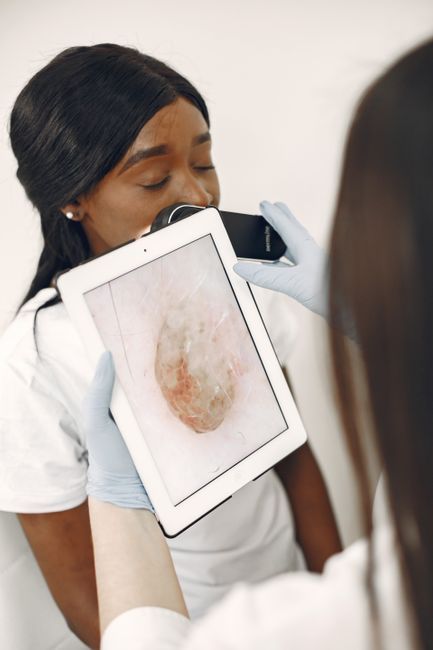
Your plan and quote are explained before the first session. Illustrative photo.
Your visit
What to expect with blue light acne therapy
01
Acne assessment
The doctor checks your acne type, current products and medicines, and any hormonal symptoms, then confirms light therapy is a good fit.
02
Plan and schedule
You agree on how many sessions, how often, and whether to add a peel, extraction or prescription treatment.
03
Light sessions
Cleansing, eye shields and about 15–20 minutes under the light. You can return to your day straight after.
04
Review
Progress is checked after a few weeks and the plan is adjusted if inflamed spots are not settling.
Your doctor
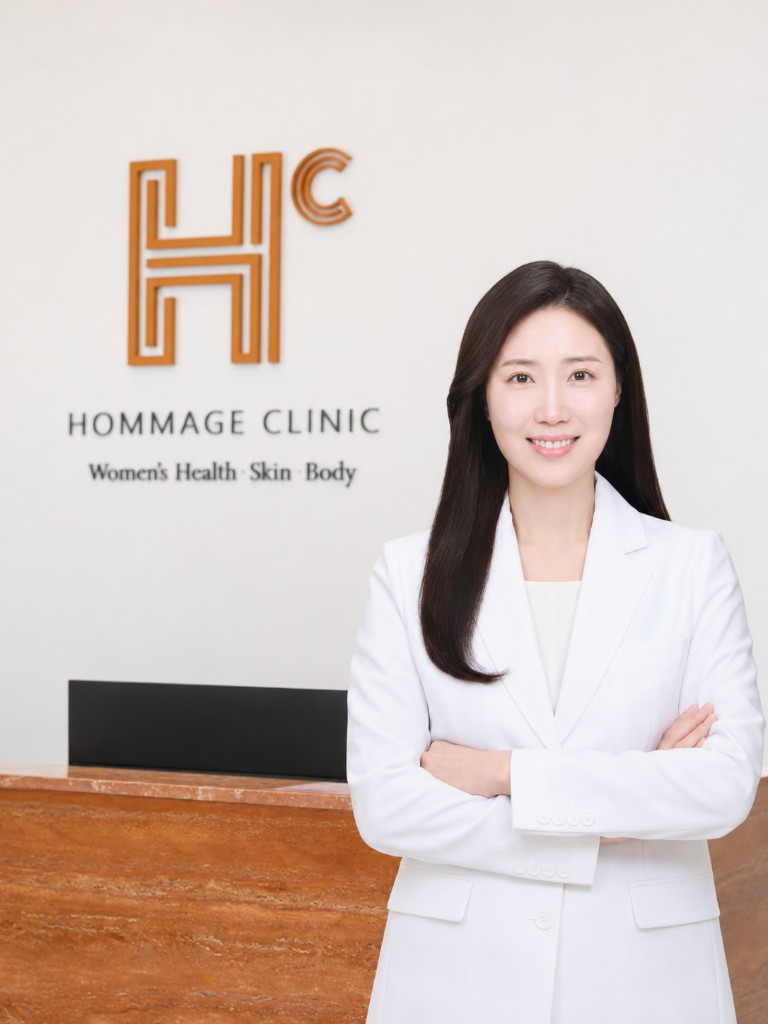
Dr. Hwang Seonhwa
Physician · Skin & Aesthetic Treatments
Dr. Hwang recommends blue light therapy for inflamed acne that is likely to respond to light, and reviews progress after a few weeks. If breakouts are deep, scarring or hormonal, Dr. Hwang adds medical treatment or other procedures to the plan.
Physician for face and skin procedures, including lifting, laser and skin-improvement treatments, planned around facial proportions and skin condition.
Blue light acne therapy: frequently asked questions
Does blue light therapy hurt?
Blue light therapy is usually comfortable. Most people feel only mild warmth while lying under the light, and no needles or numbing cream are needed. Some notice brief tightness or dryness afterward. The light is bright, so you wear eye protection throughout the session.
How many blue light sessions do I need for acne?
A typical course is one or two sessions a week for about 4–8 weeks. Most people see fewer inflamed pimples after three to four weeks of regular sessions. Because acne can come back, the doctor may suggest occasional maintenance sessions or combine light with other treatment.
Does blue light therapy work on blackheads and cysts?
Not very well. Blue light mainly helps red, inflamed pimples caused by bacteria near the skin surface. Blackheads and whiteheads respond better to peels or extraction, such as a salicylic acid peel, and deep cysts usually need prescription treatment or a corticosteroid injection.
Is blue light therapy safe during pregnancy?
Blue light without a light-sensitizing solution does not involve medication and is sometimes considered when many acne medicines are avoided in pregnancy. However, research in pregnancy is limited, so tell the doctor if you are pregnant or breastfeeding. The decision is made case by case, and photodynamic therapy is not used in pregnancy.
Can I use at-home blue light devices instead?
Home devices use lower power, so they generally act more slowly and modestly than clinic devices, but some people find them helpful for mild acne. Use only devices with eye-safety guidance, follow the instructions and stop if irritation develops. Ask your doctor whether a home device fits your plan.
Can foreigners get blue light acne therapy in Seoul?
Yes. Foreign residents and visitors can be treated at Hommage Clinic in Gangnam. Bring your passport for registration and a list of any acne medicines you use. Because a course needs repeat visits over several weeks, plan your stay accordingly, and contact us before your visit to arrange language support.
Is blue light therapy proven to work for acne?
The evidence is limited. A 2019 meta-analysis of 14 randomized trials found that several trials reported better doctor- or patient-rated improvement, but pooled lesion counts did not show a significant difference, and most trials were small and short. Blue light is best seen as a low-risk add-on or alternative, not a replacement for proven acne treatment.
Is blue light better than red light for acne?
They do different things. Blue light targets acne bacteria near the surface, while red light reaches slightly deeper and calms inflammation. Combined blue and red light tends to work better than blue light alone, so many clinics use both.
Can blue light therapy cause dark spots?
Blue-violet visible light can deepen pigmentation in medium to darker skin types, and post-acne brown marks can worsen without sun protection. Tell the doctor if you have melasma or brown marks. Shorter exposure, adding red light and a tinted sunscreen with iron oxides can lower the risk.
Is blue light therapy the same as UV light?
No. Blue light used for acne is visible light, not ultraviolet. It does not tan the skin and does not carry the skin cancer risk associated with UV exposure. Eye protection is still worn because the light is bright.
What is photodynamic therapy (PDT) for acne?
PDT adds a light-sensitizing solution to the skin before light exposure, which makes the treatment stronger. It also causes more redness, peeling and sun sensitivity, and sunlight must be avoided for about 48 hours afterward. A Cochrane review judged the evidence for PDT as standard acne treatment to be of low certainty.
Can I wear makeup after a blue light session?
Yes. There is no real downtime, so you can apply light, non-comedogenic makeup straight after a session. Arrive without makeup, or allow time for cleansing, because makeup and sunscreen can block the light.
Can I combine blue light with acne medication?
Often, yes. Blue light is commonly used alongside topical retinoids, benzoyl peroxide or hormonal treatment. Some medicines, including certain antibiotics, increase light sensitivity, so the doctor reviews your list first and may adjust timing or exposure.
References
Sources used for this page, reviewed by Dr. Hwang Seonhwa. Read our editorial and medical review policy.
- Scott AM, Stehlik P, Clark J, et al. Blue-light therapy for acne vulgaris: a systematic review and meta-analysis. Ann Fam Med. 2019;17(6):545–553. PMC
- Barbaric J, Abbott R, Posadzki P, et al. Light therapies for acne. Cochrane Database Syst Rev. 2016;9:CD007917. Cochrane summary
- Reynolds RV, Yeung H, Cheng CE, et al. Guidelines of care for the management of acne vulgaris. J Am Acad Dermatol. 2024. doi:10.1016/j.jaad.2023.12.017
- Visible light in photodermatology (review of visible-light pigmentation studies, including Mahmoud et al. 2010 and Duteil et al. 2014). Photochem Photobiol Sci. 2020. RSC
This page is general information and does not replace a personal consultation. Illustrations are original works of Hommage Women's Clinic, Gangnam, Seoul; photos marked illustrative are not of patients.
Related acne treatments
Acne Laser Treatment
Laser and light options for persistent breakouts, oiliness and post-acne redness.
LED Light Therapy Facial
Red and other LED wavelengths for calming, recovery and skin quality.
Salicylic Acid Peel
An oil-soluble peel that clears blackheads and congested pores.
Chemical Peels for Acne
How acne peels compare and which acid suits your skin and breakouts.
Extraction Facial
Clinical extraction of blackheads and whiteheads with calming care.
PCOS Treatment
Assessment for hormonal acne with irregular periods or excess hair growth.
Find out if blue light suits your acne
Book an acne assessment with Dr. Hwang Seonhwa in Gangnam to see whether light therapy, medication or a combination fits your skin.
Hommage Clinic · 4F, Building A, 509 Gangnam-daero, Seoul (near Sinnonhyeon Station) · Mon & Fri 10:00–20:00 · Tue–Thu 10:00–19:00 · Sat 10:00–15:00