
Cosmetic Gynecology · Regenerative treatments
Stem Cell Vaginal Rejuvenation: What It Is and What the Evidence Shows
Stem cell vaginal rejuvenation is an experimental treatment in which cell concentrates prepared from your own blood or fat are injected into the vaginal and vulvar tissue, with the aim of supporting tissue repair, moisture and elasticity. Evidence is still emerging and results vary. At Hommage Clinic in Gangnam, Seoul, female OB/GYN specialist Dr. Park Yuna reviews proven options with you first.
Quick answer
Stem cell vaginal rejuvenation is an experimental treatment that injects a cell concentrate made from your own blood or fat into the vaginal wall or vulva to try to support moisture, elasticity and tissue repair. At Hommage Women's Clinic in Gangnam, Seoul, female OB/GYN specialist Dr. Park Yuna discusses proven options first. A session takes about 1–2 hours with a few days of soreness. Evidence is still emerging, and results are uncertain.
Key takeaways
- Clinic “stem cell” treatments are usually mixed cell and growth-factor concentrates, not purified or laboratory-grown stem cells.
- No stem cell treatment is an established therapy for any vaginal or vulvar condition.
- The US FDA warns that the only stem cell products it has approved are blood-forming cells from cord blood for blood disorders.
- Vaginal estrogen, moisturizers and pelvic floor training have much stronger evidence and are discussed first.
Infographic
Stem cell vaginal rejuvenation in numbers
Session time
Mostly collection and processing of the cell concentrate.
Common sources
Your own blood (cell separator) or a small amount of fat.
Body aches
Possible after treatment; acetaminophen helps.
No sex or tampons
Also avoid swimming and baths, or as advised.
No alcohol or smoking
Check with the clinic before aspirin or anti-inflammatories.
Any change
Gradual and uncertain; some women notice none.
Stem cell vaginal rejuvenation at a glance
| Key fact | Details |
|---|---|
| What it is | Injection of a cell concentrate made from your own blood or fat into intimate tissue |
| Evidence | Emerging: mostly small studies; not an established treatment for any vaginal condition |
| Treatment time | Usually 1–2 hours including cell preparation |
| Anesthesia/comfort | Numbing cream and local anesthetic; more if fat is collected |
| Downtime | Soreness for a few days; body aches for 1–2 days are possible |
| Results | Uncertain and variable; any change is gradual over weeks to months |
| Performed by | Dr. Park Yuna, female OB/GYN specialist |
It may be discussed if you
- Have dryness, thinning or reduced elasticity and have already tried or discussed proven treatments
- Prefer a treatment made from your own tissue and accept the uncertainty
- Are in good general health with up-to-date cervical screening
- Want a non-surgical option and understand results may be modest or absent
Wait or avoid it if you
- Are pregnant or breastfeeding
- Have an active infection, unexplained bleeding or an abnormal Pap result that is not yet followed up
- Have or have had cancer, or a blood or immune disorder, without specialist advice
- Take blood thinners or have a bleeding disorder
What is stem cell vaginal rejuvenation?
Stem cell vaginal rejuvenation uses concentrates prepared from your own body, called autologous cells, and injects them into the vaginal wall, the vaginal opening or the vulva. The idea is that these cells and the growth factors around them may support the body's own repair processes, such as new collagen and blood vessel formation.
The term “stem cell” is used loosely in cosmetic medicine. The concentrates used in clinics are usually a mix of cells, platelets and growth factors rather than purified stem cells, and they are not grown or multiplied in a laboratory. Two sources are common:
- Blood-derived concentrate: blood is drawn from your arm and processed in a cell separator; Hommage Clinic's stem cell treatments use the Miracell system. This approach is closely related to PRP vaginal rejuvenation .
- Fat-derived cells: a small amount of fat is collected by a fine needle, processed, and the cell-rich portion is injected.
The source and method used for you are explained at consultation.
Does stem cell vaginal rejuvenation work?
The honest answer is that we do not yet know. Research on regenerative cell therapy for vaginal dryness, laxity, urinary leakage and sexual function is at an early stage. Published studies are small, often lack comparison groups and use different preparation methods, so their results cannot be compared directly. Some women report improvement in moisture or comfort, while others notice little change.
No stem cell treatment is an established, guideline-recommended therapy for any vaginal or vulvar condition. Regulators, including the US Food and Drug Administration, have warned consumers to be cautious about stem cell treatments promoted for conditions they have not been proven to treat.
For the symptoms that usually lead women to ask about this treatment, proven options exist and are worth considering first. These include vaginal estrogen and moisturizers for vaginal dryness , and pelvic floor training for laxity or leakage.
What happens during treatment?
A session usually takes 1–2 hours, most of which is preparation of the cell concentrate.
- Assessment: Dr. Park reviews your symptoms, menopause status, medicines and cervical screening, and performs a pelvic exam.
- Collection: blood is drawn from your arm, or a small amount of fat is collected under local anesthetic.
- Processing: the sample is processed in a closed system to concentrate the cells and growth factors.
- Injection: after numbing, the concentrate is injected into the vaginal wall or vulvar tissue with a fine needle.
- Going home: you rest briefly and leave with written aftercare.
What results and recovery should I expect?
Any change is gradual, typically assessed over weeks to months, and the size of the effect varies from woman to woman. Some women may notice no difference. How long any benefit lasts is not well established.
Recovery is usually short:
- Mild soreness, swelling or spotting at the injection sites for a few days.
- Body aches or muscle soreness for 1–2 days, which acetaminophen can ease.
- Avoid sex, tampons, swimming and baths for about one week, or as advised.
- For about 2 weeks, avoid alcohol and smoking, and check with the clinic before taking aspirin, anti-inflammatory painkillers or steroids, which may interfere with healing.
Risks and possible side effects
Because the cells come from your own body, the risk of allergy or rejection is low, but the procedure still carries risks:
- Pain, bruising, swelling or spotting at the injection or collection sites.
- Infection , which is uncommon with sterile technique.
- Body aches or fatigue for a day or two.
- Lumps or irregularity , particularly with fat-derived preparations.
- Urinary discomfort after injection near the urethra.
- Uncertain long-term effects , because long-term safety data for these treatments are limited.
- No improvement , which is a real possibility.
Contact the clinic promptly if you have fever, worsening pain, heavy bleeding, foul-smelling discharge or difficulty passing urine.
Stem cell vs PRP vs laser: how do they compare?
All three aim to improve tissue quality, but they differ in method and evidence.
- PRP: a simpler platelet concentrate from your blood. Evidence is also limited, but it is more widely studied. See PRP vaginal rejuvenation and the O-Shot .
- Vaginal laser: heat energy stimulates collagen in the vaginal wall. Evidence is mixed, especially for laxity. See vaginal laser therapy .
- Stem cell concentrates: the least studied of the three and the most experimental.
Our vaginal rejuvenation guide compares surgical and non-surgical options in more detail.
Stem cell treatment at Hommage Clinic
Hommage Clinic is a women's clinic in Gangnam, a short walk from Sinnonhyeon Station. Intimate regenerative treatments, like all of the clinic'scosmetic gynecologycare, are assessed and performed by Dr. Park Yuna, a female OB/GYN specialist, after a gynecological exam. The clinic's blood-derived cell treatments use the Miracell cell separator. You will hear clearly what this treatment can and cannot be expected to do, and proven options are discussed first. Visits are private, and walk-ins are welcome during opening hours.
Stem cell treatment is not covered by Korea's National Health Insurance. Cost depends on the cell source, the preparation and the areas treated, and you receive a written quote before treatment.
Mechanism
How does stem cell vaginal rejuvenation work? Blood vs fat source
Both approaches follow the same idea: collect cells from your own body, concentrate them in a closed, sterile system, and inject the concentrate into tissue that has become thin or dry. The blood-derived route is simpler and is closely related to PRP. The fat-derived route needs a small fat collection under local anesthetic and can leave the collection site sore for a few days.
In either case, the injected material is a mixture of cells, platelets and signaling proteins. Researchers think any benefit comes mainly from these signals, which may encourage blood flow and collagen, rather than from new cells turning into vaginal tissue. That theory is still being tested.
Compare
Stem cell vs PRP vs proven treatments: the evidence ladder
When you compare intimate treatments, the most useful question is how strong the evidence is. The ladder below places the options from best studied to least studied for dryness, thinning and discomfort. Treatments near the top are usually tried first; stem cell concentrates sit at the bottom because human studies are few, small and varied.
 Hommage · Gangnam
Hommage Women's Clinic · Gangnam, Seoul
Your consultation compares every option, starting with the best studied. Illustrative photo.
After treatment
Stem cell vaginal rejuvenation recovery timeline
Recovery is short, but a little longer than after PRP alone, especially when fat is collected. Soreness and body aches usually settle within a day or two. Intimate activity is paused for about a week, and alcohol and smoking for about two weeks to support healing. Any change in comfort or moisture is judged slowly, over weeks to months, at follow-up.
 Hommage · Gangnam
Hommage Women's Clinic · Gangnam, Seoul
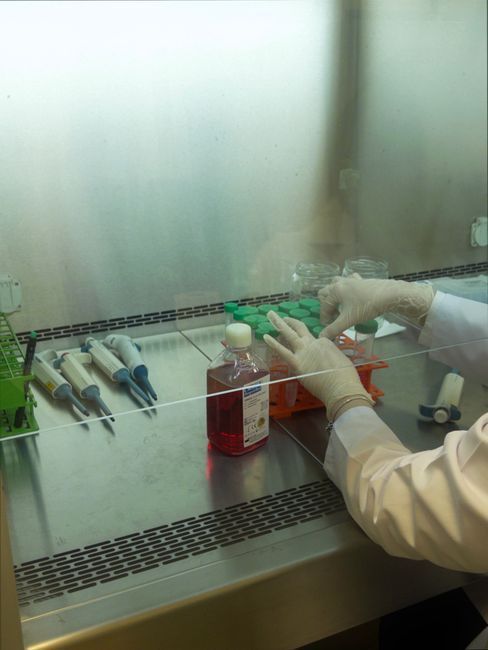
Clinic concentrates are processed on the day, not grown in a laboratory. Illustrative photo.
Be informed
Stem cell claims: what to watch out for
“Stem cell” is a powerful marketing term. The US Food and Drug Administration states that the only stem cell products it has approved are blood-forming cells from umbilical cord blood, used for disorders of blood production, and it warns consumers about unapproved regenerative products, including fat-derived cells and exosomes. Reported harms from unproven products elsewhere include infections and other serious events. The cards below help you judge any offer, including ours.
Reassuring signs
- Uses only your own cells, processed on the day
- Explains the source and device by name
- Calls the treatment experimental
- Offers proven alternatives first
- Examines you before quoting
Red flags
- Promises a cure, tightening or guaranteed results
- Donor, cord or “exosome” products for intimate use
- Cells said to be grown or multiplied for you
- Pressure to pay for a package that day
- No pelvic exam or medical history
Suitability
Who might consider stem cell vaginal rejuvenation?
This treatment is best kept for healthy women whose symptoms persist after proven care, who want to try a treatment from their own tissue, and who are comfortable with an uncertain result. It is not a first step, and it is not suitable when a medical cause has not yet been found or treated.
Rule out causes
Infection, skin conditions such as lichen sclerosus, and cervical screening checked first.
Consider PRP
Simpler and better studied than stem cell concentrates.
Discuss cell therapy
Only if symptoms persist and you accept the uncertainty.
 Hommage · Gangnam
Hommage Women's Clinic · Gangnam, Seoul
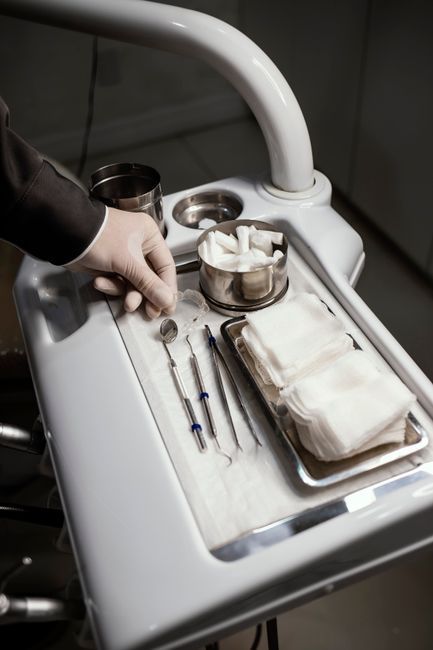
Closed, sterile processing lowers the risk of contamination. Illustrative photo.
Evidence
Is stem cell vaginal rejuvenation proven? What the research says
Human research on cell-based treatment for the vagina and vulva is still thin. The most studied related approach is fat grafting for severe vulvar lichen sclerosus that has not responded to steroid ointment: in one Italian series of 36 women, most reported better skin quality and symptoms, but there was no comparison group. For vaginal dryness and laxity, studies of cell concentrates are small and varied. Meanwhile, PRP, a simpler relative, has a few randomized trials with mixed results.
Women, fat grafting for lichen sclerosus
94% had better vulvar skin quality; uncontrolled series in severe, treatment-resistant cases.
Boero et al., Gynecol Oncol, 2015FDA-approved stem cell products
Blood-forming cells from cord blood, for blood disorders only.
US FDA consumer informationPRP studies / women reviewed
For the simpler relative of this treatment; evidence rated low quality.
Dankova et al., Biomedicines, 2023Guidelines recommending it
Not an established treatment for any vaginal or vulvar condition.
See ACOG Committee Opinion 795 Hommage · Gangnam
Hommage Women's Clinic · Gangnam, Seoul
The evidence is reviewed as new studies are published. Illustrative photo.
 Hommage · Seoul
Hommage Women's Clinic · Gangnam, Seoul
The clinic is a short walk from Sinnonhyeon Station (Line 9, Shinbundang Line). Illustrative photo.
Traveling to Seoul
Stem cell vaginal rejuvenation in Seoul for international patients
If you are traveling for this treatment, plan your trip around a proper assessment rather than a fixed procedure date. Dr. Park may suggest a proven treatment first, or PRP instead of a cell concentrate, after examining you.
- Send your symptoms, medical history and dates by WhatsApp, KakaoTalk or the contact form; ask for language support if needed.
- Bring your passport, medicine list, recent Pap or HPV results, and any cancer or blood disorder history.
- Plan a few days in Seoul after treatment so soreness can settle and any early problem can be checked before you fly.
- If fat is to be collected, ask Dr. Park in advance how many days to allow before your flight.
After you fly home, follow-up questions can be sent by message. For fever, heavy bleeding or difficulty passing urine, see a local doctor straight away.
Choosing well
How to choose a clinic for regenerative intimate treatment
Because the evidence is early, the doctor's approach matters more than the device. Choose a gynecologist who examines you, names the cell source and device, explains that the treatment is experimental, and is willing to recommend something else.
What affects the cost?
Cost depends on the cell source (blood or fat), the processing system, the areas treated, whether local anesthesia for fat collection is needed, and any tests first, such as cervical screening. Stem cell treatment is not covered by Korea's National Health Insurance. You receive a written quote after consultation, before any decision.
 Hommage · Gangnam
Hommage Women's Clinic · Gangnam, Seoul
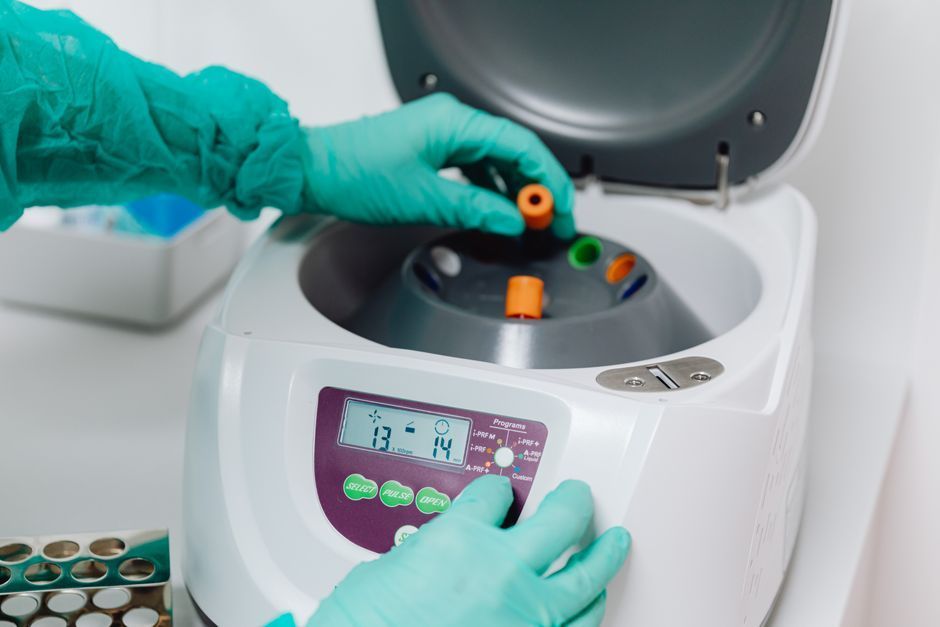
Ask any clinic which processing system it uses and why. Illustrative photo.
Your visit
What to expect at your appointment
01
Consultation
Dr. Park asks about your symptoms, menopause status, health history and medicines, and explains proven treatment options first.
02
Examination
A pelvic exam, and cervical screening if due, rule out infection or other conditions that need medical care.
03
Shared decision
You hear what the evidence shows, the risks and the alternatives, and receive a written quote. There is no pressure to decide that day.
04
Treatment and review
If you go ahead, collection, processing and injection take about 1–2 hours, with a follow-up to review how you feel.

Your doctor
Dr. Park Yuna
Medical Director · OB/GYN Specialist
Dr. Park explains that regenerative cell treatments for intimate tissue are still experimental. She reviews proven options such as vaginal estrogen and pelvic floor therapy first and offers cell-based treatment only when you understand the uncertainty.
OB/GYN specialist (Korea) and representative director of Hommage Clinic. Leads women's health care, labiaplasty and other cosmetic gynecology procedures.
Stem cell vaginal rejuvenation: frequently asked questions
Does stem cell vaginal rejuvenation work?
Evidence is still emerging. Studies are small and use different methods, and results vary: some women report improved moisture or comfort, others notice little change. No stem cell treatment is an established therapy for any vaginal condition, so it should be viewed as experimental and discussed alongside proven options.
Is stem cell vaginal rejuvenation safe?
Because the cells come from your own blood or fat, allergy and rejection are unlikely. Short-term risks include soreness, bruising, infection and body aches. Long-term safety data are limited, which is one reason to choose a doctor who examines you first and explains the uncertainty.
Where do the stem cells come from?
They come from your own body. Most commonly, blood is drawn from your arm and processed in a cell separator, or a small amount of fat is collected with a fine needle and processed. The cells are not grown in a laboratory. Your doctor explains which source is planned for you.
How is stem cell treatment different from PRP?
PRP concentrates platelets from your blood, which release growth factors. Stem cell preparations aim to include other cells as well, from blood or fat, and usually involve more processing. Both have limited evidence for intimate use, and PRP has been studied more. See PRP vaginal rejuvenation.
Can stem cell treatment help with menopause symptoms?
It has not been shown to treat menopause. Vaginal dryness and discomfort after menopause respond well to proven treatments such as vaginal estrogen, moisturizers and lubricants. For whole-body symptoms such as hot flashes, see our menopause treatment page.
What should I avoid after the treatment?
For about one week, avoid sex, tampons, swimming and baths. For about 2 weeks, avoid alcohol and smoking, and check with the clinic before taking aspirin, anti-inflammatory painkillers, steroids or herbal medicines. Acetaminophen can be used for soreness or body aches.
Can foreigners get stem cell vaginal rejuvenation in Seoul?
Yes. International patients and foreign residents can book an appointment at Hommage Clinic; bring your passport for registration. Contact us before your visit to arrange language support. Plan a few days in Seoul after treatment so any early problem can be checked.
Is stem cell vaginal rejuvenation FDA approved?
No. The US FDA states that the only stem cell products it has approved are blood-forming cells from umbilical cord blood for blood disorders. Clinic treatments that use your own cells, processed on the same day, are offered in many countries, but they are not approved treatments for any vaginal condition.
Does stem cell treatment tighten the vagina?
There is no good evidence that it does. For a feeling of looseness after childbirth, pelvic floor training is the first step, and surgical options exist for marked laxity. See Kegel therapy and vaginoplasty.
Can stem cell treatment help lichen sclerosus?
Fat grafting has been studied for severe vulvar lichen sclerosus that does not respond to steroid ointment, and small uncontrolled studies report improvement. Strong steroid ointment remains the standard treatment, with regular checks. Cell-based treatment is only considered alongside, not instead of, standard care.
Is it better to collect cells from blood or fat?
Neither has been shown to be better for intimate use. Blood-derived concentrates are simpler and avoid a second collection site. Fat collection needs local anesthetic and can leave a sore or bruised area. Dr. Park explains which source she suggests for you and why.
How many sessions of stem cell treatment are needed?
There is no established number. Dr. Park usually reviews your response at follow-up before suggesting any further session, and many women choose not to repeat treatment if they notice no change.
Who should not have stem cell vaginal rejuvenation?
It is not advised during pregnancy or breastfeeding, with an active infection, unexplained bleeding or an abnormal Pap result not yet followed up, a bleeding disorder or blood thinners, or a history of cancer or immune disorders without specialist advice.
References
Sources used for this page, reviewed by Dr. Park Yuna, OB/GYN specialist. Read our editorial and medical review policy.
- US Food and Drug Administration. Important patient and consumer information about regenerative medicine therapies. FDA
- Boero V, Brambilla M, Sipio E, et al. Vulvar lichen sclerosus: a new regenerative approach through fat grafting. Gynecol Oncol. 2015;139(3):471–475.
- Dankova I, Pyrgidis N, Tishukov M, et al. Efficacy and safety of platelet-rich plasma injections for the treatment of female sexual dysfunction and stress urinary incontinence: a systematic review. Biomedicines. 2023;11(11):2919. PMC
- American College of Obstetricians and Gynecologists. Elective female genital cosmetic surgery. Committee Opinion No. 795. Obstet Gynecol. 2020;135(1):e36–e42.
This page is general information and does not replace a personal consultation. Illustrations are original works of Hommage Women's Clinic, Gangnam, Seoul; photos marked illustrative are not of patients.
Related intimate health services
PRP Vaginal Rejuvenation
Platelet-rich plasma from your own blood for intimate tissue, and its limits.
O-Shot
A named PRP injection protocol for the clitoral area and vaginal wall.
Vaginal Rejuvenation
An overview of surgical and non-surgical options for intimate changes.
Vaginal Dryness Treatment
Proven treatments for dryness and discomfort, from moisturizers to estrogen.
Menopause Treatment
A whole-body care plan for symptoms before, during and after menopause.
Stem Cell Skin Therapy
Regenerative cell-based treatments for facial skin quality.
Get a clear opinion before choosing regenerative treatment
Book a private consultation with Dr. Park Yuna in Gangnam to compare stem cell treatment with proven options for your symptoms.
Hommage Clinic · 4F, Building A, 509 Gangnam-daero, Seoul (near Sinnonhyeon Station) · Mon & Fri 10:00–20:00 · Tue–Thu 10:00–19:00 · Sat 10:00–15:00