
Skin & Aesthetics · Facials
LED Light Therapy Facial in Seoul: What Each Color Does
An LED light therapy facial shines low-level red, blue or near-infrared light onto the skin to calm inflammation, reduce acne-causing bacteria or support skin repair, without heat and usually without downtime. Hommage Clinic in Gangnam, Seoul does not list a dedicated LED device, so Dr. Hwang Seonhwa assesses your skin and recommends treatments the clinic uses, such as LDM or cryo soothing, or medical acne care.
Quick answer
An LED light therapy facial shines low-level blue, red or near-infrared light onto the skin for 10–20 minutes, with no heat and no downtime. Blue and red light have the best evidence, as an add-on for mild to moderate acne, with results building over 4–12 weeks. Hommage Women's Clinic in Gangnam, Seoul does not list a dedicated LED device; Dr. Hwang Seonhwa assesses your skin and recommends LDM, cryo soothing or medical acne care.
Key takeaways
- Blue light (about 415 nm) acts on acne bacteria; red (about 630 nm) and near-infrared (about 830 nm) are used for calming and repair.
- LED works gradually: a course of sessions, often once or twice a week for 4–8 weeks, is usually needed.
- Anti-aging evidence is more limited than acne evidence, and changes are modest.
- Tell the clinic about light-sensitizing medicines and any light-triggered seizures before treatment.
Infographic
LED light therapy in numbers
Session length
Eye protection is worn throughout.
Typical course
Often once or twice a week.
Greater acne lesion reduction
LED vs control in a 2025 meta-analysis of 6 trials (216 people).
Blue light
Targets acne bacteria near the surface.
Red & near-infrared
Reach deeper; used for calming and repair.
Usual downtime
Mild dryness or redness in a few people.
LED light therapy at a glance
| Key fact | Details |
|---|---|
| What it is | Non-thermal light from LED panels in specific colors (wavelengths) applied to the skin |
| Main types | Blue light for acne bacteria; red and near-infrared light for calming and repair |
| Treatment time | Usually 10–20 minutes per session |
| Comfort | No anesthesia; most people feel mild warmth at most, and eye shields are worn |
| Downtime | Usually none |
| Sessions | Typically a course of repeated sessions, often once or twice a week for several weeks |
| Results | Gradual and modest; effects fade without maintenance |
LED light therapy may suit you if you have
- Mild to moderate inflammatory acne, alongside other acne treatment
- Redness or sensitivity after procedures and want gentle soothing
- Mild signs of aging and want a low-risk add-on treatment
- Time for a series of short sessions over several weeks
Avoid it or ask the doctor first if you have
- Epilepsy triggered by light, or eye conditions that make you light-sensitive
- Medicines or conditions that increase light sensitivity, such as some antibiotics or lupus
- Severe, cystic or scarring acne, which needs medical treatment first
- A new or changing spot that has not been checked by a doctor
What is LED light therapy and how does it work?
LED (light-emitting diode) therapy uses panels or masks that emit narrow bands of visible or near-infrared light at low intensity. Unlike lasers or IPL, LED light is not strong enough to heat or injure skin. Instead, specific wavelengths are absorbed by molecules in skin cells and bacteria, a process called photobiomodulation.
- Blue light (around 415 nm): activates natural compounds called porphyrins inside acne bacteria, which damages the bacteria. It works on the surface layers.
- Red light (around 630 nm): reaches a little deeper and is thought to calm inflammation and support repair.
- Near-infrared light (around 830 nm): invisible light that reaches deeper still and is used for soothing and recovery.
What can LED light therapy help with?
The strongest evidence is for blue and red light in mild to moderate inflammatory acne, usually as an add-on to standard treatment. Evidence for anti-aging and general skin rejuvenation is more limited, and changes tend to be modest.
LED is often used in clinics to calm skin after procedures, or for people who cannot use certain acne medicines. It does not remove blackheads, scars or pigment, and it does not treat rosacea or eczema on its own; those conditions need a diagnosis. For acne, see blue light acne therapy and acne laser treatment . For hormonal acne in adult women, hormone factors such as PCOS may also need checking.
What happens during an LED facial?
A session usually takes 10 to 20 minutes, and you can return to your day straight afterward.
- Cleansing: makeup and sunscreen are removed so light can reach the skin.
- Eye protection: you wear goggles or eye shields, because bright blue light in particular can strain the eyes.
- Light exposure: you lie under an LED panel or wear an LED mask set to the chosen wavelength. You may feel mild warmth.
- Finish: moisturizer and sunscreen are applied.
LED is also commonly added as a final step after other facials or procedures.
How many LED sessions do I need, and how long do results last?
LED works gradually, so it is usually given as a course of sessions, often once or twice a week for four to eight weeks. A single session is unlikely to make a visible difference.
For acne, improvement tends to build over several weeks and fades if treatment stops, so most people need maintenance or other acne care to keep results. Effects on redness or texture are generally modest. There is no special aftercare beyond your usual skincare and daily sunscreen. Home LED masks exist but are usually lower powered, so results vary.
Risks and possible side effects
LED light therapy is considered one of the lower-risk skin treatments, but it is not suitable for everyone. Possible side effects include:
- Temporary redness, dryness or mild warmth
- Eye strain or discomfort if eyes are not protected
- Headache in some people
- Rash or increased reaction in people taking light-sensitizing medicines
- Rarely, darkening of pigment in some skin types, especially with blue light
Tell the clinic about all medicines, including antibiotics, isotretinoin and herbal supplements such as St John's wort, and any history of light-triggered seizures or eye disease. Contact us if you notice blistering, a rash or eye pain.
LED light therapy vs IPL vs laser: what is the difference?
The key difference is energy. LED is low-energy and non-thermal; IPL and lasers deliver concentrated energy that heats specific targets.
- LED: gentle, usually no downtime, gradual and modest results. Often an add-on.
- IPL: broad-spectrum flashes that target pigment and visible blood vessels, with stronger effects and a small risk of burns.
- Lasers: a single precise wavelength for specific problems such as pigment, vessels or scars.
For calming skin after lasers or lifting, Hommage Clinic uses soothing treatments such as LDM and cryo.
Light-based and soothing care at Hommage Clinic
Hommage Clinic is a walk-in-friendly women's health and skin clinic in Gangnam, a short walk from Sinnonhyeon Station. The clinic does not list a dedicated LED device; its own soothing treatments include LDM and cryo. Dr. Hwang Seonhwa first checks whether your acne, redness or sensitivity needs a diagnosis, then recommends the treatment that suits your goals, and can explain where LED might fit if you use it elsewhere or at home. Because the clinic also offers women's health care, hormone-related acne can be assessed in the same place. See allskin and aesthetic treatments.
Cosmetic treatments are not covered by Korea's National Health Insurance. Cost depends on the treatment and number of sessions, and you receive a written quote first. Please contact us before your visit to arrange language support.
Mechanism
How LED light therapy works: wavelength and depth
The color of LED light is its wavelength, measured in nanometers (nm). Longer wavelengths travel deeper into the skin. That is why each color is used for a different job: blue light stays near the surface where acne bacteria live, red light reaches a little further, and invisible near-infrared light reaches deeper still. None of them is strong enough to heat or injure skin, which is the key difference from IPL and lasers.
The process is called photobiomodulation. Light energy is absorbed by specific molecules: porphyrins inside acne bacteria for blue light, and parts of the cell's energy machinery for red and near-infrared light. The effect is gentle and cumulative, so it depends on repeated sessions rather than one strong treatment.
Acne
LED light therapy for acne: who it helps
Acne is where LED has the strongest evidence. In a 2025 meta-analysis of six randomized trials, people using LED devices had about 45% greater reduction in inflamed spots than those in control groups, with improvement seen after 4 to 12 weeks. Red, blue and combined devices all helped, and combined red-and-blue devices may work best.
Good candidates
- Mild to moderate acne with red, inflamed spots
- People who want to add a gentle option to their current acne routine
- People who cannot use, or want to reduce, certain acne medicines
When LED is not enough
Deep, painful cysts and scarring acne need prescription treatment, and existing scars need resurfacing treatments rather than light. Adult women with acne around the jaw and chin, irregular periods or excess hair may have a hormonal cause such as PCOS , which can be checked in the same clinic. For targeted acne options, see blue light acne therapy and acne laser treatment .
 Hommage · Gangnam
Hommage Women's Clinic · Gangnam, Seoul
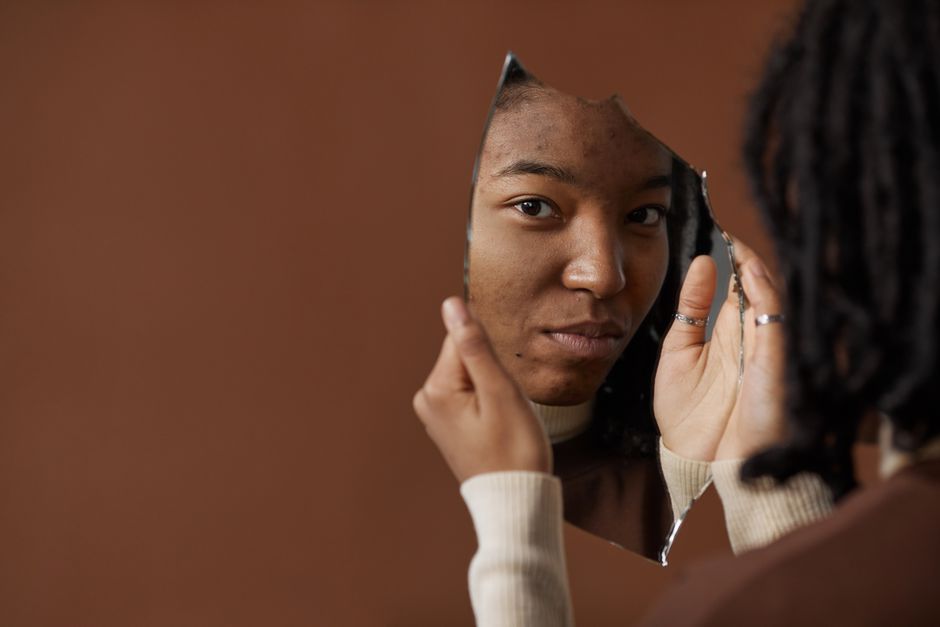
LED has its best evidence for mild to moderate inflamed acne, usually alongside other care. Illustrative photo.
 Hommage · Gangnam
Hommage Women's Clinic · Gangnam, Seoul
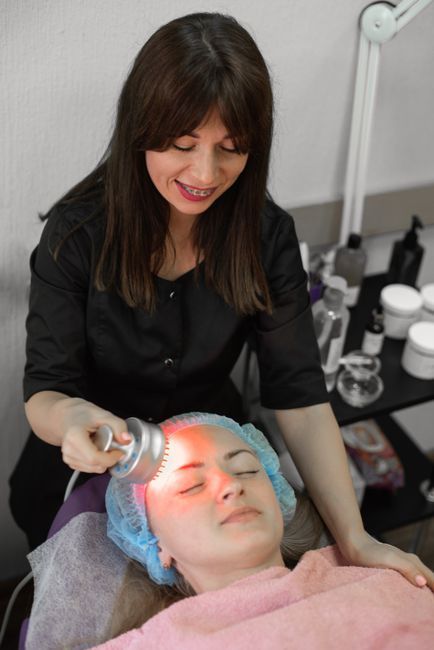
Red and blue light are chosen for different goals; many devices combine them. Illustrative photo; Hommage Clinic does not list a dedicated LED device.
Compare
Red light vs blue light therapy: which is right for you?
The right color depends on what you want to treat. Blue is the acne color; red and near-infrared are the calming and repair colors. For acne, combining both seems to work slightly better than either alone.
For acne
- About 415 nm, works near the surface
- Targets acne bacteria
- Best for red, inflamed spots
- Rarely, may darken pigment in some skin types
For calming and repair
- About 630–830 nm, reaches deeper
- Calms inflammation and redness
- Studied for fine wrinkles and elasticity
- Often used after procedures
Sessions
LED light therapy sessions schedule and results timeline
LED is a slow, steady treatment. A single session is unlikely to show a visible change. In the acne trials, improvement usually appeared between weeks 4 and 12, and in a well-known split-face rejuvenation study, sessions were given twice a week for four weeks with follow-up over three months. Because results fade when treatment stops, most people move to occasional maintenance or other skin care afterward.
Safety
Is LED light therapy safe? Eyes, medicines and skin tone
LED is one of the lower-risk skin treatments, and the 2025 meta-analysis found no severe side effects, only mild dryness, redness or discomfort in a few people. Safety still depends on three things: protecting your eyes, checking your medicines, and adjusting for your skin.
Do
- Wear the goggles or eye shields for the whole session
- Remove makeup and sunscreen so light reaches the skin
- List all medicines and supplements, including antibiotics and St John's wort
- Keep using daily sunscreen during a course
- Follow the device instructions exactly if you use a home mask
Don't
- Use LED if you have light-triggered seizures without medical advice
- Skip eye protection, especially with bright blue light
- Treat a new or changing spot before a doctor has checked it
- Expect LED to clear severe, cystic or scarring acne
- Combine with light-sensitizing medicines without checking first
 Hommage · Gangnam
Hommage Women's Clinic · Gangnam, Seoul
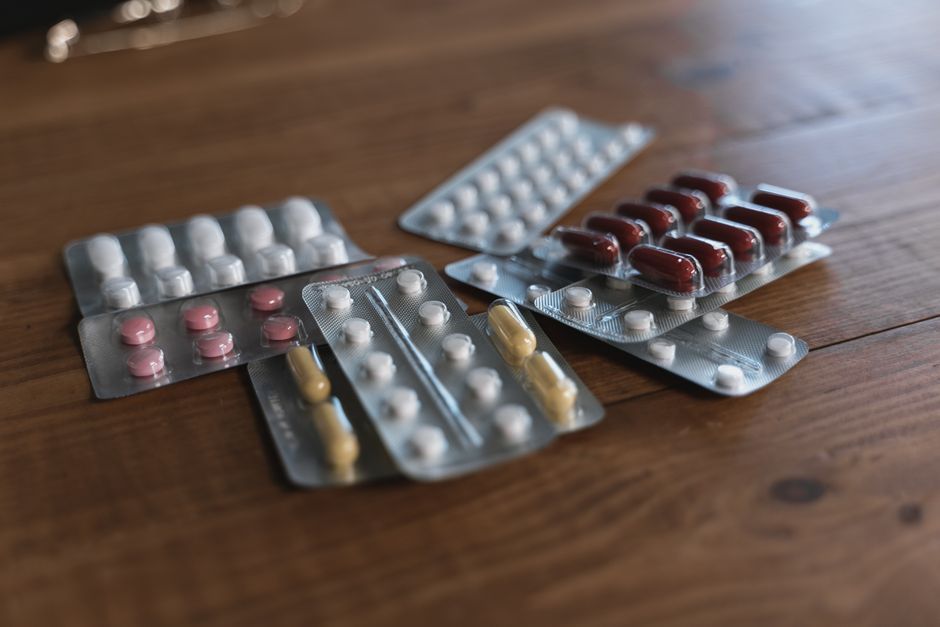
Some antibiotics, acne medicines and supplements increase light sensitivity; bring a list. Illustrative photo.
Evidence
Does LED light therapy work? What the research says
LED has better evidence than most facial treatments, especially for acne. The studies are still small, use many different devices and settings, and follow people for weeks or months rather than years. With those limits in mind, here is what the research shows.
Greater reduction in inflamed acne
LED vs control; meta-analysis of 6 randomized trials, 216 people with mild to moderate acne.
Ershadi & Barbieri, JAMA Dermatol, 2025Greater reduction in non-inflamed spots
Blackheads and whiteheads, pooled from 4 trials; improvement seen after 4–12 weeks.
Ershadi & Barbieri, 2025Wrinkle reduction (up to)
Split-face, placebo-controlled trial of 76 people; 633 nm and/or 830 nm LED twice a week for 4 weeks.
Lee et al., J Photochem Photobiol B, 2007Elasticity increase (up to)
Same 2007 trial; collagen and elastic fibers increased on skin biopsy. No adverse effects reported.
Lee et al., 2007Traveling to Seoul
Acne and light therapy advice in Seoul for international patients
Because LED works over a course of weeks, a single session during a short trip is unlikely to change your skin. A visit to Seoul is better used for a proper skin assessment: finding out what is behind your acne or redness, getting a plan you can continue at home, and, if useful, guidance on choosing a home LED device. Hommage Women's Clinic is in Gangnam, a short walk from Sinnonhyeon Station (Line 9 and Shinbundang Line), and walk-ins are welcome.
Plan your visit
- Send your concerns and dates by WhatsApp, KakaoTalk or the contact form, and ask for language support if needed.
- Bring your passport, a list of all medicines and supplements, and photos of how your skin looked at its worst.
- If you are staying several weeks, a course of in-clinic soothing or acne treatment can be planned.
- Women with acne and irregular periods can have a hormonal check in the same clinic.
After you fly home
Continue the plan with your local doctor, and message the clinic if you have questions about your written routine.
 Hommage · Seoul
Hommage Women's Clinic · Gangnam, Seoul
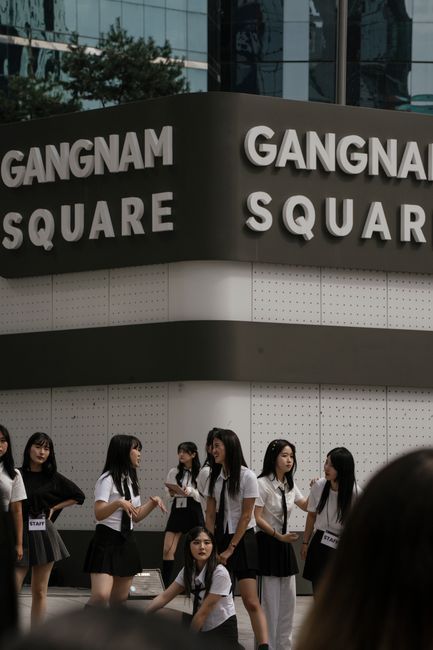
Gangnam: the clinic is a short walk from Sinnonhyeon Station. Illustrative photo.
 Hommage · Gangnam
Hommage Women's Clinic · Gangnam, Seoul
A doctor can explain where LED fits among your options. Illustrative photo.
Choosing well
Clinic LED vs home LED mask: how to choose
Home LED masks have become popular, and the 2025 meta-analysis suggests they can help mild to moderate acne. Clinic panels are usually more powerful and are supervised, but need repeated visits. Whichever you choose, these questions help:
- Is the wavelength stated? Look for blue around 415 nm and red around 630 nm, not just “multicolor.”
- Is eye protection provided? Goggles or shields should be standard.
- Has my acne been diagnosed? Severe or hormonal acne needs medical treatment as well.
- Are my medicines checked? Some antibiotics and supplements increase light sensitivity.
- Are expectations realistic? Results build over weeks and fade without maintenance.
What affects LED light therapy cost in Seoul?
Cost depends on the device, session length, number of sessions in a course, and whether LED is an add-on to another facial or a stand-alone treatment. Hommage Clinic does not list a dedicated LED device; the cost of alternatives such as LDM, cryo or acne care depends on the treatment and number of sessions. Cosmetic treatments are not covered by Korea's National Health Insurance, and you receive a written quote first.
Your visit
What to expect at your skin appointment
01
Skin check
Dr. Hwang looks at your acne, redness or sensitivity and reviews your medicines and skincare.
02
Plan
You discuss which treatment suits your goals, such as LDM, cryo or acne care, with a written quote.
03
Treatment
Soothing treatments such as LDM or cryo need no anesthesia and usually no downtime.
04
Review
Progress is reviewed after several weeks so the plan can be adjusted.
Your doctor
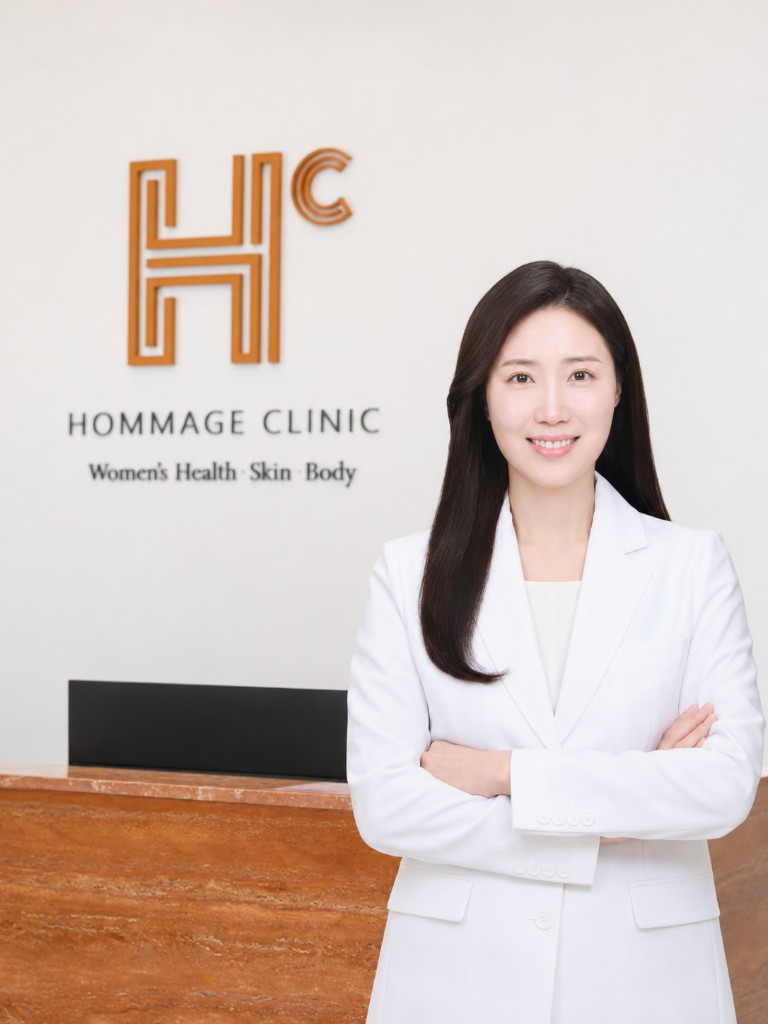
Dr. Hwang Seonhwa
Physician · Skin & Aesthetic Treatments
Dr. Hwang treats LED as a gentle add-on rather than a stand-alone fix, and looks for the underlying cause of acne or redness, along with medicines that affect light sensitivity, before recommending any treatment.
Physician for face and skin procedures, including lifting, laser and skin-improvement treatments, planned around facial proportions and skin condition.
LED light therapy: frequently asked questions
Does LED light therapy work for acne?
Blue and red LED light can help mild to moderate inflammatory acne, especially when combined with standard acne treatment. Blue light targets acne bacteria and red light calms inflammation. It is less effective for blackheads and does not treat severe, cystic or scarring acne, which needs medical care. Results build over weeks and fade without maintenance.
Is red light or blue light better for my skin?
Blue light is mainly used for acne because it acts on acne bacteria near the surface. Red and near-infrared light are used to calm inflammation and support repair, and are sometimes chosen for sensitive skin or after procedures. Many devices combine colors. Your doctor will suggest a wavelength based on your skin and goals.
Does LED light therapy hurt?
No, LED light therapy does not usually hurt. It does not heat the skin like a laser, so most people feel nothing more than mild warmth. You wear eye protection because the light is bright. Sessions are short, typically 10 to 20 minutes, and you can usually return to normal activities straight away.
How many LED sessions do I need?
LED therapy usually needs a course of sessions, often once or twice a week for four to eight weeks, before changes are noticeable. One session alone rarely makes a visible difference. Because results fade over time, many people continue with occasional maintenance sessions or combine LED with other skin care.
Is LED light therapy safe during pregnancy?
LED light therapy does not use heat, drugs or ultraviolet light, and it is generally considered low-risk, although there is limited research in pregnancy. Many clinics offer it cautiously or postpone it. Pregnancy can also cause acne and melasma, so see our page on skin care for hormonal changes and ask your doctor.
Can foreigners get help with acne or redness in Seoul?
Yes. Visitors and foreign residents can book a skin assessment at Hommage Clinic in Gangnam. The clinic does not list a dedicated LED device, but the doctor can advise on light therapy and offer alternatives such as LDM or cryo. Walk-ins are welcome during opening hours; bring your passport and contact us before your visit to arrange language support.
Do home LED masks work?
A 2025 meta-analysis of six randomized trials found at-home LED devices reduced mild to moderate acne more than control treatments, with improvement after 4–12 weeks and no severe side effects. Devices differ widely in power and wavelength, so choose one that states its wavelengths and follow the instructions exactly.
Does red light therapy reduce wrinkles?
Some evidence suggests a modest effect. In a placebo-controlled split-face trial of 76 people, 633 nm and 830 nm LED twice a week for four weeks reduced measured wrinkles by up to 36% and increased elasticity by up to 19%. The study was small, so results should be seen as modest and variable. For deeper lines or sagging, lifting or injectables work better.
Can LED light therapy cause pigmentation?
It is uncommon, but blue light may darken existing pigment in some people, especially those with medium to deep skin tones or melasma. Tell the doctor if you are prone to dark patches, use daily sunscreen during a course, and consider red light or other options if pigment is a concern. See melasma treatment.
What medicines should I avoid before LED therapy?
Tell the doctor about any medicine or supplement that increases light sensitivity, including some antibiotics, isotretinoin and St John's wort, and about conditions such as lupus or light-triggered seizures. The doctor will decide whether LED is suitable or whether to wait.
LED vs IPL: which is better?
They do different jobs. LED is low-energy and non-thermal, with gradual, modest results and no downtime. IPL delivers stronger flashes that target pigment and visible blood vessels, with bigger effects and a small risk of burns. Your skin concern decides which is more suitable.
Can LED be combined with other treatments?
Yes. LED is often used as a final step after facials or procedures, or alongside acne treatment. Timing matters if you are also using light-sensitizing medicines or have had a recent laser, so the doctor plans the order.
Is LED light therapy covered by insurance in Korea?
Cosmetic LED facials are not covered by Korea's National Health Insurance, and travel insurance rarely covers them. You receive a written quote before any treatment.
References
Sources used for this page, reviewed by Dr. Hwang Seonhwa. Read our editorial and medical review policy.
- Ershadi S, Barbieri JS. At-home LED devices for the treatment of acne vulgaris: a systematic review and meta-analysis. JAMA Dermatol. 2025;161(5):552–555. doi:10.1001/jamadermatol.2025.0019. JAMA Dermatology
- Lee SY, Park KH, Choi JW, et al. A prospective, randomized, placebo-controlled, double-blinded, and split-face clinical study on LED phototherapy for skin rejuvenation. J Photochem Photobiol B. 2007;88(1):51–67. doi:10.1016/j.jphotobiol.2007.04.008. Abstract
This page is general information and does not replace a personal consultation. Hommage Clinic does not list a dedicated LED device. Illustrations are original works of Hommage Women's Clinic, Gangnam, Seoul; photos marked illustrative are not of patients.
Related skin treatments
Blue Light Acne Therapy
How blue light targets acne bacteria, and who it suits.
Acne Laser Treatment
Laser and light options for persistent or hormonal adult acne.
IPL
Intense pulsed light for redness, pigment and sun damage.
Low-Level Laser Therapy
Low-energy light therapy used for skin and hair support.
Cryotherapy Facial
Cooling care to calm heat, redness and puffiness after procedures.
PCOS Treatment
Hormonal causes of adult acne, assessed by a female OB/GYN specialist.
Not sure if light therapy will help your skin?
Book a skin assessment with Dr. Hwang Seonhwa in Gangnam. We check what is behind your acne or redness first, then suggest the gentlest option likely to work.
Hommage Clinic · 4F, Building A, 509 Gangnam-daero, Seoul (near Sinnonhyeon Station) · Mon & Fri 10:00–20:00 · Tue–Thu 10:00–19:00 · Sat 10:00–15:00