
Skin & Aesthetics · Exfoliation
Microdermabrasion in Seoul: How Mechanical Exfoliation Works
Microdermabrasion is a non-chemical exfoliation treatment in which a device sprays fine crystals or glides a diamond-coated tip over the skin while gentle suction removes the outermost layer of dead cells, leaving skin smoother and brighter for a while. At Hommage Clinic in Gangnam, Seoul, Dr. Hwang Seonhwa first checks whether mechanical exfoliation suits your skin or whether another treatment would serve you better.
Quick answer
Microdermabrasion is a non-chemical exfoliation that removes the outermost layer of dead skin cells with fine crystals or a diamond-coated tip plus suction. At Hommage Women's Clinic in Gangnam, Seoul, Dr. Hwang Seonhwa first checks whether it suits your skin. A session takes about 20–40 minutes with no anesthesia and minimal downtime. Texture changes build over a series of about 4–6 sessions; a single session gives a short-term glow.
Key takeaways
- It treats the surface: dullness, roughness, blackheads and faint marks.
- It does not fill deep acne scars, smooth deep wrinkles or tighten skin.
- Crystal and diamond-tip systems do the same job; diamond tips avoid loose particles near the eyes.
- Melasma, rosacea and inflamed acne can get worse with friction, so they are checked first.
- Daily sunscreen matters: exfoliated skin is more sun-sensitive for a few days.
Infographic
Microdermabrasion in numbers
Session time
Plus cleansing and soothing care.
Sessions in a series
For texture and mild congestion, then maintenance.
Between sessions
Gives the skin barrier time to recover.
Chemicals or needles
Purely mechanical exfoliation with suction.
Possible dryness
Pinkness usually fades within hours.
Pause actives
No retinoids, scrubs or exfoliating acids.
Microdermabrasion at a glance
| Key fact | Details |
|---|---|
| What it is | Mechanical exfoliation of the outermost skin layer with crystals or a diamond tip plus suction |
| Treatment time | Typically 20–40 minutes, plus cleansing and soothing |
| Comfort | A light scratching and suction sensation; no anesthesia needed |
| Sessions | Often a series of 4–6 sessions about 2–4 weeks apart, then maintenance |
| Downtime | Minimal: pinkness for a few hours, sometimes dryness for 1–2 days |
| How long results last | The smoother, brighter look typically lasts days to a few weeks |
| At Hommage Clinic | Skin assessment by Dr. Hwang Seonhwa, then the exfoliation option that suits you |
Microdermabrasion may suit you if you have
- Dull, rough-feeling skin or a build-up of dead skin cells
- Mild clogged pores or blackheads, without painful inflamed acne
- Faint surface marks or uneven texture you want to refresh
- Normal, combination or oily skin that tolerates exfoliation well
Wait or choose another option if you have
- Inflamed acne, a rosacea or eczema flare, or a cold sore on the face
- Sunburn, open wounds or a skin infection in the area
- Taken isotretinoin recently: exfoliation is often postponed, so ask about timing
- Melasma, easy bruising, blood-thinning medicine, or very thin and reactive skin
What is microdermabrasion?
Microdermabrasion is a mechanical way to exfoliate. Instead of an acid, a handpiece physically buffs away part of the stratum corneum, the thin layer of dead cells on the skin surface, while a vacuum lifts the loosened cells and debris away. Because only the very top layer is removed, the skin is not wounded in the way a laser or deeper peel wounds it.
Crystal vs diamond-tip microdermabrasion
- Crystal microdermabrasion sprays fine particles, usually aluminum oxide, onto the skin and vacuums them back up with the dead cells.
- Diamond-tip microdermabrasion uses a wand with a diamond-coated tip and no loose crystals. The tip's coarseness and the suction level are chosen for your skin.
The two are closely related. A diamond peel is simply diamond-tip microdermabrasion, usually booked as a single refresh session or regular glow maintenance, while this page covers the technique and what a series can achieve.
What can microdermabrasion treat, and what can't it?
Microdermabrasion is a surface treatment, so it helps surface concerns. Studies show modest benefits, mostly after a series:
- Dullness and rough texture.
- Blackheads and mildly congested pores.
- Faint brown marks that sit in the outer skin layer.
- Very fine, superficial lines.
It cannot fill deep acne scars, smooth deep wrinkles or tighten loose skin. Shallow scars may soften slightly, but scars usually need collagen-building treatment such as microneedling for acne scars . It is also a poor choice for melasma: friction and irritation can make melasma darker, so a dedicated melasma treatment plan is safer. Painful, inflamed acne should be treated medically first, because rubbing it can spread inflammation.
What happens during a microdermabrasion session?
A session usually takes 20–40 minutes and needs no anesthesia. Most people describe a light scratching or sandpaper-like feeling with gentle suction.
- Your skin is cleansed to remove makeup and oil.
- The handpiece passes over each area in overlapping strokes, usually one or two passes. Settings are kept lighter on thin or sensitive areas, and the skin around the eyes is protected.
- Any remaining particles are wiped away.
- A soothing moisturizer and broad-spectrum sunscreen are applied.
You can usually go straight back to work or your day.
How long do microdermabrasion results last?
Expect a short-term result. The smoother, brighter look usually lasts from a few days to a few weeks, because the skin keeps renewing its outer layer. Changes in texture and congestion build more gradually over a series of about 4–6 sessions, and keeping them usually means occasional maintenance.
Aftercare is simple:
- Use a gentle cleanser and a fragrance-free moisturizer.
- Apply broad-spectrum SPF 30 or higher daily, because freshly exfoliated skin burns more easily.
- Skip scrubs, retinoids and exfoliating acids for about 2–3 days.
- Avoid saunas, swimming pools and intense workouts on the day of treatment.
Microdermabrasion vs chemical peels and hydradermabrasion: which is right for you?
All three exfoliate, but they suit different skin and goals:
- Microdermabrasion: physical buffing of the surface. Even and predictable, with no chemical reaching into the pores.
- Superficial chemical peels: acids loosen dead cells over several days. A salicylic acid peel reaches inside oily pores, so it usually works better for acne-prone skin.
- Hydradermabrasion: water-based exfoliation with suction and serums, often gentler on dry skin. See our page on HydraFacial-style facials .
If your skin is sensitive or reacts to friction, an enzyme peel facial , which uses fruit enzymes instead of abrasion, is a softer way to exfoliate.
Risks and possible side effects
Microdermabrasion is low-risk when settings match your skin, but side effects can happen:
- Redness, tenderness or a mild windburned feeling for a few hours.
- Dryness or light flaking for a day or two.
- Small pinpoint bruises or streaks from strong suction, especially on thin skin or with blood thinners.
- Temporary breakouts as pores clear.
- Post-inflammatory hyperpigmentation: dark patches after irritation, more likely in darker skin or with sun exposure.
- A cold sore flare in people who carry the herpes simplex virus.
- Eye irritation from stray crystals with crystal systems.
Contact the clinic if you notice oozing, crusting, increasing pain, or redness or dark patches that last longer than a few days.
Microdermabrasion at Hommage Clinic
Hommage Clinic is a walk-in-friendly women's health and skin clinic in Gangnam, a short walk from Sinnonhyeon Station. The clinic does not list a dedicated microdermabrasion device. Dr. Hwang Seonhwa first examines your skin to rule out acne, rosacea or melasma that need medical care, then recommends an option that suits you, such as a superficial peel, or soothing care the clinic uses like LDM, cryo or Coreg Cell-Fit. See our full range ofskin and aesthetic treatments.
Exfoliating facials are cosmetic and not covered by Korea's National Health Insurance. Cost depends on the treatment chosen and the number of sessions, and you receive a written quote before anything starts.
Technique
Crystal vs diamond-tip microdermabrasion: what is the difference?
Microdermabrasion was first described in 1985, and two types of device are now used. Crystal systems blow a stream of fine particles, most often aluminum oxide, across the skin and vacuum them back up with the dead cells. Less common crystals include sodium chloride and sodium bicarbonate. Crystal-free systems use a handpiece with diamond particles fixed to the tip, so the abrasion comes from the tip itself.
With crystal systems, the amount removed depends mostly on the crystal flow and how long the handpiece stays on one spot; the suction level itself has relatively little effect. With diamond tips, the grit of the tip matters most. Diamond-tip devices avoid stray crystals near the eyes and suit people with an aluminum allergy, which is why many clinics now prefer them for the face.
| Compare | Crystal | Diamond tip |
|---|---|---|
| Abrasive | Fine particles, usually aluminum oxide | Diamond particles fixed to the tip |
| Main control | Crystal flow and time on the skin | Tip grit and number of passes |
| Near the eyes | Risk of stray particles in the eye | No loose particles |
| Aluminum allergy | Choose another crystal or diamond tip | Suitable |
Planning
Microdermabrasion sessions: how many, and how far apart?
One session gives an immediate but short-lived refresh. Texture, blackheads and faint surface marks respond more gradually, so a course of about 4–6 sessions is common. Medical references describe weekly sessions in some protocols; for facial skin in a clinic setting, spacing them about 2–4 weeks apart gives the skin barrier time to recover and suits most schedules.
After the course, many people move to occasional maintenance. Benefits fade as the skin renews itself, so the series is not permanent. Dr. Hwang reviews your skin partway through and may stop early, switch to a gentler option or change the plan if your skin is reacting.
 Hommage · Gangnam
Hommage Women's Clinic · Gangnam, Seoul
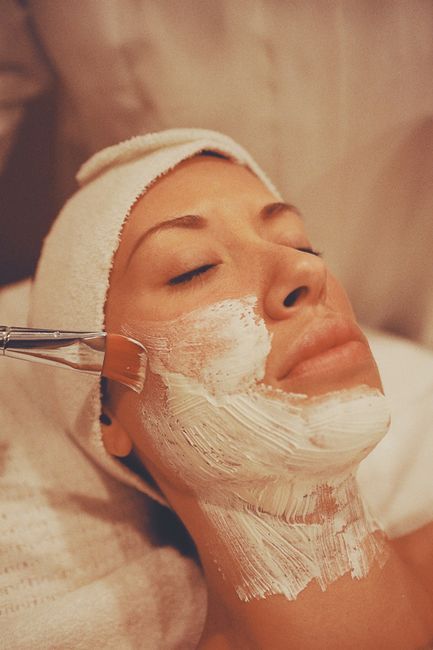
Changes in texture build gradually over a planned series. Illustrative photo.
Realistic results
Microdermabrasion for pores, blackheads, acne marks and fine lines
People search for microdermabrasion for many different problems, but it does not help them all equally. The chart below matches common concerns to how much a series of microdermabrasion can realistically do, and what may work better. For enlarged pores the effect is mostly temporary; for deeper scars and wrinkles, collagen-building treatments are usually needed.
Microdermabrasion on the neck, chest and hands
Microdermabrasion is not only used on the face. The neck, upper chest and backs of the hands often show sun-related roughness and dullness, and can be treated in the same visit. Skin on the neck and chest is thinner and more prone to redness and dark marks, so settings are lighter and fewer passes are made. Stretch marks are sometimes listed among the uses of microdermabrasion, but improvement is usually modest; see our page onstretch mark laser treatment for options with more effect. Tell Dr. Hwang about any areas you would like included so the plan and quote cover them.
 Hommage · Gangnam
Hommage Women's Clinic · Gangnam, Seoul
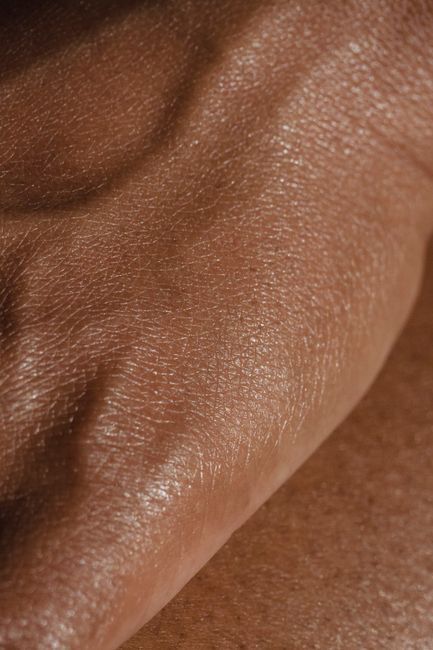
A close look at texture, pores and pigment comes first. Illustrative photo.
Safety
Who should not have microdermabrasion?
Medical references list a few clear reasons to wait, and a few situations that need extra care. Active skin infections, including cold sores (herpes simplex), shingles, warts and impetigo, should heal first, because abrasion can spread them to new areas. People who carry the cold sore virus may get a flare after treatment. A history of keloids or raised scars calls for caution, and rosacea or visible broken capillaries are relative reasons to choose something gentler.
Before your session
- Stop retinoids and exfoliating acids 2–3 days before
- Avoid sunburn and tanning in the week before
- Tell the doctor about isotretinoin, blood thinners or cold sores
- Mention any aluminum allergy
- Arrive with clean skin if you can
Wait if you have
- A cold sore, shingles, warts or impetigo on the face
- Sunburn, open wounds or a skin infection
- Painful, inflamed acne or a rosacea flare
- Recent isotretinoin (ask about timing)
- Melasma that has been active recently
Evidence
Does microdermabrasion work? What the research says
Microdermabrasion is one of the most widely used cosmetic procedures, but good-quality trials are scarce. A medical reference review rates much of the supporting literature as low-level evidence. Lab studies show measurable changes in the skin after treatment, including denser collagen fibers at the junction between the outer and inner skin in some studies, but how much this translates into visible, lasting improvement is less certain. Here is what the strongest studies found.
Volunteers, one session
Wound-healing and remodeling signals rose quickly, with no change in the thickness of the outer layer.
Karimipour et al., J Am Acad Dermatol, 2005Showed new collagen
Only a minority of those tested had more type I procollagen 14 days after a single session.
J Am Acad Dermatol, 2005Tip grit matters
In 40 adults with sun-damaged skin, a coarse diamond tip triggered collagen-building signals; a medium tip did not.
Karimipour et al., Arch Dermatol, 2009Extra sun sensitivity
Skin is more sensitive to sun for a few days after treatment.
StatPearls: Microdermabrasion, 2023Aftercare
Microdermabrasion aftercare: the first three days
Most people look slightly pink, as if they had been in the wind, for a few hours. Tenderness, mild swelling and occasional pinpoint bruising from suction are the most common side effects. Over the next day or two the skin can feel dry or tight. A simple routine is enough:
- Treatment day Moisturizer and sunscreen only. No sauna, jjimjilbang, pool or hard workout. Makeup only if your skin is calm.
- Day 1 Gentle cleanser, fragrance-free moisturizer, SPF 30+ every morning. Expect mild dryness.
- Days 2–3 Still no retinoids, scrubs or acids. Reapply sunscreen when outdoors.
- Day 4 onward Return to your usual routine if your skin feels normal. Message the clinic if redness or dark patches persist.
 Hommage · Gangnam
Hommage Women's Clinic · Gangnam, Seoul
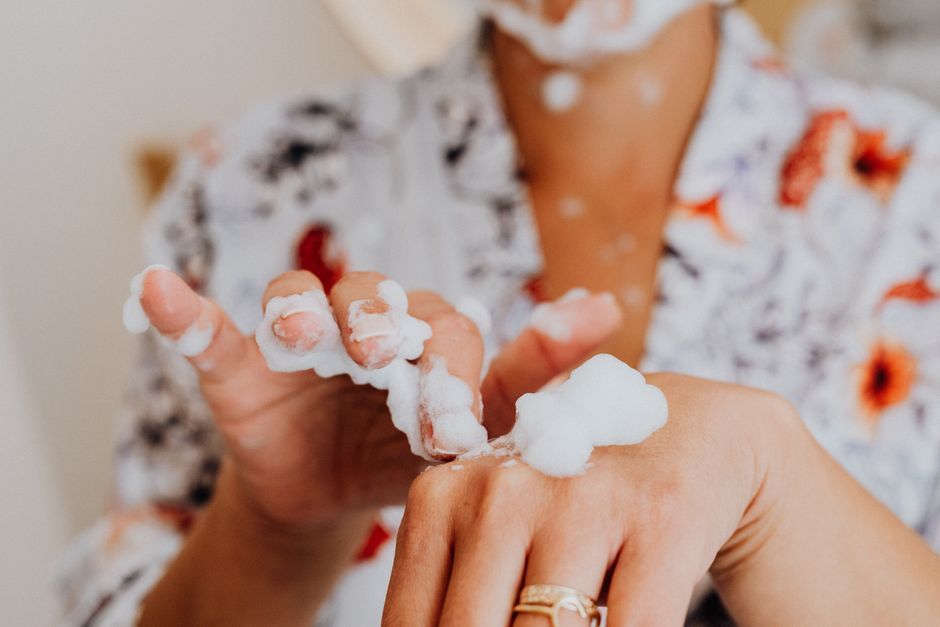
Gentle cleansing and daily sunscreen are the core of aftercare. Illustrative photo.
 Hommage · Seoul
Hommage Women's Clinic · Gangnam, Seoul
The clinic is a short walk from Sinnonhyeon Station on Line 9 and the Shinbundang Line. Illustrative photo.
Traveling to Seoul
Microdermabrasion in Seoul for international patients
A single exfoliation session fits easily into a short visit: allow about an hour including the skin check, with no recovery time needed. A full 4–6 session series is harder to complete on one trip because sessions are spaced weeks apart, so visitors usually choose one refresh session, or start a plan here and continue with a local doctor at home.
- Book early in your stay rather than the day before you fly, so any pinkness can settle.
- Skip it straight after a long-haul flight, when skin is drier and more reactive.
- Bring your passport and a list of skincare and medicines, especially retinoids, isotretinoin or blood thinners.
- Pack SPF 30+ and a hat for sightseeing in the days afterward.
- Contact the clinic by WhatsApp, KakaoTalk or the contact form beforehand to arrange language support.
Choosing well
How to choose a clinic for microdermabrasion in Seoul
Microdermabrasion is offered by spas, aesthetic shops and medical clinics across Gangnam. The procedure is simple, so the deciding factor is who assesses your skin and how carefully settings are matched to it. Use these questions anywhere, including here:
- Is a doctor involved in the assessment? Acne, rosacea, melasma and infections should be recognized first.
- Crystal or diamond tip, and why? Ask which system is used and how settings are chosen for your skin.
- How is equipment cleaned? Tips and handpieces should be disinfected or replaced between clients.
- Is the series length realistic? Be cautious of large prepaid packages before your skin's response is known.
- Do they say what it will not do? Honest clinics explain the limits for scars, wrinkles and pigment.
- Is aftercare explained in writing? Including which products to pause and when to call.
What affects microdermabrasion cost in Seoul?
Cost depends on whether you book one session or a series, the area treated (face only, or neck and chest too), whether soothing or hydrating care is added, and whether a doctor is involved. Exfoliating facials are cosmetic and are not covered by Korea's National Health Insurance. You receive a written quote before treatment starts.
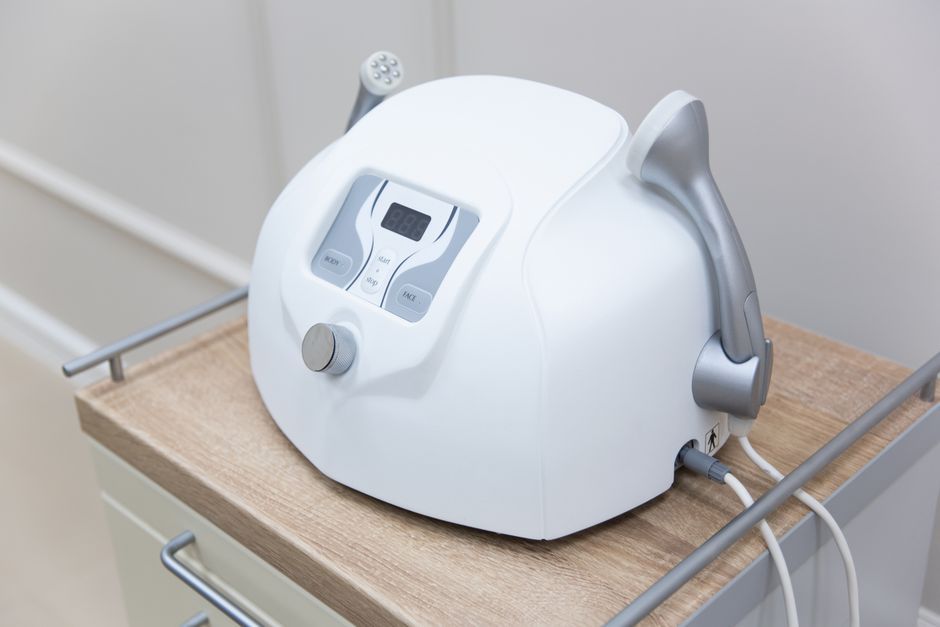 Hommage · Gangnam
Hommage Women's Clinic · Gangnam, Seoul
Hygiene and a careful skin check matter more than the device. Illustrative photo.
Your visit
What to expect at your skin assessment
01
Skin assessment
Dr. Hwang looks at texture, congestion, redness and pigment, and asks about medications, isotretinoin and recent treatments.
02
Your plan
You hear which exfoliation option fits your skin, how many sessions make sense and receive a written quote.
03
Treatment
No anesthesia is needed, and you can usually return to your day straight afterward.
04
Aftercare
Simple advice on sunscreen, which actives to pause and when to book your next visit.

Your doctor
Dr. Hwang Seonhwa
Physician · Skin & Aesthetic Treatments
Dr. Hwang checks for inflamed acne, rosacea and melasma before recommending any mechanical exfoliation, because friction can aggravate them. Expectations are set from the start: microdermabrasion refreshes the surface, and deeper concerns are planned with other treatments.
Physician for face and skin procedures, including lifting, laser and skin-improvement treatments, planned around facial proportions and skin condition.
Microdermabrasion: frequently asked questions
Does microdermabrasion hurt?
Microdermabrasion usually feels like a light scratching or sandpaper-like sensation with gentle suction, and most people find it comfortable without numbing. Bony or thin areas can feel more sensitive. Afterward, the skin may feel slightly tight or warm, like mild windburn, for a few hours. Tell the person treating you if the suction feels too strong.
How many microdermabrasion sessions do I need?
A single session gives a short-term glow. For texture and mild congestion, a series of about 4–6 sessions spaced 2–4 weeks apart is common, followed by occasional maintenance. Results fade gradually as the skin renews itself, so daily sunscreen and a suitable home routine help you keep them longer.
Is microdermabrasion good for acne scars?
Only for very shallow scars and uneven texture, where the improvement is modest. Microdermabrasion removes dead cells from the surface but does not rebuild collagen beneath a scar. Deeper boxcar, rolling or ice-pick scars usually need treatments such as fractional laser for acne scars, microneedling or subcision.
Can I wear makeup after microdermabrasion?
Usually yes, often the next day, and sometimes the same day if your skin is not red or irritated. Choose non-comedogenic products and clean brushes, and remove makeup gently. Freshly exfoliated skin absorbs products more readily, so skip strong actives such as retinoids and acids for about 2–3 days.
Is microdermabrasion safe during pregnancy?
Microdermabrasion uses no chemicals, so it is generally considered low-risk in pregnancy. However, pregnancy hormones can make skin more sensitive and more likely to develop melasma after irritation, and many people choose to postpone elective treatments. Discuss timing with your doctor and keep up strict sun protection.
Can foreigners get microdermabrasion in Seoul?
Yes. International patients and foreign residents can book a skin assessment at Hommage Clinic and should bring a passport for registration. Because downtime is minimal, exfoliating treatments fit easily into a short stay. Please contact us before your visit to arrange language support.
What is the difference between microdermabrasion and a diamond peel?
A diamond peel is a type of microdermabrasion that uses a diamond-coated tip instead of crystals. The name is usually used for a single refresh session, while microdermabrasion often refers to a planned series with either system.
Is microdermabrasion good for enlarged pores?
It can make pores look cleaner and smaller for a short time by clearing surface debris, but it does not permanently shrink pores. For oily, congested skin, a salicylic acid peel or a pore-tightening laser may be discussed.
Can microdermabrasion lighten dark spots or melasma?
Faint brown marks in the outer skin layer may fade slightly over a series. Melasma is different: friction and irritation can make it darker, especially in Asian skin, so microdermabrasion is usually avoided. See melasma treatment for safer options.
Can I have microdermabrasion with active acne?
Not on painful, inflamed spots. Rubbing them can spread inflammation and bacteria. Inflamed acne is treated medically first; once it is calm, gentle exfoliation may help with blackheads and texture.
Does microdermabrasion stimulate collagen?
Lab studies show that it can switch on wound-healing and collagen-building signals, but mostly with aggressive settings, and results varied: in one study only 2 of 11 people tested made more new collagen after one session. It should not be relied on as an anti-aging treatment.
How soon will I see results from microdermabrasion?
Skin usually looks smoother and brighter straight after the first session, once any pinkness fades. Changes in texture and blackheads build gradually over a series of about 4–6 sessions.
Can I do microdermabrasion at home?
Home devices are much weaker than clinic systems and give a milder effect. Overusing them, or combining them with retinoids and acids, can irritate the skin barrier and cause redness or dark marks. If you have acne, rosacea or melasma, ask a doctor before trying one.
References
Sources used for this page, reviewed by Dr. Hwang Seonhwa. Read our editorial and medical review policy.
- Microdermabrasion. In: StatPearls. Treasure Island (FL): StatPearls Publishing; updated 2023. NCBI Bookshelf
- Karimipour DJ, Kang S, Johnson TM, et al. Microdermabrasion: a molecular analysis following a single treatment. J Am Acad Dermatol. 2005;52(2):215–223. PubMed
- Karimipour DJ, Rittie L, Hammerberg C, et al. Molecular analysis of aggressive microdermabrasion in photoaged skin. Arch Dermatol. 2009;145(10):1114. doi:10.1001/archdermatol.2009.231
- Microdermabrasion: an evidence-based review. PubMed
This page is general information and does not replace a personal consultation. Illustrations are original works of Hommage Women's Clinic, Gangnam, Seoul; photos marked illustrative are not of patients.
Related exfoliation treatments
Diamond Peel
Diamond-tip microdermabrasion booked as a quick, crystal-free refresh session.
Enzyme Peel Facial
Gentle fruit-enzyme exfoliation suited to sensitive or reactive skin.
Skin Scaling
The Korean clinic facial for professional exfoliation and deep cleansing.
Salicylic Acid Peel
An oil-soluble superficial peel for blackheads and acne-prone skin.
HydraFacial-Style Facial
Water-based exfoliation with suction and hydrating serums.
Microneedling for Acne Scars
Collagen-building treatment for scars that exfoliation cannot reach.
Find out if microdermabrasion suits your skin
Book a skin assessment with Dr. Hwang Seonhwa in Gangnam to compare mechanical exfoliation, gentle peels and soothing care for your texture and pores.
Hommage Clinic · 4F, Building A, 509 Gangnam-daero, Seoul (near Sinnonhyeon Station) · Mon & Fri 10:00–20:00 · Tue–Thu 10:00–19:00 · Sat 10:00–15:00