
Women's health · Menopause
Menopause Treatment and Care Plans in Seoul
Menopause treatment is medical care that relieves symptoms such as hot flashes, poor sleep, mood changes and vaginal dryness, and protects your long-term bone and heart health as your periods stop. At Hommage Clinic in Gangnam, Seoul, OB/GYN specialist Dr. Park Yuna reviews your symptoms and health history, then builds one care plan that may combine hormone therapy, non-hormonal medicine and lifestyle support.
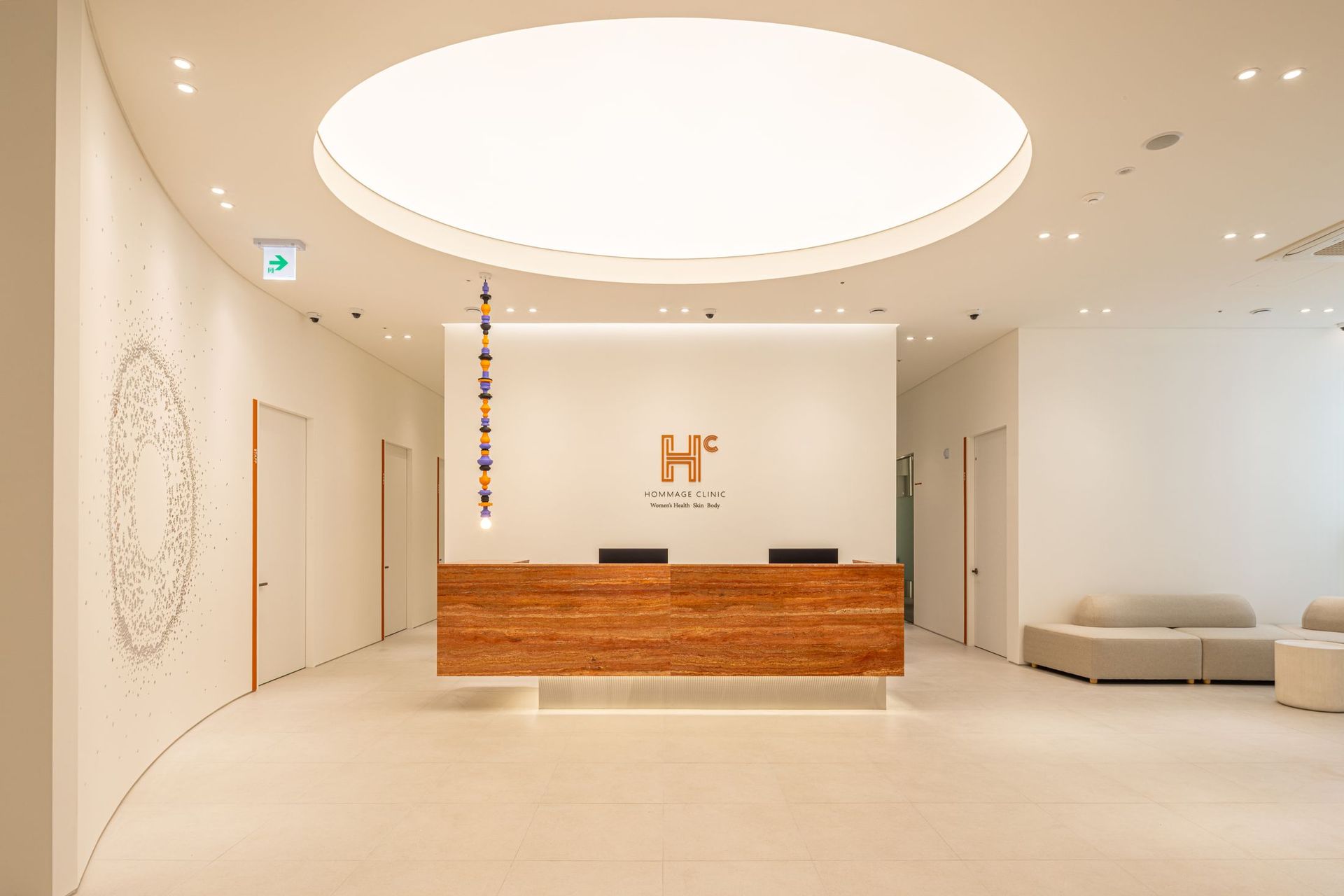
Quick answer
Menopause treatment relieves hot flashes, night sweats, poor sleep, mood changes and vaginal dryness, and protects bone and heart health once periods stop. At Hommage Women's Clinic in Gangnam, Seoul, female OB/GYN specialist Dr. Park Yuna builds one personal plan that may combine hormone therapy, vaginal estrogen, non-hormonal medicine and lifestyle support. For most healthy women under 60, or within 10 years of their last period, the benefits of hormone therapy outweigh the risks.
Key takeaways
- Menopause is confirmed after 12 months without a period. In Korea the average age is about 51.
- Hot flashes and night sweats last a median of about 7 years, so treating them is reasonable rather than simply waiting.
- Hormone therapy is the most effective treatment for hot flashes; your age, timing and health history decide whether it suits you.
- Vaginal dryness and urinary symptoms usually need their own local treatment and tend to worsen without it.
- Non-hormonal medicine and menopause-specific CBT are real options if you cannot or prefer not to take hormones.
Infographic
Menopause in numbers
Average age in Korea
Mean age at menopause in a national Korean survey (KNHANES).
No period
Twelve months in a row without a period confirms menopause.
Hot flash duration
Median total duration in the SWAN study of 1,449 women.
Fewer hot flashes
Typical reduction with standard-dose hormone therapy (about 65% at low dose).
Timing window
Under 60 or within 10 years of menopause, benefits usually outweigh risks.
First review
Follow-up about 3 months after starting, then at least yearly.
Menopause care at a glance
| Key fact | Details |
|---|---|
| What it is | The final menstrual period, confirmed after 12 months without a period; usually around age 50 |
| Common signs | Hot flashes, night sweats, poor sleep, mood changes, vaginal dryness, irregular periods beforehand |
| How it's diagnosed | Mainly from your age, cycle history and symptoms; blood tests when you are under 45 or unclear |
| Treatment options | Hormone therapy, vaginal estrogen, non-hormonal medicine, sleep, bone and lifestyle support |
| Follow-up | Usually about 3 months after starting treatment, then at least once a year |
| Reviewed by | Dr. Park Yuna, OB/GYN specialist |
Book a menopause consultation if you have
- Hot flashes or night sweats that disturb your sleep, work or social life
- Irregular periods with new mood changes, anxiety or trouble concentrating in your 40s
- Vaginal dryness, discomfort during sex or new urinary urgency
- Periods that stopped before age 45, or surgery that removed your ovaries
- Questions about whether hormone therapy is right for you
Seek urgent care instead if you have
- Chest pain, sudden shortness of breath, or a painful, swollen leg
- Sudden weakness, numbness, slurred speech or a severe headache
- Very heavy bleeding that soaks a pad every hour for several hours
What is menopause, and when does it start?
Menopause is your last menstrual period. It is confirmed once you have gone 12 months in a row without a period, and for most women it happens around age 50. The years before it, called perimenopause, often bring irregular cycles and the first symptoms as estrogen levels rise and fall unpredictably.
Menopause before age 40 is called premature ovarian insufficiency, and between 40 and 45 it is called early menopause. Both need a fuller work-up and usually hormone replacement until the natural age of menopause, which we explain on our low estrogen treatment page. Surgery that removes both ovaries, and some cancer treatments, cause menopause straight away.
Common menopause symptoms
Most women notice at least some symptoms, but their type and strength vary widely. The most common are:
- Hot flashes and night sweats , sudden waves of heat that can break up sleep. See our page on hot flashes treatment .
- Sleep, mood and memory changes , such as waking at night, irritability, low mood, anxiety and “brain fog”.
- Vaginal and urinary changes , including dryness, pain during sex, urgency and repeat urinary infections, known together as genitourinary syndrome of menopause. These tend to get worse over time without treatment.
- Joint aches, skin and hair changes , such as drier, thinner skin and hair shedding.
Lower estrogen also speeds up bone loss and changes cholesterol levels, so menopause is a good time to review bone and heart health even if you feel well.
How is menopause diagnosed?
If you are over 45 and have typical symptoms, menopause is usually diagnosed from your cycle history and symptoms alone, without blood tests. Hormone levels swing from day to day in perimenopause, so a single test can be misleading.
Hormone testing is useful if you are under 45, if your periods have stopped for another possible reason, or if hormonal birth control hides your cycle. Thyroid and other tests can rule out conditions with similar symptoms. Before starting treatment, Dr. Park also checks your blood pressure, your cervical and breast screening status and, if you have unusual bleeding, the lining of your uterus with a pelvic ultrasound .
Menopause treatment options
Treatment is chosen around your main symptoms, your health history and your own preferences. A plan often combines several of these:
- Menopausal hormone therapy (MHT/HRT): the most effective treatment for hot flashes and night sweats. For most healthy women under 60 or within 10 years of menopause, the benefits outweigh the risks. Read more about hormone replacement therapy .
- Non-hormonal medicine: options for women who cannot or prefer not to take hormones, such as certain antidepressants (SSRIs or SNRIs) or gabapentin.
- Vaginal estrogen and moisturizers: low-dose local treatment for dryness and urinary symptoms, with very little absorbed into the bloodstream. See vaginal dryness treatment .
- Bone and heart health: calcium and vitamin D advice, weight-bearing exercise, and referral for a bone density scan when you have risk factors.
- Lifestyle and sleep support: regular exercise, limiting alcohol, stopping smoking and cognitive behavioral techniques can ease hot flashes and sleep problems.
Risks and possible side effects of menopause treatment
Every option has possible side effects, and Dr. Park explains them for your situation before you start. In the first months, hormone therapy can cause breast tenderness, bloating, headaches or irregular spotting, which usually settle. Combined estrogen and progestogen therapy is linked with a small rise in breast cancer risk that grows with longer use, and estrogen taken as a tablet slightly raises the risk of blood clots and stroke. Skin patches and gels carry a lower clot risk.
Hormone therapy is usually not suitable if you have had breast cancer, a blood clot, a stroke, active liver disease or unexplained vaginal bleeding. Non-hormonal medicines can cause nausea, dizziness or drowsiness. Call the clinic if you have any bleeding after menopause, a new breast lump, or persistent side effects, and seek emergency care for chest pain or a swollen, painful leg.
Menopause care at Hommage Clinic
At Hommage Clinic, a short walk from Sinnonhyeon Station in Gangnam, your menopause care is led by Dr. Park Yuna, a female OB/GYN specialist. Ultrasound and blood tests can usually be done in the same visit. Because the clinic also treats skin, dryness and bladder symptoms, concerns such as bladder leakage or skin changes can be addressed in one plan instead of across several clinics. You can browse related care on our cosmetic and functional gynecology page.
Costs depend on the tests and medicines you need. If you are enrolled in Korea's National Health Insurance, many diagnostic tests and medical treatments for menopause are covered, while cosmetic treatments are not. Visitors without coverage pay the clinic's fees directly, and we explain costs in writing before any test or treatment.
Know your stage
Perimenopause, menopause and postmenopause: what is the difference?
Doctors split the menopause transition into stages, because the right treatment depends on where you are. Perimenopause is the run-up, often starting in the mid-40s: periods become irregular, heavier or lighter, and the first hot flashes, sleep problems or mood changes appear while you can still get pregnant. Menopause itself is a single point in time, your final period, and it is only confirmed in hindsight after 12 months without bleeding. In Korea the average age is about 51. Postmenopause is every year after that.
In perimenopause, Dr. Park often focuses on cycle control, contraception and early symptoms, sometimes with a low-dose hormonal pill or a hormonal IUD. After menopause, the focus shifts to symptom relief with hormone therapy or non-hormonal medicine, local treatment for vaginal dryness, and long-term bone and heart protection. Bleeding that returns after 12 months without a period is never normal and should always be checked with a pelvic ultrasound .
 Hommage · Gangnam
Hommage Women's Clinic · Gangnam, Seoul
Your first visit maps out which stage you are in and which symptoms matter most to you. Illustrative photo.
Timeline
Menopause stages timeline: what changes and when
The illustration shows the typical order of events. The timing varies a lot from woman to woman: some notice almost nothing, others have years of disruptive symptoms. Smoking, surgery that removes the ovaries and some cancer treatments can bring menopause earlier.
Symptom guide
Which menopause treatment helps which symptom?
Menopause is not one problem, so it rarely has one fix. Hormone therapy works across many symptoms at once, but vaginal and bladder symptoms often need local treatment as well, and sleep or mood may improve most with a combination of medicine and behavioral support. Use the cards below to see where each option fits; Dr. Park adjusts the plan to your own priorities.
Hot flashes & night sweats
Hormone therapy is the most effective option. Non-hormonal medicine and menopause-specific CBT also help.
Hormone therapy SSRI/SNRI Gabapentin CBTPoor sleep
Often improves once night sweats are controlled. CBT for menopause has evidence for sleep problems.
Treat night sweats CBTLow mood & anxiety
Hormone therapy may ease mood swings in perimenopause, but is not a treatment for depression on its own.
Assessment CBT Referral if neededVaginal dryness & painful sex
Low-dose vaginal estrogen works well and can be used with or without systemic hormones.
Vaginal estrogen Moisturizer LubricantUrgency & repeat UTIs
Vaginal estrogen can reduce repeat urinary infections and improve urinary symptoms.
Vaginal estrogen Pelvic floorBone protection
Hormone therapy prevents bone loss in women under 60. Exercise, calcium and vitamin D matter for everyone.
Hormone therapy Exercise Bone scanRelated pages: hot flashes treatment, vaginal dryness treatment, painful intercourse treatment, urinary incontinence and low libido treatment.
Compare options
Hormone therapy vs non-hormonal menopause treatment
Both routes are legitimate. Hormone therapy (also called HRT or MHT) replaces the estrogen your ovaries no longer make, and in Korean Society of Menopause data it reduces hot flashes by about 75% at standard doses. Non-hormonal options, including certain antidepressants (SSRIs and SNRIs), gabapentin and menopause-specific cognitive behavioral therapy (CBT), give more moderate relief but avoid hormones altogether. Newer non-hormonal medicines that block the brain's temperature-control signal (fezolinetant and elinzanetant) are approved in some countries; Dr. Park can tell you what is currently available to prescribe in Korea.
Is it right for me?
Who is a good candidate for menopause hormone therapy?
Timing matters more than most women expect. Major guidelines, including the Menopause Society's 2022 position statement and the Korean Society of Menopause 2025 guideline, agree that for healthy women who start hormone therapy under age 60, or within 10 years of their last period, the benefits for symptoms and bone usually outweigh the risks. Starting later is not forbidden, but absolute risks of heart disease, stroke, blood clots and dementia are higher, so the decision needs a more careful, individual review.
Women whose periods stopped before 40 (premature ovarian insufficiency) or before 45 are a separate group: guidelines advise hormone replacement until about the natural age of menopause, unless there is a reason not to, to protect bones, heart and brain. Our low estrogen treatment page covers this in detail.
Often a good fit
- Bothersome hot flashes or night sweats
- Under 60, or within 10 years of menopause
- Early menopause or ovaries removed
- Higher risk of bone loss
Needs a careful review
- Over 60 or 10+ years after menopause
- High blood pressure, diabetes, migraine with aura
- Strong family history of breast cancer
- Higher body weight or smoker (patch or gel may be safer)
Usually not suitable
- Breast or womb cancer, current or past
- Previous blood clot, stroke or heart attack
- Active liver disease
- Unexplained vaginal bleeding (check first)
Long-term health
Bone and heart health after menopause
Estrogen helps keep bones strong, so bone loss speeds up in the years around menopause. In Korean national survey data (KNHANES 2008–2011), about 37% of women aged 50 and over had osteoporosis, which often causes no symptoms until a fracture. Hormone therapy started under 60 prevents bone loss; in the large WHI trial, standard-dose combined therapy raised spine bone density by about 4.5%. That protection fades within a few years of stopping, so long-term bone planning matters whichever route you choose.
Heart risk also rises after menopause as cholesterol and blood pressure tend to climb. Guidelines do not recommend hormone therapy only to prevent heart disease, but menopause is a good moment to check blood pressure, cholesterol, blood sugar and weight. Your plan may include:
- a bone density (DXA) scan if you have risk factors such as early menopause, low body weight, smoking or a family history of hip fracture
- weight-bearing and muscle-strengthening exercise most days of the week
- calcium from food and enough vitamin D
- stopping smoking and keeping alcohol low
- regular blood pressure and cholesterol checks, and a well-woman exam each year
 Hommage · Gangnam
Hommage Women's Clinic · Gangnam, Seoul
Regular walking and strength exercise support bone and heart health after menopause. Illustrative photo.
 Hommage · Gangnam
Hommage Women's Clinic · Gangnam, Seoul
Good sleep habits support, but do not replace, medical treatment for disruptive symptoms. Illustrative photo.
Self-care
Menopause lifestyle tips: what helps and what doesn't
Healthy habits are good for long-term health at any age, but the evidence on what actually reduces hot flashes is more specific than many websites suggest. The Menopause Society's 2023 review found good support for CBT, clinical hypnosis and, for some women, weight loss, while popular approaches such as soy, herbal supplements, yoga, acupuncture and cooling tricks were not shown to reliably reduce hot flashes. Exercise did not reduce hot flashes in trials, yet it remains one of the best things you can do for bones, heart, mood and sleep.
Worth doing
- Ask about menopause-specific CBT for hot flashes and sleep
- Keep a 2-week symptom diary before your visit
- Exercise for bones, heart and mood
- Stop smoking; keep alcohol low
- Use a vaginal moisturizer for mild dryness
Be cautious about
- Expensive supplements: effects are often similar to placebo
- Compounded or 'bioidentical' hormone mixes without regulated dosing
- Stopping prescribed hormones suddenly without advice
- Ignoring bleeding after menopause
Evidence
Is menopause treatment safe and effective? What the research says
Menopause care is backed by more research than most areas of women's health, including large randomized trials and national guidelines in Korea, the US and the UK. The figures below come from those sources. They describe averages across large groups; your own benefits and risks depend on your age, the time since your last period, the type and route of hormones, and your health history.
Hot flash duration
Median total duration in 1,449 women; longer when symptoms start early in the transition.
Avis et al., JAMA Intern Med, 2015 (SWAN)Fewer hot flashes
With standard-dose hormone therapy; about 65% with low doses.
Korean Society of Menopause, 2025Symptoms can return
Hot flashes recur in up to 87% after stopping, so stopping is planned gradually.
Korean Society of Menopause, 2025Bothersome dryness
Share of postmenopausal women reporting bothersome genitourinary symptoms.
Korean Society of Menopause, 2025Osteoporosis
Korean women aged 50 and over (KNHANES 2008–2011).
Korean Society of Menopause, 2025Extra breast cancers
Per 10,000 women per year on older combined therapy in the WHI trial; estrogen alone showed about 7 fewer.
WHI data, cited in KSM 2025Traveling to Seoul
Menopause treatment in Seoul for international patients
Many expatriate and visiting women use a stay in Seoul to get a full menopause review in one place: consultation, pelvic ultrasound and blood tests can usually be done in a single visit at Hommage Women's Clinic in Gangnam, near Sinnonhyeon Station.
Before you come
- Message us by WhatsApp, KakaoTalk or the contact form with your dates and ask for language support if you need it.
- Bring your passport, a list of your medicines and supplements, and recent mammogram, cervical screening and blood test results if you have them.
- Plan about 2–3 days in Seoul so blood results can be reviewed with you before you leave.
After you go home
Medicines prescribed in Korea are dispensed at Korean pharmacies, so ask how much supply you can take with you and check whether the same product is available at home. A review about 3 months after starting is important; this can be a return visit or an appointment with your own doctor using your written plan. Seek local care straight away for chest pain, a painful swollen leg or bleeding after menopause.
 Hommage · Seoul
Hommage Women's Clinic · Gangnam, Seoul
Seoul: the clinic is in Gangnam, a short walk from Sinnonhyeon Station. Illustrative photo.
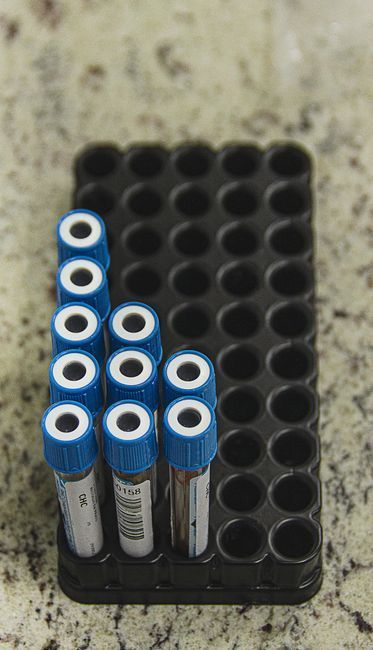 Hommage · Gangnam
Hommage Women's Clinic · Gangnam, Seoul
Blood tests are ordered when your history calls for them, not for every woman. Illustrative photo.
Choosing well
How to choose a menopause clinic in Seoul
Menopause care is long-term, so it pays to choose a doctor you can return to. Use these questions at any clinic, including ours:
- Is care led by an OB/GYN specialist? Menopause treatment should be prescribed and reviewed by a doctor, not sold as a package.
- Do they take a full history first? Clots, migraine, breast and family history change which options are safe.
- Are both hormonal and non-hormonal options explained? A balanced discussion is a good sign.
- Do they use regulated, licensed medicines? Be wary of custom-compounded hormone mixes.
- Is there a follow-up plan? Expect a review around 3 months, then at least yearly.
What affects the cost of menopause treatment in Seoul?
Cost depends on which tests you need (blood tests, hormone testing , ultrasound, bone density), the type of medicine and how long a supply you take, and how many follow-up visits you have. Patients enrolled in Korea's National Health Insurance are covered for many medical tests and treatments; visitors without coverage pay directly. You receive a written explanation of costs before any test or treatment.
Your visit
What to expect at your menopause appointment
01
Consultation
Dr. Park asks about your periods, symptoms, sleep, mood, sexual health, family history and any medicines or supplements you take.
02
Exam and tests
Blood pressure, a pelvic exam if needed, and ultrasound or blood tests when your history calls for them.
03
Your plan
We go through the benefits and risks of each option and agree on a plan that fits your health and preferences.
04
Follow-up
A review about 3 months after you start, then at least yearly, to adjust doses or change approach.
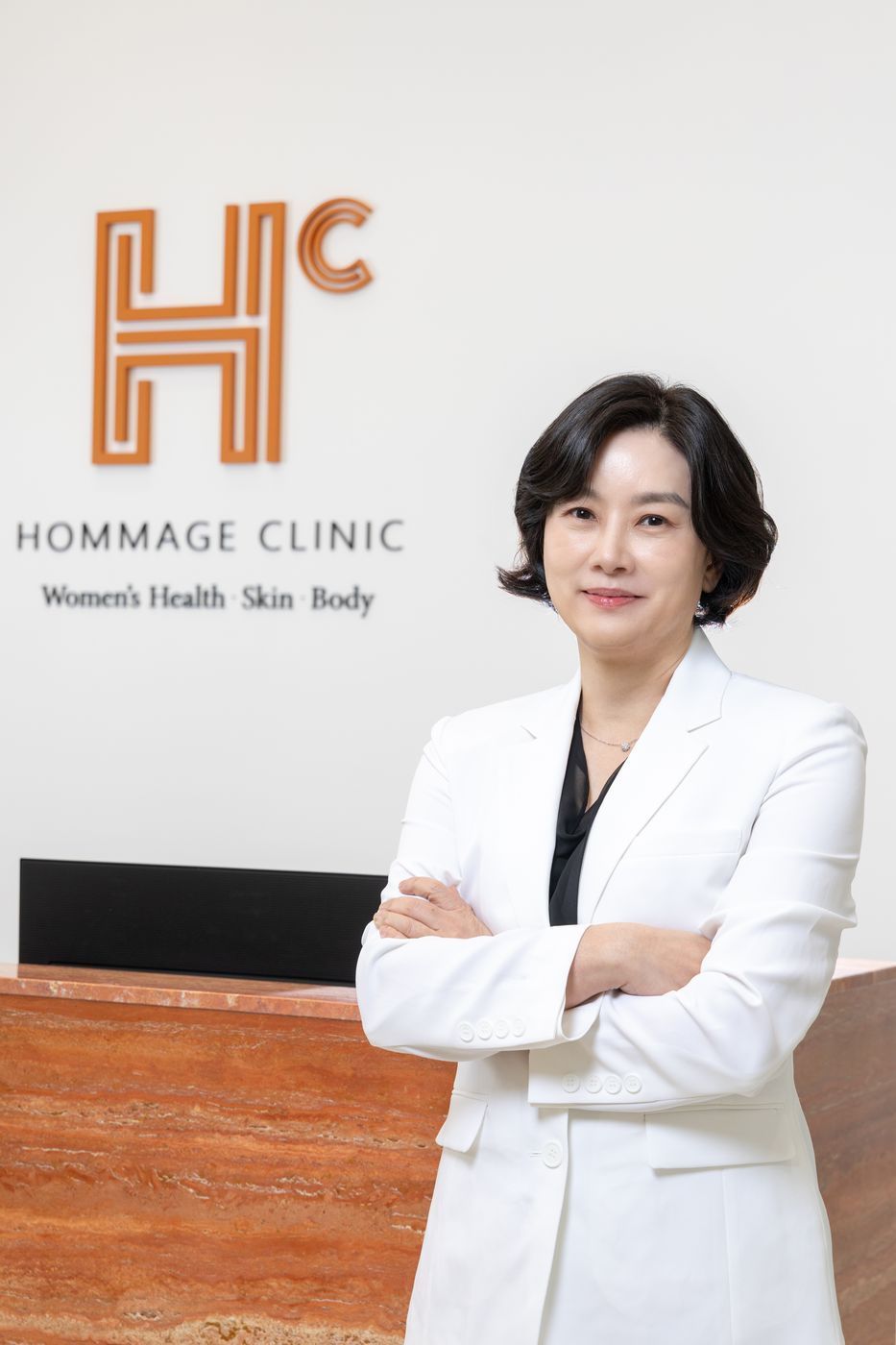
Your doctor
Dr. Park Yuna
Medical Director · OB/GYN Specialist
Dr. Park treats menopause as a stage of life to plan for, not only a set of symptoms. She weighs each treatment against your personal health history and reviews the plan as your needs change over the years.
OB/GYN specialist (Korea) and representative director of Hommage Clinic. Leads women's health care, labiaplasty and other cosmetic gynecology procedures.
Menopause: frequently asked questions
At what age does menopause usually start?
Most women reach menopause between 45 and 55, with an average age of around 50. Perimenopause symptoms can start several years earlier, often in the mid-40s. Menopause before 40 is not typical and should always be checked, because it may be premature ovarian insufficiency and usually needs hormone replacement.
How long do menopause symptoms last?
Hot flashes and night sweats last about seven years on average, and some women have them for more than ten years. Vaginal dryness and urinary symptoms tend to continue or worsen without treatment. Because symptoms can last a long time, it is worth treating them rather than waiting for them to pass.
Do I need a blood test to confirm menopause?
Usually not, if you are over 45 and have typical symptoms. Diagnosis is based on your age, cycle history and symptoms, because hormone levels change from day to day during perimenopause. Blood tests are useful if you are under 45, have had a hysterectomy, or use hormonal birth control.
Is hormone therapy safe for menopause?
For most healthy women under 60, or within 10 years of their last period, the benefits of hormone therapy for symptoms and bone health outweigh the risks. It is not suitable for everyone, for example after breast cancer or a blood clot. Learn more on our hormone replacement therapy page.
Can I still get pregnant during perimenopause?
Yes. Ovulation can still happen even when periods are irregular. General guidance is to keep using contraception until you have had no periods for 12 months if you are over 50, or for 2 years if you are under 50. Some birth control options can also help control irregular bleeding.
Can foreigners get menopause treatment in Seoul?
Yes. International patients and foreign residents can book at Hommage Clinic; please bring your passport or residence card for registration. Bring a list of your current medicines and any previous test results. Contact us before your visit to arrange language support if you need it.
What is the difference between perimenopause and menopause?
Perimenopause is the transition before your last period, when hormones swing up and down and periods become irregular. Menopause is the final period itself, confirmed after 12 months without bleeding. Symptoms often start in perimenopause, and treatment can begin then if they affect your life.
Is it too late to start hormone therapy after 60?
Not automatically, but the balance changes. Guidelines find the benefits clearest when hormone therapy starts under 60 or within 10 years of menopause. After that, risks of stroke, blood clots and heart disease are higher, so Dr. Park reviews your health carefully and may suggest a lower dose, a skin patch or gel, or non-hormonal options instead.
How long can I stay on menopause hormone therapy?
There is no fixed cut-off. Current guidelines advise using hormone therapy for as long as the benefits outweigh the risks for you, with a review at least once a year. Symptoms can return after stopping, so if you decide to stop, the dose is usually reduced gradually.
Are there non-hormonal treatments for menopause?
Yes. Low-dose SSRIs or SNRIs, gabapentin and menopause-specific cognitive behavioral therapy all reduce hot flashes, though less than hormones. Newer medicines that act on the brain's temperature centre are approved in some countries. For vaginal dryness, moisturizers and lubricants are first-line. See hot flashes treatment for details.
Do herbal supplements or soy help menopause symptoms?
The evidence is weak. Reviews by the Menopause Society and the Korean Society of Menopause found that soy isoflavones, black cohosh and similar products give little or no benefit over placebo for most women, and quality varies between brands. Tell your doctor about any supplement you take, as some interact with medicines.
Will menopause treatment help with weight gain?
Weight changes around menopause are driven mostly by age, loss of muscle and lifestyle, and hormone therapy is not a weight-loss treatment. Regular strength exercise and a balanced diet matter most. The Menopause Society notes that losing weight may also reduce hot flashes for some women.
Does menopause treatment protect my bones?
Hormone therapy started under 60 prevents bone loss and lowers fracture risk, but the protection fades within a few years of stopping. Exercise, calcium, vitamin D and a bone density scan when you have risk factors are important whichever treatment you choose.
References
Sources used for this page, reviewed by Dr. Park Yuna, OB/GYN specialist. Read our editorial and medical review policy.
- Korean Society of Menopause. The 2025 menopausal hormone therapy guidelines. J Menopausal Med. 2025;31(2):53–84. PMC
- The 2022 hormone therapy position statement of The North American Menopause Society. Menopause. 2022;29(7):767–794. doi:10.1097/GME.0000000000002028. PubMed
- The 2023 nonhormone therapy position statement of The North American Menopause Society. Menopause. 2023;30(6):573–590. doi:10.1097/GME.0000000000002200
- The 2020 genitourinary syndrome of menopause position statement of The North American Menopause Society. Menopause. 2020;27(9):976–992. PubMed
- Avis NE, Crawford SL, Greendale G, et al. Duration of menopausal vasomotor symptoms over the menopause transition (SWAN). JAMA Intern Med. 2015;175(4):531–539.
- Shin YJ, Song JY, Kim MJ, et al. Relationship between age at last delivery and age at menopause: the Korea National Health and Nutrition Examination Survey. Obstet Gynecol Sci. 2017;60(4):362–368.
- National Institute for Health and Care Excellence. Menopause: identification and management (NG23). Updated November 2024.
This page is general information and does not replace a personal consultation. Illustrations are original works of Hommage Women's Clinic, Gangnam, Seoul; photos marked illustrative are not of patients.
Related menopause and women's health care
Hot Flashes Treatment
Hormonal and non-hormonal options for hot flashes and night sweats.
Hormone Replacement Therapy
An in-depth look at HRT benefits, risks and the types of estrogen and progestogen.
Vaginal Dryness Treatment
Moisturizers, vaginal estrogen and other treatments for dryness and discomfort.
Urinary Incontinence
Why bladder leakage happens after childbirth and menopause, and how it is treated.
Well-Woman Exam
A regular check-up covering screening, breast health, contraception and wellbeing.
Skin Changes and Hormones
How menopause and other hormonal changes affect skin, pigmentation and hair.
Plan your menopause care with a specialist
Book a consultation with Dr. Park Yuna in Gangnam to review your symptoms and discuss every treatment option, hormonal and non-hormonal.
Hommage Clinic · 4F, Building A, 509 Gangnam-daero, Seoul (near Sinnonhyeon Station) · Mon & Fri 10:00–20:00 · Tue–Thu 10:00–19:00 · Sat 10:00–15:00