
Skin & Aesthetics · Pigmentation
Age Spot Removal in Seoul for Flat and Raised Spots
Age spot removal is the treatment of brown spots that build up with age on the face, hands and arms, including flat sun-related spots (lentigines) and raised, waxy seborrheic keratoses, usually with a pigment laser or a precise ablative laser. At Hommage Clinic in Gangnam, Seoul, Dr. Hwang Seonhwa identifies each spot type first, then matches the method to it.
Quick answer
Age spot removal treats the harmless brown spots that build up with age: flat solar lentigines and raised seborrheic keratoses. At Hommage Women's Clinic in Gangnam, Seoul, Dr. Hwang Seonhwa examines every spot first, then uses a pigment laser (pico or Q-switched) or IPL for flat spots and a precise CO2 or Er:YAG laser for raised ones. A session usually takes 10–30 minutes, crusts lift in about 7–14 days, and the final skin tone settles over 1–3 months.
Key takeaways
- "Age spot" covers two different things: flat sun spots and raised seborrheic keratoses. They are removed in different ways.
- Any spot that is changing, irregular or bleeding is checked first, and is never lasered before a diagnosis.
- Flat spots often need 1–2 sessions; raised spots usually clear in one.
- Temporary darkening after treatment is more common in Asian skin, so sun protection for at least 3 months is part of the treatment.
- Treated spots rarely return in the same place, but new spots can appear with age and sun exposure.
Infographic
Age spot removal in numbers
Treatment time
Depends on the number and type of spots.
Sessions for flat spots
Raised spots usually need one, sometimes a touch-up.
Crusts lift
Healing on the hands is slower than on the face.
Daily for 3 months
Lowers the risk of the area darkening again.
Clinical trials reviewed
3,234 people in a 2025 systematic review of lentigo treatments.
Have seborrheic keratoses by 70
About 30% by age 40 (British Association of Dermatologists).
Age spot removal at a glance
| Key fact | Details |
|---|---|
| Treatment time | Usually 10–30 minutes, depending on the number of spots |
| Anesthesia | Numbing cream for flat spots; local anesthetic injection may be used for raised spots |
| Sessions | Flat spots: often 1–2. Raised spots: usually 1, sometimes a touch-up |
| Downtime | Crusts for about 7–14 days; raised-spot sites stay pink for several weeks |
| Results visible | After crusts fall off; final skin tone settles over 1–3 months |
| How long results last | Treated spots rarely return in the same place, but new spots can form with age and sun |
| Reviewed by | Dr. Hwang Seonhwa, physician for skin and aesthetic treatments |
Age spot removal may suit you if you have
- Flat brown spots on the cheeks, temples or backs of the hands
- Raised, rough or waxy brown spots that look stuck on the skin
- Spots that catch on clothing, makeup brushes or glasses
- Spots a doctor has confirmed are benign
Have a spot evaluated first if it is
- New and growing quickly, or changing in shape, size or color
- Irregular, multicolored, or has a blurred or notched border
- Bleeding, itchy, sore or not healing
- Different from all your other spots (the “ugly duckling” sign)
What are age spots?
“Age spots” is an everyday name for several harmless brown spots that become more common from middle age. The two main types are:
- Solar lentigines: flat, sharply outlined brown spots caused by years of UV exposure, often on the face and the backs of the hands. These are explained in depth on our sun spot treatment page.
- Seborrheic keratoses: raised, rough or waxy spots that look “stuck on” the skin, ranging from light tan to dark brown. They are very common, largely genetic and not caused by the sun alone.
Skin also changes with hormones: after menopause , lower estrogen makes skin thinner and drier, so spots can look more prominent. Both types are benign and do not turn into cancer. People usually remove them because of appearance or because raised spots catch and get irritated.
Is it an age spot or something else?
Most brown spots in adults are harmless, but a few skin cancers, including melanoma and pigmented basal cell carcinoma, can look like an age spot. A doctor's examination with magnification (dermoscopy) separates them.
Warning signs follow the ABCDE rule: A symmetry, irregular B order, uneven C olor, D iameter over about 6 mm, and E volving size, shape or color. Any spot with these features, or one that bleeds or does not heal, needs proper evaluation and possibly a biopsy before any removal. Laser destroys tissue, so it is never used on a spot that could need a pathology report. See our page on laser mole removal for how suspicious lesions are handled.
How are age spots removed?
The method depends on whether the spot is flat or raised. Your doctor will explain which option fits each spot.
Flat age spots (lentigines)
- Pigment laser: a pico laser or Q-switched 532 nm laser shatters the pigment, often in 1–2 sessions.
- IPL: treats many scattered spots and redness at once, with more sessions. See IPL .
Raised age spots (seborrheic keratoses)
- Ablative laser: a CO2 or Er:YAG laser removes the raised layer precisely, usually in one session. Learn more about CO2 laser technology.
- Cryotherapy or curettage: freezing or gently scraping the spot, used on some body areas.
Topical retinoids and sunscreen help prevent new flat spots but do not remove raised ones.
What is recovery like after age spot removal?
Recovery is short but visible. After pigment laser, flat spots darken and flake off in about 7–10 days. After ablative laser on raised spots, a small shallow wound forms a scab that comes off in about 7–14 days, leaving pink skin that fades over several weeks to a few months.
- Wound care: keep treated spots clean and covered with ointment or a hydrocolloid patch as advised; do not pick scabs.
- Sun protection: use broad-spectrum SPF 30 or higher daily for at least 3 months to lower the risk of darkening.
- Hands: healing on the backs of the hands is often slower than on the face, so allow extra time.
Risks and possible side effects
Age spot removal is a minor procedure, but side effects are possible and are discussed before treatment.
- Post-inflammatory hyperpigmentation: temporary darkening, more common in Asian skin and with sun exposure, usually fading over weeks to months.
- Hypopigmentation: lighter marks, more likely after cryotherapy or deeper ablation.
- Scarring or texture change: uncommon, more likely with deep or large raised spots, picking, or infection.
- Incomplete removal needing a second session, and infection in rare cases.
Contact the clinic if a treated spot becomes increasingly red, swollen, painful or oozes, or if it has not healed after about two weeks.
Age spot removal at Hommage Clinic
At Hommage Clinic in Gangnam, a short walk from Sinnonhyeon Station, Dr. Hwang Seonhwa examines each spot before deciding how to treat it, and any lesion that looks atypical is referred for biopsy or specialist dermatology review instead of being lasered. Flat and raised spots are often treated in the same visit with different methods, planned and performed by a physician. Walk-ins are welcome during opening hours; see our otherskin and aesthetic treatments.
Cost depends on the number, size and type of spots and the methods used. Cosmetic removal of benign spots is not covered by National Health Insurance, and you receive a written quote before treatment.
Know your spot
Flat vs raised age spots: why the type decides the treatment
The single most useful step in age spot removal happens before any laser is switched on: working out what kind of spot you have. A flat age spot (solar lentigo) is extra pigment sitting at the base of the top skin layer, with a smooth surface. A raised age spot (seborrheic keratosis) is a small overgrowth of skin cells that sits on top of the skin, often with a rough, waxy or "stuck-on" feel. They can sit side by side on the same cheek and look similar from a distance, but they respond to completely different treatments.
A pigment laser aimed at a raised spot may lighten its color but leaves the bump behind. An ablative laser used on a flat spot removes more tissue than needed and raises the risk of marks. That is why Dr. Hwang examines each spot under magnification and plans the method spot by spot, often treating flat and raised spots in the same visit with different settings.
| Compare | Flat age spot (solar lentigo) | Raised age spot (seborrheic keratosis) |
|---|---|---|
| Feels like | Smooth; you cannot feel the edge | Rough, waxy or slightly greasy; sits on top of the skin |
| Main cause | Years of UV exposure | Largely age and inherited tendency; sun may contribute |
| Usual treatment | Pico or Q-switched pigment laser, or IPL for many small spots | CO2 or Er:YAG laser; sometimes freezing or gentle scraping |
| Typical sessions | 1–2 | Usually 1, sometimes a touch-up |
| Healing | Spot darkens and flakes off in about 7–10 days | Shallow scab lifts in about 7–14 days, then pink skin fades |
Mechanism
How does laser age spot removal work?
Pigment lasers work on a simple idea called selective photothermolysis: a wavelength of light that brown pigment absorbs far more strongly than the surrounding skin. Apico laserdelivers that energy in pulses lasting trillionths of a second, and a Q-switched laser in billionths of a second. The pigment heats and breaks into tiny fragments before much heat can spread to nearby tissue.
Over the next few days the treated spot usually turns darker and forms a thin micro-crust, which flakes away on its own, taking much of the pigment with it. The body clears the remaining fragments over the following weeks.IPLworks in a similar way with a broad band of light, treating many scattered spots and redness at once over several sessions.
Raised spots need a different approach. An ablative CO2 or Er:YAG laser removes the thickened layer of cells in thin, controlled passes, stopping at the level of the surrounding skin. The goal is to take away the bump without going deeper than necessary, which keeps the risk of a mark low.
 Hommage · Gangnam
Hommage Women's Clinic · Gangnam, Seoul
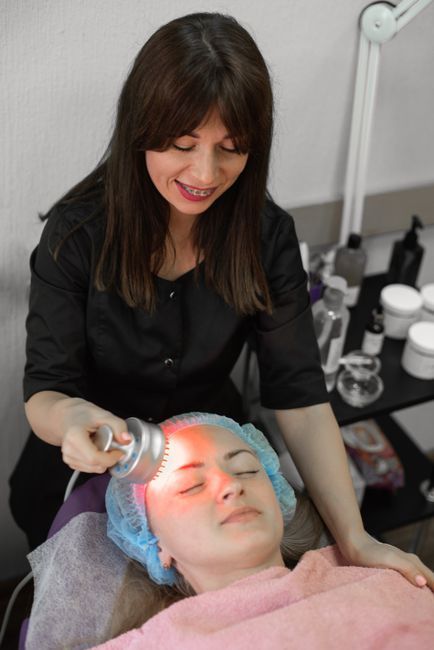
Flat age spots are treated with short laser pulses aimed only at the pigment. Illustrative photo.
 Hommage · Gangnam
Hommage Women's Clinic · Gangnam, Seoul
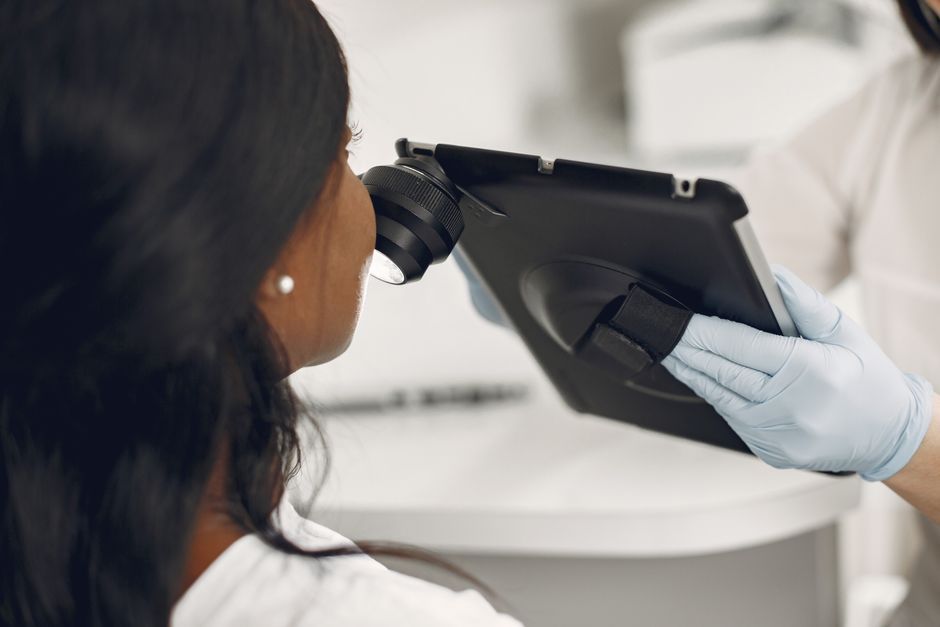
Every spot is checked under magnification before it is treated. Illustrative photo.
Safety first
Which brown spots should not be lasered straight away?
Laser destroys the tissue it treats, so nothing is left to send to a laboratory afterward. For a harmless age spot that is fine. For a spot that could be a skin cancer, it is not, because treating the surface can hide a problem that keeps growing underneath. The American Academy of Dermatology notes that when a growth looks like it could be skin cancer, removing it and checking it under a microscope is the only way to be sure.
Dr. Hwang sorts every spot into one of three groups at your first visit:
Typical benign spot
Even color, clear edge, looks like your other spots and has been stable. Can usually be treated the same day.
Unclear spot
Some features are uncertain. It may be photographed and rechecked, or treated more cautiously later.
Suspicious spot
Changing, irregular, bleeding or the "ugly duckling". Referred for biopsy or specialist review, never lasered first.
Healing
Age spot removal recovery timeline, day by day
Age spot removal has little downtime in the sense of time off work, but the healing is visible. Treated spots usually look darker for the first days, crusts lift within one to two weeks, and the skin underneath can stay pink for several weeks before it blends in. Plan treatment around events and photos, and remember that the area looks worse before it looks better.
Aftercare
Age spot removal aftercare: do's and don'ts
The weeks after treatment decide much of the final result. In Asian skin, the main risk is post-inflammatory hyperpigmentation: a temporary brown shadow where the spot was, triggered by inflammation and sunlight. Gentle wound care and strict sun protection lower that risk. You receive written instructions before you leave, and you can send photos to the clinic if anything worries you.
Do
- Wash gently with lukewarm water and pat dry
- Keep treated spots covered with ointment or a hydrocolloid patch as advised
- Use broad-spectrum SPF 30+ every day for at least 3 months
- Add a hat or mask outdoors, and reapply sunscreen on the backs of your hands
- Send the clinic a photo if a spot becomes red, swollen or oozes
Don't
- Pick or rub off crusts; let them lift on their own
- Use scrubs, peels, retinoids or vitamin C on treated skin until healed
- Sunbathe, ski or spend long hours outdoors unprotected
- Use saunas or hot baths in the first days
- Book a facial or other laser on the same area without asking first
 Hommage · Gangnam
Hommage Women's Clinic · Gangnam, Seoul
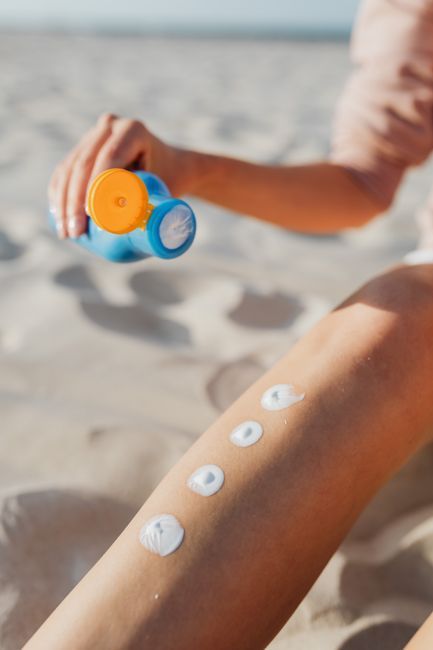
Daily sunscreen is the most important part of aftercare. Illustrative photo.
 Hommage · Gangnam
Hommage Women's Clinic · Gangnam, Seoul
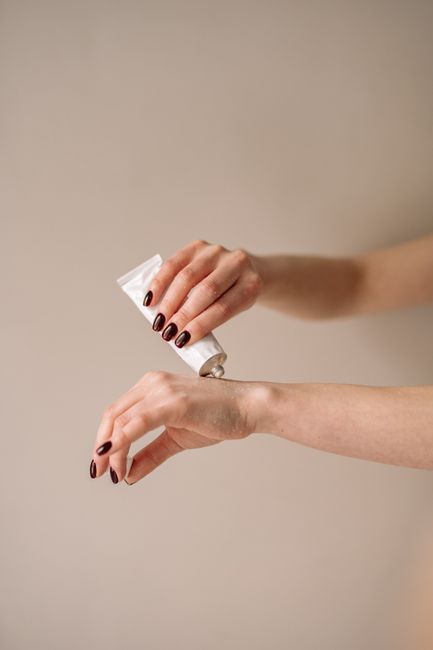
Hands get as much sun as the face but heal more slowly. Illustrative photo.
By area
Age spot removal on the face, hands and arms
Age spots appear wherever skin has had the most sun over the years, which is why the cheeks, temples, forehead, backs of the hands and forearms are the usual places. The treatment principles are the same everywhere, but each area behaves a little differently.
Face
Facial skin has a rich blood supply and heals the fastest, so crusts usually lift within about a week. Because the face is also wheremelasmaandfrecklesappear, Dr. Hwang checks whether any spot is actually melasma, which can worsen with strong pigment-laser shots and is managed differently.
Backs of the hands
The skin here is thinner, is washed many times a day and is hard to keep out of the sun, so healing is slower and the risk of temporary darkening is higher. Settings are kept conservative, you may be asked to wear thin gloves outdoors, and about two weeks of visible crusting is normal.
Arms, neck and chest
These areas heal more slowly than the face and are more prone to lighter or darker marks, so a small test area is sometimes treated first. Raised spots on the body may be better suited to freezing or gentle scraping than to laser, and Dr. Hwang will explain the options.
Evidence
Which age spot treatment works best? What the research says
The best overview of flat age spot treatment is a 2025 systematic review of 41 clinical trials including 3,234 people aged 24 to 92. It found that lasers and IPL generally gave better clearance than creams, peels or freezing, with mostly mild side effects. The figures below are ranges across different trials, not a promise for any single spot: the studies used different devices, settings, skin types and ways of scoring improvement, and many were small.
Evidence for raised spots (seborrheic keratoses) is thinner. Professional bodies such as the American Academy of Dermatology and the British Association of Dermatologists describe freezing, scraping, electrosurgery and laser as accepted options, and note that treatment is optional because the spots are harmless.
Picosecond laser
Range of reported improvement for solar lentigines across trials.
Mardani et al., J Cosmet Dermatol, 2025Intense pulsed light
With fewer cases of post-inflammatory darkening than some methods.
Mardani et al., 2025Q-switched laser
Wide range, reflecting differences in devices and study design.
Mardani et al., 2025Cryotherapy
Freezing helped, but caused more severe side effects than lasers.
Mardani et al., 2025Traveling to Seoul
Age spot removal in Seoul for international patients
Age spot removal fits easily into a short trip, because it is a single visit of under an hour and you can walk around the city afterward. The bigger question is timing: treated spots are visible for one to two weeks, and the new skin needs strict sun protection, so a beach holiday straight afterward is not ideal.
Planning your visit
- Send photos of the spots and your preferred dates by WhatsApp, KakaoTalk or the contact form, and ask for language support if needed.
- Book treatment early in your trip, ideally with at least 7 days left, so the clinic can check healing before you fly.
- Bring your passport, a list of your medicines (including blood thinners, isotretinoin or photosensitizing drugs) and any previous biopsy results.
- Pack a wide-brimmed hat, broad-spectrum sunscreen and thin gloves if your hands are being treated.
After you fly home
Keep using sunscreen daily for at least three months. If you need a touch-up, it can be planned for a later visit, usually after 4–8 weeks. Send photos to the clinic if a spot looks infected or has not healed after about two weeks, and see a local doctor for anything urgent.
 Hommage · Seoul
Hommage Women's Clinic · Gangnam, Seoul
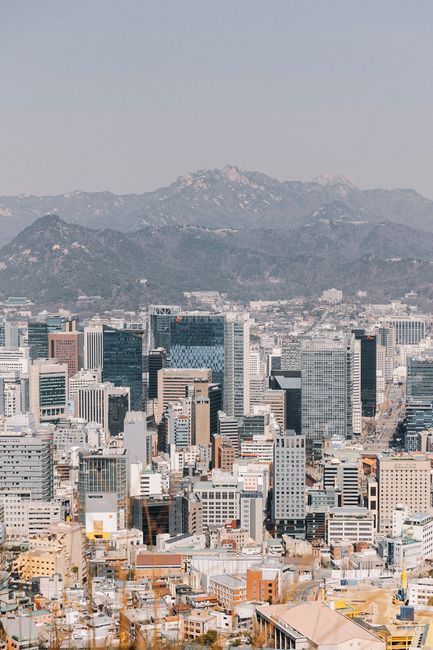
Seoul: the clinic is in Gangnam, a short walk from Sinnonhyeon Station. Illustrative photo.
 Hommage · Gangnam
Hommage Women's Clinic · Gangnam, Seoul
You receive a plan for each spot and a written quote before treatment. Illustrative photo.
Choosing well
How to choose an age spot removal clinic in Seoul
Laser spot removal is widely available in Gangnam, often advertised by the spot. Use these questions at any clinic, including ours:
- Does a physician examine each spot first? With magnification, before any laser is used.
- Do they tell flat from raised spots? And explain why each needs a different method.
- What happens to a suspicious spot? It should be referred for biopsy, not lasered.
- Are melasma and freckles considered? Melasma can worsen with aggressive pigment laser.
- Is aftercare and a review included? Written instructions and a check after 4–8 weeks.
- Is the quote written and complete? Number of spots, methods, touch-ups and follow-up.
What affects the cost of age spot removal?
The cost depends on how many spots you have, their size, whether they are flat or raised, the method used for each (pigment laser, IPL or ablative laser), and whether a touch-up session is needed. Treating many scattered spots across the face may be planned as a whole-face IPL orlaser toningcourse rather than spot by spot. Cosmetic removal of benign spots is not covered by Korea's National Health Insurance, and you receive a written quote before treatment.
Your visit
What to expect at your age spot appointment
01
Examination
Dr. Hwang checks each spot with magnification, separates flat and raised spots, and flags anything that needs a biopsy first.
02
Numbing
Numbing cream is applied, and a small local anesthetic injection may be used for raised spots.
03
Removal
Flat spots are treated with pigment laser and raised spots with precise ablative laser, usually within 10–30 minutes.
04
Wound care and review
You leave with ointment or patches and written instructions; a check is usually booked after 4–8 weeks.

Your doctor
Dr. Hwang Seonhwa
Physician · Skin & Aesthetic Treatments
Dr. Hwang separates flat and raised spots before choosing a method, refers any atypical-looking lesion for proper evaluation, and keeps treatment depth conservative to limit marks on the face and hands.
Physician for face and skin procedures, including lifting, laser and skin-improvement treatments, planned around facial proportions and skin condition.
Age spots: frequently asked questions
Can age spots turn into cancer?
No. Solar lentigines and seborrheic keratoses are benign and do not become cancer. However, some skin cancers can look like an age spot, and sun-damaged skin has a higher skin cancer risk overall. Any spot that is changing, irregular, bleeding or unlike your others should be examined before removal.
Do age spots come back after removal?
A spot that has been fully removed rarely returns in the same place, although a faint shadow can reappear with sun exposure. New spots may form elsewhere as skin ages, especially with ongoing sun exposure. Daily sunscreen and periodic check-ups help keep the skin clear.
Does age spot removal hurt?
Most people feel quick snapping or brief heat. Numbing cream is used for flat spots, and a small local anesthetic injection may be used for raised spots so the removal itself is not painful. Mild tenderness can last a day or two afterward.
Can age spots on the hands be removed?
Yes. Flat spots on the backs of the hands respond to pigment laser or IPL, and raised spots can be removed with ablative laser or other methods. Healing on the hands is usually slower than on the face, so plan for about two weeks of visible crusting.
Will removing a raised age spot leave a scar?
Most raised seborrheic keratoses are superficial and heal without a noticeable scar, leaving a pink mark that fades over weeks to months. Deeper or larger spots carry a small risk of a mark or texture change. Good wound care and sun protection lower that risk.
Can foreigners get age spot removal in Seoul?
Yes. International visitors and foreign residents can have age spots assessed and treated at Hommage Clinic; bring your passport for registration. Allow 1–2 weeks of healing, and contact us before your visit to arrange language support and book an appointment.
What is the difference between an age spot and a freckle?
Freckles are small, light-brown spots that usually appear in childhood, darken in summer and fade in winter. Age spots (solar lentigines) appear later, are often larger and darker, and stay the same color all year. Both respond to pigment laser, but they are planned differently; see our freckle removal page.
Is age spot removal the same as melasma treatment?
No. Melasma is patchy, hormone-related pigment, usually on both cheeks, that can worsen with strong laser shots. Age spots are separate, well-defined spots. Many people have both, so Dr. Hwang checks for melasma before choosing settings. See melasma treatment.
How many sessions does age spot removal take?
Flat spots often clear in 1–2 pigment laser sessions, while IPL for many scattered spots usually takes a series. Raised spots are usually removed in one session, sometimes with a small touch-up after 4–8 weeks.
Can I wear makeup after age spot removal?
Avoid makeup directly on open or crusted spots until they have healed, usually about a week on the face. You can apply makeup around patches, and over healed pink skin once the crust has lifted. Sunscreen should go on every day.
Can age spots be removed with creams or at home?
Prescription lightening creams and retinoids can fade some flat spots slowly and help prevent new ones, but they do not remove raised spots. Home devices, acids or cutting a spot off yourself risk burns, scars and missing a skin cancer, so have spots examined first.
What is the best season for age spot removal?
Autumn and winter are often easier, because there is less strong sun while the new skin heals. Treatment can be done at any time of year if you can protect the area with sunscreen, a hat or gloves for at least three months.
Is age spot removal covered by insurance in Korea?
Removal of benign age spots for appearance is not covered by Korea's National Health Insurance. A biopsy or treatment of a suspicious lesion may be handled differently. You receive a written quote before any cosmetic treatment.
References
Sources used for this page, reviewed by Dr. Hwang Seonhwa. Read our editorial and medical review policy.
- Mardani et al. Treatment of solar lentigines: a systematic review of clinical trials. J Cosmet Dermatol. 2025. doi:10.1111/jocd.70133. PMC
- American Academy of Dermatology. Seborrheic keratoses: diagnosis and treatment. aad.org
- British Association of Dermatologists. Seborrhoeic keratosis: patient information leaflet. skinhealthinfo.org.uk
- Wood LD, Stucki JK, Hollenbeak CS, Miller JJ. Effectiveness of cryosurgery vs curettage in the treatment of seborrheic keratoses. JAMA Dermatol. 2013;149(1):108–109.
This page is general information and does not replace a personal consultation. Illustrations are original works of Hommage Women's Clinic, Gangnam, Seoul; photos marked illustrative are not of patients.
Related pigment and skin treatments
Sun Spot Treatment
Treatment for flat brown spots caused by years of UV exposure.
Laser Mole Removal
When moles can be removed by laser, and when they need a check or excision first.
Pico Laser Treatment
Ultra-short pulse laser for freckles, sun spots, dermal pigment and texture.
CO2 Laser Resurfacing
Ablative laser for texture, scars and raised benign growths.
IPL
Broad-spectrum light for scattered brown spots and redness in lighter skin.
Menopause Treatment
Care for menopause symptoms, including skin changes that come with lower estrogen.
Get your age spots checked before you treat them
Book a skin assessment with Dr. Hwang Seonhwa in Gangnam to identify flat and raised spots and plan removal that suits your skin and schedule.
Hommage Clinic · 4F, Building A, 509 Gangnam-daero, Seoul (near Sinnonhyeon Station) · Mon & Fri 10:00–20:00 · Tue–Thu 10:00–19:00 · Sat 10:00–15:00