Skin & Aesthetics · Redness & vessels
Broken Capillary Removal in Seoul: Treating Red Thread Veins
Broken capillaries are small, permanently widened blood vessels near the skin surface that show as fine red or purple lines, usually on the nose and cheeks; removal most often uses a vascular laser or intense pulsed light to close them. At Hommage Clinic in Gangnam, Seoul, Dr. Hwang Seonhwa looks for the cause, such as sun damage or rosacea, before recommending a method.
Quick answer
Broken capillary removal closes the small, permanently widened vessels (telangiectasia) that show as red or purple lines on the nose and cheeks, most often with a vascular laser or intense pulsed light. At Hommage Women's Clinic in Gangnam, Seoul, Dr. Hwang Seonhwa first works out the cause, such as sun damage, rosacea, hormones or steroid creams, then chooses the method. A facial session takes about 10–20 minutes, a few lines often clear in 1–3 sessions, and redness settles in 1–3 days.
Key takeaways
- The vessels are widened, not broken, and creams cannot close them once they have formed.
- Treated vessels usually stay closed; new ones can form if the cause continues.
- Sun protection and calming the skin are as important as the laser for long-term results.
- Many sudden spider-like vessels, or vessels with other symptoms, need a medical check first.
Infographic
Broken capillary removal in numbers
Vessel width
Typical size of facial thread veins.
Session time
For a typical facial area.
Sessions for a few lines
Spaced about 4–6 weeks apart.
Sessions with rosacea
When many fine vessels and background redness are present.
Redness & swelling
Bruising for 1–2 weeks only with some laser settings.
Typical touch-up
If new vessels form over time.
Broken capillaries at a glance
| Key fact | Details |
|---|---|
| What they are | Dilated small vessels (telangiectasia) visible as red, purple or bluish lines; not actually broken |
| Common places | Sides of the nose, cheeks and chin; sometimes the neck and chest |
| Common causes | Sun damage, inherited tendency, rosacea, aging skin, hormones and long-term steroid creams |
| Main treatments | Vascular laser for distinct vessels; IPL for diffuse redness with fine vessels |
| Sessions | Usually 1–3 for a few vessels; more if redness is widespread |
| Recovery | Redness and swelling for 1–3 days; bruising with some laser settings |
| Reviewed by | Dr. Hwang Seonhwa, physician for skin and aesthetic treatments |
Consider an assessment if you have
- Fine red lines on the nose or cheeks that do not fade
- Visible vessels that make you feel you need heavy makeup
- Flushing or persistent redness along with visible vessels
- A single red dot with small branches radiating from it (spider angioma)
See a doctor for a medical check first if you have
- Many new spider-like vessels appearing quickly on the chest, face or arms, especially with tiredness or yellowing skin
- A red spot that bleeds easily, grows or looks different from your other spots
- Redness with a rash, joint pain or feeling unwell
What are broken capillaries?
Broken capillaries are tiny blood vessels that have widened and stayed that way, so they show through the skin as thin red, purple or bluish lines. The medical name is telangiectasia. Despite the common name, the vessels are not broken: their walls have lost elasticity, so they remain dilated instead of tightening again.
They are usually 0.1 to 1 millimeter wide and appear most often on the sides of the nose, the cheeks and the chin. A related pattern is the spider angioma, a central red dot with fine vessels spreading out from it like legs. Broken capillaries are harmless in themselves, but they do not disappear on their own, and creams cannot close them once they have formed.
What causes broken capillaries on the face?
Most facial broken capillaries develop from a combination of inherited tendency and long-term skin damage. Common causes include:
- Sun exposure: UV light weakens collagen around small vessels over years.
- Rosacea: repeated flushing stretches vessels until they stay visible. See rosacea laser treatment .
- Fair or thin skin and aging , which make vessels easier to see.
- Hormonal changes: spider angiomas often appear in pregnancy or with estrogen-containing medicines, and many fade after delivery. See skin care for hormonal changes .
- Long-term use of steroid creams on the face , which thins the skin.
- Heat, wind, alcohol and harsh skin care , such as hot water, scrubs or aggressive peels.
- Injury or pressure , including forceful squeezing of pimples.
Less commonly, many new spider angiomas can be a sign of liver disease, and widespread fine vessels can occur with some connective tissue conditions. If vessels appear suddenly or alongside other symptoms, a medical check comes before any cosmetic treatment.
Broken capillary removal options compared
The usual first choice for facial broken capillaries is a vascular laser, with IPL as an alternative when redness is spread out. Options include:
- Vascular laser: a single wavelength absorbed by blood closes each vessel. Pulsed dye (585–595 nm), KTP (532 nm) and long-pulsed Nd:YAG (1064 nm) lasers suit different vessel sizes and depths.
- IPL: broad-spectrum light that suits diffuse redness with many fine vessels and can also lighten brown spots, though it is less precise for distinct lines.
- Fine-needle electrocautery: a tiny electric current seals individual small vessels. It can work for a few isolated lines but carries a higher risk of small pitted marks than laser.
- Camouflage and skin care: green-tinted primers and concealer hide redness, and a gentle routine prevents worsening, but they do not remove vessels.
Sclerotherapy, an injection treatment, is mainly used for leg veins rather than the face. Dr. Hwang recommends a method after looking at the size, color and number of your vessels and your skin tone.
What happens during treatment, and does it hurt?
Laser removal of facial broken capillaries usually takes 10 to 20 minutes. After cleansing and photographs, you wear eye shields, and the doctor traces each vessel with short pulses while the skin is cooled.
Each pulse feels like a quick, hot snap of a rubber band. Most people do not need numbing cream for small areas, although the sides of the nose can be more sensitive. Fine vessels often vanish or turn gray-blue during treatment, while thicker ones fade over the following weeks.
Do broken capillaries come back after removal?
Vessels that have been closed usually do not reopen, but new ones can form if the underlying causes continue. Sun exposure, rosacea flushing, alcohol, hormonal changes and aging all play a part, so some people return for a touch-up every year or two.
A few isolated lines often clear in one to three sessions spaced four to six weeks apart. Widespread redness with many fine vessels usually needs a longer series. Expect redness and mild swelling for one to three days. With some pulsed dye settings, purple bruising lasts about one to two weeks; non-bruising settings are available but may need more sessions.
Aftercare and prevention
- Apply a cool compress for short periods and avoid rubbing the area.
- Skip saunas, hot baths, hard exercise and alcohol for a few days.
- Use a gentle cleanser and wash with lukewarm, not hot, water.
- Wear broad-spectrum sunscreen every day and avoid tanning.
- Do not use steroid creams on the face unless a doctor has prescribed them for a set time.
If your skin also stings or flakes easily, skin barrier repair can help reduce irritation that worsens redness.
Risks and possible side effects
Laser and light treatments for broken capillaries are well established, but side effects can occur. Expected, short-lived effects are redness, swelling, warmth and, with some settings, purple bruising.
Less common side effects include:
- Blistering or small scabs , which usually heal within one to two weeks.
- Temporary brown marks (post-inflammatory hyperpigmentation), more likely in Asian or tanned skin.
- Light spots or, rarely, small scars or pitted marks, especially after electrocautery or if a blister becomes infected.
- Incomplete clearance , where some vessels need another session.
- Cold sore flare-ups near the mouth in people prone to them.
Eye shields are worn throughout. Contact the clinic promptly if you notice spreading blisters, oozing, increasing pain, signs of infection, or new dark or white patches in the weeks after treatment.
Broken capillary removal at Hommage Clinic
Hommage Clinic is a women's health and skin clinic in Gangnam, a short walk from Sinnonhyeon Station, and welcomes walk-ins during opening hours. Dr. Hwang Seonhwa starts by finding out why the vessels appeared, whether sun damage, rosacea, hormonal change or steroid use, because treating the cause makes results last longer. The method and settings are then chosen for your skin tone and schedule, including whether short-term bruising is acceptable.
Spider veins that appear during pregnancy are usually left until after delivery, and the clinic's gynecology team can help when hormonal factors are involved. Cosmetic removal of broken capillaries is not covered by Korea's National Health Insurance. Cost depends on the area, the number of vessels, the method and the number of sessions, and you receive a written quote before treatment. Browse otherskin and aesthetic treatments.
Mechanism
How broken capillaries form, and how laser removes them
Healthy capillaries widen when you are hot or flushed and then tighten again. When the collagen support around them is weakened, by years of sun, repeated rosacea flushing or thin skin, some vessels stop tightening and stay visible as red lines. Because the problem is in the vessel wall, no cream can make it contract again.
A vascular laser aims light that blood absorbs at the widened vessel. The heat seals the vessel from the inside, and over the next few weeks the body clears it. The surrounding skin is cooled and largely spared, which is why there is no cut and usually only a few days of redness.
Prevention
How to prevent new broken capillaries on the face
Laser removes the vessels you have now; prevention decides how many new ones appear. Most triggers either widen vessels repeatedly (heat, alcohol, flushing) or weaken the skin around them (sun, steroid creams, harsh products). Reducing them protects your result and can slow the need for touch-ups.
- Daily broad-spectrum sunscreen Reapply outdoors, and add a hat in strong sun.
- Lukewarm water only Hot showers and steaming the face widen vessels.
- Gentle, fragrance-free products Skip grainy scrubs and frequent strong peels.
- Hands off pores Forceful squeezing around the nose can damage vessels.
- Short steroid courses only Use facial steroid creams only as prescribed.
- Know your flush triggers Alcohol, spicy food and heat often worsen rosacea.
 Hommage · Gangnam
Hommage Women's Clinic · Gangnam, Seoul
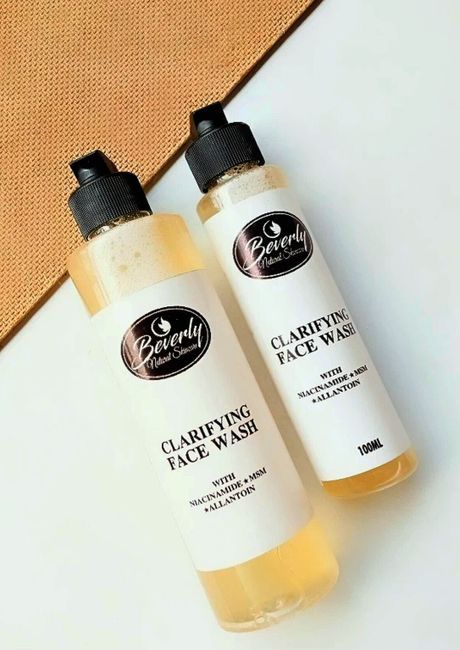
A gentle routine protects the vessel walls you still have. Illustrative photo.
 Hommage · Gangnam
Hommage Women's Clinic · Gangnam, Seoul
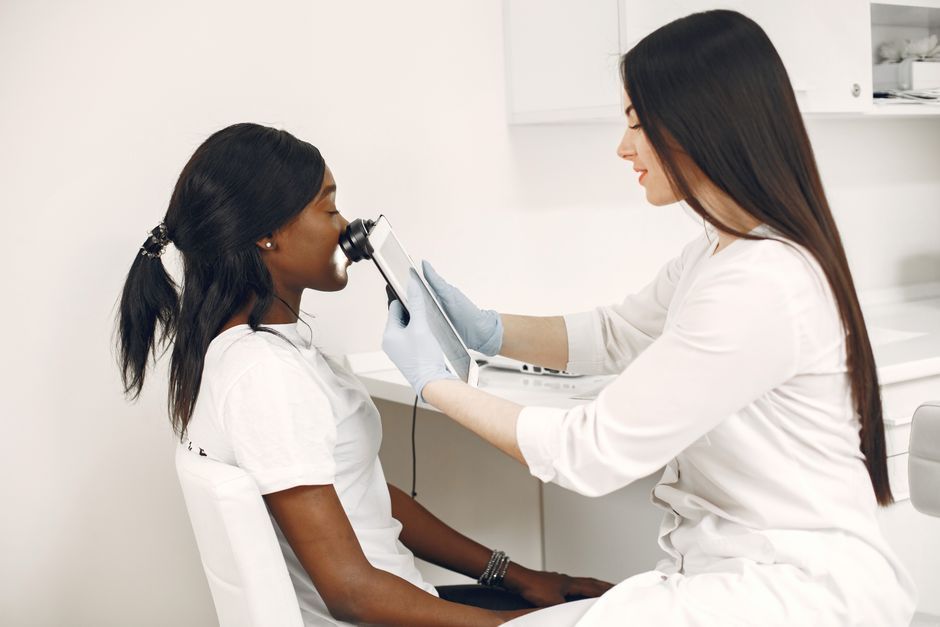
Vessel size, color and your skin tone decide which method fits. Illustrative photo.
Compare
Laser vs IPL vs electrocautery for broken capillaries
All three methods close vessels with heat, but they deliver it differently. The cards below summarize when each one fits. DermNet notes that older electrosurgery has largely been replaced by light-based treatments, which are less painful and safer, and that blue vessels such as larger ones at the side of the nose are harder to treat with light.
Vascular laser
- Precise for distinct red lines
- 595, 532 or 1064 nm
- Bruising optional
- Good for Asian skin with right settings
IPL
- Broad band of light
- Fine vessels plus brown spots
- Less precise for single lines
- Care needed on tanned skin
Electrocautery
- Fine needle seals one vessel
- For a few tiny isolated lines
- Higher risk of small pitted marks
- Largely replaced by light
Healing
Broken capillary laser recovery, day by day
Recovery after broken capillary laser is short. Most people return to work the same day or the next, with mild redness that makeup can cover once the skin is intact. Thicker vessels keep fading for several weeks, which is why results are judged at the follow-up visit rather than on the day.
Between sessions
Covering broken capillaries while you are being treated
Most people want to look normal at work during a course of treatment. Camouflage does not remove vessels, but it can make the weeks between sessions much easier. DermNet notes that makeup can be applied over bruising or small scabs; the key is to wait until any blister has healed and to avoid rubbing.
Simple camouflage steps
- A thin green-tinted primer neutralizes red tones before foundation.
- Dab concealer on individual lines with a fingertip or small brush; avoid wiping across the skin.
- Mineral sunscreen with a tint gives light coverage and sun protection together.
- Remove makeup gently with a mild cleanser and lukewarm water.
When redness is more than vessels
If your face also stings, flushes or reacts to many products, the problem may be rosacea or a weakened skin barrier rather than vessels alone. Treating that first withredness reduction therapyorskin barrier repairoften makes laser more effective and comfortable.
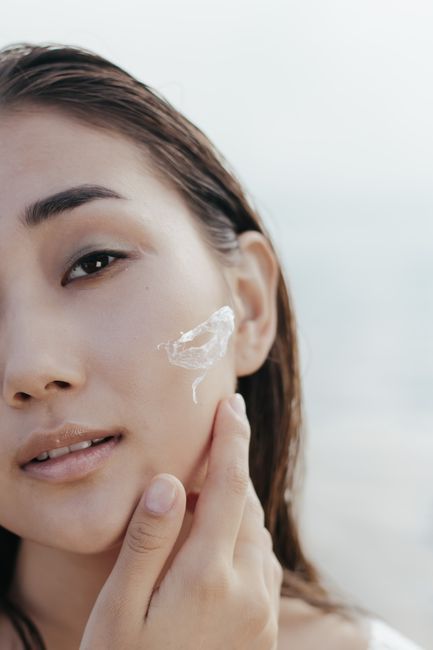 Hommage · Gangnam
Hommage Women's Clinic · Gangnam, Seoul
Color-correcting makeup can hide redness between sessions. Illustrative photo.
Evidence
Does broken capillary laser work? What the research says
Laser and light treatment of facial thread veins has been used for decades and is a standard dermatology option. Most of the comparative research comes from rosacea, where fine vessels and background redness are treated together. That research shows both pulsed dye and 1064 nm Nd:YAG lasers can work, with similar results overall. Randomized split-face trials comparing pulsed dye laser with IPL on the same patients found both effective: one trial in facial telangiectasia found the dye laser cleared more vessels with less pain, while another in rosacea found no significant difference between the two.
Studies pooled
Comparing pulsed dye and Nd:YAG lasers in rosacea redness and vessels.
Li & Wang, Front Med, 2022>50% clearance
68.6% with pulsed dye laser, 71.4% with Nd:YAG; no significant difference.
Li & Wang, Front Med, 2022Between sessions
More extensive facial veins usually need additional treatments about a month apart.
DermNetVessels are harder
Larger blue vessels respond less well to light and may need other approaches.
DermNetExcellent vessel clearance
75–100% clearance of facial thread veins after three split-face sessions: long-pulsed dye laser vs IPL (39 patients). Both worked; pain was lower with the dye laser.
Nymann et al., J Eur Acad Dermatol Venereol, 2010Traveling to Seoul
Broken capillary removal in Seoul for international patients
Because downtime is short, a first session of broken capillary removal fits easily into a visit to Seoul. Hommage Women's Clinic is in Gangnam, a short walk from Sinnonhyeon Station (Line 9 and Shinbundang Line).
Planning your visit
- Send clear daylight photos of the area by WhatsApp, KakaoTalk or the contact form for an early idea of sessions.
- Book early in your stay so redness has settled before you fly; ask for non-bruising settings if you have events.
- A few lines may clear in one visit; widespread redness needs sessions about 4–6 weeks apart, so plan return trips or continue at home with your treatment notes.
- Bring your passport and a list of your medicines and skin products, including any steroid creams.
Avoid beach holidays and saunas straight after treatment. If you notice blisters or dark patches after you fly home, send photos and see a local dermatologist.
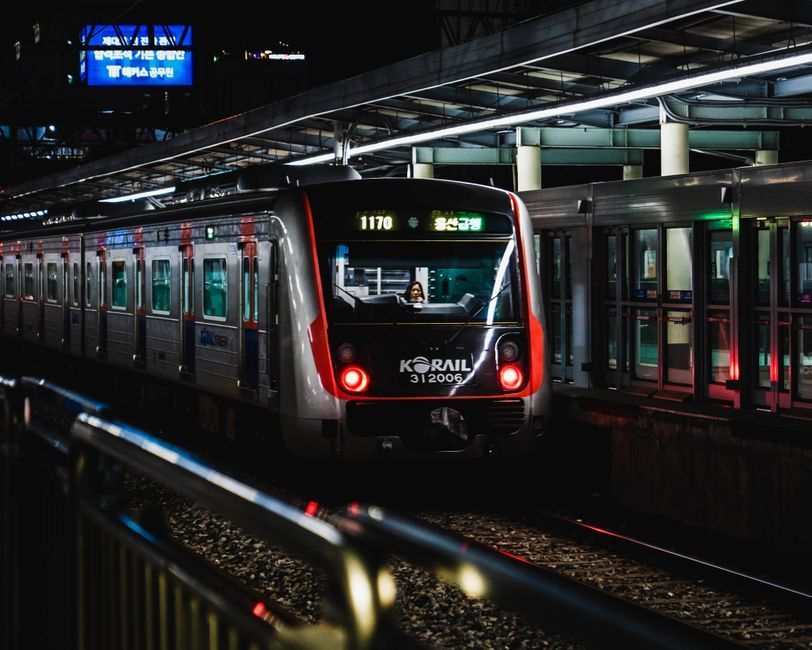 Hommage · Seoul
Hommage Women's Clinic · Gangnam, Seoul
The clinic is a short walk from Sinnonhyeon Station on Line 9 and the Shinbundang Line. Illustrative photo.
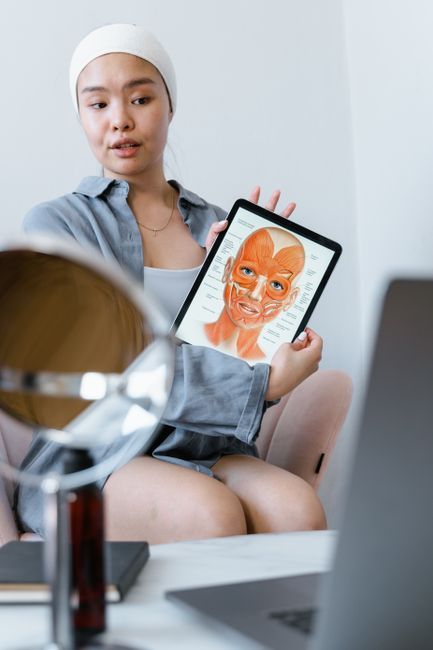 Hommage · Gangnam
Hommage Women's Clinic · Gangnam, Seoul
You receive a written plan and quote before treatment. Illustrative photo.
Choosing well
How to choose a clinic for broken capillary removal
These questions apply at any clinic, including ours:
- Do they look for the cause? Sun, rosacea, hormones or steroid creams change the plan.
- Is the device named? Vascular laser, IPL or electrocautery, and why.
- Are settings adjusted for your skin tone? Important to avoid dark marks.
- Can you choose to avoid bruising? Useful if you have work or travel.
- Is a follow-up included? Results are judged at 4–6 weeks.
- Is the quote written? With the likely number of sessions.
What affects the cost of broken capillary removal?
The main factors are the size of the area (a few lines beside the nose versus both cheeks), the method, the number of sessions and whether rosacea or redness treatment is added. Cosmetic removal is not covered by Korea's National Health Insurance. You receive a written quote after your assessment and before any treatment.
Your visit
What to expect at your appointment
01
Assessment
Dr. Hwang examines the vessels, asks about flushing, sun exposure, skin products, pregnancy and medicines, and checks for signs that need a medical work-up.
02
Choosing a method
Vascular laser, IPL or another option is recommended for your vessel type and skin tone, with the likely number of sessions.
03
Treatment
With eye shields and cooling, each vessel is traced with short pulses. Most facial sessions take 10–20 minutes.
04
Follow-up
Redness settles within days. Progress is reviewed after 4–6 weeks, when any remaining vessels can be treated.

Your doctor
Dr. Hwang Seonhwa
Physician · Skin & Aesthetic Treatments
Dr. Hwang treats broken capillaries by first identifying what caused them, then choosing between a targeted vascular laser and broad-spectrum light according to vessel size, skin tone and how much downtime fits your plans.
Physician for face and skin procedures, including lifting, laser and skin-improvement treatments, planned around facial proportions and skin condition.
Broken capillaries: frequently asked questions
Can broken capillaries go away on their own?
Usually not. Once a small vessel has stayed dilated, it rarely closes again without treatment. Spider angiomas that appear during pregnancy are an exception, as many fade within months after delivery. Gentle skin care and sun protection stop existing vessels from getting worse, but laser or light treatment is normally needed to remove them.
Can a cream remove broken capillaries?
No cream has been shown to close existing broken capillaries. Some prescription creams for rosacea can temporarily reduce redness for several hours by narrowing vessels, and green-tinted makeup can hide them. Products marketed with vitamin K or herbal extracts have little evidence. Laser or IPL is the established way to remove visible vessels.
Is laser for broken capillaries painful?
Most people describe each pulse as a quick, hot snap, like a rubber band flicking the skin. Cooling before each pulse reduces discomfort, and numbing cream is rarely needed for small areas. The sides of the nose and the upper lip tend to be more sensitive. Your doctor can adjust settings if it feels too strong.
How many sessions does broken capillary removal take?
A few isolated vessels often clear in one to three sessions spaced four to six weeks apart. Many fine vessels with background redness, as in rosacea, usually need three to five sessions. Thicker or deeper vessels may need more. Your doctor gives an estimate after examining your skin.
Why do I have broken capillaries on my nose?
The nose is one of the most common places because its skin gets strong sun exposure, its vessels are close to the surface and it is affected by rosacea flushing. Squeezing pores, harsh scrubbing, cold wind and alcohol can add to it. An assessment helps separate simple sun-related vessels from rosacea, which needs its own treatment plan.
Can foreigners get broken capillary removal in Seoul?
Yes. International visitors and foreign residents can book at Hommage Clinic; bring your passport for registration. If your stay is short, ask about settings that avoid visible bruising and allow a few days for redness to settle. Contact us before your visit to arrange language support; you can walk in during opening hours or book ahead for a set time.
Are broken capillaries a sign of a health problem?
Usually not. Most facial thread veins come from sun damage, inherited tendency or rosacea. Many new spider-like vessels appearing quickly, especially with tiredness or yellowing skin, can be linked to liver disease, and widespread fine vessels can occur with some connective tissue conditions. In those cases a medical check comes first.
Is laser or IPL better for broken capillaries?
A vascular laser is more precise for distinct red lines. IPL suits diffuse redness with many fine vessels and can lighten brown spots at the same time. Many people do well with one, and some plans combine both.
Will I bruise after broken capillary laser?
Only with some pulsed dye laser settings, which leave purple bruising for about one to two weeks. Non-bruising settings are available and usually leave only mild redness for one to three days, though they may need more sessions.
Can I wear makeup after treatment?
Usually yes, once the skin is intact, often the next day. Makeup can be applied over bruising or small scabs, but not over blisters or open skin. Apply it gently without rubbing and remove it with a mild cleanser.
Is broken capillary removal safe for Asian skin?
Yes, when the wavelength and energy are adjusted for your skin tone. Asian skin is more prone to temporary brown marks after laser, so Dr. Hwang uses conservative settings and asks you to avoid tanning before and after treatment.
How can I stop new broken capillaries forming?
Wear daily sunscreen, wash with lukewarm water, avoid harsh scrubs and squeezing pores, limit alcohol and heat if you flush easily, and use steroid creams on the face only as prescribed. Treating rosacea, if present, also reduces new vessels.
Is broken capillary removal covered by insurance in Korea?
Cosmetic removal of facial thread veins is not covered by Korea's National Health Insurance. You receive a written quote after your assessment that reflects the area, method and expected number of sessions.
References
Sources used for this page, reviewed by Dr. Hwang Seonhwa. Read our editorial and medical review policy.
- DermNet. Facial red vein and vascular birthmark treatments. dermnetnz.org
- Li Y, Wang R. Efficacy comparison of pulsed dye laser vs. microsecond 1064-nm neodymium:yttrium-aluminum-garnet laser in the treatment of rosacea: a meta-analysis. Front Med. 2022;8:798294. Full text
- Nymann P, Hedelund L, Haedersdal M. Long-pulsed dye laser vs. intense pulsed light for the treatment of facial telangiectasias: a randomized controlled trial. J Eur Acad Dermatol Venereol. 2010;24(2):143-146. PubMed
- Neuhaus IM, Zane LT, Tope WD. Comparative efficacy of nonpurpuragenic pulsed dye laser and intense pulsed light for erythematotelangiectatic rosacea. Dermatol Surg. 2009;35(6):920-928. PubMed
This page is general information and does not replace a personal consultation. Illustrations are original works of Hommage Women's Clinic, Gangnam, Seoul; photos marked illustrative are not of patients.
Related redness and vessel treatments
Vascular Laser
How 595, 532 and 1064 nm lasers close visible vessels, and which suits which vessel.
Rosacea Laser Treatment
Laser for rosacea redness and vessels, as part of a medical treatment plan.
Redness Reduction Therapy
Finding the cause of facial redness and planning a combined treatment.
IPL
Broad-spectrum light for diffuse redness and fine vessels with brown spots.
Skin Barrier Repair
Calming sensitive, stinging skin that makes redness worse.
Skin Care for Hormonal Changes
Why spider veins and redness can appear in pregnancy or with the pill.
Clear the red lines on your nose and cheeks
Book an assessment with Dr. Hwang Seonhwa in Gangnam. We will find out why the vessels appeared and plan a removal method that suits your skin and schedule.
Hommage Clinic · 4F, Building A, 509 Gangnam-daero, Seoul (near Sinnonhyeon Station) · Mon & Fri 10:00–20:00 · Tue–Thu 10:00–19:00 · Sat 10:00–15:00