
Cosmetic Gynecology · Menopause & intimate health
Vaginal Laser Therapy for Dryness, GSM and Mild Bladder Leakage
Vaginal laser therapy uses a fractional CO2 or erbium laser to make tiny, controlled heat injuries in the vaginal lining, prompting it to rebuild thicker, better-hydrated tissue; it is mainly used for dryness and pain from genitourinary syndrome of menopause (GSM). At Hommage Clinic in Gangnam, Seoul, female OB/GYN specialist Dr. Park Yuna offers it after reviewing standard treatments such as vaginal estrogen.
Quick answer
Vaginal laser therapy uses a fractional CO2 or erbium laser to treat the thin, dry vaginal lining of genitourinary syndrome of menopause (GSM). At Hommage Women's Clinic in Gangnam, Seoul, female OB/GYN specialist Dr. Park Yuna offers it after reviewing moisturizers and vaginal estrogen. A course is usually 3 sessions of 10–20 minutes, 4–6 weeks apart, with about 3–7 days without sex. Evidence is mixed: a 2024 meta-analysis found benefit but low certainty, and a 2021 sham-controlled trial found no significant difference.
Key takeaways
- GSM is a medical condition caused by low estrogen; moisturizers and low-dose vaginal estrogen remain first-line.
- Laser is most often considered when estrogen is unsuitable (for example after some breast cancers) or not enough.
- Any bleeding after menopause must be investigated before laser.
- Results, when they occur, often last around 12 months; yearly maintenance may be offered.
Infographic
Vaginal laser therapy in numbers
Per session
Usually no anesthesia; numbing cream at the opening if needed.
Sessions in a course
About 4–6 weeks apart.
No sex or tampons
Mild discharge or spotting is common.
Typical duration
When it helps; maintenance may be offered.
2024 meta-analysis
Less dryness and pain with CO2 laser, but low-certainty evidence.
Women in a sham trial
No significant difference vs sham at 12 months (JAMA, 2021).
Vaginal laser therapy at a glance
| Key fact | Details |
|---|---|
| Main uses | Vaginal dryness, burning and painful sex after menopause (GSM); sometimes mild stress leakage |
| Treatment time | Typically 10–20 minutes per session |
| Comfort | Usually no anesthesia; warmth or tingling; numbing cream at the opening if needed |
| Sessions | Usually 3 sessions about 4–6 weeks apart, then yearly maintenance if helpful |
| Downtime | Minimal; avoid sex and tampons for about 3–7 days |
| Strength of evidence | Still developing; sham-controlled trials show mixed results |
| Reviewed by | Dr. Park Yuna, OB/GYN specialist |
Laser therapy may be worth discussing if you
- Have vaginal dryness, burning or pain during sex since menopause
- Cannot use vaginal estrogen, for example after breast cancer, after discussion with your oncologist
- Have tried moisturizers and vaginal estrogen without enough relief
- Have mild leaking with coughing or exercise and want to add to pelvic floor training
Seek assessment first if you have
- Any bleeding after menopause, which must be investigated before treatment
- Unusual discharge, sores, itching or a suspected infection
- A bulge in the vagina, an abnormal Pap result, or are pregnant
What is vaginal laser therapy?
When estrogen levels fall, most often after menopause but also while breastfeeding or with some cancer treatments, the vaginal lining becomes thinner, drier and less elastic. Doctors call the resulting group of symptoms genitourinary syndrome of menopause (GSM), previously called vaginal atrophy. It can cause dryness, burning, itching, pain during sex and urinary urgency.
Vaginal laser therapy aims to reverse some of these changes. A fractional CO2 or erbium:YAG laser creates thousands of microscopic heat points in the lining, a fraction of a millimeter deep. As these heal, the lining is thought to thicken, form new blood vessels and hold more moisture. This page focuses on medical uses; if your main goal is a tighter feeling after childbirth, see laser vaginal tightening .
What can vaginal laser therapy treat?
Laser therapy is mainly used for symptoms of GSM, and less often for mild bladder leakage.
- Dryness and painful sex after menopause: the most studied use. Read about causes of vaginal dryness and painful intercourse treatment .
- Women who cannot use estrogen: for example after hormone-sensitive breast cancer, laser is sometimes considered when non-hormonal moisturizers are not enough.
- Mild stress urinary incontinence: some studies suggest a modest short-term benefit, but pelvic floor training remains the first-line treatment.
Laser does not treat infections, skin conditions such as lichen sclerosus or prolapse, so these are checked for first.
Does vaginal laser therapy work? What the evidence says
Evidence is still developing. Many early studies reported less dryness and pain, but most were small and lacked a comparison group. More recent randomized trials comparing laser with a sham (placebo) treatment have mixed results: some found little difference between real and sham treatment, while others showed modest improvement. Long-term safety and benefit are not yet established.
In 2018 the US Food and Drug Administration (FDA) warned that energy-based devices had not been cleared for vaginal rejuvenation or for treating menopause-related vaginal symptoms, and that some patients had reported burns, scarring and ongoing pain. Professional bodies including ACOG advise that low-dose vaginal estrogen and moisturizers remain first-line for GSM, and that laser should be discussed openly as an option with limited evidence. Our vaginal dryness treatment page compares these options.
What happens during a session?
Before starting, Dr. Park reviews your symptoms and medical history, examines you, and may take a Pap test or swab. Bleeding after menopause is always investigated before laser.
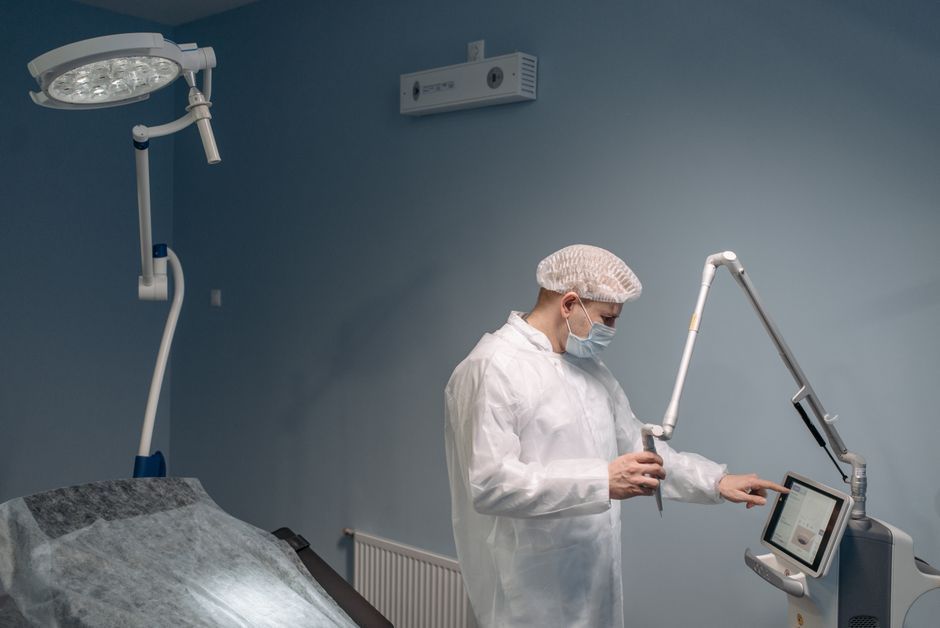
During treatment, a slim, smooth probe is placed in the vagina and moved in small steps to treat the walls evenly; the vaginal opening may be treated separately. A session usually takes 10–20 minutes. Most women feel warmth, vibration or mild tingling. Anesthesia is not usually needed, though a numbing cream can be applied to the opening. You can go home or to work straight afterward.
How many sessions, and how long do results last?
A typical course is 3 sessions about 4–6 weeks apart. Women who notice a benefit usually do so after the second or third session, and effects often last around 12 months, after which a yearly maintenance session may be offered. Not everyone responds.
After each session, mild discharge, warmth or light spotting for a few days is normal. Avoid sex, tampons, baths and swimming for about 3–7 days. Continuing a vaginal moisturizer, and estrogen if suitable, often gives better comfort than laser alone.
Risks and possible side effects
Most side effects are mild and short-lived, but serious complications have been reported. Expected effects include temporary discomfort, swelling, discharge and spotting. Less common risks include:
- Burns, blistering or ulcers in the vagina or at the opening
- Scarring or narrowing, which can make sex painful
- Ongoing pain or worsening of symptoms
- Urinary tract infection or vaginal infection, and flares of genital herpes
- No meaningful improvement despite a full course
Contact the clinic promptly if you have severe or increasing pain, heavy bleeding, fever, blisters or foul-smelling discharge.
Vaginal laser therapy at Hommage Clinic
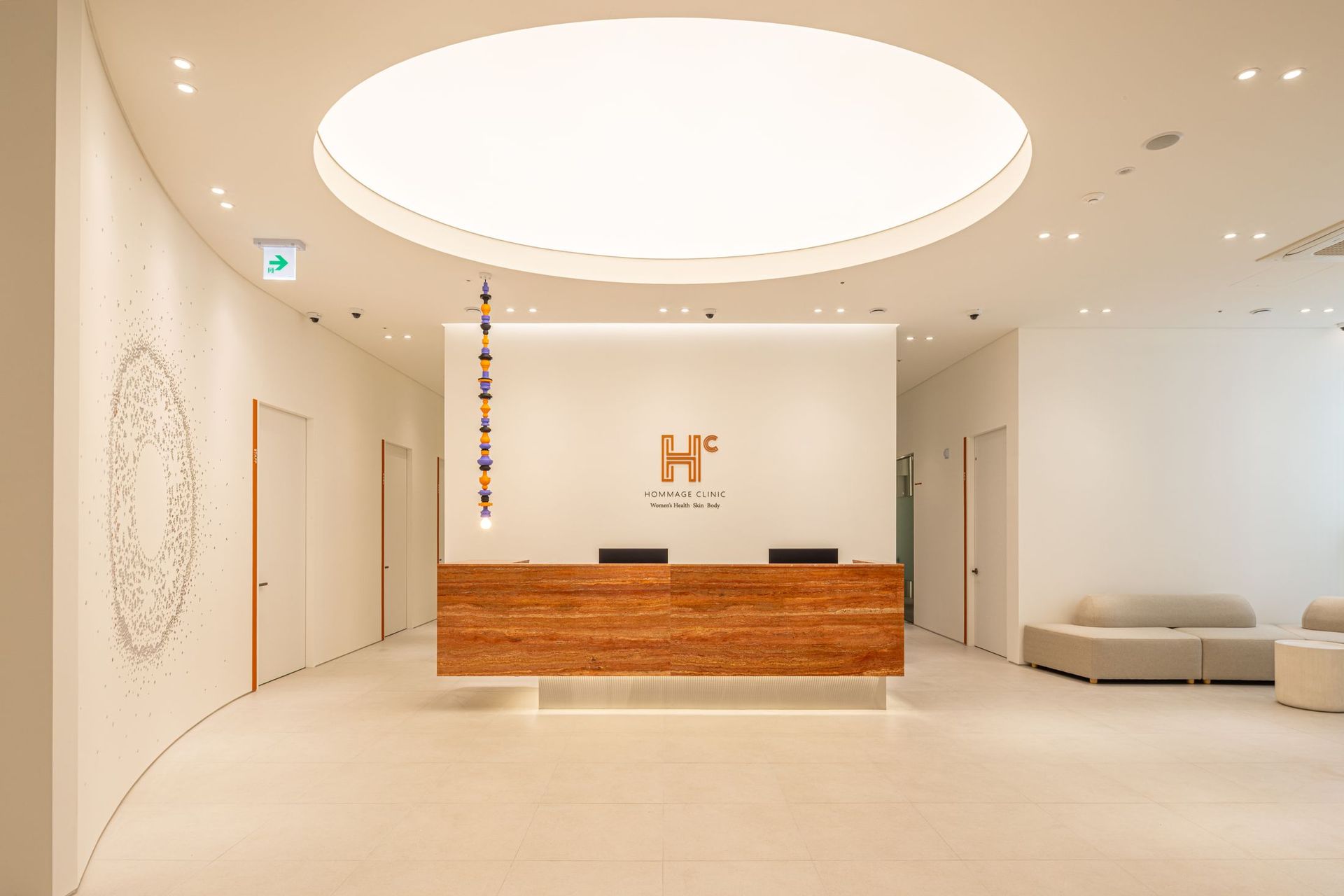
Hommage Clinic is a women's health and skin clinic in Gangnam, a short walk from Sinnonhyeon Station (Line 9 / Shinbundang Line). Dr. Park Yuna, a female OB/GYN specialist, treats GSM as a medical condition first: she reviews moisturizers, vaginal estrogen and menopause treatment with you, and suggests laser when it fits your situation. She recommends a device after assessment and explains plainly what it can and cannot do. Explore all intimate options in the cosmetic gynecology section.
Vaginal laser therapy is generally not covered by Korea's National Health Insurance, while consultations and tests for menopausal symptoms may be covered for enrolled patients. You receive a written quote for a full course before you begin.
Mechanism
How vaginal laser therapy works on the menopausal vaginal lining
Before menopause, estrogen keeps the vaginal lining thick, elastic and well supplied with blood, and it supports the natural moisture and slightly acidic environment that protects against infection. When estrogen falls, the lining becomes thinner, paler and more fragile, with fewer blood vessels. Small tears and inflammation can then cause burning, pain during sex and urinary symptoms.
A fractional laser places a grid of microscopic heat points in the lining, leaving healthy tissue between them. The healing response is thought to thicken the surface layer, stimulate collagen and new small blood vessels, and improve moisture. The diagram shows this idea in simplified form. Whether these tissue changes reliably translate into symptom relief is what the research is still testing.
 Hommage · Gangnam
Hommage Women's Clinic · Gangnam, Seoul
Settings are chosen for the vaginal lining after examination. Illustrative photo.
Compare
Vaginal laser vs vaginal estrogen vs moisturizer for menopausal dryness
For dryness and pain from GSM, the usual order is: a regular vaginal moisturizer and a lubricant during sex; then low-dose vaginal estrogen if symptoms persist; and then other options, including laser, when estrogen is unsuitable or not enough. Laser is not a replacement for this ladder but one step on it, and many women who choose laser still use a moisturizer.
Low-dose vaginal estrogen works locally with very little absorbed into the bloodstream, which is why it is different from whole-body hormone replacement therapy . Women with a history of hormone-sensitive breast cancer should discuss any estrogen with their oncologist; this is the group in whom laser is most often considered.
| Compare | Moisturizer | Vaginal estrogen | Vaginal laser |
|---|---|---|---|
| How it works | Adds water to the lining | Restores thickness and moisture of the lining | Heat injury prompts tissue remodeling |
| Use | Regularly, at home | At home, as prescribed; usually ongoing | 3 sessions, then yearly if helpful |
| Evidence | Helps mild symptoms | Strong; first-line | Low certainty; mixed sham results |
| Main limitation | Not enough for moderate GSM | Symptoms return if stopped; caution after some cancers | Uncertain benefit; rare burns or pain |
 Hommage · Gangnam
Hommage Women's Clinic · Gangnam, Seoul
After breast cancer, options are planned together with your oncology team. Illustrative photo.
Your situation
Vaginal laser therapy after breast cancer and other reasons to avoid estrogen
Vaginal dryness can be especially severe after breast cancer treatment. Chemotherapy can bring on early menopause, and anti-hormone medicines such as aromatase inhibitors lower estrogen further. At the same time, many women are advised to avoid or limit estrogen, including vaginal estrogen, depending on their cancer type and treatment.
For these women, non-hormonal moisturizers and lubricants are the starting point, sometimes with vaginal dilators or pelvic floor physiotherapy for pain. Vaginal laser is one further non-hormonal option that may be considered. Evidence in women with a history of breast cancer is limited, so Dr. Park discusses it only after you have spoken with your oncologist, and she explains both the possible relief and the uncertainty.
Bring a summary of your cancer treatment and current medicines to the consultation. If pain during sex is the main problem, our painful intercourse treatment and low estrogen treatment pages describe further options.
- Your oncologist's view A short note on whether vaginal estrogen is advised against.
- Treatment summary Surgery, chemotherapy, radiotherapy and current anti-hormone medicines.
- What you have tried Moisturizers, lubricants, dilators or physiotherapy, and how they helped.
- Recent screening Your last Pap or HPV test result if you have it.
Timeline
Vaginal laser therapy sessions and results timeline
A typical course follows the pattern below. Women who benefit usually notice it after the second or third session. Dr. Park reviews symptoms after the course using the same questions as at the start, so that you can both judge whether laser has helped enough to continue.
Aftercare
Vaginal laser aftercare and day-to-day comfort with GSM
GSM is a long-term condition: without treatment, symptoms tend to persist or slowly worsen rather than settle on their own. Whatever treatment you choose, a few daily habits make a real difference to comfort, and they also help you get the most out of laser if you have it.
Do
- Use a vaginal moisturizer regularly, not only before sex
- Use a lubricant during sex
- Wear breathable cotton underwear
- Wash the outer area with plain water
- Use a pad for discharge in the days after laser
Avoid
- Sex, tampons, baths and swimming for 3–7 days after laser
- Scented soaps, douches and wipes
- Ignoring bleeding after menopause; get it checked
- Stopping estrogen without discussing it, if prescribed
 Hommage · Gangnam
Hommage Women's Clinic · Gangnam, Seoul
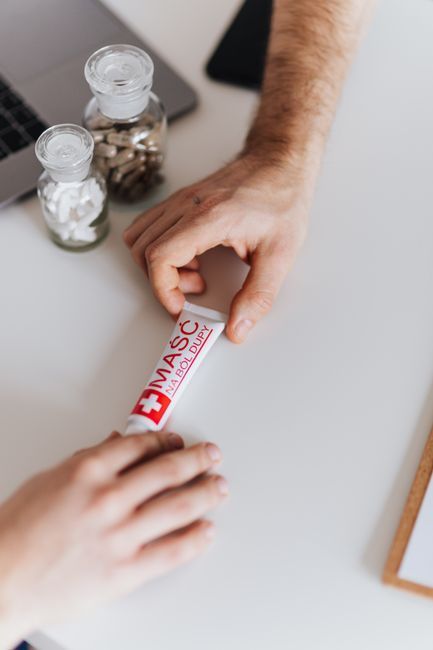
Moisturizers and, where suitable, vaginal estrogen remain part of the plan. Illustrative photo.
Evidence
Is vaginal laser therapy effective for GSM? What the research says
Vaginal laser for GSM has been studied more than laser for tightening, but the results still point in different directions. Pooled analyses that include trials against no treatment or estrogen tend to show improvement; the most rigorous single trial against sham did not. Both kinds of evidence are summarized below so you can weigh them with Dr. Park.
Pooled trials
CO2 laser improved vaginal health scores and reduced dryness, burning and pain during sex; no serious adverse effects reported.
Rev Bras Ginecol Obstet, 2024Certainty of evidence
The same review concluded the evidence was too uncertain to recommend laser for GSM management.
Rev Bras Ginecol Obstet, 2024Women in a sham trial
Three CO2 sessions vs sham; no significant difference in symptoms or quality of life at 12 months.
Li et al., JAMA, 2021Adverse events
Similar numbers in laser and sham groups in that trial, with no severe events.
Li et al., JAMA, 2021Traveling to Seoul
Vaginal laser therapy in Seoul for international patients
A full course of three sessions four to six weeks apart suits women who live in Korea or visit Seoul regularly. On a single trip you can have the consultation, exam, any tests and a first session, then continue other treatment at home. Hommage Women's Clinic is in Gangnam, a short walk from Sinnonhyeon Station (Line 9 and Shinbundang Line).
Before you book
- Send your questions and travel dates by WhatsApp, KakaoTalk or the contact form, and ask for language support if you need it.
- Bring your passport, a list of medicines (including any estrogen or anti-hormone medicines) and allergies, and recent Pap or HPV results.
- If you have had cancer, bring a treatment summary and your oncologist's view on estrogen.
- Tell us about any bleeding after menopause; it needs investigating before laser.
- Allow a couple of days after a session before flying, in case of discharge or questions.
After you fly home
Keep the written aftercare guide and continue moisturizers as advised. For fever, heavy bleeding, blisters or severe pain, see a local doctor straight away.
 Hommage · Seoul
Hommage Women's Clinic · Gangnam, Seoul
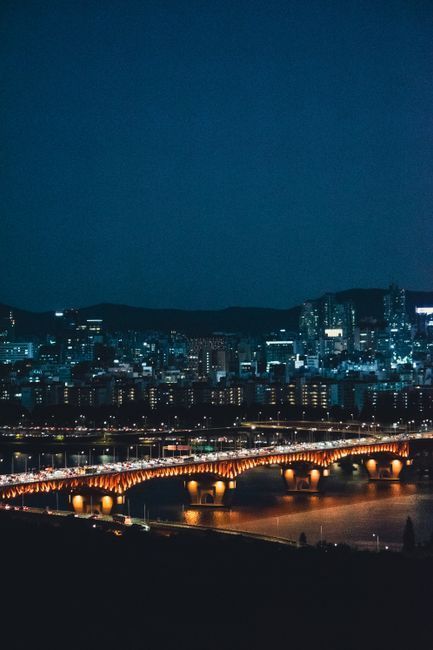
Seoul: the clinic is a short walk from Sinnonhyeon Station. Illustrative photo.
 Hommage · Gangnam
Hommage Women's Clinic · Gangnam, Seoul
Every option for dryness is reviewed before laser is planned. Illustrative photo.
Choosing well
How to choose a clinic for vaginal laser therapy in Seoul
Use these questions at any consultation, including ours:
- Is GSM treated as a medical condition? Moisturizers and vaginal estrogen should be discussed, not skipped.
- Is bleeding after menopause checked first? It must be investigated before any laser.
- Who performs it? A gynecologist should examine you and perform or supervise treatment.
- Do they explain the sham-controlled results? Honest clinics mention that evidence is mixed.
- Is there a review after the course? You should be able to stop if it is not helping.
- Written quote and aftercare plan? Both before you start.
What affects the cost of vaginal laser therapy in Seoul?
The cost depends on the laser type, the number of sessions in the course, whether the vaginal opening is treated as well as the canal, and any tests needed first, such as a Pap smear or infection screening. Consultations and tests for menopausal symptoms may be covered by Korea's National Health Insurance for enrolled patients, but vaginal laser therapy itself is generally not covered. You receive a written quote for the whole course before you begin.
Your visit
Your course of laser therapy
01
Consultation
Dr. Park asks about dryness, pain, bladder symptoms, cancer history and treatments you have tried.
02
Examination
A gentle exam, with a Pap test or swab if needed, rules out infection, skin conditions and other causes.
03
Treatment sessions
Usually 3 sessions of about 10–20 minutes, 4–6 weeks apart, with little or no downtime.
04
Review
Symptoms are reviewed after the course to decide whether maintenance or another treatment makes sense.

Your doctor
Dr. Park Yuna
Medical Director · OB/GYN Specialist
Dr. Park approaches vaginal laser as one option in a menopause care plan, not a stand-alone fix. She makes sure standard treatments such as moisturizers and vaginal estrogen have been considered, discusses laser openly with women who cannot use hormones, and stops treatment if it is not helping.
OB/GYN specialist (Korea) and representative director of Hommage Clinic. Leads women's health care, labiaplasty and other cosmetic gynecology procedures.
Vaginal laser therapy: frequently asked questions
Is vaginal laser therapy painful?
Most women find it tolerable without anesthesia. You may feel warmth, vibration or tingling inside the vagina, and the opening can be more sensitive, so a numbing cream can be applied there. Mild soreness, discharge or spotting for a few days afterward is common and usually settles without treatment.
Is vaginal laser therapy better than vaginal estrogen?
Not according to current evidence. Low-dose vaginal estrogen is well studied and remains the first-line medical treatment for GSM in most women. Trials comparing laser with estrogen show broadly similar short-term symptom relief in some studies, but laser has less long-term data. Laser may be considered when estrogen is unsuitable or not enough.
Can I have vaginal laser therapy after breast cancer?
Sometimes. Women who have had hormone-sensitive breast cancer are often advised to avoid or limit estrogen, so laser is one non-hormonal option that may be considered. Discuss it with your oncologist first, and bring your treatment history. Evidence in this group is limited, so Dr. Park explains the possible benefits and risks carefully.
Does vaginal laser therapy help bladder leakage?
It may help mild stress urinary incontinence in some women, but evidence is limited and benefits seem modest and short-term. Pelvic floor muscle training is the recommended first treatment. More significant leakage needs a full assessment. Read more about urinary incontinence and its treatment options.
How long do vaginal laser therapy results last?
When women do benefit, relief often lasts around 12 months after a course of three sessions, and a yearly maintenance session may be offered. Long-term studies are still limited, and responses vary. Using a vaginal moisturizer regularly, and estrogen where suitable, can help maintain comfort between sessions.
Can foreigners get vaginal laser therapy in Seoul?
Yes. International patients and foreign residents can book at Hommage Clinic in Gangnam. Bring your passport, a list of medicines and any relevant history, such as cancer treatment. Contact us before your visit to arrange language support. Because a course involves sessions 4–6 weeks apart, share your travel plans so we can plan around them.
What is genitourinary syndrome of menopause (GSM)?
GSM is the group of vaginal, vulvar and urinary symptoms caused by low estrogen, previously called vaginal atrophy. It includes dryness, burning, itching, pain during sex and urinary urgency or repeated infections. Unlike hot flashes, it usually does not improve on its own over time. See vaginal dryness and menopause treatment.
Does vaginal laser therapy work better than a sham treatment?
The evidence is mixed. A 2021 trial in 85 postmenopausal women found no significant difference between three CO2 laser sessions and sham at 12 months. A 2024 meta-analysis of 12 randomized trials found improvements with CO2 laser but rated the evidence as low certainty. Dr. Park explains these results before you decide.
Can I use vaginal estrogen and laser together?
Often yes, if estrogen is suitable for you. Many women continue a moisturizer, and some continue vaginal estrogen, alongside laser. You may be asked to pause creams for a few days around each session. Dr. Park tailors this to your situation.
Is vaginal laser therapy safe?
Side effects are usually mild, such as discharge, spotting or warmth for a few days, and in the 2021 sham-controlled trial adverse events were similar with laser and sham. However, the FDA has received reports of burns, scarring and ongoing pain with energy devices, so treatment should be performed carefully after an exam.
Should bleeding after menopause be checked before laser?
Yes, always. Any bleeding after menopause needs investigation, usually with an exam and pelvic ultrasound, before any vaginal laser treatment.
Can younger women with dryness have vaginal laser?
Dryness in younger women is often temporary, for example while breastfeeding or with some contraceptives or medicines, and usually responds to treating the cause, moisturizers or a short course of vaginal estrogen. Laser is rarely needed in this group. See vaginal dryness treatment.
Is vaginal laser therapy covered by insurance in Korea?
Vaginal laser therapy is generally not covered by Korea's National Health Insurance, while consultations and tests for menopausal symptoms may be covered for enrolled patients. You receive a written quote for a full course before you begin.
References
Sources used for this page, reviewed by Dr. Park Yuna, OB/GYN specialist. Read our editorial and medical review policy.
- Li FG, Maheux-Lacroix S, Deans R, et al. Effect of fractional carbon dioxide laser vs sham treatment on symptom severity in women with postmenopausal vaginal symptoms: a randomized clinical trial. JAMA. 2021;326(14):1381–1389. Abstract
- Laser therapy for genitourinary syndrome of menopause: systematic review and meta-analysis of randomized controlled trials. Rev Bras Ginecol Obstet. 2024;46:e-rbgo38. DOAJ
- US Food and Drug Administration. FDA warns against use of energy-based devices to perform vaginal 'rejuvenation' or vaginal cosmetic procedures: FDA Safety Communication. 30 July 2018. Summary (IUGA)
- Dumoulin C, Cacciari LP, Hay-Smith EJC. Pelvic floor muscle training versus no treatment, or inactive control treatments, for urinary incontinence in women. Cochrane Database Syst Rev. 2018;CD005654. Cochrane
- American College of Obstetricians and Gynecologists. Elective female genital cosmetic surgery. Committee Opinion No. 795. Obstet Gynecol. 2020;135(1):e36–e42.
This page is general information and does not replace a personal consultation. Illustrations are original works of Hommage Women's Clinic, Gangnam, Seoul; photos marked illustrative are not of patients.
Related menopause and intimate health care
Vaginal Dryness Treatment
Moisturizers, vaginal estrogen, laser and other options for dryness compared.
Menopause Treatment
A whole care plan for hot flashes, sleep, mood and vaginal changes.
Urinary Incontinence
Causes of bladder leakage and treatments, from pelvic floor training upward.
Laser Vaginal Tightening
Laser and RF for mild looseness after childbirth, with realistic expectations.
Painful Intercourse
Medical causes of pain during sex and how they are treated.
Hormone Replacement Therapy
Benefits and risks of HRT for menopausal symptoms, explained in depth.
Get relief from menopausal dryness
Book a consultation with Dr. Park Yuna in Gangnam to review all options for dryness and discomfort, including whether vaginal laser therapy suits you.
Hommage Clinic · 4F, Building A, 509 Gangnam-daero, Seoul (near Sinnonhyeon Station) · Mon & Fri 10:00–20:00 · Tue–Thu 10:00–19:00 · Sat 10:00–15:00