
Skin & Aesthetics · Contouring guide
Cheekbone Reduction in Seoul: Surgery vs Non-Surgical Contouring
Cheekbone reduction, or zygoma reduction, is facial bone surgery that cuts and repositions the cheekbone and its arch inward so the middle of the face looks narrower. Hommage Clinic in Gangnam, Seoul does not perform facial bone surgery; Dr. Kim Hyunbin reviews this guide and assesses whether non-surgical contouring with fillers, toxin or lifting could soften your cheekbones instead.
Quick answer
Cheekbone reduction(zygoma reduction, reduction malarplasty) is facial bone surgery under general anesthesia that cuts the cheekbone and its arch and fixes them further inward to narrow the mid-face. Hommage Women's Clinic in Gangnam, Seoul does not perform bone surgery; Dr. Kim Hyunbin reviews this guide and assesses whether fillers, toxin or lifting could soften prominent cheekbones without surgery. Surgical recovery usually takes 2–3 weeks, with the final shape at 3–6 months.
Key takeaways
- Cheekbones often look sharp because of hollow temples or cheeks, not only bone width.
- Non-surgical options cannot shrink bone, but they can soften the outline and are reversible or temporary.
- Bone surgery is hard to reverse; cheek sagging is a specific risk.
- International patients considering surgery should plan at least 2 weeks in Korea.
Infographic
Cheekbone reduction in numbers
Surgery time
Under general anesthesia, after CT planning.
Hospital stay
Common after bone surgery.
Back to social life
Swelling and bruising settle.
Final shape
As swelling resolves and bone heals.
Stay in Korea
Advised for international surgical patients.
Bone surgeries at Hommage
Non-surgical contouring and assessment only.
Cheekbone reduction surgery at a glance
| Key fact | Details |
|---|---|
| What it is | Bone surgery that cuts the cheekbone body and arch and moves them inward, usually fixed with plates |
| Who performs it | Plastic surgeons or oral and maxillofacial surgeons, in a facility for bone surgery |
| Anesthesia | General anesthesia; often a hospital stay of about 1–2 nights |
| Recovery | Marked swelling for about 2–3 weeks; compression garment and soft diet at first |
| Final result | Typically after about 3–6 months, once swelling fully settles and bone heals |
| Main risks | Cheek sagging, asymmetry, numbness, nerve injury, poor bone healing, infection |
| At Hommage Clinic | Surgery not offered; non-surgical contouring assessed and reviewed by Dr. Kim Hyunbin |
Surgery may be worth discussing with a surgeon if you have
- A wide mid-face caused by the cheekbone itself, confirmed on examination or a CT scan
- Cheekbones that project sideways rather than forward
- Good skin elasticity and time for a recovery of several weeks
- Realistic expectations after comparing surgical and non-surgical options
Consider non-surgical options first if you
- Look sharp mainly because of hollow temples or hollows below the cheekbones
- Have early mid-face sagging, which bone reduction can make worse
- Want a reversible change, or cannot take several weeks for recovery
- Are pregnant, breastfeeding or have health conditions that make general anesthesia risky
What is cheekbone reduction surgery?
Cheekbone reduction is an operation on the zygoma, the bone that forms the cheekbone, and the zygomatic arch, the thin bar of bone that runs back toward the ear. The surgeon cuts these bones, moves them slightly inward, and fixes them in the new position so the widest part of the face becomes narrower.
It is one of the facial bone contouring operations that are common in Korea, together with jaw angle reduction and chin surgery. The aim is usually a softer, oval face shape when the cheekbones are wide or project to the side.
Bone surgery changes the underlying structure, so it is very different from injections. It cannot be undone easily, and it needs general anesthesia and a recovery period of several weeks.
Who performs cheekbone reduction, and what happens during surgery?
Cheekbone reduction is performed by plastic surgeons and oral and maxillofacial surgeons in a facility equipped for bone surgery and general anesthesia. Hommage Clinic does not perform cheekbone reduction or any other facial bone surgery.
A typical operation takes about 1–2 hours:
- Planning: the surgeon examines your face and usually orders a CT scan to measure the bones and plan the cuts.
- Access: a cut inside the mouth along the upper gum reaches the front of the cheekbone, and a short cut hidden near the sideburn reaches the arch.
- Repositioning: the bone is cut, moved inward and fixed with small plates and screws.
- Closure: the cuts are stitched, and a compression garment is placed to limit swelling.
If you are considering surgery, ask the surgeon about their specialist qualification, how often they perform this operation, how the bone will be fixed, how the risk of cheek sagging will be managed, and how follow-up works if you live abroad.
How long is recovery after cheekbone reduction?
Most people need about 2–3 weeks before they feel comfortable returning to work or social plans, and the final shape appears over about 3–6 months. Bone takes several months to heal fully.
- First days: a hospital stay of about 1–2 nights is common. Swelling peaks over the first 2–3 days.
- First weeks: a compression garment is worn, a soft diet is followed and the mouth is kept clean with rinses. Bruising usually fades over 2–3 weeks.
- First months: numbness of the cheek or upper lip often improves gradually, and remaining swelling settles.
International patients are generally advised to stay in Korea for at least 2 weeks after surgery so stitches and early healing can be checked.
Risks and possible side effects of cheekbone reduction
Cheekbone reduction is major facial surgery, and its risks are more serious than those of injections or lifting devices. You should discuss each of these with the surgeon before deciding.
- Anesthesia and surgical risks: reactions to general anesthesia, bleeding, a blood collection (hematoma) or infection.
- Cheek sagging: the soft tissue over a narrowed cheekbone can drop, making jowls or nasolabial folds more visible, especially with age.
- Asymmetry: uneven cheekbones or contour irregularities that may need revision.
- Nerve injury: numbness of the cheek, upper lip or teeth, which is usually temporary; rarely, weakness of the forehead muscle if a facial nerve branch is injured.
- Bone healing problems: poor union or shifting of the cut bone, and plate-related discomfort.
- Limited mouth opening for some weeks.
After any surgery, seek urgent care for rapidly increasing swelling, fever, pus, severe pain or difficulty breathing. Your surgeon should explain how to reach the team after hours.
Can cheekbones look smaller without surgery?
Non-surgical treatment cannot move or shrink bone, but it can often make prominent cheekbones look softer. Cheekbones often stand out because the areas around them are hollow, so filling those areas smooths the outline of the face.
- Temple hollows: temple filler smooths the dip above the cheekbone, so the side of the face curves more gently.
- Hollows below the cheekbone: small amounts of dermal filler or a collagen stimulator such as Hilo Wave, Juvelook Volume or Radiesse can reduce the step between bone and cheek.
- Front of the cheek: adding gentle volume to the front can shift attention away from sideways width.
- Lower face: slimming a wide jaw with jawline Botox changes the overall proportion of the face.
- Soft-tissue support: Ulthera Prime, Tune Face (Accent Prime) or thread lifting can firm the mid-face.
These treatments are temporary and can be adjusted. Hyaluronic acid fillers can also be dissolved with hyaluronidase if needed. Like all injections, they carry risks such as bruising, swelling, lumps and, rarely, blood vessel blockage, which your doctor explains before treatment.
Facial contouring at Hommage Clinic
Hommage Clinic is a women's health and skin clinic in Gangnam, a short walk from Sinnonhyeon Station, and welcomes walk-ins during opening hours. A doctor examines your face from the front and side, looks at bone shape, temple and cheek hollows, skin firmness and jaw muscle, and explains which non-surgical approach could help. If your concern is mainly bony width and surgery is likely to serve you better, the doctor will say so plainly.
For combined plans, seefacial balancing treatmentor browse allskin and aesthetic treatments. Cost depends on the products, amounts and number of sessions. Cosmetic procedures are not covered by Korea's National Health Insurance, and you receive a written quote before treatment. You canbook a consultationto have your face assessed.
Anatomy
Why do cheekbones look prominent? Bone width vs hollows
Two faces with the same bone width can look very different. When the temples above the cheekbone and the area below it are full, the side of the face forms a smooth curve. When those areas are hollow, from genetics, weight loss or age, the cheekbone stands out as a ridge. Bone surgery narrows the ridge; filler smooths the dips on either side. The diagram shows the difference in a simple outline.
Compare
Zygoma reduction surgery vs non-surgical cheekbone contouring
Most people who search for cheekbone reduction want a softer, more oval face. Surgery and non-surgical contouring reach that goal in different ways, with very different commitments. The cards below compare them side by side.
Zygoma reduction
- Changes bone width permanently
- General anesthesia, 1–2 night stay
- 2–3 weeks before social life; 3–6 months to final
- Risks: sagging, asymmetry, numbness, bone healing
- Not offered at Hommage Clinic
Filler, toxin, lifting
- Softens the outline; bone unchanged
- No general anesthesia; same-day
- Swelling or bruising for days
- Risks: bruising, lumps, rarely vessel blockage
- Temporary and adjustable
Read more about the non-surgical tools: temple filler, collagen stimulators, jawline Botox and thread lifting.
 Hommage · Gangnam
Hommage Women's Clinic · Gangnam, Seoul
Light and shadow around the cheekbones show where hollows sit. Illustrative photo.
Recovery
Cheekbone reduction recovery timeline, week by week
Recovery after zygoma reduction is longer than after any injection treatment. Swelling peaks in the first days, most bruising fades over two to three weeks, and the bone keeps healing for months. This typical timeline helps you plan time off, travel and important events if you are considering surgery with a surgeon.
 Hommage · Gangnam
Hommage Women's Clinic · Gangnam, Seoul
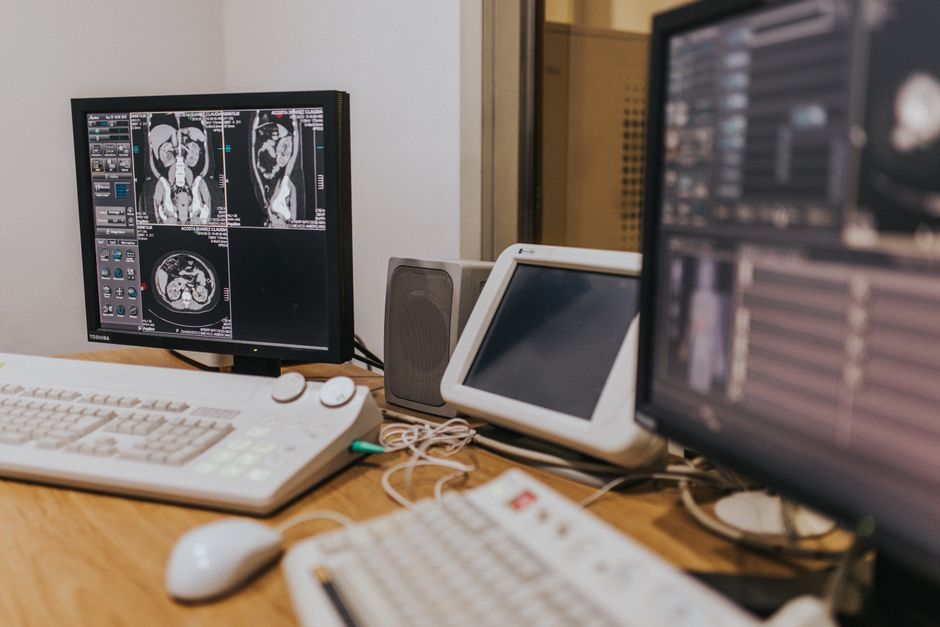
Surgical planning usually includes a CT scan of the facial bones. Illustrative photo.
Decide well
Is cheekbone reduction surgery right for you?
Because bone surgery is hard to reverse, it is worth answering a few honest questions before booking a surgical consultation. If several answers point to hollows or sagging rather than bone, try non-surgical options first.
Points toward a surgical opinion
- Width confirmed as bone on examination or CT
- Cheekbones project to the side, not forward
- Firm skin and no early mid-face sagging
- Time for several weeks of recovery
Points toward non-surgical first
- Hollow temples or hollows below the cheekbones
- Early sagging or thin skin
- You want a reversible change
- Health reasons to avoid general anesthesia
Evidence
What we know, and what we do not, about cheekbone reduction
Reduction malarplasty is widely performed in Korea and East Asia, and surgeons have published many technique reports. High-quality comparative studies are less common, and outcomes depend heavily on the surgeon and the technique used. Non-surgical cheekbone softening with fillers is also common, but evidence specifically for this purpose is mainly clinical experience rather than trials. The cards below summarize the practical points this guide is based on.
Revision operations reviewed
In one Korean centre's 5-year series of zygoma-reduction revisions, the most common reason was under-correction (51.3%); 10.3% had a complication after the revision. The authors linked bone non-union mainly to excessive bone removal at the first operation.
Lee et al., Aesthetic Plast Surg, 2017 [3]Non-union in one technique series
An intraoral L-shaped osteotomy series reported three non-unions (one needing re-operation) and two cases of cheek drooping needing a lift, with no infections.
Hong et al., J Craniofac Surg, 2014 [4]Bone change
The cheekbone is fixed in a new position; revision is difficult.
Key specific risk
Soft tissue over a narrowed cheekbone can drop, especially with age.
Hyaluronic acid filler
Can be dissolved with hyaluronidase if the result is not right.
Botulinum toxin
Cannot change cheekbones; can slim a wide jaw to change proportion.
Reading the research
Cheekbone reduction revision: why less can be more
The best-documented lessons about zygoma reduction come from surgeons who see the cases that need a second operation. In a five-year review of 341 revision patients at one Korean centre, about half were having revision because the first operation had not narrowed the cheekbone enough, while bone that failed to heal (non-union) was linked mainly to removing too much bone the first time. One in ten had a complication after the revision itself.
The practical message is that the goal should be agreed clearly and realistically before surgery, because both under- and over-correction can lead to further operations. If you are unsure whether you need bone surgery at all, Dr. Kim Hyunbin can assess whether temple filler or facial balancing would soften the outline enough, before you see a surgeon.
 Hommage · Gangnam
Hommage Women's Clinic · Gangnam, Seoul
Cheekbone width is judged from the front and in profile. Illustrative photo.
Traveling to Seoul
Cheekbone reduction in Seoul for international patients
Seoul is known for facial bone contouring, and many visitors arrive with cheekbone reduction in mind. If you choose surgery with a surgeon, plan at least two weeks in Korea after the operation for stitch removal and early checks, and agree on how follow-up works from home.
If you would like an independent, non-surgical opinion first, Hommage Women's Clinic in Gangnam can assess whether hollows rather than bone are the main issue. Filler and lifting fit into a short trip.
- Send front and side photos by WhatsApp, KakaoTalk or the contact form before you fly.
- Bring your passport, a list of medicines and any previous scans.
- Ask for language support when booking.
 Hommage · Seoul
Hommage Women's Clinic · Gangnam, Seoul
Seoul: plan your stay around the treatment you choose. Illustrative photo.
Choosing well
Questions to ask before cheekbone reduction in Seoul
Facial bone surgery is a serious decision. Take these questions to every surgical consultation, and compare answers in writing:
- Which specialist qualification do you hold? Plastic surgery or oral and maxillofacial surgery.
- Will the surgeon I meet perform the whole operation? Ask directly, and get it in writing.
- How will you fix the bone and prevent sagging? The answer should be specific to your face.
- Who gives the anesthesia, and where? General anesthesia needs an anesthesiologist and a properly equipped facility.
- What are your revision rates? A good surgeon discusses their own results honestly.
- How does follow-up work after I fly home? Agree on contacts and timing beforehand.
What affects the cost of cheekbone contouring?
For surgery, cost depends on the surgeon, imaging, general anesthesia, the hospital stay and whether other bone surgery is combined. For non-surgical contouring at Hommage Clinic, it depends on the products, the amounts used and the number of sessions. Cosmetic treatment is not covered by Korea's National Health Insurance, and you receive a written quote before any treatment.
 Hommage · Gangnam
Hommage Women's Clinic · Gangnam, Seoul
Compare answers from more than one consultation before choosing bone surgery. Illustrative photo.
Your visit
What to expect at a contouring consultation
01
Assessment
Dr. Kim's team looks at your face from the front and side, checking bone shape, temple and cheek hollows, skin firmness and jaw muscle.
02
Honest options
You hear whether non-surgical contouring can soften your cheekbones, or whether a surgical opinion makes more sense.
03
Your plan
If you choose non-surgical treatment, you receive the products, amounts, expected downtime, risks and a written quote.
04
Review
A follow-up about 2–4 weeks after treatment to check balance and decide whether any adjustment is needed.
Your doctor
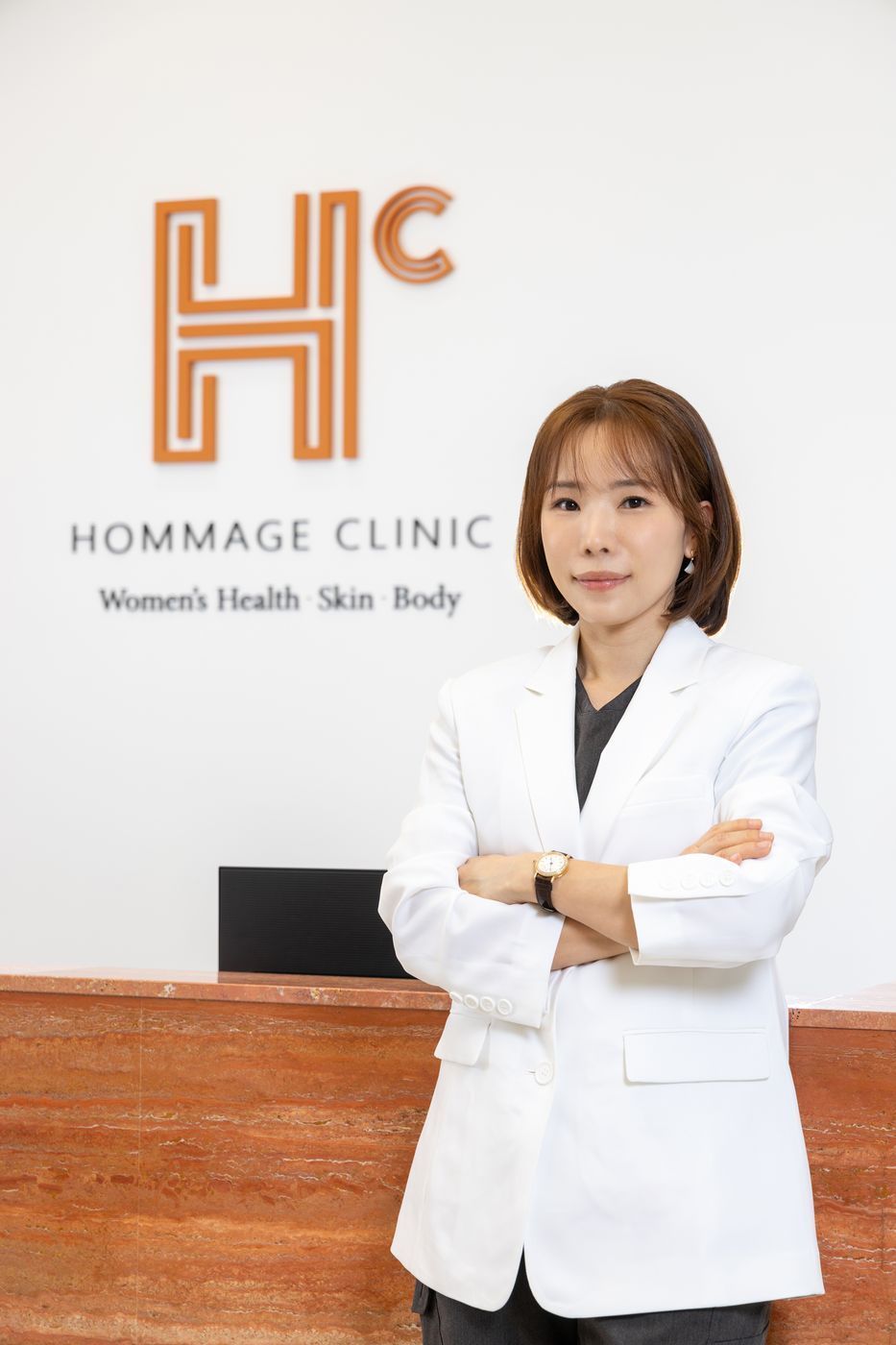
Dr. Kim Hyunbin
Associate Director · Skin & Aesthetic Treatments
Dr. Kim looks at the whole face in profile and from the front to judge whether cheekbones stand out because of the bone itself or because of hollows around them. When a hollow is the main factor, Dr. Kim plans small, staged amounts of volume rather than a large change in one visit.
Associate director dedicated to skin and aesthetic procedures, with extensive experience in lifting, botulinum toxin, fillers and laser treatments.
Cheekbone reduction: frequently asked questions
Does Hommage Clinic perform cheekbone reduction?
No. Hommage Clinic does not perform cheekbone reduction or any other facial bone surgery. The clinic offers an assessment and non-surgical contouring with fillers, collagen stimulators, botulinum toxin and lifting. If surgery looks more suitable for you, the doctor will explain why and what to ask a plastic or oral and maxillofacial surgeon.
Is cheekbone reduction permanent?
The bone change is long-lasting, because the cheekbone is cut and fixed in a new position. Your face still ages, though, and the soft tissue over the cheek can loosen over time. Reversing or revising bone surgery is difficult, which is why surgeons recommend careful planning and conservative reduction.
How long does recovery from cheekbone reduction take?
Most people need about 2–3 weeks before returning to work or social activities, while swelling and bruising settle. A compression garment and soft diet are usual at first. The final shape appears over about 3–6 months, and numbness of the cheek or upper lip, if present, often improves gradually during that time.
Can filler make my cheekbones look smaller?
Filler cannot shrink bone, but it can make prominent cheekbones look softer. Cheekbones often stand out because the temples or the areas below them are hollow. Filling those hollows with small amounts of filler smooths the outline of the face. See our temple filler page for one common approach.
Can Botox reduce my cheekbones?
No. Botulinum toxin works on muscle, and cheekbones are bone, so toxin cannot change their size. However, if your lower face is wide because of a large chewing muscle, jaw Botox can narrow the jaw and change the overall proportion, which may make the cheekbones look less dominant.
Does cheekbone reduction cause sagging?
It can. When the cheekbone is moved inward, the soft tissue it supported may drop, which can make jowls or nasolabial folds more visible. The risk is higher with weaker skin elasticity or older age. Surgeons use fixation techniques to reduce this risk, and lifting treatments may be needed later.
Can foreigners have facial contouring treatment in Seoul?
Yes. International patients can have non-surgical contouring at Hommage Clinic; bring your passport for registration. Walk-ins are welcome, or book ahead for a set time. If you are considering bone surgery elsewhere, plan to stay in Korea for at least two weeks for follow-up. Contact us before your visit to arrange language support.
Why do my cheekbones look so prominent?
Usually because of a combination of bone width and the soft tissue around it. Hollow temples above the cheekbone and hollows below it make the bone stand out as a ridge, especially after weight loss or with age. An assessment shows whether bone or hollows play the bigger part.
What is the difference between zygoma reduction and reduction malarplasty?
They are different names for the same family of operations. Zygoma reduction and reduction malarplasty both describe cutting and repositioning the cheekbone body and arch to narrow the mid-face. Techniques vary between surgeons, so ask exactly which cuts and fixation are planned.
Is there a scar after cheekbone reduction?
The main cut is usually inside the mouth along the upper gum, so it is not visible. A short cut is often made near the sideburn to reach the arch, where it is usually hidden by hair. Healing of these cuts varies between people.
Can temple filler and cheek filler be done in one visit?
Often yes. Small amounts in the temples and below the cheekbones are commonly planned together so the side of the face looks balanced. Many doctors prefer to place a conservative amount first and review after about 2–4 weeks before adding more.
How long do non-surgical cheekbone results last?
It depends on the product and the area. Hyaluronic acid fillers and collagen stimulators gradually break down over months, and toxin effects in the jaw typically last about 3–6 months. Your doctor gives an estimate for the specific products used, and treatment can be repeated or adjusted.
Can cheekbone reduction be combined with jaw surgery?
Surgeons sometimes combine cheekbone reduction with jaw angle or chin surgery for an overall facial contouring plan. Combining operations lengthens surgery and recovery, so ask the surgeon about the specific risks of a combined plan. Hommage Clinic does not perform these operations.
References and editorial note
This guide was reviewed by Dr. Kim Hyunbin. Read our editorial and medical review policy.
- Bae H, Kim J, Seo KK, Hu KS, Kim ST, Kim HJ. Comparison between conventional blind injections and ultrasound-guided injections of botulinum toxin type A into the masseter: a clinical trial. Toxins. 2020;12(9):588. DOAJ
- Ghatge AS, Ghatge SB, Mehta V. A review on bigonial width reduction by botulinum toxin injections in masseter. Bioinformation. 2023;19(3):272–277. Bioinformation
- Lee SW, Jeong YW, Myung Y. Revision surgery for zygoma reduction: causes, indications, solutions, and results from a 5-year review of 341 cases. Aesthetic Plast Surg. 2017;41:161–170. doi:10.1007/s00266-016-0723-9. Springer
- Hong SE, Liu SY, Kim JT, Lee JH. Intraoral zygoma reduction using L-shaped osteotomy. J Craniofac Surg. 2014;25(3):758–761. doi:10.1097/SCS.0000000000000759. PMC
References 1–2 support the non-surgical (jaw toxin) options; references 3–4 are surgical case series on zygoma reduction. Descriptions of zygoma surgery reflect general surgical practice; ask your surgeon for their own technique and results. Hommage Clinic does not perform facial bone surgery. This page is general information and does not replace a personal consultation. Illustrations are original works of Hommage Women's Clinic, Gangnam, Seoul; photos marked illustrative are not of patients.
Non-surgical contouring options
Temple Filler
Filler for hollow temples that softens the curve above prominent cheekbones.
Dermal Fillers
Hyaluronic acid fillers for volume, contour and balance across the face.
Facial Balancing Treatment
Filler, toxin and lifting planned together for better facial proportion.
Jawline Botox (Masseter Reduction)
Botulinum toxin that slims a square jaw by relaxing an enlarged chewing muscle.
Buccal Fat Reduction
What cheek fat surgery involves, and non-surgical ways to slim full lower cheeks.
Thread Lifting
Absorbable threads for an immediate lift with gradual collagen support.
Find out whether your cheekbones can be softened without surgery
Book an assessment in Gangnam. We look at bone, hollows and skin firmness, then explain non-surgical options honestly, including when surgery may suit you better.
Hommage Clinic · 4F, Building A, 509 Gangnam-daero, Seoul (near Sinnonhyeon Station) · Mon & Fri 10:00–20:00 · Tue–Thu 10:00–19:00 · Sat 10:00–15:00