
Skin & Aesthetics · Skin texture
Stretch Mark Laser Treatment in Seoul: Fading Red and White Marks
Stretch mark laser treatment uses controlled light or heat energy, most often a fractional laser or RF microneedling, to remodel the damaged collagen in stretch marks so they become flatter, narrower and closer to your skin color. Marks improve but do not disappear. At Hommage Clinic in Gangnam, Seoul, Dr. Kim Hyunbin checks whether your marks are early red or mature white ones and plans treatment around your skin tone.
Quick answer
Stretch mark laser treatment uses fractional laser, RF microneedling or vascular laser to rebuild collagen in stretch marks so they look flatter, narrower and closer to your skin tone. At Hommage Women's Clinic in Gangnam, Seoul, Dr. Kim Hyunbin usually plans 3–5 sessions, 4–6 weeks apart, with 1–3 days of redness. Marks improve but do not disappear; early red marks respond better than white ones.
Key takeaways
- Red marks (striae rubrae) and white marks (striae albae) are treated differently.
- The goal is softening, not removal; results build over 3–6 months.
- Treatment waits until after pregnancy; the period soon after birth, while marks are still red, is often a good time to start.
- Darker skin tones have a higher risk of dark patches, so methods and settings are chosen carefully.
- Sudden, wide purple marks with other symptoms need a medical check first.
Infographic
Stretch mark treatment in numbers
Sessions
Typical course; more for older or large areas.
Between sessions
Lets collagen rebuild in between.
Session time
Plus 30–60 minutes of numbing cream.
Redness
Fine scabs or bronzing can last up to a week.
Final result
Judged after the last session.
Main methods
Non-ablative, ablative, RF microneedling, vascular laser.
Stretch mark treatment at a glance
| Key fact | Details |
|---|---|
| What it treats | Stretch marks (striae) from pregnancy, growth spurts, weight change or steroid use |
| Treatment time | Typically 20–60 minutes, plus about 30–60 minutes for numbing cream |
| Comfort | Prickling heat or a snapping feeling; numbing cream is used |
| Sessions | Often 3–5, about 4–6 weeks apart, depending on the marks and method |
| Downtime | Redness and swelling for 1–3 days; fine scabs or bronzing for up to a week |
| Results visible | Gradually over 3–6 months; early red marks usually respond more than white ones |
| Reviewed by | Dr. Kim Hyunbin, aesthetic physician |
Stretch mark treatment may suit you if you
- Have red, pink or purple stretch marks that appeared in recent months
- Have white or silvery marks and want a softer texture and narrower width
- Have finished your pregnancy, or your weight has been stable for several months
- Can protect the treated skin from the sun for several weeks
Wait or see a doctor first if you
- Are pregnant: laser and RF treatment is postponed until after delivery
- Have an active skin infection, rash or open wound in the area
- Have taken isotretinoin recently or tend to form keloid scars
- Have sudden, wide purple stretch marks with weight gain, a rounder face or high blood pressure
What are stretch marks and why do they form?
Stretch marks (striae) are a type of scar that forms when the middle layer of the skin, the dermis, is stretched faster than it can adapt and its collagen and elastic fibers tear. They are very common: most women develop some during pregnancy, and they also appear with puberty growth spurts, rapid weight gain or loss, muscle building and long-term use of steroid medicines or creams.
Stretch marks change over time, which matters for treatment:
- Early marks (striae rubrae) are red, pink or purple and sometimes slightly raised or itchy. Blood vessels and active inflammation are still present, so they respond more readily to treatment.
- Mature marks (striae albae) are white or silvery, thin and slightly sunken. The collagen has settled into a scar, so improvement is slower and more limited.
Hormones influence how the skin stretches and heals, which is why marks often appear in pregnancy and are more common in some hormonal conditions. Our page on skin care for hormonal changes explains the wider picture.
How does stretch mark laser treatment work?
Laser and energy treatments create tiny, controlled injuries in the dermis that trigger new collagen and elastic fibers to form, so the mark becomes thicker, smoother and less visible. The main methods are:
- Non-ablative fractional laser heats thousands of microscopic columns of skin while leaving the surface intact. It suits most skin types with short downtime. See fractional laser resurfacing .
- Ablative fractional laser (CO2 or Er:YAG) removes tiny columns of skin for a stronger remodeling effect on older white marks, with longer healing and a higher risk of pigment change.
- RF microneedling delivers radiofrequency heat through fine needles below the surface. It is often chosen for darker skin tones because it spares the outer layer. See RF microneedling .
- Vascular laser targets the blood vessels in early red marks to reduce redness; see vascular laser .
Methods are often combined, for example a vascular laser for color and fractional treatment for texture, sometimes with skin-booster solutions delivered into the marks.
What happens during a stretch mark treatment session?
A session usually takes 20–60 minutes depending on the size of the area, after numbing cream has been on for 30–60 minutes. A typical session runs like this:
- The marks are examined and photographed in consistent light so changes can be compared later.
- Numbing cream is applied, then removed and the skin cleansed.
- The laser or RF handpiece is passed over each mark, or over the whole area. You feel prickling heat or a snapping sensation.
- The skin is cooled, and a soothing product is applied.
Afterward the area looks red and feels like a mild sunburn for one to three days. With fractional or RF microneedling, fine pinpoint scabs or a bronze-colored mesh pattern may appear and flake off within about a week. Wear loose clothing, avoid hot baths, saunas and swimming pools for a few days, moisturize, and protect the area from sun.
How many sessions do stretch marks need, and what results can you expect?
Most people need about 3–5 sessions spaced 4–6 weeks apart, and the goal is visible softening, not removal. Collagen keeps rebuilding for months, so the final result is judged around 3–6 months after the last session.
Realistic improvements include marks that look less red or purple, feel smoother and less sunken, and appear narrower. Early red marks tend to fade more and faster. White marks usually improve more in texture than in color, because the skin's pigment cells in the mark are reduced and lasers do not reliably restore them. Studies report moderate improvement rather than complete clearance, and results vary from person to person.
Treated marks do not usually return, but new marks can form with future pregnancy or weight change. If you are planning another pregnancy soon, it can be sensible to wait.
Risks and possible side effects of stretch mark laser
Most side effects are short-lived, but pigment changes and, rarely, scarring can occur, so a careful choice of method and settings matters. Expected effects include redness, swelling, warmth and tenderness for a few days, and pinpoint bleeding or fine scabs after microneedling or ablative laser.
- Post-inflammatory hyperpigmentation: darker patches that can last weeks to months, more likely in medium to darker skin tones and with sun exposure. A test spot and conservative settings lower the risk.
- Lighter patches: uncommon, more often after ablative laser.
- Infection, blistering or scarring: rare; more likely if the skin is picked or not kept clean.
Contact the clinic if you notice spreading redness, pus, increasing pain, fever, blisters or darkening that keeps getting worse. Sudden, wide purple stretch marks with weight gain, easy bruising or high blood pressure can signal a hormonal condition such as Cushing's syndrome and need a medical check before cosmetic treatment.
Can you treat stretch marks during pregnancy or breastfeeding?
Laser and RF treatments for stretch marks are postponed until after pregnancy. This is a precaution: the skin is still stretching, new marks may form, and elective energy treatments are generally avoided while you are pregnant. Retinoid creams such as tretinoin should not be used during pregnancy.
After the birth, early red marks are the most responsive, so starting while they are still pink can give a better result than waiting years. Many doctors are comfortable treating the abdomen with laser while you are breastfeeding, because the energy acts locally in the skin, but tell your doctor so that numbing cream use and timing can be planned, and avoid retinoid creams unless your doctor approves them. Moisturizers with hyaluronic acid or centella may soothe the skin, but no cream has been shown to reliably prevent or remove stretch marks.
Stretch mark treatment at Hommage Clinic
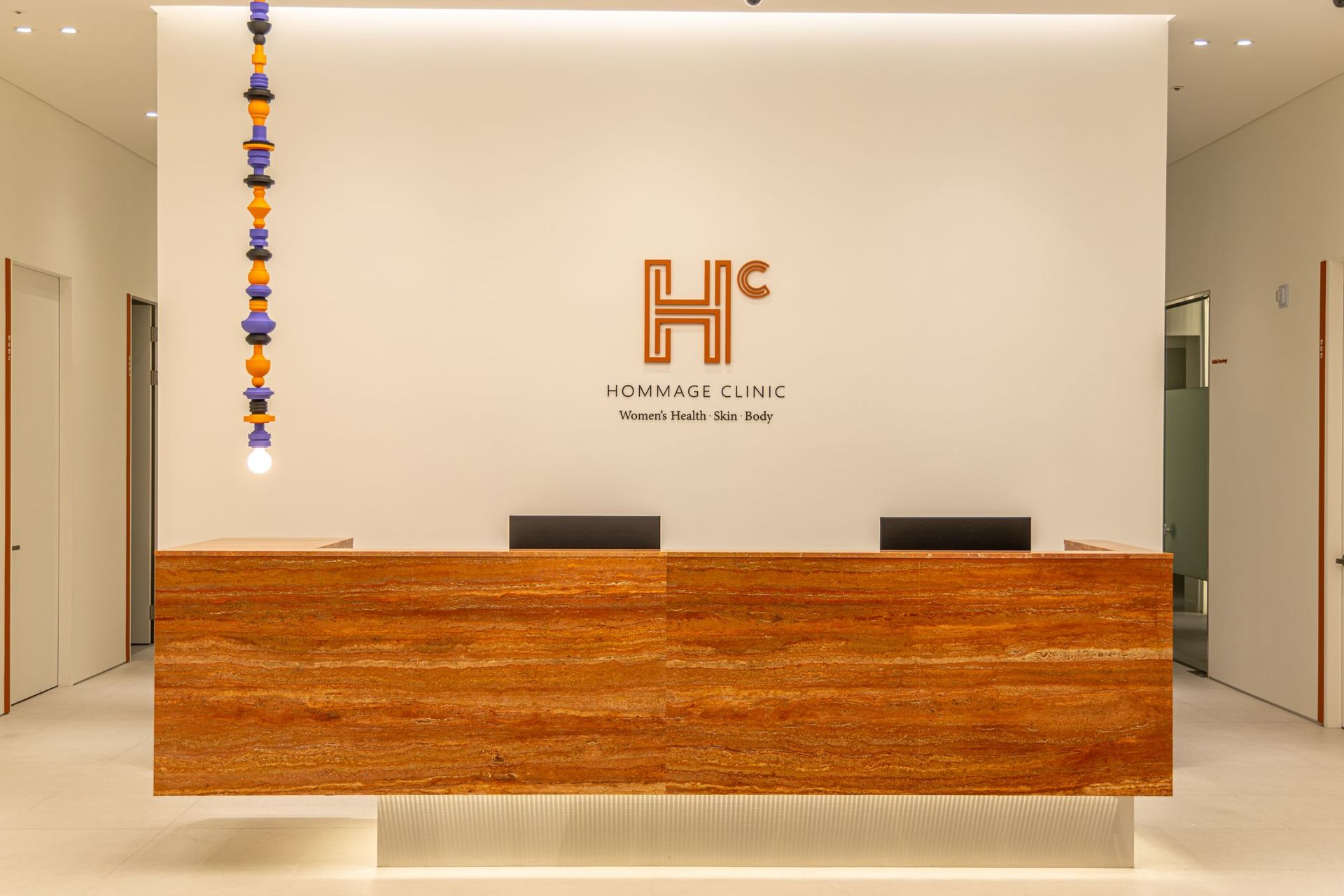
Hommage Clinic is a walk-in-friendly women's health and skin clinic in Gangnam, a short walk from Sinnonhyeon Station. Dr. Kim Hyunbin assesses the age, color and depth of your marks and your skin tone, then chooses the method and settings rather than applying one fixed package. Among the stretch-mark options the clinic lists is Mirajet, a needle-free device that uses fine high-pressure jets to deliver skin-booster solutions into the skin, which can be combined with energy treatment.
Because the clinic's OB/GYN team andskin and aesthetic treatmentsshare one roof, postpartum skin changes can be planned around your gynecology follow-up and breastfeeding. Stretch mark treatment is cosmetic and is not covered by Korea's National Health Insurance. Cost depends on the size of the area, the method and the number of sessions, and you receive a written quote before treatment.
Know your marks
Red vs white stretch marks: why the stage changes treatment
Every stretch mark starts red or purple and slowly fades to white or silver over months to years. The stage matters more than any other factor when choosing treatment. Red marks still have blood vessels and active repair going on, so they respond to both colour-targeting and collagen-building treatments. White marks are settled scars with fewer pigment cells, so treatment mainly improves texture and width rather than colour.
Compare
Fractional laser vs RF microneedling vs vascular laser for stretch marks
No single device is best for every stretch mark. The right choice depends on the colour of the marks, how deep they are and your skin tone. This chart shows how Dr. Kim Hyunbin typically matches method to mark; many plans combine two methods across a course.
After childbirth
Stretch marks after pregnancy: when to start treatment
Pregnancy is the most common reason women ask about stretch marks. Laser and RF treatment always wait until after delivery, but there is an advantage to not waiting too long: marks are most responsive while they are still red or pink, which often lasts months rather than years.
A practical timeline
- During pregnancy: moisturize for comfort; avoid retinoid creams. No laser or RF.
- First weeks after birth: focus on recovery. Your OB/GYN follow-up comes first, including any caesarean wound check.
- From a few months after birth: once you feel ready and the skin has settled, red marks can be assessed. Breastfeeding is discussed, and numbing cream and timing are planned with care.
- Before another pregnancy: if you plan one soon, it can be sensible to wait, because new marks may form.
Loose abdominal skin after pregnancy is a separate problem from stretch marks; mild laxity may be discussed with RF body tightening , but significant loose skin or muscle separation is a surgical question. The clinic's OB/GYN team and skin doctors share one roof, so postpartum care can be planned together; see skin care for hormonal changes .
 Hommage · Gangnam
Hommage Women's Clinic · Gangnam, Seoul
Treatment waits until after delivery; red marks in the following months respond best. Illustrative photo.
Your course
Stretch mark laser sessions schedule: what a course looks like
Stretch mark treatment is a course, not a single appointment. Collagen keeps rebuilding for months after each session, so sessions are spaced to let that happen, and the final result is judged well after the last one. The schedule below shows a typical five-session course; yours may be shorter or longer.
Plan ahead
How to prepare for stretch mark laser treatment
Simple preparation makes sessions more comfortable and lowers the risk of dark patches afterward.
- Avoid tanning on the area for at least two weeks before each session, including self-tan products.
- Stop retinoids and exfoliating acids on the area a few days before, unless your doctor advises otherwise.
- Tell the clinic if you are breastfeeding, have taken isotretinoin recently, use steroid creams, or tend to form keloid scars.
- Wear loose, soft clothing that will not rub on the treated area on the way home.
- Arrive with clean skin , without body lotion on the area, so numbing cream works well.
If your weight is still changing, or you are planning a pregnancy soon, it is usually better to wait until things are stable, because new marks may form.
 Hommage · Gangnam
Hommage Women's Clinic · Gangnam, Seoul
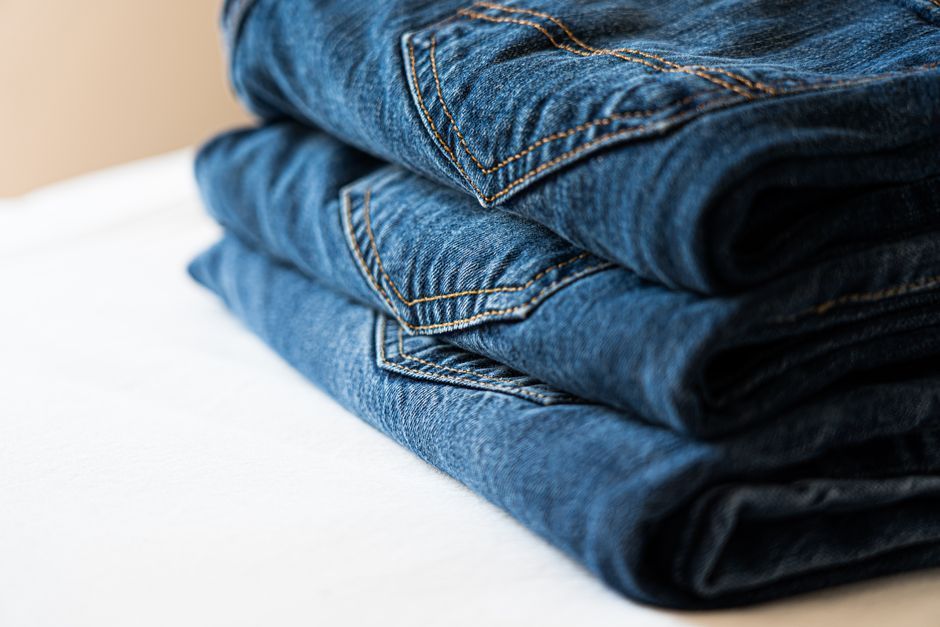
Loose, soft clothing avoids friction on freshly treated skin. Illustrative photo.
 Hommage · Gangnam
Hommage Women's Clinic · Gangnam, Seoul
A gentle, fragrance-free moisturizer helps treated skin settle. Illustrative photo.
Aftercare
After stretch mark laser: do's and don'ts
Treated skin on the body heals well when it is kept clean, moisturized and covered from the sun. The main risk to avoid is darkening from friction or sun while the skin is still red. You receive written instructions and can message the clinic with photos.
Do
- Wear loose, soft clothing over treated areas
- Shower with lukewarm water and pat dry
- Moisturize with a gentle, fragrance-free product
- Cover treated skin or use SPF 30+ if it will see sun
- Message the clinic if darkening keeps getting worse
Don't
- Take hot baths, saunas or swim for a few days
- Scrub, pick or scratch fine scabs
- Wear tight waistbands or shapewear over fresh treatment
- Tan or sunbathe during the course
- Use retinoids or acids on the area until cleared
Evidence
Do lasers work for stretch marks? What the research says
Stretch marks are hard to treat, and the evidence is honest about that. Studies of fractional laser, RF microneedling and vascular laser generally report moderate improvement in texture, width and colour, not complete clearance. Most trials are small, follow patients for months rather than years, and use different devices and scoring, so it is not possible to say one method is clearly best. The points below are what the evidence supports with reasonable confidence.
Fractional sessions in studies
Reviews of fractional photothermolysis report stretch marks treated in about 1–4 sessions in early studies.
Review, Semin Cutan Med Surg, vol 27Studies reviewed: fractional lasers lead
A review of 68 studies found non-ablative and ablative fractional lasers gave modest improvement compared with other lasers, and named 1,540 nm non-ablative fractional laser a reasonable first-line option. Few randomized trials looked at long-term results.
Ross et al., Dermatol Surg, 2017Stage matters
Early red marks generally respond better than mature white marks, which improve mainly in texture.
Consistent across clinical reviewsLasers for dark patches
For post-inflammatory darkening in skin of colour, topical treatment is first-line; lasers are an adjunct.
Sowash & Alster, Am J Clin Dermatol, 2023Creams in pregnancy
In 6 trials with 800 women, creams and oils (including olive oil and cocoa butter) did not significantly prevent stretch marks or reduce their severity. No high-quality evidence supports any topical product for prevention.
Brennan et al., Cochrane Review, 2012Traveling to Seoul
Stretch mark treatment in Seoul for international patients
Because stretch mark treatment is a course of sessions 4–6 weeks apart, it fits best for people living in Seoul or visiting regularly. A single session during a trip is possible, and recovery is short, usually 1–3 days of redness, so it rarely disrupts travel. Hommage Women's Clinic is in Gangnam, a short walk from Sinnonhyeon Station (Line 9 and Shinbundang Line).
Planning your visits
- Send photos of your marks (in normal clothing where possible, cropped to the area) and your dates by WhatsApp, KakaoTalk or the contact form; ask for language support if needed.
- Have your first session early in the trip, so redness settles before you fly.
- If you visit Seoul every 1–2 months, a full course can be planned around your trips.
- Bring your passport, a list of medicines, and tell us if you are breastfeeding or have recently taken isotretinoin.
Between visits
Keep the area moisturized and covered from strong sun, and send photos if darkening appears. Sessions can also be continued with a dermatologist at home using the plan from your consultation.
 Hommage · Seoul
Hommage Women's Clinic · Gangnam, Seoul
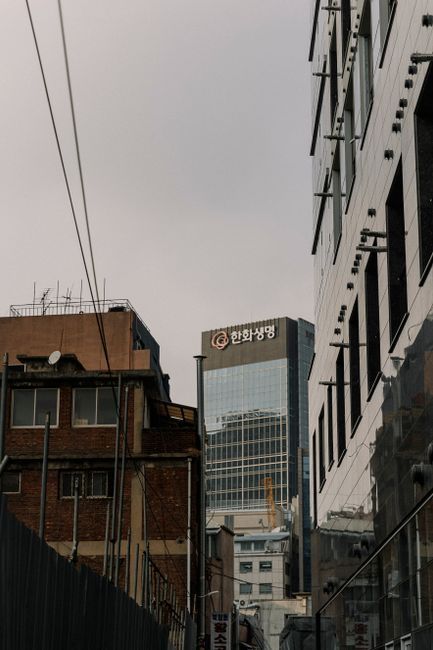
Seoul: the clinic is in Gangnam, near Sinnonhyeon Station. Illustrative photo.
Choosing well
How to choose a stretch mark clinic in Seoul
Stretch mark packages are widely advertised. These questions help you compare any clinic, including ours:
- Do they say marks will not disappear? Promises of complete removal are a warning sign.
- Is the method chosen for your marks? Red and white marks need different approaches.
- Is a doctor involved in planning? Settings for darker skin need medical judgment.
- Do they take standard photos? So change can be judged fairly over the course.
- Do they ask about pregnancy and breastfeeding? Timing and numbing cream depend on it.
- Is the full course quoted in writing? Including the number of sessions.
What affects stretch mark treatment cost in Seoul?
The cost depends on the size of the area (abdomen, hips, thighs, breasts or arms), the method or combination used, the number of sessions, and any added skin-booster delivery such as Mirajet or skin boosters . Stretch mark treatment is cosmetic and is not covered by Korea's National Health Insurance, and you receive a written quote before treatment.
 Hommage · Gangnam
Hommage Women's Clinic · Gangnam, Seoul
A consultation sets realistic goals and a written plan. Illustrative photo.
Your visit
What to expect at your stretch mark consultation
01
Skin assessment
Dr. Kim looks at the color, width and depth of your marks, your skin tone and any loose skin in the area.
02
Health check
You are asked about pregnancy, breastfeeding, recent isotretinoin, steroid use, keloids and sun exposure plans.
03
Plan and quote
You hear which method fits, how many sessions to expect and what change is realistic, with a written quote.
04
Review
Photos are compared in the same light after each session and about three months after the last one.
Your doctor
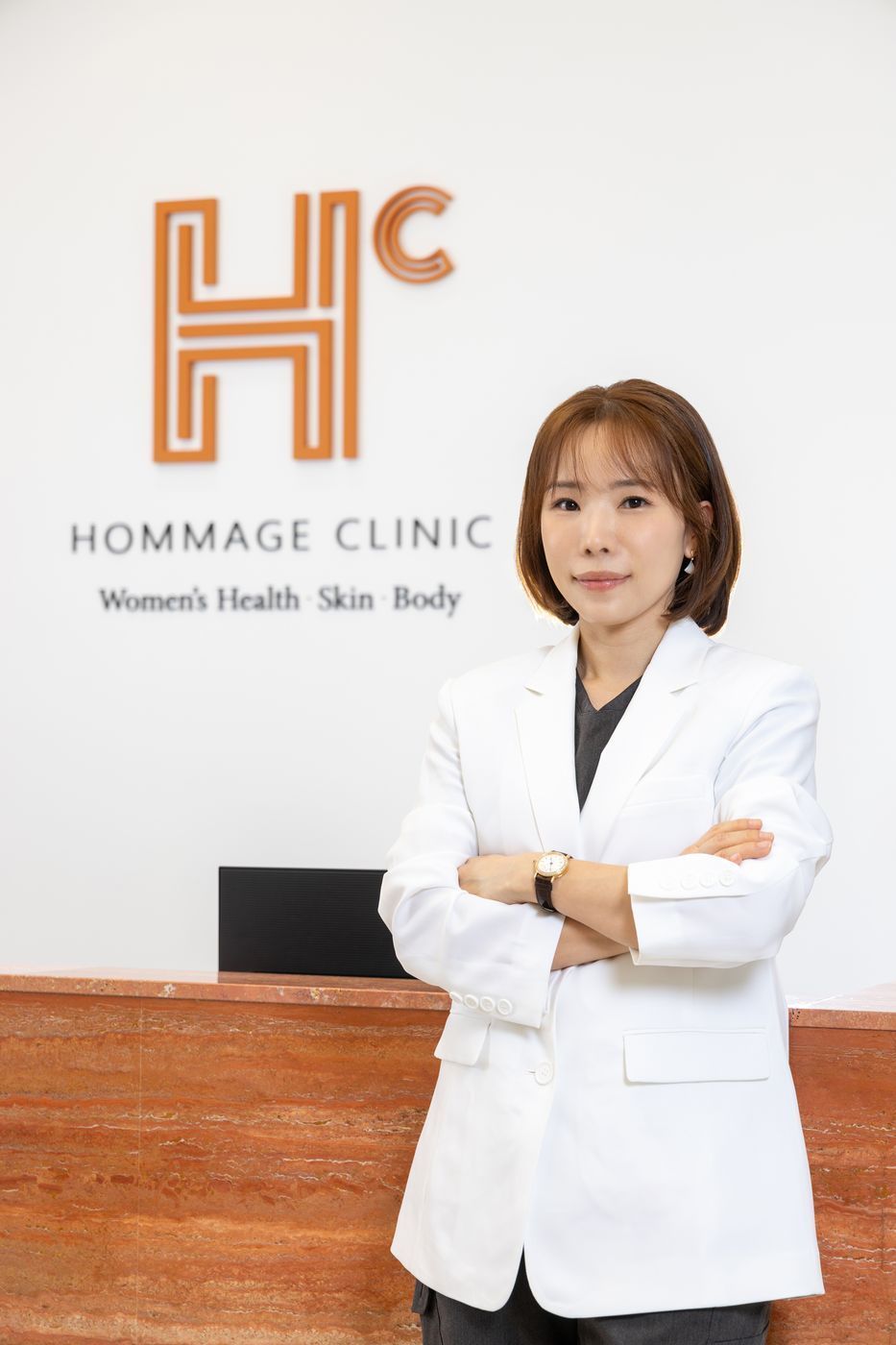
Dr. Kim Hyunbin
Associate Director · Skin & Aesthetic Treatments
Dr. Kim matches the method to the stage of each stretch mark, treating color in early red marks and texture in mature white ones. For medium to darker skin, Dr. Kim favors conservative settings and a test area to limit the risk of pigment change.
Associate director dedicated to skin and aesthetic procedures, with extensive experience in lifting, botulinum toxin, fillers and laser treatments.
Stretch mark laser treatment: frequently asked questions
Can laser remove stretch marks completely?
No. Laser and RF treatments improve stretch marks but do not remove them completely. Marks typically become less red, smoother and narrower, so they are less noticeable. Early red marks usually improve more than older white ones, and results vary between people.
How many laser sessions do stretch marks need?
Most people need about 3–5 sessions, spaced 4–6 weeks apart. Older white marks or large areas may need more, sometimes combining two methods. Because collagen keeps rebuilding for months, the final result is judged around 3–6 months after the last session.
Does stretch mark laser treatment hurt?
Numbing cream is applied before treatment, so most people feel prickling heat or a snapping sensation rather than sharp pain. RF microneedling and ablative laser feel stronger than non-ablative laser. Afterward the skin feels like a mild sunburn for one to three days.
Can I get stretch mark treatment while breastfeeding?
Often yes, after a discussion with your doctor. Laser and RF energy act locally in the skin, and many doctors treat stretch marks during breastfeeding, but numbing cream use and timing are planned with care. Retinoid creams are usually avoided while breastfeeding. Laser treatment is not done during pregnancy.
Is stretch mark laser safe for darker skin?
It can be, with the right method. Medium to darker skin has a higher risk of temporary dark patches after laser, so doctors often favor RF microneedling or non-ablative fractional laser at conservative settings, start with a test area, and ask you to protect the skin from sun before and after treatment.
Do stretch mark creams work?
Creams have limited effect. Prescription tretinoin may help early red marks a little with months of use, but must not be used in pregnancy. Moisturizers with hyaluronic acid or centella may soften the skin, but no cream has been shown to reliably prevent or remove stretch marks. For deeper change, see RF microneedling.
Can foreigners get stretch mark treatment in Seoul?
Yes. Visitors and foreign residents can book a stretch mark assessment at Hommage Clinic in Gangnam. Walk-ins are welcome, or book ahead for a set time; bring your passport for registration. Sessions are usually 4–6 weeks apart, so plan the course around your travel, and contact us before your visit to arrange language support.
What is the difference between red and white stretch marks?
Red, pink or purple marks (striae rubrae) are early marks that still have blood vessels and active repair, so they respond better to treatment. White or silvery marks (striae albae) are mature scars with fewer pigment cells; treatment mainly improves their texture and width rather than their colour.
What is the best laser for stretch marks?
There is no single best laser. Red marks often respond to a vascular laser combined with non-ablative fractional laser. White marks are usually treated with fractional laser or, especially in medium to darker skin, RF microneedling. Dr. Kim Hyunbin chooses the method after seeing the colour and depth of your marks and your skin tone.
When should I start stretch mark treatment after giving birth?
Treatment always waits until after delivery. Many women start a few months after birth, once they feel ready and while the marks are still red, because this is when they respond best. Breastfeeding and your OB/GYN follow-up are taken into account when planning.
Can stretch marks come back after laser?
Treated marks do not usually return. However, new marks can form with another pregnancy, rapid weight change or muscle building, so if you are planning another pregnancy soon it can be sensible to wait.
Should sudden purple stretch marks be checked by a doctor?
Yes. Sudden, wide purple stretch marks together with weight gain, a rounder face, easy bruising or high blood pressure can be a sign of a hormonal condition such as Cushing's syndrome, or of long-term steroid use. These need a medical check before any cosmetic treatment.
What should I wear to a stretch mark treatment appointment?
Loose, soft clothing that can be easily moved away from the treated area and will not rub afterward, such as a loose dress or soft trousers with a relaxed waistband. Avoid tight waistbands or shapewear over freshly treated skin for a few days.
References
Sources used for this page, reviewed by Dr. Kim Hyunbin. Read our editorial and medical review policy.
- Fractional photothermolysis: review of mechanism and clinical applications, including striae distensae. Semin Cutan Med Surg. Vol 27(1). PDF
- Manstein D, et al. Fractional photothermolysis: a new concept for cutaneous remodeling using microscopic patterns of thermal injury. Lasers Surg Med. 2004. PubMed
- Sowash M, Alster T. Review of laser treatments for post-inflammatory hyperpigmentation in skin of color. Am J Clin Dermatol. 2023;24:381–396. Springer
- Ross NA, Ho D, Fisher J, et al. Striae distensae: preventative and therapeutic modalities to improve aesthetic appearance. Dermatol Surg. 2017;43(5):635–648. PubMed
- Brennan M, Young G, Devane D. Topical preparations for preventing stretch marks in pregnancy. Cochrane Database Syst Rev. 2012;(11):CD000066. Cochrane Library
This page is general information and does not replace a personal consultation. Illustrations are original works of Hommage Women's Clinic, Gangnam, Seoul; photos marked illustrative are not of patients.
Related skin and body treatments
RF Microneedling
Radiofrequency delivered through fine needles for texture, pores, scars and stretch marks.
Fractional Laser Resurfacing
Laser columns that rebuild collagen for scars, texture and older stretch marks.
Vascular Laser
Laser for redness and small vessels, including the color of early red stretch marks.
RF Body Tightening
Radiofrequency for mild skin laxity on the abdomen, arms and thighs, and how a course works.
Skin Boosters
Injectable hydration and regeneration treatments that support skin quality.
Skin Care for Hormonal Changes
How pregnancy, PCOS and menopause change skin, and how care can be planned together.
Plan your stretch mark treatment with a doctor
Book an assessment with Dr. Kim Hyunbin in Gangnam. You learn which method suits the age and color of your marks and your skin tone, and what change is realistic.
Hommage Clinic · 4F, Building A, 509 Gangnam-daero, Seoul (near Sinnonhyeon Station) · Mon & Fri 10:00–20:00 · Tue–Thu 10:00–19:00 · Sat 10:00–15:00