
Skin & Aesthetics · Oily skin
Sebum Control Therapy in Seoul: Treatment Options for Oily Skin
Sebum control therapy is a doctor-planned combination of skincare, prescription medicine and in-clinic procedures that reduces excess facial oil, shine and clogged pores by calming overactive oil glands. At Hommage Clinic in Gangnam, Seoul, Dr. Hwang Seonhwa first works out why your skin is oily, including hormonal causes, then matches peels, laser or botulinum micro-injections to the medical care your skin needs.
Quick answer
Sebum control therapy is a doctor-planned mix of skincare, prescription medicine and in-clinic procedures such as peels, laser or botulinum micro-injections that reduces facial oil and shine. At Hommage Women's Clinic in Gangnam, Seoul, Dr. Hwang Seonhwa first looks for the cause, including hormonal patterns. Clinic sessions take 20–40 minutes with little downtime; shine often drops within 2–4 weeks, medicines take 1–3 months, and maintenance is usually needed.
Key takeaways
- Oil glands are driven mainly by androgens and genetics, so no treatment switches them off permanently.
- Isotretinoin is the most effective sebum-reducing medicine, but it needs strict pregnancy prevention and monitoring.
- Peels, lasers and micro-injections give shorter-term control; evidence for micro-injections comes from small trials.
- Over-washing makes oily skin worse. Gentle cleansing, a light moisturizer and sunscreen are the base of every plan.
Infographic
Sebum control in numbers
Clinic session
Peel, laser or micro-injections, with cooling or numbing.
Sessions in a series
Peels and lasers, usually 2–4 weeks apart.
Less shine
Often noticeable after starting peels or laser.
Medicine effect
Prescription treatments build up gradually.
Micro-injections
Typical duration in small studies; varies by person.
First review
The plan is adjusted to the least treatment that works.
Sebum control therapy at a glance
| Key fact | Details |
|---|---|
| What it treats | Excess facial oil and shine, clogged pores and oil-related breakouts |
| Treatment options | Topical retinoids, hormonal or oral medicine, peels, laser or energy devices, toxin micro-injections |
| Sessions | Peels and lasers usually in a series of 3–5, 2–4 weeks apart; plans vary |
| Downtime | Usually minimal: mild redness or dryness for hours to a few days |
| Results visible | Less shine often within 2–4 weeks; medication effects build over 1–3 months |
| How long results last | Varies by method; oiliness tends to return without maintenance |
| Reviewed by | Dr. Hwang Seonhwa, physician for skin and aesthetic treatments |
Sebum control therapy may suit you if you have
- Skin that looks shiny within a few hours of washing, especially on the T-zone
- Frequent blackheads, clogged pores or oil-related breakouts
- Makeup that slides or separates during the day despite oil-control products
- Oily skin with acne, irregular periods or new hair growth that may be hormonal
Wait or ask about alternatives if you
- Are pregnant, trying to conceive or breastfeeding: retinoids, isotretinoin and botulinum toxin are avoided
- Have an active skin infection, cold sore or open wound in the area
- Have a red, scaly rash on the sides of the nose or brows, which may be seborrheic dermatitis and needs different care
- Have a neuromuscular condition, if botulinum micro-injections are being considered
What causes oily skin?
Oily skin happens when sebaceous glands in the skin produce more sebum than your skin needs. These glands are largest and most numerous on the forehead, nose and chin, which is why the T-zone shines first.
Sebum production is driven mainly by androgens, the hormones that rise at puberty in both sexes. Genetics set how sensitive your glands are to them, and oil output tends to be highest from the teens to the thirties, then falls with age, especially after menopause. Heat and humidity, such as a Seoul summer, can make oiliness more noticeable, and heavy or occlusive products can add to clogging.
For some women, oily skin is one sign of a hormonal pattern. If shine comes with acne along the jaw, irregular cycles or new hair growth, an assessment for PCOS can be worthwhile, because treating the hormonal cause also helps the skin. Our guide to skin changes linked to hormones explains more.
Sebum control treatment options compared
No single treatment switches oil glands off, so a plan usually combines daily care with one or more medical or in-clinic options. The right mix depends on how oily your skin is, whether you have acne, and your plans for pregnancy.
- Skincare and topical medicine: a gentle cleanser, light non-comedogenic moisturizer and sunscreen form the base. Topical retinoids keep pores from clogging and may modestly reduce oiliness; niacinamide shows small benefits in some studies.
- Hormonal or oral medicine: for women with hormone-driven oiliness or acne, certain birth control pills or anti-androgen medicines may help. For severe oiliness with acne, a doctor may consider low-dose isotretinoin, the most effective medicine for reducing sebum, with strict pregnancy prevention and monitoring.
- Chemical peels: salicylic acid dissolves in oil, so it clears congested pores and reduces shine for a while. See salicylic acid peel .
- Laser and energy treatments: some lasers and radiofrequency microneedling heat the oil glands to reduce their activity over a series of sessions, while a laser carbon peel gives a shorter-term clean, matte finish. Evidence is growing but results vary.
- Botulinum toxin micro-injections: tiny, shallow doses placed in the skin rather than the muscle.
Can botulinum toxin micro-injections reduce oil?
Possibly, for a few months. Small studies suggest that very diluted botulinum toxin injected just under the skin surface can reduce sebum output and the look of pores, often for around three months.
This approach, sometimes called skin botox or micro-botox, is an off-label use, and the evidence comes from small trials rather than large long-term studies. Results vary from person to person, and it does not treat acne on its own. It works differently from wrinkle-relaxing Botox injections , which are placed deeper into the muscle. Dr. Hwang discusses whether it is reasonable for your skin before suggesting it.
What happens during sebum control treatment?
Your first visit is an assessment rather than an immediate procedure. The doctor looks at where your skin is oily, your pores, any acne or scarring, the products you use and any hormonal symptoms.
You then agree on a plan, for example a retinoid at home with a series of peels, or medication with a laser course. In-clinic sessions usually take 20–40 minutes. Peels feel like tingling or stinging for a few minutes, lasers feel warm with light snapping, and micro-injections feel like quick pinpricks, with numbing cream used when helpful. If you have many blackheads, an extraction facial may be added first.
How long do sebum control results last?
Most in-clinic results last weeks to a few months, because your glands keep responding to hormones and genetics. Ongoing skincare or medication is what keeps oiliness under control between sessions.
Shine often drops within 2–4 weeks of starting peels or laser, while prescription medicines usually need 1–3 months to show their full effect. Micro-injection effects typically fade after a few months. Oil levels may stay lower for a long time after a full isotretinoin course, but this varies.
Between visits, avoid harsh scrubs and stripping cleansers, which can leave skin irritated and still oily. Use blotting papers instead of repeated washing, and apply sunscreen daily, since peels, lasers and retinoids make the skin more sun-sensitive. If enlarged pores are your main concern once oil is controlled, see pore tightening laser .
Risks and possible side effects
Each option carries its own side effects, which the doctor reviews with you before you start. Most are mild and temporary, but some medicines have serious risks that need careful planning.
- Topical retinoids: dryness, redness and peeling in the first weeks; avoided in pregnancy.
- Isotretinoin: dry lips and eyes, sun sensitivity and changes in blood fats or liver tests. It causes severe birth defects, so pregnancy must be avoided during treatment and for a period afterward. Tell the doctor about any history of low mood.
- Hormonal medicine: nausea, spotting or breast tenderness; some pills are unsuitable with certain migraines, smoking over 35 or a history of blood clots.
- Peels and lasers: redness, dryness, a temporary breakout flare and, less often, burns, blistering or dark patches (post-inflammatory hyperpigmentation), especially with sun exposure.
- Botulinum micro-injections: small bruises, temporary bumps and, rarely, weakness of nearby expression muscles for a few weeks.
Contact the clinic if you notice blistering, spreading redness, pus, fever, or changes in facial movement after treatment.
Sebum control therapy at Hommage Clinic
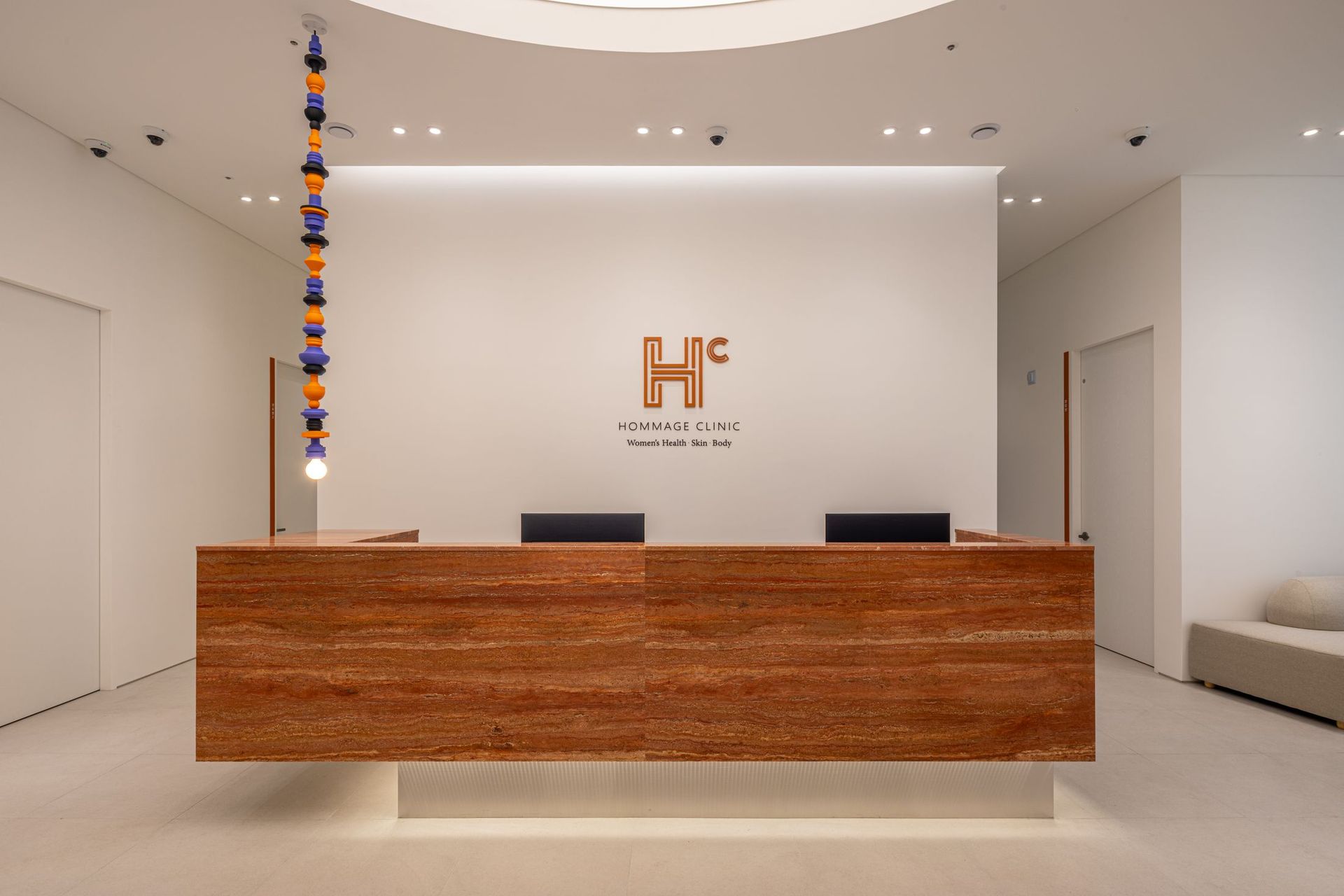
Hommage Clinic is a women's health and skin clinic in Gangnam, about a three-minute walk from Sinnonhyeon Station. Because gynecology and skin care are under one roof, oily skin with a hormonal pattern can be assessed from both sides in the same clinic. A physician plans and adjusts your treatment, and the clinic's options include peels, laser treatments, botulinum toxin and soothing care such as LDM and cryo. See our full range ofskin and aesthetic treatments.
Cost depends on the methods chosen, the number of sessions and any medicines. Medical consultations and prescriptions for acne may be covered by Korea's National Health Insurance for enrolled patients, while cosmetic procedures for oiliness are not. You receive a written quote before treatment, and walk-ins are welcome during opening hours.
How it works
How does sebum control therapy work?
Sebum is made in sebaceous glands that sit beside each hair follicle. The gland fills with oil, releases it into the follicle, and the oil travels up the pore to the skin surface. Excess shine and clogged pores come from problems at different points along that path: glands that are over-stimulated by hormones, a pore opening that becomes blocked by sticky dead cells, and oil that spreads across the surface during the day.
Each part of a sebum control plan acts at a different point. Some options work on the gland itself, some keep the pore open, and some only change what sits on the surface. That is why combining a daily routine with a medical or clinic treatment usually works better than any single product. The illustration below shows where each option acts.
1 · Surface shine
Blotting papers, mattifying products, salicylic acid peels and a laser carbon peel reduce visible oil for hours to weeks, but do not change how much the glands make.
2 · Pore opening
Topical retinoids and salicylic acid stop dead cells from sticking together, so oil can flow out instead of forming blackheads. Deep cleansing pore therapy clears plugs already there.
3 · Oil gland
Hormonal medicine lowers androgen effects, isotretinoin shrinks the glands, and some energy devices and botulinum micro-injections reduce gland activity for a period. These change how much oil is made.
Know your skin
Oily skin, dehydrated skin or seborrheic dermatitis?
Shine is not always simple oiliness. Two other conditions are often mistaken for it, and both need a different plan. Getting this right first prevents the most common mistake: treating tight, irritated skin with even stronger oil-stripping products.
Oily skin
Shine across the T-zone within hours of washing; enlarged pores and blackheads; feels comfortable, not tight.
Plan: sebum control therapy.
Dehydrated oily skin
Shiny yet tight, flaky or stinging, often after over-washing or strong acne products.
Plan: barrier repair first, then gentle oil control.
Seborrheic dermatitis
Red, greasy, scaly patches beside the nose, in the brows or along the hairline, sometimes itchy.
Plan: medical treatment for the rash, not oil-reducing procedures.
If your skin is both oily and tight, the clinic usually starts with skin barrier repair treatment for a few weeks. Once the skin is calm, oil control is easier to tolerate and tends to work better.
 Hommage · Gangnam
Hommage Women's Clinic · Gangnam, Seoul
Blotting removes surface shine without stripping the skin like repeated washing. Illustrative photo.
Your options, step by step
The oily skin treatment ladder: from skincare to prescription
Most people do not need the strongest option. Dr. Hwang usually starts at the lowest step that is likely to work, adds an in-clinic treatment when daily care is not enough, and keeps prescription medicine for oiliness that comes with acne, a hormonal pattern or a strong impact on daily life. Each step keeps the ones below it: even someone on medicine still needs a gentle routine and sunscreen.
 Hommage · Gangnam
Hommage Women's Clinic · Gangnam, Seoul
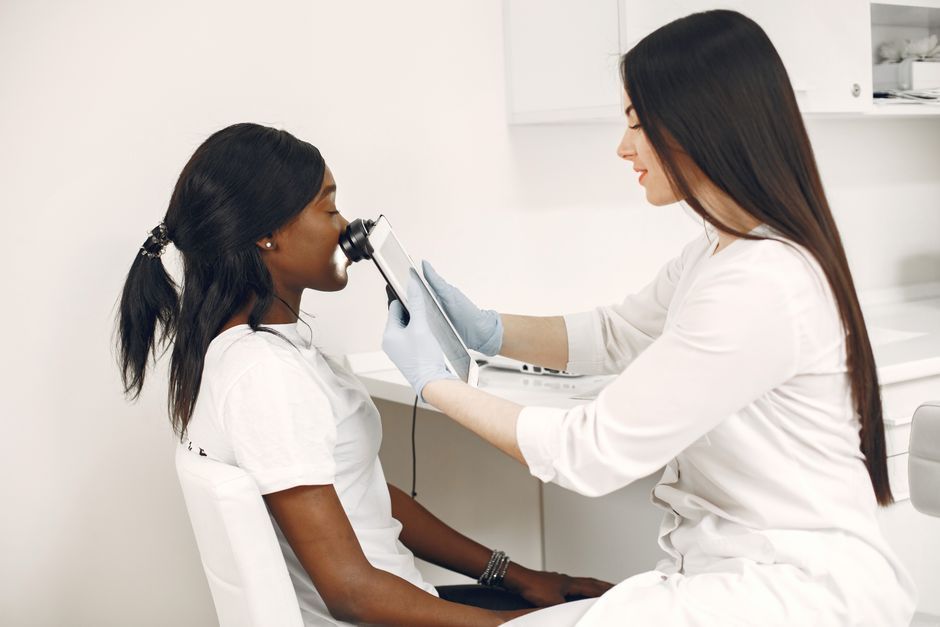
Micro-injections are discussed honestly, including their limited evidence. Illustrative photo.
Compare
Micro-botox for oily skin vs wrinkle Botox
"Skin botox" for oil and pores uses the same medicine as wrinkle treatment but in a very different way. Knowing the difference helps you judge what it can and cannot do.
| Compare | Micro-injections (oil) | Wrinkle Botox |
|---|---|---|
| Depth | Very shallow, in the skin | Into the muscle |
| Dose | Highly diluted, many tiny points | Standard doses at a few points |
| Aim | Less oil, smoother-looking pores | Softer expression lines |
| Typical duration | Often about 3 months in small studies | Usually a few months |
| Evidence | Small trials; off-label use | Well established for lines |
Micro-injections are not suitable during pregnancy or breastfeeding, or with some neuromuscular conditions. They do not treat acne on their own, so they are best seen as one optional tool for shine rather than a first step. For wrinkle treatment, see our Botox page.
Timeline
Sebum control results timeline: when will my skin be less oily?
Different parts of the plan work at different speeds. In-clinic treatments tend to change shine first, prescription medicines build up over one to three months, and the plan is reviewed at around four to eight weeks so that it can be adjusted. Because oil glands keep responding to hormones and genetics, the final step is always maintenance at the lowest level that keeps your skin comfortable.
Women's skin
Oily skin, hormones and your cycle
Because androgens drive the oil glands, many women notice their skin change with hormonal shifts. Oiliness and breakouts often rise in the days before a period, can change when starting or stopping the pill, may improve or worsen in pregnancy, and usually decrease after menopause.
When oily skin comes with acne along the jaw and chin, irregular or missed periods, or new hair growth on the face or body, it is worth checking for an underlying hormonal pattern such as polycystic ovary syndrome. Hommage is a women's health and skin clinic, so a hormone test and gynecology review can be arranged in the same building. Treating the hormonal cause, for example with certain combined pills or anti-androgen medicine chosen with a doctor, often helps the skin as well.
Planning a pregnancy?
Tell the doctor early. Retinoids, isotretinoin, anti-androgen medicine and botulinum toxin are avoided when trying to conceive, during pregnancy and while breastfeeding, so the plan is built around gentler options during that time.
 Hommage · Gangnam
Hommage Women's Clinic · Gangnam, Seoul
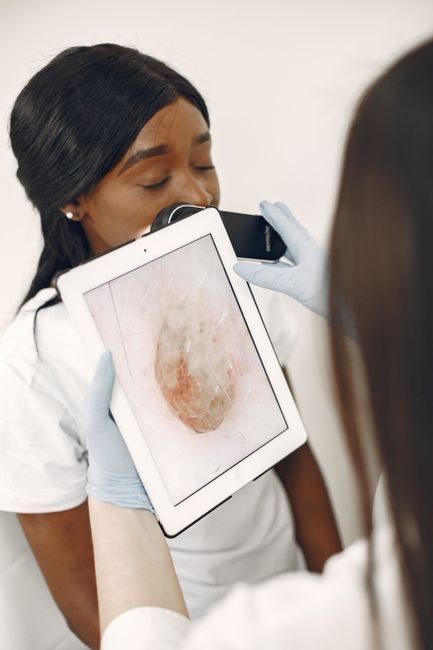
Oily skin with breakouts and cycle changes may need a hormonal check. Illustrative photo.
 Hommage · Gangnam
Hommage Women's Clinic · Gangnam, Seoul
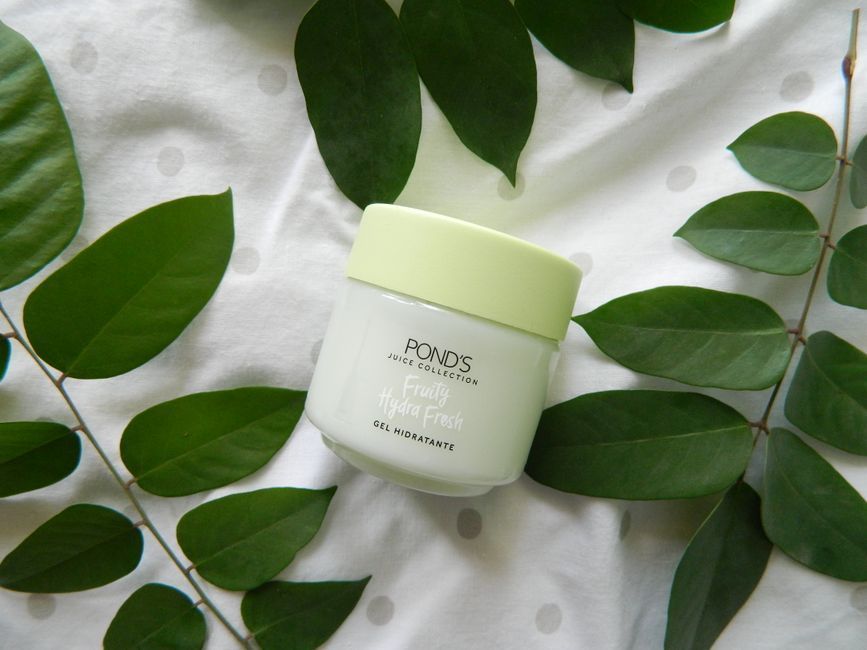
Oily skin still needs a light moisturizer to keep the barrier healthy. Illustrative photo.
Daily care
Oily skin care: do's and don'ts between treatments
What you do every day decides how long clinic results last. The aim is to remove excess oil without damaging the skin barrier, because irritated skin often looks shinier and breaks out more.
Do
- Cleanse gently morning and evening
- Use a light gel or lotion moisturizer labelled non-comedogenic
- Wear sunscreen daily, especially with retinoids, peels or laser
- Use blotting papers for midday shine
- Introduce new actives slowly, a few nights a week at first
- Keep follow-up visits so the plan can be adjusted
Don't
- Wash more than twice a day or use stripping cleansers
- Skip moisturizer because your skin is oily
- Scrub hard or use alcohol-heavy toners
- Layer several strong acids and retinoids at once
- Use heavy oils or thick balms on the T-zone
- Squeeze blackheads at home
Evidence
Does sebum control therapy work? What the research says
The evidence for reducing oil is uneven. Prescription medicines for acne are well studied, while many cosmetic oil-control treatments rest on small trials with short follow-up. The cards below summarise what we found in the published research, including where it falls short.
Studies of skin micro-toxin
A meta-analysis of 10 studies (153 participants) found intradermal botulinum toxin reduced sebum compared with saline.
Rahman et al., Plast Reconstr Surg Glob Open, 2024People in total
The evidence base is small, and the analysis did not reach the information size needed for firm conclusions.
Rahman et al., 2024Niacinamide
In a 100-person placebo-controlled study, 2% niacinamide lowered sebum excretion rate after 2 and 4 weeks; a second 30-person study found a smaller effect.
J Cosmet Laser Ther, 2006Acne medicines
US guidelines strongly recommend topical retinoids, benzoyl peroxide and isotretinoin for appropriate acne; hormonal options are conditionally recommended.
Reynolds et al., J Am Acad Dermatol, 2024Traveling to Seoul
Sebum control therapy in Seoul for international patients
Sebum control works best as a plan over weeks, so visitors usually combine one or two in-clinic sessions in Seoul with home care they continue after flying back. Hommage Women's Clinic is in Gangnam, about a three-minute walk from Sinnonhyeon Station (Line 9 and Shinbundang Line).
Planning your visit
- Book the assessment early in your trip, so a peel or laser session can follow and any redness can settle before you fly.
- A single visit gives a skin assessment, a written home-care plan and, if suitable, one in-clinic session. A series of 3–5 sessions needs repeat trips or a local clinic at home.
- Bring your passport and a list of skincare products and medicines, including any hormonal contraception or acne treatment.
- Contact the clinic by WhatsApp, KakaoTalk or the contact form with your dates and language needs; walk-ins are welcome during opening hours.
- Prescription medicines that need blood tests or pregnancy monitoring, such as isotretinoin, are best started and followed up by a doctor where you live.
Seoul summers are hot and humid, which makes oiliness more noticeable; pack blotting papers, a light moisturizer and sunscreen.
 Hommage · Seoul
Hommage Women's Clinic · Gangnam, Seoul
The clinic is in Gangnam, a short walk from Sinnonhyeon Station. Illustrative photo.
 Hommage · Gangnam
Hommage Women's Clinic · Gangnam, Seoul
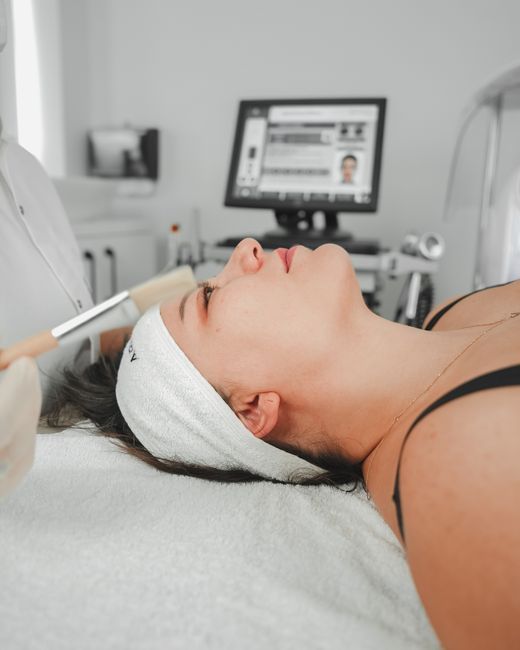
A peel series is one of several in-clinic options for oily skin. Illustrative photo.
Choosing well
How to choose a clinic for oily skin treatment in Seoul
Many Gangnam clinics advertise oil-control lasers or skin botox. These questions help you find care that looks at the whole picture, at any clinic including ours:
- Does a doctor assess the cause first? Hormones, products and skin conditions change the plan.
- Do they ask about pregnancy plans and medicines? Several options are unsafe in pregnancy.
- Is home care part of the plan? Procedures alone rarely keep oil under control.
- Are they honest about evidence? Micro-injections and some lasers have limited data.
- Is there a review visit? Plans should be adjusted after 4–8 weeks.
- Do you get a written quote? Know the number of sessions and what is included.
What affects the cost of sebum control therapy?
Cost depends on the methods chosen (peels, laser, micro-injections or a combination), the number of sessions, prescription medicines and any blood tests they need. Medical consultations and prescriptions for acne may be covered by Korea's National Health Insurance for enrolled patients, while cosmetic procedures for oiliness are not. You receive a written quote before treatment.
Your visit
What to expect at your sebum control appointment
01
Skin assessment
Dr. Hwang checks where your skin is oily, your pores and any acne, and asks about products, medicines, cycles and pregnancy plans.
02
Your plan
You agree on home care plus the in-clinic option that fits, such as peels, laser or micro-injections, and whether medicine is needed.
03
Treatment
Most sessions take 20–40 minutes, with cooling or numbing as needed. You leave with written aftercare.
04
Review
Progress is checked after about 4–8 weeks, and the plan is adjusted to keep oiliness controlled with the least treatment.
Your doctor
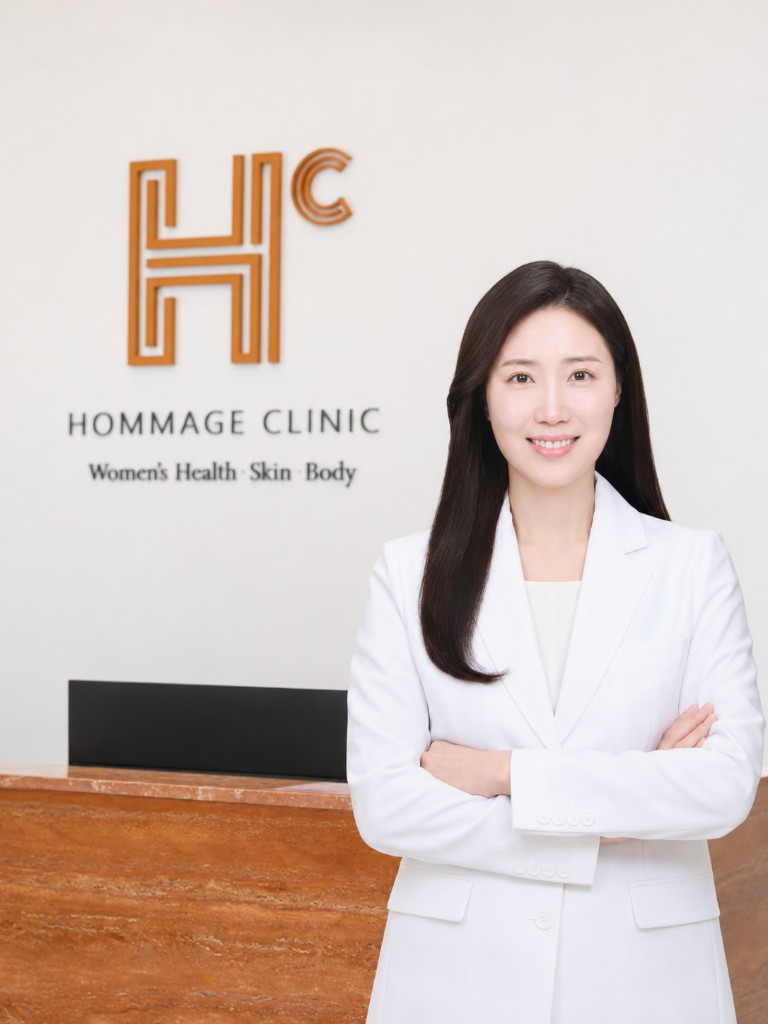
Dr. Hwang Seonhwa
Physician · Skin & Aesthetic Treatments
Dr. Hwang looks for the reason behind oily skin, such as genetics, hormones or product use, before choosing any procedure. Dr. Hwang combines in-clinic treatment with home care and, when needed, prescription medicine, and reviews the plan at follow-up visits.
Physician for face and skin procedures, including lifting, laser and skin-improvement treatments, planned around facial proportions and skin condition.
Sebum control therapy: frequently asked questions
Can sebum production be reduced permanently?
Most treatments reduce oil for weeks to months rather than permanently, because your oil glands keep responding to hormones and genetics. A full course of isotretinoin can lower oiliness for a long time in some people, but it may return. Ongoing skincare and occasional maintenance treatment are usually needed.
Does washing my face more often reduce oily skin?
No. Washing more than twice a day, or using harsh cleansers and scrubs, irritates the skin without stopping oil production, and can make breakouts and redness worse. A gentle cleanser morning and evening, a light moisturizer and blotting papers during the day work better for most people.
Does Botox reduce oily skin?
Small studies suggest that very diluted botulinum toxin injected just under the skin surface can reduce oil and the look of pores for around three months. It is an off-label use with limited evidence, and results vary. It is different from standard wrinkle Botox and is not a treatment for acne on its own.
Can oily skin be dehydrated?
Yes. Oil and water are different things, so skin can be shiny yet feel tight, flaky or sensitive, often after over-cleansing or strong acne products. Treating this means repairing the skin barrier with a light moisturizer, not removing more oil. Our skin barrier repair treatment page explains more.
Is oily skin caused by hormones?
Hormones play a large part. Androgens stimulate the oil glands, which is why oiliness rises at puberty and can change with the menstrual cycle, the pill, pregnancy and menopause. If oily skin comes with acne, irregular periods or new hair growth, a hormonal assessment, including for PCOS, can help.
Can I have sebum control treatment while pregnant or breastfeeding?
Some options must wait. Retinoids, isotretinoin, anti-androgen medicines and botulinum toxin are avoided in pregnancy, and salicylic acid peels are usually postponed. Gentle cleansing, suitable moisturizers and some pregnancy-compatible topical treatments, such as azelaic acid, may be possible. Tell the clinic if you are pregnant, trying to conceive or breastfeeding.
Can foreigners get sebum control therapy in Seoul?
Yes. International patients and foreign residents can be treated at Hommage Clinic in Gangnam. Bring your passport for registration and a list of skincare products and medicines you use. Walk-ins are welcome, or book ahead for a set time, and contact us before your visit to arrange language support.
Does niacinamide reduce oily skin?
It may help a little. In one placebo-controlled study of 100 people, a 2% niacinamide moisturizer lowered the rate of sebum production after 2 and 4 weeks, while a second, smaller study found only a reduction in surface oil. It is gentle and inexpensive, so it can be a reasonable add-on, but it is not a substitute for medical treatment when oiliness is severe.
Can a laser shrink oil glands?
Some lasers and radiofrequency microneedling devices heat the oil glands and can reduce their activity over a series of sessions. Evidence is growing but comes mainly from small studies, and results vary between people and devices. A laser carbon peel gives a shorter-term matte finish rather than lasting change. Dr. Hwang explains which device, if any, suits your skin.
Is isotretinoin used just for oily skin?
Isotretinoin is the most effective medicine for reducing sebum, but it is a strong prescription drug. Guidelines strongly recommend it for severe acne, acne that scars or causes distress, or acne that has not responded to other treatment. It is not usually used for shine alone. It causes severe birth defects, so strict pregnancy prevention and monitoring are required.
Will the birth control pill help my oily skin?
Some combined pills reduce the effect of androgens on the oil glands and are recommended as an option for hormonal acne in women. They are not suitable for everyone, for example with certain migraines, smoking over 35 or a history of blood clots. A doctor reviews your health before prescribing, and the gynecology team can help if you also have irregular periods.
Does oily skin age more slowly?
Oily skin often looks plumper and may show fine lines later, but oil does not prevent sun damage, pigmentation or loss of firmness. Daily sunscreen matters just as much for oily skin. Oil production also tends to fall with age, especially after menopause, so your routine may need to change over time.
How is sebum control therapy different from a pore cleansing facial?
A deep cleansing pore therapy session clears blackheads and congestion that are already there, and its effect lasts a few weeks. Sebum control therapy aims to reduce how much oil your skin makes, using medicine, peels, lasers or micro-injections over a longer plan. Many people with oily skin benefit from both.
References
Sources used for this page, reviewed by Dr. Hwang Seonhwa. Read our editorial and medical review policy.
- Rahman E, Rao P, Philipp-Dormston W, et al. Intradermal botulinum toxin A on skin quality and facial rejuvenation: a systematic review and meta-analysis. Plast Reconstr Surg Glob Open. 2024;12(8):e6084. PMC
- Efficacy and possible mechanisms of botulinum toxin treatment of oily skin. J Cosmet Dermatol. 2019;18(2):451–457. PubMed
- The effect of 2% niacinamide on facial sebum production. J Cosmet Laser Ther. 2006;8(2):96–101. PubMed
- Reynolds RV, Yeung H, Cheng CE, et al. Guidelines of care for the management of acne vulgaris. J Am Acad Dermatol. 2024;90(5). PMID: 38300170.
This page is general information and does not replace a personal consultation. Illustrations are original works of Hommage Women's Clinic, Gangnam, Seoul; photos marked illustrative are not of patients.
Related oily skin and acne treatments
Salicylic Acid Peel
An oil-soluble peel that clears congested pores and reduces shine on oily skin.
Laser Carbon Peel
Laser over a carbon lotion for a short-term clean, matte finish on oily skin.
Extraction Facial
Hygienic removal of blackheads and whiteheads, planned alongside medical acne care.
Pore Tightening Laser
Collagen-building treatments to soften the look of enlarged pores.
Botox
Botulinum toxin injections, including how wrinkle and skin micro-injections differ.
PCOS Treatment
Hormonal assessment for oily skin and acne with irregular periods or new hair growth.
Get oily skin under control with a doctor's plan
Book a skin assessment with Dr. Hwang Seonhwa in Gangnam to find out why your skin is oily and which treatment fits it.
Hommage Clinic · 4F, Building A, 509 Gangnam-daero, Seoul (near Sinnonhyeon Station) · Mon & Fri 10:00–20:00 · Tue–Thu 10:00–19:00 · Sat 10:00–15:00