
Skin & Aesthetics · Gentle exfoliation
Enzyme Peel Facial in Seoul: Gentle Exfoliation for Sensitive Skin
An enzyme peel facial is a gentle exfoliating treatment that uses fruit-derived enzymes, such as papain from papaya and bromelain from pineapple, to dissolve the proteins holding dead skin cells together, leaving skin softer and brighter without scrubbing or strong acids. At Hommage Clinic in Gangnam, Seoul, Dr. Hwang Seonhwa checks sensitive or reactive skin first to make sure gentle exfoliation is the right step.
Quick answer
An enzyme peel facial uses fruit enzymes such as papain (papaya) and bromelain (pineapple) to loosen the proteins that hold dead surface cells together, without scrubbing or strong acids. At Hommage Women's Clinic in Gangnam, Seoul, Dr. Hwang Seonhwa checks sensitive skin and allergies first. A session takes about 30–45 minutes, usually with no downtime, and the softer, brighter feel typically lasts several days to about two weeks.
Key takeaways
- One of the gentlest professional exfoliation options, often chosen for sensitive or dry skin.
- Results are subtle and short-term; it does not treat melasma, scars or wrinkles.
- Product strength varies a lot: lab tests found some commercial enzyme peels had little or no enzyme activity.
- People with latex allergy should mention it, because latex can cross-react with some fruits.
- Persistent redness or burning may be rosacea or eczema, which need medical care first.
Infographic
Enzyme peel in numbers
Session time
Cleanse, mask, remove, soothe.
Enzyme on the skin
Removed early if you feel burning or itching.
Usual downtime
Slight pinkness can last an hour or two.
Repeat interval
A common maintenance rhythm.
Pause actives
No scrubs, retinoids or exfoliating acids.
Latex-fruit overlap
Share of latex-allergic people who also react to some fruits.
Enzyme peel facial at a glance
| Key fact | Details |
|---|---|
| What it is | Exfoliation with fruit enzymes (papain, bromelain) that loosen dead cells on the surface |
| Treatment time | Typically 30–45 minutes, with the enzyme on the skin for about 5–15 minutes |
| Comfort | Usually mild warmth or light tingling; no anesthesia needed |
| Downtime | Usually none; slight pinkness can last an hour or two |
| Results visible | Softer, smoother skin straight away; the effect is subtle |
| How long results last | Typically several days to about 2 weeks; often repeated every 2–4 weeks |
| Suited to | Sensitive, dry or easily irritated skin that does not tolerate acids or scrubs |
An enzyme peel may suit you if you have
- Sensitive skin that stings with acid peels or turns red after scrubs
- Dull, flaky or dry skin, for example during Seoul's dry winter
- Mild surface roughness and want gentle, regular exfoliation
- A busy schedule or event and need a treatment with minimal downtime
Wait or choose another option if you have
- An allergy to papaya, pineapple, kiwi or latex (latex-fruit cross-reactions)
- A rosacea or eczema flare, an active cold sore, open wounds or sunburn
- Used isotretinoin recently: exfoliation is often postponed, so ask about timing
- Pregnancy or breastfeeding: tell the doctor, because some enzyme products also contain acids or retinol
How does an enzyme peel work?
An enzyme peel uses proteolytic enzymes, which break down proteins. The outer layer of skin is held together by protein connections between dead cells. Enzymes such as papain (from papaya), bromelain (from pineapple) or pumpkin enzymes loosen those connections, so the dead cells lift away when the mask is removed.
Unlike acids, enzymes do not change the skin's pH much and act only on the very surface, so they tend to sting less. Some products are lightly warmed or combined with steam, because enzymes work more actively at skin temperature. Many clinic formulas also include soothing ingredients such as panthenol or centella.
Enzyme peels are among the gentlest professional exfoliation options. That gentleness is also their limit: the effect is subtle and short-term.
Who is an enzyme peel for?
An enzyme peel suits people who want exfoliation but whose skin reacts to stronger methods. Typical reasons include:
- Sensitive or thin skin that stings with glycolic or salicylic acid.
- Dryness and flaking, where scrubbing or abrasion would worsen the barrier.
- Dullness or mild roughness that needs regular, light maintenance.
Sensitivity is not a diagnosis, though. Persistent redness, flushing, burning or flaking can be signs of rosacea, eczema or contact dermatitis, which need medical treatment first; see redness reduction therapy and skin barrier repair treatment . If your skin is oily and acne-prone rather than sensitive, a salicylic acid peel usually works better, because enzymes do not reach inside pores.
What happens during an enzyme peel facial?
A session usually takes 30–45 minutes and needs no anesthesia.
- Your skin is gently cleansed, without scrubbing.
- The enzyme mask or gel is applied evenly, avoiding the eyes and lips, and left on for about 5–15 minutes. You may feel mild warmth or light tingling.
- The mask is removed with cool water or damp pads.
- A calming moisturizer and broad-spectrum sunscreen finish the treatment.
Tell the person treating you straight away if you feel burning or itching, so the product can be removed early.
How long do enzyme peel results last?
The softer, brighter feel usually lasts from several days to about two weeks. Because enzymes only lift the loosest surface cells, many people repeat the treatment every 2–4 weeks as maintenance rather than expecting a lasting change.
Gentle exfoliation gives a short-term glow, not deep correction. An enzyme peel will not fade melasma, remove sun spots, fill scars or reduce wrinkles. For pigment, see a dedicated pigment correction peel or melasma treatment plan.
Aftercare is light: use a gentle moisturizer, apply broad-spectrum SPF 30 or higher, and skip scrubs, retinoids and exfoliating acids for about 1–2 days.
Enzyme peel vs chemical peel vs microdermabrasion: which is gentler?
For most sensitive skin, an enzyme peel is the gentlest of the three:
- Enzyme peel: fruit enzymes loosen surface cells. Low stinging, no visible peeling, subtle results.
- Superficial chemical peel: acids such as glycolic, lactic or salicylic acid work a little deeper and can treat acne and marks, but sting more and may cause flaking.
- Microdermabrasion: physical buffing with crystals or a diamond tip. Effective on rough texture but less suited to reactive skin; see microdermabrasion .
Your doctor may start with an enzyme peel and move to a mild acid such as lactic or mandelic acid if your skin tolerates it well.
Risks and possible side effects
Enzyme peels are gentle, but no treatment is free of side effects:
- Temporary redness, warmth or light tingling.
- Allergic or irritant reactions: itching, hives or swelling, especially if you are allergic to papaya, pineapple or latex. A patch test may be suggested.
- Irritation if the enzyme is left on too long or used on already damaged skin.
- A rosacea or eczema flare in sensitive skin.
- Dark patches after irritation, more likely in darker skin or with sun exposure.
Contact the clinic if you develop swelling, hives, blistering or redness that keeps spreading. Seek urgent care for any swelling of the lips, tongue or throat, or difficulty breathing.
Enzyme peel facials at Hommage Clinic
Hommage Clinic is a walk-in-friendly women's health and skin clinic in Gangnam, a short walk from Sinnonhyeon Station. The clinic does not list a specific enzyme peel product. Dr. Hwang Seonhwa first examines your skin and asks about allergies and reactions, then recommends gentle care that suits it, such as a mild exfoliation, LDM or cryo soothing, or Coreg Cell-Fit, a non-thermal QMR treatment intended for thin, dry or sensitive skin. Hormonal changes in pregnancy, after childbirth or around menopause can also make skin more reactive; seeskin care for hormonal changesand our widerskin and aesthetic treatments.
Cosmetic facials are not covered by Korea's National Health Insurance. Cost depends on the treatment chosen and how often you repeat it, and you receive a written quote before anything starts.
Mechanism
Papain and bromelain: how fruit enzymes exfoliate
Dead cells in the outer skin layer are held together by tiny protein rivets called corneodesmosomes. Papain and bromelain are protein-cutting enzymes (cysteine proteases). In the lab they break down the outer parts of these rivets, so dead cells come loose and wipe away when the mask is removed, rather than being scrubbed or dissolved by acid.
Enzymes work best in a narrow range of temperature and moisture and lose activity over time, especially in water-based products stored at room temperature. That is why warmth or steam is sometimes used during the facial, and why fresh, well-stored products matter. Most of what is known comes from laboratory and cosmetic studies; there are few controlled clinical trials of enzyme peels on faces.
 Hommage · Gangnam
Hommage Women's Clinic · Gangnam, Seoul
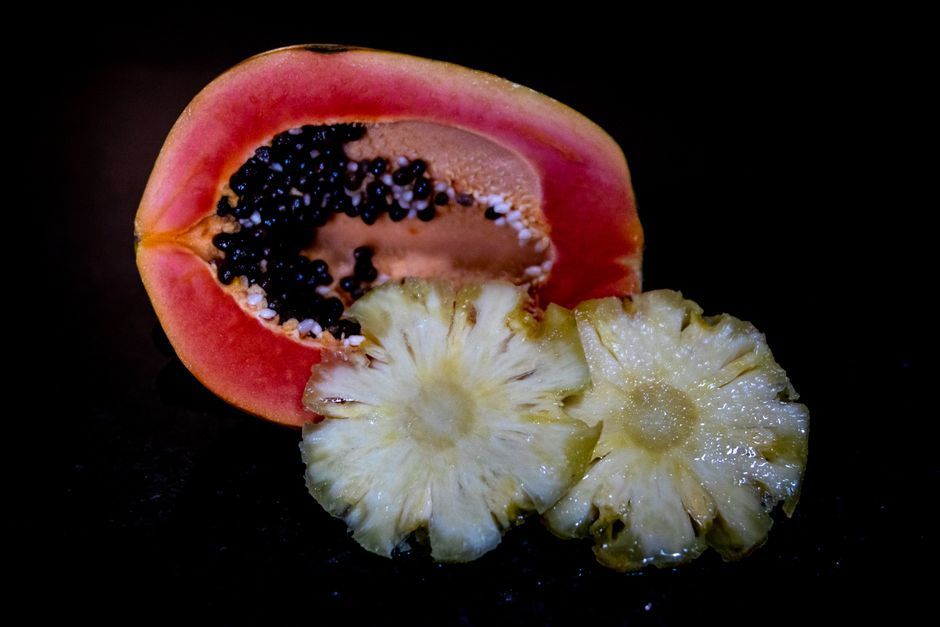
Papaya and pineapple supply the enzymes papain and bromelain. Illustrative photo.
Compare
Enzyme peel vs AHA, BHA and microdermabrasion: the sensitive-skin exfoliation ladder
For reactive skin, Dr. Hwang often thinks of exfoliation as a ladder. You start on the lowest rung that gives a result and only step up if your skin stays calm. Enzymes sit at the bottom. Mild acids such as lactic or mandelic acid come next, then oil-solublesalicylic acid for congested skin, and mechanical options likemicrodermabrasion for skin that tolerates friction.
| Compare | Enzyme peel | Mild acid peel | Microdermabrasion |
|---|---|---|---|
| How it works | Enzymes loosen protein links between dead cells | Acid loosens and dissolves dead cells | Crystals or diamond tip buff the surface |
| Stinging | Usually minimal | Mild to moderate | None, but friction can redden skin |
| Best for | Sensitive, dry, dull skin | Dullness, mild marks, texture | Rough texture in resilient skin |
| Watch out for | Fruit or latex allergy | Recent retinoids or isotretinoin | Rosacea, melasma, active acne |
 Hommage · Gangnam
Hommage Women's Clinic · Gangnam, Seoul
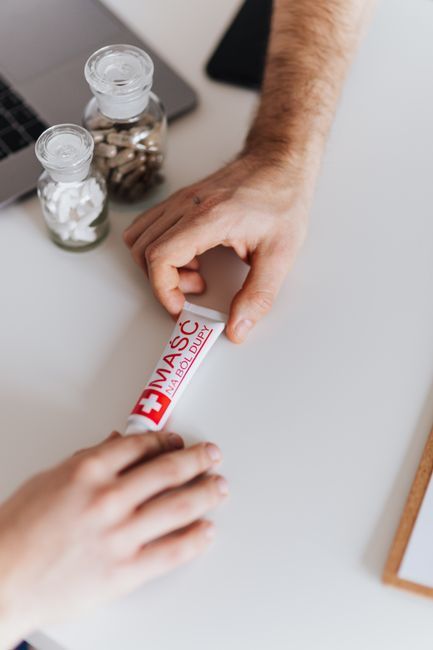
A small patch test is a sensible first step for allergy-prone skin. Illustrative photo.
Safety
Enzyme peel allergy: latex, fruit and patch testing
Because enzyme peels are made from fruit proteins, allergies are the main thing to check. People with a latex allergy are at particular risk: the Allergy & Asthma Network estimates that about 30–50% of people allergic to latex also react to certain fruits, a pattern called latex-fruit syndrome. Banana, avocado, kiwi and chestnut are the strongest cross-reactors, and papaya is also listed. In one early study of 25 latex-allergic patients, papaya was among the foods most often linked to reactions.
Papain itself can also sensitize the skin in some people. If you have a known fruit or latex allergy, frequent hives, or have reacted to fruit-based skincare before, tell the clinic when you book. Dr. Hwang may suggest a patch test or a non-enzyme option such as LDM or cryo soothing instead.
Latex allergy
Cross-reaction with some fruits is common; an alternative may be safer.
Papaya, pineapple or kiwi allergy
Avoid products containing that fruit's enzyme; test any substitute.
Past reaction to skincare
Test behind the ear or on the inner arm before a full-face mask.
No known allergies
Proceed with care; tell staff at once if you feel itching.
 Hommage · Gangnam
Hommage Women's Clinic · Gangnam, Seoul
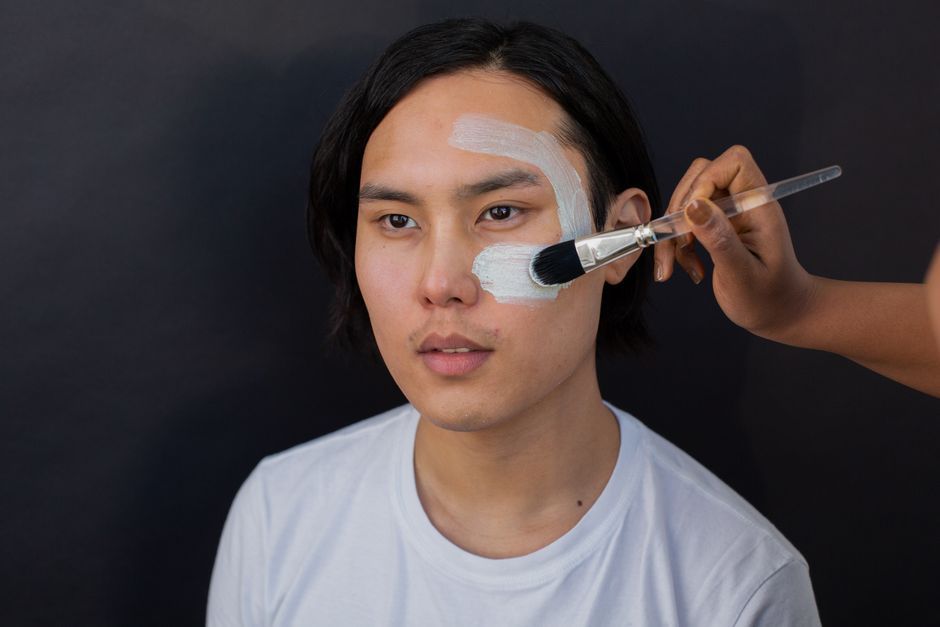
The enzyme mask is brushed on evenly and left for about 5–15 minutes. Illustrative photo.
Step by step
Enzyme peel facial step by step: a 45-minute visit
An enzyme peel is one of the calmest treatments in the clinic. There is no numbing, no needles and no device on the skin. The main safety step is timing: the enzyme stays on only as long as your skin is comfortable, and it is removed straight away if you feel itching or burning rather than mild warmth.
Evidence
Do enzyme peels work? What the research says
Enzyme peels are popular and widely described as gentle, but the evidence base is thin. Reviews explain how fruit enzymes can loosen dead cells, and lab tests confirm that papain and bromelain break down proteins. What is missing are well-designed clinical trials measuring results on real faces over time. A 2022 laboratory study also raised a practical issue: many commercial enzyme peels may contain little working enzyme by the time they reach the skin.
Peels with no detectable activity
In a lab test of 11 commercial enzyme peel products, six showed no measurable protein-cutting activity and three only traces.
Białkowski, Acta Biochim Pol, 2022Activity lost in a month
Cited data: a papain solution lost over 90% of its activity after one month at 25°C.
Białkowski, 2022Pineapple vs papaya
Fresh pineapple flesh showed about 120 times more enzyme activity than papaya in the same test.
Białkowski, 2022Latex-fruit cross-reaction
Share of latex-allergic people who also react to certain fruits.
Allergy & Asthma NetworkAftercare
After your enzyme peel: do's and don'ts for sensitive skin
Most people can go straight back to their day. The goal afterward is to protect the skin barrier so the softer feel lasts and sensitive skin does not tip into irritation. Avoid layering several new products in the same week, because if a reaction happens, it becomes hard to tell which product caused it.
Do
- Rinse with lukewarm or cool water and pat dry
- Use a fragrance-free, barrier-friendly moisturizer
- Wear broad-spectrum SPF 30+ every day
- Keep your routine simple for a few days
- Note any itching or hives and tell the clinic
Don't
- Use scrubs, retinoids or exfoliating acids for 1–2 days
- Use at-home enzyme or peel masks the same week
- Take very hot showers or saunas that day
- Try several new products at once
- Ignore swelling of the lips or face: seek urgent care
 Hommage · Gangnam
Hommage Women's Clinic · Gangnam, Seoul
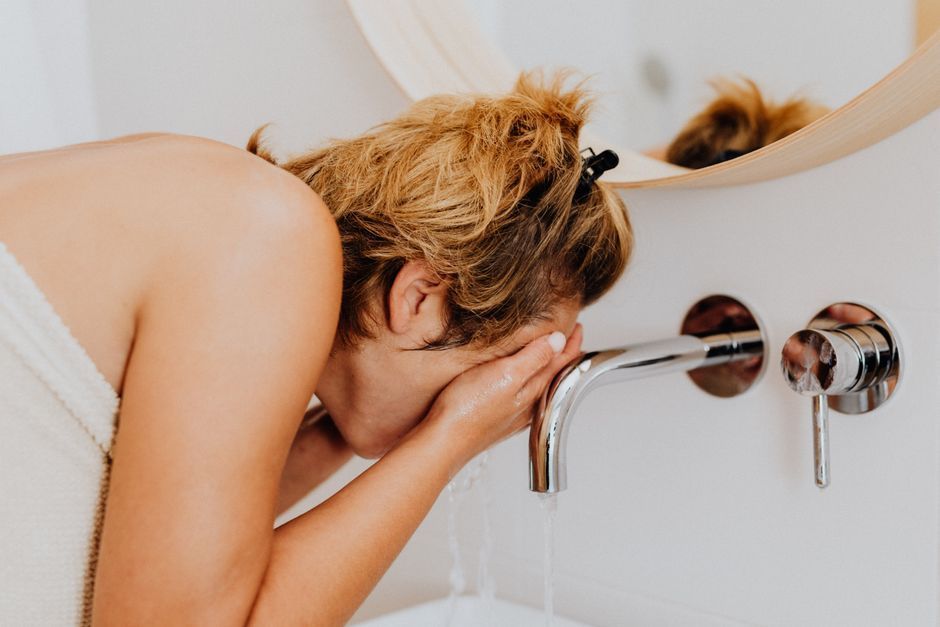
Cool water and a simple routine help sensitive skin settle. Illustrative photo.
 Hommage · Seoul
Hommage Women's Clinic · Gangnam, Seoul
Seoul's dry winters are a common reason visitors look for gentle exfoliation. Illustrative photo.
Traveling to Seoul
Enzyme peel facial in Seoul for international patients
With no downtime and no follow-up visit, an enzyme peel is one of the easiest skin treatments to fit into a trip. Allow about an hour including the skin and allergy check. Hommage Women's Clinic is in Gangnam, a short walk from Sinnonhyeon Station (Line 9 and Shinbundang Line).
- Tell the clinic about any latex, fruit or skincare allergies when you book, so an alternative can be ready.
- Long flights and heated hotel rooms dry the skin; a gentle enzyme facial a day or two after arrival can help it feel comfortable again.
- Bring your passport for registration and a list of your skincare and medicines.
- Pack a fragrance-free moisturizer and SPF 30+; Seoul winters are cold and dry, and summers are humid and sunny.
- Message the clinic by WhatsApp, KakaoTalk or the contact form to arrange language support.
Choosing well
How to choose an enzyme facial for sensitive skin in Seoul
Enzyme facials are offered at many spas and skin clinics. Because sensitive skin can hide medical conditions, and because product quality varies, these questions are worth asking anywhere, including here:
- Is my sensitivity checked by a doctor? Rosacea, eczema and contact allergy need treatment, not just a gentler facial.
- Which enzyme and other ingredients are in the product? Some "enzyme" products also contain acids or retinol.
- Do they ask about latex and fruit allergies? This should happen before the mask goes on.
- Is a patch test offered if I am unsure? Especially for a first visit.
- Are expectations realistic? Gentle exfoliation will not clear melasma or scars.
- Is there a written quote? Including any add-on soothing care.
What affects enzyme peel cost in Seoul?
The total depends on the product used, whether soothing or hydrating care such as LDM, cryo or Coreg Cell-Fit is added, whether you book a single session or regular maintenance, and whether a patch test or separate consultation is needed. Cosmetic facials are not covered by Korea's National Health Insurance, and you receive a written quote before anything starts.
 Hommage · Gangnam
Hommage Women's Clinic · Gangnam, Seoul
Ingredients matter: some enzyme products also contain acids or retinol. Illustrative photo.
Your visit
What to expect at your appointment
01
Skin and allergy check
Dr. Hwang looks for redness, dryness and signs of rosacea or eczema, and asks about fruit, latex and product allergies.
02
Choosing gentle care
You agree on the mildest option that meets your goal, with a patch test if needed and a written quote.
03
Treatment
A calm session with no anesthesia, usually 30–45 minutes, and no downtime for most people.
04
Home care
Advice on a gentle routine, sunscreen and when to repeat, or when to step up to a mild acid.

Your doctor
Dr. Hwang Seonhwa
Physician · Skin & Aesthetic Treatments
Dr. Hwang treats sensitive skin by ruling out rosacea, eczema and allergy before any exfoliation, then starting with the mildest option. Strength is increased only when the skin has shown it can tolerate it.
Physician for face and skin procedures, including lifting, laser and skin-improvement treatments, planned around facial proportions and skin condition.
Enzyme peel facial: frequently asked questions
Is an enzyme peel good for sensitive skin?
Often, yes. Enzyme peels are among the gentlest professional exfoliation options because they act only on the surface and usually sting less than acid peels. However, “sensitive skin” can be a sign of rosacea, eczema or allergy, so a skin check comes first. If you react to papaya, pineapple or latex, an enzyme peel may not suit you.
Does an enzyme peel make your skin peel?
Usually not. Despite the name, an enzyme peel does not cause visible peeling or flaking. The enzymes loosen dead cells that are wiped away when the mask is removed, so the skin simply feels smoother. If you notice flaking afterward, your skin may have been irritated, and you should moisturize and avoid other actives.
How often can I get an enzyme peel?
Every 2–4 weeks is a common rhythm for maintenance. The effect is subtle and short-lived, so it is more useful as a regular routine than as a one-off. More frequent treatment can disturb the skin barrier, especially if you also use retinoids or acids at home. Your doctor will suggest a schedule for your skin.
Is an enzyme peel safe during pregnancy?
Enzyme peels without acids or retinoids are generally considered a gentler choice in pregnancy, but product formulas vary and some contain salicylic acid or retinol. Tell your doctor if you are pregnant or breastfeeding so the ingredients can be checked. Pregnancy can also make skin more reactive and prone to melasma, so sun protection matters.
Can I wear makeup after an enzyme peel facial?
Yes, most people can wear makeup the same day, because there is usually no downtime. Choose gentle, non-comedogenic products and clean brushes. If your skin looks pink or feels warm, wait a few hours. Skip scrubs, retinoids and exfoliating acids for about 1–2 days.
Can foreigners get an enzyme peel facial in Seoul?
Yes. International patients and foreign residents can book an appointment at Hommage Clinic and should bring a passport for registration. With little or no downtime, a gentle facial fits easily into a short stay. Please contact us before your visit to arrange language support, and mention any allergies when you book.
What is the difference between papain and bromelain?
Both are protein-cutting enzymes from fruit: papain comes from papaya and bromelain from pineapple. They work in a similar way, loosening the links between dead skin cells. In one lab comparison, fresh pineapple flesh had far higher enzyme activity than papaya, but the finished product's formula and freshness matter more than the fruit source.
Can I have an enzyme peel if I am allergic to latex?
Tell the clinic first. About 30–50% of people with latex allergy also react to certain fruits, and papaya is among the fruits linked to latex cross-reactions. Depending on your history, Dr. Hwang may suggest a patch test or a non-enzyme option instead.
Is an enzyme peel good for acne?
It can help with dullness on acne-prone skin, but enzymes act on the surface and do not reach inside oily pores. For blackheads and breakouts, a salicylic acid peel usually works better, and inflamed acne needs medical treatment first.
Will an enzyme peel lighten dark spots or melasma?
Not meaningfully. It can make skin look brighter for a short time, but it does not reach the pigment that causes sun spots or melasma. See our pigment correction peel or melasma treatment pages for targeted options.
Are at-home enzyme masks the same as a clinic enzyme peel?
They work on the same idea, but strength varies widely. A 2022 lab study found that many commercial enzyme peel products had little or no measurable enzyme activity. A clinic treatment adds a skin check, controlled timing and immediate care if your skin reacts.
Can an enzyme peel help rosacea?
Rosacea is a medical condition, and any exfoliation can trigger a flare during an active phase. Rosacea is treated first with medical care; see redness reduction therapy. Once it is calm, Dr. Hwang decides whether very gentle exfoliation is appropriate.
Can I combine an enzyme peel with other treatments?
Yes, it is often paired with soothing or hydrating care on the same day. Lasers, stronger peels and microneedling are usually spaced a week or more apart, so ask your doctor to plan the order.
References
Sources used for this page, reviewed by Dr. Hwang Seonhwa. Read our editorial and medical review policy.
- Białkowski K. Proteolytic activity of cosmetic enzyme peel products. Acta Biochimica Polonica. 2022. Full text
- Venetikidou M, Lykartsi E, Adamantidi T, et al. Proteolytic enzyme activities of bromelain, ficin, and papain from fruit by-products and potential applications in sustainable and functional cosmetics for skincare. MDPI; 2025. doi:10.3390/app15052637
- Allergy & Asthma Network. Latex allergy and foods. allergyasthmanetwork.org
- Baumann LS. Beware of natural fruit and nut ingredients in latex-allergic patients. MDedge Dermatology. 2019. MDedge
This page is general information and does not replace a personal consultation. Illustrations are original works of Hommage Women's Clinic, Gangnam, Seoul; photos marked illustrative are not of patients.
Related gentle skin treatments
Skin Barrier Repair
Staged care for redness, dryness and flaking after irritation or treatments.
Redness Reduction Therapy
Treatment options for persistent facial redness and flushing.
Microdermabrasion
Mechanical exfoliation for rough texture in skin that tolerates it.
Skin Scaling
The Korean clinic facial for professional exfoliation and deep cleansing.
Salicylic Acid Peel
An oil-soluble superficial peel for blackheads and acne-prone skin.
Skin Care for Hormonal Changes
How pregnancy, the pill and menopause can make skin more sensitive.
Find gentle care for sensitive skin
Book a skin assessment with Dr. Hwang Seonhwa in Gangnam to check what is behind your sensitivity and whether an enzyme peel or other gentle care is right for you.
Hommage Clinic · 4F, Building A, 509 Gangnam-daero, Seoul (near Sinnonhyeon Station) · Mon & Fri 10:00–20:00 · Tue–Thu 10:00–19:00 · Sat 10:00–15:00