
Women's health · Hormones
Low Estrogen at Any Age: Causes, Symptoms and Treatment in Gangnam
Low estrogen means your ovaries are producing less estrogen than your body needs, which can stop periods and cause hot flashes, vaginal dryness, low mood and bone loss. It is normal after menopause but not before it. At Hommage Clinic in Gangnam, Seoul, OB/GYN specialist Dr. Park Yuna finds the cause with hormone tests and ultrasound, then treats both the cause and the symptoms.
Quick answer
Low estrogen treatment starts with finding the cause, because missed periods and hot flashes before menopause can come from premature ovarian insufficiency, over-exercise and under-eating, breastfeeding or pituitary problems. At Hommage Women's Clinic in Gangnam, Seoul, female OB/GYN specialist Dr. Park Yuna uses hormone tests and ultrasound, then treats the cause and protects bones, often with hormone replacement until about age 50 when the ovaries have stopped working early.
Key takeaways
- Low estrogen before menopause is not normal and deserves a check, especially if periods stop for 3 months or more.
- POI affects about 1 in 100 women under 40.
- For POI and early menopause, guidelines recommend hormone replacement until at least the average age of menopause.
- Exercise- and diet-related low estrogen is usually reversible by restoring energy balance.
Infographic
Low estrogen in numbers
POI
Women affected by premature ovarian insufficiency before 40.
POI threshold
Ovaries stop working normally before this age.
Missed periods
Without pregnancy, a reason to get checked.
Peak bone age
Bone builds until about 30; low estrogen earlier can lower it for life.
Natural pregnancy
Of women with POI conceive without treatment.
HRT until
Hormone replacement usually continues to about the natural age of menopause.
Low estrogen at a glance
| Key fact | Details |
|---|---|
| What it is | Estrogen levels too low for your age, because the ovaries are failing or not being signaled |
| Common signs | Missed periods, hot flashes, vaginal dryness, painful sex, low mood, poor sleep, fractures |
| Common causes | Early menopause or POI, breastfeeding, over-exercise, low body weight, stress, pituitary problems |
| How it's diagnosed | Cycle history, blood tests (estradiol, FSH, LH, prolactin, thyroid, AMH) and pelvic ultrasound |
| Treatment options | Treating the cause, hormone replacement, vaginal estrogen, bone protection, nutrition support |
| Reviewed by | Dr. Park Yuna, OB/GYN specialist |
Book an assessment if you have
- No periods for 3 months or more and you are not pregnant
- Hot flashes or night sweats before age 45
- Vaginal dryness or painful sex while breastfeeding or after stopping periods
- Missed periods linked to intense training, dieting or weight loss
- A stress fracture or early bone loss on a scan
Seek urgent care instead if you have
- Fainting, a very slow heartbeat or severe weakness with rapid weight loss
- Sudden severe headache with changes in your vision
- Thoughts of harming yourself
What causes low estrogen?
Estrogen is mainly made by the ovaries when the brain's pituitary gland signals them to. Low estrogen happens either because the ovaries are not working (primary causes) or because the brain is not sending the signal (secondary causes).
- Premature ovarian insufficiency (POI): the ovaries stop working normally before age 40. It affects about 1 in 100 women and can be linked to genetics, autoimmune disease, or chemotherapy and radiotherapy.
- Early or surgical menopause: periods stopping between 40 and 45, or after removal of both ovaries.
- Functional hypothalamic amenorrhea: the brain switches off the cycle because of too little energy intake for the amount of exercise, low body weight, eating disorders or major stress. Common in athletes and dancers.
- Breastfeeding and the postpartum period: the hormone prolactin keeps estrogen low, which is normal and temporary.
- Other medical causes: high prolactin, thyroid or pituitary disease, and some medicines, such as the GnRH treatments used for endometriosis .
Low estrogen after the natural age of menopause is expected; its symptoms are covered on our menopause treatment page.
Symptoms of low estrogen
The most common sign is periods that become irregular or stop. Other symptoms can include:
- Hot flashes, night sweats and trouble sleeping
- Vaginal dryness, irritation and pain during sex, and more frequent urinary infections
- Low mood, irritability, anxiety, poor concentration and fatigue
- Lower sex drive
- Dry skin and thinning hair
- Bone loss, which has no symptoms until a fracture happens
Because bone builds up until about age 30, low estrogen in your teens and twenties can lower your peak bone mass for life. This is why prolonged missed periods should be checked rather than accepted as convenient.
How is low estrogen diagnosed?
Low estrogen is diagnosed with a combination of your history, blood tests and sometimes ultrasound. Dr. Park asks about your periods, weight changes, exercise, eating, stress, medicines and any previous cancer treatment.
Hormone testing usually includes estradiol, FSH and LH, prolactin and thyroid function, plus a pregnancy test. A raised FSH level in a woman under 40, sometimes repeated a few weeks later, suggests POI, while low FSH and LH point to a brain-signal cause. An AMH test and pelvic ultrasound show ovarian reserve and the uterus lining. If POI is confirmed, further tests such as genetic and autoimmune screening and a bone density scan are usually recommended.
Low estrogen treatment options
Treatment depends on the cause and on your goals, such as relieving symptoms, protecting bones or getting pregnant.
- Hormone replacement for POI and early menopause: estrogen with a progestogen is recommended until at least the average age of menopause, around 50, to protect bones, heart and brain health. At this age it replaces what your body would normally make, so the risks seen in older women do not apply in the same way. See hormone replacement therapy .
- Combined birth control pills can be an alternative for younger women who also need contraception, although HRT may protect bones better.
- Exercise- or weight-related causes: the main treatment is restoring energy balance by eating more, adjusting training and treating stress or an eating disorder, often with a dietitian and mental health support.
- Breastfeeding: usually no hormone treatment is needed; lubricants, moisturizers and, if needed, low-dose vaginal estrogen help dryness. See vaginal dryness treatment .
- Bone protection: calcium and vitamin D, weight-bearing exercise and monitoring with a bone density scan.
Can I get pregnant with low estrogen?
It depends on the cause. When low estrogen comes from exercise, low weight or stress, periods and ovulation usually return once energy balance is restored, and ovulation can be supported with medication if needed.
With POI, the chance of natural pregnancy is low but not zero; about 5–10% of women with POI conceive without treatment. Many women with POI who want to become pregnant are referred to a fertility center to discuss egg donation. If you do not want to become pregnant, use contraception, because HRT doses are not contraceptive.
Risks and possible side effects of treatment
Hormone treatment can cause breast tenderness, bloating, headaches and irregular spotting in the first few months, and these usually settle. Estrogen tablets slightly raise the risk of blood clots, so skin patches or gels may be preferred if you have migraines or other clot risk factors. Combined pills are not suitable if you have migraine with aura or a history of blood clots, or if you are over 35 and smoke.
Leaving low estrogen untreated also has risks, including osteoporosis and fractures, and, with untreated POI, a higher long-term risk of heart disease. Call the clinic if you have heavy or prolonged bleeding on treatment, a new breast lump or headaches that change. Seek emergency care for chest pain, breathlessness, a painful swollen leg or sudden weakness.
Low estrogen care at Hommage Clinic
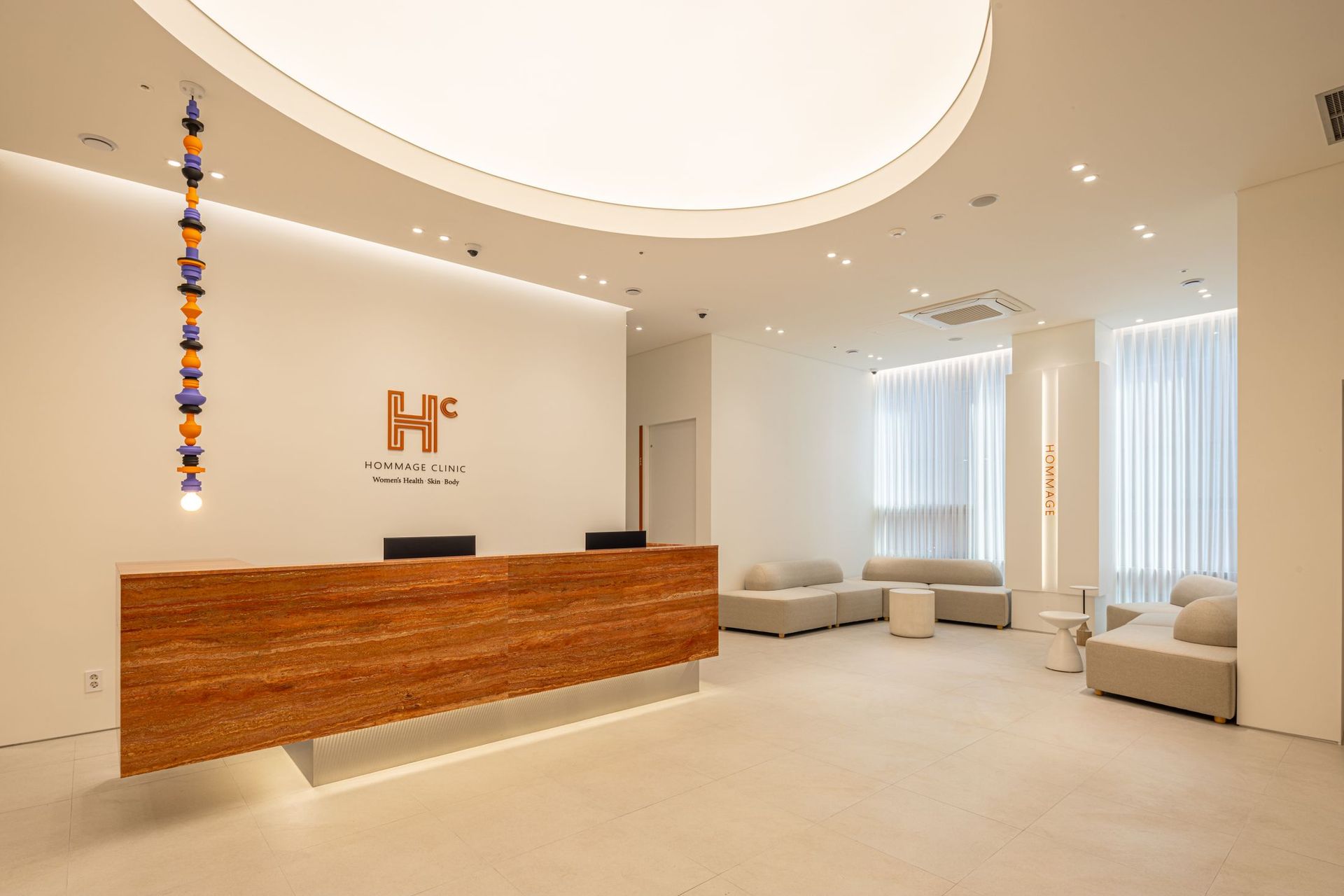
Hommage Clinic is a women's clinic in Gangnam, a short walk from Sinnonhyeon Station, led by Dr. Park Yuna, a female OB/GYN specialist. Blood tests and pelvic ultrasound can usually be done on the day, and we arrange referral for bone density scans, fertility care or specialist support when needed. Related services are listed on our cosmetic and functional gynecology page.
For patients enrolled in Korea's National Health Insurance, consultations, many hormone tests and prescribed treatments for medical conditions such as POI are covered; visitors without coverage pay the clinic's fees directly. We explain costs before any test.
How it works
Brain or ovaries? How low estrogen happens
Estrogen production depends on a chain of signals. The hypothalamus in the brain releases GnRH, which tells the pituitary gland to release FSH and LH, which in turn tell the ovaries to make estrogen. A break anywhere in that chain lowers estrogen, and blood tests show where the break is. When the ovaries fail (as in POI), the brain shouts louder, so FSH is high . When the brain stops signaling (as with over-exercise, low weight or stress), FSH and LH are low . That difference decides the treatment.
Your results
Low estrogen blood test: what your results mean
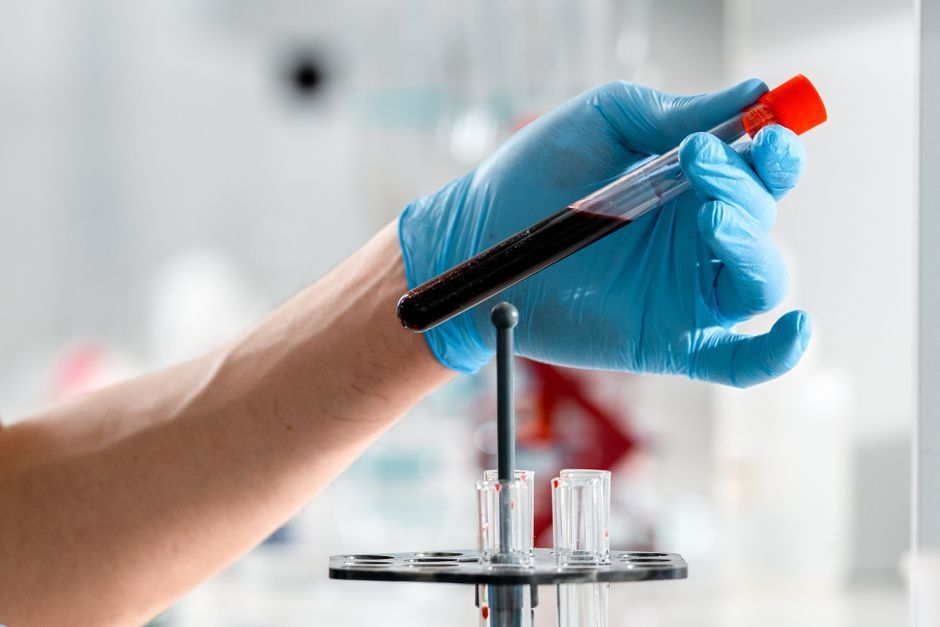
Hormone results only make sense together and in context. A single low estradiol reading can be normal at certain points in the cycle, so Dr. Park reads it alongside FSH, LH, prolactin and thyroid tests, your cycle history and, often, a pelvic ultrasound . Some tests are timed to the early days of your cycle or repeated a few weeks later to confirm a pattern.
Low estradiol + high FSH
Ovaries not responding: suggests POI or early menopause; usually repeated to confirm.
Low estradiol + low/normal FSH, LH
Brain signal reduced: think energy deficit, stress, weight loss or pituitary causes.
High prolactin
Can switch off ovulation; seen with breastfeeding, some medicines or a pituitary cause.
Abnormal thyroid
Over- or underactive thyroid can disturb cycles and mimic symptoms.
Low AMH
Low ovarian reserve; supports POI when combined with high FSH. See AMH test.
 Hommage · Gangnam
Hommage Women's Clinic · Gangnam, Seoul
Estradiol, FSH, LH, prolactin and thyroid results are read together, not alone. Illustrative photo.
By life stage
Low estrogen symptoms and causes by age
The likely cause of low estrogen changes with age, and so does the goal of treatment. In your twenties the priority is often finding a reversible cause and protecting peak bone mass; in your thirties fertility planning may come first; after 40 the question is often whether this is early menopause. The infographic gives a simple map.
Treatment pathway
How is low estrogen treated? From diagnosis to long-term plan
Once tests show where the problem lies, treatment follows one of a few routes. Reversible causes are treated at the source; permanent ovarian causes are managed with hormone replacement; and every route includes bone protection and, where relevant, fertility or contraception planning.
 Hommage · Gangnam
Hommage Women's Clinic · Gangnam, Seoul
Hard training without enough fuel can switch off the menstrual cycle. Illustrative photo.
Active women
Missed periods from exercise or dieting: functional hypothalamic amenorrhea
When you burn more energy than you eat over weeks or months, the brain treats it as a famine and switches off the reproductive cycle to save energy. This is called functional hypothalamic amenorrhea (FHA). It is common in runners, dancers, gymnasts and women who diet strictly or are under heavy stress, and it is part of the wider picture called relative energy deficiency in sport (RED-S).
Losing periods may feel convenient, but the low estrogen that comes with it weakens bones at the age when they should be strongest, raising the risk of stress fractures now and osteoporosis later. The main treatment is not hormones but fuel: eating enough to match training, reducing training load for a while, and treating stress or disordered eating, often with a dietitian and mental health support. Hormone treatment may be added for bone protection if periods do not return. A combined pill can bring regular bleeds but does not fix the underlying energy deficit, so it is not a first-line answer on its own.
Helpful steps
- Eat enough to cover training, including carbohydrates
- Plan lighter training weeks
- Get help for stress or disordered eating
- Ask about a bone density scan
Warning signs
- No period for 3 months or more
- Stress fracture or shin pain that will not settle
- Constant tiredness, feeling cold, dizziness
- Rapid weight loss
Long-term health
Why treating low estrogen protects your bones and heart
Estrogen helps keep bone strong and supports healthy blood vessels. When it is missing for years before the natural age of menopause, women face a higher risk of osteoporosis and, with POI, of heart disease. That is why the Menopause Society and the Korean Society of Menopause both recommend hormone replacement for women with POI or early menopause until at least the average age of natural menopause, unless there is a reason not to, regardless of whether they have symptoms. At this age the hormones are replacing what the body would normally make, so the risk figures seen in older women starting HRT do not apply in the same way.
Alongside hormones, everyday habits matter:
- calcium-rich foods such as dairy, tofu, small fish with bones and leafy greens
- enough vitamin D from sunlight, food or a supplement if levels are low
- weight-bearing and strength exercise, matched by enough food
- not smoking and keeping alcohol low
- a bone density scan when low estrogen has lasted a long time or you have had a fracture
 Hommage · Gangnam
Hommage Women's Clinic · Gangnam, Seoul
Enough energy, calcium and vitamin D support recovery and bone health. Illustrative photo.
Evidence
Low estrogen and POI: what the research says
Guidance on low estrogen in younger women is based on menopause society statements, observational studies and expert consensus, because large randomized trials in this group are few. The key points are consistent across societies.
HRT for POI
Recommended until at least the average age of natural menopause, regardless of symptoms.
Korean Society of Menopause, 2025; NAMS 2022; ESHRE POI guideline, 2016Long-term risks if untreated
Women with POI or early menopause face higher risks of bone loss, heart disease and cognitive or mood problems.
NAMS position statement, 2022How POI is diagnosed
Before age 40: irregular or absent periods for at least 4 months, plus FSH above 25 IU/L on two blood tests more than 4 weeks apart.
ESHRE POI guideline, Hum Reprod 2016Bone protection in POI
Estrogen replacement is recommended for bone health; the combined pill may suit some women, but its effects on bone density are less favourable.
ESHRE POI guideline, Hum Reprod 2016Osteoporosis in Korean women 50+
A reminder of how common bone loss is even at the usual age; earlier estrogen loss adds risk.
KNHANES, cited in KSM 2025Evidence gap
NICE notes limited evidence on HRT's overall health effects in early menopause and calls for research.
NICE NG23, 2024 Hommage · Seoul
Hommage Women's Clinic · Gangnam, Seoul
Seoul: the clinic is in Gangnam, near Sinnonhyeon Station. Illustrative photo.
Traveling to Seoul
Low estrogen testing and treatment in Seoul for international patients
Foreign residents and visitors can have a full low estrogen work-up at Hommage Women's Clinic in Gangnam. Blood tests and ultrasound can usually be done on the day of your consultation.
- Contact first: message us by WhatsApp, KakaoTalk or the contact form with your dates; ask for language support if needed. Some tests are best done early in your cycle, so tell us your period dates.
- Bring: passport or residence card, dates of your last few periods, any previous hormone or bone scan results, and a list of medicines and supplements.
- Time needed: plan 2–3 days so results can be reviewed with you; confirming POI may need a repeat test a few weeks later, which you can do at home.
- After you leave: take your written results and plan to your home doctor, and arrange a bone density scan if advised.
Choosing well
How to choose a clinic for low estrogen in Seoul
Use these questions at any clinic, including ours:
- Do they look for the cause first? Hormones alone are not the answer for every woman.
- Are FSH, LH, prolactin and thyroid all checked? A single estradiol value is not enough.
- Is bone health considered? Ask about calcium, vitamin D and bone density scanning.
- Are fertility plans discussed? Referral routes should be clear if pregnancy is a goal.
- Is there regular follow-up? Treatment is adjusted over months and years.
What affects the cost of low estrogen treatment in Seoul?
Costs depend on which tests are needed ( hormone testing , AMH , ultrasound, bone density), the treatment chosen and how long you take it, and the number of follow-up visits or referrals. For patients enrolled in National Health Insurance, many tests and treatments for medical conditions such as POI are covered; visitors without coverage pay directly. We explain costs before any test.
 Hommage · Gangnam
Hommage Women's Clinic · Gangnam, Seoul
The cause of low estrogen is found before treatment is chosen. Illustrative photo.
Your visit
What to expect at your low estrogen assessment
01
Consultation
Dr. Park asks about your periods, weight, exercise, eating, stress, breastfeeding, medicines and family history.
02
Tests
Blood tests for estradiol, FSH, LH, prolactin and thyroid, and a pelvic ultrasound when needed. Some tests are timed to your cycle.
03
Results and plan
We explain the cause and agree on treatment for symptoms, bone health and any pregnancy plans.
04
Follow-up
Regular reviews to adjust treatment, repeat tests and arrange bone density scans or referrals.
Your doctor
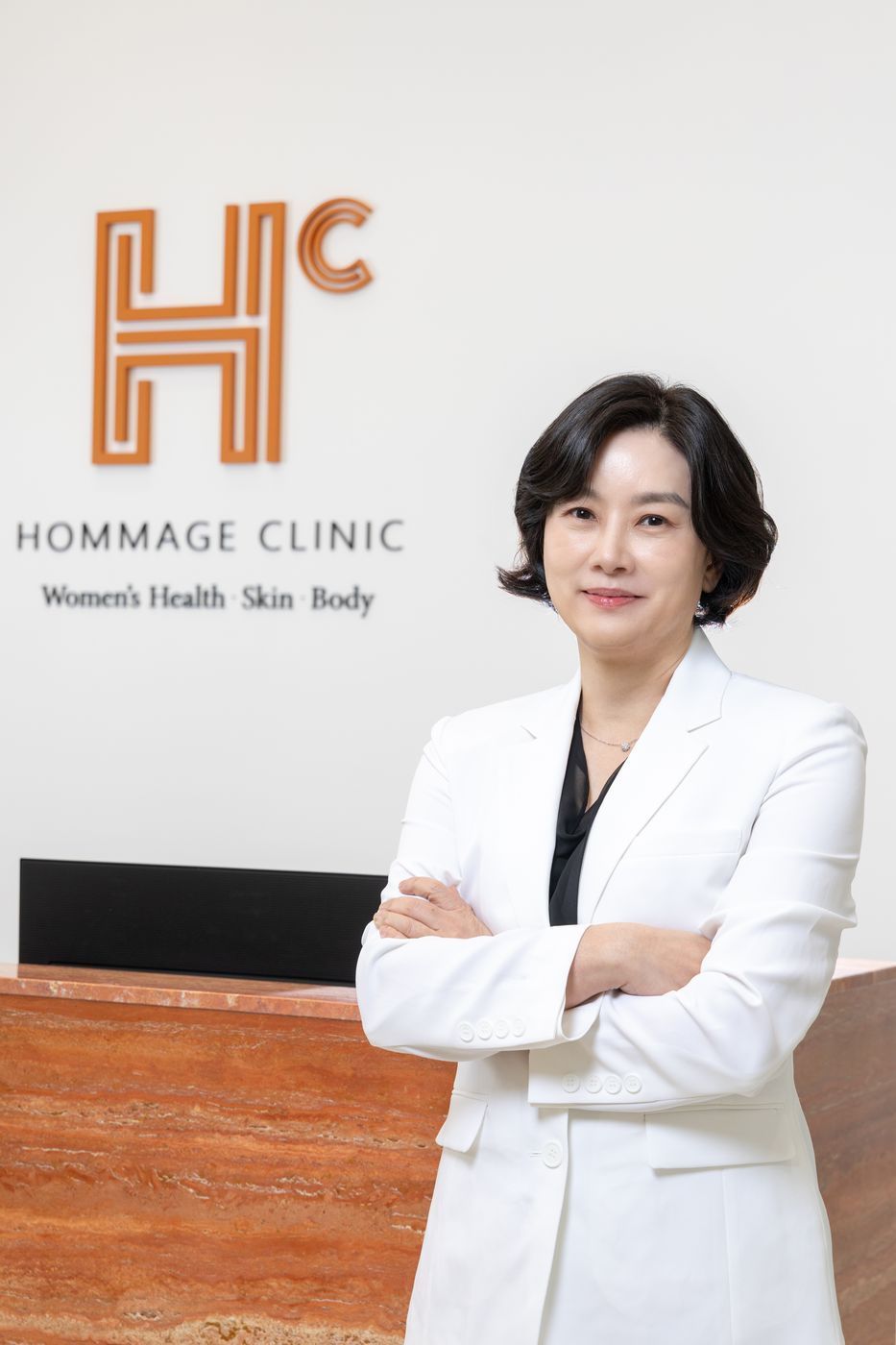
Dr. Park Yuna
Medical Director · OB/GYN Specialist
Dr. Park looks for the reason behind low estrogen before treating it, because the right plan for an athlete, a new mother and a woman with early menopause is very different. She also keeps long-term bone and heart health in view, not only today's symptoms.
OB/GYN specialist (Korea) and representative director of Hommage Clinic. Leads the clinic's women's health care, from screening and infections to hormones, contraception and fertility checks.
Low estrogen: frequently asked questions
What are the first signs of low estrogen?
The earliest sign is usually a change in periods: cycles become irregular, lighter or stop. Hot flashes, night sweats, vaginal dryness, poor sleep and low mood often follow. If your periods stop for three months or more and you are not pregnant, it is worth having your hormone levels checked.
Can low estrogen be reversed?
Sometimes. When it is caused by over-exercise, low body weight, stress, breastfeeding or high prolactin, estrogen usually recovers once the cause is treated or passes. Premature ovarian insufficiency and menopause cannot be reversed, but hormone replacement can replace the missing estrogen and protect your health.
How do I know if I have premature ovarian insufficiency?
POI is suspected when periods stop or become infrequent for four months or more before age 40. It is confirmed with blood tests showing a raised FSH level, sometimes repeated several weeks later to be sure. Dr. Park arranges these tests through hormone testing and explains next steps, including bone and fertility planning.
Is low estrogen normal while breastfeeding?
Yes. Breastfeeding raises prolactin, which keeps estrogen low and often stops periods. This can cause vaginal dryness and painful sex, which usually improve after weaning. Lubricants, moisturizers and, if needed, low-dose vaginal estrogen are considered compatible with breastfeeding. Contraception is still needed if you want to avoid pregnancy.
Can exercise cause low estrogen?
Yes. Training hard without eating enough to cover the energy you use can switch off the hormonal signal from the brain, stopping periods and lowering estrogen. This is called functional hypothalamic amenorrhea, part of relative energy deficiency in sport. Eating more and adjusting training usually restores cycles and protects bones.
Can foreigners be treated for low estrogen in Seoul?
Yes. International patients and foreign residents can book at Hommage Clinic; bring your passport or residence card, the dates of your recent periods and any previous blood test results. Contact us before your visit if you need language support.
Is HRT safe for women with POI or early menopause?
For women with POI or early menopause, guidelines from the Menopause Society and the Korean Society of Menopause recommend hormone replacement until at least the average age of natural menopause, unless there is a specific reason not to. At this age it replaces hormones your body would normally make, so the risks seen in older women starting HRT do not apply in the same way. See hormone replacement therapy.
Is the birth control pill or HRT better for low estrogen?
Both replace estrogen. HRT gives doses closer to natural levels and may protect bones better, while a combined pill also provides contraception and suits some younger women. The pill is not suitable with migraine with aura, a history of clots, or smoking over 35. Dr. Park helps you choose based on your needs.
Does low estrogen cause weight gain or hair loss?
Low estrogen can contribute to drier skin and thinning hair, and fat distribution can shift toward the waist. Weight change has many causes, though, and when low estrogen comes from under-eating or over-training, weight is often low rather than high. Thyroid and other causes of hair loss are checked as well.
How long does it take for periods to return after fixing energy balance?
It varies. For many women with exercise- or diet-related low estrogen, periods return over several months once energy intake matches training and weight is restored, but it can take longer. Dr. Park monitors progress and may add hormone treatment for bone protection if periods stay absent.
Do I need a bone density scan?
A bone density (DXA) scan is often recommended if low estrogen has lasted a long time, if POI is confirmed, or if you have had a stress fracture. It gives a baseline so bone health can be monitored during treatment.
Can low estrogen cause vaginal dryness in young women?
Yes. Low estrogen from breastfeeding, POI, some medicines or energy deficiency can thin and dry vaginal tissue at any age, causing irritation and painful sex. Lubricants, moisturizers and, when appropriate, low-dose vaginal estrogen help. See vaginal dryness.
Which hormone tests check for low estrogen?
Usually estradiol, FSH and LH, prolactin and thyroid function, plus a pregnancy test. An AMH test and pelvic ultrasound help assess ovarian reserve. Some tests are timed to the early days of your cycle or repeated after a few weeks.
References
Sources used for this page, reviewed by Dr. Park Yuna, OB/GYN specialist. Read our editorial and medical review policy.
- Korean Society of Menopause. The 2025 menopausal hormone therapy guidelines. J Menopausal Med. 2025;31(2):53–84. PMC
- The 2022 hormone therapy position statement of The North American Menopause Society. Menopause. 2022;29(7):767–794. doi:10.1097/GME.0000000000002028. PubMed
- National Institute for Health and Care Excellence. Menopause: identification and management (NG23). Updated November 2024.
- The 2020 genitourinary syndrome of menopause position statement of The North American Menopause Society. Menopause. 2020;27(9):976–992. PubMed
- ESHRE Guideline Group on POI, Webber L, Davies M, et al. ESHRE Guideline: management of women with premature ovarian insufficiency. Hum Reprod. 2016;31(5):926–937. doi:10.1093/humrep/dew027
This page is general information and does not replace a personal consultation. Illustrations are original works of Hommage Women's Clinic, Gangnam, Seoul; photos marked illustrative are not of patients.
Related hormone and women's health care
Hormone Testing
Blood tests for estradiol, FSH, LH, prolactin, thyroid and other hormones.
Hormone Replacement Therapy
How estrogen replacement works, its types, benefits and risks.
Irregular Periods
Causes of late, missed or unpredictable periods and when to get checked.
AMH Test
A blood test that estimates ovarian reserve, useful when early menopause is suspected.
Menopause Treatment
A complete care plan for symptoms and long-term health around menopause.
Vaginal Dryness
Why vaginal dryness happens, including low estrogen, and when to see a doctor.
Find out why your estrogen is low
Book an assessment with Dr. Park Yuna in Gangnam. Hormone tests and ultrasound can usually be arranged on the same day.
Hommage Clinic · 4F, Building A, 509 Gangnam-daero, Seoul (near Sinnonhyeon Station) · Mon & Fri 10:00–20:00 · Tue–Thu 10:00–19:00 · Sat 10:00–15:00