
Functional gynecology · Pelvic floor exercise
Kegel Therapy in Gangnam: How to Do Kegel Exercises Correctly
Kegel therapy is a structured program of pelvic floor exercises, in which you repeatedly squeeze and lift the muscles around the vagina, urethra and anus, then fully relax them, to improve bladder control, support and sensation. At Hommage Clinic in Gangnam, Seoul, OB/GYN specialist Dr. Park Yuna checks your technique during an exam and sets a routine matched to your strength.

Quick answer
Kegel therapy is guided pelvic floor muscle training: daily sets of slow holds and quick squeezes that strengthen the muscles controlling the bladder and supporting the pelvic organs. At Hommage Women's Clinic in Gangnam, Seoul, female OB/GYN specialist Dr. Park Yuna checks your technique by exam first, because in one study only about half of women did a correct Kegel after verbal instruction alone. Most women notice less leakage in 6–12 weeks.
Key takeaways
- A typical routine is about three sets a day of up to 10 slow holds and 10 quick flicks, built up gradually.
- Technique matters more than numbers: lift and squeeze inward, breathe normally, then relax fully.
- Kegels are the recommended first treatment for stress leakage, and training in pregnancy lowers the risk of leaking late in pregnancy.
- If you have pelvic pain or pain during sex, get checked first: your muscles may need relaxing, not strengthening.
Infographic
Kegel exercises in numbers
Typical routine
Sets of up to 10 slow holds and 10 quick flicks.
Target hold
Build up to it; start with what you can do well.
Correct after words alone
Women doing an ideal Kegel after brief verbal instruction (Bump, 1991).
Stress leakage cured
Training vs no treatment (Cochrane, 2018).
First results
Less leakage for most women doing daily exercise.
Before judging
Guidelines advise at least 3 months of supervised training.
Kegel therapy at a glance
| Key fact | Details |
|---|---|
| What it is | Repeated squeeze-lift-relax exercises for the pelvic floor muscles |
| Helps with | Stress leakage, urgency, mild prolapse symptoms, postpartum weakness, sensation |
| Typical routine | About 3 sets of 8–12 squeezes a day, with slow holds and quick flicks |
| Time to results | Often 6–12 weeks; full benefit usually by 3–5 months |
| Downtime | None |
| Technique check | A brief internal exam or biofeedback confirms you are using the right muscles |
| Reviewed by | Dr. Park Yuna, OB/GYN specialist |
Kegel therapy may help if you have
- Small leaks when you cough, sneeze, laugh or exercise
- Weakness or reduced sensation after childbirth
- Mild heaviness in the vagina at the end of the day
- Urgency, as part of bladder training
Check with a doctor before starting if you have
- Pain during sex, pelvic pain or difficulty inserting a tampon, which may mean the muscles are already too tight
- A visible or painful bulge from the vagina
- Difficulty emptying your bladder or bowel
- Leakage with fever, burning or blood in the urine
What are Kegel exercises and how do they work?
Kegel exercises strengthen the pelvic floor, the group of muscles that supports the bladder, uterus and bowel and helps keep the urethra closed. Like any muscle training, regular contractions build strength, endurance and faster reflexes, so the muscles can tighten in time when you cough or lift.
The exercises are named after Dr. Arnold Kegel, an American gynecologist who described them in the 1940s. Today, supervised pelvic floor muscle training is the recommended first treatment for stress urinary incontinence in women. “Kegel therapy” usually means a program with a technique check and follow-up, rather than exercises learned from a leaflet. For the wider range of pelvic floor care, including relaxation therapy and devices, see pelvic floor treatment .
How to do Kegel exercises step by step
The key is to lift and squeeze inward without using your stomach, buttocks or thighs, then let go completely.
- Find the muscles. Imagine stopping the flow of urine and holding in wind at the same time. You should feel a squeeze and an upward lift inside. Do not practice by stopping your urine flow regularly, as this can disturb normal bladder emptying.
- Get comfortable. Start lying down with your knees bent, which is easiest. Later, practice sitting and standing.
- Slow holds: squeeze and lift, hold for up to 10 seconds while breathing normally, then fully relax for the same time. Repeat up to 10 times.
- Quick flicks: squeeze and lift quickly for one second, then release. Repeat up to 10 times.
- Repeat three times a day. Start with what you can do well, even a 3-second hold, and build up gradually.
- Use “the knack”: once you are stronger, squeeze just before you cough, sneeze or lift.
Phone apps or a reminder can help you keep going. Consistency matters more than intensity.
Common mistakes, and why a technique check helps
Studies suggest that a substantial share of women cannot contract the pelvic floor correctly from written instructions alone. Common mistakes include:
- Bearing down (pushing out) instead of lifting in, which can worsen leakage and prolapse.
- Holding your breath or tightening the stomach, buttocks or inner thighs instead.
- Not relaxing fully between squeezes, which can tire the muscles and cause pain.
- Doing too many, too hard, too soon , leading to fatigue rather than strength.
A brief internal exam lets the doctor feel whether you are squeezing and lifting correctly and how long you can hold. Biofeedback, where a small sensor shows your muscle activity on a screen, can also help. If the exam shows the muscles are tight rather than weak, relaxation training is used instead, as strengthening could make pain during sex worse.
How long do Kegel exercises take to work?
Most women notice less leakage after 6–12 weeks of daily exercise, and full benefit usually takes three to five months. Guidelines recommend at least three months of supervised training before deciding whether it has worked.
Once you reach your goal, keep a maintenance routine, such as one set a day, because strength fades within months if you stop. During pregnancy and after birth, Kegels can usually continue or start gently; see our page on vaginal rejuvenation if looseness after childbirth is your main concern, as exercise is usually the first step there too.
Are Kegel exercises safe? Possible side effects
Kegel exercises are safe for most women when done correctly, but they are not right for everyone.
- Muscle soreness or fatigue can occur when starting or after doing too many. Reduce the number and build up slowly.
- Increased pain in women with an overactive pelvic floor, pain during sex or pelvic pain. Stop and get assessed.
- Worse leakage or prolapse if you bear down instead of lifting.
- Vaginal weights, cones and devices can cause irritation and should be cleaned and used as instructed; avoid them in pregnancy unless advised.
Contact the clinic if exercises cause pain, if leakage gets worse, or if you notice bleeding, a new bulge or difficulty passing urine.
Kegel therapy at Hommage Clinic
At Hommage Clinic, near Sinnonhyeon Station in Gangnam, Dr. Park Yuna, a female OB/GYN specialist, checks your pelvic floor contraction during a gentle exam, explains what she feels, and gives you a routine you can follow at home. Follow-up visits check progress, and if exercise alone is not enough, she discusses other options from our functional and cosmetic gynecology services, such as treatment for dryness, a pessary or referral for surgery.
For patients enrolled in Korea's National Health Insurance, consultations and many related tests are covered; cosmetic procedures are not. Visitors without coverage pay the clinic's fees directly, and you receive a written estimate before any test or treatment.
Technique
How to do a Kegel: the squeeze, lift, hold and relax cycle
Every good Kegel has four parts, and the last one is as important as the first. You squeeze the muscles around the urethra, vagina and anus as if holding in urine and wind, lift them up and in, hold while breathing normally, then relax completely before the next one. Many women forget the relax phase, and muscles that never fully let go become tired and sore rather than stronger. Rest for at least as long as you held.
The illustration shows the cycle for a slow hold. Quick flicks follow the same pattern in about one second each: squeeze-lift fast, then release fully.
Am I doing it right?
Signs you are doing Kegels correctly, and signs you are not
In a classic 1991 study published in the American Journal of Obstetrics and Gynecology, 47 women were given brief spoken instructions and then had their Kegel measured with a pressure sensor in the urethra. Only 49% produced an ideal contraction that increased closing pressure, and 25% used a technique that could actually promote leakage. That is why the exam step is not optional at Hommage Women's Clinic: Dr. Park feels the squeeze and lift directly and corrects it on the spot.
You can also check yourself at home. Sit on a firm chair and lean forward slightly: during a correct Kegel you feel the area between the vagina and anus lift away from the seat. Or, after washing your hands, insert one finger gently into the vagina; a correct squeeze feels like a gentle hug and an inward pull, never a push outward.
Signs it's working
- An inward lift you can feel inside
- Stomach, buttocks and thighs stay soft
- You can breathe and talk while holding
- A clear, full release afterwards
- Fewer leaks after several weeks
Signs to stop and check
- A pushing-down or bulging feeling
- Holding your breath or going red
- Squeezing buttocks or inner thighs
- Pain, aching or more leakage
- No change at all after 3 months
 Hommage · Gangnam
Hommage Women's Clinic · Gangnam, Seoul
A short technique check tells you whether you are squeezing the right muscles. Illustrative photo.
Your daily routine
Kegel routine for beginners: slow holds and quick flicks
The pelvic floor has two jobs that need two kinds of training. Slow holds build endurance, so the muscles can support the bladder and pelvic organs all day and hold back urgency. Quick flicks build a fast, strong reflex, so the muscles snap shut in time when you cough, sneeze, laugh or jump. A balanced Kegel routine includes both, three times a day. The picture below shows how one set looks over time; the squeeze line rises during each contraction and returns fully to rest between them.
 Hommage · Gangnam
Hommage Women's Clinic · Gangnam, Seoul
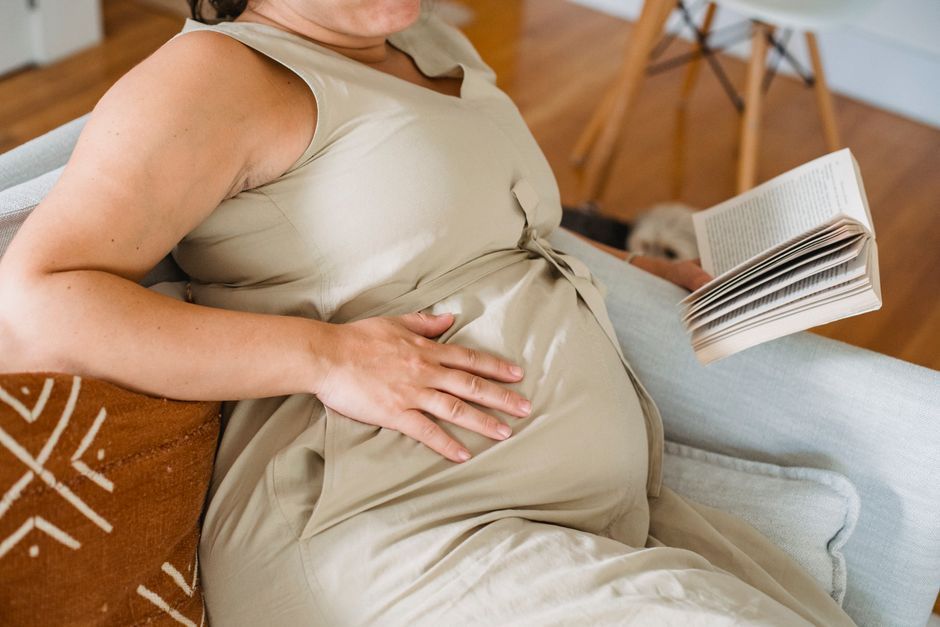
Kegels can be done during pregnancy, sitting comfortably, a few minutes a day. Illustrative photo.
Your situation
Kegel exercises in pregnancy, after birth and at menopause
Kegels during pregnancy. A 2020 Cochrane review of 46 trials and more than 10,000 women found that women without leakage who did pelvic floor training during pregnancy were probably 62% less likely to report urinary incontinence in late pregnancy, and slightly less likely (29%) to leak three to six months after birth. Training is safe in a normal pregnancy; avoid weights, cones or devices unless your doctor recommends them.
Kegels after giving birth. Gentle squeezes can usually begin within days of a vaginal birth if comfortable, and after a cesarean as you feel able. Leakage often improves as tissues heal over the first months. If you are still leaking around six weeks after birth, a technique check is worthwhile; the same Cochrane review found the evidence for treating established postnatal leakage with exercise alone was less certain, so a supervised, individual plan matters more.
Kegels after menopause. Lower estrogen thins pelvic tissues, but the muscles still respond to training at any age. Dr. Park may combine Kegels with treatment for dryness or bladder urgency; see menopause treatment .
Runners and active women. Leaking during running, jumping or lifting is common even in women who have never had a baby. Quick flicks and using the knack before impact are especially useful; see pelvic floor treatment if exercise alone is not enough.
Is it right for me?
Who should do Kegel exercises, and who should check first
Kegels suit most women with stress leakage, mild heaviness or weakness after childbirth, and they are a sensible habit during pregnancy. But they are not the right first step for everyone. If you have pain, a visible bulge or trouble emptying your bladder, a doctor should find the cause first, and if your pelvic floor turns out to be tight, relaxation comes before strengthening. The simple guide below shows how Dr. Park decides.
Evidence
Do Kegel exercises work? What the research says
Kegel exercises are one of the few women's health treatments with strong evidence from many randomised trials. The figures below come from Cochrane systematic reviews, which pool trials to give the most reliable estimates, and from the study that showed why technique checks matter. They describe what happened to groups of women in research; your own result depends on your starting strength, the type of leakage and how consistently you train.
Stress leakage cured
Pelvic floor training vs no treatment; high-quality evidence.
Cochrane review, Dumoulin et al., 2018Any leakage cured or improved
Women with any type of urinary incontinence; 2 trials, 166 women.
Cochrane review, 2018Lower risk in pregnancy
Less leakage in late pregnancy for continent women who trained antenatally.
Cochrane review, Woodley et al., 2020Technique could worsen leaks
Of 47 women given brief verbal instruction only; 49% did an ideal Kegel.
Bump et al., Am J Obstet Gynecol, 1991Habits
How to stick with Kegel exercises: a 12-week plan
The biggest reason Kegels fail is not technique but stopping too soon. Muscles take weeks to strengthen, and the first changes are easy to miss. A simple plan, a reminder and a short log of leaks make it far more likely you will reach the three-month point that guidelines recommend before judging results. Kegel apps and reminders can help, but no app can feel whether you are lifting or pushing down, so combine them with at least one technique check.
Learn
Technique check. Lying down, short holds you can do well. Start a 3-day leak diary.
Build
Lengthen holds by a second or two each week. Add sitting sets and quick flicks.
Use it
Standing sets and the knack before coughs and lifts. Review visit to recheck strength.
Maintain
About one set a day for life. Return if leaks come back after a birth or at menopause.
 Hommage · Gangnam
Hommage Women's Clinic · Gangnam, Seoul
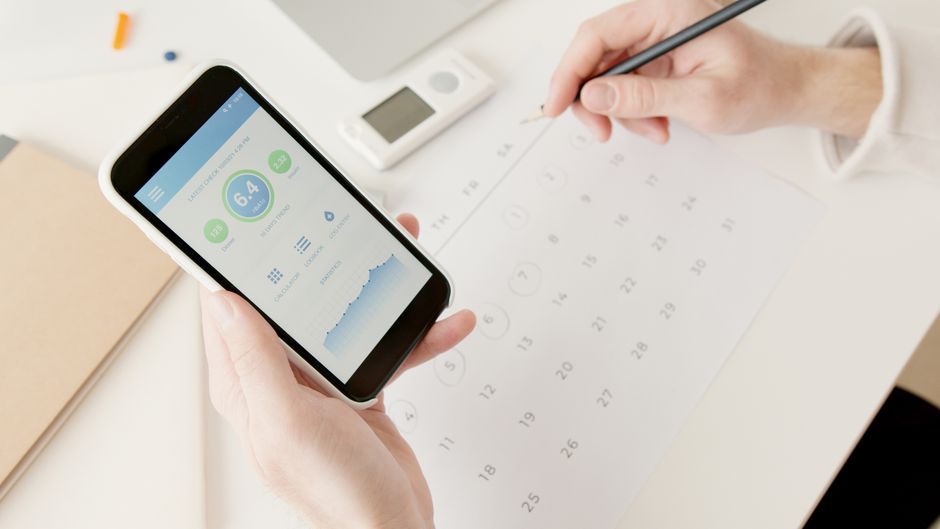
A daily reminder helps you reach the 3-month mark. Illustrative photo.
 Hommage · Gangnam
Hommage Women's Clinic · Gangnam, Seoul
Once you know the technique, Kegels can be done discreetly while sitting. Illustrative photo.
Everyday tips
Kegel do's and don'ts
Once you have learned the correct squeeze lying down, you can practise almost anywhere: at your desk, on the subway or while waiting at a traffic light. Nobody can tell. These simple rules help you get the most from each set and avoid the habits that slow progress.
Good habits
- Empty your bladder before a set
- Breathe out gently as you lift
- Relax fully between every squeeze
- Practise in the positions where you leak
- Keep a simple leak diary
Habits to avoid
- Stop your urine midstream as practice
- Hold your breath or push down
- Do hundreds a day; tired muscles leak more
- Keep going through pain
- Use weights or devices without advice
Traveling to Seoul
Kegel therapy in Seoul for international patients
Kegel therapy suits a short visit well: one appointment is enough for a technique check and a written home routine, and there is no downtime. Many visitors book an assessment at the start of a trip and a quick re-check a few days later to confirm they are doing it right before flying home. Expats living in Korea can come back for a review after six to eight weeks.
Before you travel, message the clinic on KakaoTalk or WhatsApp to describe your symptoms, book a time and arrange language support. Bring your passport or residence card, a list of medicines, and a note of any births, pelvic surgery or previous treatment. A three-day bladder diary is very helpful if leakage is your main concern.
Visiting Seoul: a simple plan
- Day 1: consultation and gentle technique check; written routine.
- Days 2–4: practise at home or your hotel three times a day.
- Day 4–5: short re-check before you fly, if you wish.
- At home: keep going for at least 3 months; message us with questions.
 Hommage · Gangnam
Hommage Women's Clinic · Gangnam, Seoul
The clinic is a short walk from Sinnonhyeon Station in Gangnam. Illustrative photo.
 Hommage · Gangnam
Hommage Women's Clinic · Gangnam, Seoul
You leave with a written routine matched to your strength. Illustrative photo.
Choosing well
Kegel therapy vs devices and apps: how to choose
Kegel trainers, vaginal weights, apps and electrical or magnetic devices are widely sold in Korea and online. Some can help women who struggle to feel the muscles, but none replaces a correct technique, and evidence for most devices is weaker than for supervised exercise. A good clinic will examine you first, offer exercise-based care before selling a device, and explain the evidence for anything extra it suggests.
What affects the cost of Kegel therapy in Seoul?
Costs depend on how many follow-up visits you need, whether biofeedback or electrical stimulation is added, whether an ultrasound or urine test is needed to rule out other causes, and whether related problems such as dryness or infection are treated. For patients enrolled in Korea's National Health Insurance, coverage depends on the diagnosis; visitors without coverage pay directly. You receive a written estimate before any test or treatment.
Your visit
How a Kegel therapy visit works
01
Talk it through
Dr. Park asks about leakage, births, pain and what you want to improve.
02
Technique check
With your consent, a short internal exam to feel your squeeze, lift and relaxation, and check for prolapse.
03
Your routine
A home program matched to your current strength, with tips for remembering and progressing.
04
Review
A follow-up in about 6–8 weeks to recheck strength and adjust the plan.

Your doctor
Dr. Park Yuna
Medical Director · OB/GYN Specialist
Dr. Park checks your technique by examination before giving you a routine, because many women squeeze the wrong muscles without realizing. She starts from your current strength and builds up gradually, and switches to relaxation work if your muscles turn out to be tight rather than weak.
OB/GYN specialist (Korea) and representative director of Hommage Clinic. Leads the clinic's women's health care, from screening and infections to hormones, contraception and fertility checks.
Kegel exercises: frequently asked questions
How many Kegels should I do a day?
A common starting routine is three sets a day, each with up to 10 slow holds of up to 10 seconds and 10 quick squeezes. Start with what you can do correctly, even if that is only a few 3-second holds, and build up over weeks. Quality and daily consistency matter more than large numbers.
How do I know if I'm doing Kegels correctly?
You should feel a squeeze and an upward lift inside the vagina and around the anus, without tightening your stomach, buttocks or thighs and without holding your breath. If you are unsure, a doctor can check with a brief internal exam. Inserting a clean finger and feeling a gentle squeeze is another way to check at home.
Can Kegel exercises tighten the vagina?
They can improve muscle tone, support and sensation, which some women notice as a tighter feeling, especially after childbirth. They do not change the shape of the vaginal walls. If looseness persists after several months of training, other options are explained in our vaginal rejuvenation guide.
Can I do Kegels during pregnancy?
Yes, pelvic floor exercises are generally recommended during pregnancy and can reduce the risk of leakage late in pregnancy and after birth. Avoid vaginal weights or devices unless your doctor advises them, and ask for advice if you have pelvic pain or a high-risk pregnancy.
Can Kegels make things worse?
Yes, in some cases. If your pelvic floor is already tight, strengthening can increase pain during sex or pelvic pain. Bearing down instead of lifting can worsen leakage or prolapse. If exercises cause pain or symptoms get worse, stop and have your technique and muscle tone checked.
Can foreigners get Kegel therapy in Seoul?
Yes. International patients and foreign residents can book a technique check at Hommage Clinic in Gangnam, which is useful even on a short visit because you leave with a home routine. Bring your passport or residence card. Walk-ins are welcome during opening hours; please contact us before your visit to arrange language support.
How long until Kegel exercises work?
Most women notice less leakage after 6–12 weeks of daily exercise, and full benefit usually takes three to five months. Guidelines recommend at least three months of supervised training before deciding whether it has worked, so try not to give up early.
Is it bad to stop urine midstream to do Kegels?
Stopping the flow once can help you find the right muscles, but doing it regularly as an exercise is not recommended, because it can interfere with normal bladder emptying. Practise your Kegels at other times, ideally with an empty bladder.
What is the difference between slow holds and quick flicks?
Slow holds of up to 10 seconds build endurance, so the muscles can support the bladder and pelvic organs through the day. Quick one-second flicks train a fast, strong response for when you cough, sneeze or jump. A balanced routine includes both.
Do Kegel apps and trainers work?
Reminder apps can help you stay consistent, and biofeedback devices can show whether you are contracting. But no app can tell whether you are lifting or pushing down, and evidence for most consumer devices is weaker than for supervised exercise. Use them alongside a technique check, not instead of one.
Can Kegels help with urge incontinence?
They can be part of treatment. A quick squeeze can calm a sudden urge long enough to reach the toilet, and pelvic floor training is often combined with bladder training. Evidence is stronger for stress leakage than for urgency alone; see our urinary incontinence page for other options.
Should men's and women's Kegels be different?
The muscles and basic method are similar, but this page and Dr. Park's Kegel therapy service are for women. Women's routines take into account pregnancy, childbirth, menopause and prolapse, which change how the program is planned.
Do I need to keep doing Kegels forever?
Usually a light maintenance routine, such as one set a day, is enough to keep the benefit. Strength fades within months if you stop completely. Restart a full program after a new birth, around menopause or if leaks return.
References
Sources used for this page, reviewed by Dr. Park Yuna, OB/GYN specialist. Read our editorial and medical review policy.
- Bump RC, Hurt WG, Fantl JA, Wyman JF. Assessment of Kegel pelvic muscle exercise performance after brief verbal instruction. Am J Obstet Gynecol. 1991;165(2):322–329. Abstract
- Dumoulin C, Cacciari LP, Hay-Smith EJC. Pelvic floor muscle training versus no treatment, or inactive control treatments, for urinary incontinence in women. Cochrane Database Syst Rev. 2018;10:CD005654. Cochrane
- Woodley SJ, Lawrenson P, Boyle R, et al. Pelvic floor muscle training for preventing and treating urinary and faecal incontinence in antenatal and postnatal women. Cochrane Database Syst Rev. 2020;5:CD007471. Cochrane
- National Institute for Health and Care Excellence. Pelvic floor dysfunction: prevention and non-surgical management. NICE guideline NG210. 2021. NICE
This page is general information and does not replace a personal consultation. Illustrations are original works of Hommage Women's Clinic, Gangnam, Seoul; photos marked illustrative are not of patients.
Related women's health services
Pelvic Floor Treatment
Care for weak or tight pelvic floor muscles, including biofeedback and pessaries.
Urinary Incontinence
Stress, urge and mixed leakage, and when treatment beyond exercise is needed.
Vaginal Rejuvenation
Surgical and non-surgical options for looseness after childbirth or with age.
Menopause Treatment
How falling estrogen affects the pelvic floor and bladder, and what helps.
Pelvic Pain Treatment
Finding the cause of ongoing pelvic pain before starting exercises.
Painful Intercourse Treatment
When tight rather than weak pelvic floor muscles cause pain during sex.
Get your Kegel technique checked
Book a visit with Dr. Park Yuna in Gangnam for a gentle technique check and a home routine you can follow with confidence.
Hommage Clinic · 4F, Building A, 509 Gangnam-daero, Seoul (near Sinnonhyeon Station) · Mon & Fri 10:00–20:00 · Tue–Thu 10:00–19:00 · Sat 10:00–15:00