
Skin & Aesthetics · Acne
Acne Laser and Light Treatment for Active Breakouts in Seoul
Acne laser treatment uses targeted laser or light energy to calm inflamed breakouts, reduce acne bacteria and oil activity, and fade the red marks acne leaves behind. At Hommage Clinic in Gangnam, Seoul, Dr. Hwang Seonhwa assesses your acne type first and combines laser sessions with prescription treatment when needed, because moderate to severe acne rarely clears with procedures alone.
Quick answer
Acne laser treatment uses laser or light energy to calm inflamed breakouts, reduce oil activity and fade the red marks acne leaves behind. At Hommage Women's Clinic in Gangnam, Seoul, Dr. Hwang Seonhwa usually plans a course of 3–6 sessions spaced 2–4 weeks apart, each with 15–30 minutes of laser time and little downtime. Lasers work best as part of a plan with prescription skincare or medicine, not as a stand-alone cure.
Key takeaways
- Different devices aim at different targets: acne bacteria, blood vessels(redness) or oil glands. The right one depends on your acne type.
- The 2024 American Academy of Dermatology guideline found the evidence too limited to make a recommendation for lasers or light, so they are used as add-ons to proven medical treatment.
- Most people notice calmer breakouts after 2–3 sessions; acne can return when treatment stops, so maintenance matters.
- Darker or tanned skin needs gentler settings and strict sun protection to lower the risk of dark marks.
Infographic
Acne laser treatment in numbers
Laser time
Plan about an hour in total with cleansing and soothing.
Sessions in a course
Depending on the device and how active your acne is.
Between sessions
Gives the skin time to settle and respond.
Sessions to notice change
Many people see fewer inflamed spots by this point.
Typical redness
Pinkness for a few hours to a day; makeup usually the next day.
Trials reviewed
Cochrane review of light therapies for acne: evidence still low certainty.
Acne laser treatment at a glance
| Key fact | Details |
|---|---|
| Treatment time | Usually 15–30 minutes of laser time, plus cleansing and soothing |
| Comfort | Warm snapping or stinging; cooling and numbing cream are used when needed |
| Sessions | Typically 3–6 sessions, 2–4 weeks apart, depending on device and acne type |
| Downtime | Minimal: redness for a few hours to a day; makeup usually the next day |
| Results visible | Calmer breakouts often after 2–3 sessions; red marks fade gradually |
| How long results last | Months with good skincare or medication; acne can return and need maintenance |
| Performed by | A physician at Hommage Clinic, who sets and adjusts the laser settings |
Acne laser treatment may suit you if you have
- Red, inflamed pimples (papules and pustules) that keep coming back
- Acne that is improving on medication but needs extra support
- Red or brown marks left behind after breakouts
- Oily skin with frequent clogged pores alongside inflamed spots
Wait or ask about alternatives if you
- Have cold sores, open wounds or a skin infection in the area
- Are pregnant: elective laser sessions are usually postponed
- Take isotretinoin or have stopped it recently, or use light-sensitizing medicines
- Have a fresh sunburn or deep tan on the face
How does acne laser treatment work?
Laser and light devices work on the causes of acne inside the hair follicle: excess oil, clogged pores, acne bacteria ( C. acnes ) and inflammation. Each device delivers a specific wavelength of light that is absorbed by one target in the upper layers of the skin.
- Vascular lasers and IPL are absorbed by blood vessels, which calms inflamed spots and fades post-acne redness. See IPL treatment .
- Infrared lasers gently heat the oil glands in the dermis to reduce oil production over a series of sessions.
- Laser carbon peel uses a Q-switched laser over a thin carbon lotion to clean out oily, congested pores. See laser carbon peel .
- Blue and red light act on light-sensitive molecules made by acne bacteria and on inflammation. See blue light acne therapy .
- Photodynamic therapy adds a light-sensitizing solution before light exposure for a stronger effect, with more redness and sun sensitivity afterward.
No single device suits every type of acne, so the choice depends on whether your breakouts are mainly inflamed, oily and clogged, or leaving marks.
Is laser enough on its own?
For mild acne, laser or light sessions can be a useful add-on, but moderate to severe acne usually needs prescription treatment as the foundation. International guidelines, including those of the American Academy of Dermatology, place lasers and light as supporting options rather than first-line treatment.
Medical treatment for acne may include topical retinoids (such as adapalene or tretinoin), benzoyl peroxide, topical or oral antibiotics used for a limited time, hormonal treatment for women (such as certain birth control pills or spironolactone), and isotretinoin for severe, nodular or scarring acne. Combining these with laser often gives steadier results than either alone.
If your breakouts cluster along the jaw and chin, flare before periods or come with irregular cycles or new hair growth, hormones may be involved. Hommage Clinic can arrange an assessment for PCOS and other hormonal causes in the same clinic. Our guide to skin care for hormonal changes explains the link.
What happens during an acne laser session?
A typical visit takes about 45–60 minutes, of which the laser itself is usually 15–30 minutes. Most people describe the sensation as warm snapping or brief stinging.
- Your skin is cleansed, and makeup and sunscreen are removed.
- If you have many blackheads or whiteheads, gentle extraction may be done first. See our extraction facial .
- You wear eye protection while the physician treats the face in passes, adjusting settings for active spots and red marks.
- The skin is cooled and soothed, and sunscreen is applied before you leave.
Numbing cream is rarely needed for gentle light treatments but can be used for stronger laser settings.
Results and recovery: what to expect
Most people notice fewer inflamed spots after two or three sessions, with further improvement across a full course. Red marks fade gradually over several weeks, while brown marks usually take longer.
Afterward, your skin may look pink for a few hours to a day. For the first few days, use a gentle cleanser and moisturizer, apply SPF 30 or higher every morning, and pause scrubs, peels and strong active ingredients unless your doctor advises otherwise. Avoid saunas and intense exercise for 24–48 hours, and try not to pick at spots.
Laser does not change the tendency to get acne, so breakouts can return when treatment stops. Ongoing skincare or medication helps keep results. Once active acne is controlled, remaining scars can be treated with options such as fractional laser for acne scars or gold RF microneedling .
Risks and possible side effects
Acne laser treatment is generally well tolerated, but side effects can occur. Common, short-lived effects include redness, warmth, mild swelling and dryness for a day or two. Some people have a temporary flare of breakouts in the first weeks of treatment.
Less common risks include post-inflammatory hyperpigmentation (dark patches), which is more likely in darker skin tones or with sun exposure, as well as blistering, crusting, burns and, rarely, scarring. Laser can trigger a cold sore outbreak in people who get them. Eye protection is always worn.
Tell the doctor if you are pregnant, take isotretinoin now or recently, or use medicines that increase light sensitivity, such as some antibiotics. Contact the clinic if you notice blisters, increasing pain, yellow crusting or pus, fever, or darkening patches after treatment.
Acne laser treatment at Hommage Clinic
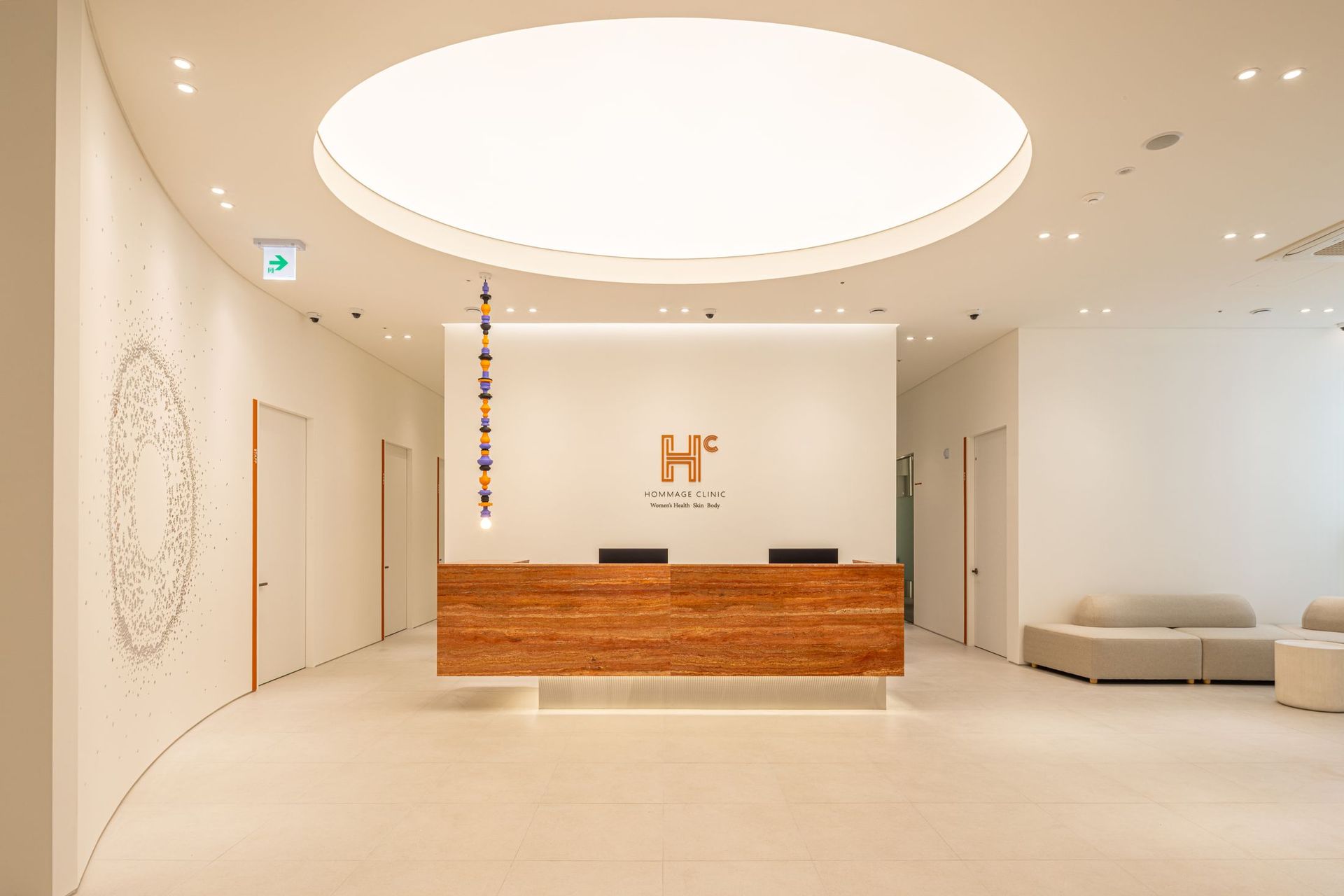
Hommage Clinic is a women's health and skin clinic in Gangnam, about a three-minute walk from Sinnonhyeon Station. Your acne is assessed by a physician before any device is chosen, and the plan can include prescription treatment, peels or extraction as well as laser. Because gynecology and skin care are under one roof, hormonal acne can be looked at from both sides. You can see our otherskin and aesthetic treatmentsfor related options.
Cost depends on the device, the number of sessions and whether other treatments are combined. Consultations and prescription medicines for acne may be covered by Korea's National Health Insurance for enrolled patients, while cosmetic laser sessions are not covered. You receive a written quote before treatment, and walk-ins are welcome during opening hours.
Mechanism
How acne laser treatment works inside the skin
Acne starts inside the hair follicle, where four things come together: extra oil from the sebaceous gland, dead skin cells that plug the opening, acne bacteria (Cutibacterium acnes) that thrive in the oily plug, and the inflammation your immune system mounts in response. Each laser or light device is absorbed by one of these targets, which is why the choice of device matters more than the word “laser” itself.
The diagram below shows where the main devices act. In practice, Dr. Hwang Seonhwa often combines approaches over a course: for example, a vascular laser or IPL for red, inflamed spots and post-acne redness, with prescription skincare to keep pores clear between sessions.
Know your acne
Which types of acne respond to laser?
Laser and light treatments help some acne patterns much more than others. They are most useful for red, inflamed papules and pustules and for the flat red marks that linger afterward. Blackheads and whiteheads respond better to pore-clearing skincare, extraction and peels, while deep, painful nodules and cysts need medical treatment first because they carry the highest risk of scarring.
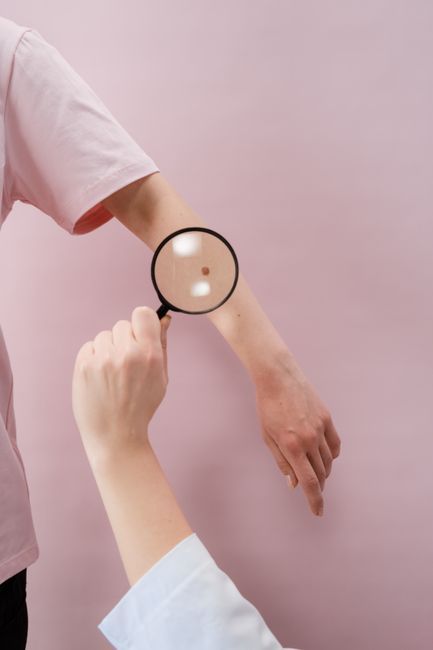
At your first visit, Dr. Hwang grades your acne and checks for scarring and pigment changes, then explains which part of the problem a device can realistically help with.
Inflamed papules and pustules
Red, tender spots. Light and vascular lasers can calm them as an add-on to skincare.
Red post-acne marks
Flat pink or red marks respond well to vascular laser or IPL.
Blackheads and whiteheads
Better cleared with retinoids, extraction or peels; carbon peel can help oily, congested pores.
Brown marks
Fade more slowly and need careful, low-heat settings and strict sun protection.
Nodules and cysts
Deep, painful lumps need prescription treatment; a single cyst can be settled with an acne injection.
 Hommage · Gangnam
Hommage Women's Clinic · Gangnam, Seoul
Every acne laser plan starts with grading your acne type, skin tone and any scarring. Illustrative photo.
Compare
Acne laser vs blue light vs chemical peel vs medication
These options are not rivals; they work on different parts of the acne process and are often combined. The strongest evidence supports prescription treatment such as topical retinoids, benzoyl peroxide and, for severe or scarring acne, isotretinoin. The 2024 American Academy of Dermatology guideline found the evidence for lasers, light devices and chemical peels too limited to make a formal recommendation, so Dr. Hwang uses them to speed up and support medical treatment rather than replace it.
| Compare | Acne laser / IPL | Blue light | Chemical peel | Prescription treatment |
|---|---|---|---|---|
| Main target | Inflammation, redness, oil glands (device-dependent) | Acne bacteria | Dead skin and oil in pores | All acne pathways, depending on the medicine |
| Downtime | Redness for hours to a day | Usually none | Mild peeling for a few days | Dryness or irritation at first |
| Best used | As an add-on, and for red marks | When medicines are not tolerated, or as an add-on | For blackheads, whiteheads and oily skin | As the base of almost every acne plan |
| Learn more | This page | Blue light therapy | Chemical peels for acne | Discussed at your consultation |
 Hommage · Gangnam
Hommage Women's Clinic · Gangnam, Seoul
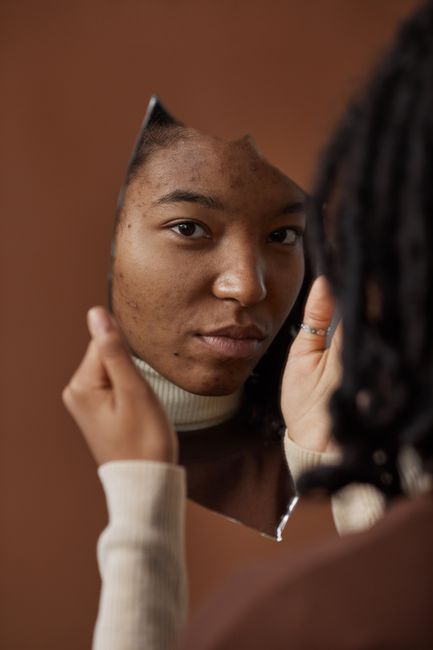
Breakouts along the jaw that flare before periods may have a hormonal side. Illustrative photo.
Adult acne in women
Laser for hormonal acne: what it can and cannot do
Many women who ask about acne laser treatment are in their twenties, thirties or forties, with breakouts on the lower face that flare before a period. Laser and light can calm these inflamed spots and fade the red marks they leave, but they do not change the hormonal signals that drive new breakouts.
The 2024 American Academy of Dermatology guideline conditionally recommends combined oral contraceptives and spironolactone as options for women with acne. When periods are irregular or there is new hair growth, an assessment for polycystic ovary syndrome (PCOS) or other hormonal causes makes sense, and hormone testing can be arranged in the same clinic.
One clinic, two specialties
Because Hommage Women's Clinic combines gynecology and skin care under one roof, Dr. Hwang can coordinate with the gynecology team, so laser sessions, skincare and any hormonal treatment fit into one plan. If you are pregnant, planning pregnancy or breastfeeding, tell the doctor; elective laser sessions and several acne medicines are usually postponed.
Your course
How many acne laser sessions? A typical treatment schedule
Acne laser treatment is a course, not a single visit. Most plans involve about 3–6 sessions spaced 2–4 weeks apart, with daily skincare or prescription treatment continuing between visits. Progress is reviewed at every session and the settings or plan are adjusted, so the schedule below is a starting point rather than a fixed rule.
Aftercare
Acne laser aftercare: do's and don'ts
Good aftercare protects the skin barrier, lowers the risk of dark marks and helps each session work better. Most people go straight back to work or study. You receive written instructions before you leave, and you can message the clinic with photos if anything worries you.
Do
- Use a gentle, non-foaming cleanser and a light moisturizer
- Apply SPF 30 or higher every morning and reapply outdoors
- Restart prescription skincare when your doctor says so
- Change pillowcases often and keep phone screens clean
- Message the clinic if you see blisters, crusts or dark patches
Don't
- Pick, squeeze or scrub treated spots
- Use peels, scrubs or strong acids for a few days unless advised
- Use saunas, hot yoga or intense exercise for 24–48 hours
- Sunbathe or tan between sessions
- Start new active products without checking first
 Hommage · Gangnam
Hommage Women's Clinic · Gangnam, Seoul
Daily sunscreen is the most important aftercare step between sessions. Illustrative photo.
 Hommage · Gangnam
Hommage Women's Clinic · Gangnam, Seoul
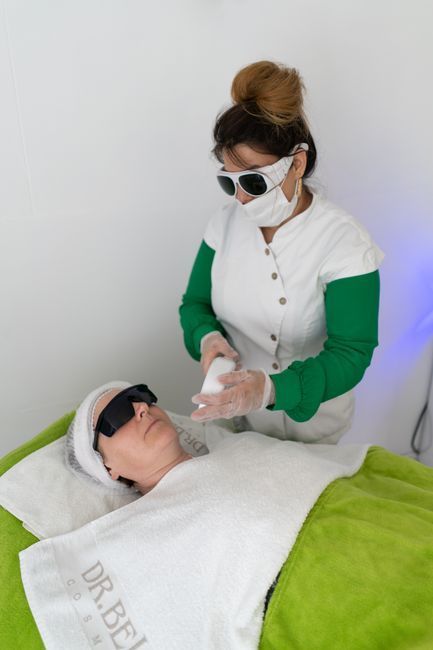
Settings are adjusted to your skin tone and how inflamed your acne is. Illustrative photo.
Your skin
Acne laser for Asian, darker and sensitive skin
Skin with more pigment, including many Korean and other Asian skin types, is more likely to develop post-inflammatory hyperpigmentation: brown marks that appear after inflammation or heat. Acne itself causes these marks, and so can a laser setting that is too strong. That is why Dr. Hwang favors conservative settings, may test a small area first, and builds results over several gentle sessions rather than one aggressive one.
If your skin is sensitive or reactive
Retinoids, acids and benzoyl peroxide can leave the skin dry and easily irritated. Your doctor may pause or lighten these products for a few days around each session. If you also have rosacea or flushing, a vascular laser may help both conditions; see redness reduction therapy.
Tanned skin and summer
A fresh tan or sunburn raises the risk of burns and pigment changes, so sessions may be delayed. Plan sun protection from at least two weeks before your first session and keep it up throughout the course.
Evidence
Does acne laser treatment work? What the research says
Laser and light treatments for acne are widely used, but the research behind them is weaker than for prescription medicines. Many trials are small, compare different devices and settings, and follow patients for only a few months. Some show clear improvement; others, including a well-known randomized trial of pulsed dye laser, found no significant difference from untreated skin. We think you should know this before you decide.
Light therapy review
4,211 participants. Authors could not draw firm conclusions; most evidence was low or very low certainty.
Barbaric et al., Cochrane Database Syst Rev, 2016Lasers and peels in the 2024 AAD guideline
Evidence was judged insufficient to recommend for or against these procedures.
Reynolds et al., J Am Acad Dermatol, 2024Pulsed dye laser trial
Split-face randomized trial: no significant improvement over the untreated side at 12 weeks.
Orringer et al., JAMA, 2004Newer 1726 nm laser
Average fall in inflamed lesions 6 months after 4 monthly sessions, as reported for its 2024 FDA clearance.
Manufacturer-reported data, 2024Traveling to Seoul
Acne laser treatment in Seoul for international patients
Because acne laser works best as a course of sessions 2–4 weeks apart, a single short trip usually allows one session plus a skin assessment and a written home-care plan. Visitors staying a month or longer, and foreign residents, can complete two or more sessions. Hommage Women's Clinic is in Gangnam, a short walk from Sinnonhyeon Station (Line 9 and Shinbundang Line).
Before you come
- Send photos of your skin and your travel dates by WhatsApp, KakaoTalk or the contact form, and ask for language support if needed.
- Bring your passport and a list of all acne medicines, including isotretinoin, antibiotics or hormonal treatment, with doses and dates.
- Avoid tanning before the trip, and plan your session early in your stay rather than right before a beach holiday.
After you fly home
You leave with a written skincare plan that a local doctor can continue. Send photos to the clinic if you notice blisters, crusting or darkening patches.
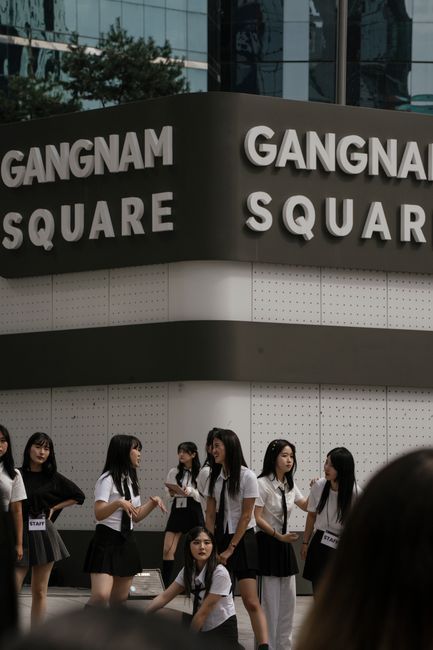 Hommage · Seoul
Hommage Women's Clinic · Gangnam, Seoul
The clinic is in Gangnam, a short walk from Sinnonhyeon Station. Illustrative photo.
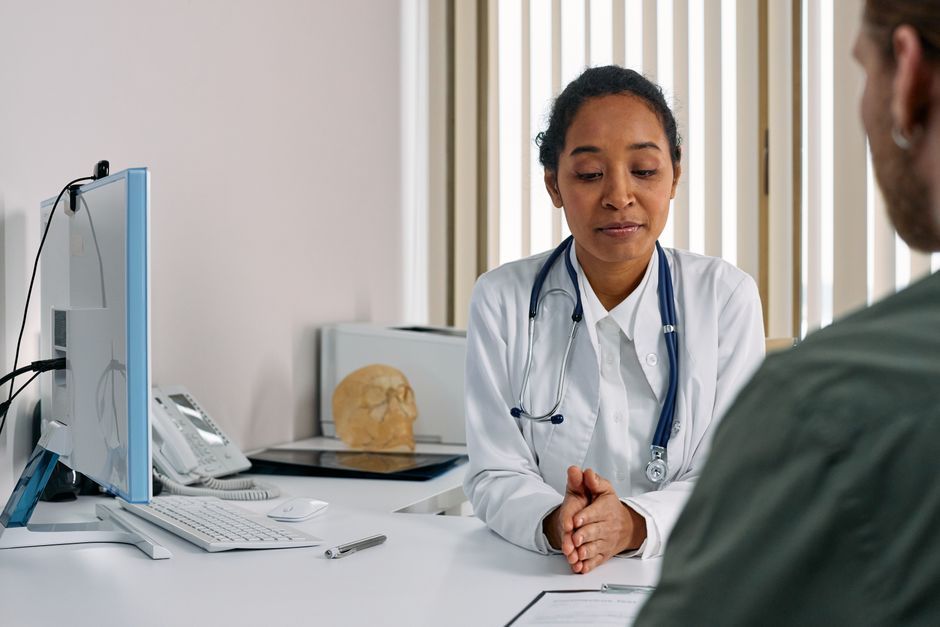 Hommage · Gangnam
Hommage Women's Clinic · Gangnam, Seoul
You receive a written plan and quote before your first session. Illustrative photo.
Choosing well
How to choose an acne laser clinic in Seoul
Gangnam has many clinics offering acne lasers, often sold as packages. Use these questions at any consultation, including ours:
- Does a doctor examine my acne first? The device should be chosen after assessment, not before.
- Will they discuss prescription treatment? Moderate to severe acne needs a medical base, not lasers alone.
- Which device, and why for my acne? A specific answer about your acne type is a good sign.
- How do they protect against dark marks? Ask about test spots, settings and sun advice for your skin tone.
- Do they ask about isotretinoin and other medicines? This affects safety and timing.
- Is the number of sessions realistic? Be cautious of large packages sold before your skin has been assessed.
What affects the cost of acne laser treatment?
The cost depends on the device, the number of sessions, the size of the area treated and whether extraction, peels or prescription medicines are added. Consultations and prescription acne medicines may be covered by Korea's National Health Insurance for enrolled patients, while cosmetic laser sessions are not. You receive a written quote before treatment starts.
Your visit
What to expect at your acne laser appointment
01
Skin assessment
The doctor looks at your acne type, skin tone, scarring, current products and medicines, and asks about cycles and hormonal symptoms.
02
Your plan
You agree on which device fits, how many sessions to expect, and whether prescription treatment or peels should be added.
03
Laser session
Cleansing, optional extraction, laser passes with eye protection, then cooling and soothing. Plan about an hour.
04
Aftercare and review
You leave with written aftercare. Progress is reviewed at each visit and the settings or plan are adjusted.
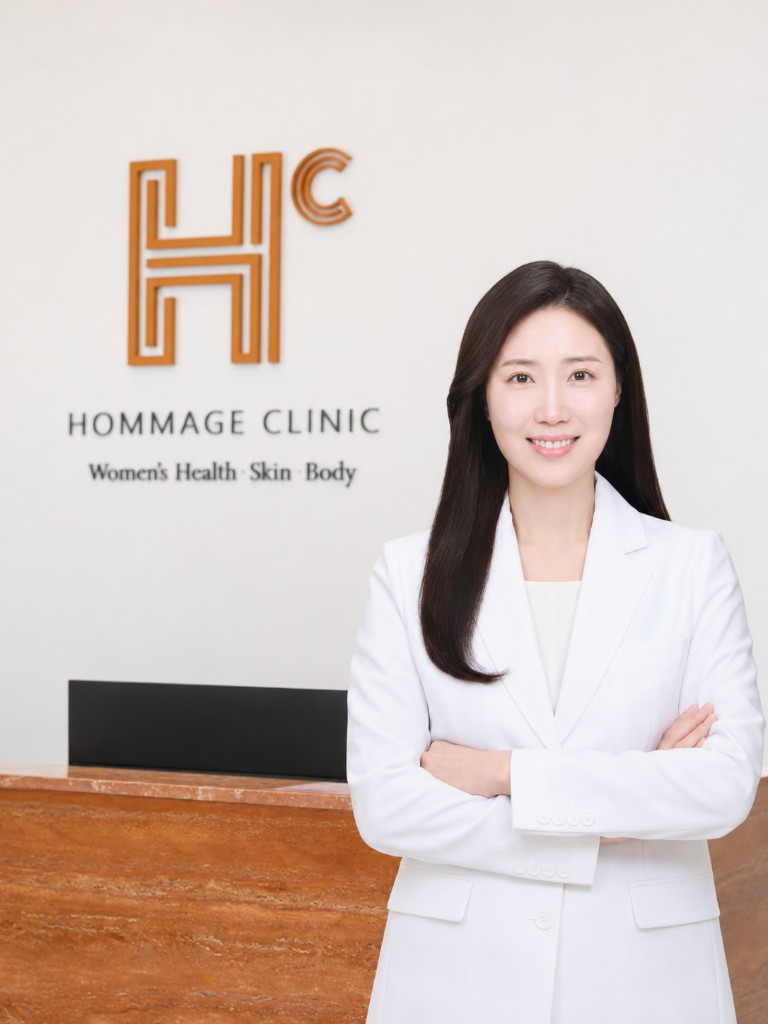
Your doctor
Dr. Hwang Seonhwa
Physician · Skin & Aesthetic Treatments
Dr. Hwang assesses the type of breakout, skin tone and current medicines before choosing a laser or light device. When acne needs more than laser alone, Dr. Hwang adds prescription treatment to the plan and reviews progress at each session.
Physician for face and skin procedures, including lifting, laser and skin-improvement treatments, planned around facial proportions and skin condition.
Acne laser treatment: frequently asked questions
Does acne laser treatment hurt?
Most people feel warmth and brief snapping or stinging, which is usually well tolerated. The skin is cooled during and after treatment, and numbing cream can be used for stronger settings. Inflamed spots can feel more sensitive than the surrounding skin, so the doctor can adjust the settings as you go.
How many acne laser sessions will I need?
Most people need a series of about 3–6 sessions spaced 2–4 weeks apart, depending on the device and how active the acne is. Some notice a difference after two sessions. Maintenance sessions may be suggested if breakouts tend to return, especially if you are not using ongoing skincare or medication.
Can laser treatment get rid of acne for good?
No treatment changes your underlying tendency to get acne, so laser is not a one-time cure. It can reduce inflammation, oil and red marks, and results last longer when combined with suitable skincare or prescription treatment. Hormonal shifts, stress and some products can trigger new breakouts later.
Can I have acne laser treatment while taking isotretinoin?
Tell your doctor if you take isotretinoin or have stopped it recently. The skin is more fragile and slower to heal during and shortly after this medicine, so some lasers and peels are postponed. Gentler options may be possible, and the timing is decided case by case after the doctor examines your skin.
Does acne laser also treat acne scars?
Laser for active acne mainly targets inflammation, oil and red marks, not indented scars. Pitted scars usually need different methods once breakouts are under control, such as RF microneedling for scars, fractional laser or subcision. Your doctor can plan both stages so they do not overlap.
Is acne laser treatment safe for darker skin tones?
Many acne lasers and light treatments can be used on darker skin, but the risk of dark marks (post-inflammatory hyperpigmentation) is higher. The doctor chooses wavelengths and settings with this in mind and may do a test area first. Daily sunscreen before and after treatment helps lower the risk.
Can foreigners get acne laser treatment in Seoul?
Yes. International patients and foreign residents can be treated at Hommage Clinic in Gangnam. Bring your passport for registration and a list of any acne medicines you use. Walk-ins are welcome, or book ahead for a set time, and contact us before your visit to arrange language support.
Is acne laser better than medication?
Not usually. Prescription treatments such as topical retinoids, benzoyl peroxide and, for severe or scarring acne, isotretinoin have the strongest evidence. The 2024 American Academy of Dermatology guideline found the evidence too limited to recommend lasers or light devices, so they are best used alongside medical treatment or when medicines are not tolerated.
Can acne get worse after laser treatment?
Some people have a short-lived flare of breakouts in the first weeks of a course. This usually settles as treatment continues. Tell the clinic if spots become very painful, crusted or filled with pus, or if you develop fever, as these can be signs of infection.
Can I wear makeup after acne laser treatment?
Most people can wear light, non-comedogenic makeup the next day, once any redness has settled. Use clean brushes or sponges and remove makeup gently in the evening. If the skin is crusted or blistered, wait until it has healed.
Can I have acne laser treatment during pregnancy?
Elective laser sessions are usually postponed during pregnancy, and several acne medicines, including isotretinoin and oral tetracyclines, must not be used. Tell the doctor if you are pregnant, trying to conceive or breastfeeding so a safe plan can be made.
What is the difference between acne laser and IPL?
A laser emits a single wavelength aimed at one target, while intense pulsed light (IPL) uses a broad band of wavelengths filtered for the task. Both can calm redness and inflamed spots. Which one is used depends on your skin tone, acne type and marks; see our IPL treatment page for more.
How soon can I treat acne scars after laser for active acne?
Scar treatment usually starts once active breakouts are under control, because new spots can undo progress and inflamed skin heals less predictably. Your doctor may then suggest options such as fractional laser or subcision depending on the scar type.
References
Sources used for this page, reviewed by Dr. Hwang Seonhwa. Read our editorial and medical review policy.
- Reynolds RV, Yeung H, Cheng CE, et al. Guidelines of care for the management of acne vulgaris. J Am Acad Dermatol. 2024. doi:10.1016/j.jaad.2023.12.017
- Barbaric J, Abbott R, Posadzki P, et al. Light therapies for acne. Cochrane Database Syst Rev. 2016;9:CD007917. Cochrane summary
- Orringer JS, Kang S, Hamilton T, et al. Treatment of acne vulgaris with a pulsed dye laser: a randomized controlled trial. JAMA. 2004;291(23):2834–2839.
- Seaton ED, Charakida A, Mouser PE, et al. Pulsed-dye laser treatment for inflammatory acne vulgaris: randomised controlled trial. Lancet. 2003;362(9393):1347–1352.
- US Food and Drug Administration 510(k) clearance K242035, Accure 1726 nm laser system for mild to severe inflammatory acne vulgaris, 2024 (as reported by HCPLive, October 2024).
This page is general information and does not replace a personal consultation. Illustrations are original works of Hommage Women's Clinic, Gangnam, Seoul; photos marked illustrative are not of patients.
Related acne treatments
Blue Light Acne Therapy
Gentle light sessions that target acne bacteria in mild to moderate inflamed acne.
Chemical Peels for Acne
Peels that unclog pores and calm breakouts, often combined with laser or medication.
Acne Injection
A small steroid injection to settle a single painful cyst within a few days.
Laser Carbon Peel
Laser over a carbon lotion to clear oily, congested pores and refresh dull skin.
Fractional Laser for Acne Scars
Resurfacing for pitted scars once active breakouts are under control.
PCOS Treatment
Hormonal assessment for adult acne with irregular periods or new hair growth.
Plan your acne treatment with a doctor
Book an acne assessment with Dr. Hwang Seonhwa in Gangnam to match laser or light sessions with the medical care your skin needs.
Hommage Clinic · 4F, Building A, 509 Gangnam-daero, Seoul (near Sinnonhyeon Station) · Mon & Fri 10:00–20:00 · Tue–Thu 10:00–19:00 · Sat 10:00–15:00