
Skin & Aesthetics · Moles & spots
Laser Mole Removal in Seoul: Why Every Mole Is Checked First
Laser mole removal uses an ablative laser, most often a CO2 laser, to vaporize a small benign mole layer by layer, usually within minutes under local numbing, leaving a small wound that heals in one to two weeks. At Hommage Clinic in Gangnam, Seoul, Dr. Hwang Seonhwa examines every mole with dermoscopy first, and any changing or irregular mole is referred for excision and pathology instead.
Quick answer
Laser mole removal uses an ablative laser, usually a CO2 laser, to vaporize a small benign mole layer by layer in about 5–20 minutes under numbing. At Hommage Women's Clinic in Gangnam, Seoul, Dr. Hwang Seonhwa examines every mole with dermoscopy first and lasers only moles that look clearly benign; changing or irregular moles are referred for excision and pathology. Most small wounds close in 7–14 days, the pink mark fades over 1–3 months, and some moles come back and need a touch-up.
Key takeaways
- Laser leaves no tissue to test, so the mole check before treatment is the most important step.
- Laser suits small, flat or slightly raised moles that have not changed; suspicious moles need excision.
- Recurrence after laser is common enough that you should plan for a possible second session.
- Sunscreen for at least 3–6 months after healing lowers the risk of dark marks on Asian skin.
Infographic
Laser mole removal in numbers
Treatment time
Depends on the number, size and depth of moles.
Wound closes
Keep it moist and covered with a dressing.
Pink mark fades
Deeper moles may take longer.
Strict sunscreen
New skin darkens easily after healing.
ABCDE size flag
Larger moles need a closer look, though melanoma can be smaller.
Tissue for the lab
Laser vaporizes the mole, which is why examination comes first.
Laser mole removal at a glance
| Key fact | Details |
|---|---|
| Before treatment | Every mole is examined, usually with dermoscopy; suspicious moles are not lasered |
| Treatment time | Usually 5–20 minutes, depending on the number and size of moles |
| Anesthesia | Numbing cream or a small local anesthetic injection |
| Downtime | A small wound under a dressing, usually healing in about 7–14 days |
| Results visible | Pink mark fades over 1–3 months; some moles repigment and need a touch-up |
| Not suitable for | Changing, irregular or suspicious moles, which need excision and pathology |
| Reviewed by | Dr. Hwang Seonhwa, physician for skin and aesthetic treatments |
Laser may suit you if you have
- Small, flat or slightly raised moles that have looked the same for years
- Moles a doctor has examined and judged benign
- Moles you want removed for appearance or because they catch on clothing
- Several small facial moles you would like treated in one visit
Have the mole evaluated, not lasered, if it
- Has changed in size, shape or color, or is new and growing in adulthood
- Is asymmetric, has an irregular border or several colors, or itches or bleeds
- Is on a palm, sole or nail, or you have a personal or family history of melanoma
- Appeared or darkened during pregnancy; elective removal is usually postponed
What is laser mole removal and how does it work?
Laser mole removal is a quick, minimally invasive way to remove small benign moles by vaporizing them with a laser. The most commonly used device is an ablative CO2 laser (10,600 nm), whose energy is absorbed by water in skin cells. Each pass removes a very thin layer, so the doctor can work down until the pigmented cells are gone while keeping the wound as shallow as possible.
This is different from pigment lasers such as pico laser , which break up flat brown pigment without creating a wound and are used for freckles and sun spots rather than moles. A CO2 laser is the same type of device used for CO2 laser resurfacing , but in mole removal it is focused on a single small spot.
One fact matters more than any other: laser vaporizes the mole, so no tissue is left to examine under a microscope. That is why the decision to use laser must come after a careful examination, never before.
Why every mole must be checked before laser
A mole should only be lasered when a doctor is confident it is benign. If a melanoma or other skin cancer were lasered by mistake, the visible part could disappear while cancer cells remain deeper in the skin, delaying diagnosis.
Doctors look for warning signs often summarized as ABCDE:
- A symmetry: the two halves do not match.
- B order: edges are irregular, notched or blurred.
- C olor: several shades of brown, black, red, white or blue.
- D iameter: larger than about 6 mm, though melanomas can be smaller.
- E volving: any change in size, shape, color, height, or new itching or bleeding.
A mole that looks different from all your others (the "ugly duckling" sign) also needs attention. In Asian skin, melanoma most often appears on the palms, soles or under the nails, so moles in those places and new dark lines in a nail need specialist assessment. Dermoscopy, a magnified light examination, helps tell benign moles from suspicious ones. When there is any doubt, the right step is excision or biopsy with histology (laboratory examination of the tissue), not laser.
Laser vs surgical excision: which is right for your mole?
Laser suits small, benign-looking moles where appearance is the main concern; excision suits any mole that needs a diagnosis, deeper moles and larger ones.
- CO2 laser: quick, no stitches, a small round wound and usually a small flat mark. Some moles return because pigment cells sit deeper than the laser safely reaches. No tissue is available for pathology.
- Shave excision: the raised part is sliced off level with the skin and sent to the laboratory. It suits raised moles and gives a diagnosis.
- Punch or surgical excision: the whole mole is cut out with a margin and stitched. It leaves a line scar but gives the most complete removal and full pathology, and it is the standard for any suspicious mole.
Laser removal of small facial moles is popular in Korea, but it should always follow a careful examination. If excision with pathology is needed, Dr. Hwang will refer you to a dermatologist or hospital that can perform it.
What happens during laser mole removal, and does it hurt?
The procedure itself usually takes 5 to 20 minutes. Dr. Hwang first examines and photographs the moles, confirms which ones are suitable, and marks them. Numbing cream is applied, or a tiny injection of local anesthetic is used for deeper moles.
With numbing, most people feel only warmth or a slight prickling, and there may be a faint smell as tissue is vaporized. Without numbing it would sting sharply, which is why anesthesia is used. Each mole is removed in thin layers, and a protective dressing is applied at the end.
How long does it take to heal after mole removal?
Most small laser wounds close in about 7 to 14 days, and the pink mark that remains fades over one to three months. Deeper moles take longer.
Aftercare
- Keep the wound moist and covered with the recommended dressing, such as a hydrocolloid patch, changing it as advised.
- Wash gently and avoid scrubbing, saunas and swimming until the wound has closed.
- Do not pick scabs; picking increases the risk of scars and dark marks.
- Use sunscreen on the area for at least three to six months once healed, because new skin darkens easily.
- Makeup can usually go on after the wound has closed.
Some moles repigment within weeks to months because a few pigment cells remained deep in the skin. A touch-up session may be offered, but any mole that returns quickly, grows or changes should be re-examined, and may need excision for diagnosis.
Risks and possible side effects
Laser mole removal is a minor procedure, but it creates a wound, so it has real risks. Expected effects are redness, a small scab and a pink mark that fades.
Possible side effects include:
- A small depressed scar , more likely after deeper moles.
- Raised or thickened scars , especially on the chest, shoulders and jawline in people prone to keloids.
- Dark marks (post-inflammatory hyperpigmentation), common in Asian skin and usually fading over months with sun protection.
- Light spots , which can last longer.
- Mole recurrence , needing further treatment or excision.
- Infection , which is uncommon with good wound care.
The most serious risk is treating a mole that was not benign, which is why examination comes first. Contact the clinic if the wound becomes increasingly painful, hot, swollen or oozing, if it has not closed after three weeks, or if the mole grows back with a different color or shape.
Laser mole removal at Hommage Clinic
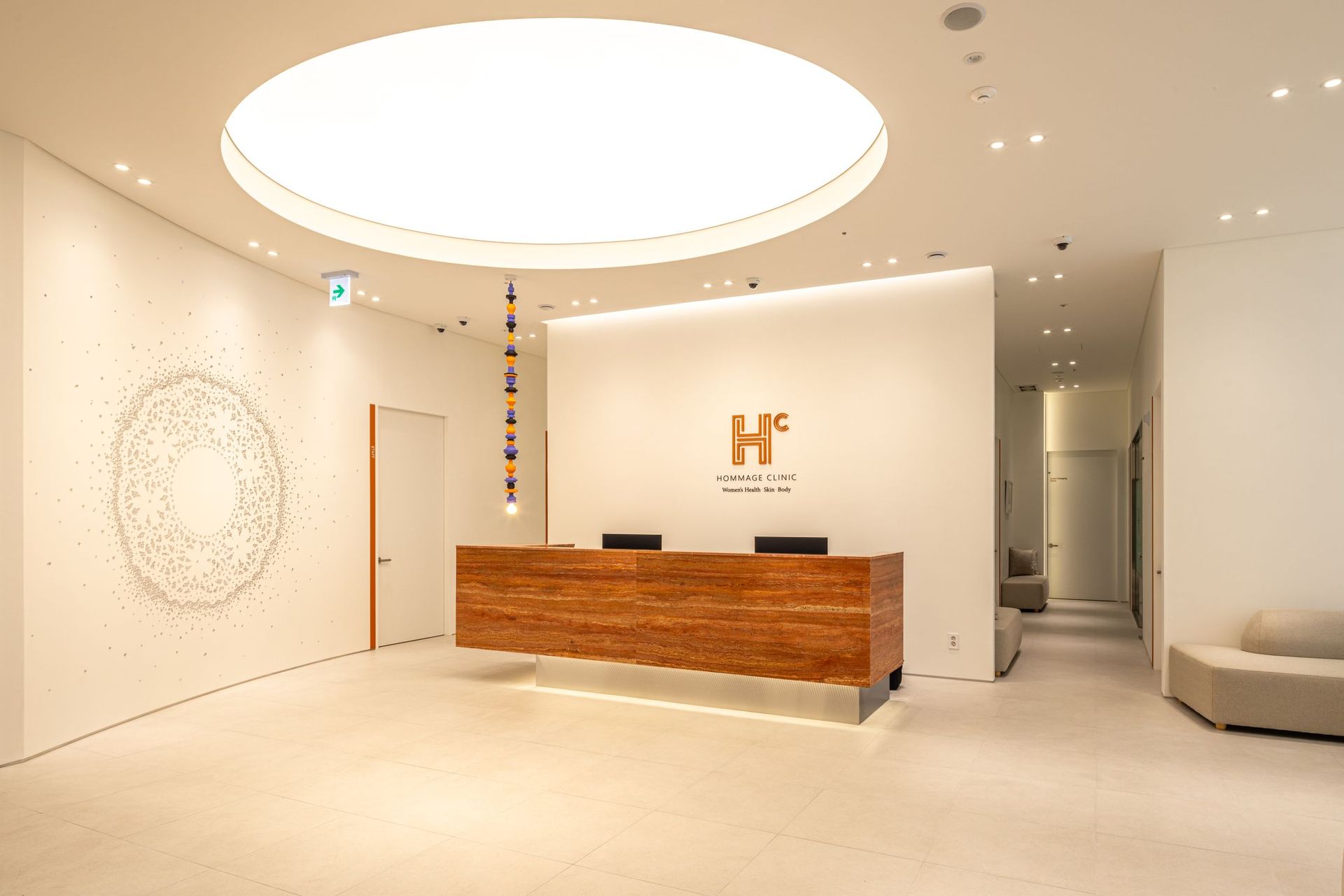
Hommage Clinic is a women's health and skin clinic in Gangnam, a short walk from Sinnonhyeon Station, and welcomes walk-ins during opening hours. Dr. Hwang Seonhwa examines every mole before treatment and lasers only small moles that look benign. Moles with warning signs are not treated with laser; you are referred to a dermatologist or hospital for excision and pathology, with a referral letter if you need one.
Many spots that people call moles are actually seborrheic keratoses or sun spots, which are treated differently; seeage spot removal. Red bumps are covered inhemangioma laser treatment, and you can browse allskin and aesthetic treatments. Cosmetic mole removal is not covered by Korea's National Health Insurance. Cost depends on the number, size and depth of the moles, and you receive a written quote before treatment.
Mechanism
How CO2 laser mole removal works, layer by layer
Moles are clusters of pigment cells (nevus cells). In a flat junctional mole they sit where the outer skin meets the deeper dermis; in compound and dermal moles, which are often raised, they extend further down. A CO2 laser removes tissue by heating the water in it, so each pass takes off a very thin layer. Dr. Hwang stops as soon as the visible pigment is gone, because going deeper increases the chance of a depressed scar.
That balance explains both the good cosmetic results and the main drawback. A shallow wound heals with a small, flat mark, but pigment cells that sit deeper than it is safe to go can survive and slowly bring the color back. Reviews of laser mole treatment describe this recurrence as common, especially for deeper moles.
Decision
Laser, shave or excision? How the decision is made
Dermatology reviews generally accept that removed moles should be sent for laboratory examination whenever there is any doubt, and describe laser removal as controversial precisely because no specimen is left. The pathway below is how Dr. Hwang applies that principle: laser is reserved for moles that are small, stable and clearly benign on examination, and everything else is referred for a procedure that gives a diagnosis.
 Hommage · Gangnam
Hommage Women's Clinic · Gangnam, Seoul
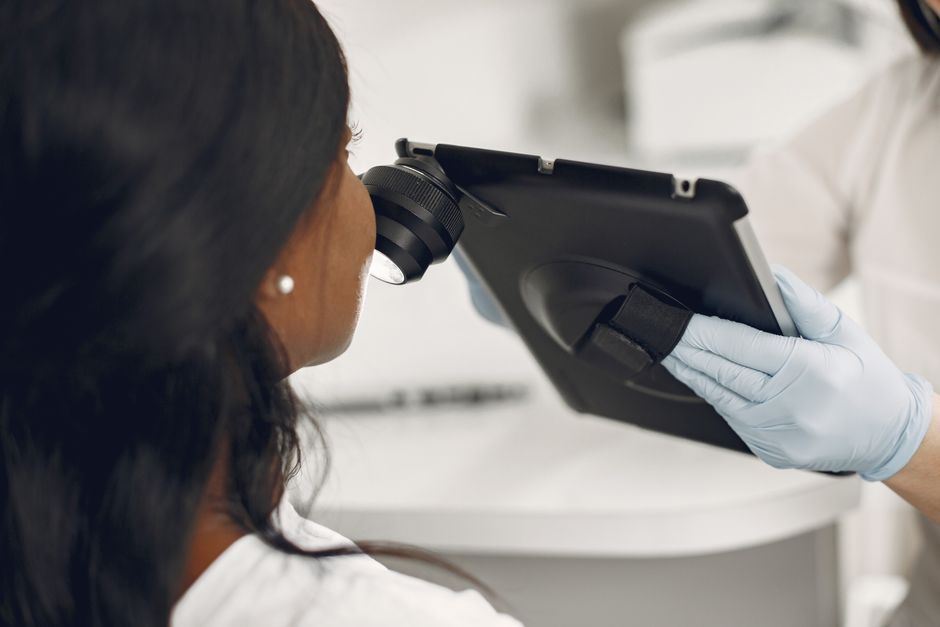
Dermoscopy, a magnified light examination, comes before any laser. Illustrative photo.
 Hommage · Gangnam
Hommage Women's Clinic · Gangnam, Seoul
Many facial spots that look like moles are freckles, sun spots or seborrheic keratoses. Illustrative photo.
Know your spot
Is it a mole, a freckle or an age spot?
People often ask for "mole removal" when the spot is something else. Getting the label right matters, because each type is treated with a different laser and has a different chance of coming back. Dr. Hwang confirms what each spot is before planning treatment.
Mole (nevus)
Round, even brown to dark spot, flat or raised, often since childhood. Ablative laser or excision.
Freckles
Many small, flat light-brown dots that darken in summer. Pigment laser; see freckle removal.
Seborrheic keratosis
Waxy, slightly raised “stuck-on” spot that appears with age. See age spot removal.
Red spot
Bright red dome, often a cherry angioma. Vascular laser; see hemangioma laser.
Healing
Laser mole removal healing stages, day by day
Healing after laser mole removal follows a predictable path. The wound is kept moist under a dressing for the first one to two weeks, the new skin is pink and sensitive for one to three months, and the final look is judged at about three months, when any recurrence or dark mark can be assessed.
Aftercare
Mole removal aftercare: do's and don'ts
Good wound care is the part of the result that is in your hands. Moist healing under a hydrocolloid patch closes small laser wounds faster and with less visible marking than letting a hard scab form. Asian skin is prone to post-inflammatory dark marks, so sun protection matters as much as the laser itself.
Do
- Keep the wound covered with the patch you were given
- Change the patch when it turns white or lifts
- Wash your face gently around the patch
- Use broad-spectrum sunscreen daily for 3–6 months once healed
- Take a photo each week to track healing
- Return if the mole comes back or changes
Don't
- Pick or peel scabs
- Use saunas, swim or scrub until the wound closes
- Apply makeup on the open wound
- Use retinoids or acids on the spot while healing
- Tan or sunbathe in the first months
- Ignore increasing pain, heat or oozing
 Hommage · Gangnam
Hommage Women's Clinic · Gangnam, Seoul
Daily sunscreen helps prevent dark marks on new skin. Illustrative photo.
Evidence
Does laser mole removal work? What the research says
Most research on laser mole removal comes from single-clinic case series, many of them in Korea and other Asian countries where removing small facial moles is common. They show good cosmetic results for small benign moles, but few compare techniques directly, follow patients for years, or confirm with biopsy what was treated. The figures below are what the stronger reviews and largest series report.
Korean patients studied
Largest series of laser-treated moles, mostly women with skin types III–V.
Kim et al., Ann Dermatol, 2012Good to excellent
After two to three sessions with a pigment laser; 39.8% fully cleared after one.
Kim et al., Ann Dermatol, 2012Skin resurfaced
Redness lasted up to two weeks; no infection was reported.
Kim et al., Ann Dermatol, 2012Recurrence after shave
Even shave excision leaves residual mole cells in some cases.
Sardana et al., Clin Cosmet Investig Dermatol, 2014Traveling to Seoul
Laser mole removal in Seoul for international patients
Mole removal is quick, but the wound needs one to two weeks of care, so timing your visit well makes a difference. Hommage Women's Clinic is in Gangnam, a short walk from Sinnonhyeon Station (Line 9 and Shinbundang Line).
Planning your stay
- Book the mole check early in your trip. If a mole needs excision and pathology, results take time and you may need a referral.
- Ideally stay about 7 days after laser so the wound can be checked; if you fly sooner, bring spare hydrocolloid patches.
- Avoid beach holidays, swimming and saunas for the first weeks, and pack a high-SPF sunscreen and a hat.
- Bring your passport and any earlier reports about your moles, especially if you have a family history of melanoma.
After you fly home
Send photos by WhatsApp or KakaoTalk if you are unsure how the wound is healing. If a treated mole grows back, changes shape or color, or bleeds, see a dermatologist at home for examination rather than simply repeating laser.
 Hommage · Seoul
Hommage Women's Clinic · Gangnam, Seoul
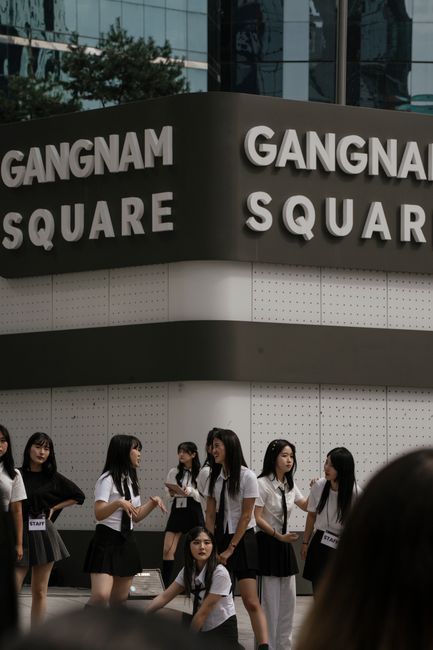
Gangnam, Seoul: the clinic is a short walk from Sinnonhyeon Station. Illustrative photo.
 Hommage · Gangnam
Hommage Women's Clinic · Gangnam, Seoul
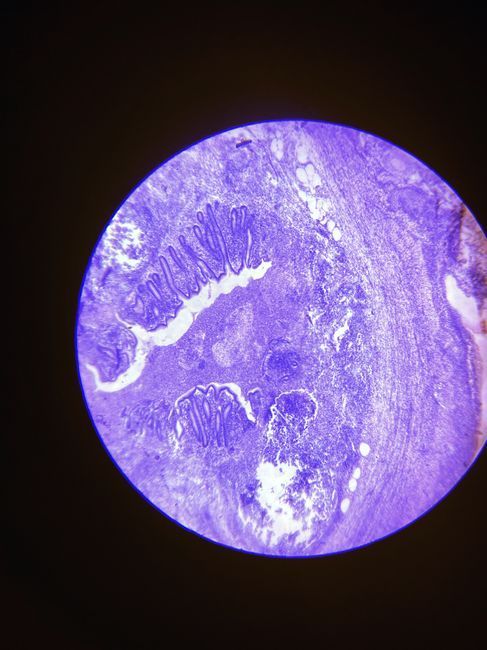
Suspicious moles go to the laboratory, not the laser. Illustrative photo.
Choosing well
How to choose a clinic for mole removal in Seoul
Mole removal is widely advertised in Gangnam, sometimes priced per mole with no examination. Ask these questions at any clinic, including ours:
- Does a doctor examine each mole first? Ideally with dermoscopy and photos, before any price is discussed.
- Will they say no to laser? A good clinic refers suspicious moles for excision and pathology.
- Do they explain recurrence? You should know a touch-up may be needed.
- Is aftercare included? Dressings, written instructions and a way to send photos.
- Who does the laser? A physician should perform or directly supervise it.
- Is the quote written? Including any touch-up policy, before treatment.
What affects the cost of laser mole removal?
Cost depends mainly on how many moles are treated, their size and depth, whether local anesthetic injections are needed, and whether a touch-up session is planned. Cosmetic mole removal is not covered by Korea's National Health Insurance, while examination or excision of a suspicious mole for diagnosis may be handled differently. You receive a written quote after your mole check and before any treatment. Combining with other spot treatments such asfreckle removalorsun spot treatmentcan be discussed at the same visit.
Your visit
What to expect at your mole removal appointment
01
Mole check
Dr. Hwang asks about any changes and examines each mole, usually with dermoscopy. Suspicious moles are referred for biopsy instead.
02
Numbing
Suitable moles are marked and numbed with cream or a small local anesthetic injection.
03
Laser removal
Each mole is vaporized in thin layers. Most visits take 5–20 minutes of treatment time.
04
Wound care
A dressing is applied, and you receive aftercare instructions. Most wounds close within about 1–2 weeks.

Your doctor
Dr. Hwang Seonhwa
Physician · Skin & Aesthetic Treatments
Dr. Hwang examines every mole before deciding on treatment, lasers only those that look clearly benign, and refers any changing or irregular mole for excision and pathology rather than removing it with laser.
Physician for face and skin procedures, including lifting, laser and skin-improvement treatments, planned around facial proportions and skin condition.
Laser mole removal: frequently asked questions
Is laser mole removal safe?
Laser mole removal is a well-established minor procedure for small benign moles when it is done after a proper examination. The main safety concern is diagnosis: laser vaporizes the mole, leaving nothing to test, so any mole with warning signs should be excised and examined in a laboratory instead. Scarring, dark marks and recurrence are possible side effects.
Will my mole come back after laser removal?
Some moles return, usually as a light brown spot within weeks to months, because pigment cells can sit deeper than the laser safely reaches. Flat, shallow moles recur less often than deeper ones. A touch-up session can treat recurrence, but a mole that comes back quickly or looks different should be re-examined and may need excision.
Does laser mole removal leave a scar?
Most small, shallow moles leave a faint flat mark that fades over several months. Deeper moles can leave a small depressed scar, and raised scars are more likely on the chest, shoulders and jawline. Keeping the wound moist, not picking scabs and using sunscreen afterward all reduce the risk of visible marks.
Can a cancerous mole be removed with laser?
No. Melanoma and other skin cancers must be removed surgically with a margin of normal skin, and the tissue must be examined in a laboratory. Laser can leave cancer cells behind and destroys the tissue needed for diagnosis. If a mole has any warning signs, it should be biopsied or excised first.
Can I wear makeup after mole removal?
Wait until the wound has fully closed, usually about 7 to 14 days. Until then, keep the dressing on and apply makeup only around it. Once healed, makeup and sunscreen can be used over the area. Sunscreen is especially important for several months, because new skin darkens easily.
How many moles can be removed in one session?
Several small moles can often be treated in one visit, but each must be examined first and only benign-looking ones are lasered. The number also depends on their size, depth and location, and on how much healing you can manage at once. Dr. Hwang will suggest a plan after your examination.
Can foreigners get laser mole removal in Seoul?
Yes. International visitors and foreign residents can book at Hommage Clinic; bring your passport for registration. Plan for one to two weeks of wound care and avoid strong sun or swimming during healing. Contact us before your visit to arrange language support; you can walk in during opening hours or book ahead for a set time.
Does laser mole removal hurt?
With numbing cream or a small local anesthetic injection, most people feel only warmth or slight prickling during the few minutes of treatment. The area may feel like a mild graze for a day or two afterward. Simple pain relief is rarely needed.
What is the difference between CO2 laser and pico laser for moles?
A CO2 laser removes the mole tissue itself, layer by layer, which suits raised or deeper moles. A pico laser breaks up pigment without a wound and is mainly used for flat spots such as freckles and sun spots. Pigment lasers can lighten some flat moles but often need several sessions, and deeper mole cells may remain.
Should I have a mole removed if it is on my palm, sole or nail?
Moles in these places should be assessed by a dermatologist rather than lasered, because in people of Asian ancestry melanoma most often appears on the palms, soles and nails. A new dark line in a nail also needs specialist assessment. If removal is advised, it is usually by excision with pathology.
Can I remove a mole during pregnancy?
Moles can darken or enlarge during pregnancy because of hormonal changes. Elective cosmetic removal is usually postponed until after pregnancy, but any mole that changes in a worrying way should still be examined promptly. Read more about skin changes with hormones.
When can I exercise or swim after mole removal?
Light exercise is fine from the next day if you keep the dressing dry and clean. Avoid swimming, saunas and hot baths until the wound has fully closed, usually 7 to 14 days, to lower the risk of infection.
Is laser mole removal covered by insurance in Korea?
Removing moles for appearance is not covered by Korea's National Health Insurance. Examination or excision of a suspicious mole for diagnosis is a medical matter and may be handled differently. You receive a written quote after your mole check.
References
Sources used for this page, reviewed by Dr. Hwang Seonhwa. Read our editorial and medical review policy.
- Sardana K, Chakravarty P, Goel K. Optimal management of common acquired melanocytic nevi (moles): current perspectives. Clin Cosmet Investig Dermatol. 2014;7:89–103. PubMed
- Kim YJ, Whang KU, Choi WB, et al. Efficacy and safety of 1,064 nm Q-switched Nd:YAG laser treatment for removing melanocytic nevi. Ann Dermatol. 2012;24(2):162–167. PMC
This page is general information and does not replace a personal consultation. Illustrations are original works of Hommage Women's Clinic, Gangnam, Seoul; photos marked illustrative are not of patients.
Related spot treatments
Age Spot Removal
Seborrheic keratoses and sun-related spots that are often mistaken for moles.
Freckle Removal
Laser treatment for flat brown freckles, which differ from moles.
Pico Laser Treatment
Ultra-short pulses that break up flat pigment without a wound.
Hemangioma Laser Treatment
Laser for cherry angiomas and other small red spots in adults.
CO2 Laser Resurfacing
The same laser type used across larger areas for texture and scars.
Skin Care for Hormonal Changes
Why moles and pigment can darken in pregnancy and with hormonal change.
Have your moles checked before removal
Book a mole assessment with Dr. Hwang Seonhwa in Gangnam. Each mole is examined first, and only benign-looking moles are removed with laser.
Hommage Clinic · 4F, Building A, 509 Gangnam-daero, Seoul (near Sinnonhyeon Station) · Mon & Fri 10:00–20:00 · Tue–Thu 10:00–19:00 · Sat 10:00–15:00