
Skin & Aesthetics · Acne scars
Rolling Scar Treatment: Release the Tethers, Then Rebuild
Rolling scar treatment smooths rolling scars, the wide, shallow acne scars with soft, sloping edges that give the skin a wavy, uneven look, usually by first releasing the fibrous bands that pull them down and then rebuilding collagen. At Hommage Clinic in Gangnam, Seoul, Dr. Hwang Seonhwa typically combines subcision with RF microneedling or fractional laser, and may add volume where tissue has been lost.
Quick answer
Rolling scar treatment lifts wide, soft-edged acne scars that are pulled down by fibrous bands under the skin. At Hommage Women's Clinic in Gangnam, Seoul, Dr. Hwang Seonhwa usually starts with subcision to release those bands, often 1–3 sessions, then rebuilds collagen with RF microneedling or fractional laser over about 3–5 sessions, 4–6 weeks apart. Expect 1–2 weeks of bruising after subcision and gradual improvement over 3–6 months; scars soften but are not erased.
Key takeaways
- Rolling scars are a tethering problem: resurfacing alone usually gives limited change.
- A simple clue: rolling scars often soften when the skin is gently stretched.
- Subcision plus a collagen-building treatment is the usual combination; volume can be added where tissue is lost.
- Some bands reattach, so more than one subcision session is common.
Infographic
Rolling scars in numbers
Typical width
Usually wider than boxcar and ice pick scars.
Share of acne scars
Estimated proportion of depressed acne scars that are rolling.
Subcision sessions
Often needed, about 4–6 weeks apart.
Resurfacing sessions
RF microneedling or laser to rebuild collagen.
Bruising
Typical after subcision; plan events around it.
Reported response
Range of effectiveness reported for subcision in rolling scars.
Rolling scars at a glance
| Key fact | Details |
|---|---|
| What they are | Wide, shallow acne scars with soft, sloping edges, often more than 4 mm across |
| Why they form | Fibrous bands tether the skin to deeper tissue and pull the surface down |
| How they're assessed | Angled-light examination; scars that soften when the skin is stretched are usually tethered |
| Treatment options | Subcision, RF microneedling, fractional laser, microneedling, fillers or collagen stimulators |
| Sessions | Typically 1–3 subcision sessions plus 3–5 resurfacing sessions, about 4–6 weeks apart |
| Results | Gradual over 3–6 months; scars become shallower and softer but are not erased |
| Reviewed by | Dr. Hwang Seonhwa, physician for skin and aesthetic treatments |
Book a rolling scar assessment if you have
- Broad, shallow dips that make the cheeks look wavy or uneven, especially in side lighting
- Scars that soften or flatten when you gently stretch the skin
- Rolling scars mixed with boxcar or ice pick scars and want one combined plan
- Acne that has been under control for a few months
Wait or discuss another option if you have
- New breakouts still forming, or cold sores or infection in the area
- Pregnancy or breastfeeding (cosmetic scar treatment is usually postponed)
- A bleeding disorder, blood-thinning medication or a keloid tendency
- Taken isotretinoin recently (timing is decided with your doctor)
What are rolling scars?
Rolling scars are broad, shallow depressions with soft, sloping edges that blend into the surrounding skin and create a rolling, wave-like surface. They are usually wider than other acne scars, often more than 4 mm across, and are most common on the cheeks.
They form when deep inflammation leaves fibrous bands in the tissue under the skin. These bands tether the dermis to deeper structures and pull the surface down, while some loss of fat and collagen underneath adds to the dip. Because the problem sits beneath the surface, rolling scars are often most visible in side or overhead lighting and can look deeper as facial volume changes with age.
Rolling vs boxcar vs ice pick scars: how do you tell them apart?
The quickest clue is the edge. Rolling scars have soft, sloping edges, while boxcar and ice pick scars have sharp ones.
- Rolling scars: wide and shallow, with smooth edges. Gently stretching the skin often makes them soften or almost disappear, which is a sign they are tethered.
- Boxcar scars: round or oval, with steep edges and a flat base, like small craters. Stretching does not make them disappear. See boxcar scar treatment .
- Ice pick scars: narrow, usually under 2 mm, and deep, like a puncture. See ice pick scar treatment .
Most people with acne scars have more than one type, so the plan follows a scar map.
Which treatments work for rolling scars?
Because rolling scars are pulled down from below, releasing the tethers is usually the first and most important step, followed by treatments that rebuild collagen at the surface.
- Subcision: a fine needle or blunt cannula is passed under the scar to cut or loosen the fibrous bands, so the skin can lift. The small bleed that follows also triggers new collagen. It is the core treatment for tethered rolling scars.
- RF microneedling: remodels the dermis across the scarred area, often in the same session as subcision or a few weeks after. It carries a lower pigment risk in Asian and darker skin.
- Fractional laser: smooths surface texture and the edges of mixed scars once the tethers have been released.
- Classic microneedling: a gentler option for mild rolling scars.
- Volume: hyaluronic acid filler or collagen stimulators can lift scars where tissue has been lost, and may help prevent the bands from reattaching.
Resurfacing alone usually gives limited change in rolling scars, because it does not release the bands holding them down.
What does a rolling scar plan look like?
A typical plan runs over several months and is adjusted at each visit.
- Control active acne first. New breakouts can leave new scars, so acne treatment comes first if needed.
- Map and mark the scars. Rolling scars are marked under angled light, alongside any boxcar or ice pick scars.
- Release the tethers. Subcision is done under local anesthetic, often in 1–3 sessions about 4–6 weeks apart.
- Rebuild collagen. RF microneedling or fractional laser is added in the same session or alternated over about 3–5 sessions.
- Add volume if needed. Filler or a collagen stimulator may be used where scars stay soft but sunken.
How long does rolling scar treatment take to work?
Some lift may be visible soon after subcision, once swelling settles, but most improvement develops over 3–6 months as new collagen forms. The full result of a plan is usually judged about 3–6 months after the last session.
Rolling scars often respond well to a combined approach, and most people see them become shallower and less noticeable. They are improved rather than erased, and some bands can reattach, which is why more than one subcision session is common. Recovery usually involves:
- Bruising and swelling for about 1–2 weeks after subcision.
- Redness for 2–4 days after RF microneedling, or longer after ablative laser.
- Gentle skincare only, makeup once the skin has closed and any bruising allows, and daily SPF 30+ sunscreen.
Risks and possible side effects
Each part of a rolling scar plan has its own risks, and Dr. Hwang will go through them with you before you consent:
- Bruising and swelling after subcision, usually settling within 1–2 weeks.
- Small firm lumps under treated scars, which usually soften over weeks; occasionally they need treatment.
- Temporary numbness or tenderness in the treated area.
- Post-inflammatory hyperpigmentation : temporary darkening, more likely in Asian and darker skin, especially after laser.
- Infection or cold sore reactivation , and acne flares or milia.
- With filler, rare but serious vascular complications , which is why a physician performs injections.
Call the clinic if you notice increasing pain or swelling, a hot, hard or growing lump, pus, fever, or any skin that turns pale, gray or dusky.
Rolling scar treatment at Hommage Clinic
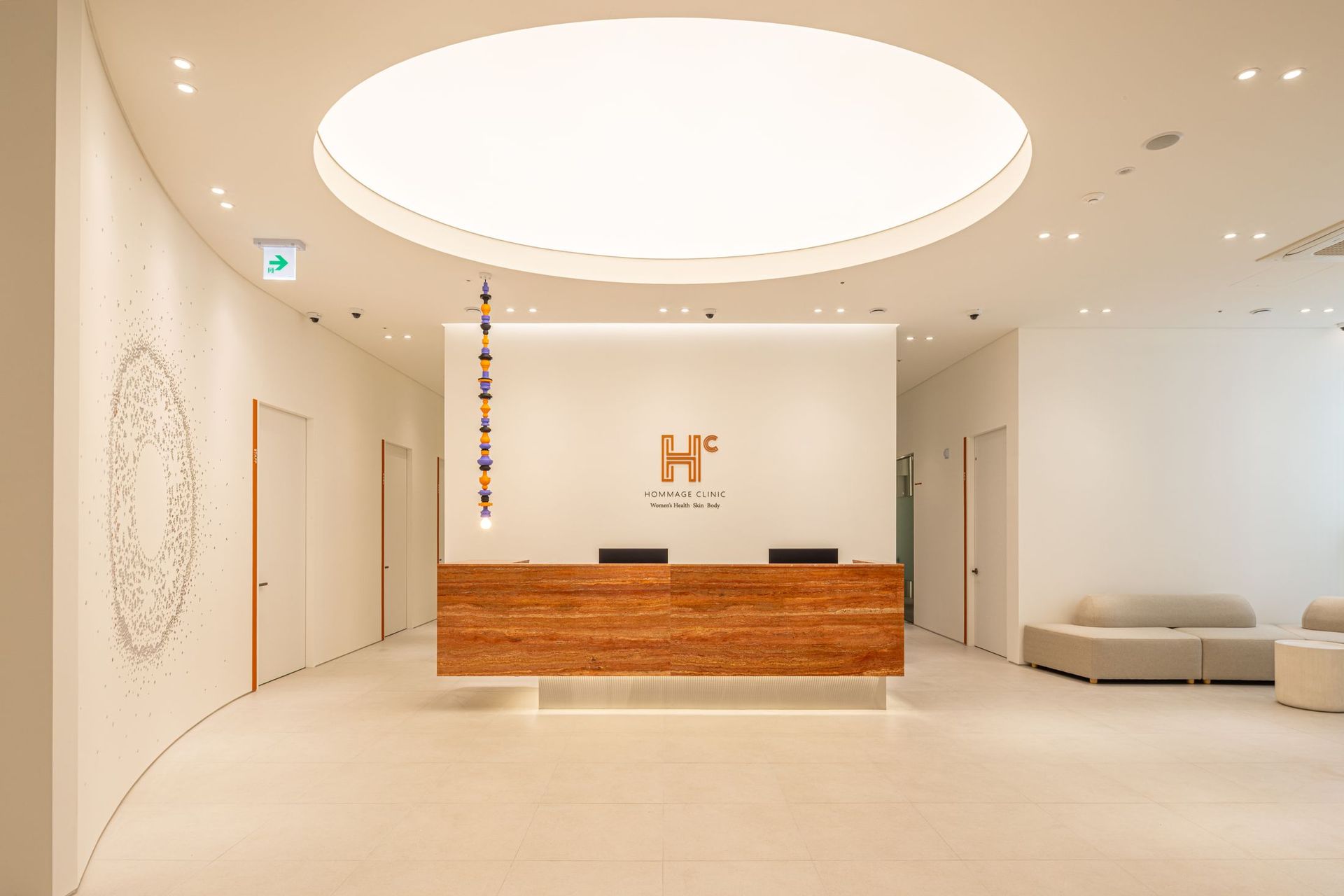
Hommage Clinic is a women's health and skin clinic in Gangnam, a short walk from Sinnonhyeon Station. Rolling scars are marked one by one before treatment, and the physician who assesses you performs the subcision and sets the resurfacing settings for each area. Hormone-related acne behind recurring breakouts can be assessed by our OB/GYN team under the same roof, and ourskin and aestheticsservices cover the collagen stimulators and boosters that may be added to a plan.
Cost depends on the number of scars and sessions, the methods combined and any products used. Cosmetic scar treatment is not covered by Korea's National Health Insurance, although many medical tests and treatments are for enrolled patients. You receive a written quote for the whole plan before starting, and walk-ins are welcome during opening hours.
How it works
How subcision treats rolling scars: tethered vs released
A rolling scar looks like a gentle dip on the surface, but the cause sits underneath. During deep acne inflammation, scar tissue forms fibrous strands that anchor the underside of the skin to deeper layers. As those strands contract, they pull the surface down into a soft hollow. Subcision passes a fine needle or blunt cannula flat beneath the scar to cut or loosen those strands, so the skin can spring back up.
The small, controlled bleed under the released scar is part of the treatment. As it heals, it lays down new connective tissue that helps hold the skin up and makes it harder for the bands to reattach. Resurfacing with RF microneedling or fractional laser then refines the surface.
Self-check
Do I have rolling scars? The stretch and light test
You cannot diagnose scar type reliably at home, but two simple observations help you describe your skin at a consultation. First, look at your cheeks in a mirror with a single light source to the side, such as a window: rolling scars show as broad, soft shadows that make the skin look wavy rather than pitted. Second, place two fingers either side of a dip and gently spread them apart. Rolling scars, which are pulled down from below, often flatten or fade when stretched. Boxcar and ice pick scars keep their sharp outline.
Rolling scars are usually wider than 4–5 mm and are common on the lower cheeks and jawline. Because loss of fat and bone with age deepens hollows, some people notice rolling scars more in their thirties and forties even though the acne was years earlier.
- Soft, sloping edges The dip blends into normal skin with no sharp rim.
- Wide rather than deep Often more than 4–5 mm across, sometimes merging into a wavy patch.
- Softens when stretched A sign the scar is tethered from below.
- Worse in side light Shadows appear under overhead or window light and fade in flat light.
- Mixed with other types Boxcar or ice pick scars nearby are common and are planned for separately.
 Hommage · Gangnam
Hommage Women's Clinic · Gangnam, Seoul
Rolling scars are easiest to see in side light on the cheeks. Illustrative photo.
Comparing options
Subcision vs microneedling vs filler for rolling scars
Each option does a different job, which is why they are usually combined rather than chosen between. Subcision addresses the tethering, collagen-building treatments improve the quality of the skin over the scar, and volume treatments replace tissue that has been lost. A comparative study summarized in a 2013 review found that rolling scars responded better to subcision than to TCA CROSS, with a significantly greater reduction in depth and size, which fits the idea that the problem lies below the surface.
| Option | What it does | Typical course | Main downside |
|---|---|---|---|
| Subcision | Cuts the fibrous bands so the skin lifts; the healing bleed adds support | 1–3 sessions, about 4–6 weeks apart | Bruising for 1–2 weeks; occasional firm lumps |
| RF microneedling | Remodels the dermis and smooths texture across the area | 3–5 sessions | Redness for 2–4 days; little effect on tethering alone |
| Fractional laser | Refines surface texture and the edges of mixed scars | 3–5 sessions | Longer downtime and pigment risk with ablative settings |
| Filler or collagen stimulator | Lifts dips where fat or collagen has been lost | One or more treatments, judged after release | Temporary; rare vascular complications |
 Hommage · Gangnam
Hommage Women's Clinic · Gangnam, Seoul
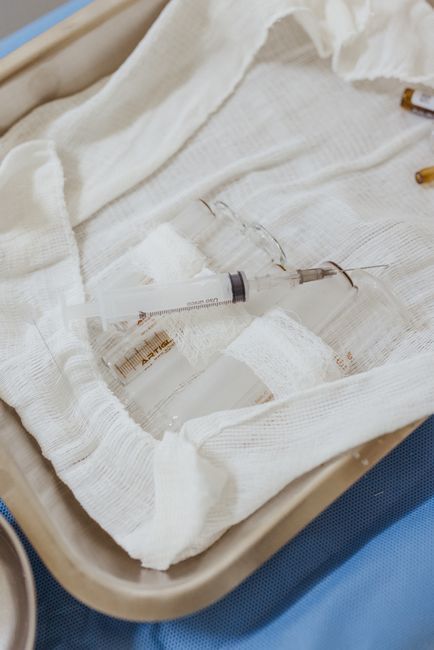
Subcision is done under local anesthetic with sterile, single-use instruments. Illustrative photo.
Treatment day
What happens on rolling scar treatment day
A combined rolling scar session usually takes under an hour of treatment time, plus time for numbing. The scars are marked under angled light while you sit upright, because they can look different when you lie down. The skin is cleaned, and a local anesthetic is injected around each marked area. Subcision is done first; if RF microneedling is planned for the same visit, it follows once bleeding has stopped, or is booked a few weeks later.
What it feels like
After the anesthetic takes effect, most people feel pressure and a tugging or snapping sensation as bands release, rather than sharp pain. Firm pressure and a cold pack are applied afterward to limit bruising.
Before your appointment
- Tell the doctor about blood thinners, supplements such as fish oil or ginkgo, and any bleeding tendency; do not stop prescribed medicine without advice.
- Mention any history of cold sores, as preventive medicine may be advised.
- Avoid booking within two weeks of an important event, as bruising can be visible.
Recovery
Rolling scar recovery and results timeline
Right after subcision the scars can look lifted, partly from swelling and fluid. That early change fades over the first days, and the lasting improvement builds slowly as new collagen forms. Many people feel the first week is the hardest to judge, so progress is compared with photos taken in the same light at each visit.
Aftercare
Aftercare after rolling scar treatment: do's and don'ts
Most of the recovery after subcision is bruising and tenderness, so aftercare focuses on limiting swelling and protecting the skin while it heals. If resurfacing was added on the same day, the advice for that treatment applies too. You receive written instructions before you leave.
Do
- Use a wrapped cold pack for short periods on the first day
- Sleep with your head slightly raised for a night or two
- Cleanse gently and keep the skin moisturized
- Use broad-spectrum SPF 30+ every day
- Take pain relief recommended by your doctor
- Send photos if a lump feels hot, hard or keeps growing
Don't
- Massage or press hard on treated areas unless told to
- Drink alcohol or do hard exercise for the first day or two
- Use saunas or hot baths while bruised and swollen
- Apply retinoids or exfoliating acids until cleared
- Pick at needle marks or any crusts
- Judge the result in the first week
 Hommage · Gangnam
Hommage Women's Clinic · Gangnam, Seoul
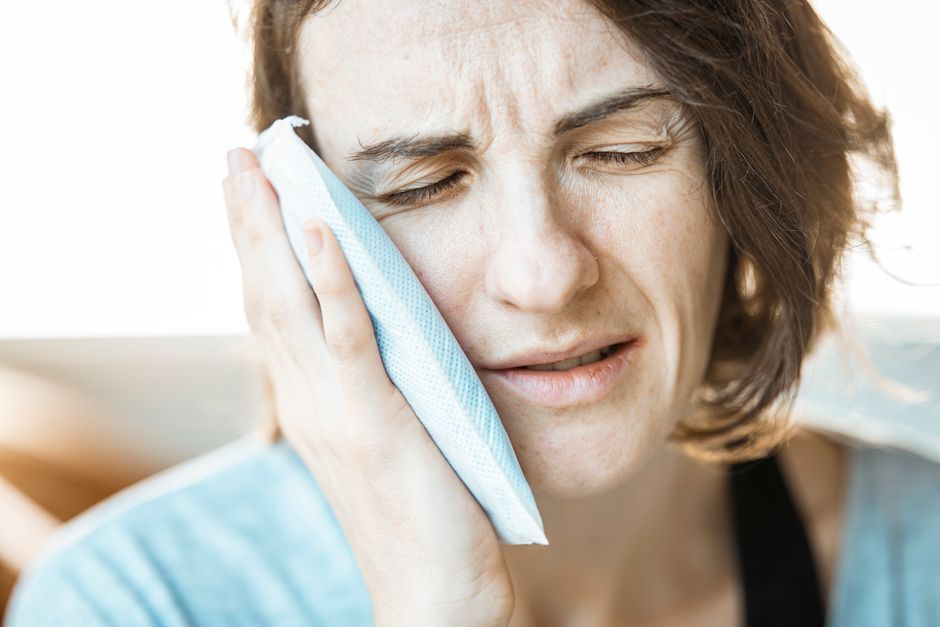
Short spells with a wrapped cold pack help limit swelling on the first day. Illustrative photo.
Evidence
Does subcision work for rolling scars? What the research says
Subcision has been used for acne scars since the 1990s, and reviews consistently name rolling scars as the type that responds best. The evidence is still mostly small studies and case series, often with different needles, different combinations and no untreated comparison group. The findings below give a fair picture of what to expect, not a guarantee.
Reported response
Range of effectiveness reported for subcision in rolling scars across the literature.
Küçüktaş et al., J Turk Acad Dermatol, 2013Improved a grade
43 of 45 patients with atrophic scars after 4 monthly sessions of subcision plus microneedling.
Bhargava et al., J Clin Aesthet Dermatol, 2019Of acne scars
Estimated share of atrophic acne scars that are rolling type.
Fabbrocini et al., Dermatol Res Pract, 2010Firm lumps settle
Small nodules from excess healing tissue often resolve on their own in this time.
Küçüktaş et al., 2013 Hommage · Seoul
Hommage Women's Clinic · Gangnam, Seoul
Gangnam: the clinic is a short walk from Sinnonhyeon Station. Illustrative photo.
Traveling to Seoul
Rolling scar treatment in Seoul for international patients
Rolling scars usually need more than one visit, so it helps to plan your trip around the sessions that matter most. A common approach is to use the first visit for the scar map and a first subcision, often combined with RF microneedling, and to return 4–6 weeks later or continue resurfacing at home with your written plan.
Planning your stay
- Send daylight photos of your cheeks from the front and both sides by WhatsApp, KakaoTalk or the contact form before booking.
- Allow about two weeks if you want bruising to settle before you fly home or return to work; a short stay is possible if you are comfortable traveling with visible bruising.
- Bring your passport, a list of medicines and supplements (especially blood thinners) and any previous scar treatment records.
- Plan sightseeing for later in your trip rather than the day after subcision.
Choosing well
How to choose a clinic for rolling scar treatment
Because rolling scars are caused by tethering, a laser-only package is often a sign the plan has not been matched to the scar. Use these questions at any consultation, including ours:
- Is subcision part of the plan? For tethered rolling scars, releasing the bands is usually essential.
- Does a doctor perform the subcision? It is a needle procedure under local anesthetic and should be done by a physician.
- Are scars marked while you sit upright? Rolling scars can look different lying down.
- Is bleeding risk checked? Blood thinners and supplements should be asked about beforehand.
- Is volume discussed honestly? Filler can help some scars but is not a substitute for release.
- Do I get a written plan and quote? Including session numbers and follow-up.
What affects the cost of rolling scar treatment?
Cost depends on the number and size of scarred areas, how many subcision and resurfacing sessions are planned, whetherRF microneedlingorfractional laseris used, and whether filler or acollagen stimulatoris added. Cosmetic scar treatment is not covered by Korea's National Health Insurance, and you receive a written quote before starting.
 Hommage · Gangnam
Hommage Women's Clinic · Gangnam, Seoul
You receive a written plan combining release and resurfacing before starting. Illustrative photo.
Your visit
What to expect at your rolling scar consultation
01
Scar mapping
The physician examines your skin under angled light, checks which scars soften when stretched, and maps other scar types.
02
Health check
Active acne, bleeding tendency, blood thinners, recent isotretinoin use and pigment tendency are reviewed.
03
Combined plan
You receive a written plan and quote: subcision sessions, resurfacing and any volume treatment.
04
Treatment and review
Sessions are usually 4–6 weeks apart, with progress compared and the plan adjusted each time.

Your doctor
Dr. Hwang Seonhwa
Physician · Skin & Aesthetic Treatments
Dr. Hwang treats rolling scars as a tethering problem first, releasing the bands with subcision before adding RF microneedling or laser to rebuild the surface. Where scars stay sunken after release, Dr. Hwang discusses whether added volume would help.
Physician for face and skin procedures, including lifting, laser and skin-improvement treatments, planned around facial proportions and skin condition.
Rolling scars: frequently asked questions
What treatment works for rolling scars?
Most rolling scars respond to a combination. Subcision releases the fibrous bands pulling the scar down, and RF microneedling or fractional laser then rebuilds collagen and smooths texture. Filler or a collagen stimulator may be added where volume has been lost. Resurfacing alone usually gives less change, because it does not release the tethers.
Can rolling scars be fixed completely?
Rolling scars can usually be made noticeably shallower and smoother, but no treatment reliably removes them completely. How much they improve depends on how deep and widespread they are, whether volume has been lost and how your skin heals. A scar assessment gives you a realistic idea of what a combined plan can achieve.
How many subcision sessions do rolling scars need?
Many people need 1–3 subcision sessions spaced about 4–6 weeks apart, because some fibrous bands can reattach after the first release. Subcision is usually paired with 3–5 RF microneedling or laser sessions. Your progress is reviewed at each visit before the next step is chosen. See subcision for acne scars.
Does rolling scar treatment hurt?
Subcision is done under local anesthetic, so most people feel pressure and some pulling rather than sharp pain. RF microneedling and laser are done after numbing cream and feel hot and prickly. The treated area may feel sore and bruised for several days afterward, which over-the-counter pain relief recommended by your doctor usually manages.
How long is the bruising after subcision for rolling scars?
Bruising and swelling usually last about 1–2 weeks after subcision, and can be more noticeable when several scars are treated or if you bruise easily. Cold compresses in the first day or two help. Stop any non-essential blood-thinning supplements only on medical advice, and plan important events and flights with this recovery in mind.
Can foreigners get rolling scar treatment in Seoul?
Yes. International patients and foreign residents can book scar treatment at Hommage Clinic; bring your passport for registration. A plan usually spans several sessions 4–6 weeks apart, so plan return visits or a longer stay, and allow about two weeks for bruising to settle after subcision. Please contact us before your visit to arrange language support.
How do I know if my scars are rolling scars?
Rolling scars are wide, shallow dips with soft, sloping edges that make the skin look wavy, especially in side light. A useful clue is that they often soften or flatten when you gently stretch the skin, because they are pulled down from below. Boxcar and ice pick scars keep their sharp outline. A doctor confirms the type under angled light.
Is microneedling alone enough for rolling scars?
Microneedling can soften mild rolling scars and improves skin texture, but it does not release the fibrous bands that hold deeper rolling scars down. Studies that report good results for rolling scars usually combine microneedling with subcision. For more than mild scarring, a combined plan tends to give more change than microneedling alone.
Can filler fix rolling scars?
Hyaluronic acid filler can lift rolling scars where volume has been lost, and may help keep released tissue from reattaching, but the effect is temporary. Filler works best after subcision rather than instead of it. Because filler carries a rare risk of blocking a blood vessel, it should be injected by a physician who knows facial anatomy.
What are the lumps after subcision?
Small, firm bumps under treated scars are a common part of healing, caused by new tissue forming where the bands were released. They often soften on their own over about 2–3 months. If a lump is large, persistent, hot or growing, contact the clinic, as it may need a check or a small treatment.
Can rolling scars come back after treatment?
Some fibrous bands can reattach after subcision, which is why a second or third session is common and why collagen-building or volume treatments are added. Once the plan is complete, improvement generally holds, although aging and loss of facial volume can make remaining scars look a little deeper over the years.
Are rolling scars harder to treat than boxcar scars?
They need a different approach rather than being harder. Boxcar scars have sharp edges and are often treated with resurfacing or TCA CROSS, while rolling scars respond best when the tethering is released first. Many people have both, and a combined plan treats each type in turn. See boxcar scar treatment.
When can I wear makeup after rolling scar treatment?
After subcision alone, light makeup can usually be used once the needle entry points have closed, often after a day or so. If RF microneedling or laser was done on the same day, wait until the skin surface has healed, usually a few days. Use clean brushes and gentle products, and follow the written instructions you receive.
References
Sources used for this page, reviewed by Dr. Hwang Seonhwa. Read our editorial and medical review policy.
- Jacob CI, Dover JS, Kaminer MS. Acne scarring: a classification system and review of treatment options. J Am Acad Dermatol. 2001;45(1):109–117.
- Fabbrocini G, Annunziata MC, D'Arco V, et al. Acne scars: pathogenesis, classification and treatment. Dermatol Res Pract. 2010;2010:893080.
- Küçüktaş M, Engin B, Kutlubay Z, Serdaroğlu S. Subcision treatment of acne scars. J Turk Acad Dermatol. 2013;7(3):1373r1.
- Bhargava S, Kumar U, Varma K. Subcision and microneedling as an inexpensive and safe combination to treat atrophic acne scars in dark skin: a prospective study of 45 patients. J Clin Aesthet Dermatol. 2019;12(8):18–22.
This page is general information and does not replace a personal consultation. Illustrations are original works of Hommage Women's Clinic, Gangnam, Seoul; photos marked illustrative are not of patients.
Related acne scar treatments
Subcision for Acne Scars
Releases the fibrous bands that pull rolling scars down; the core step for tethered scars.
RF Microneedling for Scars
Remodels the dermis after subcision, with lower pigment risk for darker skin.
Boxcar Scar Treatment
Round, sharp-edged scars treated according to whether they are shallow or deep.
Ice Pick Scar Treatment
Narrow, deep scars that need focused methods such as TCA CROSS.
Fractional Laser for Acne Scars
Laser resurfacing to smooth texture once rolling scars have been released.
Collagen Stimulators
Injectables that build collagen gradually to lift areas of lost volume.
Find out whether your scars are tethered
Book an appointment with Dr. Hwang Seonhwa in Gangnam to have your rolling scars mapped and receive a written plan combining subcision and resurfacing.
Hommage Clinic · 4F, Building A, 509 Gangnam-daero, Seoul (near Sinnonhyeon Station) · Mon & Fri 10:00–20:00 · Tue–Thu 10:00–19:00 · Sat 10:00–15:00