
Cosmetic Gynecology · Regenerative treatments
O-Shot in Seoul: What This PRP Injection Can and Cannot Do
The O-Shot is the trademarked name of an injection protocol using platelet-rich plasma (PRP), a concentrate made from your own blood, injected near the clitoris and into the front wall of the vagina, with the aim of improving sexual function or mild urinary leakage. Evidence is limited and results vary. At Hommage Clinic in Gangnam, Seoul, female OB/GYN specialist Dr. Park Yuna assesses you before any intimate PRP injection.
Quick answer
The O-Shot is a trademarked protocol of platelet-rich plasma (PRP) injection: plasma concentrated from your own blood is injected near the clitoris and into the front vaginal wall. At Hommage Women's Clinic in Gangnam, Seoul, female OB/GYN specialist Dr. Park Yuna performs it only after an exam. A visit takes about 45–60 minutes and most women return to work the same or next day. Evidence of benefit is limited and mixed, so it is offered with honest expectations.
Key takeaways
- The O-Shot is PRP, not a new drug; the name refers to the injection protocol and sites.
- The largest systematic review (12 studies, 327 women) found promising but low-quality evidence.
- Randomized trials comparing PRP with saline give mixed results; a single injection did not beat saline for stress urinary leakage.
- Treatable causes such as low estrogen, pelvic floor weakness or medication effects are checked and treated first.
Infographic
The O-Shot in numbers
Visit time
Blood draw, PRP preparation, numbing and injection.
Mild soreness
Swelling or a feeling of fullness usually settles quickly.
No sex or tampons
Also avoid swimming and baths, or as advised.
Studies / women
In the largest systematic review; evidence rated low quality.
Gradual change
Any effect builds slowly; some women notice none.
Stay in Seoul
Allow time for a check before you fly, if needed.
The O-Shot at a glance
| Key fact | Details |
|---|---|
| What it is | A named protocol for injecting PRP from your own blood into intimate tissue |
| Treatment time | Usually 45–60 minutes, including blood draw, processing and numbing |
| Anesthesia/comfort | Numbing cream and local anesthetic; most women feel pressure and brief stinging |
| Downtime | Mild soreness for a day or two; avoid sex for a few days |
| Evidence | Limited: small studies with mixed results; not an approved treatment for sexual dysfunction |
| How long it lasts | Variable and not well established; any change is gradual |
| Performed by | Dr. Park Yuna, female OB/GYN specialist |
It may be discussed if you
- Have noticed reduced sensation or arousal and have had a medical and hormonal assessment
- Have mild stress urinary leakage and are also doing pelvic floor exercises
- Want a non-surgical option made from your own blood
- Understand that the evidence is limited and the effect may be small or absent
Wait or explore other care first if you
- Are pregnant or breastfeeding
- Have pain during sex, low desire or relationship stress that has not been assessed
- Have an active infection, unexplained bleeding or an abnormal Pap result not yet followed up
- Have a platelet or bleeding disorder, take blood thinners, or have active cancer
What is the O-Shot?
The O-Shot is a trademarked name for a particular protocol of platelet-rich plasma (PRP) injection developed in the United States. The name describes the protocol, not a different substance. The treatment itself is PRP: a small amount of your blood is spun in a centrifuge to concentrate the platelets, which release growth factors that signal tissue repair and new blood vessel formation.
In this protocol, PRP is injected into two areas: the tissue near the clitoris and the front (anterior) wall of the vagina, close to the urethra. The idea is that growth factors may improve blood flow and tissue health in these areas.
Many clinics offer intimate PRP injection under general names rather than the trademarked one. Our page on PRP vaginal rejuvenation explains PRP for the vaginal wall and vulva more broadly.
What is the O-Shot used for?
Women usually ask about the O-Shot for one of three reasons:
- Changes in sexual response , such as reduced sensation or difficulty with arousal.
- Mild stress urinary incontinence , leakage when coughing, laughing or exercising.
- Vulvar skin conditions such as lichen sclerosus, where PRP is being studied alongside standard steroid treatment.
Sexual concerns rarely have a single cause. Low estrogen after childbirth or menopause, medications such as some antidepressants, pelvic floor problems, pain, stress and relationship factors all play a part. That is why an assessment comes first. Our pages on low sex drive and painful intercourse treatment explain common causes and proven care.
Does the O-Shot work?
Evidence is limited and results vary. A small number of studies report improvement in sexual function scores or mild urinary leakage after intimate PRP injection, but most are small, short-term and lack a comparison group. Randomized controlled trials are few, with mixed results, and different clinics prepare PRP in different ways.
PRP has not been approved by major regulators, such as the US Food and Drug Administration, as a treatment for sexual dysfunction. The American College of Obstetricians and Gynecologists has also noted that evidence for many vaginal rejuvenation procedures is lacking. Expectation can influence how any sexual health treatment feels, which makes uncontrolled results hard to interpret.
The O-Shot may be a reasonable option for some women who understand this, but it should not replace treatment of a medical cause.
What happens during the procedure?
The appointment usually takes 45–60 minutes.
- Assessment: Dr. Park asks about your concerns, cycle or menopause status, medicines and urinary symptoms, and performs a pelvic exam.
- Blood draw: a small amount of blood is taken from your arm and processed to concentrate the platelets.
- Numbing: numbing cream is applied to the vulva while the PRP is prepared, and local anesthetic may be added.
- Injection: PRP is injected with a fine needle near the clitoris and into the front vaginal wall.
- Going home: you can usually leave straight away with written aftercare.
How long does the O-Shot last?
How long any effect lasts is not well established and varies between women. Those who notice a change usually do so gradually over several weeks. Some choose to repeat treatment after several months, while others notice no difference and do not continue.
Recovery is usually quick:
- Mild soreness, swelling or a feeling of fullness for a day or two.
- Avoid sex, tampons, swimming and baths for a few days, or as advised.
- Use acetaminophen for discomfort, and avoid anti-inflammatory painkillers for a few days if you can.
- Most women return to work the same or next day.
Risks and possible side effects
PRP comes from your own blood, so allergic reactions are unlikely, but side effects can occur:
- Pain, swelling or bruising at the injection sites, and bruising where blood was drawn.
- Temporary changes in sensation , including increased sensitivity or discomfort, which usually settle.
- Urinary discomfort or, rarely, a urinary tract infection after injection near the urethra.
- Infection at an injection site, which is rare with sterile technique.
- Feeling faint during the blood draw.
- No noticeable improvement , which is a real possibility.
Contact the clinic if you have fever, increasing pain, heavy bleeding, foul-smelling discharge or difficulty passing urine.
O-Shot at Hommage Clinic
Hommage Clinic is a women's clinic in Gangnam, a short walk from Sinnonhyeon Station. Intimate PRP injection is assessed and performed by Dr. Park Yuna, a female OB/GYN specialist, as part of the clinic'scosmetic gynecologycare. The term O-Shot is used on this page because many patients search for it; the treatment offered is PRP injection to the intimate area, planned after an exam. Other options, such asG-spot amplificationor treatment forurinary incontinence, are discussed when relevant. Visits are private, and walk-ins are welcome during opening hours.
Intimate PRP injection is not covered by Korea's National Health Insurance. Cost depends on the areas treated and the number of sessions, and you receive a written quote before treatment.
Mechanism
How does the O-Shot work?
The O-Shot uses the same four steps as any platelet-rich plasma treatment. A small blood sample is taken from your arm, spun in a centrifuge so the heavier red cells settle at the bottom, and the lighter plasma layer that is rich in platelets is drawn off. Platelets carry growth factors, proteins that signal cells to repair tissue and form new small blood vessels. In the O-Shot protocol, this PRP is injected in two places: the tissue around the clitoris and the front wall of the vagina near the urethra.
The theory is that better blood flow and tissue repair could improve sensation, natural lubrication or support of the urethra. This is a plausible biological idea, but it has not been proven in large, well-controlled trials. How the PRP is prepared also varies between clinics and kits, which is one reason results differ from study to study.
Compare
O-Shot vs other treatments for sexual and bladder concerns
The O-Shot is one option among several, and rarely the first one. For dryness and discomfort after menopause, vaginal estrogen or moisturizers have much stronger evidence. For mild stress leakage, supervised pelvic floor muscle training is the first-line treatment in international guidelines. For low desire, a medical, hormonal and relationship assessment comes first. The cards below show where each option fits, so you can discuss them with Dr. Park.
O-Shot (intimate PRP)
- Your own plasma, injected
- Aims at sensation and mild leakage
- Evidence: limited, mixed
- Downtime: a day or two
Pelvic floor training
- Daily exercises, ideally supervised
- Best-proven care for stress leakage
- No needles, no downtime
- See Kegel therapy
Vaginal estrogen
- Low-dose cream, tablet or ring
- Treats dryness and thin tissue after menopause
- Prescribed after assessment
- See vaginal dryness treatment
G-spot amplification
- Hyaluronic acid filler, not PRP
- Adds volume to the front wall
- Evidence: also limited
- See G-spot amplification
 Hommage · Gangnam
Hommage Women's Clinic · Gangnam, Seoul
Your consultation covers all the options, not only the O-Shot. Illustrative photo.
 Hommage · Gangnam
Hommage Women's Clinic · Gangnam, Seoul
Medicines, cycle, bladder symptoms and blood disorders are all checked first. Illustrative photo.
Suitability
Who is a good candidate for the O-Shot?
The best candidates are healthy adult women with a specific, assessed concern, such as a change in sensation or mild stress leakage, who have already looked at the common medical causes and accept that the result is uncertain. The O-Shot is less suitable when the main problem is pain, low desire with no physical change, or moderate to severe leakage, because other treatments work better for these.
Often a reasonable fit
- Over 18, healthy, not pregnant
- Reduced sensation after a full assessment
- Mild stress leakage, also doing pelvic floor exercises
- Up-to-date cervical screening
- Comfortable with uncertain results
Better to wait or choose other care
- Pregnant or breastfeeding
- Active infection or unexplained bleeding
- Platelet or bleeding disorder, blood thinners
- Active cancer
- Pain during sex not yet investigated
After treatment
O-Shot recovery and results timeline
Recovery after the O-Shot is short. Most women feel mild soreness or fullness for a day or two and go back to work the same or the next day. Sex, tampons, swimming and baths are paused for a few days. Any change in sensation or bladder control is gradual and, if it happens, is usually judged over several weeks. A follow-up is offered after several weeks to review how you feel before any further session is discussed.
Before and after
Preparing for the O-Shot and aftercare do's and don'ts
Good preparation makes the visit smoother and lowers the chance of bruising or infection. Tell Dr. Park about every medicine and supplement you take, because some affect bleeding or platelet function. Plan your visit outside your period, eat normally and drink water beforehand, since a light meal makes the blood draw easier. Afterwards, keep the area clean and give the tissue a few quiet days.
Do
- Share your full medicine and supplement list
- Eat and drink normally before the visit
- Use acetaminophen for soreness
- Wear loose cotton underwear for a day or two
- Call the clinic if pain, fever or discharge increases
Don't
- Have sex or use tampons for a few days
- Swim, use a sauna or take baths for a few days
- Take anti-inflammatory painkillers soon after, if you can avoid them
- Book during your period
- Expect an instant change
 Hommage · Gangnam
Hommage Women's Clinic · Gangnam, Seoul
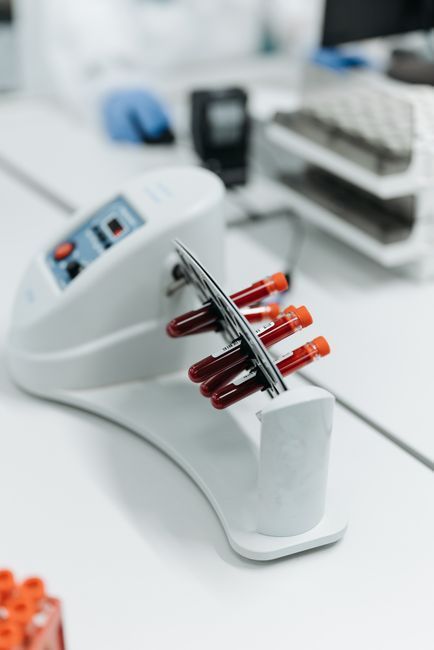
Your blood sample is spun in a centrifuge to concentrate the platelets. Illustrative photo.
Evidence
Is the O-Shot proven? What the research says
Research on intimate PRP is growing, but it is still early. A 2023 systematic review pooled every study it could find on PRP for female sexual dysfunction and stress urinary incontinence: only 12 studies with 327 women in total, most without a control group. Scores improved on average, but the authors rated the evidence as low quality and called for better trials.
Since then, a few randomized trials have compared PRP with a saline injection. For stress leakage, a single PRP injection into the front vaginal wall did not do better than saline at six months. For sexual function in premenopausal women, a small pilot trial reported a larger short-term improvement with PRP than with saline, but most differences were not statistically significant and the trial did not include a clitoral injection, so it did not test the full O-Shot protocol.
Studies in the main review
327 women; 5 studies on sexual function, 7 on stress leakage. Evidence rated low quality.
Dankova et al., Biomedicines, 2023Women in a PRP vs saline trial for leakage
No significant difference in treatment success at 6 months after one injection.
Ashton et al., Urology, 2024Felt improved at 6 weeks
PRP vs saline in a 52-woman pilot trial; most score differences were not significant.
Clarke et al., Obstet Gynecol, 2026For sexual dysfunction
PRP is not an approved treatment for female sexual dysfunction; evidence for many vaginal rejuvenation procedures is lacking.
ACOG Committee Opinion 795 Hommage · Gangnam
Hommage Women's Clinic · Gangnam, Seoul
Clinical research on intimate PRP is still at an early stage. Illustrative photo.
Traveling to Seoul
O-Shot in Seoul for international patients
Because the O-Shot has little downtime, it fits into a short trip. Hommage Women's Clinic is in Gangnam, a short walk from Sinnonhyeon Station (Line 9 and Shinbundang Line). Consultation, blood draw and treatment can happen on the same day, but you are never pressured to decide on the spot.
Before you book
- Message the clinic by WhatsApp, KakaoTalk or the contact form with your concern and preferred dates; ask for language support if needed.
- Choose dates outside your period.
- Bring your passport, a list of medicines and supplements, and any recent Pap or hormone test results.
- Allow 1–2 days in Seoul after treatment in case you need a check.
After you fly home
Keep your written aftercare guide and send questions to the clinic by message. The review after several weeks can be done by message, or in person if you return. For fever, heavy bleeding or difficulty passing urine, see a local doctor straight away.
 Hommage · Seoul
Hommage Women's Clinic · Gangnam, Seoul
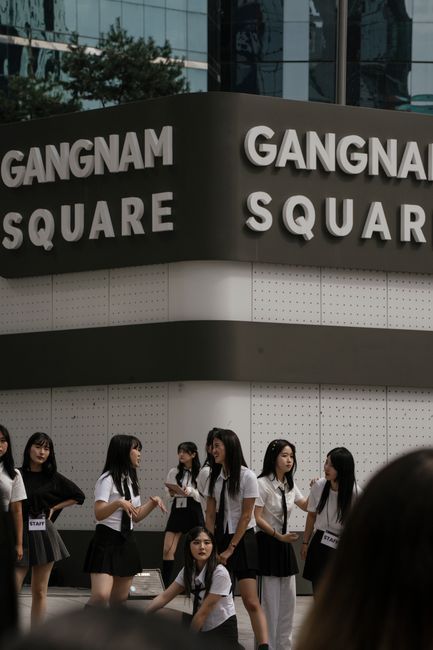
Gangnam, Seoul: the clinic is a short walk from Sinnonhyeon Station. Illustrative photo.
 Hommage · Gangnam
Hommage Women's Clinic · Gangnam, Seoul
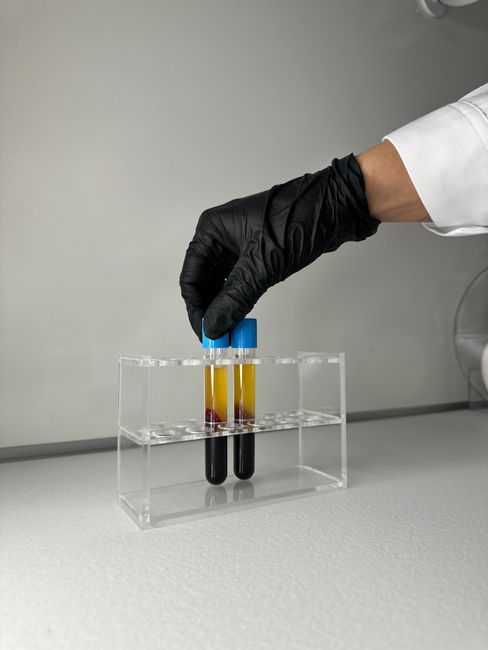
Ask how PRP is prepared and whether kits are sterile and single-use. Illustrative photo.
Choosing well
How to choose an O-Shot clinic in Seoul
Many clinics in Gangnam advertise intimate PRP. Because the evidence is limited, the way a clinic talks about the treatment tells you a lot. Be cautious of promises of guaranteed results or better orgasms, and look for a doctor who examines you, checks for medical causes and is comfortable telling you when the O-Shot is not the right choice.
Questions to ask any clinic
- Is the injection done by an OB/GYN specialist?
- Will I have a pelvic exam and a check for medical causes first?
- How is the PRP prepared, and is the kit sterile and single-use?
- What does the evidence show, and what are the alternatives?
- What follow-up is included, and how do I reach you after I fly home?
What affects O-Shot cost in Seoul?
The price depends on the areas treated (clitoral area, front vaginal wall or both), the PRP preparation method, the number of sessions, and whether tests such as a Pap smear or hormone panel are needed first. Intimate PRP is not covered by Korea's National Health Insurance. You receive a written quote after your consultation and before any treatment.
Your visit
What to expect at your appointment
01
Private consultation
Dr. Park asks about your concerns, health, medicines and urinary symptoms in a calm, confidential setting.
02
Examination
A pelvic exam, and hormone tests if needed, look for treatable causes such as low estrogen or infection.
03
Shared decision
You hear what the evidence shows, the risks and the alternatives, with no pressure to treat the same day.
04
Treatment and follow-up
If you go ahead, PRP is prepared and injected in about 45–60 minutes, with a follow-up offered after several weeks.

Your doctor
Dr. Park Yuna
Medical Director · OB/GYN Specialist
Dr. Park treats a request for the O-Shot as the start of a wider sexual health conversation. She looks for treatable causes such as low estrogen, pelvic floor problems or medication effects, and explains the limited evidence before any PRP injection is planned.
OB/GYN specialist (Korea) and representative director of Hommage Clinic. Leads women's health care, labiaplasty and other cosmetic gynecology procedures.
O-Shot: frequently asked questions
What is the O-Shot?
The O-Shot is a trademarked name for one protocol of platelet-rich plasma (PRP) injection. A small amount of your blood is processed to concentrate the platelets, and the PRP is injected near the clitoris and into the front vaginal wall. It aims to improve sexual function or mild urinary leakage, but evidence is limited.
Is the O-Shot the same as PRP?
The O-Shot uses PRP, so the substance is the same. The name refers to a specific injection protocol and its injection sites. Many clinics offer similar intimate PRP injections under general names. See PRP vaginal rejuvenation for how PRP is used in intimate tissue more broadly.
Does the O-Shot work?
Evidence is limited. Some small studies report improvement in sexual function scores or mild urinary leakage, but most lack comparison groups and results vary. Some women notice a change and others notice none. It is most useful as part of a plan that also addresses medical causes.
Does the O-Shot hurt?
Most women feel pressure and brief stinging. Numbing cream is applied while the PRP is prepared, and local anesthetic can be added. Mild soreness or a feeling of fullness for a day or two afterward is common and usually eases with acetaminophen.
How long does the O-Shot last?
There is no reliable figure. Any effect is gradual, and how long it lasts varies from woman to woman. Some women choose to repeat treatment after several months, while others notice little change. Dr. Park reviews your response before suggesting any further session.
Can the O-Shot help with bladder leakage?
Some small studies suggest intimate PRP may help mild stress urinary incontinence, but evidence is limited. Pelvic floor muscle training remains the first-line treatment, and moderate or severe leakage needs a full assessment. See our urinary incontinence page.
Can foreigners get the O-Shot in Seoul?
Yes. International patients and foreign residents can book an appointment at Hommage Clinic; bring your passport for registration. Contact us before your visit to arrange language support. Recovery is usually quick, but allow a day or two in Seoul in case you need a check.
Is the O-Shot safe?
Because PRP comes from your own blood, allergic reactions are unlikely, and the controlled trials published so far reported no serious adverse events. Short-term soreness, bruising and, rarely, urinary symptoms or infection can occur. It is not suitable if you are pregnant, have a bleeding or platelet disorder, an active infection or active cancer.
How many O-Shot sessions do I need?
There is no proven number of sessions, and studies have used different schedules and PRP preparations. At Hommage Women's Clinic, Dr. Park starts with one session and reviews your response after several weeks before discussing another. Many women decide not to continue if they notice no change.
Can I have the O-Shot after menopause?
Yes, if you are otherwise healthy. After menopause, low estrogen is a common cause of dryness, thin tissue and discomfort, and vaginal estrogen or moisturizers have much stronger evidence for these symptoms. Dr. Park usually treats low estrogen first. See menopause treatment.
O-Shot vs G-spot amplification: what is the difference?
The O-Shot uses PRP from your own blood and aims to support tissue repair and blood flow. G-spot amplification uses hyaluronic acid filler to add volume to the front vaginal wall. Both have limited evidence, and neither is a treatment for low desire.
Is PRP used for vulvar lichen sclerosus?
PRP is being studied for vulvar lichen sclerosus, a chronic skin condition, and at least one small placebo-controlled trial has been published. Strong steroid ointment remains the standard first-line treatment, and PRP is not a replacement for it or for regular monitoring.
When can I have sex after the O-Shot?
Most women wait a few days, until any soreness has settled, before sex or tampon use. Swimming, saunas and baths are also paused for a few days. Dr. Park gives you a written aftercare sheet with your own timeline.
References
Sources used for this page, reviewed by Dr. Park Yuna, OB/GYN specialist. Read our editorial and medical review policy.
- Dankova I, Pyrgidis N, Tishukov M, et al. Efficacy and safety of platelet-rich plasma injections for the treatment of female sexual dysfunction and stress urinary incontinence: a systematic review. Biomedicines. 2023;11(11):2919. PMC
- Ashton L, Nataksuka H, Johnson CM, et al. A single injection of platelet-rich plasma injection for the treatment of stress urinary incontinence in females: a randomized placebo-controlled trial. Urology. 2024;193:63–68.
- Clarke B, Gaddam N, Garcia B, et al. Vaginal injection of platelet-rich plasma for sexual function in premenopausal women: a pilot randomized controlled trial. Obstet Gynecol. 2026. Trial registration NCT05769283
- Goldstein AT, Mitchell L, Govind V, Heller D. A randomized double-blind placebo-controlled trial of autologous platelet-rich plasma intradermal injections for the treatment of vulvar lichen sclerosus. J Am Acad Dermatol. 2019;80(6):1788–1789.
- American College of Obstetricians and Gynecologists. Elective female genital cosmetic surgery. Committee Opinion No. 795. Obstet Gynecol. 2020;135(1):e36–e42.
This page is general information and does not replace a personal consultation. Illustrations are original works of Hommage Women's Clinic, Gangnam, Seoul; photos marked illustrative are not of patients.
Related intimate health services
PRP Vaginal Rejuvenation
Platelet-rich plasma for vaginal and vulvar tissue: uses, evidence and recovery.
G-Spot Amplification
Hyaluronic acid filler in the front vaginal wall, and the limits of the evidence.
Low Libido Treatment
Medical and practical options when low desire is causing you distress.
Painful Intercourse Treatment
Finding and treating the cause of pain during or after sex.
Urinary Incontinence
Causes of bladder leakage and the treatments that help.
Hormone Testing
Blood tests for estrogen, thyroid and other hormones that affect desire and comfort.
Talk through the O-Shot with a female OB/GYN
Book a private consultation with Dr. Park Yuna in Gangnam to look at what is behind your concern and whether intimate PRP is worth considering.
Hommage Clinic · 4F, Building A, 509 Gangnam-daero, Seoul (near Sinnonhyeon Station) · Mon & Fri 10:00–20:00 · Tue–Thu 10:00–19:00 · Sat 10:00–15:00