
Skin & Aesthetics · Ablative laser
Er:YAG Laser Resurfacing in Seoul: Precise Skin Renewal
Er:YAG laser resurfacing uses a 2,940 nm erbium laser to remove very thin, precise layers of skin with little surrounding heat, improving fine lines, rough texture, shallow scars and sun damage with a shorter recovery than CO2 laser. At Hommage Clinic in Gangnam, Seoul, Dr. Hwang Seonhwa sets the depth and pattern for your skin type, scar depth and the downtime you can allow.
Quick answer
Er:YAG laser resurfacing uses a 2,940 nm erbium laser that is absorbed almost entirely by water in the skin, so it removes thin, precise layers with little surrounding heat. At Hommage Women's Clinic in Gangnam, Seoul, Dr. Hwang Seonhwa uses it for fine lines, rough texture, shallow scars and mild sun damage, usually in 1–3 sessions, with about 3–5 days of downtime for light treatment and 5–10 days for deeper work.
Key takeaways
- Er:YAG is the "precise, cooler" ablative laser; CO2 is the "deeper, hotter" one.
- Depth is set pass by pass, so treatment can be light (peel-like) or deeper.
- Healing is usually faster than CO2, but the tightening effect is smaller.
- Asian skin can still darken temporarily; sun protection for 2–3 months is essential.
- It does not lift sagging skin or treat melasma.
Infographic
Er:YAG laser in numbers
Wavelength
At the peak of water absorption.
Laser time
After 30–60 minutes of numbing cream.
Sessions
Spaced about 4–8 weeks apart.
Light treatment
Redness and fine peeling.
Deeper treatment
Oozing and crusts, then pinkness for 2–6 weeks.
Texture keeps improving
As new collagen forms.
Er:YAG laser resurfacing at a glance
| Key fact | Details |
|---|---|
| Laser type | Ablative erbium:YAG laser (2,940 nm), used in fractional or full-surface mode |
| Treatment time | About 15–40 minutes of laser time, after about 30–60 minutes of numbing |
| Comfort | Numbing cream and cooling; usually a warm, stinging or tapping feeling |
| Sessions | Typically 1–3 sessions, spaced about 4–8 weeks apart, depending on depth |
| Downtime | Light treatments about 3–5 days; deeper treatments about 5–10 days |
| Results visible | Fresher skin once healed; texture keeps improving over about 3 months |
| Performed by | Dr. Hwang Seonhwa, physician for skin and aesthetic treatments |
Er:YAG laser may suit you if you have
- Fine lines, especially around the eyes and mouth
- Rough, uneven texture or mild sun damage
- Shallow acne scars or other superficial scars
- A need for a shorter recovery than CO2 laser usually allows
Wait or choose another option if you have
- Pregnancy or breastfeeding, or a fresh tan or sunburn
- An active cold sore, skin infection or inflamed acne
- Recent isotretinoin (Roaccutane) use, keloid scars or vitiligo
- Deep wrinkles or deep scars that may need CO2 or a combination plan
What is Er:YAG laser resurfacing?
Er:YAG (erbium-doped yttrium aluminum garnet) laser resurfacing is an ablative treatment that vaporizes very thin layers of skin. Its 2,940 nm wavelength sits at the peak of water absorption, so almost all of the energy is used to remove tissue, leaving only a thin zone of heat behind.
This makes Er:YAG a precise, controllable tool. The doctor can remove a set depth of skin per pass, and the skin then regrows a smoother, more even surface. It can be used in fractional mode, treating microscopic columns, or as full-surface resurfacing for a lighter, even peel-like effect over an area.
Er:YAG vs CO2 laser: what is the difference?
Both lasers are ablative, but Er:YAG is the gentler, more precise of the two. CO2 laser resurfacing (10,600 nm) leaves much more heat in the skin, which tightens collagen and suits deeper scars and wrinkles, but extends recovery.
- Precision: Er:YAG removes thin, predictable layers; CO2 produces a deeper, heat-driven effect.
- Recovery: Er:YAG usually heals faster, with redness that settles sooner.
- Tightening: CO2 gives more tightening per session; Er:YAG may need more sessions for a similar change in deeper lines.
- Pigment risk: because of the lower heat, Er:YAG may carry a somewhat lower risk of prolonged redness and pigment change, which matters for Asian and darker skin. Both still carry real risks.
- Bleeding: deeper Er:YAG passes can cause pinpoint bleeding, because the laser does not seal vessels the way CO2 does.
For a broader comparison that includes non-ablative lasers with only a few days of redness, see fractional laser resurfacing .
What can Er:YAG laser treat?
Er:YAG is well suited to concerns in the upper layers of the skin:
- Fine lines and crepey skin, including around the eyes and mouth.
- Rough texture, dullness and mild sun damage.
- Shallow acne scars and surgical scars. Deeper or tethered scars usually need a combined plan; see rolling scar treatment .
- Some raised benign growths, which can be precisely removed after a doctor's diagnosis.
It is not a lifting treatment and does not treat sagging. It also does not treat melasma, which can worsen with heat and inflammation; a separate melasma treatment plan is safer for that concern.
What happens during treatment?
Your skin is cleansed and numbing cream is applied for about 30–60 minutes. With protective eye shields in place, the doctor treats each area in planned passes, adjusting depth for thinner areas such as the eyelids or neck. Most people feel warmth and a tapping or stinging sensation. Afterward, a soothing ointment or dressing is applied, and you receive written aftercare instructions before you leave.
How long does Er:YAG recovery take?
Recovery depends on depth. After light or fractional treatment, expect redness, mild swelling and fine peeling for about 3–5 days. After deeper treatment, the skin may ooze and crust for about 5–10 days, with pinkness that fades over 2–6 weeks.
- Moisturize generously with the ointment or barrier cream you are given; healing skin should not dry out.
- Do not pick or peel flakes and crusts, as this raises the risk of dark marks and scarring.
- Strict sun protection: stay out of strong sun and use broad-spectrum SPF 30+ sunscreen once healed, for at least 2–3 months.
- Pause retinoids, acids, scrubs, saunas and swimming until your doctor confirms you have healed.
Skin looks fresher once healed, and texture keeps improving for about 3 months as new collagen forms.
Risks and possible side effects
Er:YAG is generally well tolerated, but it is still an ablative laser, and Dr. Hwang will explain the risks before you agree to treatment:
- Prolonged redness , more likely after deeper treatment.
- Post-inflammatory hyperpigmentation (PIH): temporary darkening, more common in Asian and darker skin, usually fading over weeks to months with sun protection.
- Infection: bacterial, viral or fungal while the skin is healing.
- Cold sore reactivation: if you have a history of cold sores, an antiviral medicine is usually prescribed around treatment.
- Pinpoint bleeding during deeper passes, acne flares and milia.
- Rarely, scarring or lighter patches of skin.
Call the clinic if you develop increasing pain, pus, yellow crusts, clusters of small blisters, fever, or redness that spreads after the first few days.
Er:YAG laser resurfacing at Hommage Clinic
Hommage Clinic is a women's health and skin clinic in Gangnam, a short walk from Sinnonhyeon Station. Resurfacing is planned by a doctor who sets depth and pattern after examining your skin, and who can combine laser with other options from ourskin and aestheticsservices when that suits your goals better.
Cost depends on the area, treatment depth, the number of sessions and any combined treatment. Cosmetic laser resurfacing is not covered by Korea's National Health Insurance. You receive a written quote before treatment, and walk-ins are welcome during opening hours.
Mechanism
How Er:YAG laser works: cold ablation vs CO2 heat
Both Er:YAG and CO2 lasers target water in the skin, but Er:YAG's 2,940 nm wavelength is absorbed much more strongly. Nearly all of its energy goes into vaporizing a very thin layer of tissue, which is why it is sometimes called "cold ablation". CO2 leaves a wider zone of heat around each treated spot; that heat tightens collagen but also lengthens recovery. The diagram compares the two side by side.
Your options
Light, fractional or deeper Er:YAG: which treatment fits your goal?
Er:YAG is flexible because the depth is set pass by pass. That means the same laser can give a light, peel-like refresh with a few days of flaking, a fractional treatment for texture and shallow scars, or a deeper resurfacing for more stubborn lines. The cards compare the three; Dr. Hwang Seonhwa chooses based on your concern, skin type and how much downtime you can take.
Light full-surface
A very thin, even layer is removed, like a controlled peel. For dullness and rough texture.Fractional
Microscopic columns with skin bridges in between. For shallow scars, pores and texture.Deeper passes
More depth for fine lines around the eyes and mouth; crusting and pinkness for 2–6 weeks.Er:YAG for the eyes and mouth
Because depth can be controlled finely, Er:YAG is often used on thin skin around the eyes and lips, where fine lines are common and deeper heat is less welcome. Settings are reduced on delicate areas, and eye shields are always used. Deeper creases and heavy lids are not resurfacing problems; they may suit botox , fillers or surgery instead.
 Hommage · Gangnam
Hommage Women's Clinic · Gangnam, Seoul
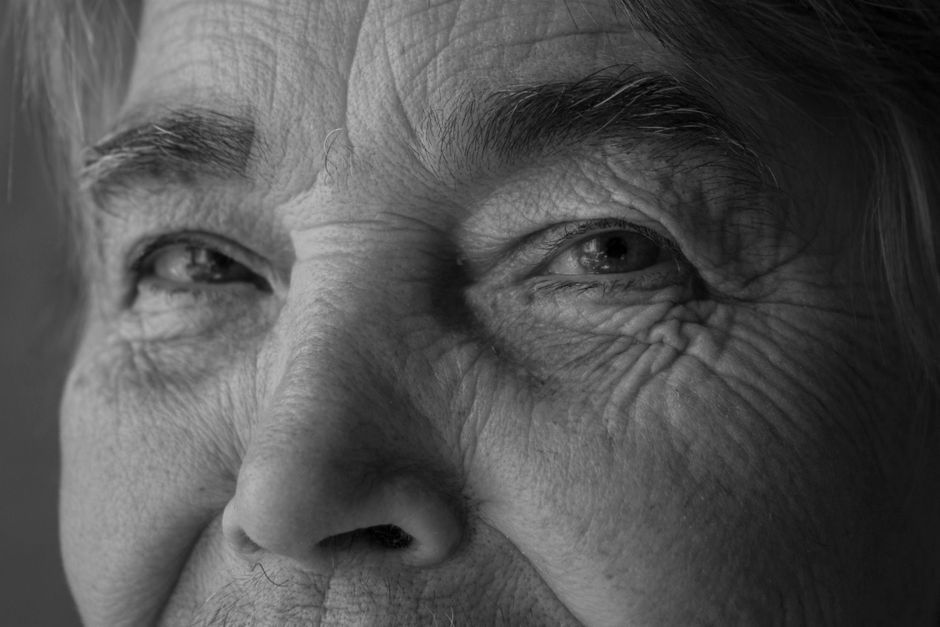
Fine lines on thin skin are a common reason to choose Er:YAG. Illustrative photo.
 Hommage · Gangnam
Hommage Women's Clinic · Gangnam, Seoul
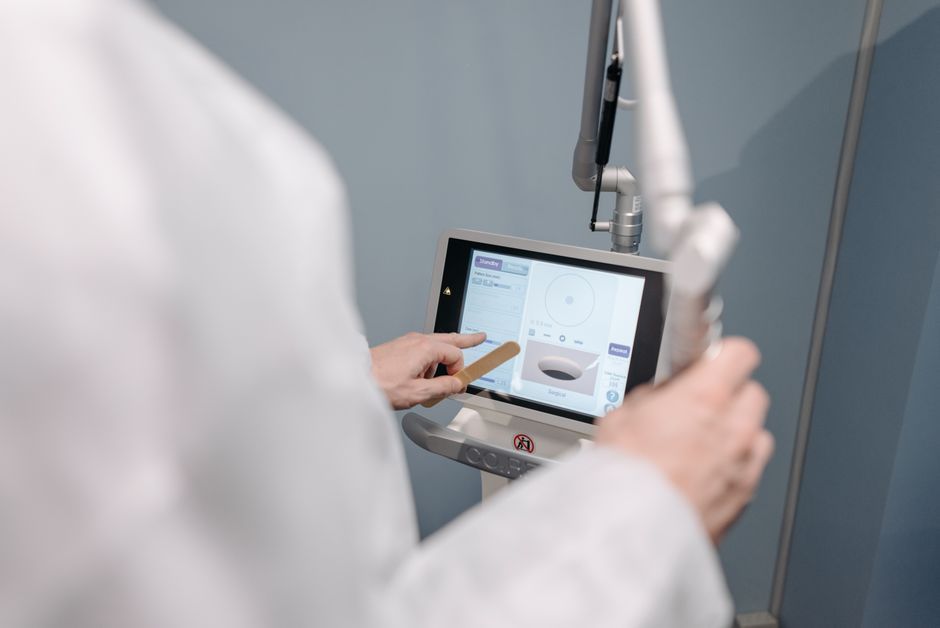
Depth and pattern are set for each facial area before treatment. Illustrative photo.
Plan ahead
Preparing for Er:YAG laser, and the alternatives
In the two weeks before treatment, avoid tanning and sunburn, and tell the clinic about cold sores, recent isotretinoin, blood thinners, keloid scarring or vitiligo. Retinoids and exfoliating acids are usually paused for a few days beforehand. Arrive without makeup if possible, so numbing cream can be applied straight away. If you have ever had cold sores, an antiviral is usually started before treatment.
Er:YAG or something else?
Er:YAG is one of several options for texture. If you want minimal downtime, a non-ablative fractional laser or RF microneedling may suit better, accepting more sessions. If your scars or wrinkles are deeper, CO2 laser gives more tightening per session. For surface dullness and uneven tone without much downtime, a chemical peel such as a Jessner peel can be enough. For pigment such as melasma, a melasma treatment plan is safer than resurfacing.
Healing
Er:YAG laser recovery timeline
Er:YAG recovery follows the depth of treatment. Light and fractional treatments usually settle within a working week; deeper treatment needs about a week and a half before the skin is fully closed. The timeline shows the typical milestones; the final texture result keeps improving for about three months.
 Hommage · Gangnam
Hommage Women's Clinic · Gangnam, Seoul
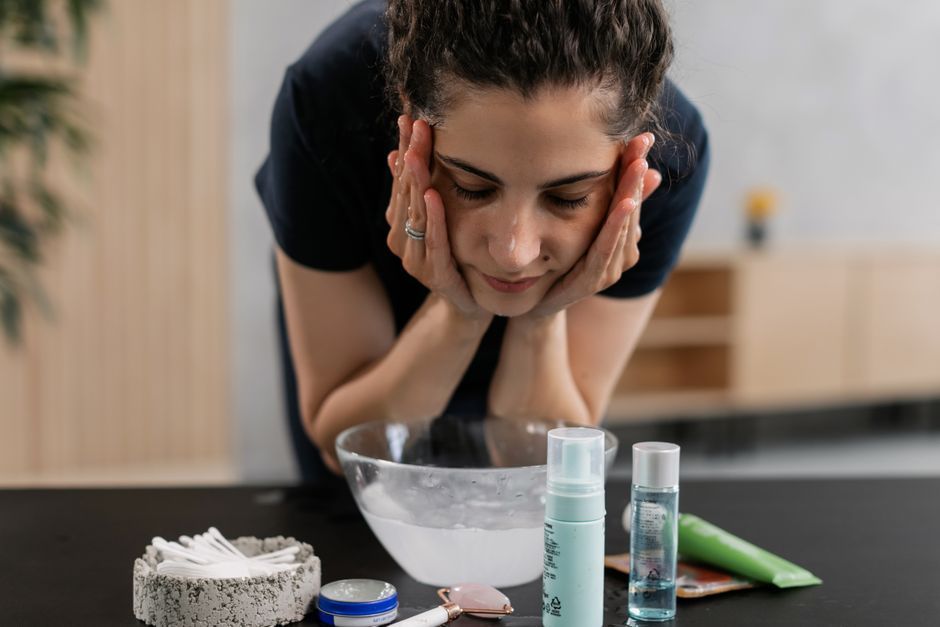
Gentle rinsing and moist healing help the new surface form evenly. Illustrative photo.
Aftercare
Er:YAG laser aftercare: do's and don'ts
Good aftercare keeps the healing surface moist and protected, which lowers the risk of infection, dark marks and scarring. You receive written instructions and products before leaving, and you can message the clinic with photos while you heal.
Do
- Rinse with cool water and pat dry gently
- Keep skin moist with the ointment or barrier cream provided
- Use cool compresses for warmth and swelling
- Take antivirals as prescribed if you get cold sores
- Use SPF 30+ once healed, for at least 2–3 months
Don't
- Pick or peel flakes and crusts
- Use retinoids, acids or scrubs until cleared
- Go to saunas, pools or hot yoga while healing
- Wear makeup before the skin has closed
- Expose treated skin to strong sun
Evidence
Does Er:YAG laser work? What the research says
Er:YAG is an established resurfacing laser, but direct, high-quality comparisons with other lasers are limited, especially in Asian skin. The research below shows that ablative lasers in general improve scars more than non-ablative ones, and that fractional treatment heals quickly because untreated skin surrounds each column. Studies comparing different erbium-type lasers with CO2 in Asian patients show that pigment risk varies by device and settings rather than by one laser type always being safer.
Ablative vs non-ablative
Meta-analysis: ablative lasers improved acne scars more; non-ablative lasers had less pain and shorter redness.
Ke et al., J Dtsch Dermatol Ges, 2025Fractional re-surfacing
Ablative fractional columns usually re-epithelialize within about 2 days, thanks to surrounding untreated skin.
Review, Semin Cutan Med Surg, vol 27Surface per pass
An early fractional Er:YAG prototype treated about 1–10% of the skin surface per session.
Review, Semin Cutan Med Surg, vol 27Device matters
In 16 Japanese patients, a fractional 2,790 nm erbium-type laser caused more PIH than fractional CO2 at the settings used.
Kono et al., presented at ASLMS, 2010Temporary darkening after Er:YAG
In 190 Korean patients (skin type III+) after Er:YAG resurfacing, darkening began at about 3.5 weeks, lasted about 7 weeks on average and cleared within 16 weeks in 93.2% of cases.
Kim et al., Lasers Surg Med, 2005Average redness after Er:YAG
All 218 Korean patients (skin types III–V) had redness after Er:YAG resurfacing; it resolved within 12 months in 98.2%. Longer redness was linked to more darkening.
Ko et al., Dermatol Surg, 2007Traveling to Seoul
Er:YAG laser in Seoul for international patients
Er:YAG's shorter recovery makes it easier to fit into a trip than CO2, but the depth of treatment still decides how long you should stay. Hommage Women's Clinic is in Gangnam, a short walk from Sinnonhyeon Station (Line 9 and Shinbundang Line).
How long to stay
- Light or fractional: about 5 days lets peeling finish before you fly.
- Deeper treatment: plan 7–10 days so crusts can shed and the skin can be checked.
Before you book
- Send photos and your dates by WhatsApp, KakaoTalk or the contact form; ask for language support if needed.
- Avoid sunburn and tanning for two weeks before your trip.
- Bring your passport, a list of medicines, and any history of cold sores or isotretinoin.
After you fly home
Keep moisturizing on the flight, protect your skin from the sun for at least 2–3 months, and send a photo to the clinic if you notice darkening or anything unusual.
 Hommage · Seoul
Hommage Women's Clinic · Gangnam, Seoul
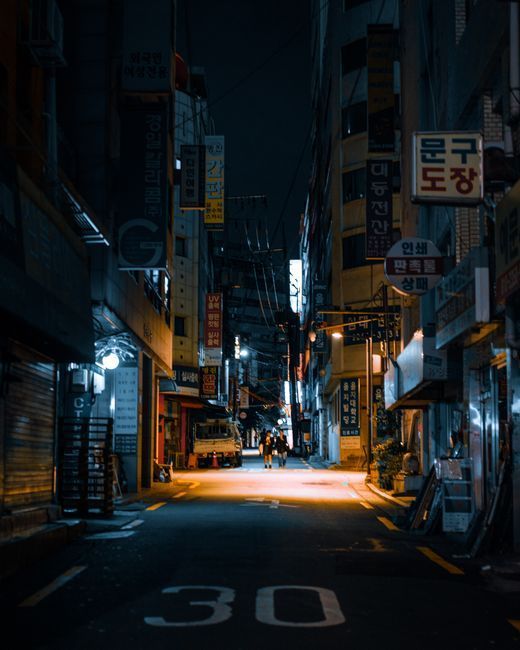
Gangnam, Seoul: the clinic is a short walk from Sinnonhyeon Station. Illustrative photo.
 Hommage · Gangnam
Hommage Women's Clinic · Gangnam, Seoul
A consultation compares Er:YAG, CO2 and gentler options for your skin. Illustrative photo.
Choosing well
How to choose an Er:YAG laser clinic in Seoul
Use these questions at any consultation, including ours:
- Is it true Er:YAG (2,940 nm)? Ask which laser and wavelength will be used.
- Does a doctor set the depth? Especially for eyes and lips.
- Are CO2 and gentler options offered too? So you get the right strength, not the only machine.
- How is pigment risk managed? Settings, timing and sun protection plan.
- Is follow-up included? And a way to send photos while healing.
- Is the quote written? Including sessions and aftercare products.
What affects Er:YAG laser cost in Seoul?
The cost depends on the area (full face, around the eyes or mouth, or a single scar), the depth and mode (light, fractional or deeper), the number of sessions, and any combined treatments such as a Jessner peel or skin boosters . Cosmetic laser resurfacing is not covered by Korea's National Health Insurance, and you receive a written quote before treatment.
Your visit
What to expect at your Er:YAG laser appointment
01
Skin assessment
Dr. Hwang reviews your concerns, skin type, cold-sore history and medications, and explains whether Er:YAG, CO2 or a gentler option fits better.
02
Preparation
Your skin is cleansed and numbed. An antiviral may be started if you are prone to cold sores.
03
Laser treatment
The doctor treats each area in planned passes, adjusting depth for delicate zones, with eye protection throughout.
04
Aftercare and review
You go home with written aftercare and a sun-protection plan, and a follow-up visit checks healing.

Your doctor
Dr. Hwang Seonhwa
Physician · Skin & Aesthetic Treatments
Dr. Hwang uses Er:YAG when precise, shallower resurfacing fits your goal and schedule better than a deeper laser. For pigment-prone skin, Dr. Hwang favors conservative depth and spacing, combined with careful sun protection afterward.
Physician for face and skin procedures, including lifting, laser and skin-improvement treatments, planned around facial proportions and skin condition.
Er:YAG laser resurfacing: frequently asked questions
Does Er:YAG laser resurfacing hurt?
Most people feel warmth and a stinging or tapping sensation, which numbing cream and cooling keep manageable. Er:YAG usually feels less hot than CO2 laser because it leaves less heat in the skin. Deeper treatments are more uncomfortable, and the skin may feel sunburned for a day or two afterward.
How long is the downtime after Er:YAG laser?
After light or fractional Er:YAG, most people have about 3–5 days of redness and peeling. Deeper treatment can need about 5–10 days for crusts to shed, with pinkness that fades over a few weeks. Your doctor will set the depth to match the recovery time you have available.
Is Er:YAG better than CO2 laser?
Neither is better for everyone. Er:YAG is more precise, heals faster and may carry a slightly lower risk of pigment change, so it suits fine lines and shallow texture problems. CO2 gives more tightening and is often chosen for deeper scars and wrinkles. Your doctor recommends one after assessing your skin.
How many Er:YAG sessions will I need?
Many people see a clear improvement in texture after one session, but fine lines or shallow scars often benefit from 2–3 sessions spaced about 4–8 weeks apart. Deeper concerns may need a combination with other treatments. Your doctor will suggest a number after examining your skin.
When can I wear makeup after Er:YAG laser?
Wait until the skin has fully re-surfaced and any crusts have shed, usually about 3–5 days after light treatment and up to 7–10 days after deeper treatment. Start with gentle, fragrance-free products and clean brushes. If the skin stings when you apply makeup, it is not ready yet.
Can foreigners get Er:YAG laser resurfacing in Seoul?
Yes. International patients and foreign residents can book an appointment at Hommage Clinic and should bring a passport for registration. Allow enough days in Seoul for initial healing and a follow-up check before you fly. Please contact us before your visit to arrange language support.
What does 2,940 nm mean, and why does it matter?
It is the wavelength of the Er:YAG laser. At 2,940 nm, the light is absorbed very strongly by water in the skin, so the energy is used to remove a thin layer precisely, with little heat spreading to surrounding tissue. That is why Er:YAG usually heals faster than CO2 but tightens less.
Is Er:YAG laser safe for Asian skin?
It can be, with careful settings and sun protection. Its lower heat is thought to reduce the risk of prolonged redness and darkening compared with CO2, but this has not been proven in large trials, and temporary darkening can still happen. Conservative depth, avoiding tanning and SPF 30+ for 2–3 months lower the risk.
Can Er:YAG treat fine lines around the eyes?
Yes, it is often used for fine lines and crepey skin around the eyes and mouth because depth can be finely controlled on thin skin. Eye shields are always used. Deeper creases caused by muscle movement may respond better to botox, and heavy lids are not a resurfacing problem.
Does Er:YAG work for acne scars?
How long do Er:YAG results last?
Texture and scar improvements come from new collagen and are long-lasting, but skin continues to age and respond to sun. Daily sunscreen and good skincare help maintain the result, and some people choose an occasional lighter treatment later.
Will Er:YAG make my skin bleed?
Light treatments rarely bleed. Deeper passes can cause pinpoint bleeding because, unlike CO2, Er:YAG does not seal small vessels as it works. This stops quickly with gentle pressure and is part of normal treatment.
What should I avoid before Er:YAG laser?
Avoid tanning and sunburn for about two weeks, pause retinoids and exfoliating acids for a few days, and tell the clinic about cold sores, recent isotretinoin, blood thinners, keloids or vitiligo. An antiviral is usually prescribed if you have had cold sores.
References
Sources used for this page, reviewed by Dr. Hwang Seonhwa. Read our editorial and medical review policy.
- Ke R, Cai B, Ni X, et al. Efficacy and safety of non-ablative vs. ablative lasers for acne scarring: a meta-analysis. J Dtsch Dermatol Ges. 2025. doi:10.1111/ddg.15651
- Fractional photothermolysis: review of mechanism and clinical applications. Semin Cutan Med Surg. Vol 27(1). PDF
- Kono T, et al. Fractional 10,600 nm CO2 vs fractional 2,790 nm Er:YSGG laser for acne scars in Asian skin. Presented at the American Society for Lasers in Medicine and Surgery annual meeting, 2010. Report
- Manstein D, et al. Fractional photothermolysis: a new concept for cutaneous remodeling using microscopic patterns of thermal injury. Lasers Surg Med. 2004. PubMed
- Sowash M, Alster T. Review of laser treatments for post-inflammatory hyperpigmentation in skin of color. Am J Clin Dermatol. 2023;24:381–396. Springer
- Kim YJ, Lee HS, Son SW, Kim SN, Kye YC. Analysis of hyperpigmentation and hypopigmentation after Er:YAG laser skin resurfacing. Lasers Surg Med. 2005;36(1):47–51. doi:10.1002/lsm.20120
- Ko NY, Ahn HH, Kim SN, Kye YC. Analysis of erythema after Er:YAG laser skin resurfacing. Dermatol Surg. 2007;33(11):1322–1327. doi:10.1111/j.1524-4725.2007.33283.x
This page is general information and does not replace a personal consultation. Illustrations are original works of Hommage Women's Clinic, Gangnam, Seoul; photos marked illustrative are not of patients.
Related resurfacing treatments
CO2 Laser Resurfacing
Ablative laser with more heat and tightening for deeper scars and wrinkles.
Fractional Laser Resurfacing
Ablative and non-ablative fractional lasers compared by depth and downtime.
Jessner Peel
A superficial-to-medium chemical peel for texture, acne marks and uneven tone.
Plan precise resurfacing with less downtime
Book a skin assessment with Dr. Hwang Seonhwa in Gangnam to see whether Er:YAG, CO2 or a gentler treatment fits your skin and schedule.
Hommage Clinic · 4F, Building A, 509 Gangnam-daero, Seoul (near Sinnonhyeon Station) · Mon & Fri 10:00–20:00 · Tue–Thu 10:00–19:00 · Sat 10:00–15:00