
Skin & Aesthetics · Pores
Pore Tightening Laser in Seoul: How to Refine Enlarged Pores
Pore tightening laser is a series of fractional laser or energy-based treatments that heat the deeper layer of the skin to build new collagen, firming the skin around enlarged pores so they look smaller and smoother, although pores cannot be erased. At Hommage Clinic in Gangnam, Seoul, Dr. Hwang Seonhwa first works out why your pores look enlarged, then sets the device, depth and number of sessions.
Quick answer
Pore tightening laser uses fractional laser or RF microneedling to heat the dermis and build collagen around enlarged pores, so they look finer and smoother; pores cannot be erased. At Hommage Women's Clinic in Gangnam, Seoul, Dr. Hwang Seonhwa first finds the cause (oil, aging, sun or acne), then plans about 3–5 sessions roughly 4 weeks apart, with 1–3 days of redness for non-ablative treatment and results over 2–3 months.
Key takeaways
- Pores look bigger for different reasons; laser mainly helps laxity, texture and scars.
- Oily or clogged pores need oil control and cleansing too.
- Non-ablative fractional or RF microneedling is usually the first choice for Asian skin.
- Results often last a year or more; maintenance once or twice a year helps.
- A realistic goal is "finer and smoother", not "gone".
Infographic
Pore tightening laser in numbers
Sessions
About 4 weeks apart.
Laser time
About 60–90 minutes in total with numbing.
Non-ablative redness
3–7 days for ablative or RF microneedling.
Visible change
As new collagen forms.
Typical duration
Pores widen slowly again with age.
Maintenance per year
Often enough after a series.
Pore tightening laser at a glance
| Key fact | Details |
|---|---|
| Treatment time | Usually 15–30 minutes of laser time, after about 30–60 minutes of numbing cream |
| Comfort | Numbing cream and cooling; most people feel heat and prickling |
| Sessions | Typically 3–5 sessions about 4 weeks apart, depending on the device and skin |
| Downtime | Non-ablative: redness for 1–3 days. Ablative or RF microneedling: often 3–7 days |
| Results visible | Gradually, over about 2–3 months, as new collagen forms |
| How long results last | Often a year or more; pores widen again slowly with age, so some choose maintenance |
| Performed by | Dr. Hwang Seonhwa or another Hommage Clinic physician |
Pore tightening laser may suit you if you have
- Pores on the cheeks or nose that look large even when clean
- Pores that have become more visible with age or sun damage
- Enlarged pores together with rough texture or shallow acne scars
- Realistic expectations of softer, finer-looking pores rather than none
Wait or choose another option if you
- Are pregnant or breastfeeding: elective laser treatment is usually postponed
- Have active inflamed acne, a cold sore or a skin infection in the area
- Take isotretinoin or stopped it recently, or have a fresh tan or sunburn
- Have a history of keloid scars, or an active melasma flare (discuss first)
Why do pores look bigger?
Pores look larger when the opening is stretched from inside or loses support from the skin around it. Pore size is partly set by genetics, so some visibility is normal for everyone.
- Oil (sebum): larger, more active oil glands go with wider pore openings, which is why pores are most visible on the nose and central cheeks.
- Clogging: plugs of oil and dead cells stretch the opening and make it look darker.
- Aging and laxity: collagen and elastin around each pore decline with age, and in women this speeds up after menopause, so pores can look elongated or teardrop-shaped.
- Sun damage: long-term UV exposure weakens the supporting tissue and thickens the surface.
- Acne: past inflammation can leave widened or scarred openings.
Laser mainly helps with the laxity, texture and scar side. Clogged or oily pores respond better to deep cleansing pore therapy and sebum control therapy , so many plans combine them.
How does pore tightening laser work?
Pore lasers deliver controlled heat into the dermis, the layer that supports the pore walls. The skin responds by building new collagen over the following months, which firms the tissue around each pore and smooths the surface.
- Non-ablative fractional lasers (such as 1550 nm erbium glass or 1927 nm thulium) heat tiny columns of skin without removing the surface. Downtime is short, so they are often the first choice. See fractional laser resurfacing .
- Ablative fractional lasers (CO2 or Er:YAG) remove microscopic columns of tissue for a stronger effect, with more downtime and pigment risk.
- RF microneedling delivers radiofrequency heat through fine needles and is often chosen for pores with texture or acne scars, and for skin prone to dark marks.
- Low-energy laser toning and carbon peel mainly reduce oiliness and refresh the surface, giving a milder, shorter-term effect on pores.
What happens during a pore laser session?
A visit usually takes about 60–90 minutes, most of which is numbing time. The laser itself typically takes 15–30 minutes for the face.
- Assessment: the doctor examines your pores, skin tone, oiliness and any scarring, and agrees on the device and settings.
- Numbing: after cleansing, numbing cream is applied for about 30–60 minutes.
- Treatment: you wear eye protection while the laser or RF handpiece is passed over the treatment areas. Most people feel heat and prickling, eased by cooling.
- Soothing: the skin is cooled and calmed, and sunscreen is applied before you leave.
If pores are clogged, a cleansing step may be done first or at a separate visit.
How long do pore tightening results last?
Pores look gradually finer and smoother over about 2–3 months after a series, and the improvement often lasts a year or more. Pores do not disappear, and natural aging and sun exposure slowly widen them again, so many people choose a maintenance session once or twice a year.
Expect a realistic, moderate change: studies of fractional laser and RF microneedling show measurable improvement in pore appearance and texture, but results vary with skin type, age and how many sessions you have.
Aftercare matters for both results and safety. For the first week, use a gentle cleanser and a plain moisturizer, apply sunscreen every morning, and avoid scrubs, retinoids and acids until the doctor says you can restart them. Skip saunas, intense exercise and alcohol for 1–2 days, and do not pick at any rough or flaking skin.
Risks and possible side effects
Pore lasers are generally well tolerated, but every energy treatment has risks. Expected, short-lived effects include redness, warmth, mild swelling and a sandpaper-like texture or fine flaking for a few days. Ablative lasers and RF microneedling can leave tiny grid marks or pinpoint crusts for up to a week.
Less common risks include post-inflammatory hyperpigmentation (dark patches), which is more likely in Asian and darker skin tones or with sun exposure, a temporary acne flare, prolonged redness, and a cold sore outbreak in people who get them. Burns, blistering, infection and scarring are rare but possible, especially with aggressive settings.
Tell the doctor if you are pregnant, prone to cold sores or keloids, have melasma, or take isotretinoin or light-sensitizing medicines. Contact the clinic if you notice blisters, increasing pain or swelling, pus, fever, or darkening patches after treatment.
Pore laser vs skin boosters vs micro-injections: which is right for you?
The right option depends on why your pores look large. Laser is usually the base for laxity and texture, while other treatments add hydration or oil control.
- Fractional laser or RF microneedling: for pores linked to aging, sun damage, rough texture or shallow scars. Effects build over months and tend to last longest.
- Skin boosters: injectable treatments that improve hydration, elasticity and texture. They can make pores look finer and are often combined with laser.
- Botulinum toxin micro-injections: very diluted, shallow doses that may reduce oil and pore visibility for a few months. This is an off-label use with limited evidence.
- Peels and cleansing: for clogged, oily pores; quick to recover from but short-lived on their own.
For many people a combination works better than any single treatment.
Pore tightening laser at Hommage Clinic
Hommage Clinic is a women's health and skin clinic in Gangnam, about a three-minute walk from Sinnonhyeon Station. A physician assesses what is driving your enlarged pores before choosing a device, and sets the depth and energy for your skin tone. Laser can be combined with the clinic's skin boosters, such as Rejuran Healer and LITOO, or with oil-control and cleansing treatments. See our full range ofskin and aesthetic treatments.
Cost depends on the device, the area and the number of sessions. Cosmetic laser treatment is not covered by Korea's National Health Insurance. You receive a written quote before treatment, and walk-ins are welcome during opening hours.
Know your pores
Three types of enlarged pores, and which treatment fits each
Dermatologists often describe enlarged pores by what is driving them. Oily pores are round and wide where oil glands are most active; sagging pores stretch into teardrop or elongated shapes as collagen around them weakens; and scarred pores have irregular edges left by past acne. Many people have a mix. The diagram shows the three shapes, and the cards below match each to the treatment most likely to help.
Mechanism
How does laser shrink pores? Collagen support around the pore wall
A pore looks smaller when the skin around its opening is firmer and smoother. Fractional laser and RF microneedling send heat into the dermis around the pores; over the next two to three months the skin lays down new collagen and elastin, which supports the pore wall and tightens the opening. The pore itself is not removed; it simply looks finer because the tissue around it has more structure.
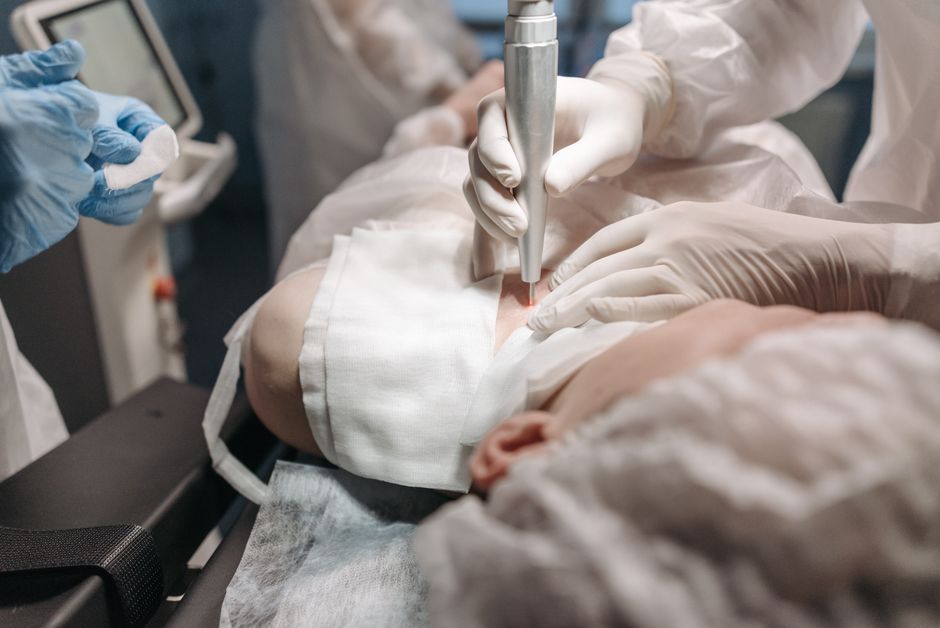 Hommage · Gangnam
Hommage Women's Clinic · Gangnam, Seoul
The cheeks and nose are the most common areas for pore treatment. Illustrative photo.
Compare
Best laser for enlarged pores: fractional vs RF microneedling vs toning
Several devices are marketed for pores, and they are not interchangeable. The cards compare the main options by strength, downtime and best use. A 2025 meta-analysis on acne scarring found ablative lasers gave greater improvement while non-ablative lasers caused less pain and shorter redness, a trade-off that also applies when choosing for pores.
Non-ablative fractional
1550 or 1927 nm. 1–3 days of redness, 3–5 sessions. Good for aging and sun-related pores.RF microneedling
Heat delivered through fine needles. 3–7 days of tiny marks. Often preferred for pigment-prone skin.Ablative fractional
CO2 or Er:YAG. More change per session, more downtime and pigment risk.Toning / carbon peel
Reduces oiliness and refreshes the surface; shorter-term effect on pores.Aftercare
Pore laser aftercare and daily pore care: do's and don'ts
What you do after treatment protects the result, and what you do every day helps it last. The first week is about calm, protected skin; the months after are about keeping oil, clogging and sun damage in check so pores do not widen again quickly.
Do
- Use a gentle cleanser and plain moisturizer for the first week
- Apply sunscreen every morning, even on cloudy days
- Use non-comedogenic makeup and skincare
- Restart retinoids only when your doctor says so; they help pores long-term
- Book maintenance once or twice a year if advised
Don't
- Scrub, pick or squeeze pores, especially in the first week
- Use saunas, intense exercise or alcohol for 1–2 days after
- Use pore strips or harsh peels on treated skin
- Skip sunscreen: UV weakens pore support
- Expect one session to give the full result
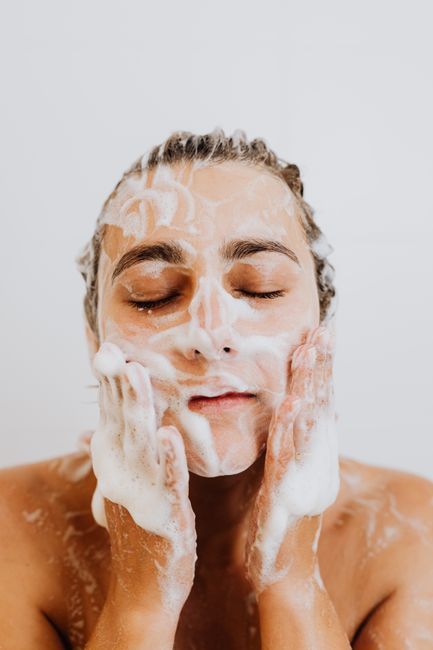 Hommage · Gangnam
Hommage Women's Clinic · Gangnam, Seoul
A gentle cleanser keeps pores clear without irritating treated skin. Illustrative photo.
Evidence
Does pore laser really work? What the research says
Enlarged pores are one of the most common reasons people in Korea ask about laser, but they are surprisingly hard to measure, so the research is weaker than for acne scars. Studies of fractional laser and RF microneedling report measurable improvement in pore appearance and texture, usually alongside scars or photoaging rather than pores alone. The findings below are the most relevant we could verify; they support a realistic, moderate expectation.
Pore treatments reviewed
A 2023 review of 19 clinical trials (591 people) found that medicines and several laser wavelengths reduced pore number and area; combined treatments and multiple sessions worked better. Side effects were mostly mild, temporary burning and redness.
Review, J Cosmet Dermatol, 2023Pores improved
One fractional CO2 session in 9 Chinese patients gave statistically significant, mild to moderate improvement in enlarged pores, texture and scars.
Chan et al., Lasers Surg Med, 2010Ablative vs non-ablative
On acne scarring, ablative lasers improved more; non-ablative had less pain and shorter redness.
Ke et al., J Dtsch Dermatol Ges, 2025Darkening fades
PIH after ablative CO2 in Asian skin fell from 55.5% at 1 month to 11.1% at 6 months, one reason gentler options are tried first.
Chan et al., Lasers Surg Med, 2010Collagen remodeling
Fractional photothermolysis showed that microscopic heat columns trigger dermal remodeling, the basis of pore tightening.
Manstein et al., Lasers Surg Med, 2004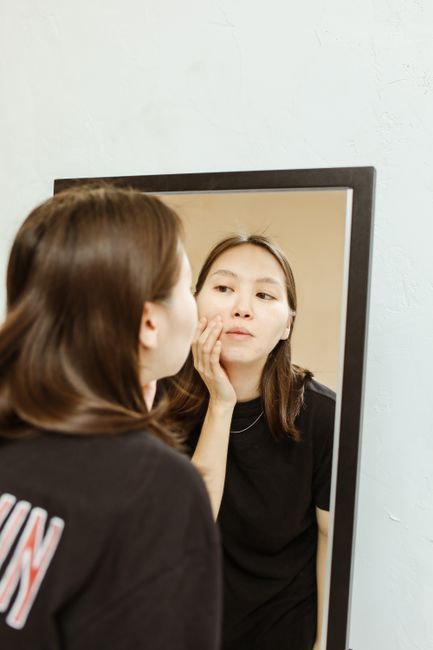 Hommage · Gangnam
Hommage Women's Clinic · Gangnam, Seoul
Why pores look larger changes with age, so the plan does too. Illustrative photo.
Who benefits most
Pore laser by age and skin type: what to expect
A 2023 review of 19 clinical trials on facial pores concluded that the right approach depends on age. In younger people, enlarged pores are driven mostly by oil, so controlling sebum comes first, with sebum control therapy or prescription skincare, and laser is an add-on. In older skin, loss of support around the pore wall adds to the problem, so rejuvenating treatments such as fractional laser or RF microneedling become more useful alongside oil control.
Reviews also stress that there is no standard way to measure pore size: studies use photos, software analysis, or doctor and patient ratings. That is why Dr. Hwang Seonhwa photographs your skin under the same light at each visit, so you can judge your own change rather than rely on a promise.
Traveling to Seoul
Pore laser in Seoul for international patients
Pore treatment is popular with visitors to Seoul, and non-ablative sessions fit easily into a trip because redness usually settles in 1–3 days. Hommage Women's Clinic is in Gangnam, about a three-minute walk from Sinnonhyeon Station (Line 9 and Shinbundang Line).
How long to stay
- Non-ablative laser: 2–3 days is usually enough before flying.
- RF microneedling or ablative laser: plan about a week for tiny marks or crusts to clear.
- A full course of 3–5 sessions needs visits about 4 weeks apart, so many visitors have one session per trip or continue at home.
Before you come
- Send photos and dates by WhatsApp, KakaoTalk or the contact form; ask for language support if needed.
- Avoid tanning for two weeks before your visit.
- Bring your passport and a list of medicines, including isotretinoin or retinoids.
 Hommage · Seoul
Hommage Women's Clinic · Gangnam, Seoul
Gangnam, Seoul: the clinic is a short walk from Sinnonhyeon Station. Illustrative photo.
 Hommage · Gangnam
Hommage Women's Clinic · Gangnam, Seoul
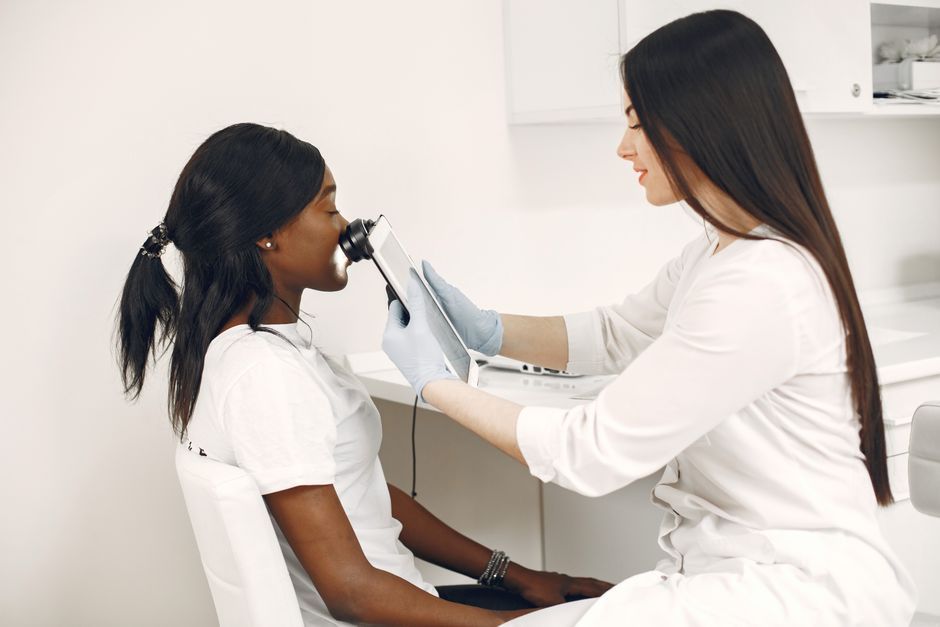
A skin assessment finds the cause of enlarged pores before choosing a device. Illustrative photo.
Choosing well
How to choose a pore laser clinic in Seoul
Pore packages are everywhere in Gangnam. These questions help you compare any clinic, including ours:
- Do they ask why your pores look big? Oily, sagging and scarred pores need different plans.
- Do they promise to "close" pores? That is not possible; honest clinics say so.
- Is a doctor setting the device and energy? Especially for Asian skin.
- Do they offer oil control and cleansing too? Laser alone rarely fixes oily pores.
- Are photos taken in the same light? So you can judge change fairly.
- Is the full course quoted in writing? Including maintenance.
What affects pore laser cost in Seoul?
The cost depends on the device (non-ablative, RF microneedling or ablative), the area (nose and cheeks or full face), the number of sessions, and whether it is combined with skin boosters , Rejuran , oil control or cleansing. Cosmetic laser treatment is not covered by Korea's National Health Insurance, and you receive a written quote before treatment.
Your visit
What to expect at your pore laser appointment
01
Skin assessment
Dr. Hwang examines your pores, oiliness, skin tone and any scarring, and asks about medicines, sun exposure and pregnancy plans.
02
Your plan
You agree on the device, the number of sessions and whether cleansing, oil control or skin boosters should be added.
03
Laser session
Numbing cream, then about 15–30 minutes of laser or RF with cooling. Plan about 60–90 minutes in total.
04
Aftercare and review
You leave with written aftercare. Each session is reviewed and settings are adjusted as your skin responds.
Your doctor
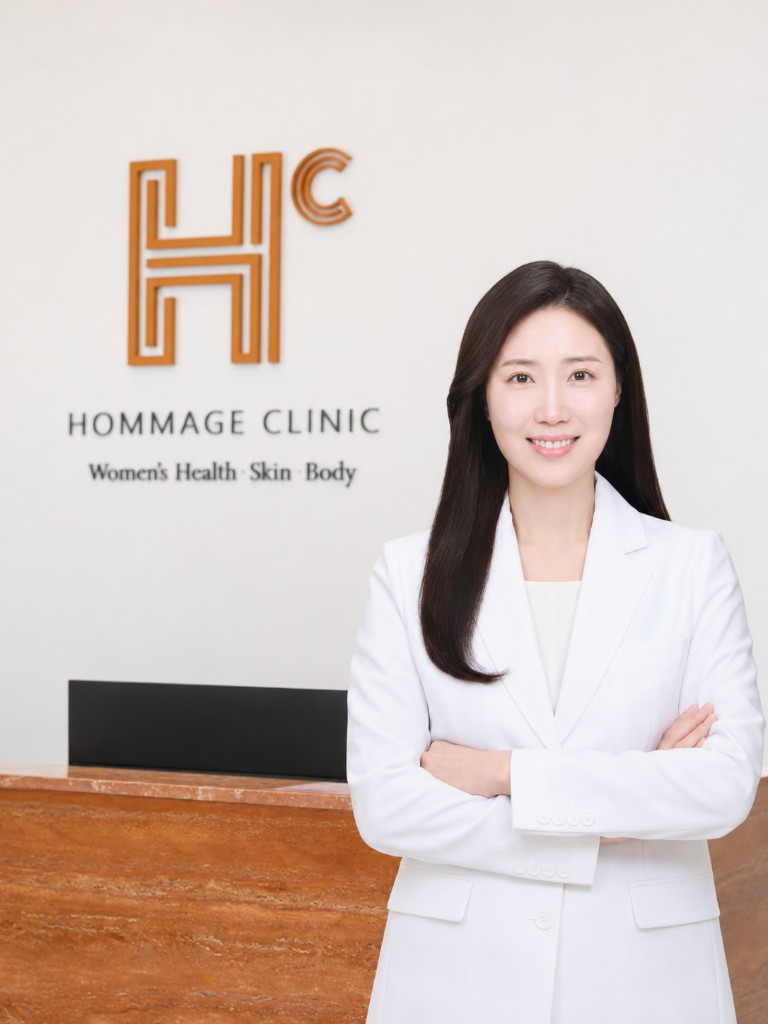
Dr. Hwang Seonhwa
Physician · Skin & Aesthetic Treatments
Dr. Hwang separates oil-driven, age-related and scar-related pore enlargement before choosing a device, because each responds to different treatment. Dr. Hwang sets realistic goals with you and adjusts depth and energy for your skin tone to limit the risk of dark marks.
Physician for face and skin procedures, including lifting, laser and skin-improvement treatments, planned around facial proportions and skin condition.
Pore tightening laser: frequently asked questions
Can a laser permanently shrink pores?
No treatment closes pores permanently, because pores are part of normal skin and their size is partly genetic. Laser can make enlarged pores look finer and smoother by building collagen around them, and the effect often lasts a year or more. Aging and sun exposure gradually widen pores again, so maintenance helps.
How many pore laser sessions will I need?
Most people need about 3–5 sessions spaced around 4 weeks apart for a visible change. The number depends on the device, how enlarged your pores are and whether texture or scarring is also being treated. After a series, one or two maintenance sessions a year are often enough.
Does pore tightening laser hurt?
Most people feel heat and prickling, which numbing cream and cooling keep tolerable. Ablative lasers and RF microneedling feel stronger than gentle non-ablative settings. The skin may feel warm, like a mild sunburn, for a few hours afterward. Tell the doctor during treatment if anything feels too intense.
Is pore laser safe for Asian or darker skin?
Yes, with the right device and settings, but the risk of dark marks (post-inflammatory hyperpigmentation) is higher. Non-ablative fractional laser and RF microneedling are often preferred, with conservative energy and good sun protection before and after. The doctor may suggest a test area or a pre-treatment skincare plan.
When can I wear makeup after pore laser?
After non-ablative laser, most people can wear makeup the next day once redness settles. After ablative laser or RF microneedling, wait until any tiny crusts have cleared, usually 3–7 days. Use clean brushes and non-comedogenic products, and keep applying sunscreen.
Can I have pore laser while pregnant or breastfeeding?
Elective laser treatments are usually postponed during pregnancy and often while breastfeeding, mainly because of numbing creams, medications and a higher risk of pigment changes. Pores often look different after pregnancy anyway. Our guide to skin care for hormonal changes covers pregnancy-safe options.
Can foreigners get pore tightening laser in Seoul?
Yes. International patients and foreign residents can be treated at Hommage Clinic in Gangnam. Bring your passport for registration, and plan your trip around downtime and sun exposure, since treated skin needs protection. Walk-ins are welcome during opening hours; please contact us before your visit to arrange language support.
What is the best laser for enlarged pores?
It depends on why your pores look large. For pores linked to aging and sun damage, non-ablative fractional laser is often the first choice. For pores with texture or acne scars, or skin prone to dark marks, RF microneedling is frequently preferred. Ablative CO2 or Er:YAG gives a stronger effect with more downtime. Oily pores need oil control as well.
Will laser help oily, clogged pores?
Only partly. Laser mainly firms the skin around pores; it does not stop oil production. Oily and clogged pores respond better to sebum control therapy, deep cleansing or a laser carbon peel, often combined with laser.
Why do my pores look bigger as I get older?
Collagen and elastin around each pore decline with age and sun exposure, and in women this speeds up after menopause. With less support, pores stretch into elongated or teardrop shapes. This is the type of enlarged pore that collagen-building laser helps most.
Can pore laser be combined with skin boosters?
Yes. Skin boosters such as Rejuran Healer improve hydration and texture and are often combined with laser for a smoother result. They are usually scheduled on a different day or after the skin has settled. See skin boosters.
Do botox micro-injections shrink pores?
Very diluted, shallow botulinum toxin injections may reduce oil and pore visibility for a few months. This is an off-label use with limited evidence, so it is usually considered alongside, not instead of, collagen-building treatment.
How do I keep pores small after laser?
Use sunscreen every day, choose non-comedogenic skincare, keep oil and clogging under control, and restart a retinoid when your doctor advises. Avoid squeezing pores. Many people book one or two maintenance sessions a year.
References
Sources used for this page, reviewed by Dr. Hwang Seonhwa. Read our editorial and medical review policy.
- Chan NPY, et al. Fractional ablative carbon dioxide laser resurfacing for skin rejuvenation and acne scars in Asians. Lasers Surg Med. 2010. doi:10.1002/lsm.20974. PubMed
- Ke R, Cai B, Ni X, et al. Efficacy and safety of non-ablative vs. ablative lasers for acne scarring: a meta-analysis. J Dtsch Dermatol Ges. 2025. doi:10.1111/ddg.15651
- Manstein D, et al. Fractional photothermolysis: a new concept for cutaneous remodeling using microscopic patterns of thermal injury. Lasers Surg Med. 2004. PubMed
- Fractional photothermolysis: review of mechanism and clinical applications. Semin Cutan Med Surg. Vol 27(1). PDF
- The efficacy and adverse effects of treatment options for facial pores: a review article. J Cosmet Dermatol. 2023;22(3):763–775. doi:10.1111/jocd.15502. PubMed
- Dong J, Lanoue J, Goldenberg G. Enlarged facial pores: an update on treatments. Cutis. 2016;98(1):33–36. MDedge
This page is general information and does not replace a personal consultation. Illustrations are original works of Hommage Women's Clinic, Gangnam, Seoul; photos marked illustrative are not of patients.
Related pore and texture treatments
Fractional Laser Resurfacing
Ablative and non-ablative fractional laser for texture, pores, scars and fine lines.
RF Microneedling
Needle-delivered radiofrequency heat for pores, texture and acne scars.
Skin Boosters
Injectable hydration and collagen support, often combined with pore laser.
Deep Cleansing Pore Therapy
Clinic cleansing for blackheads and clogged pores on the nose and T-zone.
Sebum Control Therapy
Medical and in-clinic options for oily skin that makes pores look larger.
Skin Care for Hormonal Changes
How pregnancy, the pill and menopause change oil, collagen and pore visibility.
Get a realistic plan for enlarged pores
Book a skin assessment with Dr. Hwang Seonhwa in Gangnam to find out what is driving your enlarged pores and which laser or combination fits your skin.
Hommage Clinic · 4F, Building A, 509 Gangnam-daero, Seoul (near Sinnonhyeon Station) · Mon & Fri 10:00–20:00 · Tue–Thu 10:00–19:00 · Sat 10:00–15:00