
Intimate health · Vaginal comfort
Vaginal Dryness Treatment Options Compared in Gangnam, Seoul
Vaginal dryness treatment restores moisture and comfort, usually starting with lubricants and vaginal moisturizers and moving to low-dose vaginal estrogen, which treats the underlying thinning of the tissue. At Hommage Clinic in Gangnam, Seoul, OB/GYN specialist Dr. Park Yuna compares each option with you, from simple home care to prescription and in-clinic treatments, based on the cause and your health history.
Quick answer
Vaginal dryness treatment usually starts with a lubricant for sex and a vaginal moisturizer 2–3 times a week, then moves to low-dose vaginal estrogen, the most effective option for menopause-related dryness. At Hommage Women's Clinic in Gangnam, Seoul, female OB/GYN specialist Dr. Park Yuna checks the cause, rules out infection and builds a stepwise plan. Vaginal estrogen usually helps within 2–12 weeks.
Key takeaways
- Bothersome dryness affects about 40–54% of postmenopausal women and tends to worsen without treatment.
- Lubricants ease friction during sex; moisturizers hydrate day to day; vaginal estrogen restores the lining.
- Low-dose vaginal estrogen needs no progestogen and can usually be used long term.
- Laser and radiofrequency have limited evidence and are not first-line.
Infographic
Vaginal dryness treatment in numbers
Bothersome symptoms
Postmenopausal women reporting bothersome genitourinary symptoms.
Moisturizer per week
Regular use keeps tissue hydrated between sexual activity.
Estrogen start phase
Usually daily, then twice a week long term.
Noticeable change
Typical improvement with vaginal estrogen; full benefit by ~12 weeks.
Progestogen needed
Not required with low-dose vaginal estrogen.
First review
Check comfort and adjust the plan.
Treatment at a glance
| Key fact | Details |
|---|---|
| First steps | Water- or silicone-based lubricant for sex, plus a vaginal moisturizer 2–3 times a week |
| Most effective | Low-dose vaginal estrogen cream, tablet or ring for menopause-related dryness |
| When it works | Moisturizers within days; vaginal estrogen usually within 2–12 weeks |
| Other options | Vaginal DHEA or ospemifene where available, hyaluronic acid gels, in-clinic laser or RF |
| Comfort | Creams, gels and tablets are simple to use at home; in-clinic options use topical numbing |
| Prescribed by | Dr. Park Yuna, OB/GYN specialist |
Treatment may help if you have
- Dryness, itching or burning that lasts more than a few weeks
- Pain or light bleeding during sex due to dryness
- Urinary urgency or repeat infections after menopause
- Dryness while breastfeeding or after cancer treatment (options are tailored)
Check with us first if you have
- Unexplained bleeding after menopause, which must be investigated before treatment
- A possible infection, with unusual discharge, smell or sores
- Had breast or endometrial cancer (hormone options need your cancer team's input)
How vaginal dryness is treated
Treatment works in two ways: some products add moisture or reduce friction, while others restore the vaginal lining itself. Lubricants and moisturizers ease symptoms; vaginal estrogen and similar prescription treatments reverse the thinning caused by low estrogen.
Before choosing, it helps to know why you are dry. Dryness during breastfeeding often improves with time, while dryness after menopause usually needs ongoing treatment. Our vaginal dryness causes page explains the reasons and when to see a doctor. If an infection is suspected, it is treated first.
Lubricants vs moisturizers: what is the difference?
Lubricants are used just before or during sex to reduce friction; moisturizers are used regularly, two to three times a week, to keep the tissue hydrated day to day. Many women use both.
- Water-based lubricants are safe with condoms and toys and easy to wash off, but may need reapplying.
- Silicone-based lubricants last longer and suit sensitive skin, and are safe with latex condoms.
- Oil-based products can weaken latex condoms and may raise the risk of infection in some women.
- Vaginal moisturizers , including hyaluronic acid gels or pessaries, cling to the lining and release water over time.
Choose products without fragrance, warming agents or glycerin if you are prone to irritation or yeast infections.
Vaginal estrogen and other prescription treatments
Low-dose vaginal estrogen is the most effective treatment for dryness caused by menopause. It comes as a cream, a small tablet or pessary, or a soft ring, and restores the thickness, moisture and natural acidity of the lining. It also reduces urinary urgency and the risk of repeat urinary infections.
Very little vaginal estrogen is absorbed into the bloodstream, so it does not carry the same risks as hormone replacement therapy taken as tablets or patches, and a progestogen is not needed. It is usually used daily for about two weeks, then twice a week long term.
Other prescription options include vaginal DHEA (prasterone) and ospemifene, a tablet that acts on the vaginal lining. Their availability in Korea varies, so Dr. Park will tell you what can be prescribed at the time of your visit.
Do vaginal laser and radiofrequency treatments work?
Laser and radiofrequency treatments heat the vaginal lining to stimulate new collagen and blood flow. Some studies show improved dryness and comfort, but the evidence is still limited and long-term results are uncertain, so major gynecology societies do not yet recommend them as a first-line treatment.
They may be considered when lubricants, moisturizers and vaginal estrogen have not helped enough, or when hormones are not suitable. A typical course is a few sessions several weeks apart, with maintenance later. Learn more on our vaginal laser therapy page. Regenerative injections such as PRP have even less evidence and are discussed only after standard options.
How long does vaginal dryness treatment take to work?
Lubricants work straight away and moisturizers within a few days. Vaginal estrogen usually brings noticeable improvement within 2–4 weeks, with full benefit by about 12 weeks. Symptoms usually return if treatment stops, so most women with menopause-related dryness continue a maintenance dose.
If pain during sex continues even once the tissue is healthier, the pelvic floor muscles may have tightened in response to past pain. Our painful intercourse treatment page explains how this is treated.
Risks and possible side effects
Most treatments are well tolerated, but each has possible side effects. Some lubricants and moisturizers can sting or irritate, especially those with fragrance or glycerin. Vaginal estrogen can cause mild discharge, spotting or breast tenderness at first; any bleeding after menopause must be checked. If you have had breast cancer, vaginal estrogen is discussed with your cancer team first.
Vaginal laser or radiofrequency treatment can cause temporary discharge, spotting, discomfort or, rarely, burns and scarring, and the US FDA has warned against marketing these devices with unproven claims. Ospemifene can cause hot flashes and carries a small clot risk. Call the clinic if you have bleeding, pain that gets worse, fever or unusual discharge after any treatment.
Vaginal dryness treatment at Hommage Clinic
At Hommage Clinic, near Sinnonhyeon Station in Gangnam, treatment is planned and prescribed by Dr. Park Yuna, a female OB/GYN specialist. Because the clinic offers both medical gynecology and in-clinic intimate treatments, you can start with standard options and move to other treatments only if you need them, without changing doctors. Related care is listed on our cosmetic and functional gynecology page.
If you are enrolled in Korea's National Health Insurance, consultations and many prescribed medicines are covered; laser and other elective procedures are not. Costs depend on the treatment chosen, and you receive a written quote before any procedure.
Step by step
Vaginal dryness treatment ladder: from home care to prescription
Guidelines from the Menopause Society (2020) and the Korean Society of Menopause (2025) describe a stepwise approach. You start with simple, non-hormonal products and move up only if symptoms persist. Each step adds to, rather than replaces, the one before: many women keep using a lubricant for sex even after vaginal estrogen has restored the tissue.
 Hommage · Gangnam
Hommage Women's Clinic · Gangnam, Seoul
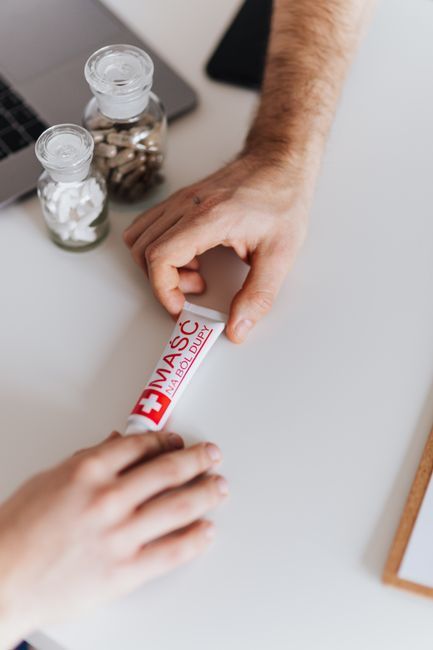
Checking labels helps you avoid fragrance, warming agents and other irritants. Illustrative photo.
Buying guide
Best lubricant and moisturizer for vaginal dryness: what to look for
Products marketed for intimate use vary a lot. Some contain fragrances, warming or tingling agents, or high amounts of glycerin, which can sting sensitive, thin tissue or encourage yeast infections in some women. A short list of ingredients is usually a good sign. If a product burns or itches, stop using it and try another type rather than assuming all products will feel the same.
Look for
- Water- or silicone-based lubricant
- Moisturizer made for vaginal use (e.g. hyaluronic acid)
- Fragrance-free, short ingredient list
- Condom-safe if you use condoms
Avoid or be careful with
- Fragrance, warming or tingling agents
- High-glycerin products if prone to yeast
- Oils and petroleum jelly with latex condoms
- Douches and scented washes
Mechanism
How does vaginal estrogen work? Thin vs restored vaginal lining
When estrogen falls, the lining of the vagina becomes thinner, paler and less elastic, it makes less natural moisture, and its normal acidity drops, which makes irritation and urinary infections more likely. Low-dose vaginal estrogen acts directly on the lining: over several weeks the cell layers thicken, blood flow and moisture improve, and the protective acidic environment returns. The diagram below is a simplified, abstract view of those layers.
Compare options
Vaginal estrogen vs laser vs moisturizer: which works best?
Each option solves a different part of the problem. Moisturizers and lubricants relieve symptoms but do not change the tissue; vaginal estrogen treats the cause in menopause-related dryness; and energy-based devices are an option with weaker evidence. The Menopause Society's 2020 statement found placebo-controlled trials of laser and other energy devices insufficient to make recommendations, and the Korean Society of Menopause notes that ACOG, AUGS and the Menopause Society advise against their routine use for now.
Your situation
Vaginal dryness treatment after breast cancer
Dryness can be especially severe after breast cancer treatment, particularly with aromatase inhibitors, which lower estrogen to very low levels. Non-hormonal options always come first: regular moisturizers, a good lubricant, and pelvic floor therapy if pain has caused muscle tightening. According to the Korean Society of Menopause, low-dose vaginal estrogen may be considered as a second-line option only after discussion with your oncologist, and the Menopause Society notes observational data suggesting it appears safe for selected survivors whose non-hormonal treatments have failed.
Vaginal DHEA has been suggested as an alternative for women on aromatase inhibitors, but safety data are limited and it is not approved in Korea as of 2025. Ospemifene is not recommended for breast cancer survivors. Dr. Park coordinates every decision with your cancer team and keeps you informed of the evidence at each step.
 Hommage · Gangnam
Hommage Women's Clinic · Gangnam, Seoul
After breast cancer, every step is planned with your oncology team. Illustrative photo.
Evidence
Vaginal dryness treatment: what the research says
Vaginal estrogen has been studied for decades, while newer options have less data. These figures come from menopause society guidance; they describe groups of women, and your own response may differ.
Prevalence estimates
Range of postmenopausal women affected by GSM across studies.
Menopause Society GSM statement, 2020Bothersome symptoms
Postmenopausal women reporting bothersome GSM.
Korean Society of Menopause, 2025Time to improvement
Typical with low-dose vaginal estrogen; long-term use permitted.
Korean Society of Menopause, 2025Estrogen vs moisturizer vs placebo
In a 12-week randomized trial, vaginal estradiol tablets, an over-the-counter vaginal moisturizer and placebo all reduced the most bothersome symptom by a similar amount; estradiol did not outperform the others.
Mitchell et al., JAMA Intern Med 2018Moisturizers and lubricants
Non-prescription, non-hormonal products give enough relief for most women with mild symptoms; vaginal estrogen is for moderate to severe GSM.
Menopause Society GSM statement, 2020Laser and energy devices
Placebo-controlled evidence not enough to recommend.
Menopause Society, 2020First steps
Can an over-the-counter vaginal moisturizer be enough?
For many women with mild symptoms, yes. The Menopause Society's 2020 statement says non-prescription, non-hormonal lubricants and moisturizers give enough relief for most women with mild genitourinary symptoms, and keeps low-dose vaginal estrogen for moderate to severe symptoms. In a 12-week US trial of 302 postmenopausal women, a vaginal moisturizer, vaginal estradiol tablets and a placebo gel all eased the most bothersome symptom by a similar amount.
That does not mean estrogen is unhelpful: it treats the thinning of the lining itself and is still recommended when symptoms are moderate, severe or affect the bladder. At Hommage Women's Clinic in Gangnam, Seoul, Dr. Park Yuna usually suggests a few weeks of regular moisturizer use first, then reviews whether prescription treatment is needed. See our vaginal dryness causes page if you are unsure why symptoms started.
 Hommage · Gangnam
Hommage Women's Clinic · Gangnam, Seoul
Many women with mild dryness start with a non-prescription moisturizer. Illustrative photo.
 Hommage · Gangnam
Hommage Women's Clinic · Gangnam, Seoul
Talking openly with a partner helps when dryness affects intimacy. Illustrative photo.
Everyday comfort
Living with vaginal dryness: daily habits and intimacy tips
Small changes can make a real difference alongside treatment:
- Gentle hygiene: wash the outer area with plain water or a mild, unscented cleanser; avoid douching, which removes protective moisture and bacteria.
- Breathable clothing: cotton underwear and avoiding very tight clothing can reduce irritation.
- Time and arousal: more time for foreplay increases natural lubrication; use a lubricant generously rather than sparingly.
- Regular sexual activity or vaginal dilators, if comfortable, may help keep tissue elastic.
- Talk about it: dryness is common and treatable; explaining it to a partner reduces pressure and anxiety.
If sex stays painful despite good lubrication, the cause may be muscle tension or another condition. See painful intercourse treatment and low libido treatment .
Traveling to Seoul
Vaginal dryness treatment in Seoul for international patients
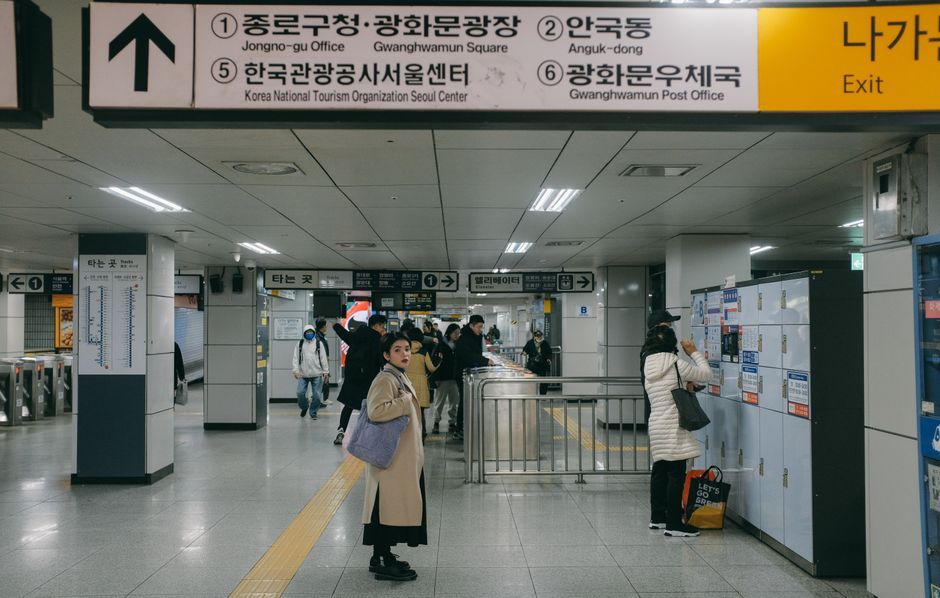
Visitors and foreign residents can see Dr. Park Yuna privately at Hommage Women's Clinic in Gangnam, near Sinnonhyeon Station.
- Contact first: message us by WhatsApp, KakaoTalk or the contact form; ask for language support if you need it.
- Bring: passport or residence card, names of products and medicines you use, and any cancer treatment history.
- Time needed: usually a single visit for assessment and a prescription; in-clinic laser or RF, if considered, is a course of sessions weeks apart, so it suits residents or repeat visitors better than a short trip.
- After you leave: check whether the same vaginal estrogen product is sold at home, and plan an 8–12 week review in Seoul or locally.
 Hommage · Seoul
Hommage Women's Clinic · Gangnam, Seoul
The clinic is a short walk from Sinnonhyeon Station (Line 9 and Shinbundang Line). Illustrative photo.
Choosing well
How to choose a clinic for vaginal dryness treatment in Seoul
Many clinics in Gangnam advertise intimate laser packages. Use these questions at any clinic, including ours, to make sure standard medical options come first:
- Is an OB/GYN specialist involved? Infection, skin conditions and bleeding need medical assessment first.
- Are lubricants, moisturizers and vaginal estrogen offered first? Laser should not be the starting point.
- Is the evidence for laser explained honestly? Including that major societies do not recommend routine use.
- Is a cancer history taken into account? Hormone choices should involve your oncology team.
- Do you get a written plan and review date? An 8–12 week check is typical.
What affects the cost of vaginal dryness treatment in Seoul?
Costs depend on whether tests are needed (for example for infection), the prescription chosen and its form (cream, tablet or ring), how long a supply you take, and whether in-clinic procedures are added. Consultations and many prescribed medicines are covered for patients enrolled in National Health Insurance; laser and other elective procedures are not. You receive a written quote before any procedure.
Your visit
How treatment is planned
01
Assessment
Dr. Park reviews your symptoms, cause of dryness, medicines and any cancer history, with a gentle exam.
02
First-line plan
Advice on lubricants and moisturizers, and vaginal estrogen or another prescription if suitable.
03
Review
A follow-up after about 8–12 weeks to check comfort and adjust the plan.
04
Further options
If symptoms persist, in-clinic treatments or pelvic floor support are discussed, with a written quote.

Your doctor
Dr. Park Yuna
Medical Director · OB/GYN Specialist
Dr. Park starts with proven, low-risk treatments and explains clearly what each can and cannot do. She suggests in-clinic procedures only when standard options have not given you enough relief, and tells you honestly how strong the evidence is.
OB/GYN specialist (Korea) and representative director of Hommage Clinic. Leads the clinic's women's health care, from screening and infections to hormones, contraception and fertility checks.
Vaginal dryness treatment: frequently asked questions
What is the most effective treatment for vaginal dryness?
For dryness caused by menopause, low-dose vaginal estrogen is the most effective treatment because it restores the vaginal lining itself. Lubricants and moisturizers are the first step and may be enough for mild symptoms. The right choice depends on the cause, your health history and your preferences.
Is vaginal estrogen safe?
Low-dose vaginal estrogen is considered safe for most women, including long-term use, because very little reaches the bloodstream. It does not need a progestogen and is not linked with the risks of tablet HRT in studies. If you have had breast cancer, the decision is made with your cancer team.
Can I use vaginal estrogen while breastfeeding?
Low-dose vaginal estrogen is generally considered compatible with breastfeeding, although lubricants and moisturizers are usually tried first because dryness often improves after weaning. Dr. Park will check your symptoms and choose the gentlest option that works. Lower estrogen during breastfeeding is explained on our low estrogen page.
Can I use coconut oil or petroleum jelly for vaginal dryness?
It is better not to. Oils and petroleum jelly can weaken latex condoms, are hard to wash away and have been linked with a higher risk of bacterial vaginosis and yeast infections in some women. A water- or silicone-based lubricant made for vaginal use is a safer choice.
How many sessions of vaginal laser are needed for dryness?
A typical course is about three sessions, four to six weeks apart, followed by a yearly maintenance session if it helps. Results vary, and evidence for long-term benefit is still limited. Laser is usually considered only after lubricants, moisturizers and vaginal estrogen have been tried.
Can foreigners get vaginal dryness treatment in Seoul?
Yes. International patients and foreign residents can book a private consultation with Dr. Park Yuna at Hommage Clinic in Gangnam. Bring your passport or residence card and the names of any products or medicines you already use. Contact us before your visit if you need language support.
What is the difference between a vaginal lubricant and a moisturizer?
A lubricant is used just before or during sex to reduce friction. A vaginal moisturizer is used regularly, usually 2–3 times a week, to keep the tissue hydrated day to day. Many women benefit from using both.
How long do I need to use vaginal estrogen?
Dryness caused by menopause usually returns when treatment stops, so most women continue a twice-weekly maintenance dose for as long as it helps. The Korean Society of Menopause notes that long-term use is permitted. Your plan is reviewed regularly, and any bleeding after menopause is always checked.
Do I need a progestogen with vaginal estrogen?
No. Low-dose vaginal estrogen is absorbed in very small amounts, so guidelines do not require a progestogen to protect the womb lining, unlike tablet or patch HRT. Routine endometrial monitoring is not usually needed unless you have bleeding or other risk factors.
Can vaginal estrogen help with bladder symptoms?
Yes. Vaginal estrogen can reduce urinary urgency and lower the risk of repeat urinary tract infections after menopause. It is less helpful for stress leakage when coughing or exercising; see urinary incontinence for those options.
Are vaginal DHEA and ospemifene available in Korea?
According to the Korean Society of Menopause 2025 guideline, neither vaginal DHEA (prasterone) nor ospemifene is approved in Korea as of 2025. Dr. Park will tell you what can be prescribed at the time of your visit and which alternatives are suitable.
Why is sex still painful after treating dryness?
If pain continues once the tissue is healthier, the pelvic floor muscles may have tightened in response to past pain, or another condition may be involved. Pelvic floor therapy and a full assessment can help. See painful intercourse treatment.
Can young women get vaginal dryness?
Yes. Breastfeeding, some birth control pills, certain medicines, cancer treatment, low estrogen from over-exercise and irritating products can all cause dryness before menopause. The cause guides the treatment; see vaginal dryness causes.
References
Sources used for this page, reviewed by Dr. Park Yuna, OB/GYN specialist. Read our editorial and medical review policy.
- Faubion SS, Kingsberg SA, Clark AL, et al. The 2020 genitourinary syndrome of menopause position statement of The North American Menopause Society. Menopause. 2020;27(9):976–992. doi:10.1097/GME.0000000000001609. PubMed
- Korean Society of Menopause. The 2025 menopausal hormone therapy guidelines. J Menopausal Med. 2025;31(2):53–84. PMC
- The 2022 hormone therapy position statement of The North American Menopause Society. Menopause. 2022;29(7):767–794. doi:10.1097/GME.0000000000002028. PubMed
- National Institute for Health and Care Excellence. Menopause: identification and management (NG23). Updated November 2024.
- Mitchell CM, Reed SD, Diem S, et al. Efficacy of vaginal estradiol or vaginal moisturizer vs placebo for treating postmenopausal vulvovaginal symptoms: a randomized clinical trial. JAMA Intern Med. 2018;178(5):681–690. AFP summary
This page is general information and does not replace a personal consultation. Illustrations are original works of Hommage Women's Clinic, Gangnam, Seoul; photos marked illustrative are not of patients.
Related intimate health care
Vaginal Dryness: Causes
Why dryness happens at any age, its symptoms, and when to see a doctor.
Vaginal Laser Therapy
How medical vaginal laser works for dryness and mild bladder symptoms, and its limits.
Painful Intercourse Treatment
Treatment for pain during sex, including pelvic floor muscle tension.
Hormone Replacement Therapy
Whole-body HRT for hot flashes and other menopause symptoms, with risks explained.
Menopause Treatment
A complete menopause care plan, from symptoms to bone and heart health.
Vaginal Infections
Infections that can mimic dryness, and how they are tested and treated.
Find the right treatment for vaginal dryness
Book a private consultation with Dr. Park Yuna in Gangnam to compare home, prescription and in-clinic options for your situation.
Hommage Clinic · 4F, Building A, 509 Gangnam-daero, Seoul (near Sinnonhyeon Station) · Mon & Fri 10:00–20:00 · Tue–Thu 10:00–19:00 · Sat 10:00–15:00