
Skin & Aesthetics · Body contouring
Laser Lipolysis in Seoul: Surgical vs Non-Invasive Options
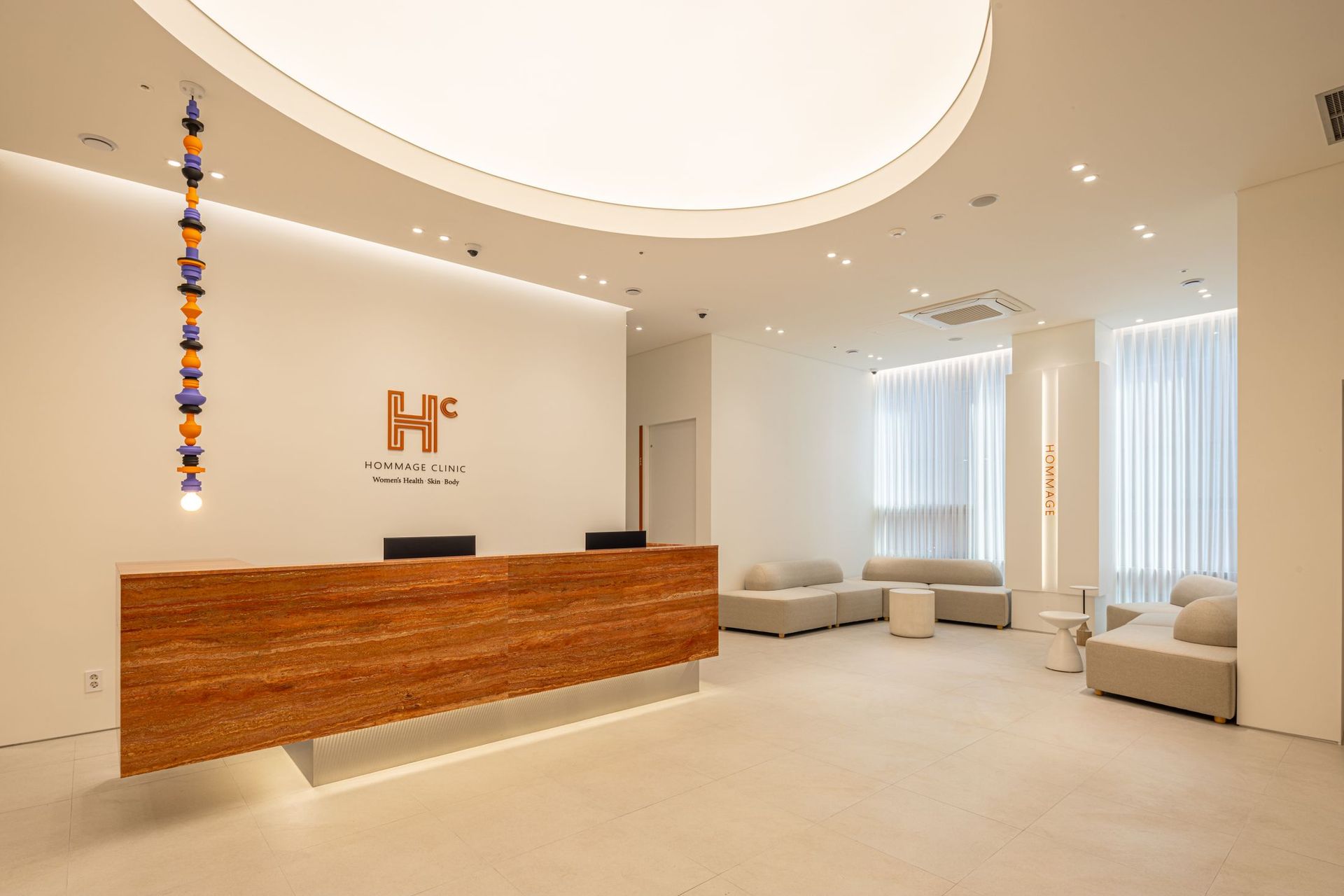
Laser lipolysis uses laser energy to heat and break down fat, either through a thin fiber placed under the skin during laser-assisted liposuction or from outside the skin with a non-invasive device. Hommage Clinic in Gangnam, Seoul does not perform liposuction or list a laser fat device; Dr. Kim Hyunbin explains both approaches and the clinic's non-surgical options, such as ONDA and Tune Body.
Quick answer
Laser lipolysis means using laser heat to damage fat, either inside the fat layer during laser-assisted liposuction (surgery with small incisions) or from outside the skin with a non-invasive laser such as a 1060 nm diode device. In one study, a single non-invasive session thinned abdominal fat by about 2.65 mm at 12 weeks. Hommage Women's Clinic in Gangnam, Seoul does not perform liposuction or list a laser fat device; Dr. Kim Hyunbin explains both approaches and whether the clinic's ONDA or Tune Body suits you.
Key takeaways
- Always ask which kind of "laser lipo" a clinic means: surgical or non-invasive.
- Laser liposuction removes far more fat but is surgery, with surgical recovery and risks.
- Non-invasive laser gives a small, gradual change with little downtime.
- Low-level "cold" laser slimming devices have weak evidence.
Infographic
Laser lipolysis in numbers
Different treatments
Surgical laser liposuction and non-invasive laser share one name.
Common non-invasive laser
A diode wavelength used to heat fat while the skin is cooled.
Fat thinning
Average at 12 weeks after one abdominal session (35 people).
Non-invasive results
Change appears gradually as treated fat is cleared.
Surgical final contour
After laser-assisted liposuction, as swelling settles.
Pooled burn rate, LAL
Laser-assisted liposuction in a 2025 meta-analysis of 23 studies.
Laser lipolysis at a glance
| Key fact | Details |
|---|---|
| What it is | Laser heat used to disrupt fat, either inside the fat layer or from outside the skin |
| Laser-assisted liposuction | A surgical procedure: small incisions, a laser fiber, then suction, usually under local anesthesia |
| Non-invasive laser | A cooled laser applicator over the skin; no incisions; sessions usually under an hour |
| Downtime | Surgical: bruising and a compression garment for weeks. Non-invasive: minimal |
| Results visible | Surgical: over weeks to months as swelling settles. Non-invasive: about 6–12 weeks |
| At Hommage Clinic | No liposuction or laser fat device; ONDA or Tune Body considered after assessment |
Non-surgical fat reduction may suit you if you
- Are at or near a stable, healthy weight
- Have a soft, pinchable bulge on the abdomen, flanks, thighs or arms
- Want a modest change and cannot take time off for recovery
- Accept that results build gradually over weeks
Consider a surgical opinion or wait if you
- Have a larger volume of fat or marked loose skin, where surgery changes more
- Are pregnant or breastfeeding
- Have an infection, open wound or recent sunburn in the area
- Take medicines that make your skin sensitive to light, for laser-based treatment
What is laser lipolysis?
Laser lipolysis means using laser energy to damage fat cells, and the term is used for two very different treatments. Knowing which one a clinic means is the first question to ask.
- Laser-assisted liposuction (often called laser lipo) is a form of liposuction. A thin laser fiber is passed through tiny incisions into the fat layer to heat and loosen fat, which is then usually removed with suction. It is a surgical procedure, normally done under local anesthesia with fluid injected into the area.
- Non-invasive laser fat reduction uses a laser applicator resting on the skin. The laser heats the fat layer underneath while the skin surface is cooled, injuring some fat cells, which the body clears over the following weeks. There are no incisions.
A third group, low-level or “cold” laser devices, is sometimes marketed for body slimming. Their evidence is weak, and any change in circumference tends to be small and short-lived.
Laser liposuction vs non-invasive laser: which is which?
Laser-assisted liposuction removes more fat in one session but is surgery, with surgical risks and recovery. Non-invasive laser treatment changes less, with minimal downtime.
- Amount of change: liposuction can remove a substantial volume; non-invasive lasers reduce a modest amount in one area.
- Anesthesia and incisions: liposuction needs local anesthesia and small incisions; non-invasive treatment needs neither.
- Recovery: liposuction usually means bruising, swelling and a compression garment for several weeks; non-invasive treatment allows normal activity the same day.
- Skin tightening: the heat of laser liposuction may tighten skin a little; non-invasive lasers have a limited effect on loose skin.
If you are mainly bothered by mild loose skin rather than fat, RF body tightening may suit you better than either.
Who is a good candidate?
Non-surgical fat reduction suits people near their goal weight who have a defined, pinchable bulge that has not responded to diet and exercise. It is not a weight-loss treatment, and it does not affect fat deep inside the abdomen around the organs.
If you have a larger volume of fat, several areas to treat or significant loose skin, surgical liposuction performed by a plastic surgeon is usually more effective. Hommage Clinic does not perform liposuction; our guide to choosing a liposuction clinic in Seoul lists the credentials and questions to check. For other non-surgical options, compare cryolipolysis , body HIFU and ultrasound cavitation .
What happens during treatment, and what is recovery like?
Laser-assisted liposuction
The area is marked and numbed with injected fluid, small incisions are made, and the laser fiber and a suction cannula are moved through the fat. The procedure often takes one to a few hours depending on the area. Afterward you wear a compression garment for several weeks. Bruising, swelling and soreness are expected, many people return to desk work within a few days, and the final contour usually shows after 3–6 months.
Non-invasive laser fat reduction
Flat applicators are placed on the area and the laser heats the fat layer in cycles while the skin is cooled. Sessions usually take under an hour, and most people feel deep warmth and occasional tingling. You can return to normal activity the same day. Results appear gradually, usually over about 6–12 weeks, and a second session may be suggested.
How long do results last?
Fat cells that are removed or destroyed do not grow back, so results from either approach are long-lasting if your weight stays stable. The remaining fat cells can still enlarge with weight gain, in treated and untreated areas alike.
Skin also continues to age, so some people later add skin-tightening treatments to maintain the contour. Photographs and measurements before treatment are the fairest way to judge how much has changed.
Risks and possible side effects
Laser-assisted liposuction carries the risks of any liposuction, plus the risk of heat injury from the laser. Possible complications include:
- Burns to the skin from laser heat
- Bruising, swelling, numbness and lumps that settle over weeks to months
- Uneven contour, dents or loose skin
- Fluid collection (seroma) and infection
- Rare but serious problems such as blood clots, fat embolism or reactions to local anesthetic
For these reasons it should be done by a qualified surgeon in a properly equipped facility. Non-invasive laser treatment carries lower risks: tenderness, swelling, firmness and small nodules that usually settle within weeks, and, rarely, burns.
After any fat-reduction treatment, seek prompt care for fever, spreading redness, blisters, increasing pain, or calf pain and shortness of breath.
Laser lipolysis and body contouring at Hommage Clinic
Hommage Clinic is a walk-in-friendly women's health and skin clinic in Gangnam, a short walk from Sinnonhyeon Station. The clinic does not perform liposuction, including laser-assisted liposuction, and does not list a laser fat-reduction device. Dr. Kim Hyunbin explains the difference between these treatments and, where surgery would serve you better, says so at the first visit.
For localized fat, the clinic uses ONDA, which delivers microwave energy to the deep fat layer while cooling the skin surface, and Tune Body radiofrequency. For moderate skin laxity on the abdomen, arms or thighs, the clinic also offers Renuvion, a minimal-incision helium plasma skin-tightening treatment. See allskin and aesthetic treatments. Body contouring is cosmetic and is not covered by Korea's National Health Insurance; cost depends on the device, area and number of sessions, and you receive a written quote before treatment.
How it works
How does laser lipolysis work? Inside vs outside the skin
In laser-assisted liposuction, a fiber about as thin as a pencil lead is passed through small incisions into the fat, which has first been filled with numbing fluid. The laser tip heats and loosens fat cells and seals small blood vessels, and the liquefied fat is usually removed with a suction cannula. The heat delivered just under the skin may also contract it slightly.
In non-invasive laser lipolysis, a flat applicator rests on the skin. A wavelength such as 1060 nm passes through the skin, which is cooled by the applicator, and warms the fat layer underneath. Laboratory work suggests that holding fat at about 42–47°C for several minutes triggers fat cells to die slowly, and the body then clears them over weeks, much as it does after other non-surgical fat treatments.
| Compare | Laser-assisted liposuction | Non-invasive laser |
|---|---|---|
| Type | Surgery, local anesthesia | Non-invasive, no anesthesia |
| Amount of change | Large volumes possible | Small; millimeters of fat thickness |
| Recovery | Compression garment for weeks | Normal activity the same day |
| Final result | About 3–6 months | About 6–12 weeks |
| Who performs it | A qualified surgeon in an equipped facility | A doctor-supervised clinic |
Candidates
Who is a good candidate for laser lipo? A simple guide
The right choice depends mostly on how much fat you want to change and how loose the skin is, not on the device. This simplified guide reflects how Dr. Kim talks through options at an assessment. It is a starting point for that conversation, not a diagnosis.
 Hommage · Gangnam
Hommage Women's Clinic · Gangnam, Seoul
The first question is how much change you want, not which device. Illustrative photo.
Recovery
Laser lipo recovery and results timeline
The two forms of laser lipolysis have very different timelines. After laser-assisted liposuction, bruising and swelling are expected and a compression garment is usually worn for several weeks, with the final contour after about 3–6 months. After a non-invasive laser session you return to normal life straight away; in the 1060 nm abdominal study, swelling, tenderness and firmness mostly resolved within 1–3 weeks, and fat thinning was measured at 6 and 12 weeks.
 Hommage · Gangnam
Hommage Women's Clinic · Gangnam, Seoul
Laser-assisted liposuction is surgery and belongs in an equipped facility. Illustrative photo.
Safety
Is laser lipo safe? Surgical and non-invasive risks compared
A 2025 meta-analysis of 23 studies comparing liposuction techniques found low pooled complication rates for laser-assisted liposuction, including burns or blistering in about 0.13% of cases, compared with about 0.32% for standard suction-assisted liposuction. The authors noted possible publication bias and very different study designs, so these figures may underestimate real-world risk. Laser liposuction is still surgery: blood clots, fat embolism and anesthetic reactions are rare but serious.
Non-invasive laser fat reduction carries lower risk. In the abdominal 1060 nm study, effects were mild to moderate swelling, tenderness and firmness, mostly settling in 1–3 weeks, and no serious adverse events were reported.
Before laser liposuction
- Are you a board-certified plastic surgeon?
- Where is it done, and who gives the anesthesia?
- How much fat will be removed, from where?
- What is the plan for burns, seroma or clots?
After any fat treatment
- Fever or spreading redness
- Blisters or skin turning white or dark
- Increasing pain or swelling
- Calf pain or shortness of breath
Evidence
Does laser lipolysis work? What the research says
Evidence for the two forms of laser lipolysis answers different questions. For laser-assisted liposuction, the question is safety compared with other liposuction techniques. For non-invasive lasers, the question is how much fat actually changes. Low-level "cold" laser slimming devices are a separate category with weaker and shorter-lived effects.
Fat thinning at 12 weeks
One 1060 nm laser session on the abdomen; 1.5 mm at 6 weeks. 35 people.
Bass & Doherty, J Drugs Dermatol, 2018Blinded photo matching
Reviewers picked the after photo correctly; weight was unchanged.
Bass & Doherty, 2018Burns with laser liposuction
Pooled rate vs 0.32% for suction-assisted liposuction; 23 studies.
Ahmed et al., Eur J Plast Surg, 2025Darker skin types studied
Share of Fitzpatrick IV–VI participants in the 1060 nm study.
Bass & Doherty, 2018Aftercare
After non-invasive laser lipolysis: aftercare and results
There is no wound after a non-invasive laser session, so aftercare is simple. The area may feel firm, tender or swollen, and small firm spots can be felt under the skin for a few weeks. These are expected and usually settle within 1–3 weeks.
- Return to work and exercise as soon as you feel comfortable.
- Avoid saunas, hot baths and heat packs on the area while it is tender.
- Wear soft, loose clothing over the treated area for a few days.
- Keep a stable weight; remaining fat cells can still grow.
- Take photos in the same light and position at 6 and 12 weeks.
What about "cold laser" slimming?
Low-level laser devices are used in some salons and spas for body slimming. They do not heat or destroy fat cells, and reported circumference changes tend to be small and short-lived. If a provider offers "laser lipo" with no heating and many sessions, ask which type of laser it is.
 Hommage · Gangnam
Hommage Women's Clinic · Gangnam, Seoul
Heating lasers and low-level "cold" lasers work very differently. Illustrative photo.
 Hommage · Seoul
Hommage Women's Clinic · Gangnam, Seoul
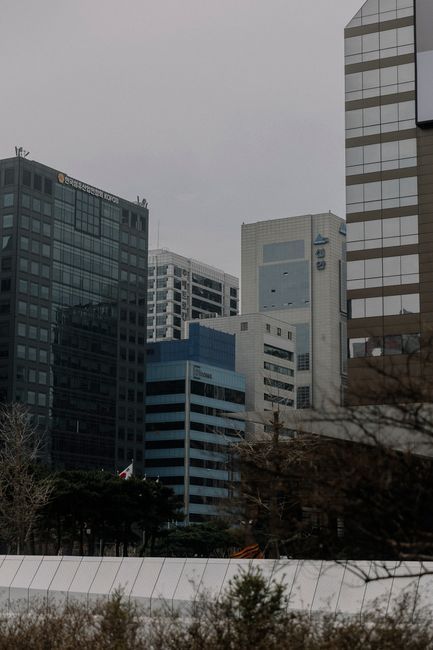
Gangnam: the clinic is a short walk from Sinnonhyeon Station. Illustrative photo.
Traveling to Seoul
Laser lipolysis in Seoul for international patients
How long to stay depends on which kind of laser lipolysis you mean. A non-invasive session fits a short trip, but the result takes about 12 weeks, so it is judged from home with photos. Laser-assisted liposuction is surgery: plan enough time in Seoul for the procedure, early follow-up and wound checks with your surgeon before flying, and expect to wear a compression garment on the flight.
- For a non-surgical assessment at Hommage Clinic, message us by WhatsApp, KakaoTalk or the contact form with the area, your height and weight and your dates; ask for language support if needed.
- Bring your passport for registration and a list of your medicines, including any that make skin sensitive to light.
- If you are considering surgery elsewhere, ask the surgeon how many days of follow-up they need before you fly.
- Take baseline photos before you travel.
Choosing well
How to choose a laser lipo clinic in Seoul
The words "laser lipo" are used by surgical clinics, dermatology clinics and spas in Seoul for very different services. These questions help you compare like with like:
- Surgical or non-invasive? Get a clear answer before comparing anything else.
- Which laser and wavelength? Heating lasers and low-level lasers are not equivalent.
- Who performs it? Laser liposuction should be done by a qualified surgeon; devices should be doctor-supervised.
- How much change is realistic? Expect millimeters with non-invasive lasers, more with surgery.
- What is the follow-up plan? Including who to contact for burns, lumps or infection.
- Is there a written quote? Covering sessions or surgery, garments and follow-up.
What affects laser lipolysis cost in Seoul?
For laser-assisted liposuction, cost depends on the number and size of areas, the volume removed, anesthesia, the facility and garments. For non-invasive lasers, it depends on the device, the number of applicators and sessions. None is covered by Korea's National Health Insurance. At Hommage Clinic, which offers non-surgical options only, you receive a written quote at your assessment before deciding.
 Hommage · Gangnam
Hommage Women's Clinic · Gangnam, Seoul
Ask the same questions at every clinic you compare. Illustrative photo.
Your visit
What to expect at a body-contouring consultation
01
Assessment
Dr. Kim checks fat thickness, skin laxity, your weight history, medicines and pregnancy plans.
02
Surgery or device?
You hear whether a non-surgical device is likely to help or whether a surgical opinion elsewhere would serve you better.
03
Choosing a method
If a clinic treatment fits, Dr. Kim explains why ONDA, Tune Body or Renuvion suits your area and how much change is realistic.
04
Plan and quote
You receive a session plan and a written quote before any treatment starts.

Your doctor
Dr. Kim Hyunbin
Associate Director · Skin & Aesthetic Treatments
Dr. Kim explains the difference between laser liposuction and non-invasive laser treatments at the first visit, and recommends a surgical opinion elsewhere when the amount of fat or loose skin is beyond what a non-surgical device can change. When a clinic device is suitable, Dr. Kim sets out how much change is realistic for your area.
Associate director dedicated to skin and aesthetic procedures, with extensive experience in lifting, botulinum toxin, fillers and laser treatments.
Laser lipolysis: frequently asked questions
Is laser lipolysis the same as liposuction?
Laser-assisted liposuction is a type of liposuction: a laser fiber heats the fat through small incisions, and the fat is usually suctioned out. Non-invasive laser fat reduction is different, because the laser works from outside the skin with no incisions. Always ask a clinic which of the two it means before booking.
Does Hommage Clinic perform laser lipolysis?
No. Hommage Clinic does not perform liposuction, including laser-assisted liposuction, and does not list a laser fat-reduction device. For localized fat, Dr. Kim assesses whether one of the clinic's body treatments, such as ONDA or Tune Body, is likely to help, or whether a surgical opinion elsewhere would serve you better.
How much fat does non-invasive laser lipolysis remove?
Non-invasive laser treatment reduces a modest amount of fat in one area, usually visible over about 6–12 weeks. The change is much smaller than with liposuction, varies between people and may need a second session. It is more suited to fine-tuning for someone already near a stable, healthy weight.
Does laser lipolysis tighten loose skin?
Laser-assisted liposuction may tighten the skin a little because of the heat it delivers under the skin, but it cannot replace surgery for significant laxity. Non-invasive laser fat reduction has little effect on loose skin. For mild laxity, radiofrequency tightening is usually considered; for moderate laxity, other minimally invasive options exist.
What is recovery like after laser liposuction?
Most people wear a compression garment for several weeks and have bruising, swelling and soreness that gradually settle. Many return to desk work within a few days, but strenuous exercise usually waits longer. The final contour often takes 3–6 months to show as swelling resolves, so plan follow-up visits with your surgeon.
Can foreigners get body-contouring treatment in Seoul?
Yes. Visitors and foreign residents can book a body-contouring assessment at Hommage Clinic in Gangnam. Walk-ins are welcome, or book ahead for a set time; bring your passport for registration. If you are considering surgery elsewhere, allow enough time in Seoul for follow-up before flying, and contact us before your visit to arrange language support.
How much does one non-invasive laser session change fat thickness?
In a study of 35 people treated once on the abdomen with a 1060 nm diode laser, ultrasound showed the fat layer was on average 1.5 mm thinner at 6 weeks and 2.65 mm thinner at 12 weeks, with no change in weight. Blinded reviewers identified the after photos correctly 95% of the time.
Is laser liposuction safer than regular liposuction?
A 2025 meta-analysis of 23 studies found low pooled complication rates for laser-assisted liposuction, including burns in about 0.13% of cases versus about 0.32% for suction-assisted liposuction. The authors warned of publication bias and mixed study designs. Any liposuction is surgery, and the surgeon and facility matter more than the tool.
Does non-invasive laser lipolysis hurt?
Most people feel deep warmth with periods of more intense heat and occasional tingling, while the applicator cools the skin. Afterward the area can be tender, swollen or firm; in the abdominal study these effects were mild to moderate and mostly resolved within 1–3 weeks.
Is laser lipo safe for darker skin?
Heat-based treatments can leave marks more easily on darker skin, so settings and skin cooling matter. In the 1060 nm abdominal study, about 23% of participants had darker skin types (Fitzpatrick IV–VI) and no serious adverse events were reported. Discuss your skin type and any history of pigmentation with the doctor.
Does cold laser (low-level laser) slimming work?
Low-level laser devices do not heat or destroy fat. Studies report small circumference changes that tend to be short-lived, so they are not comparable with heating lasers or liposuction. Ask any provider offering "laser lipo" which type of laser they use.
Is laser lipolysis a weight-loss treatment?
No. Neither form of laser lipolysis is designed for weight loss. Non-invasive lasers change fat thickness by millimeters, and even liposuction removes fat from chosen areas rather than lowering health risks linked to weight. If weight is hard to manage, a medical review, including conditions such as PCOS, may help more.
Laser lipo or CoolSculpting: which is better?
Both non-invasive laser and cryolipolysis give a modest reduction in one area. Lasers heat the fat through a flat applicator, while cryolipolysis cools a fold of fat held in a cup, so it needs a pinchable bulge. The best choice depends on the shape and thickness of the area; Dr. Kim can compare them at an assessment.
References
Sources used for this page, reviewed by Dr. Kim Hyunbin. Read our editorial and medical review policy.
- Bass LS, Doherty ST. Safety and efficacy of a non-invasive 1060 nm diode laser for fat reduction of the abdomen. J Drugs Dermatol. 2018;17(1):106–112. Journal
- Ahmed M, Shraim B, Al-Matwi M, et al. Comparison of complications in isolated aesthetic liposuction procedures across different techniques: a systematic review and meta-analysis. Eur J Plast Surg. 2025;48:8. Journal
This page is general information and does not replace a personal consultation. Illustrations are original works of Hommage Women's Clinic, Gangnam, Seoul; photos marked illustrative are not of patients.
Related body treatments
CoolSculpting (Cryolipolysis)
Fat freezing explained, with its rare risks and the clinic's comparable options.
Body HIFU Treatment
Focused ultrasound that targets fat at a set depth without incisions.
Ultrasound Cavitation
Sound-wave fat reduction and an honest look at what the evidence shows.
RF Body Tightening
Radiofrequency treatment for mild skin laxity on the abdomen, arms and thighs.
Fat Dissolving Injections (Body)
Injections for small, stubborn pockets of body fat such as the bra line.
Choosing a Liposuction Clinic
A checklist for international patients considering surgical fat removal in Seoul.
Find out whether a non-surgical option fits your goal
Book an assessment with Dr. Kim Hyunbin in Gangnam. You hear honestly whether a clinic device can help, or whether a surgical opinion would serve you better.
Hommage Clinic · 4F, Building A, 509 Gangnam-daero, Seoul (near Sinnonhyeon Station) · Mon & Fri 10:00–20:00 · Tue–Thu 10:00–19:00 · Sat 10:00–15:00