Skin & Aesthetics · Redness & vessels
Vascular Laser Treatment in Seoul for Visible Vessels and Red Spots
A vascular laser is a medical laser whose light is absorbed by the blood inside small vessels, heating and closing them so the body can clear them away. It is used to reduce broken capillaries, facial redness and small red spots. At Hommage Clinic in Gangnam, Seoul, Dr. Hwang Seonhwa assesses the size, depth and color of your vessels and your skin tone before choosing the wavelength.
Quick answer
Vascular laser treatment uses light that is absorbed by blood to heat and close small visible vessels, reducing broken capillaries, facial redness and red spots without cutting. At Hommage Women's Clinic in Gangnam, Seoul, Dr. Hwang Seonhwa chooses between 595 nm pulsed dye, 532 nm KTP and 1064 nm Nd:YAG lasers according to the size, depth and color of your vessels and your skin tone. A session takes about 10–30 minutes, isolated vessels often clear in 1–3 sessions, and diffuse redness usually needs 3–5 sessions about 4–6 weeks apart.
Key takeaways
- Red, fine surface vessels and bluish, deeper vessels need different wavelengths.
- Bruising is a choice: purpuric settings may clear redness faster but leave 1–2 weeks of purple marks.
- Treated vessels stay closed, but new ones can form with sun, age, rosacea or hormones.
- Leg spider veins and children's birthmarks usually need a different route.
Infographic
Vascular laser in numbers
Session time
Depends on the number and size of vessels.
Sessions for single vessels
Small, isolated vessels often clear quickly.
Sessions for redness
Spaced about 4–6 weeks apart.
Redness & swelling
Usually mild with non-purpuric settings.
Purple bruising
Only with purpuric pulsed dye settings.
>50% clearance
Pooled rosacea redness results for PDL and Nd:YAG (2022 meta-analysis).
Vascular laser at a glance
| Key fact | Details |
|---|---|
| Treatment time | Usually 10–30 minutes, depending on the number and size of vessels |
| Comfort | A quick hot snap with each pulse; built-in cooling helps and numbing is rarely needed |
| Sessions | Often 1–3 for isolated vessels; 3–5 for diffuse redness, about 4–6 weeks apart |
| Downtime | Redness and swelling for 1–3 days; purple bruising for 1–2 weeks with some settings |
| Results visible | Some vessels fade at once; others clear gradually over 2–6 weeks |
| How long results last | Treated vessels usually stay closed, but new ones can form with sun, age or rosacea |
| Reviewed by | Dr. Hwang Seonhwa, physician for skin and aesthetic treatments |
A vascular laser may suit you if you have
- Fine red or purple lines on the nose, cheeks or chin
- Persistent facial redness, for example from rosacea
- Small bright red bumps such as cherry angiomas or spider angiomas
- Red marks left after acne that have not faded with time
Wait or choose another route if you
- Are pregnant; spider veins that appear in pregnancy often fade after delivery
- Have a fresh tan or an active infection or cold sore in the area
- Have a lesion that is growing, bleeding or changing, which needs diagnosis first
- Want treatment for a child's birthmark, which needs a pediatric specialist
What is a vascular laser and how does it work?
A vascular laser delivers a single wavelength of light that hemoglobin, the red pigment in blood, absorbs strongly. The light passes through the outer skin, is absorbed inside the target vessel and turns into heat, which damages the vessel wall so that it closes. Over the following weeks the body breaks down the closed vessel and the redness fades.
Doctors call this selective photothermolysis: the wavelength, pulse length and energy are matched to the vessel so that it is heated while the surrounding skin is protected. Most vascular lasers also cool the skin surface with a cold spray or chilled tip just before each pulse, which reduces pain and the risk of burns. Because the laser targets blood rather than the skin itself, it is a non-invasive treatment with no cutting.
Types of vascular laser: 595 nm, 532 nm and 1064 nm
Different wavelengths reach different depths, so the choice depends on what your vessels look like. Three types are used most often:
- Pulsed dye laser (585–595 nm): a widely used option for facial redness, fine broken capillaries, rosacea and red marks. With some settings it intentionally leaves purple bruising (purpura) for one to two weeks; gentler settings avoid bruising but may need more sessions.
- KTP laser (532 nm): suits small, bright red surface vessels, such as those around the nose. Skin pigment also absorbs this wavelength, so it needs extra care in tanned or darker skin.
- Long-pulsed Nd:YAG laser (1064 nm): penetrates deeper and suits larger, bluish or purple vessels. It is less absorbed by skin pigment but delivers more heat, so precise settings matter.
Intense pulsed light is a related option. IPL uses a broad band of light rather than one wavelength and can treat diffuse redness and brown spots together, but it is usually less precise for distinct vessels. Before treatment, Dr. Hwang explains which device and wavelength are planned for you and why.
What can a vascular laser treat?
Vascular lasers treat small, visible blood vessels and red lesions in the skin. Common uses include:
- Facial telangiectasia , often called broken capillaries or spider veins, on the nose and cheeks. See broken capillary removal .
- Rosacea redness and visible vessels, alongside medical treatment. See rosacea laser treatment .
- Cherry angiomas, spider angiomas and venous lakes , small red or bluish bumps on the face, lips and body. See hemangioma laser treatment .
- Persistent redness and red marks after acne. See redness reduction therapy .
Some concerns need a different route. Spider veins on the legs usually respond better to sclerotherapy, and bulging varicose veins need assessment by a vein specialist. Birthmarks and hemangiomas in babies and children should be managed by a pediatric dermatologist or hospital team. Any spot that bleeds easily, grows quickly or looks unusual should be diagnosed before any laser treatment.
What happens during treatment, and does it hurt?
A session usually takes 10 to 30 minutes. After cleansing and photographs, you wear protective eye shields and the doctor treats each vessel or area with a series of pulses, often with a cold spray or chilled tip before each one.
Each pulse feels like a hot snap of a rubber band. Most people tolerate facial treatment without numbing cream, and cooling makes it more comfortable. The longer-wavelength Nd:YAG laser tends to feel hotter and sharper, and areas such as the nose or upper lip can be more sensitive. You may see small vessels disappear or turn darker immediately, which is an expected response.
How long do vascular laser results last?
Treated vessels usually stay closed for good, but the tendency to form new ones remains. Sun exposure, aging, rosacea, alcohol and hormonal changes can all lead to new vessels over time, so some people return for a touch-up every year or two.
Small, isolated vessels may clear in one to three sessions. Diffuse redness usually needs three to five sessions about four to six weeks apart, with gradual improvement each time. After treatment, expect redness and swelling for one to three days; swelling can be more noticeable around the eyes the next morning. If purpuric settings are used, purple bruising lasts about one to two weeks.
Aftercare
- Apply a cool compress for short periods to ease swelling.
- Use a gentle cleanser and moisturizer, and avoid rubbing or scrubbing the area.
- Avoid hot baths, saunas, intense exercise and alcohol for a few days.
- Wear broad-spectrum sunscreen daily and avoid tanning before and after treatment.
Risks and possible side effects of vascular laser
Vascular laser treatment is well established, but side effects can occur even with careful settings. Expected, temporary effects are redness, swelling, warmth and, with some settings, purple bruising.
Less common side effects include:
- Blistering or crusting , which usually heals within one to two weeks.
- Post-inflammatory hyperpigmentation: temporary brown marks, more likely in Asian and darker skin or after sun exposure.
- Light spots (hypopigmentation) , which can last longer.
- Scarring or skin texture change , which is rare and more likely if the skin is overheated or a blister becomes infected.
- Cold sore flare-ups around the mouth in people prone to them.
Eye protection is worn throughout to prevent eye injury. Contact the clinic promptly if you notice blisters that spread, oozing, increasing pain, signs of infection, or dark or white patches in the weeks after treatment.
Vascular laser treatment at Hommage Clinic
Hommage Clinic is a women's health and skin clinic in Gangnam, a short walk from Sinnonhyeon Station, and welcomes walk-ins during opening hours. Dr. Hwang Seonhwa first works out what each red mark is, whether a broken capillary, a cherry angioma, rosacea or something that needs a biopsy, and then plans the wavelength and energy for your skin. Vascular laser care at the clinic is planned for adults; children's birthmarks are referred to pediatric specialists.
Spider veins and redness often change with pregnancy, the pill or menopause, and the clinic's gynecology team can consider those factors too; seeskin care for hormonal changes. Cosmetic vascular laser treatment is not covered by Korea's National Health Insurance. Cost depends on the number and size of the vessels, the area and the sessions needed, and you receive a written quote before treatment. You can also browse allskin and aesthetic treatments.
Mechanism
How vascular lasers work: wavelength and depth
The color of a laser beam decides two things: how strongly blood absorbs it and how deep it travels. Shorter green and yellow wavelengths are absorbed very strongly by blood but stay near the surface, which suits fine, bright red vessels. The longer, invisible 1064 nm wavelength passes deeper and is absorbed less by skin pigment, which suits larger bluish vessels and darker skin, but it needs more energy and careful settings.
Pulse length matters too. Fine capillaries heat up and close with very short pulses; thicker vessels need longer pulses so the heat spreads across the whole vessel wall. Skin cooling before each pulse protects the surface. Dr. Hwang adjusts all three, wavelength, pulse length and energy, for each area, sometimes using two devices in the same session.
Compare
Vascular laser vs IPL: which suits your redness?
People often ask whether a vascular laser orIPLis better. A laser sends one precise wavelength and is the stronger tool for distinct vessels and bright red spots. IPL flashes a broad band of light and can soften diffuse redness and brown sun spots in the same session, but it is less targeted for individual vessels and needs extra caution in darker or tanned skin. Many redness plans use both at different stages.
| Concern | Usual first choice |
|---|---|
| Fine red lines on nose | 595 nm pulsed dye or 532 nm KTP |
| Larger bluish vessels | 1064 nm Nd:YAG |
| Rosacea redness | Pulsed dye laser or IPL, with medical care |
| Cherry angioma | Vascular laser; often one session |
| Redness + sun spots | IPL, sometimes followed by laser |
| Leg spider veins | Usually sclerotherapy; vein specialist |
 Hommage · Gangnam
Hommage Women's Clinic · Gangnam, Seoul
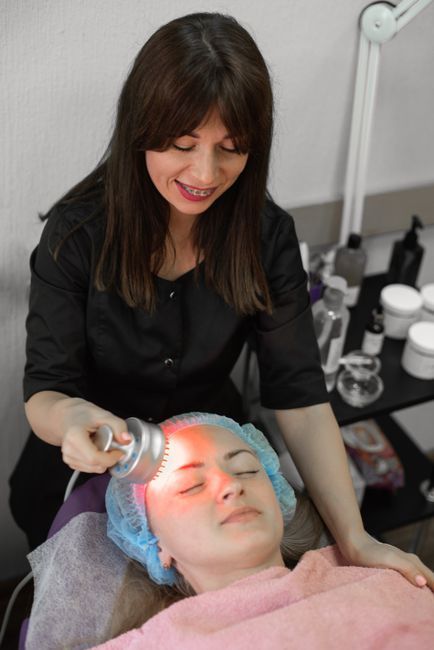
Each pulse is preceded by skin cooling; eye protection is worn throughout. Illustrative photo.
 Hommage · Gangnam
Hommage Women's Clinic · Gangnam, Seoul
Your work and social plans help decide whether bruising settings make sense. Illustrative photo.
Your choice
Bruising or no bruising? Purpuric vs non-purpuric settings
With a pulsed dye laser, the same device can be set to cause a visible purple bruise (purpura) or to avoid it. Bruising settings deliver the energy in a very short burst that ruptures tiny vessels; non-bruising settings spread it over a longer pulse or several sub-pulses. The trade-off is mainly time: one approach costs you social downtime, the other may cost you an extra session or two.
Non-purpuric
- No purple bruising in most cases
- Mild redness and swelling for 1–3 days
- Makeup usually the next day
- May need more sessions
- Suits short stays and busy schedules
Purpuric
- Purple bruising for about 1–2 weeks
- Can clear stubborn redness in fewer sessions
- Bruises can be covered with makeup once skin is intact
- Plan around events and photos
- Suits people with time to stay low-key
Schedule
Vascular laser sessions schedule for diffuse redness
Diffuse redness improves step by step. Each session closes a share of the vessels, and the skin needs about four to six weeks to clear them before the next one. The illustration shows a typical course of three to five sessions; isolated vessels or a single cherry angioma may need only one.
Before & after
Vascular laser preparation and aftercare checklist
Most problems after vascular laser, such as dark marks or blisters, are linked to tanned skin, heat or friction in the days after treatment. These simple steps lower that risk and help the treated vessels clear.
Do
- Use sunscreen daily for weeks before and after
- Mention cold sores, blood thinners and recent tanning
- Apply cool compresses for short periods
- Sleep with your head slightly raised the first night
- Use a gentle cleanser and moisturizer
- Contact us if a blister appears
Don't
- Tan or use self-tanner before treatment
- Rub, scrub or exfoliate the area for a week
- Use saunas, hot baths or hot yoga for a few days
- Drink alcohol for the first days, as it can increase flushing
- Use retinoids or acids until redness settles
- Pick at any crusts
 Hommage · Gangnam
Hommage Women's Clinic · Gangnam, Seoul
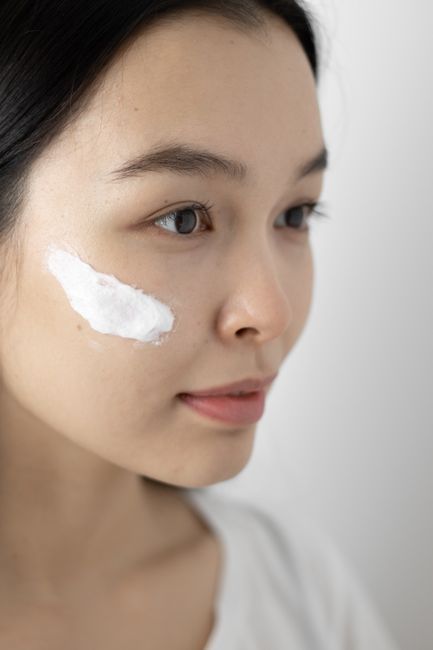
Avoiding a tan is one of the simplest ways to make vascular laser safer. Illustrative photo.
Evidence
Does vascular laser work? What the research says
Vascular lasers are among the longest-established laser treatments in dermatology, and they are a standard option for facial redness and visible vessels. Head-to-head research comparing devices is more limited. A 2022 meta-analysis of ten studies in rosacea found that pulsed dye and 1064 nm Nd:YAG lasers worked similarly overall, with differences mainly in bruising and comfort.
PDL: >50% clearance
Pooled physician-assessed results in rosacea redness.
Li & Wang, Front Med, 2022Nd:YAG: >50% clearance
No significant difference from pulsed dye laser.
Li & Wang, Front Med, 2022Patient satisfaction
88.6% with PDL and 91.4% with Nd:YAG.
Li & Wang, Front Med, 2022Session for cherry angiomas
Small red spots usually disappear after one treatment.
DermNetTraveling to Seoul
Vascular laser in Seoul for international patients
A single vascular laser session fits easily into a trip, but a full course for diffuse redness spans several months, so it helps to plan realistically. Hommage Women's Clinic is in Gangnam, a short walk from Sinnonhyeon Station (Line 9 and Shinbundang Line).
Planning your visit
- Send photos of the area by WhatsApp, KakaoTalk or the contact form so Dr. Hwang can give a rough idea of sessions in advance.
- For a short stay, ask for non-purpuric settings so you are not left with bruising while traveling.
- Allow 1–3 days of mild redness before important events or photos.
- If you visit Seoul regularly, sessions can be timed with your trips about 4–6 weeks apart, or continued with a doctor at home using your treatment notes.
- Bring your passport and a list of medicines, including blood thinners and acne treatments.
Avoid beach holidays and strong sun straight after treatment. If you notice blisters or dark patches after flying home, send photos and see a local dermatologist.
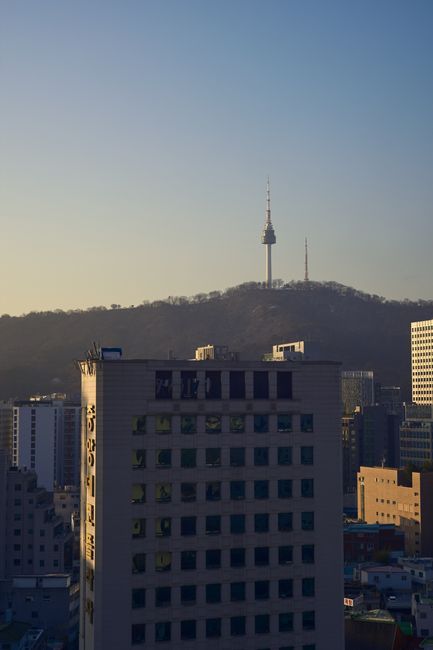 Hommage · Seoul
Hommage Women's Clinic · Gangnam, Seoul
Seoul: the clinic is in Gangnam, a short walk from Sinnonhyeon Station. Illustrative photo.
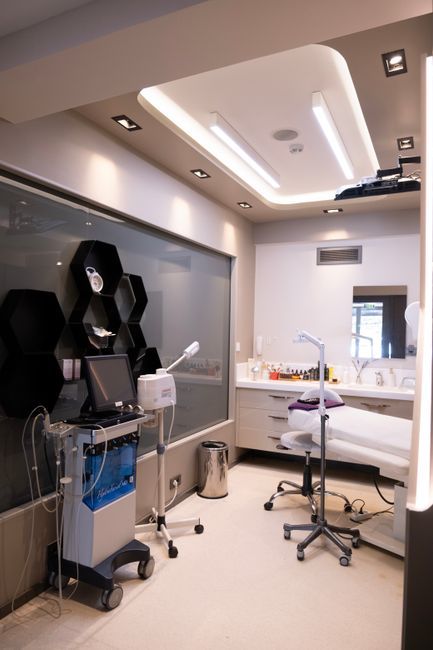 Hommage · Gangnam
Hommage Women's Clinic · Gangnam, Seoul
Ask which device and wavelength are planned, and why. Illustrative photo.
Choosing well
How to choose a vascular laser clinic in Seoul
Many Gangnam clinics advertise “redness laser” without naming the device. These questions help you compare, including at our clinic:
- Is the cause of redness diagnosed first? Rosacea, broken capillaries and angiomas are planned differently.
- Which device and wavelength? 532, 595 or 1064 nm, or IPL, and why it suits your vessels.
- Will I bruise? You should be able to choose purpuric or non-purpuric settings.
- Is my skin tone considered? Settings should be adjusted for Asian or tanned skin.
- Are photos taken? Before-treatment photos make progress easy to judge.
- Is the quote written? Covering the expected number of sessions.
What affects the cost of vascular laser?
Cost depends on the size of the area (a few vessels on the nose versus the whole face), the type of laser, the number of sessions, and whether it is combined withIPLor medical treatment forrosacea. Cosmetic vascular laser is not covered by Korea's National Health Insurance. You receive a written quote after your assessment and before any treatment.
Your visit
What to expect at your vascular laser appointment
01
Diagnosis
Dr. Hwang examines each vessel or red spot, asks about flushing, medicines and pregnancy, and checks for anything that needs a biopsy first.
02
Planning
The wavelength, energy and whether bruising is acceptable are agreed with you, along with the likely number of sessions.
03
Treatment
With eye shields on and skin cooling, the laser takes about 10–30 minutes. Small vessels may fade or darken at once.
04
Recovery
Swelling settles over 1–3 days. The next session, if needed, is usually 4–6 weeks later.

Your doctor
Dr. Hwang Seonhwa
Physician · Skin & Aesthetic Treatments
Dr. Hwang matches the wavelength to the size and depth of each vessel and to your skin tone, and discusses in advance whether settings that may leave temporary bruising suit your schedule.
Physician for face and skin procedures, including lifting, laser and skin-improvement treatments, planned around facial proportions and skin condition.
Vascular laser: frequently asked questions
Will vascular laser treatment leave bruises?
It depends on the settings. Pulsed dye laser at purpuric settings leaves purple bruising that lasts about one to two weeks but can clear redness in fewer sessions. Non-purpuric settings avoid bruising, though more sessions may be needed. Other lasers can leave mild swelling or small dark lines that fade within days. Your doctor will explain what to expect for your plan.
How many vascular laser sessions will I need?
Small, isolated vessels often clear in one to three sessions. Diffuse redness, such as rosacea, usually needs three to five sessions about four to six weeks apart. Larger or deeper vessels may need more. Your doctor estimates the number after examining your skin, and progress is reviewed at each visit.
Do broken capillaries come back after laser?
Treated vessels usually stay closed, but new ones can form over time. Sun exposure, aging, rosacea, alcohol, harsh skin care and hormonal changes all play a part. Daily sunscreen and gentle skin care help, and many people return for a touch-up session every year or two.
Is vascular laser safe for Asian or darker skin?
Yes, with the right wavelength and settings. Pigment in your skin also absorbs some wavelengths, especially 532 nm, so the risk of temporary dark marks is higher in tanned or darker skin. Longer wavelengths and conservative energy reduce this risk. Avoid tanning before treatment and use sunscreen afterward.
Can a vascular laser treat spider veins on the legs?
Laser can treat very fine leg veins, but results on the legs are generally less reliable than on the face. Sclerotherapy, an injection treatment, is the usual first choice for leg spider veins, and bulging varicose veins need an ultrasound assessment by a vein specialist. Your doctor can advise where to go if leg veins are your main concern.
What affects the cost of vascular laser in Seoul?
Cost depends on the size of the area, the number and type of vessels, the laser settings and the number of sessions needed. Cosmetic vascular laser treatment is not covered by Korea's National Health Insurance. Hommage Clinic gives you a written quote after your assessment and before any treatment.
Can foreigners get vascular laser treatment in Seoul?
Yes. International visitors and foreign residents can book vascular laser treatment at Hommage Clinic; bring your passport for registration. If you have a short stay, ask about non-purpuric settings to avoid visible bruising. Contact us before your visit to arrange language support; you can walk in during opening hours or book ahead for a set time.
Does vascular laser hurt?
Each pulse feels like a quick hot snap of a rubber band. Skin cooling before each pulse makes it more comfortable, and most people manage facial treatment without numbing cream. The 1064 nm Nd:YAG laser and sensitive areas such as the nose and upper lip can feel sharper.
Which is better for redness: pulsed dye laser or Nd:YAG?
Both work. A 2022 meta-analysis in rosacea found similar results: about 69% of patients treated with pulsed dye laser and 71% treated with Nd:YAG had more than half their redness cleared, with no significant difference. Pulsed dye laser tends to suit fine red vessels and diffuse redness; Nd:YAG suits deeper or bluish vessels. Dr. Hwang chooses based on your vessels and skin tone.
Is vascular laser or IPL better for facial redness?
A vascular laser is more precise for distinct vessels and red spots. IPL uses a broad band of light that can treat diffuse redness and brown sun spots together, but is less targeted. Some plans use both. The right choice depends on what is causing your redness.
Can I wear makeup after vascular laser?
With non-purpuric settings, makeup can usually be applied the next day if the skin is intact. If bruising or crusting occurs, mineral makeup can be used over intact skin, but avoid rubbing. Do not apply makeup over blisters or open skin.
Can vascular laser treat red acne marks?
Yes. Flat red or pink marks left after acne contain small dilated vessels, and a vascular laser can help them fade faster. Active acne should be controlled first, and textured acne scars need different treatments. See redness reduction therapy.
Can I have vascular laser during pregnancy?
Elective laser treatment is usually postponed during pregnancy. Spider veins and redness that appear in pregnancy often fade after delivery, so it is worth waiting a few months afterward before deciding on treatment.
References
Sources used for this page, reviewed by Dr. Hwang Seonhwa. Read our editorial and medical review policy.
- Li Y, Wang R. Efficacy comparison of pulsed dye laser vs. microsecond 1064-nm neodymium:yttrium-aluminum-garnet laser in the treatment of rosacea: a meta-analysis. Front Med. 2022;8:798294. Full text
- DermNet. Facial red vein and vascular birthmark treatments. dermnetnz.org
This page is general information and does not replace a personal consultation. Illustrations are original works of Hommage Women's Clinic, Gangnam, Seoul; photos marked illustrative are not of patients.
Related redness and vessel treatments
Broken Capillary Removal
Laser removal of fine red and purple lines on the nose and cheeks.
Rosacea Laser Treatment
How laser fits into rosacea care alongside medication and trigger control.
Redness Reduction Therapy
Finding the cause of facial redness and combining skin care, medicine and light.
Hemangioma Laser Treatment
Laser for cherry angiomas and small red vascular spots in adults.
IPL
Broad-spectrum light for diffuse redness and brown spots together.
Skin Care for Hormonal Changes
How pregnancy, the pill and menopause can bring out redness and spider veins.
Get a plan for your red vessels and spots
Book an assessment with Dr. Hwang Seonhwa in Gangnam. We will identify each lesion and choose a wavelength that suits your skin and schedule.
Hommage Clinic · 4F, Building A, 509 Gangnam-daero, Seoul (near Sinnonhyeon Station) · Mon & Fri 10:00–20:00 · Tue–Thu 10:00–19:00 · Sat 10:00–15:00