
Gynecology · Cervical screening
Pap Smear in Korea: How the Test Works and What Results Mean
A Pap smear (Pap test) collects a small sample of cells from your cervix so a laboratory can look for abnormal changes that could develop into cervical cancer if left untreated. At Hommage Clinic in Gangnam, Seoul, female OB/GYN specialist Dr. Park Yuna takes the sample in a quick, private exam and explains your result and any next steps in plain language.
Quick answer
A Pap smear is a cervical screening test: a few seconds with a soft brush collects cells from the cervix, and a laboratory checks them for precancerous changes. At Hommage Women's Clinic in Gangnam, Seoul, it is taken by female OB/GYN specialist Dr. Park Yuna in a visit of about 15–30 minutes. Results usually take 1–2 weeks. Korea's national program offers a Pap smear every 2 years from age 20.
Key takeaways
- A Pap smear finds cell changes years before cancer could develop, when treatment is simple.
- Most results are normal. An abnormal result usually means a follow-up test, not cancer.
- From about age 30, adding an HPV test catches more precancers and can allow longer gaps between tests.
- Avoid your period, sex, tampons and vaginal products for about 48 hours before the test for the clearest sample.
Infographic
Pap smear in numbers
Taking the sample
The whole visit is usually 15–30 minutes.
Preparation
No sex, tampons or vaginal products before the test.
Results
Reported with the international Bethesda system.
Korean interval
National program: every 2 years from age 20.
Sensitivity for CIN2+
Liquid-based Pap, vs ~90% for HPV testing (Cochrane, 2017).
Korean uptake
Eligible women screened in the national program, 2022.
Pap smear at a glance
| Key fact | Details |
|---|---|
| What it is | A screening test that checks cervical cells for abnormal (precancerous) changes |
| Test time | Taking the sample takes about a minute; the whole visit is usually 15–30 minutes |
| Comfort | Brief pressure or mild cramping for most women; you can ask to pause at any time |
| Preparation | Avoid your period, sex, tampons and vaginal creams for about 48 hours before |
| Results | Usually within 1–2 weeks, reported using the international Bethesda system |
| How often | Typically every 2–3 years, or longer intervals when combined with HPV testing |
| Reviewed by | Dr. Park Yuna, OB/GYN specialist |
Book a Pap smear if you
- Are 20 or older and have ever been sexually active
- Have not had cervical screening in the last 2–3 years, or are unsure when you last had one
- Were advised to repeat a test after an unclear or abnormal result
- Have recently moved to Korea and want to continue regular screening
See a doctor promptly instead of waiting for screening if you have
- Bleeding after sex, between periods or after menopause
- Unusual discharge with a bad smell, or pelvic pain
- Severe pelvic pain with fever, which needs same-day care
What is a Pap smear?
A Pap smear is a screening test that looks at cells from the surface of the cervix, the lower part of the uterus that opens into the vagina. It does not diagnose cancer directly. Instead, it finds abnormal cell changes years before they could turn into cancer, when treatment is simple and very effective.
Almost all cervical cancers are caused by long-lasting infection with high-risk types of human papillomavirus (HPV). A Pap smear checks the cells themselves, while an HPV test looks for the virus that causes the changes. Many clinics in Korea now use liquid-based cytology, in which the sample is rinsed into a vial of fluid, which can give a clearer slide and allows an HPV test from the same sample.
How is a Pap smear done?
A Pap smear is a short, simple procedure done during a pelvic exam. Most of the appointment is spent talking, not testing.
- You undress from the waist down in a private room and lie on the examination chair with a cover.
- The doctor gently inserts a speculum to see the cervix. A smaller size can be used if you are tense or have not had many exams.
- A soft brush or small spatula is turned against the cervix for a few seconds to collect cells.
- The sample goes to a pathology laboratory, and you can get dressed straight away.
If you are having a well-woman exam , the Pap smear can be combined with an ultrasound or STI tests in the same visit.
Does a Pap smear hurt, and how should you prepare?
A Pap smear is usually not painful. Most women feel pressure from the speculum and a brief scraping or cramping sensation that lasts only seconds. Breathing slowly and relaxing your thigh and pelvic muscles helps, and you can ask the doctor to stop at any time.
To get the most accurate sample:
- Book for a day when you are not bleeding, ideally 1–2 weeks after your period ends.
- For 48 hours before, avoid vaginal sex, tampons, douching, vaginal medicines, lubricants and spermicides.
- If you have an active infection or unusual discharge, tell us. It may be better to treat a vaginal infection first and test afterward.
What do Pap smear results mean?
Most Pap smear results are normal. Results in Korea, as in most countries, are reported using the Bethesda system, and an abnormal result usually means you need a follow-up test, not that you have cancer.
- Negative (NILM): no abnormal cells were found. Continue routine screening.
- ASC-US: slightly unusual cells of unclear meaning. An HPV test or a repeat Pap test usually decides the next step.
- LSIL: low-grade changes, usually caused by HPV. Many clear on their own, but further checks are often advised.
- ASC-H or HSIL: changes that may be higher grade. A colposcopy is recommended to look more closely.
- AGC: unusual glandular cells, which need colposcopy and sometimes a check of the uterine lining.
- Unsatisfactory: the sample could not be read, often because of blood or inflammation. A repeat test in a few months is usual.
The result may also mention inflammation or an infection such as yeast or bacterial vaginosis, which can be treated separately.
Possible side effects and limitations
A Pap smear is a low-risk test. Light spotting for a day and mild cramping are common, especially if the cervix bleeds easily, for example during pregnancy or while taking the pill. These settle without treatment. Contact the clinic if you have heavy bleeding, fever or pain that gets worse.
No screening test catches every problem. A single Pap smear can miss some abnormal cells (a false negative) or show changes that turn out to be harmless (a false positive). That is why screening is repeated at regular intervals and why HPV testing is increasingly added, especially from about age 30.
Pap smear vs HPV test: which do you need?
Both tests use a sample from the cervix, and they complement each other. The Pap smear looks for abnormal cells; the HPV test looks for the high-risk virus types that cause them. A negative HPV test gives strong reassurance, while a positive one shows who needs closer follow-up.
In general, Pap testing alone is preferred in your 20s, when HPV is common and usually clears on its own. From about age 30, HPV testing, alone or together with a Pap smear (co-testing), is widely recommended and can allow longer gaps between tests. Your age, history and previous results decide the right combination. For age-by-age schedules and the Korean national program, read our guide to cervical cancer screening in Korea .
Pap smears at Hommage Clinic
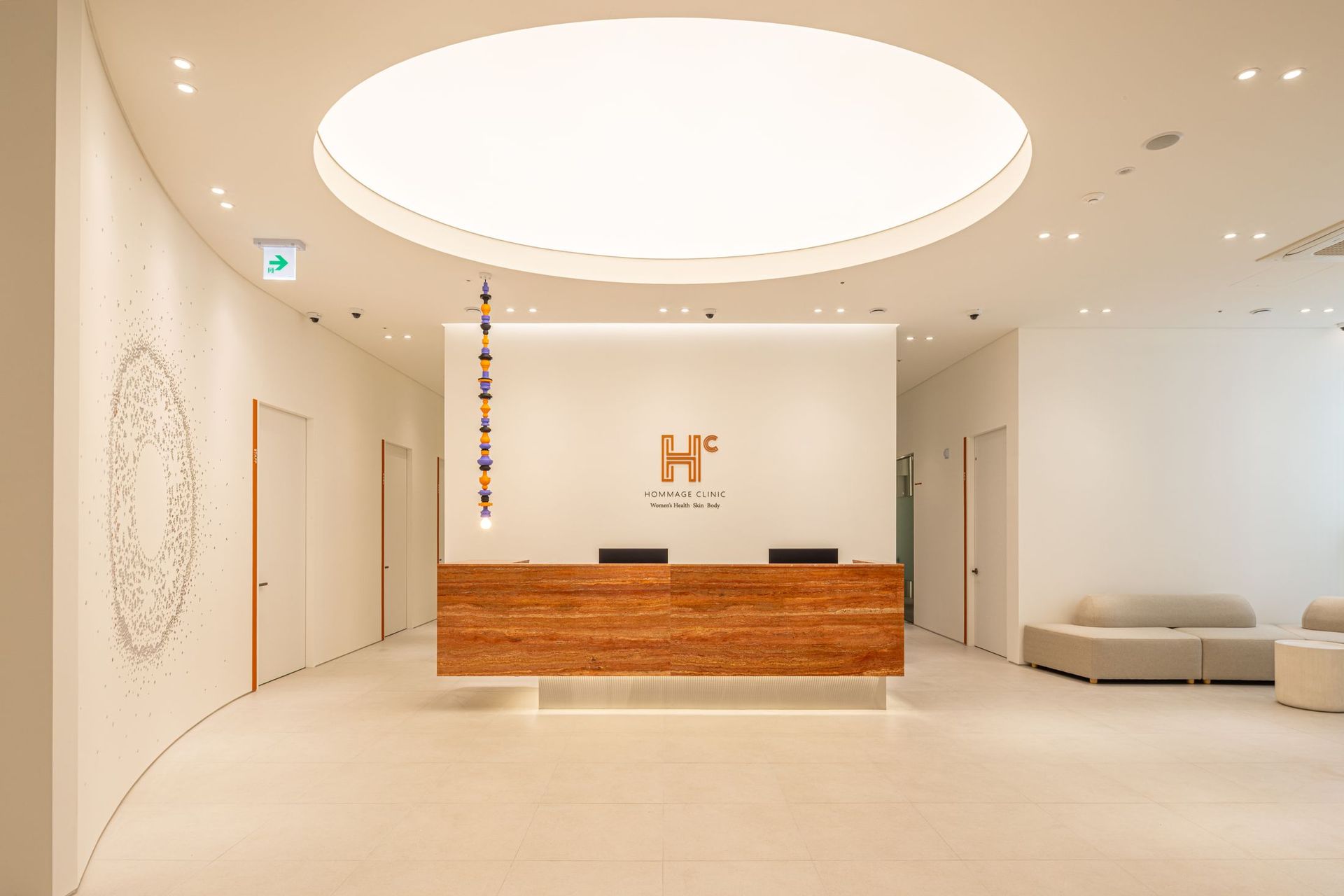
Hommage Clinic is a women's clinic in Gangnam, a short walk from Sinnonhyeon Station. Your Pap smear is taken by Dr. Park Yuna, a female OB/GYN specialist, in a private room, and she goes through your result with you, including what any follow-up involves. You can find our other gynecology services here.
Women enrolled in Korea's National Health Insurance may be eligible for a Pap smear under the national cervical cancer screening program; bring your invitation or ask us to check. Tests outside that program, such as liquid-based cytology or HPV testing added for screening, are usually paid directly, as they are for visitors without coverage. We tell you which tests you are having and what they cost before the sample is taken.
From sample to result
How does a Pap smear work?
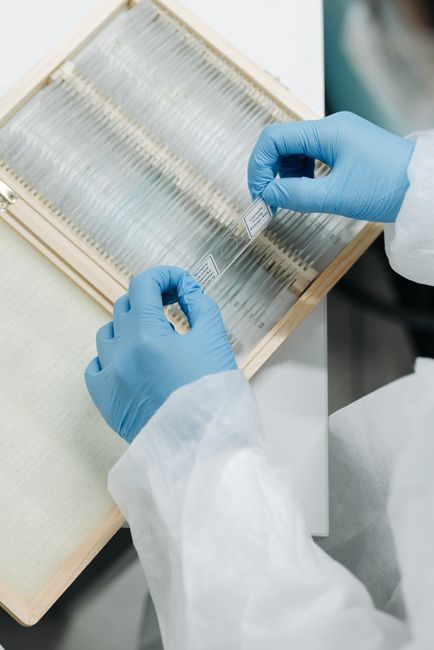
A Pap smear takes seconds in the exam room, but your sample then goes on a journey. The cells are rinsed into a small vial of preserving fluid (liquid-based cytology) or spread onto a glass slide (conventional Pap). At the pathology laboratory, they are stained and examined under a microscope by trained cytology staff and a pathologist, who look for cells whose size, shape or nucleus has changed. The finding is written up in the internationally used Bethesda system, and Dr. Park Yuna then explains what it means for you. The diagram below follows those four stages.
Test types
Conventional Pap smear vs liquid-based cytology (LBC)
In Korea you may see two kinds of Pap test offered. The conventional Pap smear spreads cells straight onto a glass slide. Liquid-based cytology (LBC), sometimes called ThinPrep or SurePath after brand names, rinses the brush into a vial so the laboratory can prepare a thinner, more even layer of cells. In the Cochrane review of screening tests, both methods had broadly similar accuracy; the practical advantages of LBC are fewer unreadable samples in some settings and the option to run an HPV test from the same vial without asking you back. The national program uses the Pap smear; LBC and HPV testing outside the program are usually paid directly.
Conventional Pap
- Cells spread directly on a glass slide
- Used in Korea's national program
- Separate visit or sample needed for HPV testing
Liquid-based cytology
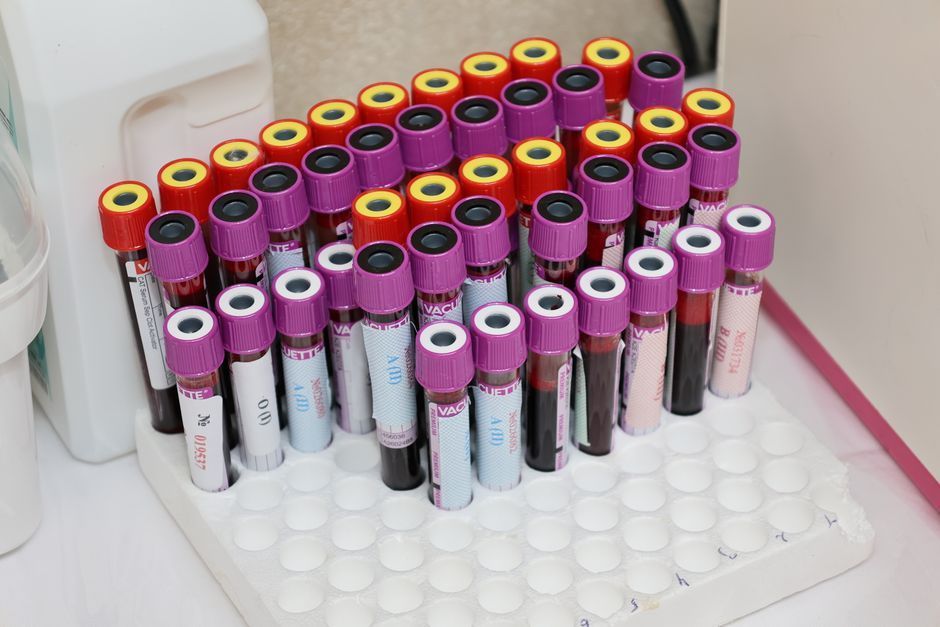
- Cells rinsed into a vial of fluid
- Thinner, more even slide
- HPV test possible from the same sample
 Hommage · Gangnam
Hommage Women's Clinic · Gangnam, Seoul
Liquid-based cytology keeps your sample in a vial of preserving fluid. Illustrative photo.
Abnormal result?
Abnormal Pap smear: what happens next
Hearing that your Pap smear is abnormal can be frightening, but it is a common result and usually leads to a simple, staged follow-up rather than treatment. The path depends on the type of change, your age and whether HPV is present. Low-grade changes often clear on their own as the immune system controls HPV, so watchful follow-up is common. Higher-grade changes are examined with a colposcopy , and if a true precancer is confirmed, it can usually be removed with a short outpatient procedure. The pathway below is a simplified guide.
 Hommage · Gangnam
Hommage Women's Clinic · Gangnam, Seoul
Pap smear cells are read under a microscope at a pathology laboratory. Illustrative photo.
Accuracy
How accurate is a Pap smear compared with an HPV test?
Accuracy is measured in two ways. Sensitivity is how often a test finds precancer (CIN2 or worse) when it is there; specificity is how often it is correctly negative when there is nothing to find. A 2017 Cochrane review of screening studies found that HPV testing finds more precancers, while the Pap test gives fewer false alarms. That is why many guidelines combine them or use HPV first from age 30, and why one normal Pap smear is followed by regular repeats rather than relied on for life.
Pooled estimates for asymptomatic women: HPV test (HC2) sensitivity 89.9% and specificity 89.9%; liquid-based Pap (ASC-US or worse) sensitivity 72.9% and specificity 90.3%. Conventional Pap had lower sensitivity but higher specificity. Figures describe groups of women in studies, not any single test result.
Before and after
Pap smear do's and don'ts
Small things in the two days before your test make a real difference to how clear the sample is, and a clear sample means fewer repeat visits. After the test, you can go straight back to work, study or sightseeing. Use this quick checklist when you book.
Before your test
- Book 1–2 weeks after your period ends
- Bring your last Pap or HPV results
- Tell us if you are pregnant, tense or have pain during sex
- Mention unusual discharge or itching
For 48 hours before
- Have vaginal sex
- Use tampons, douches or vaginal creams
- Use lubricants or spermicides
- Come during heavy bleeding
 Hommage · Gangnam
Hommage Women's Clinic · Gangnam, Seoul
Book your Pap smear 1–2 weeks after your period ends. Illustrative photo.
Evidence
Does the Pap smear work? What the research says
The Pap smear is one of the most successful cancer screening tests in medicine. Countries that introduced organized Pap screening, including Korea, have seen cervical cancer rates and deaths fall. Its main weakness is that a single test can miss some precancers, which is why it is repeated regularly and increasingly paired with HPV testing. The figures below come from large reviews and official programs.
Yearly fall in Korea
Cervical cancer incidence and deaths, 1993–2014, as screening expanded.
WHO Western Pacific, 2018LBC sensitivity
For CIN2+ in asymptomatic women; specificity 90.3%.
Koliopoulos et al., Cochrane, 2017HPV vs LBC
Relative sensitivity of HPV testing for CIN2+ compared with liquid-based Pap.
Koliopoulos et al., Cochrane, 2017Cancers found per 1,000
Detection rate in Korea's national cervical screening, 2022.
Lee, Suh & Choi, 2025Traveling to Seoul
Pap smear in Seoul for foreigners
A Pap smear needs no recovery time, so it is easy to fit into a work trip, a semester abroad or a holiday. Many international women also use the visit to compare their schedule at home with Korean practice. Hommage Women's Clinic is in Gangnam, a short walk from Sinnonhyeon Station (Line 9 and Shinbundang Line).
Before you book
- Message us by WhatsApp, KakaoTalk or the contact form with your dates; ask for language support if needed.
- Choose a day 1–2 weeks after your period ends.
- Bring your passport or residence card and your last Pap or HPV report, even if it is in another language.
- Tell us when you leave Seoul, because results take 1–2 weeks.
Getting your result abroad
If you have already flown home, we can share your result securely and explain it by message or call. Bring the written report to your own doctor so the next test can be scheduled correctly.
 Hommage · Seoul
Hommage Women's Clinic · Gangnam, Seoul
The clinic is a short walk from Sinnonhyeon Station on Line 9. Illustrative photo.
 Hommage · Gangnam
Hommage Women's Clinic · Gangnam, Seoul
You can ask for a female doctor for your Pap smear. Illustrative photo.
Choosing well
How to choose a clinic for a Pap smear in Seoul
Most gynecology clinics in Seoul offer Pap smears. These questions help you find one that suits you:
- Is the sample taken by a specialist? An OB/GYN can also examine anything unusual on the spot.
- Conventional Pap or LBC, and is HPV testing offered? Ask which test suits your age and history.
- How are results explained? A written report and a plain-language explanation help you plan follow-up.
- Can follow-up be done in the same clinic? For example, an HPV test or colposcopy after an abnormal result.
- Is the cost explained first? Know whether your test is under the national program or paid directly.
What affects the cost of a Pap smear in Seoul?
The cost depends on whether you qualify for Korea's national cervical screening program, the type of test (conventional Pap or liquid-based cytology), whether an HPV test is added from the same sample, and whether the visit includes a consultation, ultrasound or other tests. Visitors without Korean National Health Insurance pay directly and can request an itemized receipt for their own insurer. We tell you which tests you are having and what they cost before the sample is taken.
Your visit
What to expect at your Pap smear appointment
01
Brief consultation
Dr. Park checks your last period, previous results, symptoms and whether an HPV test should be added.
02
The sample
A gentle speculum exam and a few seconds with a soft brush. Most women are dressed again within minutes.
03
Laboratory analysis
Your sample is examined at a pathology lab. Results usually take 1–2 weeks.
04
Results and next steps
We explain your result in plain terms and, if needed, arrange an HPV test, repeat test or colposcopy.

Your doctor
Dr. Park Yuna
Medical Director · OB/GYN Specialist
Dr. Park keeps Pap smears quick and unhurried, using the smallest comfortable speculum and explaining each step before she does it. When a result is abnormal, she explains what it actually means and what follow-up, if any, is needed.
OB/GYN specialist (Korea) and representative director of Hommage Clinic. Leads women's health care, labiaplasty and other cosmetic gynecology procedures.
Pap smear: frequently asked questions
How long do Pap smear results take in Korea?
Pap smear results usually take about 1–2 weeks, depending on the laboratory and whether an HPV test was added. We contact you when the result is ready and explain what it means. If you are visiting Seoul for a short time, tell us your travel dates so we can agree how to share your result with you.
Can I get a Pap smear on my period?
It is better not to. Blood can make the cells harder to see and may lead to an unsatisfactory result that needs repeating. Book for a day when you are not bleeding, ideally one to two weeks after your period ends. Very light spotting at the end of a period is usually acceptable, so call us if you are unsure.
Does an abnormal Pap smear mean I have cancer?
No. An abnormal Pap smear means some cervical cells look different, most often because of an HPV infection that may clear on its own. Very few abnormal results are cancer. Depending on the type of change, the next step is usually an HPV test, a repeat Pap smear or a colposcopy.
Is a Pap smear safe during pregnancy?
Yes. A Pap smear is safe at any stage of pregnancy and does not harm the baby. Because the cervix has more blood flow during pregnancy, light spotting afterward is more common and usually harmless. Tell the doctor you are pregnant so the sample is taken gently, and contact us if bleeding is heavy or you have pain.
Do I need a Pap smear if I've had the HPV vaccine?
Yes. The HPV vaccine protects against the HPV types that cause most, but not all, cervical cancers, and it is most effective if given before any exposure to the virus. Vaccinated women still need regular cervical screening. Learn more about the HPV vaccine for adult women.
Can foreigners get a Pap smear in Seoul?
Yes. International patients and foreign residents can book a Pap smear at Hommage Clinic in Gangnam. Bring your passport or residence card and, if you have one, your National Health Insurance details. Contact us before your visit to arrange language support, and bring previous screening results from your home country if available.
How often should I get a Pap smear?
Korea's national program offers a Pap smear every 2 years from age 20. The US Preventive Services Task Force advises every 3 years from 21 to 29, and from 30 to 65 either a Pap every 3 years or HPV-based testing every 5 years. Your past results and history may change this, so Dr. Park confirms your next date with each result.
Is a Pap smear free in Korea?
Women enrolled in Korea's National Health Insurance can usually have a Pap smear through the national cervical cancer screening program every 2 years from age 20. Liquid-based cytology, HPV tests added for screening and tests for visitors without coverage are usually paid directly. We confirm costs before the sample is taken.
What is the difference between a Pap smear and liquid-based cytology?
Both look at the same cervical cells. A conventional Pap spreads them on a glass slide; liquid-based cytology rinses them into a vial, which gives a more even slide and lets the lab run an HPV test from the same sample. Large reviews found broadly similar accuracy between the two.
Can I have a Pap smear if I am a virgin?
If you have never had any sexual contact, your risk of HPV, and therefore of cervical precancer, is very low, and a Pap smear is not routinely needed. If you have had any genital skin-to-skin contact, screening is worth discussing. Dr. Park can use a very small speculum or talk through other options.
Can a Pap smear detect STDs or ovarian cancer?
No. A Pap smear looks for cervical cell changes. It sometimes notes signs of infection, but it is not a test for chlamydia, gonorrhea or other STIs, and it does not screen for ovarian or uterine cancer. Ask about STD testing or a pelvic ultrasound if you need them.
When can I stop having Pap smears?
The USPSTF advises that women over 65 with adequate, normal screening in the past, and women who have had a hysterectomy with removal of the cervix for a non-cancer reason, can usually stop. If you have had high-grade changes or cervical cancer, screening continues longer. Dr. Park reviews your history before advising you to stop.
Can I have sex after a Pap smear?
Yes. There is no recovery time. Light spotting for a day is common and harmless; you can resume sex, exercise and work straight away. If you have heavy bleeding, fever or increasing pain, contact the clinic.
References
Sources used for this page, reviewed by Dr. Park Yuna, OB/GYN specialist. Read our editorial and medical review policy.
- Koliopoulos G, Nyaga VN, Santesso N, et al. Cytology versus HPV testing for cervical cancer screening in the general population. Cochrane Database Syst Rev. 2017;CD008587. Cochrane
- Lee K, Suh M, Choi KS. Current status of the National Cancer Screening Program in Korea. J Prev Med Public Health. 2025;58(4):337–347. PMC
- US Preventive Services Task Force. Screening for cervical cancer. 2018. USPSTF
- World Health Organization. New recommendations for screening and treatment to prevent cervical cancer. 2021. WHO
- World Health Organization Western Pacific. Cervical cancer prevention and control saves lives in the Republic of Korea. 2018. WHO
This page is general information and does not replace a personal consultation. Illustrations are original works of Hommage Women's Clinic, Gangnam, Seoul; photos marked illustrative are not of patients.
Related cervical health services
Cervical Cancer Screening
Screening schedules by age and how Korea's national screening program works.
HPV Testing
What an HPV DNA test checks for and what positive or negative results mean.
Colposcopy
A closer look at the cervix after an abnormal Pap or HPV result.
Well-Woman Exam
A yearly gynecology checkup with screening tests matched to your age.
Vaginal Infections
How to tell BV, yeast and other infections apart, and when to get tested.
HPV Vaccine
HPV vaccination for adult women to lower the risk of cervical cancer and warts.
Book your Pap smear in Gangnam
Quick, private cervical screening with Dr. Park Yuna near Sinnonhyeon Station, with HPV testing added when it suits your age and history.
Hommage Clinic · 4F, Building A, 509 Gangnam-daero, Seoul (near Sinnonhyeon Station) · Mon & Fri 10:00–20:00 · Tue–Thu 10:00–19:00 · Sat 10:00–15:00