
Skin & Aesthetics · Exfoliation
Diamond Peel in Seoul: A Quick, Chemical-Free Skin Refresh
A diamond peel is a type of microdermabrasion in which a wand with a diamond-coated tip gently buffs away dead skin cells while suction lifts them off, giving smoother, brighter-looking skin with no chemicals and minimal downtime. At Hommage Clinic in Gangnam, Seoul, Dr. Hwang Seonhwa checks your skin first and explains that the glow is short-term, so it suits pre-event refreshes and maintenance.

Quick answer
A diamond peel is diamond-tip microdermabrasion: a wand with a diamond-coated tip buffs away dead surface cells while gentle suction lifts them off, with no acids. At Hommage Women's Clinic in Gangnam, Seoul, Dr. Hwang Seonhwa checks your skin first and recommends a diamond-style refresh or a gentler alternative. A session takes about 30 minutes with no numbing, pinkness fades within hours, and the glow typically lasts several days to about two weeks.
Key takeaways
- A diamond peel is mechanical exfoliation. Despite the name, it is not a chemical peel.
- It is best for a short-term refresh: dullness, roughness, flaky winter skin and a pre-event glow.
- It does not treat acne scars, wrinkles, sagging or melasma, and friction can make some pigment and redness worse.
- Book about 3–7 days before an event and never try it for the first time the day before.
- For maintenance, sessions are usually spaced about 3–4 weeks apart to protect the skin barrier.
Infographic
Diamond peel in numbers
Session time
Including cleansing, exfoliation and soothing care.
Acids or numbing
Purely mechanical buffing with light suction.
Pinkness
Light redness usually settles the same day.
Glow lasts
Several days to about two weeks as skin renews.
Maintenance interval
Roughly in step with the skin's surface renewal.
Before an event
Enough margin for any pinkness or breakouts to settle.
Diamond peel at a glance
| Key fact | Details |
|---|---|
| What it is | Diamond-tip microdermabrasion: mechanical exfoliation with no acids and no loose crystals |
| Treatment time | About 30 minutes, including cleansing and soothing |
| Comfort | A mild buffing and suction sensation; no anesthesia needed |
| Downtime | Minimal: light pinkness for a few hours |
| Results visible | Straight away: smoother texture and a brighter look |
| How long results last | Typically several days to about 2 weeks; repeat monthly for maintenance |
| Timing before an event | About 3–7 days ahead, so any pinkness has settled |
A diamond peel may suit you if you want
- A quick refresh before a wedding, photos or an important event
- To smooth rough, flaky or dull skin, for example in Seoul's dry winter
- Exfoliation without acids, because chemical peels have irritated you before
- Regular light maintenance between other skin treatments
Wait or choose another option if you have
- Inflamed acne, rosacea, eczema or a cold sore on the face
- Sunburn, open wounds or a skin infection in the area
- Used isotretinoin recently: exfoliation is often postponed, so ask about timing
- Melasma, very thin or reactive skin, or you bruise easily
What is a diamond peel?
A diamond peel is diamond-tip microdermabrasion. Despite the name, it is not a chemical peel and no acid is applied. A handheld wand with a tip coated in fine, industrial diamond particles is moved across the skin, gently buffing the outermost layer of dead cells, while a built-in vacuum draws the loosened cells away.
Because the abrasive surface is fixed to the tip, there are no loose crystals to get into the eyes or nose, and tips of different coarseness can be swapped for delicate or thicker areas. That makes it a practical option for quick, controlled exfoliation.
For how the wider technique works, including crystal systems and what a full series can achieve, see our page on microdermabrasion .
Diamond peel vs microdermabrasion: what is the difference?
They are the same family of treatment, and a diamond peel is one form of microdermabrasion. The difference is mostly in how each is used:
- Diamond peel: booked as a single refresh session or regular maintenance, typically for dullness, roughness and a pre-event glow.
- Microdermabrasion series: a planned course of about 4–6 sessions for texture and mild congestion, using either crystals or a diamond tip.
If you only need to look fresher for a specific date, a single diamond peel is usually enough. If you want gradual texture change, ask about a series instead. Neither one treats deep scars, wrinkles or sagging.
What can a diamond peel do, and what can't it?
A diamond peel gives a short-term, surface-level improvement. It can:
- Make dull, rough or flaky skin look smoother and brighter.
- Help moisturizers and makeup sit more evenly.
- Loosen surface debris around blackheads for a while.
It cannot correct deeper problems. Gentle exfoliation gives a glow, not deep correction. Acne scars need collagen-building treatments such as fractional laser for acne scars , and pigment such as melasma can darken with friction, so it is better managed with a dedicated plan; see melasma treatment . Active, inflamed acne also needs medical care first.
What happens during a diamond peel?
A session takes about 30 minutes and needs no numbing. You will feel a light buffing or scratchy sensation with gentle suction.
- Your skin is cleansed to remove makeup, sunscreen and oil.
- The diamond tip is passed over each area in overlapping strokes. A finer tip and lower suction are used on thinner skin, such as near the eyes.
- A soothing moisturizer and broad-spectrum sunscreen are applied.
Most people return to work or other plans straight afterward.
How long does a diamond peel last?
The smoother, brighter look usually lasts from several days to about two weeks, because your skin keeps shedding and renewing its outer layer. Many people repeat it about once a month for maintenance, or time one session before an event.
To keep your skin comfortable:
- Apply broad-spectrum SPF 30 or higher daily, because freshly exfoliated skin is more sun-sensitive.
- Use a gentle cleanser and a fragrance-free moisturizer.
- Skip scrubs, retinoids and exfoliating acids for about 2–3 days.
- Avoid saunas, pools and intense workouts on the day of treatment.
Book about 3–7 days before an important event, and avoid trying it for the first time the day before.
Risks and possible side effects
A diamond peel is low-risk when the tip and suction are matched to your skin, but side effects can happen:
- Redness, warmth or tenderness for a few hours.
- Dryness or light flaking for a day or two.
- Pinpoint bruising or suction marks, more likely on thin skin or with blood-thinning medicine.
- A few small breakouts in the first days.
- Post-inflammatory hyperpigmentation: temporary dark patches, more likely in darker skin or after sun exposure.
- A cold sore flare in people who carry the herpes simplex virus.
Contact the clinic if you notice oozing, crusting, increasing pain, or redness or darkening that does not settle within a few days.
Diamond peel at Hommage Clinic
Hommage Clinic is a walk-in-friendly women's health and skin clinic in Gangnam, a short walk from Sinnonhyeon Station. The clinic does not list a dedicated diamond-tip device. Dr. Hwang Seonhwa first examines your skin and, depending on what it needs, recommends a suitable refresh, such as a gentleenzyme peel facial, a superficial peel, or soothing care the clinic uses like LDM, cryo or Coreg Cell-Fit. For deeper concerns, see our full range ofskin and aesthetic treatments.
Exfoliating facials are cosmetic and not covered by Korea's National Health Insurance. Cost depends on the treatment chosen and how often you repeat it, and you receive a written quote before anything starts.
Mechanism
How does a diamond peel work?
A diamond peel works on the very top of the skin. The outermost layer, the stratum corneum, is made of flattened dead cells that the body sheds on its own. When those cells build up, skin can look dull and feel rough, and makeup catches on dry patches. The diamond-coated tip loosens this layer by light abrasion, and the vacuum in the handpiece pulls the loosened cells away in the same stroke.
How much is removed depends mainly on the coarseness of the tip, the number of passes and how the wand is moved. A typical treatment uses a few overlapping passes per area, with a finer tip near the eyes. The living layers beneath are not cut or peeled away, which is why there is so little downtime, and also why the result is short-term.
Research on biopsies shows that microdermabrasion can briefly switch on wound-healing signals in the deeper skin, but in one study only 2 of 11 people tested showed new collagen production after a single session. Treat the glow as the main benefit, not anti-aging.
Compare
Diamond peel vs chemical peel vs HydraFacial: which exfoliation suits you?
All three remove dead surface cells, but they do it in different ways, and that changes who they suit. A diamond peel uses friction and suction. A chemical peel uses an acid that dissolves the bonds between dead cells and, at higher strengths, can reach deeper. A HydraFacial-style treatment uses water-based solutions and suction, with more emphasis on cleansing and hydration.
If you react to acids, a diamond peel is often the gentler choice. If you have acne-prone, oily skin, asalicylic acid peelmay help more because salicylic acid works inside the pores. If your skin is dry and dehydrated, aHydraFacial-style facialmay feel more comfortable. For very sensitive skin, anenzyme peel facial is the softest of the four.
| Compare | Diamond peel | Chemical peel | HydraFacial-style |
|---|---|---|---|
| How it works | Diamond tip buffs; suction lifts cells | Acid loosens or dissolves dead cells | Water-based solutions with suction |
| Best for | Dullness, roughness, pre-event glow | Acne, uneven tone, fine texture (by acid type) | Dehydration, congestion, a gentle refresh |
| Avoid if | Rosacea, melasma, active acne | Recent isotretinoin, acid sensitivity | Active infection or open skin |
| Visible peeling | Usually none | None to several days, by strength | Usually none |
Who it suits
Is a diamond peel right for my skin type?
Skin type matters more than the device. A diamond peel is usually well tolerated by normal, combination and dry, flaky skin, and by people who have reacted to acids before. Oily skin with blackheads may feel smoother for a while, but pores refill, so a diamond peel works best as one part of a routine rather than as acne treatment.
Friction is the main concern. Skin that flushes easily, has visible broken capillaries, or tends to darken after irritation can react badly to buffing. Clinical reviews list rosacea and visible capillaries as relative reasons to avoid microdermabrasion, and an active cold sore, warts or a skin infection as reasons to wait. Korean and other Asian skin types are also more prone to temporary dark marks after irritation, so Dr. Hwang starts gently and uses lighter settings on a first visit.
Dry, flaky or dull skin
Buffing removes rough patches so moisturizer and makeup sit evenly.
Normal or combination skin
A good pre-event refresh or monthly maintenance option.
Oily skin with blackheads
Smoother for a while; pair with pore-focused care for lasting change.
Darker or pigment-prone skin
Lighter settings and strict sun protection to limit dark marks.
Rosacea, melasma, eczema
Friction can worsen redness and pigment; gentler care is chosen.
Active acne, cold sore, sunburn
Treat or let it heal first, then reassess.
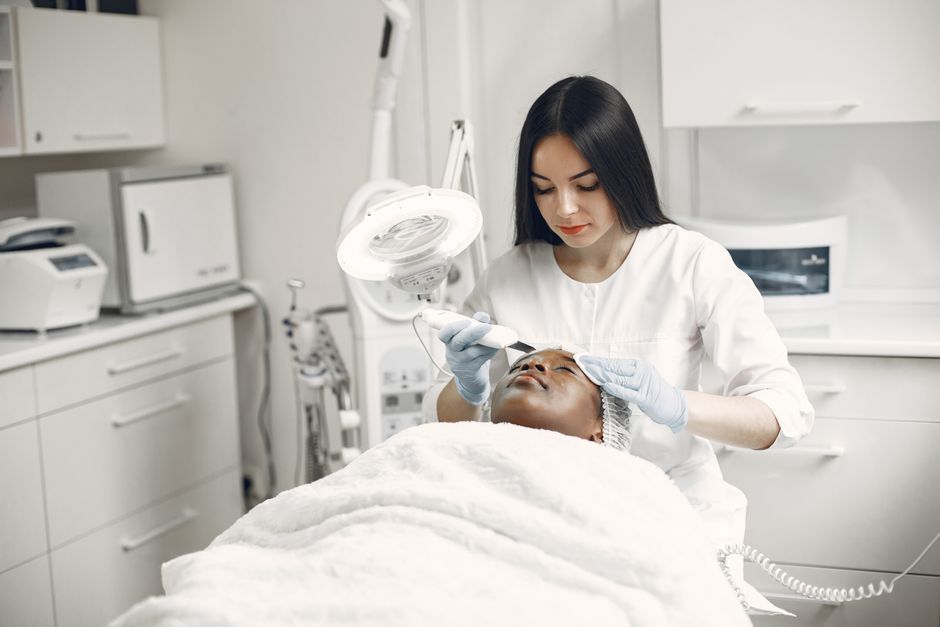 Hommage · Gangnam
Hommage Women's Clinic · Gangnam, Seoul
Skin type, redness and pigment are checked before any exfoliation is chosen. Illustrative photo.
 Hommage · Gangnam
Hommage Women's Clinic · Gangnam, Seoul
The glow is short-term, so timing matters more than anything else. Illustrative photo.
Timing
Diamond peel before a wedding or event: when to book
The most common reason people ask for a diamond peel is an upcoming date: a wedding, photo shoot, graduation or business trip. Because the effect fades as your skin renews itself, timing is everything. Too early and the glow has faded; too late and any pinkness or small breakouts may still be visible.
The sweet spot is about 3–7 days before the event. If you have never had a diamond peel, book a trial session a month or more ahead so you know how your skin reacts. Avoid starting new actives, waxing or other facial treatments in the final week.
Aftercare
Diamond peel aftercare: do's and don'ts
Freshly exfoliated skin is more sensitive to sun and to strong products for a few days. Clinical reviews of microdermabrasion note increased sun sensitivity for several days afterward, which is why sunscreen is the single most important aftercare step, especially for skin that darkens easily. Simple, gentle care for the first 48–72 hours keeps the glow and lowers the risk of irritation or dark marks.
Do
- Apply broad-spectrum SPF 30+ every morning and reapply outdoors
- Use a gentle cleanser and fragrance-free moisturizer
- Drink water and keep skin hydrated, especially in dry Seoul winters
- Use clean brushes if you wear makeup the same day
- Message the clinic if redness lasts more than a few days
Don't
- Use retinoids, scrubs or exfoliating acids for about 2–3 days
- Go to a sauna, jjimjilbang or pool on the day of treatment
- Do an intense workout the same day
- Pick at small bumps or flakes
- Book waxing or another facial treatment in the same week
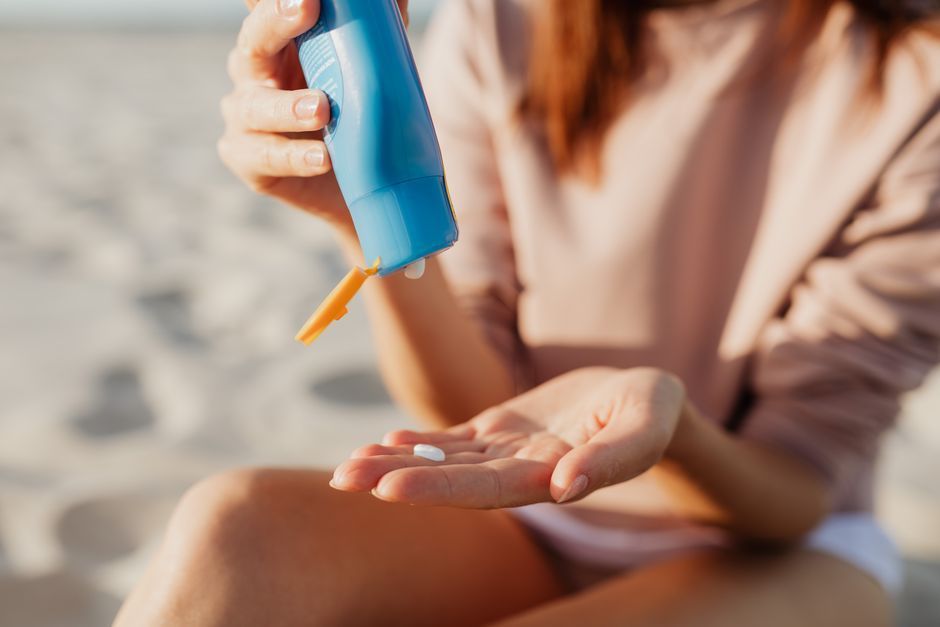 Hommage · Gangnam
Hommage Women's Clinic · Gangnam, Seoul
Sunscreen every day is the most important step after any exfoliation. Illustrative photo.
Routine
How often should you get a diamond peel, and what can it be combined with?
For most people, one session every 3–4 weeks is plenty. That spacing lets the skin barrier recover between treatments. Exfoliating more often does not give a better glow; it tends to cause tightness, redness and sensitivity, and over time can make skin look duller rather than brighter.
A diamond-style refresh can sit alongside other care. Hydrating treatments such asskin boostersor aKorean glass skin facialwork on moisture rather than the surface layer. Lasers, stronger chemical peels andRF microneedlingare usually spaced at least a week or two away from any exfoliation, so ask Dr. Hwang to plan the order with you.
At-home habits that keep the result longer
- A gentle, low-pH cleanser and a barrier-friendly moisturizer morning and night.
- Daily broad-spectrum sunscreen, even on cloudy days.
- No harsh scrubs or peeling gels between sessions.
- A humidifier in winter if your skin flakes in heated rooms.
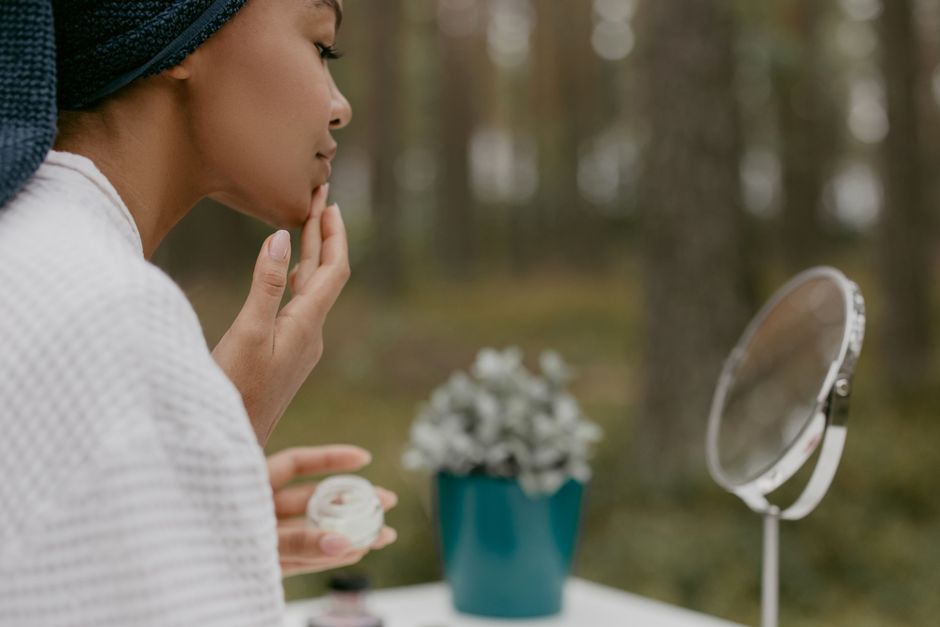 Hommage · Gangnam
Hommage Women's Clinic · Gangnam, Seoul
A simple moisturizing routine helps the skin barrier recover between sessions. Illustrative photo.
Evidence
Does a diamond peel really work? What the research says
Microdermabrasion has been used since the 1980s and is considered low-risk, but the research behind it is modest. Most studies are small, short and rely on how skin looks or feels rather than on long-term measurements. A medical reference review classes much of the supporting evidence as low level. The clearest findings are about what happens inside the skin after treatment, and how much the strength of the tip matters.
New collagen after one session
Wound-healing signals rose quickly in 49 volunteers, but new type I collagen was seen in only 2 of 11 tested.
Karimipour et al., J Am Acad Dermatol, 2005Adults in a diamond-tip study
A coarse diamond tip triggered collagen-building signals; a medium tip did not.
Karimipour et al., Arch Dermatol, 2009Typical redness
All participants in the 2009 study had mild redness that usually lasted under two hours.
Arch Dermatol, 2009Weekly sessions in a series
The usual course when microdermabrasion is used for texture rather than a one-off glow.
StatPearls: Microdermabrasion, 2023Traveling to Seoul
Diamond peel in Seoul for international patients
A diamond-style refresh is one of the easiest skin treatments to fit into a trip to Seoul. There is no numbing, no visible peeling and usually no follow-up visit, so a single appointment of about an hour, including the skin check, is enough. Hommage Women's Clinic is in Gangnam, a short walk from Sinnonhyeon Station (Line 9 and Shinbundang Line).
Planning tips
- Book early in your stay, not on your last day, so any pinkness settles before photos or a flight.
- Avoid scheduling it right after a long-haul flight, when skin is often dehydrated and more reactive.
- Pack a high-SPF sunscreen and a hat: city walking and sightseeing mean more sun on freshly exfoliated skin.
- Bring your passport for registration and a list of skincare and medicines you use, especially retinoids or isotretinoin.
- Message the clinic by WhatsApp, KakaoTalk or the contact form before you arrive to arrange language support.
 Hommage · Seoul
Hommage Women's Clinic · Gangnam, Seoul
Gangnam, Seoul: the clinic is a short walk from Sinnonhyeon Station. Illustrative photo.
 Hommage · Gangnam
Hommage Women's Clinic · Gangnam, Seoul
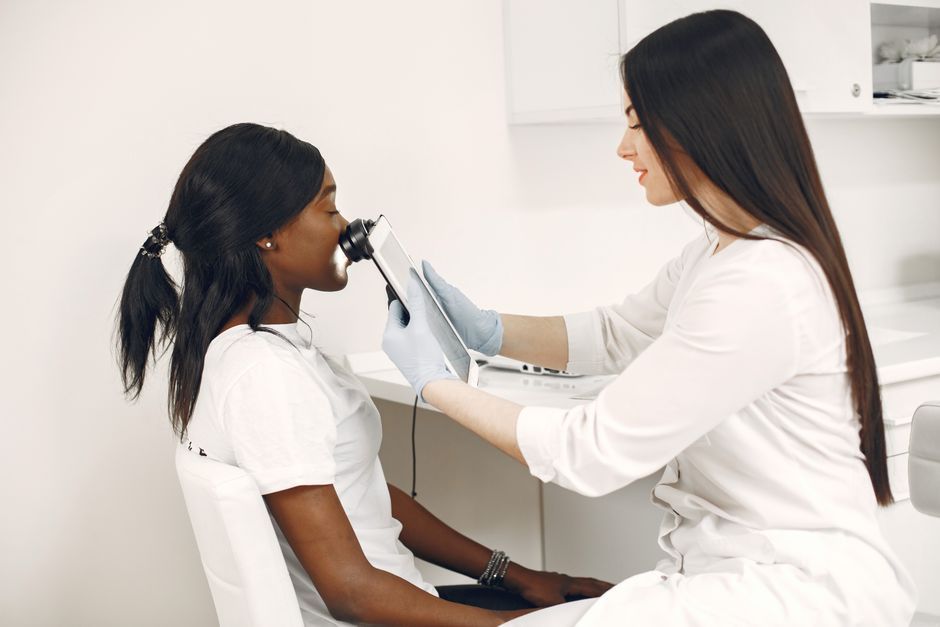
A doctor-led skin check comes before any exfoliation. Illustrative photo.
Choosing well
How to choose a clinic for a diamond peel in Seoul
Diamond peels are offered everywhere from spas to dermatology clinics in Gangnam. The device is simple; what matters is who decides whether it is right for your skin. Ask these questions anywhere, including here:
- Does a doctor check my skin first? Rosacea, melasma and active acne should be spotted before any buffing.
- Will they tell me if it is not right for me? A good clinic suggests a gentler option rather than selling a package.
- Are tips cleaned or replaced between clients? Ask how the handpiece and tips are disinfected.
- Do they ask about isotretinoin and retinoids? Recent use changes what is safe.
- Are claims realistic? Be wary of promises to erase scars, wrinkles or pigment.
- Do I get aftercare and a written quote? Both should be clear before treatment starts.
What affects diamond peel cost in Seoul?
The price depends on whether you book a single refresh or a series, whether it is combined with soothing or hydrating care such as LDM or cryo, and whether a doctor or therapist performs it. Add-ons like masks or serums also change the total. Exfoliating facials are cosmetic and not covered by Korea's National Health Insurance, and you receive a written quote before anything starts.
Your visit
What to expect at your refresh appointment
01
Skin check
Dr. Hwang looks at texture, redness, breakouts and pigment, and asks about medications, isotretinoin and recent treatments.
02
Choosing the option
You agree on the gentlest exfoliation that meets your goal and timeline, with a written quote.
03
Treatment
A short session with no anesthesia, so it fits easily around work or a trip.
04
Aftercare
Sunscreen goes on, and you get advice on actives to pause and when to repeat.

Your doctor
Dr. Hwang Seonhwa
Physician · Skin & Aesthetic Treatments
Dr. Hwang treats a diamond peel as a short-term refresh rather than a corrective treatment, and asks about upcoming events so a session can be timed with enough margin for any redness to settle. Skin with melasma, rosacea or active acne is steered toward care that will not aggravate it.
Physician for face and skin procedures, including lifting, laser and skin-improvement treatments, planned around facial proportions and skin condition.
Diamond peel: frequently asked questions
Is a diamond peel a chemical peel?
No. A diamond peel is a mechanical exfoliation, not a chemical peel. A diamond-coated tip buffs away dead cells and suction removes them, without any acid. The word “peel” refers to the exfoliating effect, and you usually do not see visible peeling afterward, unlike with stronger chemical peels.
Does a diamond peel hurt?
Most people find a diamond peel comfortable. It feels like gentle buffing with light suction, and numbing is not needed. Thin or bony areas can feel more sensitive. Your skin may feel warm and slightly tight for a few hours afterward.
How long before an event should I get a diamond peel?
About 3–7 days before is a sensible window. That gives any pinkness or small breakouts time to settle while the glow is still fresh. If you have never had one, try it well before an important date so you know how your skin reacts.
How often can I get a diamond peel?
For maintenance, about once every 3–4 weeks is common, which roughly matches how often the skin renews its outer layer. More frequent sessions can irritate the skin barrier and cause redness or dryness. Your doctor may space them further apart if your skin is sensitive.
Can I wear makeup after a diamond peel?
Usually yes, the same day or the next morning if your skin is not irritated. Use clean brushes and non-comedogenic products, and remove makeup gently. Many people find makeup sits more smoothly after exfoliation. Pause retinoids and exfoliating acids for about 2–3 days.
Can foreigners get a diamond peel in Seoul?
Yes. International patients and foreign residents can book a skin assessment at Hommage Clinic and should bring a passport for registration. Because downtime is minimal, a refresh treatment fits easily into a short trip. Please contact us before your visit to arrange language support.
Does a diamond peel help acne scars or wrinkles?
Not in a meaningful way. A diamond peel works on the surface layer of dead cells, so scars and wrinkles that sit deeper in the skin are not corrected. Research on collagen changes after microdermabrasion used aggressive settings and showed mixed results. For scars, treatments such as fractional laser or RF microneedling have better evidence.
Is a diamond peel safe for sensitive skin or rosacea?
It depends. Mildly sensitive skin often tolerates a gentle setting, but rosacea and visible broken capillaries are usually reasons to avoid friction, because buffing can increase redness. Dr. Hwang may suggest an enzyme peel facial or soothing care instead.
Is a diamond peel safe if I have melasma?
It is usually not recommended. Friction and heat can trigger more pigment in melasma, especially in Asian skin. Melasma is better managed with a dedicated plan of sun protection and targeted treatment; see our melasma treatment page.
Can I get a diamond peel while taking isotretinoin?
Exfoliating procedures are usually postponed during isotretinoin and for a period after stopping, because the skin is thinner and heals more slowly. The exact wait depends on your dose and skin, so tell your doctor if you have taken it recently.
Diamond peel or crystal microdermabrasion: which is better?
Both remove the outer layer of dead cells. Diamond-tip systems have no loose crystals, so there is no grit near the eyes and they suit people with an aluminum allergy. Crystal systems can feel slightly stronger. The skill and settings matter more than the type. See microdermabrasion for more.
Will my skin peel after a diamond peel?
Usually not visibly. Most people have light pinkness for a few hours and perhaps mild dryness or fine flaking for a day or two. Visible sheets of peeling are more typical of stronger chemical peels.
Can I get a diamond peel during pregnancy?
Mechanical exfoliation uses no acids, so it is sometimes chosen during pregnancy, but skin can be more sensitive and prone to pigment at this time. Tell your doctor you are pregnant so the settings and aftercare products can be chosen carefully.
References
Sources used for this page, reviewed by Dr. Hwang Seonhwa. Read our editorial and medical review policy.
- Microdermabrasion. In: StatPearls. Treasure Island (FL): StatPearls Publishing; updated 2023. NCBI Bookshelf
- Karimipour DJ, Kang S, Johnson TM, et al. Microdermabrasion: a molecular analysis following a single treatment. J Am Acad Dermatol. 2005;52(2):215–223. PubMed
- Karimipour DJ, Rittie L, Hammerberg C, et al. Molecular analysis of aggressive microdermabrasion in photoaged skin. Arch Dermatol. 2009;145(10):1114. doi:10.1001/archdermatol.2009.231
- Microdermabrasion: an evidence-based review. PubMed
This page is general information and does not replace a personal consultation. Illustrations are original works of Hommage Women's Clinic, Gangnam, Seoul; photos marked illustrative are not of patients.
Related exfoliation treatments
Microdermabrasion
How crystal and diamond-tip exfoliation work, and what a full series can do.
Enzyme Peel Facial
Gentle fruit-enzyme exfoliation for sensitive or reactive skin.
Skin Scaling
The Korean clinic facial that combines exfoliation and deep pore cleansing.
HydraFacial-Style Facial
Water-based exfoliation with suction and hydrating serums.
Korean Glass Skin Facial
Hydration-focused care for a dewy look, with realistic expectations.
Skin Boosters
Injectable hydration with effects that typically last months, not days.
Plan a refresh that fits your skin and your date
Book a skin check with Dr. Hwang Seonhwa in Gangnam to choose a gentle exfoliation for your skin type and time it safely before your event.
Hommage Clinic · 4F, Building A, 509 Gangnam-daero, Seoul (near Sinnonhyeon Station) · Mon & Fri 10:00–20:00 · Tue–Thu 10:00–19:00 · Sat 10:00–15:00