
Sexual health · Treatment options
Low Libido Treatment for Women in Gangnam: Your Options Compared
Low libido treatment means improving sexual desire by treating what is lowering it, such as pain, vaginal dryness, medication side effects, hormonal change, stress or relationship strain, using medical care, counseling and, for some women, medication. At Hommage Clinic in Gangnam, Seoul, OB/GYN specialist Dr. Park Yuna matches each option to the cause found at your assessment.
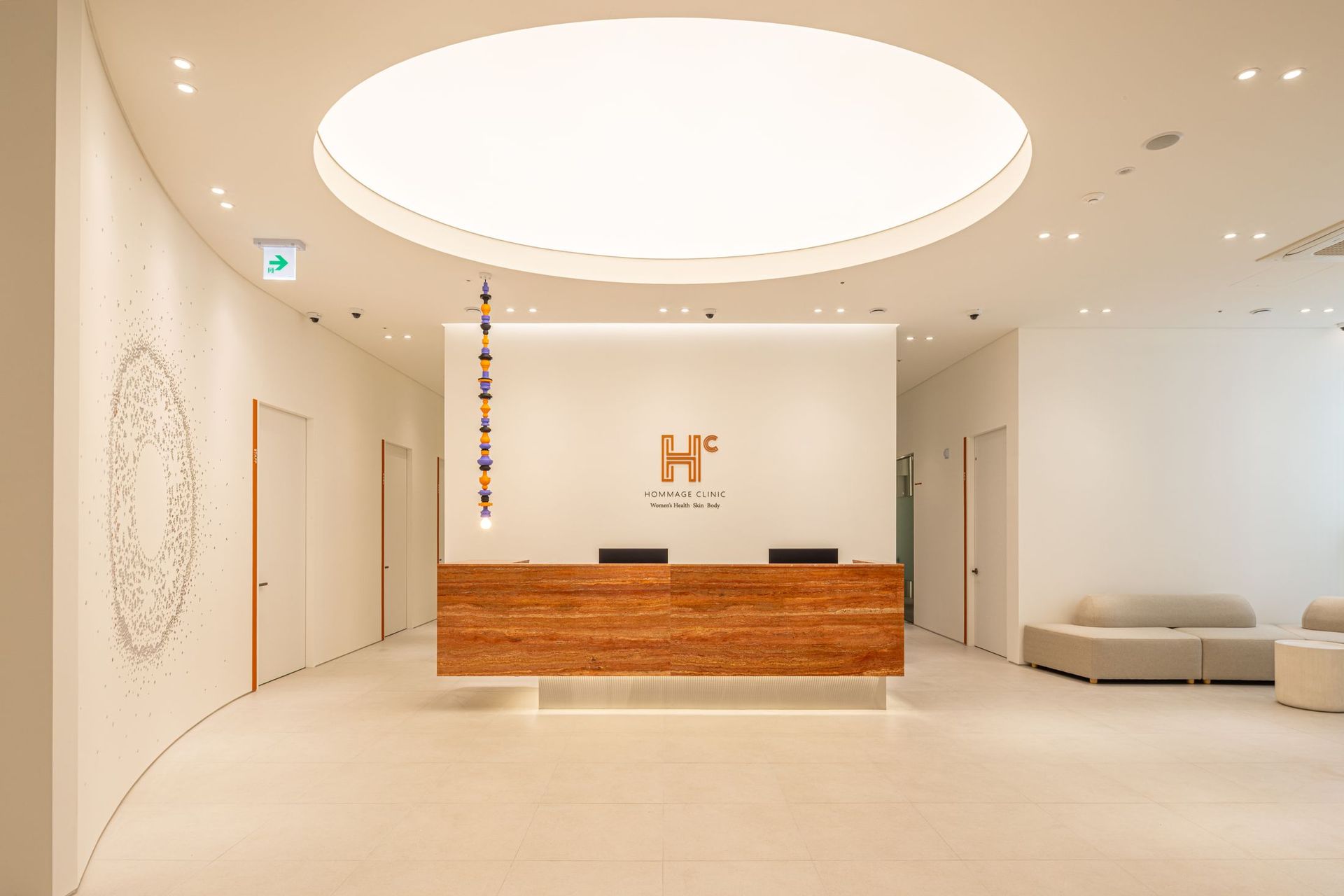
Quick answer
Low libido treatment for women works best when it targets the causes: treating pain or dryness, reviewing medicines, counseling or sex therapy and, for selected women, hormonal treatment. At Hommage Women's Clinic in Gangnam, Seoul, female OB/GYN specialist Dr. Park Yuna assesses you first, explains what the evidence shows for each option, and reviews progress after about 6–12 weeks. Libido medicines exist, but in trials their average benefit was modest.
Key takeaways
- There is no single pill that fixes low desire; most plans combine two or three approaches.
- Treating pain or dryness is often the fastest win.
- Testosterone is evidence-based only for selected postmenopausal women, and the gain is modest.
- Flibanserin and bremelanotide give small average benefits and have notable side effects.
- Injections and lasers have no good evidence for raising desire.
Infographic
Low libido treatment in numbers
First review
Follow-up to check progress and side effects at Hommage.
Testosterone trial
Reviewed after 3–6 months and stopped if there is no benefit by about 6 months.
Flibanserin effect
Extra satisfying sexual events per month vs placebo, pooled from 8 trials.
Testosterone effect
About one extra satisfying sexual event a month in postmenopausal women.
Nausea with bremelanotide
vs 1.3% with placebo in two 24-week trials.
Approaches combined
Most effective plans use more than one type of treatment.
Low libido treatment at a glance
| Key fact | Details |
|---|---|
| First step | Finding the cause: history, exam and targeted blood tests |
| Main options | Treating pain or dryness, medication review, counseling or sex therapy, hormonal therapy |
| Hormonal options | Vaginal estrogen, menopausal hormone therapy, testosterone for selected postmenopausal women |
| Prescription libido drugs | Flibanserin and bremelanotide are US-approved; availability in Korea is limited |
| When to expect change | Often gradual, over 2–3 months; testosterone is reviewed at 3–6 months |
| Follow-up | Usually after 6–12 weeks, then as needed |
| Reviewed by | Dr. Park Yuna, OB/GYN specialist |
Treatment may help if you have
- Low desire that has lasted for months and distresses you
- Pain, dryness or discomfort that makes sex something to avoid
- Lower desire since starting an antidepressant or hormonal contraception
- Lower desire around perimenopause, menopause or after removal of the ovaries
Talk to us first, before hormonal options, if you
- Are pregnant, breastfeeding or trying to conceive
- Have had breast cancer or another hormone-sensitive cancer
- Have had a blood clot, stroke or heart disease, or have uncontrolled high blood pressure
- Drink alcohol regularly, which affects some libido medicines
How is low libido treated?
Low libido is treated by addressing its causes, not with a single pill. Most women have more than one contributing factor, so the most effective plan usually combines two or three approaches, such as treating dryness, adjusting a medication and making time for counseling.
Treatment starts with an assessment, explained on our page about causes of low sex drive . Once the likely causes are clear, Dr. Park explains the options below, what each can and cannot do, and how long it takes to see whether it is working. You decide which to try.
Treating pain, dryness and other physical causes
If sex hurts, desire almost always falls, so treating pain is often the most effective first step.
- Dryness and thinning after menopause: low-dose vaginal estrogen restores moisture and elasticity in genitourinary syndrome of menopause (GSM), and absorption into the bloodstream is very low. Moisturizers and lubricants help too. See vaginal dryness treatment .
- Pain during sex: the cause may be dryness, infection, endometriosis or tight pelvic floor muscles. Our page on painful intercourse treatment covers each.
- Tight or weak pelvic floor: guided pelvic floor treatment can ease muscle tension and improve sensation.
- Other conditions: treating an underactive thyroid, anemia, high prolactin or poorly controlled diabetes can lift energy and desire.
Counseling and sex therapy
Counseling and sex therapy have good evidence for low desire, especially when stress, anxiety, past experiences or relationship patterns are involved. They can be used alone or alongside medical treatment.
- Cognitive behavioral therapy (CBT): helps change unhelpful thoughts about sex and performance.
- Mindfulness-based approaches: train attention on physical sensations rather than worries, and have been shown to improve desire and satisfaction.
- Sensate focus and couples therapy: structured exercises and guided conversations that reduce pressure and rebuild intimacy.
Dr. Park can refer you to a counselor or sex therapist and explain what to expect. Simple changes, such as better sleep, less alcohol and protected time together, also make a real difference for many couples.
Hormonal and medication options
Medication is considered once physical and relationship factors have been addressed, or alongside them. The main options are:
- Medication review: if an antidepressant may be involved, your prescriber may adjust the dose or switch to an option with fewer sexual side effects, such as bupropion. If hormonal contraception may be involved, a different pill or a non-hormonal method can be tried.
- Menopausal hormone therapy: relieves hot flashes, poor sleep and dryness, which often helps desire indirectly. Tibolone, used in Korea, may also improve sexual function in some postmenopausal women. See hormone replacement therapy .
- Testosterone: international guidance supports a trial of low-dose, transdermal testosterone for postmenopausal women with distressing low desire, with blood tests to keep levels in the normal female range. It is stopped if there is no benefit after about six months. No testosterone product is licensed specifically for women in most countries, so it is prescribed off-label.
- Flibanserin and bremelanotide: approved in the United States for premenopausal women with low desire. In trials, the average benefit was modest. Availability outside the US is limited and neither is routinely available in Korea, so ask us about current options before you travel.
Sildenafil (Viagra) is not approved for women and does not increase desire, though it has helped some women with arousal problems linked to antidepressants.
Risks and possible side effects of libido treatment
Every treatment has trade-offs, and Dr. Park will go through them with you before you start.
- Vaginal estrogen: occasional spotting, discharge or irritation; women with a history of breast cancer need an individual discussion.
- Systemic hormone therapy: a small increase in the risk of blood clots and stroke with tablets, and breast cancer risk depends on the type and duration.
- Testosterone: acne and unwanted hair growth; voice changes or hair loss are rare at female doses. It must not be used in pregnancy, and long-term safety data are limited.
- Flibanserin: dizziness, sleepiness and fainting, especially with alcohol.
- Bremelanotide: nausea, flushing, a temporary rise in blood pressure and skin darkening with repeated use.
Avoid “libido boosters” sold online, as some have been found to contain hidden prescription drugs. Call the clinic promptly if you develop leg swelling or pain, chest pain, sudden headache, unexpected bleeding or worsening mood during treatment.
Do injections or lasers increase libido?
There is no good evidence that injections or energy devices increase sexual desire. Treatments such as PRP injections (for example the O-Shot ), G-spot fillers and vaginal lasers are sometimes marketed for sexual satisfaction, but studies are small and results vary. In 2018 the US FDA warned against marketing energy devices for sexual function claims.
Where they may have a place is in treating a physical cause. For example, vaginal laser therapy is sometimes used for dryness after menopause in women who cannot use estrogen. Dr. Park will tell you honestly whether a procedure is likely to help your specific problem.
Low libido treatment at Hommage Clinic
At Hommage Clinic in Gangnam, a short walk from Sinnonhyeon Station, low libido care is led by Dr. Park Yuna, a female OB/GYN specialist. Exams, ultrasound and blood tests can usually be done in one visit, and treatment for dryness, pain, menopause and pelvic floor problems is available in the same clinic. See our full range of cosmetic and functional gynecology services.
Costs depend on the tests and treatments you choose. If you are enrolled in Korea's National Health Insurance, many consultations, tests and medical treatments are covered, while cosmetic procedures are not. We give you a written quote before treatment, and you can contact us before your visit to arrange language support.
Choosing a treatment
Which low libido treatment is right for me?
The right starting point depends on what the assessment finds. This map shows how a cause leads to a first-line treatment. Most women follow more than one path at the same time, for example treating dryness while also starting counseling. Medicines aimed directly at desire come later, once fixable causes have been addressed.
Non-drug treatment
Sex therapy and mindfulness for low libido: what happens in sessions
Many women are unsure what sex therapy involves. It is a form of talking therapy: there is no physical contact or examination, and sessions are with a trained counselor, alone or with a partner. Typical courses run for several weekly or fortnightly sessions, with short exercises to practice at home.
What you may work on
- Understanding desire: learning about responsive desire and what helps or blocks arousal for you.
- Mindfulness: short daily practices that train attention on body sensations rather than worries or self-judgment during intimacy.
- Thoughts and beliefs: noticing and changing thoughts such as 'something is wrong with me' or pressure to perform.
- Sensate focus: structured, non-demanding touch exercises for couples, with intercourse paused at first to remove pressure.
- Communication: practical ways to talk about wants, limits and timing.
Counseling is often combined with medical care. For example, a woman treating menopause-related dryness may also attend a few sessions to rebuild confidence after months of painful sex. Dr. Park can refer you and coordinate with your counselor.
 Hommage · Gangnam
Hommage Women's Clinic · Gangnam, Seoul
Short daily mindfulness practice is part of many sex therapy programs. Illustrative photo.
 Hommage · Gangnam
Hommage Women's Clinic · Gangnam, Seoul
Medicines aimed at desire are discussed once fixable causes are addressed. Illustrative photo.
Medicines compared
Testosterone vs flibanserin vs bremelanotide for female libido
Three medicines are studied specifically for low desire in women. All have modest average effects, and none suits everyone. The cards summarize what trials show.
Testosterone
- Low-dose cream or gel on the skin
- About 1 extra satisfying event a month
- Acne, hair growth possible
- Blood levels kept in the female range
Flibanserin
- Daily tablet at bedtime (US-approved)
- About 0.5 extra satisfying events a month
- Dizziness, sleepiness, nausea
- Alcohol increases fainting risk
Bremelanotide
- Self-injection before sex (US-approved)
- Small gains in desire and less distress
- Nausea in about 40% in trials
- Flushing, headache, short rise in blood pressure
Flibanserin and bremelanotide are not routinely available in Korea. Testosterone is prescribed off-label for women in most countries, at doses close to natural female levels. Products made for men, injections, pellets and compounded preparations give much higher levels and are not recommended.
If testosterone is an option
Testosterone therapy for women: monitoring timeline
For postmenopausal women with distressing low desire, a trial of testosterone is a structured process, not an open-ended prescription. International guidance recommends a full assessment first, a baseline blood level, checks after starting to make sure levels stay in the normal female range, and a clear point at which to stop if it is not helping.
Everyday steps
Helping treatment work: do's and don'ts
Medical treatment works better when daily life supports it. These practical points come up in almost every consultation.
Helpful habits
- Protect sleep and plan unhurried time together
- Use a good lubricant and allow time for arousal
- Keep a short diary of changes to bring to follow-up
- Tell us about all medicines and supplements
- Talk openly with your partner about the plan
Common pitfalls
- Stop antidepressants or contraception on your own
- Buy libido boosters or hormones online
- Use testosterone products made for men
- Mix flibanserin with alcohol
- Expect results in days; most change takes weeks
 Hommage · Gangnam
Hommage Women's Clinic · Gangnam, Seoul
Relaxed time together without pressure helps treatment work. Illustrative photo.
Realistic expectations
How long does low libido treatment take to work?
Different treatments work on different timescales. Knowing roughly when to expect change helps you judge whether a treatment is working and avoid giving up too early, or continuing something that is not helping. The chart shows typical windows used at Hommage for review; individual responses vary.
Evidence
Low libido treatment: what the research says
Research on desire medicines in women is more extensive than for many intimate treatments, but the results are humbling: on average, each medicine adds less than one or about one extra satisfying sexual event a month compared with placebo, and side effects are common. That is why treating causes and counseling remain the foundation of care.
Flibanserin gain
Extra satisfying sexual events per month vs placebo; 8 trials, 5,914 women. Dizziness about 4 times as likely.
Jaspers et al., JAMA Intern Med, 2016Testosterone gain
Extra satisfying sexual events per month in postmenopausal women; 36 trials, 8,480 women overall.
Islam et al., Lancet Diabetes Endocrinol, 2019Bremelanotide trials
Women in two 24-week trials; small gains in desire, nausea in 40% vs 1.3% on placebo.
Kingsberg et al., Obstet Gynecol, 2019Evidence-based hormone
Testosterone for postmenopausal low desire is the only indication with international consensus.
Global Consensus Position Statement, 2019Traveling to Seoul
Low libido treatment in Seoul for international patients
Low libido care is mostly ongoing, so a short trip to Seoul is best used for a thorough assessment and a clear plan, with treatment continued at home. At Hommage Women's Clinic in Gangnam, the consultation, exam, ultrasound and blood draw can usually be done in one visit.
Planning your stay
- Plan 2–5 days if you want to discuss blood results in person.
- If a medicine is started, ask how it can be continued and monitored in your home country, since availability differs.
- Testosterone needs blood tests during treatment; arrange these with a local doctor before starting.
What to bring
- Passport or residence card
- All current medicines, including contraception and antidepressants, in their packaging or as a list
- Recent blood results or scans
Contact us by WhatsApp, KakaoTalk or the contact form before you travel, especially if you need language support. You can ask for a written summary of your plan for your own doctor.
 Hommage · Seoul
Hommage Women's Clinic · Gangnam, Seoul
The clinic is a short walk from Sinnonhyeon Station (Line 9 and Shinbundang Line). Illustrative photo.
 Hommage · Gangnam
Hommage Women's Clinic · Gangnam, Seoul
Good care offers counseling as well as medical options. Illustrative photo.
Choosing well
How to choose a clinic for low libido treatment in Seoul
Many products and procedures are marketed as libido boosters. Use these questions at any clinic, including ours:
- Is there an assessment before treatment? Treatment without finding the cause is guesswork.
- Is the doctor a specialist? An OB/GYN can examine for pain, dryness and hormonal causes.
- Do they explain realistic benefits? Expect honest numbers, not promises.
- Is hormone monitoring planned? Testosterone needs blood tests and a review date.
- Do they avoid unproven procedures for desire? Injections and lasers are not evidence-based for libido.
- Is counseling part of the plan? It is a core treatment, not an extra.
What affects the cost of low libido treatment?
Cost depends on the tests needed, which medicines are prescribed and for how long, how many follow-up visits and blood tests are required, and whether counseling sessions are included. Many consultations, tests and medical treatments are covered for patients enrolled in Korea's National Health Insurance; cosmetic procedures are not. You receive a written estimate before starting.
Your visit
How treatment is planned
01
Assessment
A private consultation, pelvic exam with your consent, and blood tests chosen for your symptoms and age.
02
Options explained
Dr. Park explains which causes are likely and which treatments fit, including what the evidence shows and the side effects.
03
Start treatment
You choose where to start, for example treating dryness, adjusting a medication or arranging counseling.
04
Review
A follow-up after about 6–12 weeks to check progress and side effects, and to adjust or stop treatment.

Your doctor
Dr. Park Yuna
Medical Director · OB/GYN Specialist
Dr. Park treats low libido as a set of solvable problems rather than a single diagnosis. She starts with the cause most likely to be holding desire back, such as pain or a medication, and explains the evidence and side effects of each option so you can choose.
OB/GYN specialist (Korea) and representative director of Hommage Clinic. Leads the clinic's women's health care, from screening and infections to hormones, contraception and fertility checks.
Low libido treatment: frequently asked questions
Is there a pill for low libido in women?
There are two prescription medicines for low desire in premenopausal women, flibanserin (a daily tablet) and bremelanotide (an injection before sex), both approved in the United States. Their average benefit in trials was modest, and they are not routinely available in Korea. For most women, treating the underlying causes is more effective.
Does Viagra work for women?
Not for low desire. Sildenafil (Viagra) increases blood flow to the genitals but does not raise interest in sex, and it is not approved for women. Some studies show it may help arousal or orgasm problems linked to antidepressants. Ask your doctor before trying it, because it interacts with some heart medicines.
Can testosterone help female libido?
It can help some postmenopausal women with distressing low desire. Low-dose transdermal testosterone is given with blood tests to keep levels in the normal female range, and it is stopped if there is no improvement after about six months. It is not recommended for premenopausal women, during pregnancy or simply because a blood level looks low.
How long does low libido treatment take to work?
Most treatments work gradually. Vaginal estrogen usually eases dryness within a few weeks, with full effect by about three months. Counseling often takes several sessions, and testosterone is reviewed after 3–6 months. A follow-up appointment lets Dr. Park check progress and change the plan if something is not helping.
Will vaginal estrogen improve my sex drive?
It does not raise desire directly, but it can make sex comfortable again by treating dryness and thinning after menopause. When pain is the main reason you avoid sex, desire often returns once sex no longer hurts. Read more about vaginal dryness treatment.
Do libido supplements work?
There is little reliable evidence that herbal or over-the-counter libido supplements work, and some products sold online have been found to contain undeclared prescription drugs. If you take any supplement, bring it to your appointment so Dr. Park can check it for interactions with your other medicines.
Can foreigners get low libido treatment in Seoul?
Yes. International patients and foreign residents can book an appointment at Hommage Clinic in Gangnam. Bring your passport or residence card and a list of your medications, including any prescribed at home. Walk-ins are welcome during opening hours; please contact us before your visit to arrange language support.
How well does flibanserin work?
Modestly. A review of 8 trials with nearly 6,000 women found that flibanserin added about half an extra satisfying sexual event per month compared with placebo, while dizziness, sleepiness and nausea were more common. It must not be combined with heavy alcohol use.
What are the side effects of bremelanotide?
In two 24-week trials, nausea affected about 40% of women using bremelanotide compared with about 1% on placebo. Flushing and headache were also common, and blood pressure can rise briefly after each injection. Repeated use can darken areas of skin.
Can premenopausal women use testosterone for low libido?
International consensus guidance found insufficient evidence to recommend testosterone for premenopausal women. It is also unsafe in pregnancy. Treating other causes, counseling and, where appropriate, medicines made for premenopausal women are considered first.
Does sex therapy really help low desire?
For many women, yes, especially when stress, anxiety, past experiences or relationship patterns are involved. Approaches such as CBT, mindfulness-based therapy and sensate focus have few side effects and can be combined with medical treatment. Results build over several sessions.
Can the O-Shot or vaginal laser increase my libido?
There is no good evidence that PRP injections such as the O-Shot or vaginal lasers increase desire, and the US FDA has warned against marketing energy devices for sexual function. A laser may sometimes be used for menopause-related dryness, which can make sex more comfortable.
Should my partner be involved in treatment?
It is your choice. Many women start alone, and a partner can join later for education or couples counseling. When communication or differences in desire are part of the problem, involving a partner often helps.
References
Sources used for this page, reviewed by Dr. Park Yuna, OB/GYN specialist. Read our editorial and medical review policy.
- Davis SR, Baber R, Panay N, et al. Global consensus position statement on the use of testosterone therapy for women. J Clin Endocrinol Metab. 2019;104(10). doi:10.1210/jc.2019-01603. PMC
- Islam RM, Bell RJ, Green S, Page MJ, Davis SR. Safety and efficacy of testosterone for women: a systematic review and meta-analysis of randomised controlled trial data. Lancet Diabetes Endocrinol. 2019;7(10):754–766. DOI
- Jaspers L, Feys F, Bramer WM, et al. Efficacy and safety of flibanserin for the treatment of hypoactive sexual desire disorder in women: a systematic review and meta-analysis. JAMA Intern Med. 2016. DOI
- Kingsberg SA, Clayton AH, Portman D, et al. Bremelanotide for the treatment of hypoactive sexual desire disorder: two randomized phase 3 trials. Obstet Gynecol. 2019.
- US Food and Drug Administration. Statement on efforts to safeguard women's health from deceptive health claims and significant risks related to devices marketed for use in medical procedures for vaginal rejuvenation. 2018.
This page is general information and does not replace a personal consultation. Illustrations are original works of Hommage Women's Clinic, Gangnam, Seoul; photos marked illustrative are not of patients.
Related women's health services
Low Sex Drive
Why desire drops, from hormones and medications to stress and pain, and how it is assessed.
Vaginal Dryness Treatment
Moisturizers, lubricants, vaginal estrogen and other options for dryness compared.
Painful Intercourse Treatment
Finding and treating the causes of pain during or after sex.
Hormone Replacement Therapy
Benefits and risks of menopausal hormone therapy, explained in depth.
Pelvic Floor Treatment
Care for weak or overly tight pelvic floor muscles, including pain during sex.
Low Estrogen Treatment
Care for low estrogen at any age, after childbirth, early menopause or intense training.
Talk through your treatment options
Book a private consultation with Dr. Park Yuna in Gangnam to find what is affecting your desire and which treatment fits.
Hommage Clinic · 4F, Building A, 509 Gangnam-daero, Seoul (near Sinnonhyeon Station) · Mon & Fri 10:00–20:00 · Tue–Thu 10:00–19:00 · Sat 10:00–15:00