Skin & Aesthetics · Thread lifting
Thread Lifting in Seoul: How Absorbable Threads Lift the Face
A thread lift is a non-surgical procedure in which fine, absorbable threads with tiny barbs or cones are placed under the skin to reposition sagging tissue and stimulate collagen as they dissolve. At Hommage Clinic in Gangnam, Seoul, thread lifts use MINT PDO and Silhouette Soft threads under local anesthesia, with thread type and direction planned for your face and reviewed by Dr. Kim Hyunbin.
Quick answer
A thread lift places fine absorbable threads with barbs or cones under the skin to reposition mild to moderate sagging of the cheeks, jowls and jawline, then stimulates collagen as the threads dissolve. At Hommage Women's Clinic in Gangnam, Seoul, it is done under local anesthesia in about 30–60 minutes with MINT PDO or Silhouette Soft threads, with the plan reviewed by Dr. Kim Hyunbin. Bruising and swelling usually settle in 1–2 weeks, and results typically last about a year (roughly 6–18 months).
Key takeaways
- Threads reposition tissue; they do not remove skin, so heavy sagging is better treated surgically.
- Swelling and bruising are common; skin dimpling, visible threads and temporary numbness are the main specific risks.
- Satisfaction is high straight after treatment but falls over time, because the lift gradually softens.
- Evidence on long-term durability is limited; most studies are small and short.
- International patients should plan to stay in Seoul for about a week for a check before flying.
Infographic
Thread lifting in numbers
Treatment time
Under local anesthesia; most people go home straight afterward.
Bruising & swelling
Usually settle within one to two weeks.
PDO absorbed
MINT PDO threads dissolve within about 6–8 months.
PLLA absorbed
Silhouette Soft cones and thread dissolve more slowly.
Typical result
Range about 6–18 months, depending on thread and face.
Swelling
Most common effect in a 26-study meta-analysis (Niu 2021).
Thread lifting at a glance
| Key fact | Details |
|---|---|
| Treatment time | Typically 30–60 minutes, depending on the number of threads and areas |
| Anesthesia | Local anesthesia at the entry points, with numbing cream beforehand |
| Sessions | Usually one; a top-up may be planned once the lift starts to soften |
| Downtime | Swelling, tightness and possible bruising, usually easing within 1–2 weeks |
| Results visible | Lift is visible at once; it settles over 2–4 weeks as swelling resolves |
| How long results last | Typically about 1 year, ranging from 6 to 18 months by thread and face |
| Performed by | A Hommage Clinic physician; treatment plan reviewed by Dr. Kim Hyunbin |
A thread lift may suit you if you have
- Mild to moderate sagging of the cheeks, jowls or jawline
- Deepening lines beside the nose and mouth from mid-face descent
- Good skin thickness and want a visible lift without incisions
- A lift from energy devices alone that has not been enough
Wait or choose another option if you
- Are pregnant or breastfeeding, or have an active skin infection
- Take blood thinners or have a bleeding disorder (discuss with the doctor first)
- Have a tendency to keloid scars or an autoimmune condition affecting healing
- Have heavy skin excess or very thin skin, where surgery or other options work better
How does a thread lift work?
A thread lift works in two ways: an immediate mechanical lift and a slower collagen response. Threads with small barbs or cones are passed under the skin with a fine needle or blunt cannula. Once in place, the barbs grip the soft tissue so the doctor can draw it gently upward along a planned direction (vector).
Over the following months the body breaks the thread down by hydrolysis, the same way absorbable surgical sutures dissolve. As this happens, a mild healing reaction forms new collagen around the thread path, which helps support the tissue after the thread itself has gone.
Types of lifting threads
- PDO (polydioxanone) barbed threads , such as MINT, have barbs along their length. MINT threads use molded barbs arranged around the thread for grip in several directions. PDO is usually absorbed within about 6–8 months.
- PLLA-based cone threads , such as Silhouette Soft, use small absorbable cones spaced along the thread. The thread material (poly-L-lactic acid) is absorbed more slowly, typically over about 12–18 months, and is known for collagen stimulation.
- Smooth or twisted mono threads do not lift; they are used in larger numbers to improve skin firmness and texture.
What can a thread lift treat?
Thread lifts are suited to mild to moderate sagging, where tissue needs repositioning rather than removal. Common areas include:
- Mid-face and cheeks: lifting tissue that has descended, which can soften the fold beside the nose.
- Jowls and jawline: restoring a cleaner jaw line. For a jaw- and chin-focused plan, see our V-line thread lift page.
- Under the chin and neck: mild laxity, often combined with treatment for fat under the chin.
- Brow: a subtle lift of the outer brow in selected cases.
Threads do not remove excess skin, so they are not a replacement for a surgical facelift when sagging is heavy. They can also be paired with energy-based lifting such as HIFU (Ulthera) or Thermage to tighten the skin around the lifted tissue.
What happens during a thread lift?
A thread lift is done in the clinic under local anesthesia and typically takes 30–60 minutes. Most people go home straight afterward.
- Planning: while you sit upright, the doctor marks entry points and lifting vectors based on how your tissue has descended.
- Anesthesia: numbing cream is applied, then small amounts of local anesthetic are injected at the entry points and along the thread paths.
- Placement: threads are inserted through tiny entry points with a needle or cannula, then the tissue is gently repositioned and the ends trimmed. You may feel pressure and a pulling sensation, but not sharp pain.
- Check: symmetry is checked with you sitting up, and cold packs are applied to limit swelling.
How long does a thread lift last, and what is recovery like?
Most thread lifts last about a year, with a typical range of 6–18 months depending on the thread type, the number of threads, your skin thickness and how much sagging you started with. Some of the immediate lift relaxes in the first weeks as the tissue settles, and the collagen response continues for several months.
Recovery is usually short but not zero. Expect swelling, tightness and tenderness for several days, and possible bruising that fades within 1–2 weeks. Small dimples near the entry points often smooth out on their own within days.
Aftercare for about 2–4 weeks: avoid opening your mouth very wide, chewing very hard foods, facial massage and pressure on the face, and sleep on your back for the first few nights if you can. Avoid saunas, alcohol and strenuous exercise for about a week, and postpone dental work for a few weeks.
Risks and possible side effects of thread lifting
Thread lifting is minimally invasive, but it is still a procedure under the skin and has real risks. Common, temporary effects include swelling, bruising, soreness when chewing or yawning, a feeling of tightness and small skin dimples or puckering.
Less common complications include visible or palpable threads, a thread end poking through the skin, uneven results or asymmetry, over-tightening, infection at an entry point, temporary numbness or altered sensation, and, rarely, nerve or salivary gland irritation or a small lump (granuloma) along the thread path. Most issues can be corrected by adjusting or removing a thread.
Contact the clinic if you notice increasing pain, redness, warmth or discharge, fever, a thread end you can feel through the skin, or asymmetry that does not improve after two weeks. Tell the doctor about blood thinners, supplements such as fish oil, and any previous threads or fillers.
Thread lift vs HIFU or Thermage: which is right for you?
Threads and energy devices solve different problems, so the choice depends on your tissue. A thread lift physically repositions tissue, so it gives a more immediate and visible lift, with some downtime. HIFU and Thermage tighten with heat and need 2–6 months for the full effect, with minimal downtime.
- Threads suit tissue that has already moved down, such as early jowls or mid-face descent.
- Energy devices suit skin that is loosening but still in place, or when you prefer no needles.
- Combination plans are common: threads for position, energy for skin firmness, and dermal fillers or collagen stimulators where volume loss is part of the problem.
Thread lifting at Hommage Clinic
Hommage Clinic is a women's health and skin clinic in Gangnam, a short walk from Sinnonhyeon Station, and welcomes walk-ins during opening hours. The clinic uses MINT PDO threads and Silhouette Soft threads, as well as other absorbable threads, and chooses the type and number for your face after assessing bone structure, skin thickness and how your tissue moves. Follow-up visits are planned around the healing stages.
Because Ulthera Prime, Thermage FLX and Tune Face are available in the same clinic, threads can be part of a single plan rather than a stand-alone procedure. See allskin and aesthetic treatmentsfor the full range.
Cost depends on the thread type, the number of threads or cones and any combined treatments. Cosmetic thread lifts are not covered by Korea's National Health Insurance. You receive a written quote before treatment, and you canbook a consultationto get one.
Mechanism
How a thread lift works, step by step
A thread lift combines two effects. The first is mechanical: barbs or cones along each thread catch the soft tissue under the skin, so the doctor can move descended cheek or jowl tissue a few millimetres upward along a planned direction, called a vector. The second is biological: as the absorbable thread slowly breaks down, the body lays down new collagen around its path, which helps support the repositioned tissue after the thread itself has gone.
Because the lift depends on the barbs holding tissue, results are best where the skin and fat have good thickness and the sagging is mild to moderate. Threads cannot remove loose skin, which is why heavy sagging is better served by surgery, and why threads are often combined with skin-tightening treatments such as HIFU or Thermage.
Thread types
MINT PDO vs Silhouette Soft: which thread is used for what?
Hommage Women's Clinic uses two main families of lifting thread, and many plans use both. MINT threads are made of polydioxanone (PDO), the same material as many dissolvable surgical sutures, with molded barbs arranged around the thread so it can hold tissue in more than one direction. Silhouette Soft threads are based on poly-L-lactic acid (PLLA) and carry small absorbable cones spaced along the thread; the material is absorbed more slowly and is known for its collagen-stimulating effect.
Neither thread is better for everyone. The choice depends on where you need support, how thick your skin is, and whether the priority is a firm hold along the jawline or a softer, longer-acting lift in the mid-face. Smooth mono threads are a third type: they do not lift, but are placed in larger numbers to improve firmness and texture. Dr. Kim Hyunbin reviews the plan and explains why a particular thread and number of threads is proposed for your face.
MINT thread
- Polydioxanone with molded barbs
- Firm grip in several directions
- Absorbed within about 6–8 months
- Often used for jowls and jawline
Silhouette Soft
- Poly-L-lactic acid with absorbable cones
- Gentler, spread-out hold
- Absorbed over about 12–18 months
- Known for collagen stimulation
Mono threads
- Smooth or twisted PDO threads
- Placed in larger numbers
- Improve firmness and texture
- Do not reposition tissue
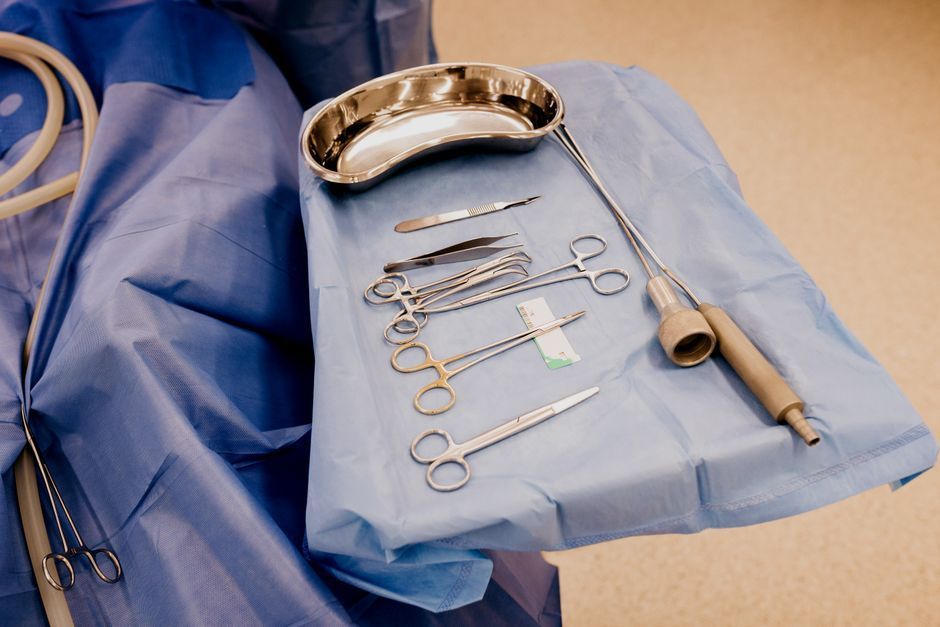 Hommage · Gangnam
Hommage Women's Clinic · Gangnam, Seoul
Lifting threads are sterile, single-use and dissolve on their own over months. Illustrative photo.
Compare
Thread lift vs HIFU vs Thermage at a glance
People searching for a non-surgical facelift in Seoul usually compare these three treatments. They are not interchangeable. A thread lift moves tissue that has already descended, so the change is visible straight away. HIFU (Ulthera) focuses ultrasound energy into deeper layers, including the SMAS, while Thermage heats the skin with radiofrequency. Both energy treatments tighten gradually, with the full effect building over 2–6 months and very little downtime.
In practice many plans combine them: threads for position, an energy device for skin quality, and sometimes filler or collagen stimulators where volume loss is part of the problem. For a jaw-focused plan, see jawline tightening RF and the V-line thread lift.
| Compare | Thread lift | HIFU / Thermage |
|---|---|---|
| Best suited to | Tissue that has already moved down: early jowls, mid-face descent | Skin that is loosening but still in place; prevention and maintenance |
| How it works | Barbs or cones physically reposition tissue; collagen forms as threads dissolve | Heat contracts collagen and triggers new collagen over months |
| When you see it | Immediately, settling over 2–4 weeks | Gradually, full effect at 2–6 months |
| Main trade-off | Swelling, bruising, possible dimpling; avoid wide mouth opening for weeks | Subtler change; heat discomfort during treatment |
 Hommage · Gangnam
Hommage Women's Clinic · Gangnam, Seoul
Your jawline and mid-face are assessed from the front and side, sitting upright. Illustrative photo.
Suitability
Who is a good candidate for a thread lift?
The best results are usually seen in adults with early to moderate sagging and reasonable skin thickness, often from their mid-thirties to fifties, who want a visible lift without surgery and accept that the effect is temporary. Age itself is less important than the quality of the tissue: thin, very lax skin gives the barbs less to hold, and in a large review the rate of skin dimpling was higher in patients over 50 than in younger patients.
Expectations matter as much as anatomy. A thread lift gives a refreshed, lifted look rather than the result of a surgical facelift, and the lift softens over months. If your main concern is volume loss, sun damage or muscle-related width of the jaw, other options such as filler or Botox may come first.
Often a good fit
- Early jowls or a softening jawline
- Mid-face descent deepening the nose-to-mouth fold
- Medium to good skin thickness
- Wants a visible lift with short downtime
- Accepts a temporary, gradual result
Another option may suit better
- Heavy skin excess or deep neck bands: surgery
- Very thin skin: energy devices or stimulators first
- Mainly volume loss: filler or collagen stimulators
- Wide jaw from muscle: jaw Botox
- Pregnant, infection, or bleeding risk: wait
Healing
Thread lift recovery and results timeline
Most people are back at a desk within a day or two, but a thread lift is not entirely downtime-free. Swelling, tightness and tenderness are strongest in the first several days, especially when chewing or yawning. Bruising, if it appears, usually fades within one to two weeks, and small dimples near the entry points often smooth out on their own within days. The lift itself is visible straight away, then relaxes slightly and settles over two to four weeks as swelling resolves.
After that, the threads slowly dissolve, PDO within about 6–8 months and PLLA more slowly, while collagen forms along their path. Most results last about a year, within a typical range of 6 to 18 months, and fade gradually rather than suddenly.
Aftercare
Thread lift aftercare: do's and don'ts
In the first weeks the barbs are still settling into the tissue, so the aim of aftercare is to avoid pulling the face into extreme positions or pressing on it. Following these instructions lowers the risk of a thread shifting, dimpling or asymmetry. You receive them in writing, and you can message the clinic with photos if something looks or feels wrong.
Do
- Use wrapped cold packs for short periods on the first day
- Sleep on your back, head slightly raised, for the first few nights
- Eat soft foods and chew gently for the first weeks
- Keep entry points clean and dry as instructed
- Take acetaminophen if needed for tenderness
- Attend your follow-up check
Don't (about 2–4 weeks)
- Open your mouth very wide or chew very hard foods
- Have facial massage, or press and rub the face
- Use saunas, drink alcohol or exercise hard for about a week
- Book dental work for a few weeks
- Pull on a thread end; contact the clinic instead
- Have other face treatments without asking first
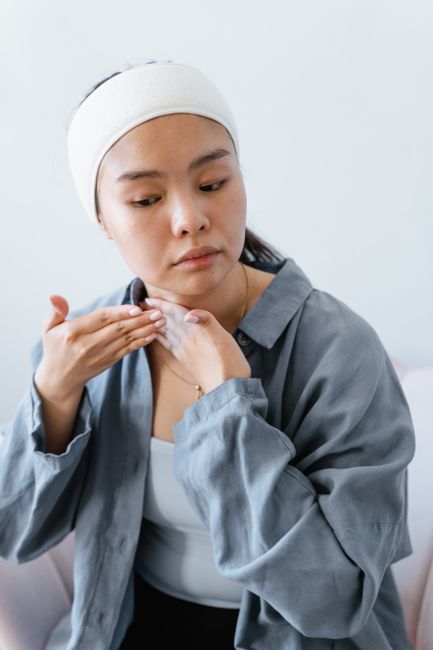 Hommage · Gangnam
Hommage Women's Clinic · Gangnam, Seoul
Apply skincare with a light touch and avoid rubbing or massage while the threads settle. Illustrative photo.
Evidence
Is a thread lift safe and does it work? What the research says
Thread lifts are popular, but the research behind them is weaker than for many other aesthetic treatments. The largest meta-analysis so far pooled 26 studies and found that most complications were minor and temporary, with swelling the most common. It also found that satisfaction was very high immediately after treatment and lower in the longer term, which fits what doctors see: the lift softens over months.
Durability is the main open question. A 2018 systematic review in Plastic and Reconstructive Surgery found only 12 relevant studies and concluded that most showed, at best, limited durability of the lifting effect; the two clearly positive studies were sponsored by thread manufacturers. That is why Hommage Women's Clinic describes a thread lift as a temporary improvement and does not promise a fixed duration.
Swelling
The most commonly reported effect across 26 studies; usually temporary.
Niu et al., Aesthetic Plast Surg, 2021Skin dimpling
Pooled rate; higher in patients over 50 (16% vs 5.6%).
Niu et al., 2021Infection or extrusion
Each about 2%; extrusion was lower with absorbable threads (1.6% vs 7.6%).
Niu et al., 2021Satisfaction
Immediately after treatment vs longer-term follow-up.
Niu et al., 2021Durability studies
Most showed limited durability; the two positive ones were industry-sponsored.
Systematic review, Plast Reconstr Surg, 2018Traveling to Seoul
Thread lift in Seoul for international patients
A thread lift fits into a short trip, but it helps to leave room for swelling to settle and for a check before you fly. Hommage Women's Clinic is in Gangnam, a short walk from Sinnonhyeon Station (Line 9 and Shinbundang Line).
Before you book
- Send photos of your face (front and side), your questions and preferred dates by WhatsApp, KakaoTalk or the contact form, and ask for language support if needed.
- Tell us about blood thinners, supplements such as fish oil, and any previous threads, filler or facial surgery.
- Bring your passport for registration and a list of your medicines.
- Plan about 7 days in Seoul so a check can be done before your flight, and avoid important photos or events in the first two weeks.
After you fly home
Keep following the aftercare guide for the full 2–4 weeks and send photos if you notice a dimple, a thread end or asymmetry that is not improving. For redness, warmth, discharge or fever, see a local doctor promptly.
 Hommage · Seoul
Hommage Women's Clinic · Gangnam, Seoul
Gangnam, Seoul: the clinic is a short walk from Sinnonhyeon Station. Illustrative photo.
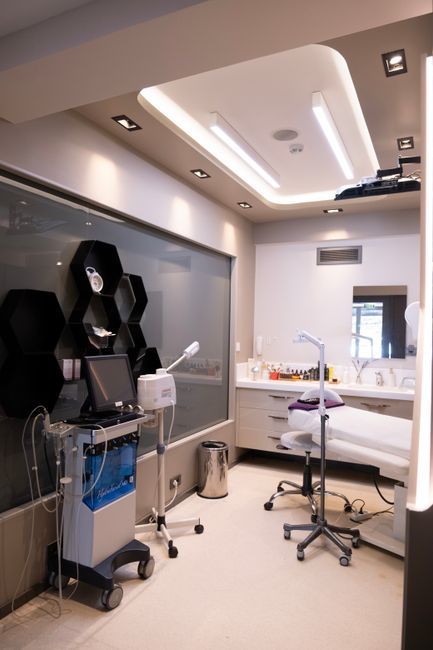 Hommage · Gangnam
Hommage Women's Clinic · Gangnam, Seoul
Ask to see the thread brand and packaging, and get a written plan before you decide. Illustrative photo.
Choosing well
How to choose a thread lift clinic in Seoul
Thread lifts are offered widely in Gangnam, often with very different thread counts and promises. These questions help at any consultation, including ours:
- Is a physician doing the procedure? Threads are placed under the skin near nerves and glands; ask who will treat you.
- Which thread brand and how many? A good clinic names the product and explains why that number of threads suits your face.
- Are threads absorbable? Absorbable threads had lower extrusion and paresthesia rates than non-absorbable ones in a meta-analysis.
- Are vectors planned with me sitting up? Marking upright reflects how your tissue sags in daily life.
- What if I get a dimple or a thread end? Ask how adjustments or removal are handled and whether follow-up is included.
- Do they mention alternatives? Responsible advice includes when HIFU, filler or surgery may suit you better.
What affects thread lift cost in Seoul?
The price depends mainly on the thread type (MINT PDO or Silhouette Soft), the number of threads or cones, the areas treated, and whether the thread lift is combined with HIFU, Thermage or filler. A very low headline price often means fewer threads. Cosmetic thread lifts are not covered by Korea's National Health Insurance, and you receive a written quote at consultation before you decide.
Your visit
What to expect at your thread lift appointment
01
Consultation
The doctor assesses sagging, skin thickness and volume, reviews medications and explains which threads suit you.
02
Marking and numbing
Entry points and vectors are marked while you sit upright, then numbing cream and local anesthesia are applied.
03
Thread placement
Threads are placed and the tissue gently repositioned, typically in 30–60 minutes, followed by a symmetry check.
04
Recovery and review
Cold packs and written aftercare. A follow-up visit checks healing and symmetry as swelling settles.
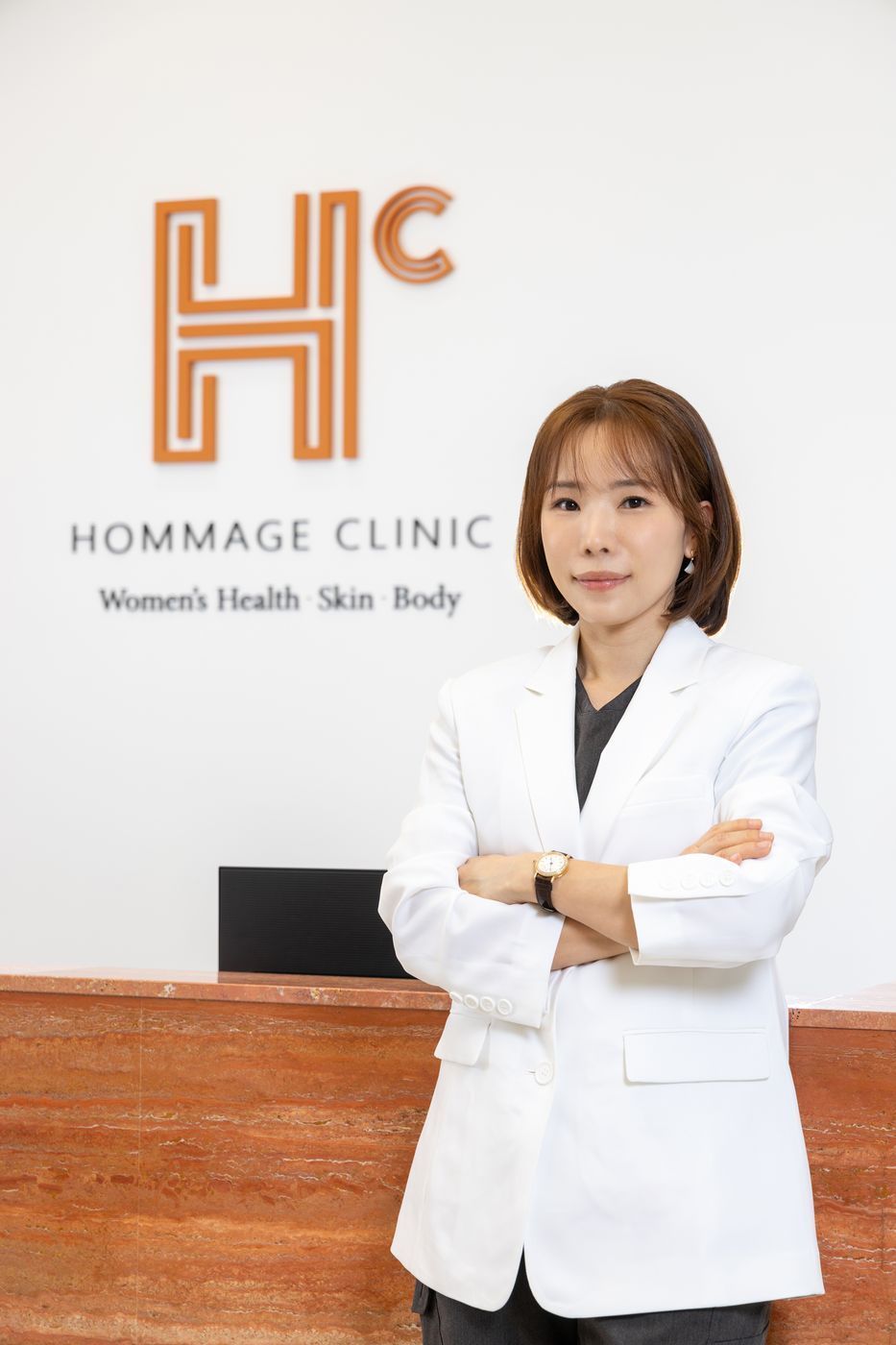
Your doctor
Dr. Kim Hyunbin
Associate Director · Skin & Aesthetic Treatments
Dr. Kim plans each thread lift with you sitting upright, marking vectors to match how your tissue has descended rather than using a standard pattern. The choice between MINT and Silhouette Soft, and the number of threads, depends on your skin thickness and the support your face needs.
Associate director dedicated to skin and aesthetic procedures, with extensive experience in lifting, botulinum toxin, fillers and laser treatments.
Thread lifting: frequently asked questions
Does a thread lift hurt?
A thread lift is done under local anesthesia, so most people feel pressure and a pulling sensation rather than sharp pain. The anesthetic injections sting briefly. Afterward, tenderness and tightness are common for several days, especially when chewing or yawning, and can usually be managed with acetaminophen.
How long does a thread lift last?
A thread lift typically lasts about a year, with a range of roughly 6–18 months. PDO threads such as MINT absorb within about 6–8 months, while PLLA-based Silhouette Soft absorbs more slowly. The collagen formed around the threads helps the effect outlast the thread itself.
How long is the downtime after a thread lift?
Most people return to desk work within a day or two, but swelling and possible bruising usually take 1–2 weeks to settle. Small dimples near entry points often smooth out within days. Avoid wide mouth opening, hard chewing, facial massage and strenuous exercise for the first few weeks.
Can threads be removed if I don't like the result?
In the early weeks, a thread that is causing a dimple, asymmetry or discomfort can often be adjusted or removed through a small entry point. Once tissue has formed around it, removal becomes harder. Because the threads are absorbable, they also dissolve on their own over months.
Can I combine a thread lift with Ulthera or Thermage?
Yes. Threads and energy devices are often combined, because threads reposition tissue while Thermage or Ulthera firms the skin. Energy treatment is commonly done first or on the same day, depending on the plan. The doctor will advise on order and timing.
Can foreigners get a thread lift in Seoul?
Yes. International patients can have a thread lift at Hommage Clinic; bring your passport for registration. Plan to stay in Seoul for at least a week afterward so swelling can settle and a check-up can be arranged. Contact us before your visit to arrange language support.
What is the difference between MINT and Silhouette Soft threads?
MINT threads are made of polydioxanone (PDO) with molded barbs and are absorbed within about 6–8 months. Silhouette Soft threads are based on poly-L-lactic acid (PLLA) with small absorbable cones and are absorbed more slowly, over roughly 12–18 months. Many plans use one or both, depending on the area and your skin thickness.
What are the most common side effects of a thread lift?
Swelling, bruising, tenderness and a feeling of tightness are the most common and usually settle within 1–2 weeks. In a 2021 meta-analysis of 26 studies, swelling was reported in about 35% of patients and skin dimpling in about 10%, while infection and thread extrusion were each about 2%. Most issues are temporary or can be corrected.
Is a thread lift as good as a facelift?
No. A thread lift repositions tissue without removing skin, so the change is smaller and temporary. A surgical facelift removes excess skin and lasts much longer, but involves incisions and a longer recovery. Threads suit mild to moderate sagging; heavy skin excess is better treated surgically.
What age is best for a thread lift?
There is no fixed age. Thread lifts tend to suit people with early to moderate sagging and reasonable skin thickness, often from their mid-thirties to fifties. In one meta-analysis, skin dimpling was more common in patients over 50, so thin or very lax skin may be better served by other options.
When can I wear makeup or exercise after a thread lift?
Light makeup can usually be applied gently the next day, avoiding the entry points if they are still open, and without rubbing. Saunas, alcohol and strenuous exercise are best avoided for about a week, and facial massage, wide mouth opening and hard chewing for about 2–4 weeks.
Can I have a thread lift after filler or Botox?
How much does a thread lift cost in Korea?
Cost depends on the thread type, the number of threads or cones, the areas treated and any combined treatments. Cosmetic thread lifts are not covered by Korea's National Health Insurance. You receive a written quote at your consultation before you decide.
References
Sources used for this page, reviewed by Dr. Kim Hyunbin, Hommage Clinic. Read our editorial and medical review policy.
- Niu Z, Zhang K, Yao W, et al. A meta-analysis and systematic review of the incidences of complications following facial thread-lifting. Aesthetic Plast Surg. 2021;45(5):2148–2158. DOI
- Invited discussion on: A meta-analysis and systematic review of the incidences of complications following facial thread-lifting. Aesthetic Plast Surg. 2021. PMC
- Van der Lei B and colleagues (University Medical Center Groningen). Thread-lift sutures: still in the lift? A systematic review of the literature. Plast Reconstr Surg. March 2018.
- Complications of thread lift about skin dimpling and thread extrusion. PMC
This page is general information and does not replace a personal consultation. Illustrations are original works of Hommage Women's Clinic, Gangnam, Seoul; photos marked illustrative are not of patients.
Related lifting treatments
V-Line Thread Lift
Thread lifting focused on the jawline and chin for a slimmer, more defined lower face.
HIFU Facial Lifting
Ulthera micro-focused ultrasound that lifts the SMAS layer without needles.
Thermage
Monopolar RF skin tightening that pairs well with threads for firmer skin.
Jawline Tightening RF
Radiofrequency options for a firmer jawline and lower face.
Collagen Stimulators
PLLA and other injectables that rebuild collagen and support lifted tissue.
Dermal Fillers
Hyaluronic acid filler to restore lost volume alongside a thread lift.
Find out whether a thread lift suits your face
Book a consultation in Gangnam. We assess your sagging and skin, then explain thread options, downtime and alternatives before you decide.
Hommage Clinic · 4F, Building A, 509 Gangnam-daero, Seoul (near Sinnonhyeon Station) · Mon & Fri 10:00–20:00 · Tue–Thu 10:00–19:00 · Sat 10:00–15:00