Skin & Aesthetics · Body contouring
Ultrasound Cavitation in Seoul: An Honest Guide to Results
Ultrasound cavitation is a non-invasive body treatment that uses low-frequency sound waves to disrupt fat cells in a small area, aiming for a modest reduction in circumference over a course of sessions. Hommage Clinic in Gangnam, Seoul does not list a cavitation machine; Dr. Kim Hyunbin explains the evidence and the clinic's own body options, such as ONDA and Tune Body.
Quick answer
Ultrasound cavitation uses low-frequency, unfocused sound waves to disrupt some fat cells in a small area, usually over 6–10 sessions of 20–45 minutes. Small studies report waist reductions of around 1.5–2 cm, but evidence is limited and results vary by machine. Hommage Women's Clinic in Gangnam, Seoul does not offer cavitation; Dr. Kim Hyunbin explains the evidence and the clinic's own options, ONDA and Tune Body.
Key takeaways
- Cavitation is gentle, but it is the least predictable of the common non-surgical fat-reduction options.
- Part of the change seen on the day is fluid; measure again weeks later for a fair result.
- It does not tighten skin and is not a weight-loss treatment.
- Many machines are sold for salons and home use; who supervises treatment matters.
Infographic
Ultrasound cavitation in numbers
Per area
Back to normal activity straight away.
Sessions
Usually 1–2 weeks apart, depending on the machine.
Reported reduction
Waist and abdomen, 20 women, 5 sessions (one small study).
Anesthesia
Warmth and a buzzing sound are normal.
Fair re-measure
After the last session, once fluid shifts settle.
Ultrasound cavitation at a glance
| Key fact | Details |
|---|---|
| What it is | Low-frequency, unfocused ultrasound applied to the skin to disrupt fat cells |
| Treatment time | Typically 20–45 minutes per area |
| Comfort | Warmth and a buzzing or high-pitched sound; no anesthesia needed |
| Sessions | Often 6–10, about 1–2 weeks apart, depending on the machine |
| Downtime | Minimal; occasional redness or mild bruising |
| Results visible | Gradually over the course; changes are usually modest and vary widely |
| At Hommage Clinic | No cavitation machine listed; ONDA or Tune Body considered after assessment |
Ultrasound cavitation may suit you if you
- Are at or near a stable, healthy weight
- Have soft, pinchable fat on the abdomen, flanks, thighs or arms
- Want a gentle option and accept small, gradual changes
- Can commit to a course of several sessions
Wait or choose another option if you
- Are pregnant or breastfeeding
- Have a pacemaker, metal implant or IUD near the treatment area
- Have liver or kidney disease, a bleeding disorder or active cancer
- Have broken skin, infection or a recent operation in the area
What is ultrasound cavitation and how does it work?
Ultrasound cavitation passes low-frequency sound waves through the skin into the fat layer. The waves create tiny pressure bubbles in the fluid around fat cells, and when these bubbles collapse they can disrupt some fat cell membranes. The released fat is then processed by the body over time.
Most cavitation machines are unfocused: the energy spreads through a wide area rather than concentrating at one depth. This makes the treatment gentle, but it also limits how much fat is affected. It is different from focused body ultrasound, which concentrates energy at a set depth to heat and destroy fat; see body HIFU treatment for that technology.
Cavitation does not tighten loose skin and is not a weight-loss treatment.
Does ultrasound cavitation actually work?
The evidence for ultrasound cavitation is limited and mixed. Some small studies report a reduction in waist or thigh circumference of a few centimeters after a course of sessions, while others show little change. Many studies have no control group, use different machines and settings, or follow patients only briefly.
Part of the change seen straight after a session may be fluid shifting rather than fat loss, which is why measurements taken weeks later give a fairer picture. Because machines vary widely, including many sold for salons and home use, results from one device cannot be assumed for another. If you want a more predictable reduction of a pinchable bulge, devices with stronger clinical data, such as cryolipolysis or heat-based body devices, are usually discussed first.
What happens during a cavitation session?
A session usually takes 20–45 minutes per area and you can return to normal activity straight away. A typical session runs like this:
- The area is measured, photographed and covered with a conductive gel.
- A handpiece is moved slowly over the skin in overlapping circles.
- You feel warmth and may hear a buzzing or high-pitched sound, which is normal.
- The gel is wiped off; some providers add massage or radiofrequency afterward.
Providers often advise drinking water and staying active after treatment. A course is commonly 6–10 sessions spaced 1–2 weeks apart, depending on the machine.
How long do results last?
Any fat cells that are destroyed are not replaced, so a genuine reduction lasts as long as your weight stays stable. However, because the change from cavitation is often small and partly due to fluid, some of the early difference can fade within days.
Remaining fat cells can grow again with weight gain. Measuring the same points at the start, at the end of the course and a month later is the most honest way to judge whether the treatment has worked for you.
Risks and possible side effects of ultrasound cavitation
Cavitation is generally well tolerated, and most side effects are mild and short-lived. Common effects include warmth, redness, mild tenderness and occasional bruising. Some people notice a temporary ringing or buzzing in the ears during treatment, or feel thirsty or tired afterward.
- Burns or blisters can occur, rarely, with poorly maintained machines, too little gel or excessive settings.
- Contour irregularities are uncommon but possible if one spot is over-treated.
- Implants and pregnancy: treatment is avoided over metal implants, pacemakers or an IUD and during pregnancy.
Stop treatment and contact a doctor if you develop blisters, persistent pain, skin changes or any symptoms that worry you. Because cavitation is widely offered outside medical settings, ask who supervises treatment and what to do if a problem arises.
Cavitation vs other non-surgical fat reduction
Ultrasound cavitation is the gentlest and least predictable of the common fat-reduction options. A quick comparison:
- Ultrasound cavitation: unfocused sound waves, many sessions, small and variable change.
- Focused body ultrasound: destroys fat at a set depth in fewer sessions, with more discomfort.
- Cryolipolysis: controlled cooling of a pinchable bulge, usually 1–2 sessions per area.
- Heat-based devices: microwave, radiofrequency or laser energy that heats the fat layer and may firm skin a little.
- Injections: for small pockets; see fat dissolving injections for the body .
For larger volumes of fat, surgical liposuction remains more effective than any of these.
Body contouring at Hommage Clinic
Hommage Clinic is a walk-in-friendly women's health and skin clinic in Gangnam, a short walk from Sinnonhyeon Station. The clinic does not list an ultrasound cavitation machine. Dr. Kim Hyunbin assesses your area, explains realistic expectations and recommends one of the clinic's body treatments only when it is likely to help. The clinic's options include ONDA, which delivers microwave energy to the deep fat layer while cooling the skin surface, and Tune Body radiofrequency for localized fat and mild laxity. See allskin and aesthetic treatments.
Body contouring is cosmetic and is not covered by Korea's National Health Insurance. Cost depends on the device, the area and the number of sessions, and you receive a written quote before treatment.
Mechanism
How does ultrasound cavitation work? Bubbles, pressure and fat cells
“Cavitation” is the physics term for tiny bubbles that form and collapse when sound waves pass through fluid. In a cavitation treatment, low-frequency ultrasound travels through the skin into the fat layer. The alternating pressure makes microscopic bubbles grow and burst in the fluid around fat cells, and that mechanical stress can break some fat cell membranes. The released fat is then cleared and processed by the body over the following days and weeks.
Because the energy is unfocused and spreads widely, only a fraction of fat cells is affected in each session, which is why cavitation is given as a course and why its results are modest.
Technology
Cavitation vs HIFU: unfocused and focused ultrasound explained
Both treatments use ultrasound, which is why they are often confused, but they work in opposite ways. Cavitation spreads low-frequency waves widely to create bubbles mechanically. Focused ultrasound (HIFU) concentrates high-intensity energy into a small point at a fixed depth, where heat destroys fat. That difference explains why HIFU needs fewer sessions and is more uncomfortable, while cavitation is gentler but less predictable.
Ultrasound cavitation
- Low-frequency waves spread widely
- Works mechanically through bubbles
- Gentle: warmth and buzzing
- Usually 6–10 sessions
- Small, variable change
Body HIFU
- High-intensity energy at a set depth
- Works by heating fat to destroy it
- More discomfort during treatment
- Fewer sessions
- See body HIFU treatment
 Hommage · Gangnam
Hommage Women's Clinic · Gangnam, Seoul
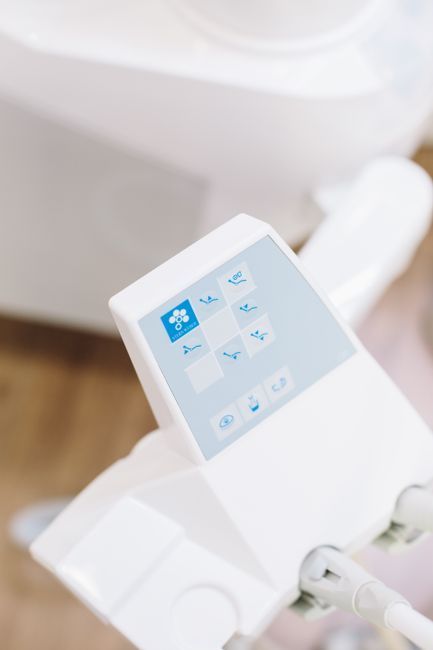
Machines vary widely, so results from one cannot be assumed for another. Illustrative photo.
Compare
Cavitation vs cryolipolysis vs HIFU vs heat devices: which is better?
If you are comparing non-surgical fat reduction, the main trade-off is between gentleness and predictability. The chart groups the common options by how many sessions they typically take and how predictable the result is. It is a simplified guide, not a ranking for your body.
| Option | How it works | Best suited to |
|---|---|---|
| Ultrasound cavitation | Unfocused low-frequency waves, bubbles | Gentle option, small expectations |
| Heat devices | Microwave (ONDA), RF (Tune Body) or laser heat the fat layer | Localized fat with mild laxity |
| Focused ultrasound | Heat at a fixed depth | Pinchable fat, fewer visits |
| Cryolipolysis | Controlled cooling of a fat bulge | Distinct, pinchable bulge |
| Injections | Fat-dissolving solution | Small, stubborn pockets |
 Hommage · Gangnam
Hommage Women's Clinic · Gangnam, Seoul
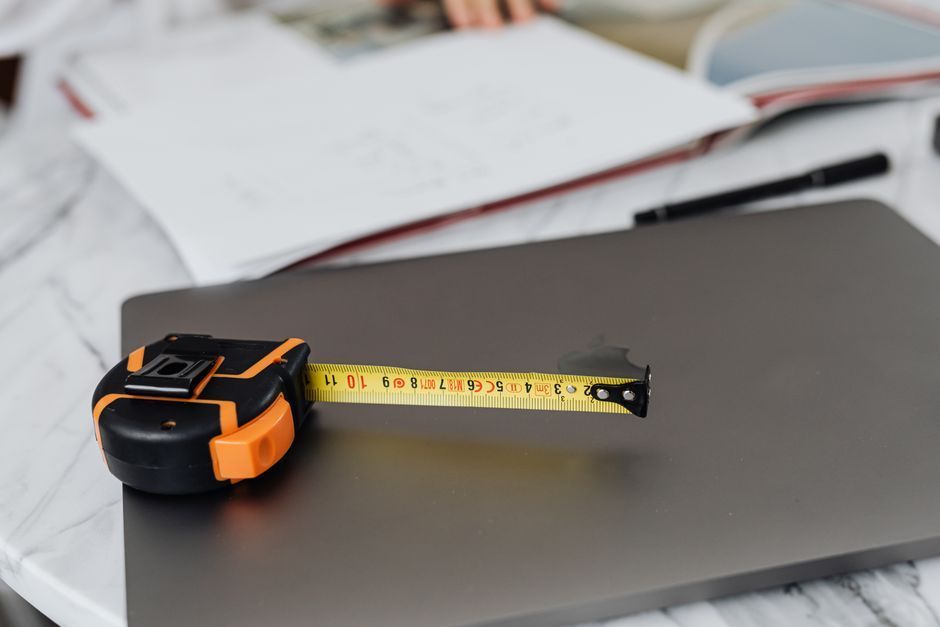
Same points, same time of day, same tape: the fairest test of any body treatment. Illustrative photo.
Results
Ultrasound cavitation before and after: how to measure results honestly
Many people search for cavitation before-and-after photos, but photos taken straight after a session mostly show fluid shifts, posture and lighting. A fair comparison needs measurements, not impressions. Whatever body treatment you choose, ask for these steps or do them yourself:
- Mark fixed points For example, a set distance above and below the navel, measured from a fixed landmark.
- Same time of day Morning measurements avoid the swelling that builds through the day.
- Same position and breathing Standing, relaxed, measured at the end of a normal breath out.
- Record your weight too A smaller waist with weight loss is not evidence that the device worked.
- Re-measure about a month after the course By then, short-term fluid changes have settled.
- Standardized photos Same light, distance and pose as the baseline.
Timeline
How many cavitation sessions, and when will I see results?
A typical cavitation course runs over two to five months, depending on the interval. Change, if it comes, is gradual, and the honest test is a measurement taken about a month after the final session rather than the number on the tape the day you are treated.
Aftercare
Ultrasound cavitation aftercare: do's and don'ts
Aftercare advice from cavitation providers is mostly common sense: stay active, keep hydrated and avoid anything that would make the treated area hot or swollen. There is little research showing that any specific aftercare routine improves results, so be wary of add-ons sold as essential.
Do
- Drink water normally through the day
- Walk or exercise as usual
- Keep your weight stable through the course
- Measure at fixed points, not by mirror
- Report blisters, persistent pain or skin changes
Don't
- Have treatment over an IUD, implant or pacemaker
- Use a sauna or hot bath on the day of treatment
- Expect weight loss on the scale
- Book at-home or unsupervised machines without medical advice
- Continue sessions if an area blisters
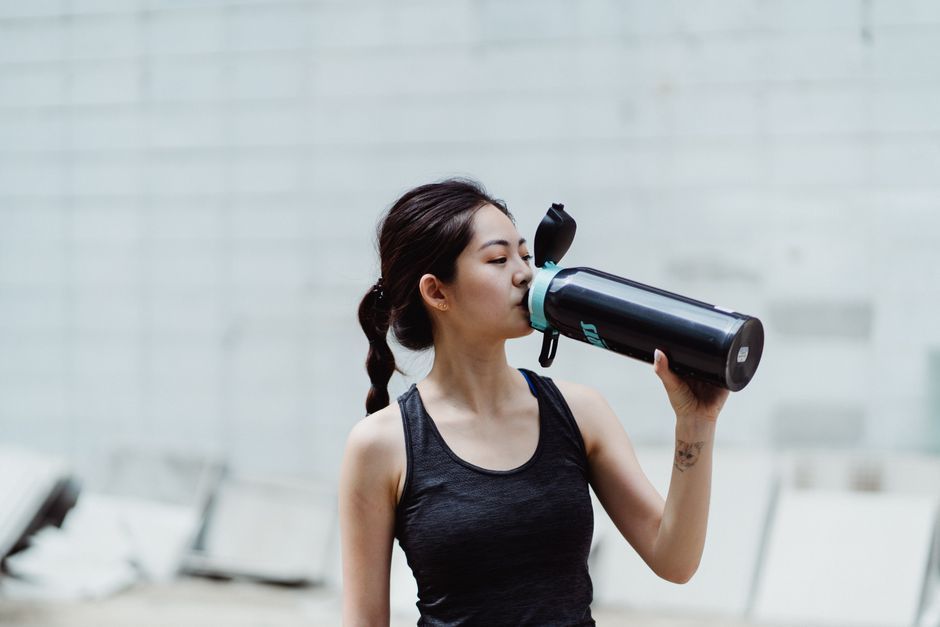 Hommage · Gangnam
Hommage Women's Clinic · Gangnam, Seoul
Normal activity and hydration are all most people need after a session. Illustrative photo.
Evidence
Is ultrasound cavitation effective? What the research says
Research on low-frequency ultrasound for fat reduction is small-scale and uses many different machines, so results cannot be pooled reliably. The studies below are typical: modest centimeter changes, mild side effects and open questions about what happens to the released fat.
Women studied
Five low-frequency ultrasound sessions to the abdomen; no control group.
Tonucci et al., Aesthetic Plast Surg, 2014Circumference change
Mean reduction at waist (1.5), abdomen (2.1) and navel (1.9 cm).
Tonucci et al., 2014Lipids and liver tests
Blood fats and liver enzymes did not change significantly; fasting glucose rose slightly.
Tonucci et al., 2014Articles in a 2025 review
Evidence limited by small samples, short follow-up and no standard protocols.
Warner-Palacio et al., Int J Mol Sci, 2025Traveling to Seoul
Non-surgical fat reduction in Seoul for international patients
Cavitation is widely advertised in Seoul, often in packages of many sessions. For a visitor, a course of 6–10 sessions one to two weeks apart rarely fits a trip, and you would leave before you could fairly judge the result. A doctor-led assessment is a better use of limited time: you learn whether your concern is fat, loose skin or fluid, and which option makes sense to start now and continue at home.
Before you book
- Send your dates and the areas that concern you by WhatsApp, KakaoTalk or the contact form; ask for language support if needed.
- Tell us about implants, an IUD, pacemakers, pregnancy, and liver or kidney conditions.
- Bring your passport for registration and take baseline measurements before you travel.
- Ask any provider who supervises treatment and how to contact them after you fly home.
 Hommage · Seoul
Hommage Women's Clinic · Gangnam, Seoul
Gangnam: the clinic is a short walk from Sinnonhyeon Station. Illustrative photo.
 Hommage · Gangnam
Hommage Women's Clinic · Gangnam, Seoul
Ask who assesses you and who supervises the machine. Illustrative photo.
Choosing well
How to choose a cavitation or body contouring provider in Seoul
Cavitation is offered in clinics, spas and even sold for home use. These questions help you judge any provider:
- Is a doctor involved? Someone should rule out fluid, loose skin or a medical cause first.
- Which machine, and what evidence? Ask for the device name and any published data for it.
- Are contraindications checked? Implants, IUD, pacemaker, pregnancy, liver and kidney disease.
- How is progress measured? Fixed-point measurements and photos, not same-day impressions.
- What if I get a burn or blister? There should be a clear plan and a medical contact.
- Is the package honest? Be cautious of large prepaid packages and weight-loss promises.
What affects the cost of non-surgical fat reduction?
Cost depends on the device, the size and number of areas, the number of sessions, who performs the treatment and whether it is combined with skin tightening such asRF body tighteningor muscle toning such asEMS body sculpting. Body contouring is cosmetic and not covered by Korea's National Health Insurance; at Hommage Clinic you receive a written quote before any treatment.
Your visit
What to expect at a body-contouring consultation
01
Assessment
Dr. Kim checks fat thickness, skin firmness, your weight history and any implants, pregnancy plans or medical conditions.
02
Honest options
You hear which approach suits your area and how much change is realistic, including when a device is unlikely to help.
03
Measurements
If you go ahead, the area is measured and photographed so progress can be judged fairly.
04
Plan and quote
You receive a session plan and a written quote before any treatment starts.

Your doctor
Dr. Kim Hyunbin
Associate Director · Skin & Aesthetic Treatments
Dr. Kim explains how much change a body device can realistically achieve for your area before any session is booked, and measures progress at fixed points rather than relying on how the area looks the same day. When a device is unlikely to help, Dr. Kim says so at the first visit.
Associate director dedicated to skin and aesthetic procedures, with extensive experience in lifting, botulinum toxin, fillers and laser treatments.
Ultrasound cavitation: frequently asked questions
Does ultrasound cavitation really work?
Evidence is limited. Some small studies show a reduction of a few centimeters in circumference after a course, while others show little change, and part of the early effect may be fluid. Results also depend heavily on the machine. It is more accurately described as a gentle option with modest, variable results rather than a reliable fat-reduction treatment.
How many cavitation sessions are needed?
Providers commonly suggest 6–10 sessions, about 1–2 weeks apart, depending on the machine and area. Measuring the area before the first session and a few weeks after the last one is the fairest way to see whether the course has made a difference for you.
Is ultrasound cavitation the same as HIFU?
No. Cavitation uses low-frequency, unfocused ultrasound spread over a wide area. Body HIFU focuses high-intensity ultrasound at a set depth to heat and destroy fat in fewer sessions. They are different technologies with different evidence; see body HIFU treatment for more.
Does ultrasound cavitation hurt?
Most people find it comfortable. You feel warmth and may hear a buzzing or high-pitched sound from the handpiece, which is normal. Tell the person treating you if the area feels hot or painful, because that can signal settings that are too high or too little gel.
Can I have cavitation with an IUD or during my period?
Treatment over the lower abdomen is usually avoided if you have an IUD or other implant in the area, so tell the provider beforehand. Having your period is not usually a reason to cancel, but some women prefer to avoid abdominal treatment on days with heavy cramps.
Does Hommage Clinic offer ultrasound cavitation?
Hommage Clinic does not list an ultrasound cavitation machine. For localized fat, Dr. Kim assesses your area and explains the clinic's own options, such as ONDA and Tune Body, including how much change to expect and how many sessions are likely.
Can foreigners get body-contouring treatment in Seoul?
Yes. Visitors and foreign residents can book a body-contouring assessment at Hommage Clinic in Gangnam. Walk-ins are welcome, or book ahead for a set time; bring your passport for registration. Courses of treatment run over several weeks, so share your travel dates, and contact us before your visit to arrange language support.
How long does an ultrasound cavitation session take?
Most sessions take 20–45 minutes per area, and you can return to normal activity straight away. A course is commonly 6–10 sessions spaced 1–2 weeks apart, depending on the machine.
How soon will I see cavitation results?
Any change on the tape straight after a session is mostly fluid. A fair result is measured at the same points about a month after the final session, once short-term fluid shifts have settled. Many people see little or no lasting change, which is why measuring matters.
Is ultrasound cavitation safe?
It is generally well tolerated. Reported side effects include warmth, redness, tingling, soreness and occasional bruising, with rare burns from poorly maintained machines or excessive settings. It is avoided in pregnancy and over implants, pacemakers or an IUD. In one small study, blood fats and liver tests did not change significantly, though fasting glucose rose slightly.
Can I lose weight with ultrasound cavitation?
No. Cavitation is aimed at small, local reductions in circumference, not weight loss. A 2014 study of 20 women found waist reductions of about 1.5 cm after five sessions. Weight is controlled by diet, activity and, where appropriate, medical treatment.
Is home cavitation safe?
Home machines vary widely, are rarely studied, and are used without anyone checking for implants, pregnancy or skin damage. Burns and blisters are more likely with poor contact or too little gel. If you choose to use one, follow the instructions closely and stop if the skin becomes hot, painful or blistered.
What is a better alternative to cavitation for belly fat?
It depends on the cause. For a distinct, pinchable bulge, cryolipolysis is usually discussed first, and heat-based devices such as ONDA are another option. For small pockets, fat-dissolving injections may suit. For loose skin, RF body tightening is more relevant. Dr. Kim assesses which applies to you.
References
Sources used for this page, reviewed by Dr. Kim Hyunbin. Read our editorial and medical review policy.
- Tonucci LB, Mourão DM, Ribeiro AQ, Bressan J. Noninvasive body contouring: biological and aesthetic effects of low-frequency, low-intensity ultrasound device. Aesthetic Plast Surg. 2014;38(5). Abstract
- Warner-Palacio J, Paxton Z, Hassiak A, et al. Investigating the metabolic effects of ultrasound-induced lipolysis. Int J Mol Sci. 2025;26(17):8689. Full text
This page is general information and does not replace a personal consultation. Illustrations are original works of Hommage Women's Clinic, Gangnam, Seoul; photos marked illustrative are not of patients.
Related body treatments
Body HIFU Treatment
Focused ultrasound that targets fat at a set depth, and how it differs from cavitation.
CoolSculpting (Cryolipolysis)
Fat freezing explained, with its rare risks and the clinic's comparable options.
Laser Lipolysis
Laser liposuction vs non-invasive laser fat reduction, explained honestly.
Fat Dissolving Injections (Body)
Injections for small, stubborn pockets of body fat and what the evidence shows.
Body Contour Massage Therapy
Massage and lymphatic techniques for bloating and fluid, and their limits on fat.
Cellulite Reduction Therapy
Why cellulite forms and which treatments can smooth dimpled skin.
Get a realistic view of your body-contouring options
Book an assessment with Dr. Kim Hyunbin in Gangnam. You hear how much change is realistic for your area and which of the clinic's treatments, if any, fits.
Hommage Clinic · 4F, Building A, 509 Gangnam-daero, Seoul (near Sinnonhyeon Station) · Mon & Fri 10:00–20:00 · Tue–Thu 10:00–19:00 · Sat 10:00–15:00