
Skin & Aesthetics · Hair & scalp
Dandruff Treatment in Seoul: Is It Dandruff, Dry Scalp or Psoriasis?
Dandruff medical therapy is doctor-guided treatment for persistent scalp flaking and itching, using medicated shampoos such as ketoconazole, zinc pyrithione or selenium sulfide to calm the yeast-related reaction behind dandruff. At Hommage Clinic in Gangnam, Seoul, Dr. Hwang Seonhwa first checks whether your flakes are dandruff, dry scalp, seborrheic dermatitis or psoriasis, because each needs a different approach.

Quick answer
Dandruff medical therapy means confirming what is causing your flakes, then using the right medicated shampoo the right way. At Hommage Women's Clinic in Gangnam, Seoul, Dr. Hwang Seonhwa examines your scalp to tell dandruff from dry scalp, seborrheic dermatitis or psoriasis. Most dandruff improves within 2–4 weeks of an antifungal shampoo such as ketoconazole 2%, left on for a few minutes, two to three times a week, followed by weekly maintenance to stop it returning.
Key takeaways
- Dandruff is a reaction to Malassezia , a yeast everyone carries. It is not an infection, not contagious and not caused by poor hygiene.
- Leaving the shampoo on the scalp for 3–5 minutes matters more than the brand.
- If one active ingredient does not help after about 4 weeks, a different one often will.
- Redness, thick plaques, crusting or patchy hair loss suggest a different condition and need an examination.
Infographic
Dandruff treatment in numbers
Typical improvement
With the right shampoo used correctly.
Leave-on time
Lather into the scalp, wait, then rinse well.
Ketoconazole treatment
For 2–4 weeks, per the product label.
Maintenance interval
One wash every 1–2 weeks to prevent relapse.
Seborrheic dermatitis
Pooled global prevalence; 5.6% in adults (2024 meta-analysis).
Often enough
Exam and written routine; review if no better in 4 weeks.
Dandruff at a glance
| Key fact | Details |
|---|---|
| What it is | Common, harmless scalp flaking with itch but little or no visible redness |
| Common signs | White or grayish flakes on hair and shoulders, mild itch, worse in winter or with stress |
| How it's diagnosed | A scalp examination; scrapings only if infection or another condition is suspected |
| Treatment options | Medicated shampoos (ketoconazole, zinc pyrithione, selenium sulfide, ciclopirox, tar) |
| How fast it improves | Usually within 2–4 weeks of using the right shampoo correctly |
| Follow-up | Maintenance washing about once a week; review if no better after 4 weeks |
| Reviewed by | Dr. Hwang Seonhwa, physician |
Book an assessment if you have
- Flaking that has not improved after about 4 weeks of an over-the-counter anti-dandruff shampoo
- Itching that disturbs sleep, or flakes with redness, crusting or soreness
- Flaking that has spread to the eyebrows, the sides of the nose or behind the ears
- Flakes together with hair shedding, patchy hair loss or changes in your nails
Seek urgent care instead if you have
- Face or eyelid swelling, or trouble breathing, after hair dye or a new product
- A painful, boggy or pus-filled patch on the scalp, especially with fever or swollen glands
- A rapidly spreading rash over large areas of the body
What causes dandruff?
Dandruff is scalp flaking caused by an over-reaction of the skin to Malassezia , a yeast that normally lives on everyone's scalp. It is very common, not contagious and not a sign of poor hygiene.
The yeast feeds on scalp oil (sebum) and breaks it down into fatty acids. In some people these irritate the scalp, which then sheds skin cells faster than usual, so they clump into visible flakes. Dandruff is the mild end of a spectrum: when the same process causes visible redness and greasy scale, often on the face too, it is called seborrheic dermatitis . Dandruff often gets worse in cold, dry weather, with stress, and when hair is washed less often.
Dandruff, dry scalp, seborrheic dermatitis or psoriasis: how to tell them apart
Several conditions cause flakes, and the right treatment depends on which one you have. These clues help, though a doctor's examination is the reliable way to know.
- Dandruff: loose white or grayish flakes and mild itch, with little or no redness. Improves with medicated shampoo.
- Dry scalp: small, fine, dry flakes and a tight feeling, often in winter, with dry skin elsewhere. Gentle shampoo and less hot water help; strong anti-dandruff shampoos can make it worse.
- Seborrheic dermatitis: greasy, yellowish scale on red, itchy skin, often along the hairline, eyebrows and beside the nose.
- Scalp psoriasis: thick, silvery scale on sharply outlined, raised plaques that may extend past the hairline, sometimes with patches on the elbows or knees or pitted nails.
- Contact dermatitis: itching, redness or oozing after hair dye or a new product.
- Scalp ringworm (tinea capitis) and head lice: ringworm causes scaly patches with broken hairs and needs oral medicine. Lice eggs (nits) look like flakes but stick firmly to the hair shaft.
How is dandruff treated?
Most dandruff is controlled with a medicated shampoo used correctly. Each active ingredient works differently, so if one does not help after about four weeks, a different one often will.
- Ketoconazole 2% or ciclopirox: antifungals that reduce Malassezia ; often the most effective choice for persistent dandruff.
- Zinc pyrithione and selenium sulfide: reduce yeast and slow flaking; good first options.
- Coal tar: slows skin-cell turnover; also used for psoriasis.
- Salicylic acid: loosens and lifts thick scale so other treatments can reach the skin.
Massage the shampoo into the scalp, not just the hair, and leave it on for about five minutes before rinsing. Use it two to three times a week until flakes settle, then about once a week. If you have tightly curled or textured hair, washing with a medicated shampoo once a week is often enough, followed by a conditioner on the lengths. If redness and itching are marked, a short course of a prescribed anti-inflammatory solution may be added, as described on our seborrheic scalp treatment page.
When should you see a doctor about dandruff?
See a doctor if flakes have not improved after about four weeks of a medicated shampoo, or if your scalp is red, sore, crusted or very itchy. These signs suggest something more than simple dandruff.
At the visit, Dr. Hwang asks about your products, hair dye, washing routine and skin elsewhere, then examines your scalp, hairline, face and nails. A skin scraping may be arranged if a fungal infection is possible. Psoriasis and other conditions that need specialist treatment, such as prescription vitamin D creams or tablets, are referred to a dermatology specialist. If you are also noticing thinning or shedding, the scalp is treated first and hair loss is then assessed as part of a hair density treatment plan .
How long does dandruff treatment take, and will it come back?
Flakes and itch usually improve within two to four weeks of using the right shampoo correctly. Dandruff tends to be long-term, so it often returns if you stop treatment completely.
A simple maintenance routine keeps most dandruff under control: a medicated shampoo about once a week, your usual mild shampoo on other days, and rinsing out oils and styling products thoroughly. Some people find a shampoo stops working as well over time; switching to or alternating with a different active ingredient often helps. Expect flares in winter, during stressful periods and after illness, and restart the more frequent routine as soon as you notice them.
Risks and possible side effects of dandruff treatments
Medicated shampoos are generally safe, but they can cause:
- Dryness, irritation or stinging, especially on a scalp that is already dry rather than flaky from dandruff
- Changes in hair texture or oiliness; selenium sulfide and coal tar can discolor light, gray or chemically treated hair
- Greater sun sensitivity, an odor and staining of fabric with coal tar
- Rarely, an allergic reaction, with redness, swelling or blistering
Prescribed topical steroids are safe in short courses but can thin the skin if used for long periods. Keep shampoos out of your eyes, and stop the product and contact the clinic if your scalp becomes more red, painful or swollen. Tell us if you are pregnant or breastfeeding so products can be checked before you use them.
Dandruff care at Hommage Clinic
Hommage Clinic is a walk-in-friendly women's health and skin clinic in Gangnam, a short walk from Sinnonhyeon Station. Dr. Hwang Seonhwa examines your scalp, explains what is causing the flakes and gives you a written shampoo routine for flares and maintenance. When the scalp also feels congested or oily, an in-clinicscalp detox treatmentcan be added for comfort, alongside our widerskin and aesthetics services.
Consultation and prescribed treatment for a diagnosed skin condition may be covered by National Health Insurance for enrolled patients, while cosmetic scalp-care sessions are not. You receive a written quote before any non-covered treatment.
Mechanism
How dandruff forms, and where each treatment works
Dandruff is not dirt and it is not a true infection. Everyone's scalp carries Malassezia, a yeast that feeds on the oil (sebum) your scalp produces. As it breaks that oil down, it releases fatty acids. In people who are sensitive to them, these fatty acids irritate the top layer of skin, which responds by renewing itself faster than normal. The shed cells do not separate cleanly, so they clump into the white or grayish flakes you see on your collar.
Understanding this chain explains why treatment works at different points. Antifungal shampoos such as ketoconazole, ciclopirox, zinc pyrithione and selenium sulfide reduce the yeast at the start of the chain. Coal tar slows the fast skin turnover, and salicylic acid loosens scale that has already formed so the other ingredients can reach the skin. It also explains why dandruff returns when treatment stops: the yeast is a normal part of your skin, so the goal is control rather than a permanent cure.
Self-check
Dandruff vs dry scalp vs seborrheic dermatitis vs scalp psoriasis
"Dandruff" is often used for any scalp flakes, but four common conditions look similar and are treated quite differently. Using a strong antifungal shampoo on a dry scalp can make tightness and itch worse, while treating psoriasis as dandruff usually leaves thick plaques unchanged. The illustration and table below summarize the clues Dr. Hwang looks for at the examination. They are a guide, not a diagnosis; several conditions can also overlap.
| Clue | Dandruff | Dry scalp | Seborrheic dermatitis | Scalp psoriasis |
|---|---|---|---|---|
| Flakes | Loose, white or gray | Fine, powdery | Greasy, yellowish | Thick, silvery, stuck on |
| Skin underneath | Little or no redness | Not red, feels tight | Red, inflamed | Raised, sharply outlined |
| Other areas | Scalp only | Dry skin on body | Brows, sides of nose, ears | Elbows, knees, nails |
| First step | Medicated shampoo | Gentle shampoo, less heat | Antifungal plus short anti-inflammatory course | Specialist assessment |
At home
How to use dandruff shampoo correctly
The most common reason a dandruff shampoo "doesn't work" is how it is used. Medicated shampoos need contact time with the scalp skin, not the hair. Product information for ketoconazole 2% shampoo, for example, advises leaving it on for 3 to 5 minutes, using it twice a week for 2 to 4 weeks to treat dandruff, then once every 1 to 2 weeks to prevent it returning.
If you color your hair, have very fine or textured hair, or your scalp stings easily, tell Dr. Hwang: the choice of ingredient and how often you use it can be adjusted so the routine is something you can keep up for months.
Do
- Wet the hair, part it and massage the shampoo into the scalp skin
- Leave it on for 3–5 minutes before rinsing thoroughly
- Use it 2–3 times a week until flakes settle, then weekly
- Use conditioner on the lengths only, if your hair feels dry
- Give one ingredient about 4 weeks before judging it
- Switch or alternate ingredients if one stops working
Don't
- Rinse straight off after a few seconds
- Scratch or pick at flakes; it adds irritation
- Use very hot water or a hot hair dryer on the scalp
- Leave heavy oils or styling products on for days
- Let shampoo run into your eyes
- Keep using a product that makes your scalp red or sore
 Hommage · Gangnam
Hommage Women's Clinic · Gangnam, Seoul
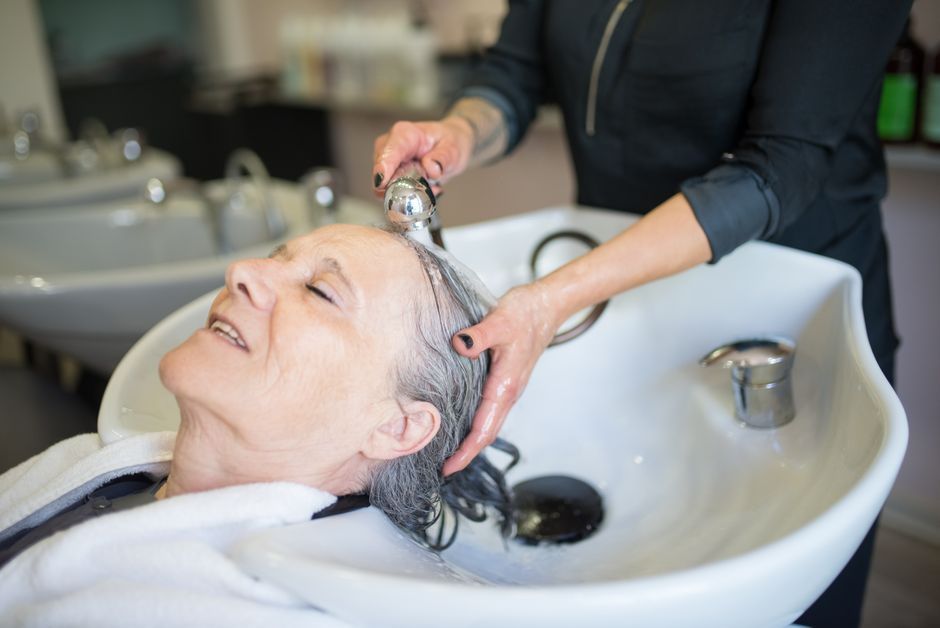
Contact time on the scalp skin is what makes a medicated shampoo work. Illustrative photo.
Your plan
Dandruff treatment timeline: clearing phase, review and maintenance
Medical dandruff care has two phases. In the clearing phase you use a medicated shampoo more often until flakes and itch settle, usually within two to four weeks. After a review, you move to a lighter maintenance routine that keeps dandruff from building up again. Because the yeast behind dandruff is always present, stopping completely is the most common reason flakes return within weeks.
 Hommage · Gangnam
Hommage Women's Clinic · Gangnam, Seoul
Itch that disturbs sleep or concentration is a good reason to have your scalp checked. Illustrative photo.
Triggers
What makes dandruff flare, and what you can change
Dandruff comes and goes. Knowing your own triggers makes it easier to step up treatment early, before flakes and itch build up. The most common ones are listed below; not everyone reacts to all of them.
- Cold, dry seasons: flaking is often worse in Seoul's winter, when indoor heating dries the air.
- Stress and poor sleep: many people notice flares during exams, deadlines or after illness.
- Infrequent washing: oil and shed cells build up between washes, feeding the yeast.
- Heavy oils and styling products: leave-in oils, waxes and dry shampoo can add to buildup on the scalp.
- Hormonal changes: higher androgen levels increase scalp oil, as discussed on our page about skin care for hormonal changes.
Evidence that specific foods cause dandruff is limited, so restrictive diets are not recommended for dandruff alone. A balanced diet, regular washing and a routine you can maintain are more useful than frequent product changes.
Comparison
Ketoconazole vs zinc pyrithione vs selenium sulfide vs coal tar
Each anti-dandruff ingredient has strengths and drawbacks. In a randomized, placebo-controlled trial of 246 people with moderate to severe dandruff, both ketoconazole 2% and selenium sulfide 2.5% shampoos reduced dandruff significantly more than placebo, and ketoconazole appeared to be better tolerated. Which one suits you depends on your scalp, hair color and how often you can use it.
Ketoconazole 2%
- Reduces Malassezia yeast
- Often chosen for persistent dandruff
- Twice weekly, then every 1–2 weeks
- Occasional dryness or irritation
Ciclopirox
- Antifungal with anti-inflammatory action
- An alternative if ketoconazole fails
- Prescription in many countries
- Mild itch or burning possible
Zinc pyrithione
- Common in everyday anti-dandruff shampoos
- Good for mild dandruff and maintenance
- Gentle enough for frequent use
- May be too weak for stubborn flaking
Selenium sulfide
- Reduces yeast and slows shedding
- Effective in controlled trials
- Can discolor light, gray or colored hair
- Rinse well; can leave an odor
Coal tar / salicylic acid
- Tar slows skin turnover; salicylic acid lifts scale
- Useful for thick scale or psoriasis
- Tar can stain and smell
- Tar increases sun sensitivity
Your situation
Dandruff with colored hair, textured hair, pregnancy or hair loss
Colored, bleached or gray hair
Selenium sulfide and coal tar can change the tone of light, gray or chemically treated hair. Ketoconazole, ciclopirox or zinc pyrithione are usually preferred, applied to the scalp and rinsed thoroughly. Avoid coloring on the same day as a flare, when the scalp is irritated.
Curly, coily or textured hair
Washing less often helps protect textured hair, so a medicated shampoo once a week, applied to the scalp in sections and followed by conditioner on the lengths, is often enough. Heavy scalp oils may need to be used more sparingly during flares.
Pregnancy and breastfeeding
Product information for ketoconazole 2% shampoo notes that it was not detected in the blood after long-term shampooing and is not contraindicated in pregnancy or breastfeeding, though caution is advised. Tell Dr. Hwang if you are pregnant or breastfeeding so every product can be checked first.
Dandruff with thinning hair
An inflamed, itchy scalp is treated first. If shedding continues once the scalp is calm, hair loss is assessed separately, for example as part of a hair density treatment plan or with hair loss PRP therapy where suitable.
 Hommage · Gangnam
Hommage Women's Clinic · Gangnam, Seoul
Your routine is adjusted for hair color, texture and how often you wash. Illustrative photo.
Evidence
Does dandruff treatment work? What the research says
Medicated shampoos for dandruff have been studied for decades, and controlled trials consistently show they work better than a placebo shampoo. The evidence is weaker on which ingredient is best for an individual, and most trials are short, so the practical approach is to choose a well-tolerated option, use it correctly and change it if it does not help.
People in a placebo-controlled trial
Ketoconazole 2% and selenium sulfide 2.5% both beat placebo for moderate to severe dandruff.
J Am Acad Dermatol, 1993;29(6)Seborrheic dermatitis worldwide
Pooled prevalence from 121 studies; 5.64% in adults.
Polaskey et al., JAMA Dermatol, 2024People in safety trials
No side effect of ketoconazole 2% shampoo occurred in 1% or more of users across 22 trials.
UK product information (SmPC)Patients, 1% vs 2%
Ketoconazole 2% outperformed 1% for severe dandruff or seborrheic dermatitis.
Dermatology (Basel), 2001Traveling to Seoul
Dandruff treatment in Seoul for international patients
Dandruff care fits easily into a short stay, because most treatment happens at home. One visit to Hommage Women's Clinic in Gangnam, a short walk from Sinnonhyeon Station, is usually enough for an examination and a written routine, and follow-up can be done by message after you fly home.
Before your visit
- Send your questions and preferred date by WhatsApp, KakaoTalk or the contact form, and ask for language support if you need it.
- Bring your passport and photos or the names of shampoos and treatments you have tried.
- Skip styling products and dry shampoo on the day, so the scalp can be examined as it is.
- Mention any medicines, allergies, pregnancy or skin conditions such as psoriasis.
After you fly home
Keep your written routine and the names of the active ingredients, since brand names differ between countries. If flakes are not better after about four weeks, send a message with photos, or see a local doctor, to confirm the diagnosis.
 Hommage · Seoul
Hommage Women's Clinic · Gangnam, Seoul
Gangnam, Seoul: the clinic is a short walk from Sinnonhyeon Station. Illustrative photo.
 Hommage · Gangnam
Hommage Women's Clinic · Gangnam, Seoul
A clear diagnosis and written routine come before any optional add-on. Illustrative photo.
Choosing well
How to choose a clinic for dandruff treatment in Seoul
Gangnam has many scalp-care shops and clinics. Use these questions at any visit, including ours:
- Is a doctor examining my scalp? Dandruff, psoriasis and infection need a medical diagnosis, not just a product.
- Do they check my face, ears and nails too? These clues help separate dandruff from seborrheic dermatitis or psoriasis.
- Is the plan based on tested ingredients? Medicated shampoos have the strongest evidence; add-ons should be optional.
- Do I get a written routine? It should say which product, how long to leave it on and how often.
- Is follow-up included? You should know what to do if flakes return or the scalp gets worse.
- Am I told the cost first? Ask what is covered by insurance and what is not before any session.
What affects the cost of dandruff treatment?
Cost depends on whether you need only a consultation and prescription, whether tests such as a skin scraping are needed, which medicated products you use and how long, and whether you choose optional in-clinic care such as a scalp detox treatment or Korean scalp spa therapy. Consultation and prescribed treatment for a diagnosed condition may be covered by National Health Insurance for enrolled patients; cosmetic scalp-care sessions are not. You receive a written quote before any non-covered treatment.
Your visit
What to expect at your dandruff appointment
01
Tell us what you have tried
Bring the names of shampoos and treatments you have used. Dr. Hwang asks how long the flakes have lasted and what makes them worse.
02
Scalp examination
Your scalp, hairline, face and nails are checked to tell dandruff from dry scalp, seborrheic dermatitis, psoriasis or infection.
03
Your routine
You leave with a written plan: which shampoo, how long to leave it on, how often, and what to do if flakes return.

Your doctor
Dr. Hwang Seonhwa
Physician · Skin & Aesthetic Treatments
Dr. Hwang starts dandruff care by confirming what the flakes actually are, since dry scalp, psoriasis and infection each need a different approach. The aim is a simple routine you can keep up at home, with clear steps for when flaking returns.
Physician for face and skin procedures, including lifting, laser and skin-improvement treatments, planned around facial proportions and skin condition.
Dandruff: frequently asked questions
Is dandruff a fungal infection?
Not exactly. Dandruff is linked to Malassezia, a yeast that lives on everyone's scalp, but the problem is the scalp's reaction to it rather than an infection. That is why antifungal shampoos help, and why dandruff is not contagious. Scalp ringworm (tinea capitis) is a true fungal infection, causes patchy hair loss and needs oral medicine.
How can I tell dandruff from dry scalp?
Dandruff flakes are usually larger and may look slightly oily, and the scalp itches. Dry scalp flakes are small and powdery, the scalp feels tight, and your skin is often dry elsewhere too, especially in winter. If a medicated shampoo makes your scalp feel worse and drier, dry scalp is more likely; a gentle shampoo and lukewarm water usually help.
Which anti-dandruff shampoo should I use?
There is no single right shampoo for everyone. Zinc pyrithione or selenium sulfide are good first choices, and ketoconazole 2% is often used when those are not enough. Use one consistently for about four weeks, leaving it on for five minutes each time. If it does not help, switch to a different active ingredient or see a doctor to confirm the diagnosis.
Does dandruff cause hair loss?
Dandruff itself does not usually cause hair loss, although heavy scratching can break hairs and inflammation may increase shedding for a while. Flaking with patchy hair loss can signal a fungal infection or another scalp condition and should be checked. If your hair is thinning more generally, read about our hair density treatment plan.
Can hormones make dandruff worse?
Yes, they can. Androgens increase scalp oil, so dandruff often worsens during the teenage years and in conditions with higher androgen levels, such as PCOS. Some women also notice changes in pregnancy or after childbirth. Our page on skin care for hormonal changes explains how hormones affect skin and hair.
Can foreigners get dandruff treatment in Seoul?
Yes. International patients and foreign residents can book at Hommage Clinic; bring your passport for registration and the names of any products you have tried. Medicated shampoos are mostly used at home, so one visit with a follow-up usually suits short stays. Please contact us before your visit to arrange language support; you can walk in during opening hours or book ahead for a set time.
How long should I leave dandruff shampoo on?
Product information for ketoconazole 2% shampoo advises leaving it on the scalp for 3 to 5 minutes before rinsing thoroughly, and a similar contact time suits most medicated shampoos. Massage it into the scalp skin rather than the hair lengths. Rinsing it off straight away is one of the most common reasons a shampoo seems not to work.
How often should I wash my hair if I have dandruff?
While flakes are active, use a medicated shampoo two to three times a week and your usual mild shampoo on other days if you wash daily. Once the scalp is clear, one medicated wash every one to two weeks usually keeps dandruff under control. Washing less often lets oil and shed cells build up, which often makes dandruff worse.
Can dandruff be cured permanently?
Dandruff can be controlled very well, but it often returns if treatment stops, because the yeast linked to it is a normal part of everyone's skin. Most people stay clear with a simple weekly maintenance routine and step up treatment when they notice a flare, for example in winter or during stressful periods.
Is it dandruff or seborrheic dermatitis?
They are the same process at different strengths. Dandruff is flaking with little or no redness; seborrheic dermatitis adds visible redness and greasy, yellowish scale, often on the eyebrows, beside the nose or behind the ears. Seborrheic dermatitis may need a short anti-inflammatory course as well as an antifungal; see our seborrheic scalp treatment page.
Can I use dandruff shampoo on colored hair?
Yes, with some care. Selenium sulfide and coal tar can change the tone of light, gray or chemically treated hair, so ketoconazole, ciclopirox or zinc pyrithione are usually preferred. Apply the shampoo to the scalp, rinse thoroughly and avoid coloring while the scalp is irritated.
Do scalp treatments in a clinic cure dandruff?
In-clinic scalp cleansing can remove buildup and feel soothing, but it has not been shown to replace a medicated shampoo for dandruff. At Hommage Clinic, options such as a scalp detox treatment are offered only as an optional add-on to a diagnosis and a home routine.
Is ketoconazole shampoo safe in pregnancy?
UK product information for ketoconazole 2% shampoo notes that ketoconazole was not detected in the blood after long-term shampooing and that the shampoo is not contraindicated in pregnancy or breastfeeding, although caution is advised. Tell Dr. Hwang if you are pregnant or breastfeeding so every product can be checked before you use it.
References
Sources used for this page, reviewed by Dr. Hwang Seonhwa. Read our editorial and medical review policy.
- A randomized, double-blind, placebo-controlled trial of ketoconazole 2% shampoo versus selenium sulfide 2.5% shampoo in the treatment of moderate to severe dandruff. J Am Acad Dermatol. 1993;29(6):1008–1012. PubMed
- Polaskey MT, Chang CH, Daftary K, Fakhraie S, Miller CH, Chovatiya R. The global prevalence of seborrheic dermatitis: a systematic review and meta-analysis. JAMA Dermatol. 2024;160(8):846–855. JAMA Dermatology
- Effect of ketoconazole 1% and 2% shampoos on severe dandruff and seborrhoeic dermatitis: clinical, squamometric and mycological assessments. Dermatology. 2001.
- Ketoconazole 2% w/w Shampoo: Summary of Product Characteristics. Electronic Medicines Compendium (UK). emc
- Lio P, Chang C. Seborrheic dermatitis update: a review of the etiology and treatment of seborrheic dermatitis. Practical Dermatology.
This page is general information and does not replace a personal consultation. Illustrations are original works of Hommage Women's Clinic, Gangnam, Seoul; photos marked illustrative are not of patients.
Related scalp and hair care
Seborrheic Scalp Treatment
Medical care for red, greasy, flaky scalp inflammation that keeps coming back.
Scalp Detox Treatment
A clarifying in-clinic scalp cleanse for oiliness and product buildup.
Skin Care for Hormonal Changes
How PCOS, pregnancy and menopause affect skin, scalp and hair.
Find out what is really behind your flakes
Book a scalp check with Dr. Hwang Seonhwa in Gangnam and leave with a clear shampoo routine for flares and maintenance.
Hommage Clinic · 4F, Building A, 509 Gangnam-daero, Seoul (near Sinnonhyeon Station) · Mon & Fri 10:00–20:00 · Tue–Thu 10:00–19:00 · Sat 10:00–15:00