
Skin & Aesthetics · Body contouring
Body HIFU Treatment in Seoul: Focused Ultrasound for Fat and Firmness
Body HIFU (high-intensity focused ultrasound) concentrates ultrasound energy at a set depth under the skin, heating tiny points in the fat layer or deep skin so that some fat cells are destroyed and collagen tightens over the following weeks. At Hommage Clinic in Gangnam, Seoul, Dr. Kim Hyunbin assesses your area and explains whether focused ultrasound or another body device, such as ONDA or Tune Body, fits your goal.
Quick answer
Body HIFU(high-intensity focused ultrasound) is a non-invasive body-contouring treatment that focuses ultrasound energy at a set depth under the skin to destroy a modest amount of fat or firm deep skin in one area. At Hommage Women's Clinic in Gangnam, Seoul, Dr. Kim Hyunbin measures your fat thickness and skin laxity and explains whether focused ultrasound or one of the clinic's listed body devices, ONDA or Tune Body, suits your goal. A session takes 30–60 minutes per area with little downtime, and results build over 2–3 months. In the first randomized trial of abdominal focused ultrasound, the average waist reduction with the higher energy setting was about 2.5 cm at 12 weeks.
Key takeaways
- Body HIFU is contouring for a pinchable pocket of fat or mild looseness, not a weight-loss treatment.
- Expect a gradual, modest change measured in centimeters; it is not a substitute for liposuction when there is a lot of fat.
- Burns, lumps and dents are uncommon and are mostly linked to settings that do not match tissue thickness, which is why the fat layer is measured first.
- Because there is no wound, international patients can usually be assessed and treated in a short visit, with results reviewed at about 8–12 weeks.
Infographic
Body HIFU in numbers
Per area
Session length depends on the size of the treated area.
Sessions per area
Usually 4–8 weeks apart, depending on device and goal.
At the focal point
Tiny zones of heat in the fat layer while the skin surface is spared.
Fullest result
The body clears treated fat gradually over weeks.
Average waist change
Higher-energy group at 12 weeks in a randomized trial of 180 adults.
Tenderness fades
Typical time for post-treatment discomfort to settle in that trial.
Body HIFU at a glance
| Key fact | Details |
|---|---|
| What it is | Focused ultrasound that heats tiny points in the fat layer or deep skin at a fixed depth |
| Treatment time | Typically 30–60 minutes per area, depending on its size |
| Comfort | Deep heat, prickling or a brief ache with each pulse; numbing cream may be used |
| Sessions | Often 1–3 per area, about 4–8 weeks apart, depending on the device and goal |
| Downtime | Minimal; redness, tenderness, swelling or bruising can last days to a few weeks |
| Results visible | Gradually from about 4–8 weeks; usually fullest at around 2–3 months |
| At Hommage Clinic | Ulthera Prime listed for face and neck; ONDA or Tune Body considered for body areas |
Body HIFU may suit you if you
- Are at or near a stable, healthy weight
- Have a pinchable layer of fat on the abdomen, flanks, thighs or upper arms
- Have mild skin looseness, for example above the knees or on the inner arms
- Want a gradual change without incisions and accept that results are modest
Wait or choose another option if you
- Are pregnant or breastfeeding
- Have metal implants, a hernia, open wounds or an active skin infection in the area
- Have very little fat, or mainly loose, overhanging skin
- Mainly want to lose weight or reduce deep belly fat around the organs
What is body HIFU and how does it work?
Body HIFU focuses ultrasound waves onto a small point at a fixed depth, much as a magnifying glass focuses sunlight. At that point the tissue heats quickly to roughly 60°C or more, creating a tiny zone of thermal injury while the skin surface above it is spared. The handpiece places rows of these points across the treated area.
Body HIFU is used in two ways. Deeper settings target the fat layer, where heated fat cells die and are cleared by the body over the following weeks. Shallower settings heat the deep skin and the connective tissue beneath it, so collagen contracts and gradually rebuilds for a firmer feel. Body cartridges reach deeper than the settings used in HIFU facial lifting , often 6 mm or more below the surface. Body HIFU is also different from ultrasound cavitation , which uses unfocused, low-frequency sound waves and gives smaller, less predictable changes.
Who is body HIFU for?
Body HIFU suits people close to their goal weight who have a modest, pinchable layer of fat or mild skin looseness in a specific area. It is a contouring treatment for a few problem spots, not a way to lose weight, and your weight on the scale barely changes.
Commonly treated areas include the lower abdomen, flanks, inner and outer thighs, the area above the knees, upper arms and buttocks. Fat reduction needs enough fat to treat safely, so a very thin fat layer is a reason to choose another method. Fat deep inside the abdomen, around the organs, is not affected, and a belly that bulges because the abdominal muscles separated during pregnancy is a muscle issue that HIFU cannot correct. If dimpling is your main concern, see cellulite reduction therapy . For larger volumes of fat, surgical liposuction is usually more effective than any device.
What happens during a body HIFU session?
A session usually takes 30–60 minutes per area, and most people return to normal activity the same day. A typical visit runs like this:
- The area is assessed, measured and photographed, and the fat thickness is checked so the right depth is chosen.
- The skin is cleansed and a treatment grid is marked. Numbing cream or pain relief may be offered.
- Ultrasound gel is applied, and the handpiece delivers rows of pulses across the grid.
- You feel deep heat, prickling or a short ache with each pulse, strongest over thin skin or near bone. The energy can be adjusted if it is too uncomfortable.
- The gel is removed. The area may look slightly red or swollen for a few hours.
How long do body HIFU results take, and how long do they last?
Results appear gradually rather than straight away. Fat reduction usually starts to show from about 4–8 weeks and is fullest at around 2–3 months, as the body clears the treated fat. Tightening builds over a similar period as new collagen forms. Studies of focused-ultrasound fat reduction report modest changes, often a waist reduction of around 2 cm after one treatment, and individual results vary.
Fat cells that are destroyed do not return, but the remaining fat cells can still enlarge with weight gain, so a stable weight keeps the change. Tightening is less lasting, because skin keeps aging; its effect typically softens over a year or so, and maintenance sessions may be suggested. Aftercare is simple: continue normal activity, avoid very hot baths, saunas and firm massage on the area while it is tender, and call the clinic if pain or skin changes worry you.
Risks and possible side effects of body HIFU
Most side effects are mild and temporary, but you should know them before deciding. Common effects include redness, swelling, tenderness, bruising and a feeling of firmness or numbness in the treated area, which can last from a few days to several weeks.
- Discomfort: body treatment can feel more intense than facial HIFU, especially over thin skin or near bone.
- Burns and blisters: uncommon, and usually linked to energy or depth that does not match the tissue thickness. They can leave marks or darker patches, which are more likely in darker skin tones.
- Lumps or unevenness: small firm nodules may be felt for some weeks; rarely, a dent or irregular contour develops.
- Nerve irritation: temporary tingling, numbness or shooting sensations.
Contact the clinic promptly if you notice blisters, skin that turns white, gray or dark, severe or increasing pain, or a hard lump that keeps growing after the first two weeks.
Body HIFU vs RF vs microwave (ONDA): which is right for you?
All three heat tissue to reshape the body, but they deliver energy differently, which changes what each one suits.
- Body HIFU focuses ultrasound at a precise depth, point by point. It suits a defined pocket of fat or a small area of looseness, often in fewer sessions, but it can be more uncomfortable.
- Radiofrequency (RF) warms a broader volume of skin and fat. It is mainly used for gradual skin firming over a course of sessions; see RF body tightening .
- Microwave energy (ONDA) is designed to heat the fat layer while the skin surface is cooled, and is used for localized fat and laxity across larger areas such as the abdomen and thighs.
Cold-based fat reduction is another route; see cryolipolysis . The right choice depends on whether fat, laxity or both concern you most, how thick the fat is, and how much discomfort and downtime you are willing to accept.
Body contouring at Hommage Clinic
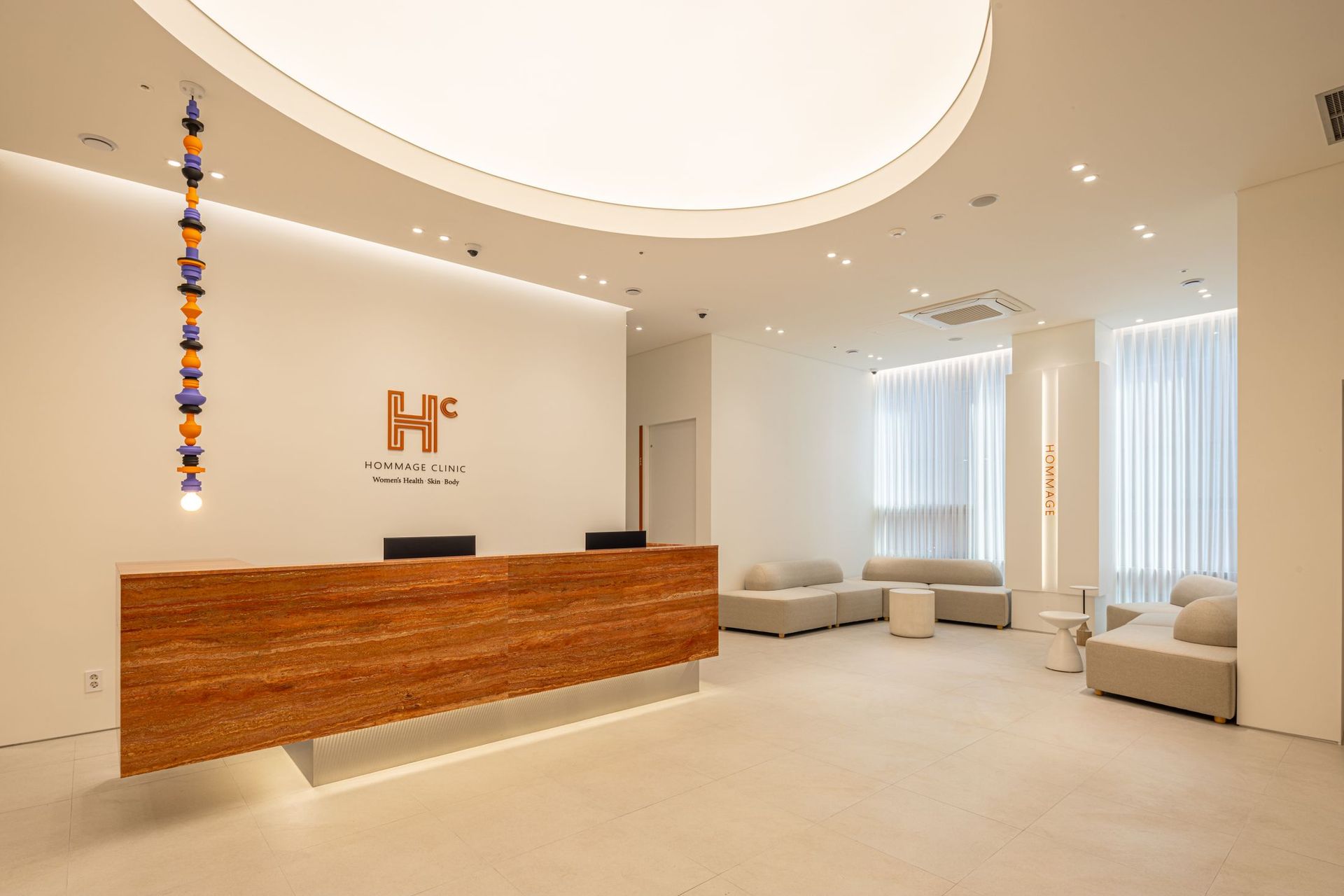
Hommage Clinic is a walk-in-friendly women's health and skin clinic in Gangnam, a short walk from Sinnonhyeon Station. The focused-ultrasound device the clinic lists is Ulthera Prime, used with real-time ultrasound imaging for the face, neck and décolletage. For body areas, the clinic's listed options include ONDA, which delivers microwave energy to the deep fat layer while cooling the skin; Tune Body, the body treatment in the same Tune line as the clinic's Tune Face radiofrequency; and Renuvion helium plasma, a minimal-incision option for moderate laxity. Dr. Kim Hyunbin assesses your area and recommends a device only when it is likely to help.
Because gynecology andskin and aesthetic treatmentsare under one roof, body changes after pregnancy or around menopause can be discussed together with your women's health care. Body contouring is cosmetic and is not covered by Korea's National Health Insurance. Cost depends on the device, the number of areas and the number of sessions, and you receive a written quote before treatment.
Mechanism
How does body HIFU work? Focused ultrasound, step by step
Ordinary diagnostic ultrasound passes through tissue without heating it. Body HIFU uses sound waves at much higher intensity and bends them to meet at one small point below the skin, the way a lens gathers sunlight. Only at that focal point does the energy concentrate enough to heat tissue quickly, to around 60°C or more, which is hot enough to damage fat cells and contract collagen. The skin the beam passes through on the way in stays much cooler, because the energy there is spread out.
The depth of the focal point is fixed by the cartridge or setting used. That is why measuring your fat layer first matters: a depth that sits comfortably inside a thick fat layer could land too close to muscle, bone or the skin itself in a thinner area. Over the following weeks, white blood cells called macrophages gradually clear the damaged fat, which is why results build slowly rather than appearing on the day.
Treatment areas
Body HIFU for the stomach, flanks, thighs and arms
Most body HIFU research has looked at the abdomen and flanks, where the fat layer is usually thick enough to treat at body depths. Studies of the first body focused-ultrasound devices generally enrolled adults with a body mass index of 30 or less and at least 2–2.5 cm of pinchable fat in the treated area. Thinner areas such as the inner arms or above the knees are more often treated for mild looseness than for fat, using shallower settings.
The cards below summarize what each area typically needs. Dr. Kim confirms the fat thickness at your visit; if it is too thin for a safe fat-reduction depth, a tightening option such as RF body tightening or small-volume fat dissolving injections may suit better.
Lower abdomen
The most studied area; often a pocket of fat below the navel that remains despite stable weight.
Flanks (love handles)
Usually enough fat for body depths; often treated together with the abdomen for a waistline change.
Outer and inner thighs
Fat thickness varies a lot here, so depth is chosen area by area.
Above the knees
Thin tissue near bone; mainly treated for mild looseness with lower energy.
Upper arms
Mild crepey skin on the inner arm; heavy hanging skin needs a different approach.
Buttocks and banana roll
Small changes in contour under the buttock crease; expectations should be modest.
 Hommage · Gangnam
Hommage Women's Clinic · Gangnam, Seoul
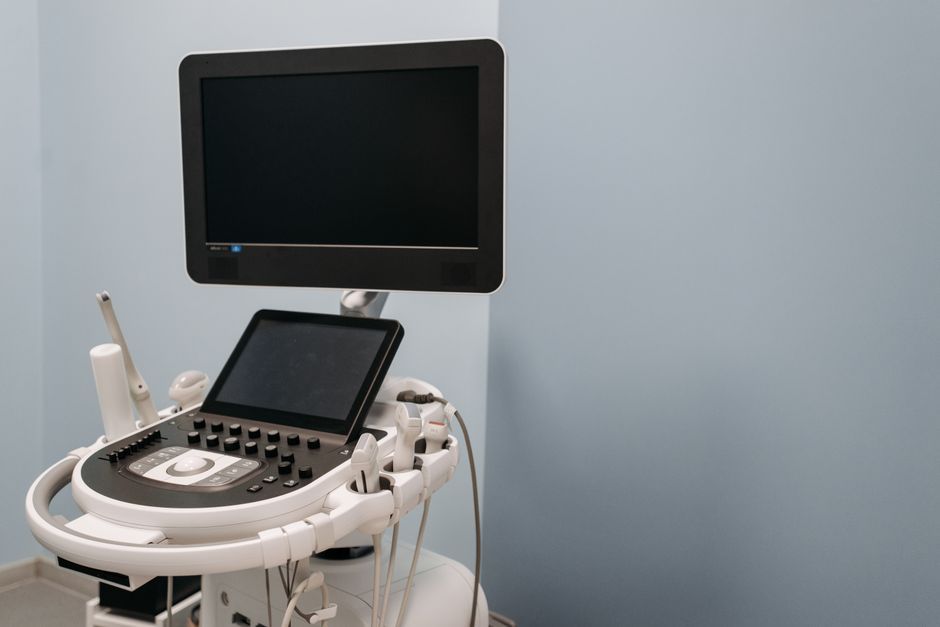
The fat layer is checked before a treatment depth is chosen. Illustrative photo.
Compare
Body HIFU vs CoolSculpting vs RF vs ONDA: which energy does what?
Every non-surgical body device works by damaging a small amount of fat or stimulating collagen with an energy source, and each energy behaves differently in tissue. Focused ultrasound heats precise points at a set depth. Cryolipolysis cools a fold of fat held in an applicator. Radiofrequency warms a broad volume of skin and fat. Microwave energy (ONDA) heats the fat layer while the skin surface is cooled. A literature review of 55 studies and 3,649 patients covering cryolipolysis, focused ultrasound, radiofrequency and low-level laser found that these devices produce statistically significant but modest reductions in localized fat, so the choice is about your tissue and tolerance, not about one device being far better.
Read more onCoolSculpting (cryolipolysis),RF body tightening,laser lipolysisandEMS body sculpting.
| Compare | Body HIFU | Cryolipolysis | RF / microwave |
|---|---|---|---|
| Main goal | A defined pocket of fat, or deep firming | A pinchable bulge of fat | Skin firming plus some fat reduction |
| How it feels | Deep heat or ache with each pulse | Intense cold, then numbness | Warmth, sometimes hot spots |
| Typical course | 1–3 sessions per area | 1–2 cycles per area | Often a course of several sessions |
| Notable risk | Burns or lumps if depth does not match tissue | Rare paradoxical fat enlargement | Burns if energy is too high |
Results
Body HIFU results timeline: before and after, week by week
The most common surprise after body HIFU is that nothing much seems to happen at first. Any early flatness is mostly swelling going down. The real change comes from treated fat being cleared, which in published studies continues for up to about 14 weeks. That is why most trials measured waist size at 12 weeks, and why Dr. Kim reviews your result at about 8–12 weeks before discussing another session.
In the largest randomized trial, post-treatment tenderness resolved in about 7–10 days, bruising in about 12–14 days and swelling in about 13–16 days. Your experience may be shorter or longer depending on the energy used and the area treated.
Safety
Body HIFU safety: who should not have it, and how burns are prevented
Most problems after body HIFU come from a mismatch between the energy and the tissue: too much energy, a depth too shallow for the skin, or passes stacked over the same spot. Careful assessment, conservative settings on a first session and keeping the handpiece in full contact with the skin all lower that risk. Darker skin tones are more prone to marks after any heat injury, so settings are chosen more cautiously.
Some situations make body HIFU unsuitable in the treated area or call for a doctor's review first:
Avoid in the area
- Pregnancy or breastfeeding
- Metal implants or mesh under the area
- Hernia, open wounds or active skin infection
- Very thin fat layer for a fat-reduction depth
Discuss with the doctor
- Recent surgery or liposuction in the area
- Blood thinners or a bleeding tendency
- Numbness or nerve problems in the area
- Keloid scars or a tendency to dark marks
 Hommage · Gangnam
Hommage Women's Clinic · Gangnam, Seoul
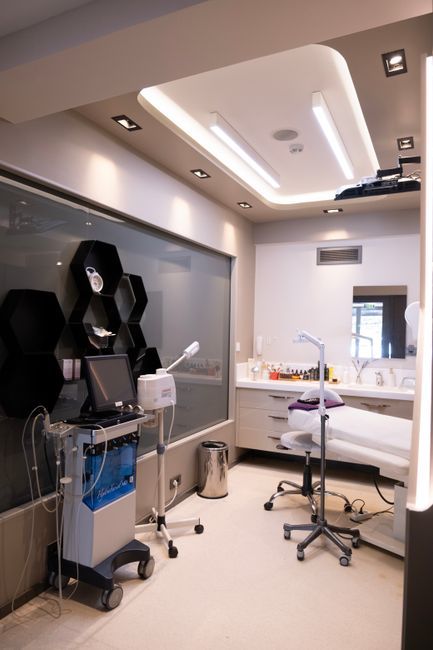
Settings are matched to your tissue to keep the risk of burns low. Illustrative photo.
 Hommage · Gangnam
Hommage Women's Clinic · Gangnam, Seoul
Walking and normal daily activity can continue the same day. Illustrative photo.
Aftercare
Body HIFU aftercare: do's and don'ts
There is no wound to care for after body HIFU, so aftercare is mostly about comfort and noticing the rare problem early. You can usually go back to work and normal activity the same day. The treated area may feel bruised, firm or numb in patches for some days to weeks; this is expected and settles on its own.
Do
- Return to work and walking the same day if you feel well
- Wear loose, soft clothing over the treated area for a few days
- Use a cool pack wrapped in cloth if the area feels hot or tender
- Drink water and keep your usual healthy routine
- Keep your weight stable to protect the result
- Send the clinic a photo if anything looks unusual
Don't
- Use saunas, very hot baths or heat packs while the area is tender
- Have deep or firm massage on the area for the first week or two
- Ignore blisters or skin that turns white, gray or dark
- Judge the result in the first few weeks; swelling can mislead
- Book another device on the same area before your review
- Start a crash diet expecting HIFU to speed weight loss
Expectations
Does body HIFU really work? Setting realistic expectations
Body HIFU does work for the right person, but the change is smaller than many advertisements suggest. In controlled studies, average waist reductions after a single treatment were around 2–2.5 cm at 12 weeks, and people in the sham or control groups also changed a little, by about 1.2 cm in one trial, because waist measurements naturally vary. About one in three people in the higher-energy group of that trial lost 3 cm or more. Put simply, most people notice clothes fitting a little better rather than a different body shape.
What makes a good result more likely
- A stable weight for several months before and after treatment
- A clearly pinchable pocket of fat rather than general weight spread over the body
- Firm, elastic skin that can shrink back over a smaller fat layer
- Patience to wait 2–3 months before judging the result
When another option is better
If the main concern is loose, overhanging skin after pregnancy or major weight loss, or a large volume of fat, surgery such as liposuction or abdominoplasty usually gives a much bigger change than any device. If muscles separated in pregnancy cause the bulge, core rehabilitation and a medical review come first. Dr. Kim will tell you honestly if body HIFU is unlikely to meet your goal.
 Hommage · Gangnam
Hommage Women's Clinic · Gangnam, Seoul
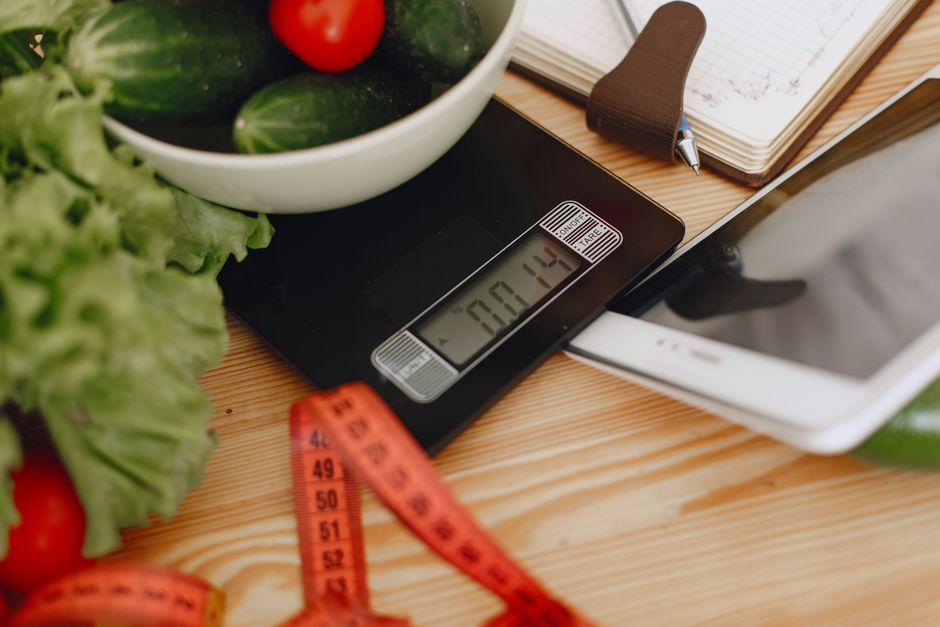
Body HIFU changes contour by centimeters; a stable weight keeps the result. Illustrative photo.
Evidence
Is body HIFU safe and effective? What the research says
Focused ultrasound for body contouring has been studied since the late 2000s, including one sham-controlled randomized trial of 180 adults published in Plastic and Reconstructive Surgery in 2011. Most other studies are smaller, many are funded by device makers, and follow-up rarely goes beyond a few months. Newer body HIFU devices sold in Korea and elsewhere differ from the devices studied, so these numbers are a guide rather than a promise for any specific machine.
Average waist change
Higher-energy group at 12 weeks; 2.1 cm with lower energy. Randomized, sham-controlled, 180 adults.
Jewell et al., Plast Reconstr Surg, 2011Lost 3 cm or more
Share of the higher-energy group reaching at least 3 cm; about 1 in 4 with lower energy.
Jewell et al., 2011 (ASPS summary)Needed pain relief
Main side effects were minor pain, swelling and bruising; no unexpected complications.
Jewell et al., 2011 (ASPS summary)Range across studies
Mean waist reductions reported in published focused-ultrasound studies, mostly after one treatment.
Frank & Saedi, Res Rep Focused Ultrasound, 2015Traveling to Seoul
Body HIFU in Seoul for international patients
Body HIFU has no wound and little downtime, so it fits into a short trip. Most visitors can have an assessment and, if suitable, treatment within one or two days, and fly home soon afterward. The catch is timing: results take 2–3 months to show, so your review is usually done by message with photos and measurements, or at your next visit to Seoul.
Before you book
- Send the areas that concern you, your height and weight, and preferred dates by WhatsApp, KakaoTalk or the contact form; ask for language support if you need it.
- Tell us about metal implants, hernias, recent surgery in the area, pregnancy or breastfeeding.
- Bring your passport for registration and a list of your medicines.
- Allow at least one free day after treatment before a long flight, in case the area is tender.
After you fly home
Take before photos in the same light and position at home, and repeat them at 8–12 weeks. If you notice blisters, skin color change or a growing hard lump, send photos to the clinic and see a local doctor promptly.
 Hommage · Seoul
Hommage Women's Clinic · Gangnam, Seoul
Seoul: the clinic is in Gangnam, a short walk from Sinnonhyeon Station. Illustrative photo.
 Hommage · Gangnam
Hommage Women's Clinic · Gangnam, Seoul
You receive a written plan and quote before any treatment. Illustrative photo.
Choosing well
How to choose a body HIFU clinic in Seoul
Many Gangnam clinics advertise body HIFU, and the machines, cartridges and settings vary widely. Use these questions at any consultation, including ours:
- Does a doctor assess me first? Fat thickness, skin laxity and medical history should be checked before any device is chosen.
- Which device and cartridge depth? Ask the device name and why that depth suits your area.
- Am I told if I am not a good candidate? A responsible clinic suggests another option when HIFU is unlikely to help.
- Are the expected results stated honestly? Centimeters over months, not instant dramatic change.
- How are burns and lumps managed? There should be a clear plan for follow-up if something goes wrong.
- Do I get a written quote and review date? Both should come before you decide.
What affects body HIFU cost in Seoul?
Cost depends mainly on the device and cartridge used, the number and size of areas treated, the number of lines or shots delivered, and how many sessions are planned. Combining body HIFU with another device, such as RF or microwave, adds to the total. Body contouring is cosmetic and is not covered by Korea's National Health Insurance; you receive a written quote at your consultation before you decide.
Your visit
What to expect at a body-contouring consultation
01
Assessment
Dr. Kim checks fat thickness, skin laxity, your weight history and any implants, hernias or medical conditions in the area.
02
Choosing a method
You hear whether focused ultrasound, ONDA, Tune Body or another approach fits your area and goal, and why.
03
Plan and quote
You receive the planned areas, the expected number of sessions and a written quote before any treatment starts.
04
Follow-up
Results are reviewed after about 8–12 weeks, once fat reduction and tightening can be judged, before any further session.
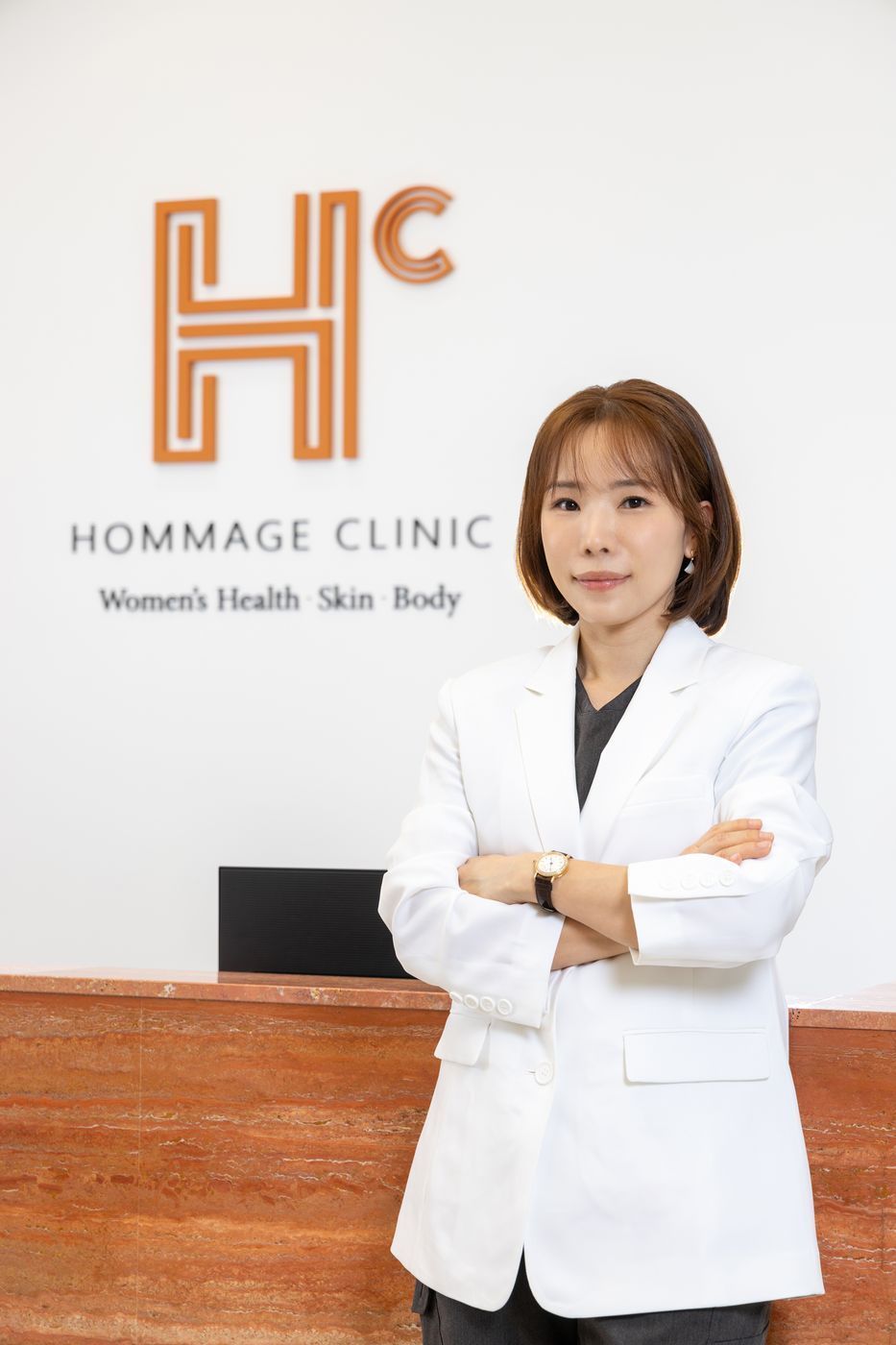
Your doctor
Dr. Kim Hyunbin
Associate Director · Skin & Aesthetic Treatments
Dr. Kim measures fat thickness and skin laxity before choosing a depth or device, because energy that suits a thick fat layer can be too strong over thin tissue. If a non-surgical device is unlikely to give the change you want, Dr. Kim explains that at the first visit.
Associate director dedicated to skin and aesthetic procedures, with extensive experience in lifting, botulinum toxin, fillers and laser treatments.
Body HIFU: frequently asked questions
Does body HIFU hurt?
Body HIFU is usually uncomfortable rather than very painful, but it can feel more intense than facial HIFU. Most people feel deep heat, prickling or a short ache with each pulse, especially near bone or on thin skin. Numbing cream or pain relief may be offered, and the energy can be adjusted during treatment. Tenderness can last a few days afterward.
How many body HIFU sessions will I need?
Many people have one to three sessions per area, spaced about 4–8 weeks apart, depending on the device and whether the goal is fat reduction or tightening. Because results build over 2–3 months, a further session is usually planned only after the first result can be judged.
Is body HIFU the same as ultrasound cavitation?
No. Body HIFU focuses high-intensity ultrasound at a set depth to heat and destroy fat or tighten tissue, usually in a few sessions. Ultrasound cavitation uses low-frequency, unfocused waves spread over a wide area and typically needs many sessions for smaller, more variable results. See ultrasound cavitation for details.
Can I have body HIFU after pregnancy?
Body HIFU is not done during pregnancy. After the birth, most doctors suggest waiting until your weight has settled and breastfeeding has finished. A belly that bulges because the abdominal muscles separated, or bladder and pelvic symptoms, need their own assessment first; see pelvic floor treatment.
Will body HIFU help me lose weight?
No. Body HIFU reduces a modest amount of fat in a treated area, and your weight on the scale barely changes. It works for people already near a stable, healthy weight. If weight has become hard to manage, a medical review, including conditions such as PCOS or thyroid problems, may be worth considering.
Does Hommage Clinic offer body HIFU?
The focused-ultrasound device Hommage Clinic lists is Ulthera Prime, used for the face, neck and décolletage. For body areas, Dr. Kim assesses your fat thickness and skin laxity and explains which of the clinic's body options, such as ONDA microwave or Tune Body radiofrequency, is likely to help before you book a treatment.
Can foreigners get body contouring treatment in Seoul?
Yes. Visitors and foreign residents can book a body-contouring assessment at Hommage Clinic in Gangnam. Walk-ins are welcome, or book ahead for a set time; bring your passport for registration. Results take 2–3 months to show fully, so plan follow-up around your travel dates, and contact us before your visit to arrange language support.
How much fat does body HIFU remove?
The change is modest. In a randomized, sham-controlled trial of 180 adults, the average waist reduction 12 weeks after one abdominal treatment was about 2.5 cm with the higher energy setting and 2.1 cm with the lower setting. Other studies report averages of roughly 2–4.7 cm. Results vary from person to person.
Is body HIFU safe?
In published studies the main side effects were short-lived discomfort, bruising and swelling, and serious complications were uncommon. Burns, blisters, lumps or dents can occur, mostly when the energy or depth does not match the tissue, which is why fat thickness is measured first. It is not done during pregnancy or over metal implants or a hernia.
Body HIFU or CoolSculpting: which is better?
Neither is better for everyone. Focused ultrasound heats fat at a set depth and also suits mild firming, while cryolipolysis freezes a pinchable bulge of fat held in an applicator. Reviews find both give modest, measurable reductions; the choice depends on the shape and thickness of the area and how you tolerate heat or cold.
Can body HIFU be combined with other treatments?
Sometimes. Body HIFU may be planned alongside RF body tightening for skin firming, or small-volume fat dissolving injections for areas too thin for focused ultrasound. Treatments on the same area are usually spaced out so each result can be judged.
Is there downtime after body HIFU?
Very little. Most people go back to work and normal activity the same day. In the largest trial, tenderness settled in about 7–10 days, bruising in about 12–14 days and swelling in about 13–16 days. Avoid saunas, very hot baths and firm massage on the area while it is tender.
How long do body HIFU results last?
Fat cells destroyed by treatment do not come back, but the remaining fat cells can grow if you gain weight, so a stable weight keeps the result. Skin tightening fades more gradually as the skin keeps aging, and maintenance sessions may be suggested after about a year.
References
Sources used for this page, reviewed by Dr. Kim Hyunbin. Read our editorial and medical review policy.
- Jewell ML, et al. Randomized sham-controlled trial to evaluate the safety and effectiveness of a high-intensity focused ultrasound device for noninvasive body sculpting. Plast Reconstr Surg. July 2011. Summary: American Society of Plastic Surgeons
- Frank M, Saedi N. High-intensity focused ultrasound for noninvasive body contouring: current perspectives. Res Rep Focused Ultrasound. 2015;3:1–4. doi:10.2147/RRFU.S55831. Full text
- Noninvasive body contouring: literature review and summary of objective data. SKIN: The Journal of Cutaneous Medicine. Article
This page is general information and does not replace a personal consultation. Illustrations are original works of Hommage Women's Clinic, Gangnam, Seoul; photos marked illustrative are not of patients.
Related body treatments
RF Body Tightening
Radiofrequency for mild skin laxity on the abdomen, arms and thighs, and how a course works.
Ultrasound Cavitation
Unfocused sound-wave fat reduction and why its results vary so much between machines.
CoolSculpting (Cryolipolysis)
How fat freezing works, who it suits and the rare side effects to know about.
HIFU Facial Lifting
Ulthera Prime focused ultrasound for the face, jawline and neck.
Cellulite Reduction Therapy
Why cellulite forms and which treatments can soften dimpling, realistically.
Fat Dissolving Injections (Body)
Injections for small, stubborn pockets such as bra-line rolls, and what the evidence shows.
Find out whether focused ultrasound suits your body goal
Book an assessment with Dr. Kim Hyunbin in Gangnam. You hear which body treatment fits your area, how many sessions to expect and what change is realistic.
Hommage Clinic · 4F, Building A, 509 Gangnam-daero, Seoul (near Sinnonhyeon Station) · Mon & Fri 10:00–20:00 · Tue–Thu 10:00–19:00 · Sat 10:00–15:00