
Skin & Aesthetics · Chemical peel
Pigment Correction Peels for Dark Marks and Melasma in Seoul
A pigment correction peel is a gentle, superficial chemical peel that uses mild acids and skin-lightening ingredients to speed up the shedding of pigment-loaded skin cells, gradually fading dark marks, sun-related spots and uneven tone. At Hommage Clinic in Gangnam, Seoul, Dr. Hwang Seonhwa keeps the peel light for pigment-prone skin and pairs it with daily sun protection and home care.
Quick answer
A pigment correction peel is a gentle, superficial chemical peel that combines mild acids with pigment-calming ingredients to fade dark marks after acne, mild melasma and uneven tone. At Hommage Women's Clinic in Gangnam, Seoul, Dr. Hwang Seonhwa plans each peel for pigment-prone skin. A session takes about 20–30 minutes with little or no downtime, and most people need 4–6 peels about 2–4 weeks apart, together with daily sunscreen and home care.
Key takeaways
- For pigment, several light peels are safer than one strong peel, because irritation itself can cause dark marks.
- Peels work best on pigment in the outer skin layer; deep pigment responds less.
- Melasma can be lightened but not cured; peels are one part of a long-term plan.
- Sun protection decides how long the result lasts.
Infographic
Pigment correction peel in numbers
Per session
Including preparation and soothing.
Peels in a series
Spaced about 2–4 weeks apart.
Skin preparation
Sunscreen and a calming or lightening cream at home.
Pause actives
No retinoids, scrubs or acids after each peel, or as advised.
Complication rate
Superficial peels in skin types III–VI, mostly temporary (2018 study).
Every day
Ideally tinted, to block visible light too.
Pigment correction peel at a glance
| Key fact | Details |
|---|---|
| Peel depth | Very superficial to superficial; medium-depth peels are usually avoided for melasma |
| Treatment time | About 20–30 minutes, including skin preparation and soothing |
| Comfort | Mild tingling or warmth for a few minutes; no numbing needed |
| Sessions | Typically 4–6 sessions about 2–4 weeks apart |
| Downtime | Minimal: pinkness for a few hours, light flaking for a few days in some people |
| Results visible | Gradual; tone usually looks more even after several sessions |
| Performed by | Dr. Hwang Seonhwa, physician for skin and aesthetic treatments |
A pigment correction peel may suit you if you have
- Brown marks left after acne, bites or irritation (post-inflammatory hyperpigmentation)
- Mild melasma, as one part of a plan with sunscreen and topical care
- Dull, blotchy or uneven skin tone, or faint sun-related spots
- Pigment-prone skin that has darkened after strong lasers or peels before
Wait or choose another option if you
- Are pregnant or breastfeeding: retinoid and salicylic acid peels are avoided, so discuss gentler options
- Have sunburn, a fresh tan, an active cold sore or a skin infection on the face
- Took isotretinoin recently: peels are often postponed, so ask the doctor about timing
- Cannot avoid strong sun in the weeks after treatment, such as on a beach holiday
What is a pigment correction peel?
A pigment correction peel is a superficial chemical peel designed for uneven pigment rather than for acne or wrinkles. Mild acids loosen the bonds between dead skin cells, so cells carrying excess melanin shed sooner and are replaced by more evenly colored skin.
The formula depends on your skin, but it usually combines two kinds of ingredients:
- Exfoliating acids such as glycolic, lactic, mandelic or salicylic acid, used at low to moderate strength.
- Pigment-calming ingredients such as azelaic acid, kojic acid, arbutin, tranexamic acid or a retinoid, which slow down melanin production.
A peel works mainly on pigment in the epidermis, the outer skin layer. Pigment that sits deeper, as in some melasma or Hori's nevus, responds less and usually needs other treatments.
Superficial vs medium-depth peels: which suits pigment?
For pigment problems, a series of gentle superficial peels is usually safer than one stronger peel. Inflammation is itself a trigger for dark marks, so a peel that injures the skin too much can leave you darker than before.
- Very superficial and superficial peels act within the epidermis. They cause little or no visible peeling and suit melasma and dark marks in Asian and darker skin.
- Medium-depth peels , such as stronger trichloroacetic acid (TCA) or a TCA peel layered over Jessner's solution, reach the upper dermis. They need about a week of healing and carry a clearly higher risk of rebound darkening, so they are rarely the right choice for melasma.
For acne marks on oily skin, a slightly stronger Jessner peel applied in light coats is sometimes an option. Your doctor chooses the depth after examining your skin.
What can a pigment correction peel treat?
Pigment peels are most useful for flat, brown, surface-level discoloration:
- Post-inflammatory hyperpigmentation: brown marks after acne or irritation. Peels for active breakouts are covered in chemical peels for acne .
- Melasma: as an add-on, never the whole plan. Daily sun protection and topical or oral treatment come first; see melasma treatment .
- Dull, uneven tone and mild sun-related darkening.
Well-defined spots such as freckles and sun spots usually clear faster with lasers; see sun spot treatment . Gentle peels are sometimes alternated with low-energy laser toning for melasma, timed safely apart.
What happens during a pigment peel?
The peel itself takes about 20–30 minutes. Before the first session, you may be asked to use sunscreen and a lightening or calming cream at home for a few weeks, which prepares the skin and lowers the risk of darkening.
- Your skin is cleansed and lightly degreased, and sensitive spots around the eyes, nostrils and lips are protected.
- The peel solution is applied evenly and timed while the doctor watches how your skin responds. Tingling or warmth is normal and fades within minutes.
- The peel is neutralized or rinsed off, depending on the acid.
- A soothing product and broad-spectrum sunscreen are applied before you leave.
How long do pigment peel results last?
Results build gradually over a series, and how long they last depends mostly on sun protection. Dark marks from acne often fade well and stay faded if new breakouts are controlled. Melasma is chronic, so it tends to return with sun, heat or hormonal change unless you keep up maintenance.
Aftercare is what protects your result:
- Sun protection every day: broad-spectrum SPF 30 or higher, ideally a tinted sunscreen with iron oxides that also blocks visible light, reapplied outdoors, plus a hat.
- Use a gentle cleanser and a fragrance-free moisturizer.
- Do not scrub or pick at any flaking skin.
- Pause retinoids, scrubs and exfoliating acids for about 3–5 days, or as advised.
- Avoid saunas, hot yoga and long periods in strong heat for a few days.
Risks and possible side effects
Superficial pigment peels are well established, but side effects are possible, and Dr. Hwang will review them with you before treatment:
- Stinging, redness, dryness and light flaking for a few days.
- Rebound or post-inflammatory darkening , more likely in darker skin, after sun exposure, or if the peel is too strong.
- Irritant or allergic reactions to an acid or lightening ingredient.
- Cold sore flare-ups in people who carry the herpes simplex virus.
- Patchy or uneven lightening, and rarely blistering, crusting, infection or scarring.
Contact the clinic if you notice blisters, oozing, increasing pain or swelling, or patches that look darker after the flaking has settled.
Pigment correction peels at Hommage Clinic
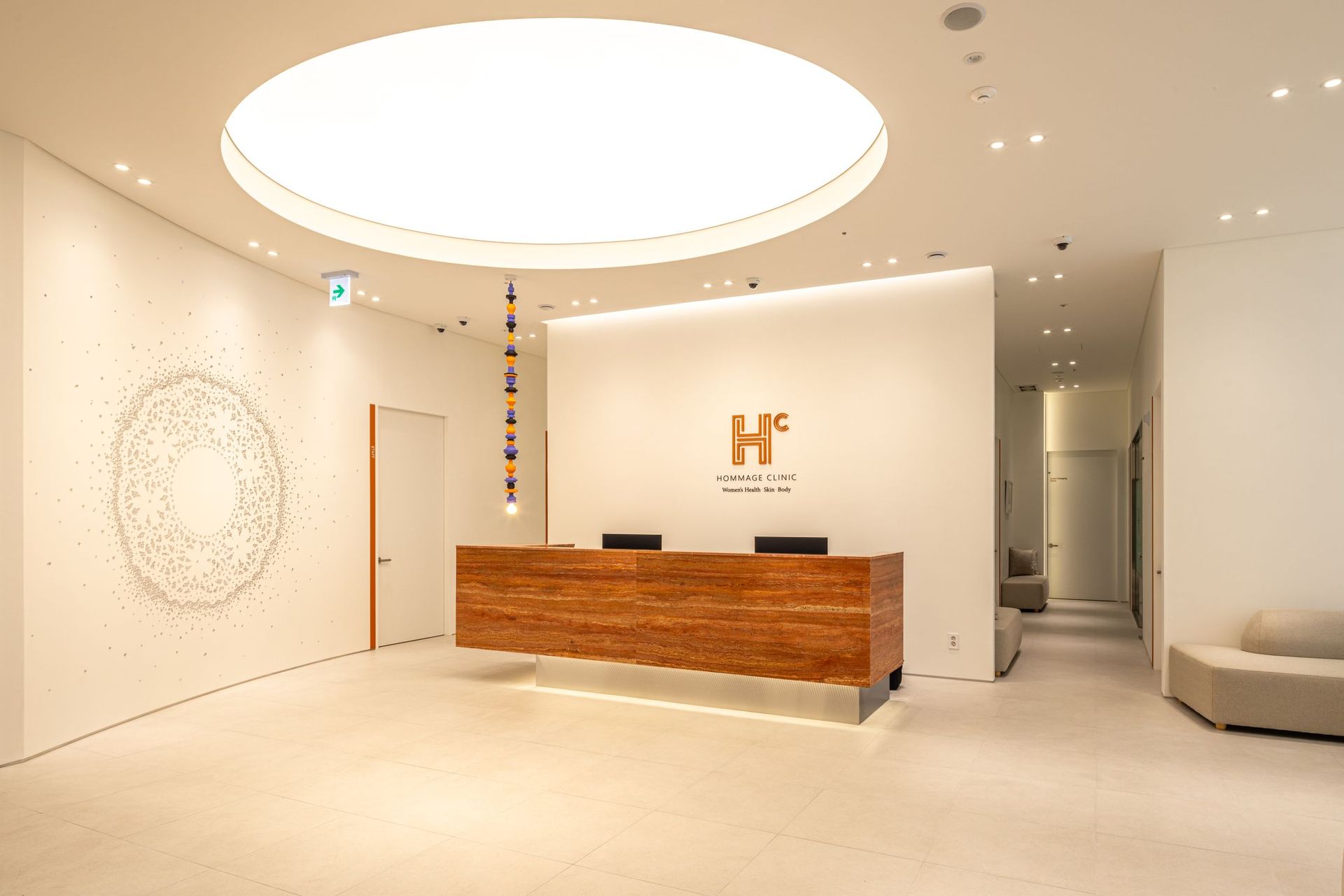
Hommage Clinic is a women's health and skin clinic in Gangnam, a short walk from Sinnonhyeon Station. Your peel is planned by a doctor, who sets the formula, strength and schedule for your skin rather than following a fixed package. Because pigment often changes with pregnancy, the pill or menopause, our OB/GYN team can review the hormonal side in the same clinic; read more aboutskin care for hormonal changesor explore our otherskin and aesthetic treatments.
Cost depends on the peel formula, the number of sessions and any home care or combined treatment. Cosmetic peels are not covered by Korea's National Health Insurance. You receive a written quote before treatment, and walk-ins are welcome during opening hours.
How it works
Chemical peel depth for pigmentation, explained
Skin pigment can sit at different depths. In most dark marks after acne and in the common "epidermal" type of melasma, extra melanin sits in the epidermis, the thin outer layer that renews itself every few weeks. A superficial peel speeds up that renewal so pigment-loaded cells are shed sooner. When pigment has dropped into the dermis below, it is held by cells that a superficial peel cannot reach, which is why some marks fade slowly or only partly.
Going deeper is not the answer for pigment-prone skin. A medium-depth peel creates a controlled wound in the upper dermis, and the inflammation that follows can trigger new, sometimes stubborn darkening. A review of cosmetic procedures in skin of color describes superficial peels as the safest choice and advises using medium and deep peels only with great caution. The diagram shows where each peel works.
Ingredients
Which peel is best for hyperpigmentation?
There is no single best peel for every dark mark. The choice depends on your skin type, how oily or sensitive your skin is, whether you have melasma, acne or both, and how your skin has reacted to treatments before. Each acid has a slightly different job, and pigment-calming ingredients are often added on top. These are the main groups Dr. Hwang chooses from:
Glycolic acid
Small molecule that exfoliates evenly. Widely studied for melasma and dark marks; neutralized after a short time in pigment-prone skin.
Lactic & mandelic acid
Gentler, larger molecules. Often chosen for sensitive skin and as a first peel.
Salicylic acid
Oil-soluble, so it suits acne-prone skin with marks. Avoided during pregnancy.
Pigment-calming
Azelaic or kojic acid, arbutin, tranexamic acid or a retinoid to slow new melanin production.
 Hommage · Gangnam
Hommage Women's Clinic · Gangnam, Seoul
The formula and strength are chosen for your skin, not from a fixed package. Illustrative photo.
Compare
Chemical peel vs laser for melasma and dark marks
Peels, low-energylaser toningand prescription creams such astranexamic acidare not rivals so much as tools that work at different speeds and depths. A 2024 meta-analysis of 15 randomized trials found that both lasers and chemical peels reduced melasma severity, with a somewhat larger average effect for lasers but more post-inflammatory darkening, especially in darker skin, and fewer complications with peels. In practice, a combined, gentle plan is common.
| Compare | Pigment peel | Laser toning | Sunscreen + creams |
|---|---|---|---|
| How it works | Speeds shedding of pigment-loaded cells | Low-energy pulses break up pigment | Blocks triggers and slows melanin |
| Downtime | Pinkness, light flaking | Mild redness | None |
| Main caution | Too strong a peel can darken skin | Rebound darkening or white spots if overdone | Irritation from some creams |
| Role | Add-on for marks and mild melasma | Add-on, often alternated with peels | Always needed |
Planning
Pigment peel sessions: a typical 4–6 peel plan
A pigment correction plan starts before the first peel. Two to four weeks of sunscreen and a calming or lightening cream at home make the skin more even and less reactive, which lowers the risk of darkening. Each peel is then built on the last: strength goes up only if your skin handled the previous session well, and is held or lowered if it did not.
 Hommage · Gangnam
Hommage Women's Clinic · Gangnam, Seoul
Sunscreen every day matters as much as the peel itself. Illustrative photo.
Aftercare
After a chemical peel for pigmentation: do's and don'ts
Freshly peeled skin is more sensitive to sun, heat and friction for several days. Most setbacks, such as new dark patches, come from sun exposure or picking at flakes rather than from the peel itself. A study of superficial peels in skin types III to VI reported complications in 3.8% of patients; they resolved within months and were less common in winter.
Do
- Use a tinted SPF 30+ sunscreen every morning and reapply outdoors
- Wear a hat or stay in shade on sunny days
- Cleanse gently and use a fragrance-free moisturizer
- Let flakes come off on their own
- Restart actives only when the doctor says so
- Report any patch that looks darker after flaking settles
Don't
- Scrub, pick or peel flaking skin
- Use retinoids, acids or scrubs for about 3–5 days
- Take saunas, hot yoga or long hot showers for a few days
- Book waxing, threading or another peel too soon
- Try a stronger peel at home to speed things up
Your situation
Pigment peels and hormones: the pill, pregnancy and after childbirth
Melasma is far more common in women, and it often appears or darkens with pregnancy, hormonal contraception or hormone therapy. Reviews of cosmetic procedures in skin of color list oral hormonal agents and light-sensitizing medicines among the things to check before a peel. That does not mean you must stop the pill, but it helps explain why pigment can return and why a peel alone is rarely enough.
During pregnancy and breastfeeding
Peels with retinoids, hydroquinone or salicylic acid are postponed. Melasma that starts in pregnancy often fades after delivery, so many women focus on sun protection first and decide about peels later.
After childbirth and around menopause
Skin can be drier and more reactive when estrogen levels change, so peels may start milder. Because Hommage Women's Clinic also provides gynecology care, hormonal questions can be reviewed in the same place; seeskin care for hormonal changesorbirth control options.
 Hommage · Gangnam
Hommage Women's Clinic · Gangnam, Seoul
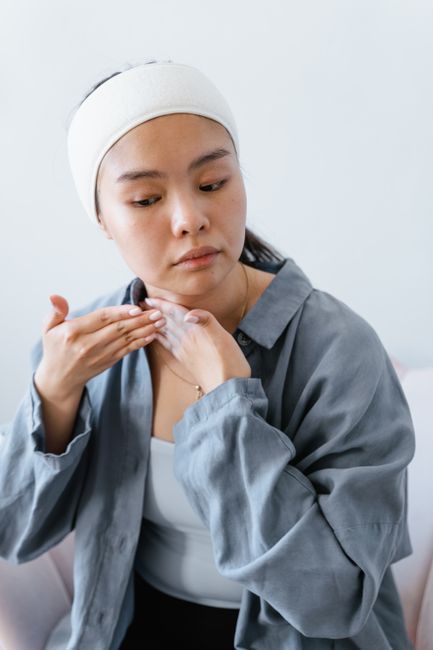
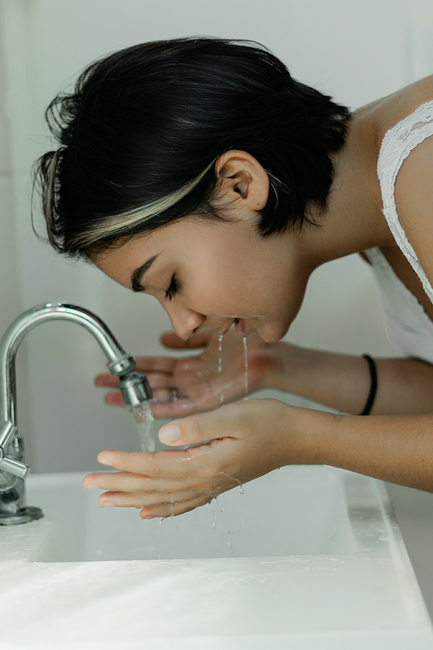
A gentle home routine keeps skin calm between peels. Illustrative photo.
 Hommage · Gangnam
Hommage Women's Clinic · Gangnam, Seoul
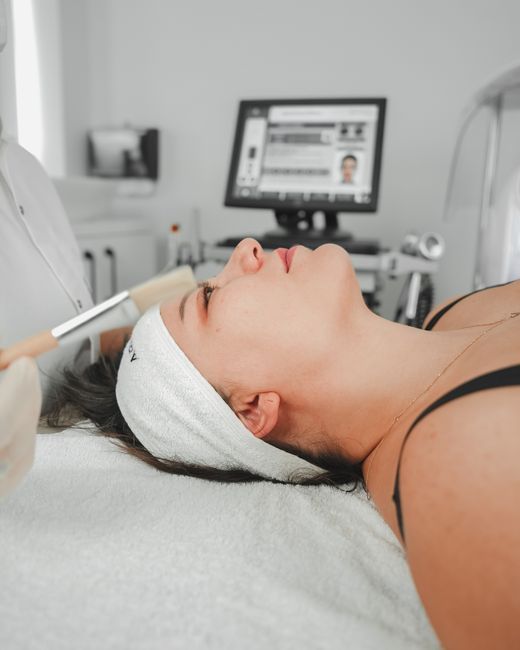
The peel is applied evenly and timed while your skin is watched. Illustrative photo.
Evidence
Do chemical peels work for pigmentation? What the research says
Chemical peels are one of the oldest and most studied add-on treatments for melasma and dark marks. Recent meta-analyses agree that they reduce melasma severity scores, but the studies vary widely in peel type, strength, skin type and follow-up, and many are small.
Peels vs lasers for melasma
Both reduced severity; peels had fewer complications.
Lee et al., J Cosmet Med, 2024Studies meta-analyzed
Peels and oral or topical treatment lowered melasma scores; high variation between studies.
Ribeiro et al., Pharmaceutics, 2025Complications
Superficial peels in skin types III–VI; resolved over months.
Vemula et al., JAAD, 2018 (via Desai 2023)Traveling to Seoul
Pigment correction peels in Seoul for international patients
Because pigment peels have little downtime, a single peel fits into a short trip. A full series of 4–6 peels 2–4 weeks apart suits people living in Seoul or visiting more than once. For a short stay, a consultation, one gentle peel and a home-care plan to continue with your own doctor is often the most realistic approach.
- Send daylight photos of your face and your travel dates by WhatsApp, KakaoTalk or the contact form; ask for language support if needed.
- Avoid booking a peel just before a beach trip or ski holiday.
- Bring your passport and a list of your skin products and medicines, including isotretinoin, the pill or photosensitizing drugs.
- Pack a tinted sunscreen and a hat; Seoul summers are bright and humid.
- Ask for written notes on the peel type and strength used, to share with a doctor at home.
 Hommage · Seoul
Hommage Women's Clinic · Gangnam, Seoul
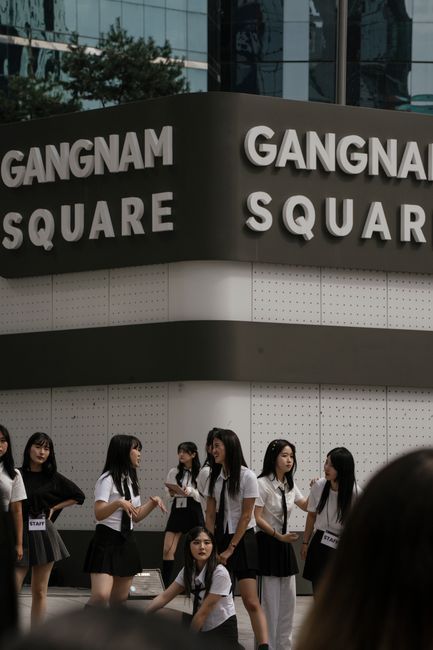
The clinic is in Gangnam, a short walk from Sinnonhyeon Station. Illustrative photo.
Choosing well
How to choose a clinic for pigmentation peels in Seoul
Peels are offered by many clinics and spas. For pigment-prone skin, these questions help you judge any provider, including us:
- Is the pigment diagnosed first? Melasma, dark marks and sun spots need different plans.
- Is a doctor choosing the peel? Formula and strength set for your skin type.
- Do they start gently? Strength rises only if your skin tolerated the last peel.
- Is skin preparation included? Sunscreen and a priming cream before the first peel.
- Is home care part of the plan? Peels alone rarely control melasma.
- Is the quote written? Number of peels, products and follow-up visits.
What affects the cost of a pigment correction peel?
The cost depends on the peel formula, the number of sessions in your plan, any prescription or home-care products, and whether peels are combined withlaser toningortranexamic acid therapy. Cosmetic peels are not covered by Korea's National Health Insurance, and you receive a written quote before treatment.
 Hommage · Gangnam
Hommage Women's Clinic · Gangnam, Seoul
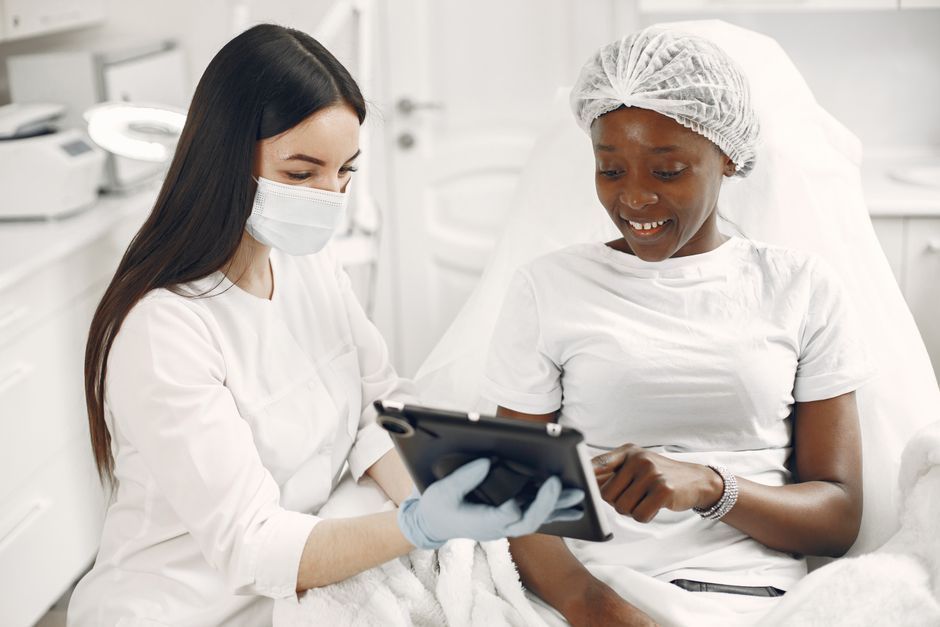
Your pigment type is diagnosed before any peel is planned. Illustrative photo.
Your visit
What to expect at your pigment peel appointment
01
Skin assessment
Dr. Hwang examines the type and depth of your pigment and reviews medications, pregnancy plans, cold-sore history and recent sun exposure.
02
Skin preparation
You may start sunscreen and a calming or lightening cream at home for a few weeks before the first peel.
03
Peel session
The solution is applied and timed while your skin is watched, then neutralized or rinsed off. The visit takes about 20–30 minutes.
04
Aftercare and plan
Sunscreen goes on, you receive written aftercare, and the timing of the next peel is agreed.

Your doctor
Dr. Hwang Seonhwa
Physician · Skin & Aesthetic Treatments
Dr. Hwang keeps pigment peels deliberately light and increases strength only when the skin has tolerated the previous session, because irritation can darken pigment-prone skin. Sunscreen habits and home care are reviewed at every visit, since they affect the result as much as the peel itself.
Physician for face and skin procedures, including lifting, laser and skin-improvement treatments, planned around facial proportions and skin condition.
Pigment correction peel: frequently asked questions
Does a pigment correction peel hurt?
A pigment correction peel usually feels like mild tingling or warmth for a few minutes, then settles. Because these peels are superficial, numbing cream is not needed, and most people go back to their day afterward. Tell the doctor if the stinging feels strong, because the peel can be neutralized or removed early.
How many pigment correction peels will I need?
Most people need a series of about 4–6 peels spaced 2–4 weeks apart. Dark marks after acne often improve within a few sessions, while melasma usually needs a longer plan that combines peels with sunscreen and topical or oral treatment. Occasional maintenance peels help keep the result.
Can a chemical peel remove melasma permanently?
No. A peel can lighten melasma, but it does not cure it, and the patches often return with sun, heat, pregnancy or hormone changes. Peels are most useful as one part of a long-term plan with strict sun protection and prescription care. See our melasma treatment page for the full approach.
Can I have a pigment peel in summer?
Yes, if you can protect your skin strictly. Gentle superficial peels can be done year-round, but strong sun soon after a peel raises the risk of darkening. Many people prefer autumn and winter, and it is wise to avoid booking a peel shortly before a beach holiday or outdoor trip.
Is a pigment correction peel safe during pregnancy or breastfeeding?
Many pigment peels are postponed during pregnancy and breastfeeding, especially those containing retinoids, hydroquinone or salicylic acid. A very gentle lactic or glycolic acid peel may sometimes be considered after discussion. Melasma that starts in pregnancy often fades after delivery. Learn more about skin changes during pregnancy and other hormonal shifts.
Can foreigners get a pigment correction peel in Seoul?
Yes. International patients and foreign residents can book an appointment at Hommage Clinic and should bring a passport for registration. Because results build over several sessions, a peel series suits people staying in Seoul for a while. Please contact us before your visit to arrange language support.
Will my skin peel visibly after a pigment correction peel?
Often not much. Very superficial peels may cause no visible peeling at all, and superficial peels usually cause light flaking for a few days. Strong sheet-like peeling is a sign of a deeper peel, which is generally avoided for pigment-prone skin.
Which is better for dark spots: a peel or a laser?
It depends on the spot. Well-defined sun spots and freckles usually clear faster with a laser such as pico laser. Diffuse dark marks and melasma often do well with gentle peels, sometimes alternated with laser toning. A 2024 meta-analysis found both helped melasma, with fewer complications after peels.
Can I wear makeup after a pigment peel?
Usually from the next day, as long as the skin is not raw or stinging. Use gentle products, remove them softly, and keep sunscreen underneath.
Can I use my vitamin C or retinol after a peel?
Pause retinoids, exfoliating acids and scrubs for about 3–5 days, or as advised. Gentle moisturizer and sunscreen are fine straight away. Your doctor will tell you when to restart brightening serums, which can support the result once the skin has settled.
Why did my dark marks get darker after a peel?
Temporary darkening can happen if the skin was irritated or exposed to sun. It usually fades with strict sun protection and calming care, but tell the clinic so the plan can be adjusted, for example with a milder peel or more preparation time.
Is a pigment correction peel covered by insurance in Korea?
Cosmetic peels are not covered by Korea's National Health Insurance. You receive a written quote for the full plan before treatment.
Can men have a pigment correction peel?
Yes. The same principles apply. Shaving can irritate freshly peeled skin, so skip shaving on the day of the peel and shave gently for a few days afterward.
References
Sources used for this page, reviewed by Dr. Hwang Seonhwa. Read our editorial and medical review policy.
- Desai M, Gill J, Luke J. Cosmetic procedures in patients with skin of color: clinical pearls and pitfalls. J Clin Aesthet Dermatol. 2023;16(3):37–40. JCAD
- Lee I, Kang S, Lee J, Cho H, Lee KW, Lim D. Comparative efficacy of chemical peels and laser treatments in melasma: a meta-analysis of randomized controlled trials. J Cosmet Med. 2024;8(2):81–87. DOAJ
- Ribeiro MM, Cardoso da Silva AC, Dalagrana H, et al. Systematic review and meta-analysis of treatments on Melasma Area Severity Index and quality of life. Pharmaceutics. 2025. PMID 41471132.
- Vemula S, et al. Study of superficial chemical peels in Fitzpatrick skin types III–VI. J Am Acad Dermatol. 2018. Cited as summarized in reference 1.
This page is general information and does not replace a personal consultation. Illustrations are original works of Hommage Women's Clinic, Gangnam, Seoul; photos marked illustrative are not of patients.
Related pigment and peel treatments
Melasma Treatment
A long-term plan for melasma combining sun protection, medication and gentle procedures.
Laser Toning
Low-energy laser sessions for uneven tone, often alternated with gentle peels.
Tranexamic Acid Therapy
Oral and topical tranexamic acid for melasma, with safety screening first.
Jessner Peel
A superficial-to-medium chemical peel for acne, dark marks and rough texture.
Chemical Peels for Acne
How different peels fit into acne care, from breakouts to marks.
Skin Care for Hormonal Changes
How pregnancy, the pill and menopause affect pigmentation and acne.
Plan a gentle approach to your pigmentation
Book a skin assessment with Dr. Hwang Seonhwa in Gangnam to find out whether your marks or melasma suit a pigment correction peel, and how to protect the result.
Hommage Clinic · 4F, Building A, 509 Gangnam-daero, Seoul (near Sinnonhyeon Station) · Mon & Fri 10:00–20:00 · Tue–Thu 10:00–19:00 · Sat 10:00–15:00