
Skin & Aesthetics · Acne scars
Fractional Laser for Acne Scars in Seoul: A Scar-by-Scar Plan
Fractional laser for acne scars is a treatment that sends a grid of microscopic laser columns into scarred skin, removing or heating tiny areas of scar tissue so the skin rebuilds with new collagen and depressed scars become shallower over a series of sessions. At Hommage Clinic in Gangnam, Seoul, Dr. Hwang Seonhwa maps your scar types and skin tone before choosing ablative or non-ablative settings.
Quick answer
Fractional laser for acne scars treats scarred skin in microscopic columns so new collagen makes depressed scars shallower. At Hommage Women's Clinic in Gangnam, Seoul, Dr. Hwang Seonhwa maps your scars first, then chooses non-ablative settings (about 3–5 sessions, 1–3 days of redness) or ablative CO2 or Er:YAG (about 1–3 sessions, 5–7 days of crusting). Results build over 3–6 months; scars soften but are not erased.
Key takeaways
- Best for shallow boxcar scars, released rolling scars and overall texture.
- Ablative lasers do more per session; non-ablative lasers hurt less and heal faster.
- Temporary darkening is common in Asian skin; settings and sun care are adjusted for it.
- Ice pick and deep boxcar scars usually need TCA CROSS or punch techniques as well.
Infographic
Fractional laser for acne scars in numbers
Non-ablative sessions
About 4–6 weeks apart.
Ablative sessions
About 6–8 weeks or more apart.
Non-ablative downtime
Redness like a mild sunburn.
Ablative downtime
Pinpoint crusting and peeling.
Final result
Judged after the last session.
Dark marks fade
Range in a study of fractional CO2 in Asian skin.
Fractional laser for acne scars at a glance
| Key fact | Details |
|---|---|
| Laser type | Non-ablative (e.g. 1,550 nm) or ablative fractional CO2 or Er:YAG, chosen per scar and skin |
| Treatment time | About 20–40 minutes of laser time, after 30–60 minutes of numbing cream |
| Sessions | Typically 3–5 non-ablative or 1–3 ablative sessions, about 4–8 weeks apart |
| Downtime | Non-ablative: 1–3 days of redness; ablative: about 5–7 days of crusting and peeling |
| Results visible | Gradually from about 1–2 months; final result about 3–6 months after the last session |
| How long results last | Scar improvement is long-lasting; scars soften but are not erased |
| Performed by | Dr. Hwang Seonhwa or another Hommage Clinic physician |
Fractional laser may suit you if you have
- Shallow to medium boxcar scars or uneven, pitted texture
- Rolling scars, ideally after subcision has released them
- Mixed scars that need surface smoothing as part of a combined plan
- Acne that has been under control for a few months
Wait or discuss another option if you have
- Active breakouts, cold sores or a skin infection in the area
- Pregnancy or breastfeeding (elective laser treatment is usually postponed)
- A fresh tan, an active melasma flare or a tendency to keloids
- Taken isotretinoin recently (timing is decided with your doctor)
How does fractional laser improve acne scars?
Fractional laser improves acne scars by injuring the skin in thousands of microscopic columns, called microthermal zones, while leaving the skin between them untouched. That untreated skin heals each column quickly, and the healing response replaces stiff scar tissue with new collagen over the following months.
Depressed acne scars form when inflammation destroys collagen in the dermis. For scars, the laser is set to reach that layer, with higher energy for depth and a carefully chosen density, meaning the share of skin treated in each session. Higher density gives more change per session but also more downtime and a higher risk of pigment change, so Asian and darker skin is usually treated at lower density over more sessions.
This page focuses on scars. For other uses of the same technology, such as pores, fine lines and texture, see fractional laser resurfacing .
Which acne scars respond to fractional laser?
Fractional laser works well on broad, shallow scars and the texture around them, and less well on narrow, deep scars. Most people have more than one scar type, so the plan follows a scar map.
- Boxcar scars (round or oval with sharp edges): shallow and medium ones respond well; deep ones often need TCA CROSS or punch techniques as well. See boxcar scar treatment .
- Rolling scars (wide, wave-like dips): improve more when the fibrous bands pulling them down are first released with subcision . See rolling scar treatment .
- Ice pick scars (narrow and deep): laser columns rarely reach their base, so these are usually treated with TCA CROSS first. See ice pick scar treatment .
- Raised scars and keloids : need a different approach and are assessed separately.
Flat red or brown marks left after breakouts are not true scars. They usually fade with time, sun protection and redness or pigment treatment.
Ablative vs non-ablative fractional laser: which is right for your scars?
The choice depends on scar depth, skin tone and how much downtime you can take. Ablative lasers give more change per session, while non-ablative lasers are gentler on pigment-prone skin but need more sessions.
- Non-ablative fractional (for example, 1,550 nm): heats columns of skin under an intact surface. Expect redness and swelling for about 1–3 days and a series of about 3–5 sessions. Often chosen for shallow scars and skin that darkens easily.
- Ablative fractional : CO2 laser (10,600 nm) or Er:YAG laser (2,940 nm) vaporizes tiny channels through the surface. Expect about 5–7 days of pinpoint crusting and peeling, with fewer sessions, typically 1–3.
Laser is not the only resurfacing option. RF microneedling for scars delivers heat under the surface with a lower pigment risk, and classic microneedling suits milder scars. Many scar plans alternate fractional laser with one of these.
What happens during a fractional laser session?
A visit usually takes about 1–1.5 hours, including numbing time.
- Your skin is cleansed and, with your consent, photographed under the same lighting each time so progress can be compared.
- Numbing cream is applied for about 30–60 minutes. If you get cold sores, an antiviral medicine is usually started beforehand.
- Your eyes are protected, and the doctor treats the face in planned passes, focusing on scar clusters, with cooling throughout.
- The skin is soothed and moisturized, and you go home with written aftercare instructions.
Most people feel heat and a prickling or snapping sensation, which is stronger with ablative settings.
How many sessions do you need, and when will you see results?
Most people need a series. Non-ablative treatment usually takes about 3–5 sessions spaced 4–6 weeks apart, and ablative fractional treatment about 1–3 sessions spaced 6–8 weeks or more apart.
Change is gradual. Skin often looks smoother once it has healed, but new collagen keeps forming for months, so the result of a series is usually judged about 3–6 months after the last session. Scars become shallower and less noticeable in most people; they are improved rather than erased. To protect your result:
- Keep the skin moisturized with the products you are given, and do not pick crusts or flakes.
- Use a broad-spectrum SPF 30+ sunscreen daily once the surface has healed, and avoid strong sun for at least 2–3 months.
- Pause retinoids and exfoliating acids until your doctor clears you, usually 1–2 weeks.
- Makeup is usually fine the next day after non-ablative treatment, and once the crusts have shed after ablative treatment.
Risks and possible side effects
Fractional laser for scars is a well-established treatment, but it carries real risks, which Dr. Hwang will explain before you consent:
- Redness and swelling , lasting days after non-ablative treatment and sometimes several weeks after ablative treatment.
- Post-inflammatory hyperpigmentation : temporary darkening, more common in Asian and darker skin and after sun exposure. It usually fades over weeks to months.
- Infection or cold sore reactivation , mainly while the skin is open after ablative treatment.
- Acne flares and milia (tiny white bumps).
- Rarely, lighter patches of skin or new scarring .
Call the clinic if pain or redness is getting worse after the first few days, or if you notice pus, yellow crusts, clusters of small blisters or a fever.
Fractional laser for acne scars at Hommage Clinic
Hommage Clinic is a women's health and skin clinic in Gangnam, a short walk from Sinnonhyeon Station. Your scars are mapped by type under angled light before a laser is chosen, and the doctor sets energy and density for each area rather than using one setting for the whole face. If breakouts are still active, they are treated first, for example withacne laser treatment, and hormone-related acne can be assessed by our OB/GYN team under the same roof. See ourskin and aestheticsservices for related care.
Cost depends on the laser type, the area, the number of sessions and any combined methods. Cosmetic scar treatment is not covered by Korea's National Health Insurance, although many medical tests and treatments are for enrolled patients. You receive a written quote before treatment, and walk-ins are welcome during opening hours.
How it works
How fractional laser works on acne scars: ablative vs non-ablative columns
Both kinds of fractional laser treat only a fraction of the skin in each pass, leaving bridges of healthy skin that speed healing. The difference is what happens inside each column. Ablative lasers vaporize a tiny open channel through the surface and into the dermis, then a zone of heat around it tightens and remodels. Non-ablative lasers leave the surface intact and create a column of heated, coagulated tissue underneath. Ablative channels drive more collagen change per session; non-ablative columns heal faster with less risk.
Two settings matter most for scars: energy, which controls how deep each column reaches, and density, the share of skin treated. For Asian skin, Dr. Hwang usually favors adequate depth with modest density, spread over more sessions.
Asian skin
Fractional laser for acne scars in Asian skin
Asian skin generally responds well to fractional laser, but it darkens more readily after inflammation. A study from Mahidol University in Thailand treated 13 patients with skin type IV using three sessions of ablative fractional CO2 laser about seven weeks apart. Six months after the last session, blinded physicians rated nearly half as good or excellent and none worse. However, 12 of 13 patients developed temporary dark marks at some point, which resolved within 2–16 weeks (average about 5) with a lightening cream.
That pattern is why settings are adjusted for Korean and other Asian skin: modest density, enough time between sessions, skin preparation when needed, and strict sun protection. Non-ablative lasers andRF microneedlingare often used for skin that darkens very easily.
- Modest density Less skin treated per pass, more sessions overall.
- Enough spacing Sessions spaced so inflammation fully settles in between.
- Skin preparation A few weeks of preparation may be advised if you darken easily.
- Avoid a fresh tan Treatment is postponed on recently tanned skin.
- Strict sun care Daily broad-spectrum SPF 30+ and shade for 2–3 months.
 Hommage · Gangnam
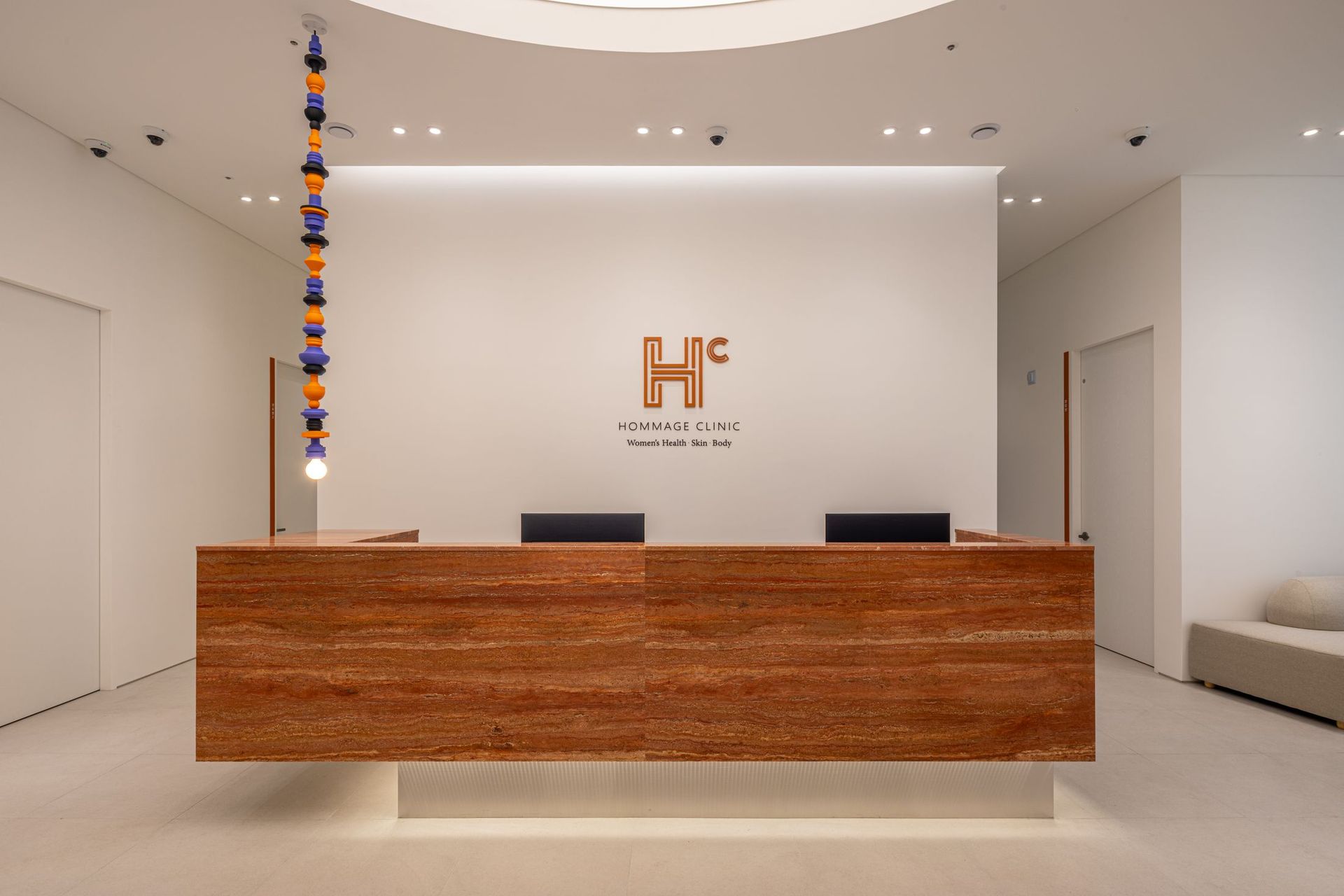
Hommage Women's Clinic · Gangnam, Seoul
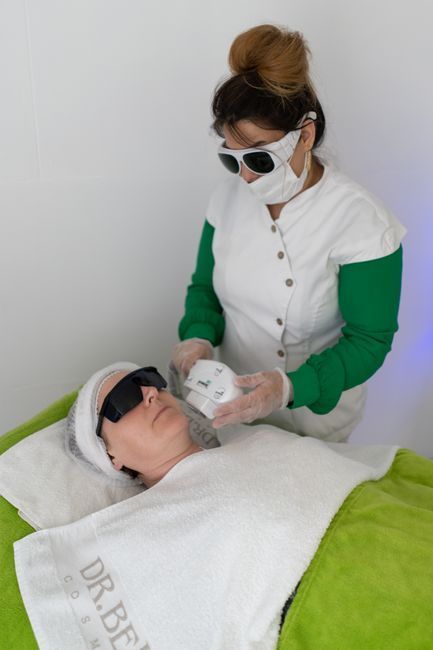
Eyes are protected throughout, and settings are adjusted for Asian skin. Illustrative photo.
Comparing options
Fractional laser vs RF microneedling vs microneedling for acne scars
These three resurfacing methods are often compared, but they suit different skin and goals, and many plans alternate them. A 2025 meta-analysis of seven trials (186 cases) found ablative lasers gave stronger results on both doctor and patient ratings, while non-ablative lasers caused less pain and shorter redness. RF microneedling sits between them: it delivers heat deep with less surface injury, which is why it is popular for skin prone to darkening.
| Option | Best for | Typical course | Downtime |
|---|---|---|---|
| Ablative fractional laser | Moderate boxcar scars and texture, when downtime is acceptable | 1–3 sessions, 6–8+ weeks apart | About 5–7 days of crusting |
| Non-ablative fractional laser | Shallow scars, busy schedules | 3–5 sessions, 4–6 weeks apart | About 1–3 days of redness |
| RF microneedling | Skin prone to darkening; rolling scars after subcision | 3–5 sessions | About 1–3 days of redness |
| Microneedling | Mild scars and texture | Often more sessions | About 1–2 days of redness |
Recovery
Fractional laser acne scar recovery, day by day
Recovery depends mainly on whether ablative or non-ablative settings were used. The timeline below shows a typical ablative fractional session, the longer of the two; after non-ablative treatment most people move from stage 1 to stage 4 within a few days.
 Hommage · Gangnam
Hommage Women's Clinic · Gangnam, Seoul
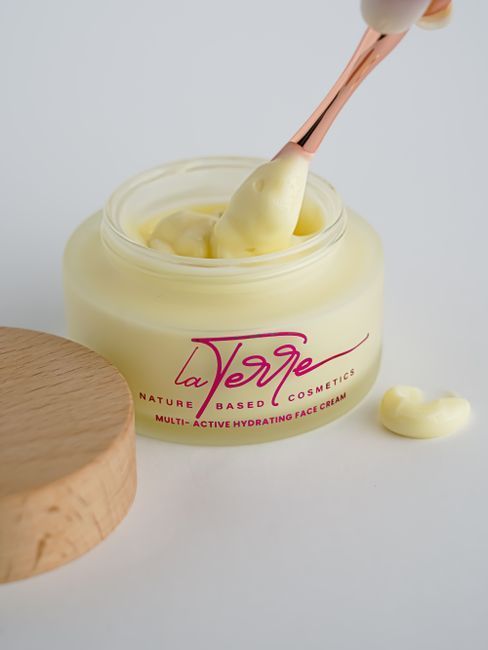
Frequent moisturizing supports the skin barrier while it heals. Illustrative photo.
Aftercare
Aftercare after fractional laser for acne scars: do's and don'ts
The first two weeks after fractional laser decide how quickly you heal and how likely you are to develop dark marks. In the Thai study of Asian skin, temporary darkening was very common but fully reversible, which makes prevention and early treatment worthwhile. You receive written instructions for your specific settings.
Do
- Moisturize often with the products you are given
- Cleanse with lukewarm water and a gentle cleanser
- Use broad-spectrum SPF 30+ once the surface is healed
- Wear a hat and seek shade for 2–3 months
- Sleep on a clean pillowcase
- Report early dark patches so they can be treated
Don't
- Pick crusts or peel flaking skin
- Use retinoids, acids or scrubs for 1–2 weeks
- Go to saunas, swim or exercise hard for a few days
- Sunbathe or use tanning beds
- Apply heavy makeup on open skin
- Book another facial treatment without asking
Evidence
Does fractional laser work for acne scars? What the research says
Fractional laser is one of the most studied acne scar treatments. The evidence consistently shows meaningful but partial improvement, a trade-off between strength and downtime, and a real but manageable pigment risk in Asian skin. Most trials are small and use different devices and settings, so results are best read as ranges.
Mean depth improvement
Topographic measurement after fractional treatment; range 43–80%.
Fabbrocini et al., Dermatol Res Pract, 2010Good or excellent
Blinded physician rating, 13 patients with skin type IV, 3 ablative CO2 sessions; none worsened.
Manuskiatti et al., J Am Acad Dermatol, 2010Temporary dark marks
12 of 13 Asian patients; all resolved in 2–16 weeks (average about 5).
Manuskiatti et al., 2010Ablative vs non-ablative
186 cases: ablative stronger; non-ablative less pain and shorter redness.
Ke et al., meta-analysis, 2025Preparation
How to prepare for fractional laser for acne scars
Good preparation lowers the risk of dark marks and infection and makes the session more comfortable. Ablative fractional laser can be quite uncomfortable: in the Thai study of Asian skin, patients rated pain at about 8 out of 10 on average despite numbing cream, with scores tending to fall at later sessions. Numbing time is built into your appointment, and cooling is used throughout.
- Avoid tanning and strong sun for several weeks beforehand; treatment is postponed on a fresh tan.
- Stop retinoids and exfoliating acids a few days before, as advised.
- Tell the doctor about cold sores; an antiviral is usually started before ablative treatment.
- Mention any isotretinoin use in the past year and any history of dark marks after treatments.
- Arrive without makeup, and plan a quiet few days after ablative settings.
 Hommage · Gangnam
Hommage Women's Clinic · Gangnam, Seoul
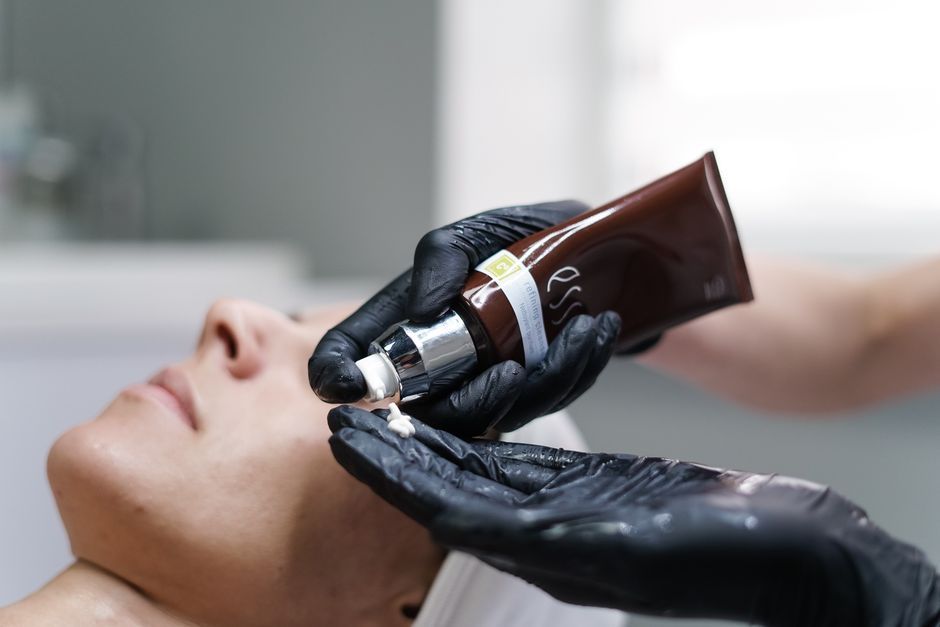
Numbing cream is applied for about 30–60 minutes before the laser. Illustrative photo.
 Hommage · Seoul
Hommage Women's Clinic · Gangnam, Seoul
Seoul: the clinic is in Gangnam, a short walk from Sinnonhyeon Station. Illustrative photo.
Traveling to Seoul
Fractional laser for acne scars in Seoul for international patients
A single trip can cover the scar map and one laser session, but a full series needs several sessions weeks apart. Many visitors combine a first session in Seoul with targeted steps such as TCA CROSS or subcision, then return or continue resurfacing at home with the written plan.
Planning your visit
- Send daylight photos of your scars by WhatsApp, KakaoTalk or the contact form before booking.
- Allow about 7 days in Seoul after ablative settings so crusts shed before you fly; non-ablative treatment needs only a few days.
- Bring your passport, a list of medicines and any earlier treatment records.
- Pack a hat and sunscreen: sightseeing and flights mean more sun than you expect while the skin is sensitive.
Choosing well
How to choose a clinic for fractional laser acne scar treatment
The laser brand matters less than how it is set and who sets it. Ask these questions at any consultation, including ours:
- Is there a scar map first? Laser should be matched to scar type, not used for everything.
- Ablative or non-ablative, and why? The answer should reflect your skin tone and downtime.
- How is pigment risk handled? Ask about density, spacing and preparation.
- Who sets the laser? A physician should choose and adjust settings.
- What about deep scars? TCA CROSS, subcision or punch techniques should be available.
- Do I get a written plan and quote? Including number of sessions and expected downtime.
What affects the cost of fractional laser for acne scars?
Cost depends on the laser type (ablative or non-ablative), the size of the area, the number of sessions, and whetherTCA CROSS,subcisionorRF microneedlingare combined. Cosmetic scar treatment is not covered by Korea's National Health Insurance, and you receive a written quote before treatment.
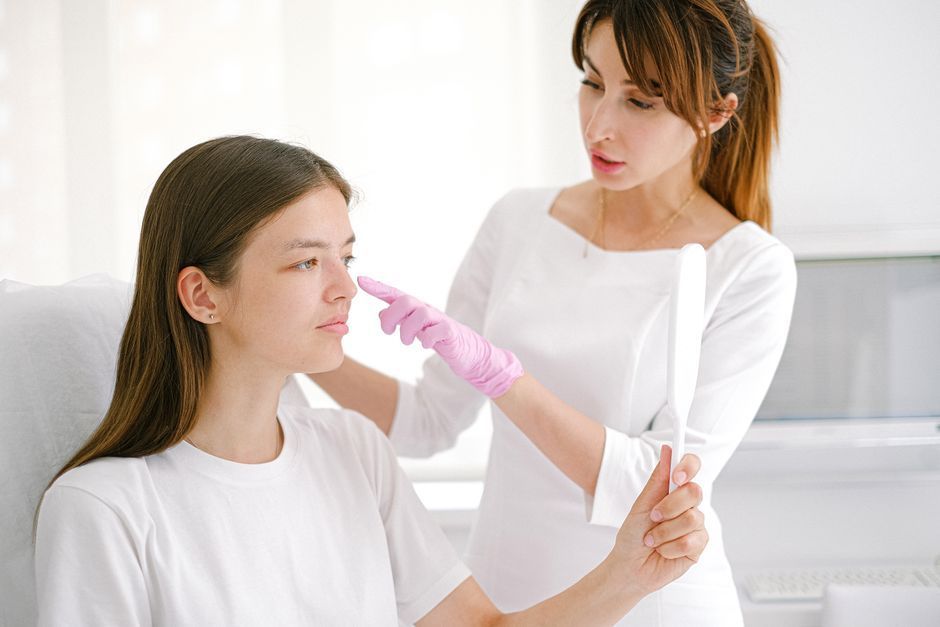 Hommage · Gangnam
Hommage Women's Clinic · Gangnam, Seoul
You receive a written plan comparing options before treatment. Illustrative photo.
Your visit
What to expect at your fractional laser appointment
01
Scar mapping
The physician examines your skin under angled light and records boxcar, rolling and ice pick scars area by area.
02
Laser choice
Your skin tone, pigment history, cold-sore history and available downtime are weighed to choose ablative or non-ablative settings.
03
Combined plan
You receive a written plan and quote, including any subcision or TCA CROSS needed before or between laser sessions.
04
Treatment and review
Sessions are spaced about 4–8 weeks apart, and progress is reviewed before each one so settings can be adjusted.

Your doctor
Dr. Hwang Seonhwa
Physician · Skin & Aesthetic Treatments
Dr. Hwang plans fractional laser from a scar map, using laser where scars are broad and shallow and reserving TCA CROSS or subcision for scars the laser cannot reach. For skin that darkens easily, Dr. Hwang usually chooses lower-density settings over more sessions rather than one aggressive treatment.
Physician for face and skin procedures, including lifting, laser and skin-improvement treatments, planned around facial proportions and skin condition.
Fractional laser for acne scars: frequently asked questions
Can fractional laser remove acne scars completely?
No treatment removes acne scars completely, but fractional laser can make depressed scars noticeably shallower and smooth the texture around them. How much change you see depends on scar type, depth and how your skin heals. Broad, shallow scars respond more than narrow, deep ones, and most people get a better result when laser is combined with other methods.
How many fractional laser sessions do I need for acne scars?
Most people need about 3–5 non-ablative sessions spaced 4–6 weeks apart, or 1–3 ablative sessions spaced 6–8 weeks or more apart. Deep or mixed scars may need more sessions, or a combination with subcision or TCA CROSS. Because collagen keeps building after treatment, the final result is usually judged about 3–6 months after the last session.
Does fractional laser work on ice pick scars?
On its own, only a little. Ice pick scars are narrow and deep, so laser columns rarely reach their base. They are usually treated first with TCA CROSS or punch techniques, and fractional laser is then used to smooth the surrounding texture. A scar assessment shows how many of your scars are the ice pick type.
How long is the downtime after fractional laser for acne scars?
It depends on the laser. After non-ablative treatment, skin looks sunburned for about 1–3 days and may feel rough for about a week. After ablative fractional treatment, expect swelling and pinpoint crusting for about 5–7 days, then pinkness that can last several weeks. Plan important events and flights with this in mind.
Can I have fractional laser after isotretinoin (Accutane)?
Tell your doctor if you have taken isotretinoin in the past year. A 6–12 month wait before laser was traditionally advised, while newer expert reviews suggest some gentler procedures may be reasonable sooner. Deeper ablative treatment is usually still approached with more caution. Dr. Hwang decides the timing based on when you stopped, how your skin looks and the planned settings.
Is fractional laser safe for darker skin?
It can be used in Asian and darker skin with careful settings, but the risk of temporary darkening is higher. To lower it, the doctor usually chooses lower density, gentler settings over more sessions or a non-ablative laser, and may recommend skin preparation beforehand. Strict sun protection for several months after treatment is essential.
Can foreigners get fractional laser for acne scars in Seoul?
Yes. International patients and foreign residents can book scar treatment at Hommage Clinic; bring your passport for registration. Because a series of sessions several weeks apart is usually needed, plan return visits or a longer stay, and allow about a week of recovery before flying after ablative treatment. Please contact us before your visit to arrange language support.
Is CO2 laser or non-ablative laser better for acne scars?
A 2025 meta-analysis found ablative lasers such as fractional CO2 gave stronger improvement, while non-ablative lasers caused less pain and shorter redness. The better choice depends on how deep your scars are, how easily your skin darkens and how much downtime you can take.
Does fractional laser for acne scars hurt?
Numbing cream is applied first, but you still feel heat and prickling. Ablative settings are more uncomfortable: in one study of Asian patients, average pain was about 8 out of 10 despite numbing, though scores tended to fall at later sessions. Cooling during treatment and short breaks help.
How common are dark marks after fractional laser in Asian skin?
Fairly common, but usually temporary. In a small study of ablative fractional CO2 laser in skin type IV, 12 of 13 patients developed some darkening at some point, and all cleared within 2–16 weeks with a lightening cream. Careful settings, sun protection and early treatment of any darkening keep the risk manageable.
When will I see results from fractional laser for acne scars?
Skin often looks smoother once it has healed, about a week after ablative treatment, but the main change builds over months as collagen forms. The result of a series is usually judged about 3–6 months after the last session, compared with photos taken before you started.
Can fractional laser be combined with subcision or TCA CROSS?
Yes, and that combination often gives the best overall result for mixed scars. Subcision releases tethered rolling scars and TCA CROSS treats narrow deep ones, while fractional laser smooths the surface. They are usually scheduled a few weeks apart so each area heals between steps.
What is the difference between fractional laser for acne scars and general laser resurfacing?
The technology is the same, but scar treatment uses deeper settings focused on scarred areas, often combined with other scar methods. General fractional laser resurfacing targets pores, fine lines and overall texture with settings chosen for the whole face.
References
Sources used for this page, reviewed by Dr. Hwang Seonhwa. Read our editorial and medical review policy.
- Manuskiatti W, et al. Ablative fractional resurfacing for atrophic acne scars in Asian patients (skin type IV). J Am Acad Dermatol. 2010;63:274–283.
- Ke R, Cai B, Ni X, et al. Efficacy and safety of non-ablative vs. ablative lasers for acne scarring: a meta-analysis. 2025. doi:10.1111/ddg.15651.
- Fabbrocini G, Annunziata MC, D'Arco V, et al. Acne scars: pathogenesis, classification and treatment. Dermatol Res Pract. 2010;2010:893080.
- Jacob CI, Dover JS, Kaminer MS. Acne scarring: a classification system and review of treatment options. J Am Acad Dermatol. 2001;45(1):109–117.
This page is general information and does not replace a personal consultation. Illustrations are original works of Hommage Women's Clinic, Gangnam, Seoul; photos marked illustrative are not of patients.
Related acne scar treatments
Boxcar Scar Treatment
How sharp-edged boxcar scars form and why their depth decides which method suits them.
Rolling Scar Treatment
Wide, wave-like scars that usually need subcision before resurfacing.
TCA CROSS Treatment
A focused acid technique for narrow ice pick scars that laser cannot reach.
RF Microneedling for Scars
Heat delivered under the surface with lower pigment risk, often alternated with laser.
Subcision for Acne Scars
Releases the fibrous bands under rolling scars before or alongside laser sessions.
Fractional Laser Resurfacing
The technology overall, including its use for pores, fine lines and rough texture.
Find out which laser suits your scars
Book an appointment with Dr. Hwang Seonhwa in Gangnam for a scar map and a written plan comparing ablative and non-ablative options, sessions and downtime.
Hommage Clinic · 4F, Building A, 509 Gangnam-daero, Seoul (near Sinnonhyeon Station) · Mon & Fri 10:00–20:00 · Tue–Thu 10:00–19:00 · Sat 10:00–15:00