
Skin & Aesthetics · Lifting
HIFU Facial Lifting with Ulthera in Seoul
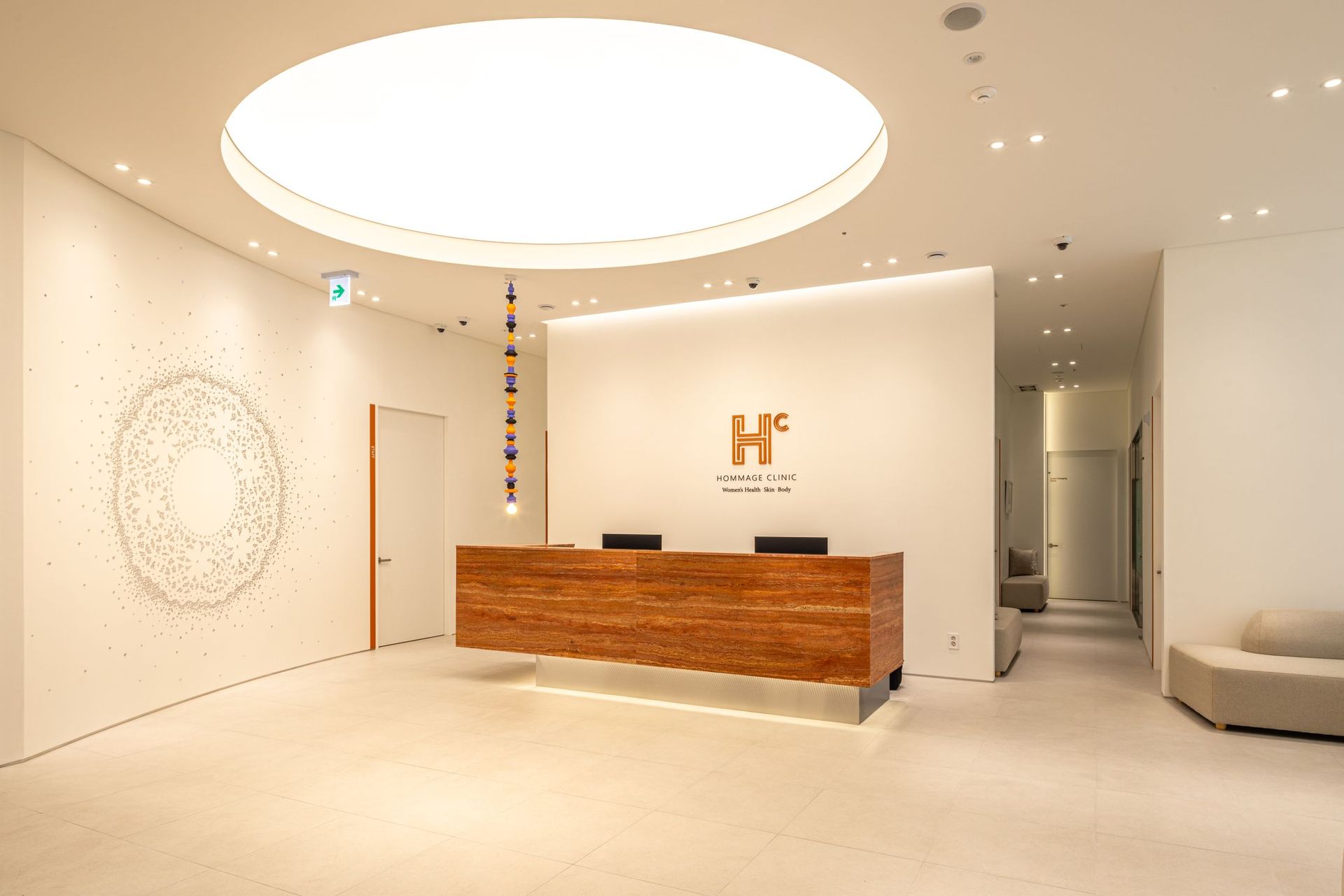
HIFU facial lifting uses focused ultrasound to heat tiny points deep under the skin, including the SMAS layer that surgeons tighten in a facelift, so tissue contracts and builds new collagen over the following months. At Hommage Clinic in Gangnam, Seoul, HIFU is performed with Ulthera Prime under real-time ultrasound imaging, and the treatment plan is reviewed by Dr. Kim Hyunbin.
Quick answer
HIFU facial lifting is a non-invasive treatment that uses micro-focused ultrasound to heat tiny points at 1.5, 3.0 and 4.5 mm under the skin, including the SMAS layer tightened in a facelift. At Hommage Women's Clinic in Gangnam, Seoul, it is done with Ulthera Prime under real-time imaging, and plans are reviewed by Dr. Kim Hyunbin. A full face and neck takes about 60–90 minutes with minimal downtime; the lift builds over 2–6 months.
Key takeaways
- HIFU suits mild to moderate sagging of the brow, cheeks, jawline and neck. It does not replace a surgical facelift for heavy jowls.
- The lift is gradual: some tightening early, most visible change from about 1 month, building over 2–6 months.
- Most side effects are temporary redness, swelling, tenderness or small bruises; nerve irritation is uncommon and usually resolves.
- A good plan is set by face shape and fat volume, not a fixed shot package, to avoid hollowing in lean faces.
Infographic
HIFU facial lifting in numbers
Depths in mm
Upper dermis, deep dermis and the SMAS lifting layer.
Focal heat
Reached in tiny points under the skin; the surface is spared.
Full face and neck
Smaller areas take less time.
Lift builds
New collagen forms gradually after one session.
Typical duration
Many people repeat about once a year.
Rated improved
Investigator-rated improvement pooled from 42 studies (see references).
HIFU lifting at a glance
| Key fact | Details |
|---|---|
| Energy type | Micro-focused ultrasound delivered at set depths of about 1.5 mm, 3.0 mm and 4.5 mm |
| Treatment time | Typically 60–90 minutes for the full face and neck; less for smaller areas |
| Comfort | Numbing cream, plus local anesthesia or pain relief when needed; deep heat is felt |
| Downtime | Minimal; redness or swelling usually settles in hours, tenderness may last days |
| Results visible | Often from about 1 month, building gradually over 2–6 months |
| How long results last | Typically around 1–1.5 years, depending on age and skin condition |
| Performed by | A Hommage Clinic physician; treatment plan reviewed by Dr. Kim Hyunbin |
HIFU may suit you if you have
- Early sagging along the jawline, mild jowls or a softening under-chin area
- Heavy-feeling brows or eyelids and want a subtle lift without surgery
- Mid-face descent that deepens the lines beside the nose and mouth
- A preference for a needle-free, incision-free lifting treatment
Wait or choose another option if you
- Are pregnant or breastfeeding
- Have open wounds, active infection, or severe or cystic acne in the area
- Have an implanted electronic device or metal implants in the treatment zone
- Have very thin, lean cheeks, where extra heat may hollow the face further
How does HIFU facial lifting work?
HIFU (high-intensity focused ultrasound) concentrates sound waves into tiny points of heat beneath the skin, without affecting the surface. At each point the tissue reaches roughly 60–70°C, which makes collagen contract and starts a repair process that builds new collagen and elastin over the next few months.
What sets facial HIFU apart from radiofrequency is depth control. Different transducers place the heat at fixed depths:
- 4.5 mm: the SMAS (superficial musculoaponeurotic system), the fibrous layer over the facial muscles that is tightened in a surgical facelift. This is where the lifting effect comes from.
- 3.0 mm: the deep dermis and the layer just beneath it, for firmness.
- 1.5 mm: the upper dermis, for skin texture and fine lines.
Ulthera, a micro-focused ultrasound system, adds real-time imaging (DeepSee) so the physician can see the tissue layers on screen before each line of energy. Many other HIFU devices deliver energy at similar depths without this visualization.
What can HIFU treat?
HIFU is designed for mild to moderate sagging, when you want structural lift rather than surface smoothing. It is commonly used on these areas:
- Brow and upper face: a subtle brow lift that can open the eye area.
- Cheeks and mid-face: support for tissue that has started to slide, softening the fold beside the nose.
- Jawline and under the chin: a sharper jaw line and early jowl improvement. If the main issue is fat under the chin, see double chin reduction .
- Neck and décolletage: laxity and fine crepey lines.
HIFU does not replace a surgical facelift for heavy jowls or deep neck bands. In those cases the doctor may suggest combining it with thread lifting , or getting a surgical opinion.
Does HIFU hurt, and what happens during treatment?
Most people feel HIFU as brief, deep heat or a prickling ache along the bone, especially over the jawline and forehead. Comfort varies a lot between people, so the plan includes numbing cream and, where needed, local anesthesia or a painkiller before treatment.
- Assessment: the physician reviews your facial structure, skin thickness and fat volume, then plans the number of lines and depths for each area.
- Preparation: the skin is cleansed and numbed, and guide marks are drawn.
- Treatment: ultrasound gel is applied, the transducer is placed flat on the skin and energy is delivered line by line, with imaging used to confirm depth. A full face and neck typically takes 60–90 minutes.
- Soothing: cooling or calming care helps settle redness and warmth afterward.
How long does HIFU last?
Results from Ulthera typically last around 1–1.5 years, and many people repeat it about once a year. Some tightening may be felt early, but most of the visible lift appears gradually from about one month and continues to develop over 2–6 months as new collagen forms.
How much change you see depends on age, skin quality and how much laxity you start with. Mild to moderate sagging usually shows the clearest change, while very loose skin responds less. HIFU slows the visible effects of aging; it does not stop them.
Aftercare is simple: you can usually wash your face and wear makeup the same day. Use sunscreen and gentle skincare, avoid saunas and very hot baths for a few days, and let the clinic know if tenderness increases rather than fades.
Risks and possible side effects of HIFU
HIFU has a long safety record when performed carefully, but side effects are possible. Common, temporary effects include redness, mild swelling, tenderness to touch and a tingling or numb feeling for a few days. Small bruises or raised lines (welts) can appear and usually fade within a week or two.
Less common risks include temporary nerve irritation that causes numbness or, rarely, mild weakness of a muscle near the mouth, which can make a smile look uneven for a few weeks. Burns are rare when the transducer is kept flat and the correct depth is used. In people with lean faces, too much energy over fat pads can cause unwanted hollowing, which is why the plan is adjusted to your face shape.
Contact the clinic if you notice blistering, worsening pain, a new uneven smile or numbness that lasts more than two weeks. Tell the doctor about recent fillers, threads, implants and any medications before treatment.
HIFU vs Thermage: which is right for you?
HIFU and Thermage both use heat to tighten, but they reach different layers. HIFU places focused points of heat at set depths down to the SMAS, so it is chosen when the goal is lifting the deeper structure of the jaw, cheeks and brow. Thermage uses monopolar radiofrequency to heat a broad volume of the dermis, so it is chosen mainly for tightening crepey skin and improving texture, including on the eyelids.
Many people have features of both, and the two treatments are often combined on the same day. Other complementary options include RF jawline tightening with Tune Face (Accent Prime) and skin boosters for skin quality.
HIFU facial lifting at Hommage Clinic
Hommage Clinic is a women's health and skin clinic in Gangnam, a short walk from Sinnonhyeon Station, and welcomes walk-ins during opening hours. The clinic uses Ulthera Prime by Merz with DeepSee real-time imaging and 1.5 mm, 3.0 mm and 4.5 mm transducers. Before treatment, the transducer tip is opened in front of you, and you receive a record of the shot count and tip serial number afterward.
Lifting is planned around your bone structure, skin thickness and fat volume rather than a fixed shot package, and it can be combined with Thermage FLX, Tune Face or threads when one device is not enough. You can explore every option on ourskin and aestheticspage.
Cost depends on the areas treated, the number of lines (shots) and any combined treatments. Cosmetic lifting is not covered by Korea's National Health Insurance. You receive a written quote before treatment, and you canbook a consultationto get one.
Mechanism
How HIFU lifts the face: the layers it reaches
The face is built in layers: skin on the surface, the dermis beneath it, a layer of fat, then the SMAS, a thin fibrous sheet that holds the facial fat and muscles together. When the SMAS and dermis loosen with age, the cheeks slide down, the jawline softens and jowls appear. A surgical facelift tightens the SMAS directly. HIFU heats it from outside instead, without any cut.
Each pulse focuses ultrasound into a tiny point of heat at one fixed depth, leaving the skin surface and the tissue between the points largely untouched. The heated collagen contracts at once, and the small injury starts a healing response that lays down new collagen over the following months. That is why HIFU gives a modest early tightening and a larger, gradual lift.
Candidates
Who is a good candidate for HIFU facial lifting?
The best results are usually seen in people with early to moderate laxity whose skin still has reasonable elasticity, often from the mid-30s onward. Age matters less than the tissue itself: a 35-year-old with heavy cheeks and a 55-year-old with thin, well-supported skin may need very different plans.
At your assessment, the doctor looks at three things: how far the tissue has descended, how thick the skin is, and how much facial fat you have. Fuller faces often tolerate more lines at the deeper depth. Lean faces need a lighter hand over the cheeks and temples, because too much heat over thin fat pads can make the face look more hollow.
Often a good fit
- Softening jawline or early jowls
- Mild brow or upper-eyelid heaviness
- Loose skin under the chin with little fat
- Crepey neck or décolletage
- Wants no needles, cuts or social downtime
Discuss other options
- Heavy jowls or deep neck bands: surgery or threads may do more
- Very lean, hollow cheeks: risk of further volume loss
- Volume loss as the main issue: fillers or collagen stimulators
- Fat under the chin as the main issue: fat reduction first
- Pregnancy, active skin infection or implants in the area
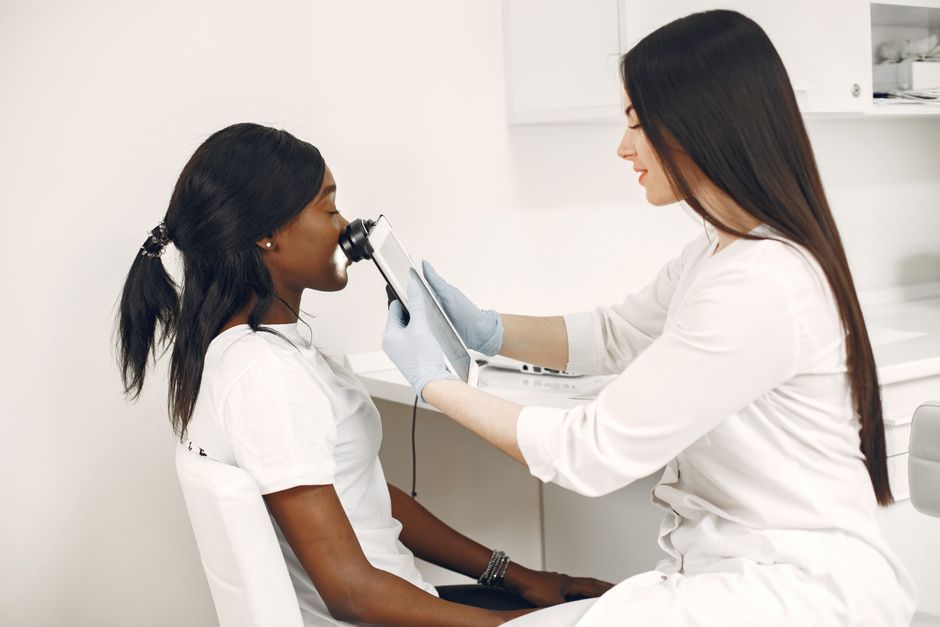 Hommage · Gangnam
Hommage Women's Clinic · Gangnam, Seoul
Every HIFU plan starts with an assessment of structure, skin thickness and fat. Illustrative photo.
Compare
Ulthera vs Thermage: lifting or tightening?
Both are heat-based, non-surgical treatments, and both work by making collagen contract and regenerate. The difference is where and how the heat is delivered. HIFU places separate points of heat at fixed depths, down to the SMAS, so it is chosen to lift sagging structure. Thermage uses monopolar radiofrequency to warm a broad, even volume of the dermis, so it is chosen to tighten loose, crepey skin and refine texture, including around the eyes.
Many faces have both problems at once, which is why the two are often combined in one visit. See ourThermage pagefor details of radiofrequency tightening.
| Compare | HIFU (Ulthera) | Thermage (monopolar RF) |
|---|---|---|
| Energy | Micro-focused ultrasound | Monopolar radiofrequency |
| Heat pattern | Separate points at set depths | Broad, even heating of the dermis |
| Main goal | Lift sagging jawline, cheeks, brow | Tighten crepey skin, refine texture |
| Typical feeling | Deep, brief ache over bone | Waves of heat with cooling |
| Often combined? | Yes. Many plans use HIFU for structure and RF for the skin surface layer. | |
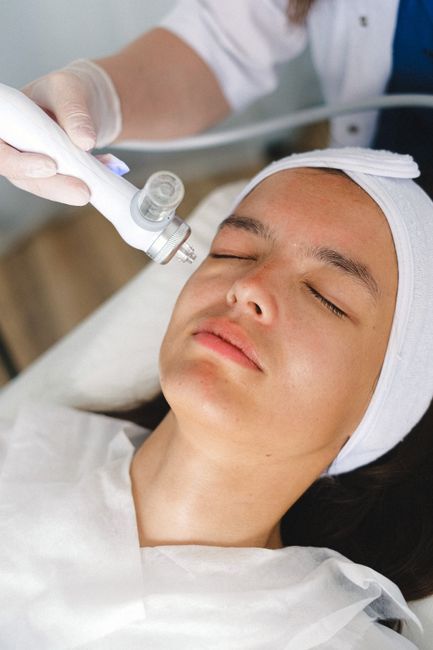 Hommage · Gangnam
Hommage Women's Clinic · Gangnam, Seoul
Energy is delivered line by line through a handpiece held flat on the skin. Illustrative photo.
Devices
Ulthera vs other HIFU devices: what is the difference?
HIFU is the general name for focused ultrasound treatments, and Korea has many HIFU devices. Ulthera, known in research as micro-focused ultrasound with visualization (MFU-V), is the system with the longest research record and the first to receive a US FDA clearance for a non-invasive lift: the brow in 2009, followed by the neck and under the chin in 2012.
Its practical difference is the screen. Before each line, the physician sees the skin, fat, SMAS and bone and can confirm that the energy will land in the intended layer. Other HIFU devices can be effective too, but they usually deliver energy without this view, and their settings and evidence differ from device to device. Whatever device you choose, the skill and judgment of the person planning the lines matter as much as the machine.
- Is the device named? Ask which system will be used. HIFU and Ulthera are not always the same thing.
- Is the transducer opened in front of you? At Hommage Clinic the tip is opened in your presence.
- Do you get a shot record? You receive the shot count and tip serial number after treatment.
- Is the plan per area? Lines and depths should match your face, not a fixed package.
Results
HIFU results timeline: before and after, month by month
HIFU is not an instant-result treatment, and it helps to know that before you book. Some people notice a slight tightening right away, which comes from collagen contracting and mild swelling. The real lift builds slowly as new collagen forms, so it is fair to judge the result at around three months rather than in the mirror the next morning. Taking your own photos in the same light before treatment and at three months is the most honest way to see the change.
Aftercare
HIFU aftercare: do's and don'ts
Because HIFU does not break the skin, aftercare is light, and most people go straight back to work. The goal is simply to let the deeper tissue settle and to avoid adding extra heat or pressure while it is tender.
Do
- Wash gently and use a simple moisturizer
- Wear broad-spectrum sunscreen every day
- Use a cool compress if the area feels warm
- Eat soft foods for a day or two if the jaw is tender
- Message the clinic if tenderness grows instead of fading
Don't (for a few days)
- Use saunas, hot yoga or very hot baths
- Have strong peels or retinoid-heavy routines on tender skin
- Massage the face firmly or use facial devices
- Book other heat treatments without asking the doctor
- Drink heavily on the first night if you bruise easily
 Hommage · Gangnam
Hommage Women's Clinic · Gangnam, Seoul
Gentle skincare and daily sunscreen are most of HIFU aftercare. Illustrative photo.
 Hommage · Gangnam
Hommage Women's Clinic · Gangnam, Seoul
A softening jawline is one of the most common reasons people ask about HIFU. Illustrative photo.
Combining
Combining HIFU with other treatments
Facial aging is rarely one problem. Sagging, skin laxity, volume loss and texture change happen together, and each responds to a different tool. HIFU addresses the deeper support layer, so it is often paired with treatments that work on the others:
- Thermagefor surface tightening of crepey skin, often in the same visit.
- Thread liftingwhen a more immediate repositioning of the jowls or cheeks is wanted.
- Collagen stimulatorsorfillerswhen lost volume, not sagging, is the main cause.
- Skin boostersorRejuranfor hydration and skin quality.
The order matters. If fillers or threads are planned, the doctor will advise whether HIFU should come first or after a gap, so the heat does not affect recently placed products. Tell the clinic about any filler, threads or implants you already have.
Evidence
Does HIFU really work? What the research says
Micro-focused ultrasound is one of the more studied non-surgical lifting methods, but the quality of the evidence is moderate at best. Most studies are small, many are funded by manufacturers, few compare against a placebo, and results are often judged from photographs or patient questionnaires. With those limits in mind, the research consistently shows a real but modest lift, with mostly mild and temporary side effects.
Studies pooled
Systematic review and meta-analysis of micro-focused ultrasound with visualization (MFU-V).
Amiri et al., Aesthet Surg J, 2025Improved, by investigators
Share of patients rated as showing some global aesthetic improvement.
Amiri et al., 2025Satisfied
84% overall, but 62% when patients could answer “neutral”.
Amiri et al., 2025Redness or swelling
In 20 Korean patients treated with Ulthera; 10% bruised. All resolved within 2 weeks.
Park et al., Ann Dermatol, 2015Traveling to Seoul
HIFU in Seoul for international patients
HIFU is one of the easiest treatments to fit into a short trip to Korea, because there is no wound to check and most people go out the same evening. Hommage Women's Clinic is in Gangnam, a short walk from Sinnonhyeon Station (Line 9 and Shinbundang Line).
Planning your visit
- Send your questions and dates by WhatsApp, KakaoTalk or the contact form, and ask for language support if you need it.
- Book HIFU early in your stay, so any tenderness or swelling settles before you fly and the doctor can see you again if needed.
- One or two days in Seoul after treatment is usually enough; three is comfortable if you are combining treatments.
- Bring your passport, a list of medicines, and details of any filler, threads or implants in your face.
After you fly home
The lift develops over the following months, so judge results at around three months. Send photos or questions to the clinic if anything worries you, and see a local doctor promptly for blistering or a change in facial movement.
 Hommage · Seoul
Hommage Women's Clinic · Gangnam, Seoul
Seoul: the clinic is in Gangnam, a short walk from Sinnonhyeon Station. Illustrative photo.
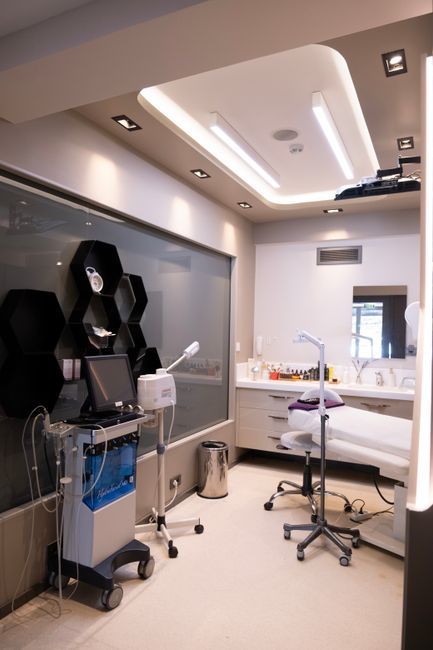 Hommage · Gangnam
Hommage Women's Clinic · Gangnam, Seoul
Ask which device is used and who plans the treatment before you book. Illustrative photo.
Choosing well
How to choose a HIFU clinic in Seoul
Gangnam has many clinics advertising HIFU, often by shot count. Use these questions at any consultation, including ours:
- Is a doctor assessing my face? The plan should come from a physician who looks at structure, skin and fat.
- Which device and which depths? Ask for the device name and the transducers planned for each area.
- Are shots set for my face or sold as a package? More shots are not always better, especially in lean faces.
- How is pain managed? Numbing and pain relief options should be explained in advance.
- Do I get a record and a written quote? Shot count, tip details and the price should be clear before treatment.
What affects HIFU cost in Seoul?
The price depends mainly on the device, the areas treated and the number of lines (shots) at each depth, plus any pain-relief options and combined treatments such asThermageorRF jawline tightening. Cosmetic lifting is not covered by Korea's National Health Insurance. You receive a written quote at your consultation before you decide.
Your visit
What to expect at your HIFU appointment
01
Facial assessment
Your face is analyzed for bone structure, skin thickness and fat volume, and the doctor maps depths and lines for each area.
02
Numbing
Cleansing, numbing cream and guide marks. Local anesthesia or pain relief is added when needed.
03
Ulthera treatment
Energy is delivered line by line with real-time imaging. A full face and neck typically takes 60–90 minutes.
04
Soothing and follow-up
Calming care settles redness. The lift develops over 2–6 months, and a review can be arranged.
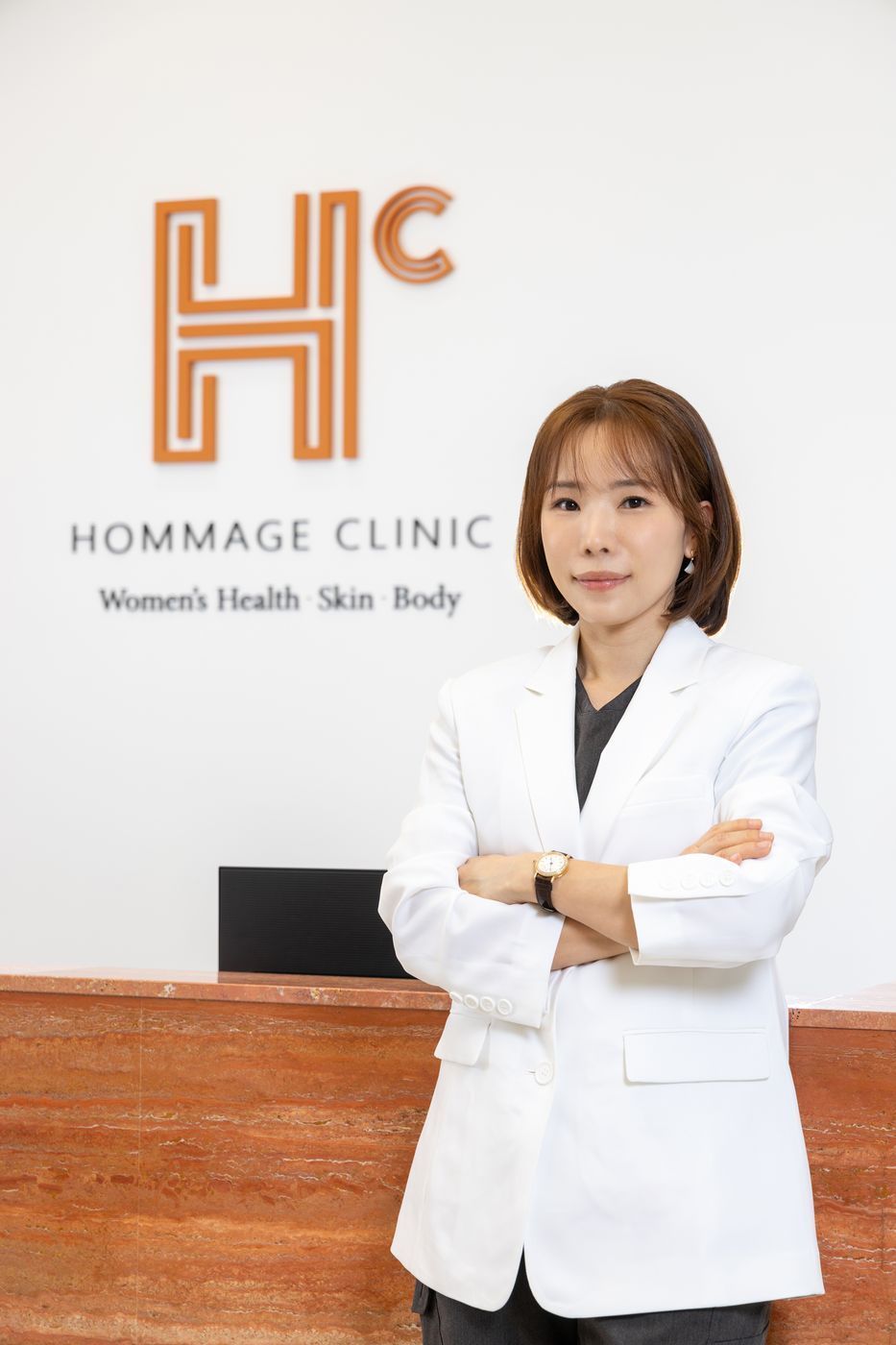
Your doctor
Dr. Kim Hyunbin
Associate Director · Skin & Aesthetic Treatments
Dr. Kim plans HIFU by reading the face in layers: where the SMAS needs lifting, where the skin needs firming, and where fat should be spared to avoid hollowing. The number of lines and depths is set for each area rather than taken from a fixed package.
Associate director dedicated to skin and aesthetic procedures, with extensive experience in lifting, botulinum toxin, fillers and laser treatments.
HIFU facial lifting: frequently asked questions
Does HIFU hurt?
HIFU can be uncomfortable, especially over bony areas such as the jawline and forehead, where it feels like deep heat or a brief ache. Numbing cream is used first, and local anesthesia or a painkiller can be added. Sensitivity varies, and the energy can be adjusted area by area during treatment.
How long does HIFU last?
Results from Ulthera typically last around 1–1.5 years. The lift appears gradually from about one month and continues to build over 2–6 months as collagen remodels. Many people repeat treatment yearly, and combining it with Thermage can help maintain skin firmness.
Is Ulthera the same as HIFU?
Ulthera is one type of HIFU, also called micro-focused ultrasound. Its distinguishing feature is real-time imaging, which lets the physician see the skin layers and confirm depth before delivering energy. Other HIFU devices work at similar depths but usually without this visualization, and their energy settings differ.
How many HIFU sessions do I need?
One session is usually enough for each treatment cycle, because the lift keeps developing for months afterward. Maintenance is typically once a year. Repeating HIFU too often is not recommended, and lean faces may need fewer lines in some areas to avoid hollowing.
Can I wear makeup after HIFU?
Usually yes. You can typically wash your face and apply makeup the same day, because the skin surface is not broken. Some redness, swelling or tenderness is normal for a few hours to a few days. Use sunscreen and avoid saunas or very hot baths for a few days.
Can foreigners get HIFU in Seoul?
Yes. International patients can have HIFU at Hommage Clinic; bring your passport for registration. Because downtime is minimal, a session fits easily into a short stay. Contact us before your visit to arrange language support and to plan the session early in your trip.
When will I see HIFU results?
Some people notice slight tightening straight away, but most of the visible lift appears from about one month and keeps developing over 2–6 months as new collagen forms. Compare photos taken in the same light before treatment and at around three months.
Can HIFU make my face look thinner or hollow?
It can, if too much energy is placed over thin fat pads in a lean face. This is why the number of lines and depths is planned for each area of your face rather than taken from a fixed package. If your main concern is lost volume, fillers or collagen stimulators may suit you better.
Is HIFU safe?
When performed carefully, HIFU has a good safety record. Redness, swelling, tenderness and small bruises are common and usually settle within days to two weeks. Temporary numbness or nerve irritation is uncommon, and burns are rare. Tell the doctor about fillers, threads, implants and medicines before treatment.
Can I combine HIFU with Botox or fillers?
Often yes, but timing matters. The doctor will advise whether to do HIFU first or leave a gap after recent fillers or threads, so the heat does not affect products that are still settling. Botulinum toxin is commonly planned around HIFU in the same course of care.
At what age should I start HIFU?
There is no fixed age. HIFU tends to work best when early sagging first appears, often from the mid-30s, while the skin still has good elasticity. The decision depends on your tissue, not your birth year, and some people in their 20s do not need lifting at all.
Can HIFU replace a facelift?
No. HIFU gives a subtle, gradual lift for mild to moderate sagging. Heavy jowls, deep neck bands or very loose skin respond less, and surgery or thread lifting may do more. Research shows a real but modest effect, and results vary between people.
How long should I stay in Seoul for HIFU?
One or two days after treatment is usually enough, because there is no wound to check. Book HIFU early in your trip so tenderness settles before your flight, and contact the clinic by WhatsApp, KakaoTalk or the contact form to arrange dates and language support.
References
Sources used for this page, reviewed by Dr. Kim Hyunbin. Read our editorial and medical review policy.
- Amiri M, Ajasllari G, Llane A, et al. Microfocused ultrasound with visualization (MFU-V) effectiveness and safety: a systematic review and meta-analysis. Aesthet Surg J. 2025;45(3):NP86–NP94. PMC
- Park H, Kim E, Kim J, Ro Y, Ko J. High-intensity focused ultrasound for the treatment of wrinkles and skin laxity in seven different facial areas. Ann Dermatol. 2015;27(6):688–693. KoreaMed Synapse
- Ulthera, Inc. Announcement of US FDA clearance to lift lax tissue on the neck and under the chin (submental), October 2012; first brow-lift indication cleared in 2009.
This page is general information and does not replace a personal consultation. Illustrations are original works of Hommage Women's Clinic, Gangnam, Seoul; photos marked illustrative are not of patients.
Related lifting treatments
Thermage
Monopolar RF skin tightening for crepey skin, texture and eyelid laxity.
Jawline Tightening RF
Radiofrequency lifting for a firmer jawline, including Tune Face (Accent Prime).
Thread Lifting
Absorbable threads that reposition tissue for a more immediate lift.
V-Line Thread Lift
Thread lifting focused on the jawline and chin for a slimmer lower face.
Body HIFU Treatment
Focused ultrasound for firming loose skin on the abdomen, arms and thighs.
Collagen Stimulators
Injectables such as PLLA that build collagen alongside energy-based lifting.
Plan a HIFU lift that fits your face
Book a lifting consultation in Gangnam. We assess structure, skin and fat, then explain whether Ulthera, Thermage or a combination suits you.
Hommage Clinic · 4F, Building A, 509 Gangnam-daero, Seoul (near Sinnonhyeon Station) · Mon & Fri 10:00–20:00 · Tue–Thu 10:00–19:00 · Sat 10:00–15:00