
Skin & Aesthetics · Hair & scalp
Hair Filler Injections for Thinning Hair: What They Are and Aren't
A hair filler injection is a scalp treatment in which a solution of hyaluronic acid and peptides is injected in tiny amounts into thinning areas to hydrate the scalp and support hair follicles; despite the name, it does not add volume like a facial filler. At Hommage Clinic in Gangnam, Seoul, Dr. Hwang Seonhwa explains its limited evidence and uses it, when suitable, only alongside proven hair-loss treatment.

Quick answer
A hair filler injection is a series of tiny, shallow scalp injections of hyaluronic acid with peptides, meant to hydrate the scalp and support thinning follicles. It does not add volume like a facial filler. At Hommage Women's Clinic in Gangnam, Seoul, Dr. Hwang Seonhwa offers it only as an add-on to proven treatment such as minoxidil. A session takes about 30–40 minutes, with 1–2 days of minor bumps, and results are reviewed after about 3 months. Evidence is limited.
Key takeaways
- "Hair filler" is a marketing name; products and ingredients differ between brands.
- No large, independent randomized trials have shown it increases hair density as reliably as minoxidil or PRP.
- It may suit people who want an add-on without a blood draw, and who accept the uncertainty.
- The cause of thinning should be checked before any injection.
Infographic
Hair filler injection in numbers
Per session
Including numbing; the injections take about 10–15 minutes.
Bumps and tenderness
Small bumps at injection points usually settle quickly.
Sessions in a course
A few weeks apart, depending on the product.
First review
When any change is usually assessed with photos.
Blood draws
Unlike PRP, it uses a ready-made solution.
Evidence level
Mostly small or manufacturer-led studies.
Hair filler injections at a glance
| Key fact | Details |
|---|---|
| What it is | Scalp injections of hyaluronic acid with peptides, not a volumizing filler |
| Evidence level | Limited: mostly small or manufacturer-led studies |
| Treatment time | About 30–40 minutes, including numbing |
| Sessions | Usually a course of several sessions a few weeks apart |
| Downtime | Minimal; small bumps and tenderness usually settle in 1–2 days |
| Results visible | If they occur, usually assessed after about 3 months |
| Performed by | Dr. Hwang Seonhwa, physician |
Hair filler may be discussed if you have
- Mild to moderate pattern thinning, with fine hairs still present
- A dry or tight-feeling scalp alongside thinning
- First-line treatment such as minoxidil already in place
- Realistic expectations about a treatment with limited evidence
Wait or choose another option if you
- Are pregnant or breastfeeding
- Have a scalp infection, open wounds or a flare of scalp inflammation
- Have had an allergic reaction to hyaluronic acid products or local anesthetics
- Have sudden patchy or scarring hair loss that has not been diagnosed
What is a hair filler injection?
"Hair filler" is a marketing name, mainly used in Korea and Europe, for injectable scalp solutions that combine hyaluronic acid (HA) with peptides. Many products contain non-cross-linked or lightly cross-linked HA, which hydrates tissue, and peptides such as copper tripeptide or oligopeptides, which are studied for their role in wound healing and hair growth signals.
It is important to know what hair filler is not . It is not a dermal filler used to add volume to the face, it does not thicken existing hair strands by itself, and it does not fill in bald patches. The aim is to improve the scalp environment so that thinning follicles may produce stronger hair over time.
Does hair filler work? What the evidence shows
The evidence for hair filler injections is limited. Most published data come from small studies, case series or manufacturer-led research, often without a control group, and results vary between products.
Individual ingredients have some supporting laboratory and early clinical data, but there are no large, independent randomized trials showing that hair filler injections increase hair density as reliably as established treatments. For comparison, topical minoxidil has strong evidence for female and male pattern hair loss, while PRP for hair loss and low-level laser therapy have moderate evidence. Hair filler is more accurately viewed as an optional add-on for people who understand this uncertainty.
Who is it for, and what causes the thinning?
Hair filler is considered mainly for pattern thinning where follicles are still active. It is not a treatment for the underlying cause of hair loss, so the cause should be checked first.
In women, common contributors include genetic pattern thinning, temporary shedding a few months after childbirth or illness (telogen effluvium), low iron stores, thyroid disorders, and raised androgens in polycystic ovary syndrome (PCOS) . Dr. Hwang examines your scalp and can arrange blood tests, including hormone testing when your periods or skin suggest a hormonal cause. Postpartum shedding usually recovers on its own within 6–12 months and rarely needs injections.
What happens during a hair filler session?
A session usually takes 30–40 minutes, including numbing.
- Your scalp is examined and the thinning areas are marked, usually along the part line and crown.
- Numbing cream or cooling is applied, and the scalp is disinfected.
- The solution is injected with a very fine needle in many small, shallow injections, which takes about 10–15 minutes.
- The scalp is cleaned and you can go home straight away.
A course usually involves several sessions a few weeks apart, followed by a review after about three months. Dr. Hwang will explain which product is proposed, its ingredients and the planned schedule before you agree to treatment.
Hair filler vs PRP vs minoxidil: which comes first?
For most people, medication comes first and injections are added only if more is wanted.
- Topical minoxidil: the first-line, evidence-based treatment for pattern hair loss, used daily at home.
- Oral options: low-dose oral minoxidil or, for some women, anti-androgen medicine may be prescribed after assessment; many are avoided in pregnancy.
- PRP: growth factors from your own blood, with moderate evidence; often chosen before hair filler.
- Hair filler: an add-on with limited evidence, sometimes chosen by people who prefer not to have blood drawn.
Other options include scalp microneedling and stem cell and exosome hair therapy .
Risks and possible side effects of hair filler
Most side effects are mild and short-lived, similar to other scalp injections:
- Stinging during injection and scalp tenderness for a day or two
- Small bumps, redness or swelling at injection points, usually settling within 1–2 days
- Minor bruising or pinpoint bleeding
- Headache or a feeling of tightness after treatment
Less common risks include infection, allergic reaction, persistent lumps and temporary shedding. Very rarely, any injected product can enter a blood vessel; the scalp has a rich blood supply, so injections are kept shallow and in small amounts. Contact the clinic promptly if you notice increasing pain, skin color change, spreading redness, pus or fever.
Hair filler at Hommage Clinic
Hommage Clinic is a women's health and skin clinic in Gangnam, a short walk from Sinnonhyeon Station. Dr. Hwang Seonhwa assesses your scalp, explains the evidence for each option and performs any injections. Because the clinic also offers gynecology, hormonal causes of thinning can be investigated under one roof, and hair care is part of our wider skin and aesthetics services .
Cost depends on the product, the area treated and the number of sessions. Hair filler is cosmetic and not covered by National Health Insurance, while blood tests for a medical cause may be covered for enrolled patients. You receive a written quote before treatment starts.
Clear up the name
Hair filler vs dermal filler: why the name is misleading
People often imagine a hair filler works like a lip or cheek filler, plumping up thin areas. It does not. Facial dermal fillers are thick, cross-linked hyaluronic acid gels placed deeper to hold shape for months. Hair filler solutions are thin, mostly non-cross-linked hyaluronic acid with added peptides, spread in tiny amounts just under the skin of the scalp, where they are absorbed. Any benefit, if it happens, comes from the scalp environment and the follicles, not from added bulk.
| Compare | Facial dermal filler | Hair filler injection |
|---|---|---|
| Main ingredient | Cross-linked hyaluronic acid gel | Thin, mostly non-cross-linked hyaluronic acid with peptides |
| Placement | Deeper, in a few precise spots | Many tiny, shallow injections across thinning areas |
| Purpose | Add volume and shape | Hydrate the scalp and support follicles |
| Visible change | Immediate, lasts months | None at once; any change assessed after about 3 months |
Inside the syringe
What is in a hair filler, and what is each ingredient for?
Hair filler products differ between brands, but most combine two kinds of ingredients. Hyaluronic acid is a natural moisture-holding molecule found in skin. Peptides are short chains of amino acids; some, such as copper tripeptide, have been studied in the laboratory for their role in wound healing and signals to hair follicles. Some products add vitamins or other compounds.
A theory that makes sense in the laboratory does not guarantee a visible result on the scalp. That is why Dr. Hwang Seonhwa names the exact product, explains what is known about it, and keeps proven treatment in your plan.
Hyaluronic acid
Holds water in tissue; in hair filler it is thin and absorbed rather than shaping volume.
Peptides
Short protein fragments, such as copper tripeptide, studied for repair and follicle signals.
Other additives
Some brands add vitamins or other compounds; ask exactly what your product contains.
 Hommage · Gangnam
Hommage Women's Clinic · Gangnam, Seoul
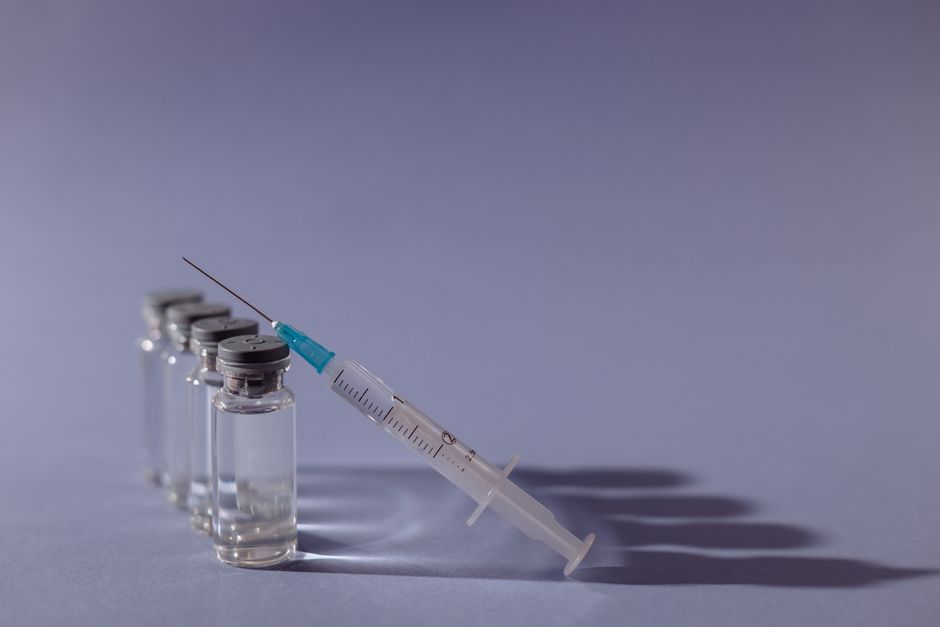
Hair filler is a thin solution injected in tiny amounts, not a volumizing gel. Illustrative photo.
Where it is injected
Hair filler injection areas: part line, crown and temples
In women, thinning usually shows along the part and over the top of the head, while the front hairline is often kept. Injections follow the pattern of your thinning, placed in a grid of tiny points a short distance apart. Areas with no hair left are not treated, because there are no follicles to support.
 Hommage · Gangnam
Hommage Women's Clinic · Gangnam, Seoul
Hair filler is considered only where fine hairs are still present. Illustrative photo.
Is it for you?
Who might choose hair filler over other options?
The people most likely to consider hair filler already have a diagnosis of pattern thinning and a daily home treatment, and want something extra in the clinic. Some prefer it toPRPbecause no blood is drawn, or because they feel faint with blood tests. Others have a dry, tight-feeling scalp and like the idea of hydration.
If you have not yet tried minoxidil, or the cause of your thinning has not been checked, those steps come first. If you want the option with the most research behind it among clinic procedures, PRP orlow-level laser therapyare usually discussed before hair filler.
- Diagnosis confirmed Pattern thinning, not undiagnosed patchy or scarring hair loss.
- Causes checked Iron, thyroid and hormones considered and treated if needed.
- Foundation in place Daily minoxidil or another prescribed treatment already started.
- Comfortable with uncertainty You understand the evidence is limited and results vary.
- Not pregnant or breastfeeding Injections are postponed until after breastfeeding.
Timeline
Hair filler course and results timeline
Hair filler is given as a course rather than a single injection. Small bumps from the injections settle within a day or two, but any change in the hair itself takes months, because follicles cycle slowly. The review at about three months, with photos compared against your starting point, decides whether to continue, change plan or stop.
Aftercare
Hair filler aftercare: do's and don'ts
After hair filler, you may see or feel small raised bumps where the solution was placed. They usually flatten within a day or two as the solution spreads and is absorbed. Most people return to work the same day. Keeping the scalp clean and avoiding heat and pressure for a short time helps the injection points close smoothly.
Do
- Wash your hair the next day with a mild shampoo and lukewarm water
- Let small bumps settle on their own
- Restart minoxidil when your doctor says it is fine
- Sleep on a clean pillowcase the first night
- Call the clinic if pain increases, skin changes color, or redness spreads
Don't (for about 24–48 hours)
- Massage, rub or press hard on the treated areas
- Dye, perm or bleach your hair
- Use saunas, hot baths or swimming pools
- Wear tight hats or headbands over the treated area
- Do intense exercise that makes you sweat heavily
 Hommage · Gangnam
Hommage Women's Clinic · Gangnam, Seoul
Keep hair care gentle for a day or two after treatment. Illustrative photo.
Evidence
Does hair filler work? How it compares in the research
When we reviewed the medical literature for this page, we could not find a large, independent randomized trial or a systematic review showing that hyaluronic acid and peptide "hair filler" injections increase hair density in pattern hair loss. Published data are mostly small studies, case series and manufacturer information, and results differ between products. By contrast, the main treatments it is compared with have pooled evidence from many trials, summarized below so you can see the difference in confidence.
Trials on female pattern hair loss
Pooled in one Cochrane review; minoxidil had the best support.
van Zuuren et al., Cochrane, 2016Regrowth with minoxidil
Chance of moderate-to-marked regrowth vs placebo in women.
Cochrane, 2016PRP randomized trials pooled
Higher density than placebo, but low-certainty evidence.
Kieling et al., An Bras Dermatol, 2024 Hommage · Seoul
Hommage Women's Clinic · Gangnam, Seoul
Seoul: the clinic is in Gangnam, near Sinnonhyeon Station. Illustrative photo.
Traveling to Seoul
Hair filler in Seoul for international patients
Hair filler is often marketed to visitors in Seoul as a quick scalp treatment. Because it is given as a course several weeks apart, a single visit usually means one session, which is unlikely to show much on its own. If you are in Seoul only briefly, a consultation can still be useful: you get an assessment, blood tests if needed, and a written plan you can continue at home.
Before you book
- Message the clinic by WhatsApp, KakaoTalk or the contact form with your dates; ask for language support if needed.
- Bring your passport, recent blood test results and a list of medicines and hair products you use.
- Allow 1–2 days: assessment first, treatment the same or next day if suitable.
- Ask for the product name in writing so your doctor at home knows what was injected.
Flying the next day is generally fine, since there is no wound to check.
Choosing well
How to choose a hair filler clinic in Seoul
Hair filler is widely advertised, so it helps to have a few questions ready. Use these at any clinic, including ours:
- Is the product named? You should know the brand and ingredients before injection.
- Is the evidence described honestly? Be wary of promises of guaranteed or permanent regrowth.
- Is the cause checked first? Iron, thyroid and hormones should be considered.
- Does a doctor inject? Scalp injections should be done or supervised by a physician.
- Is proven treatment included? Hair filler should sit alongside minoxidil, not replace it.
- Is there a review and stopping point? A clear plan to judge results at about 3 months.
What affects the cost of hair filler injections?
Cost depends on the product brand, the amount used, the size of the area treated, how many sessions are in the course, and whether it is combined with other treatments such asscalp microneedling. Daily home treatment adds to the long-term total. Hair filler is cosmetic and not covered by National Health Insurance, and you receive a written quote before treatment.
 Hommage · Gangnam
Hommage Women's Clinic · Gangnam, Seoul
A consultation explains whether hair filler fits your plan at all. Illustrative photo.
Your visit
What to expect at your hair filler appointment
01
Assessment
Dr. Hwang reviews your hair history, recent pregnancy or illness, your cycle and medicines, and examines your scalp.
02
Tests if needed
Iron, thyroid and hormone blood tests help rule out causes that injections cannot fix.
03
Options and quote
You compare minoxidil, PRP and hair filler, including their evidence, and receive a written quote.
04
Treatment and review
If you go ahead, sessions are scheduled a few weeks apart with a review at about 3 months.

Your doctor
Dr. Hwang Seonhwa
Physician · Skin & Aesthetic Treatments
Dr. Hwang explains hair filler as an optional add-on with limited evidence, not a stand-alone cure or a volumizing filler. It is considered only after treatable causes are checked and proven treatment such as minoxidil is in place.
Physician for face and skin procedures, including lifting, laser and skin-improvement treatments, planned around facial proportions and skin condition.
Hair filler injections: frequently asked questions
Is hair filler the same as facial filler?
No. Facial fillers are usually cross-linked hyaluronic acid gels designed to add volume. Hair filler solutions are injected in tiny, shallow amounts to hydrate the scalp and deliver peptides to hair follicles. They do not add volume to the scalp or make bald areas look filled in.
Does hair filler injection hurt?
Most people feel stinging and pressure, but it is usually manageable. The scalp is numbed with cream or cooling first, and very fine needles are used. Tenderness and small bumps usually settle within one to two days.
How many hair filler sessions do I need?
Most protocols use a course of several sessions a few weeks apart, followed by a review after about three months. The exact schedule depends on the product used. Because pattern hair loss continues over time, any benefit is likely to need ongoing treatment, such as daily minoxidil.
Is hair filler better than PRP?
There is no good evidence that it is. PRP has been studied more and has moderate evidence for pattern hair loss, while hair filler studies are fewer and smaller. Hair filler may suit people who prefer not to have blood drawn. Your doctor can compare both for your situation. See PRP for hair loss.
Can I get hair filler while breastfeeding?
It is usually postponed during pregnancy and breastfeeding because safety data are lacking. Hair shedding after childbirth is often temporary and usually improves within 6–12 months. If shedding continues beyond that, iron and thyroid tests are a sensible first step before any procedure.
Can foreigners get hair filler injections in Seoul?
Yes. International patients and foreign residents can book a hair filler consultation at Hommage Clinic; bring your passport for registration. A course needs several visits weeks apart, so it suits people living in Seoul or visiting regularly. Please contact us before your visit to arrange language support; you can walk in during opening hours or book ahead for a set time.
What is in a hair filler injection?
Most hair filler products combine thin, mostly non-cross-linked hyaluronic acid with peptides, such as copper tripeptide or other oligopeptides. Some add vitamins or other compounds. Ingredients differ between brands, so ask for the exact product name before treatment.
Will I see bumps on my scalp after hair filler?
Small raised bumps at the injection points are common straight after treatment. They are usually hidden by hair and flatten within one to two days as the solution is absorbed. Avoid rubbing or massaging them.
Can hair filler fill in a bald patch?
No. Hair filler does not add volume and cannot create new follicles. It is considered only for thinning areas where fine hairs are still present. Patchy bald spots need a diagnosis first, as they can have different causes.
Does hair filler work for men as well as women?
Hair filler is offered for pattern thinning in both men and women, and the same limits on evidence apply. At Hommage Clinic, the focus is on women's hair thinning, including hormonal causes that can be checked by our gynecology team.
Can hair filler be combined with other hair treatments?
Yes. It is usually used alongside daily minoxidil, and sometimes with scalp microneedling or low-level laser therapy. Our hair density treatment plan explains how options are combined.
How long do hair filler results last?
There is little long-term data. Because pattern hair loss continues over time, any benefit is likely to fade without ongoing home treatment or further sessions. Results are reviewed at about three months to decide whether to continue.
References
Sources used for this page, reviewed by Dr. Hwang Seonhwa. Read our editorial and medical review policy.
- van Zuuren EJ, Fedorowicz Z, Schoones J. Interventions for female pattern hair loss. Cochrane Database Syst Rev. 2016;(5):CD007628. Cochrane
- Kieling L, Konzen AT, Zanella RK, Valente DS. Is autologous platelet-rich plasma capable of increasing hair density in patients with androgenic alopecia? A systematic review and meta-analysis of randomized clinical trials. An Bras Dermatol. 2024;99(6):847–862. PMC
- Georgiadis J, Phillips JH, Mott T. Platelet-rich plasma for androgenic alopecia. Am Fam Physician. 2022;105(1):84–85. AAFP
We found no large independent randomized trial of hyaluronic acid and peptide hair filler injections when this page was reviewed; we will update it if new evidence is published. This page is general information and does not replace a personal consultation. Illustrations are original works of Hommage Women's Clinic, Gangnam, Seoul; photos marked illustrative are not of patients.
Related hair and scalp treatments
Hair Loss PRP Therapy
Platelet-rich plasma scalp injections with moderate evidence for pattern hair loss.
Scalp Microneedling
Fine-needle scalp treatment that can boost the effect of minoxidil and PRP.
Stem Cell Hair Therapy
Emerging exosome and cell-based scalp treatments, and their current evidence.
Low-Level Laser Therapy
Needle-free red light therapy for thinning hair, in clinic or at home.
Hair Density Treatment Plan
How medication and procedures are combined into one plan for thinning hair.
Hormone Testing
Blood tests for androgens, thyroid and other hormones behind hair thinning.
Find out if hair filler fits your plan
Book a scalp assessment with Dr. Hwang Seonhwa in Gangnam to compare hair filler, PRP and proven medical treatment.
Hommage Clinic · 4F, Building A, 509 Gangnam-daero, Seoul (near Sinnonhyeon Station) · Mon & Fri 10:00–20:00 · Tue–Thu 10:00–19:00 · Sat 10:00–15:00