
Skin & Aesthetics · Pores
Deep Cleansing Pore Therapy in Seoul for Blackheads and Clogged Pores
Deep cleansing pore therapy is an in-clinic treatment that loosens and clears oil, dead skin and blackheads from congested pores, usually on the nose, chin and forehead, using exfoliation, gentle extraction and calming care. At Hommage Clinic in Gangnam, Seoul, Dr. Hwang Seonhwa checks whether your concern is blackheads, normal sebaceous filaments or acne first, so the treatment matches what your pores actually need.

Quick answer
Deep cleansing pore therapy is a 45–60 minute in-clinic treatment that softens, dissolves and gently clears blackheads and congested pores on the nose, chin and forehead. At Hommage Women's Clinic in Gangnam, Seoul, Dr. Hwang Seonhwa first checks whether you have blackheads, normal sebaceous filaments or acne. No numbing is needed, mild redness usually fades within a few hours, and pores stay clearer for about 2–4 weeks, so most people repeat it every 3–4 weeks.
Key takeaways
- Many grey dots on the nose are normal sebaceous filaments. They can be cleared, but they always refill.
- Cleansing empties pores; it does not shrink them. Pores that look large when clean need collagen-building treatment instead.
- Softening first and extracting with sterile tools is gentler than squeezing, scrubbing or pore strips at home.
- Between visits, a topical retinoid or salicylic acid product helps slow refilling, in line with dermatology guidelines.
Infographic
Deep pore cleansing in numbers
Session length
Cleansing, exfoliation, extraction and soothing in one visit.
Numbing needed
Expect tingling and brief pressure, not pain.
Mild redness
Usually settles the same day; makeup the next day.
Clearer pores
Pores slowly refill as your skin keeps making oil.
Typical interval
Maintenance in step with the skin's renewal cycle.
For travelers
No follow-up needed, so it fits a short stay in Seoul.
Deep cleansing pore therapy at a glance
| Key fact | Details |
|---|---|
| Treatment time | Usually 45–60 minutes, including cleansing, exfoliation, extraction and soothing |
| Comfort | Tingling from exfoliants and brief pressure during extraction; no numbing needed |
| Sessions | Often every 3–4 weeks as maintenance, in line with the skin's renewal cycle |
| Downtime | Minimal: mild redness for a few hours; makeup usually the next day |
| Results visible | Cleaner, smoother-looking pores right after treatment |
| How long results last | Typically 2–4 weeks, as pores and sebaceous filaments naturally refill |
| Performed by | Planned by Dr. Hwang Seonhwa; done by the doctor or trained staff under supervision |
Deep pore cleansing may suit you if you have
- Blackheads on the nose, chin or forehead that keep returning
- Grey or dark dots on the nose that pore strips and scrubs have not helped
- A rough, dull or congested T-zone where makeup settles into pores
- Oily or combination skin and want regular, gentle maintenance
Wait or ask about alternatives if you
- Have many red, inflamed or painful pimples: acne treatment comes first
- Have a rosacea or eczema flare, sunburn, cold sore or skin infection
- Take isotretinoin or stopped it recently, or had a peel or laser in the past week
- Have very sensitive skin that reacts to exfoliating acids
What is deep cleansing pore therapy?
Deep cleansing pore therapy is a clinic version of pore care that goes further than washing at home. It softens and dissolves the mix of sebum and dead skin cells that sits in the pore opening, then removes what can be cleared safely and calms the skin afterward.
A typical treatment combines several steps: a thorough cleanse, chemical exfoliation with an oil-soluble acid such as salicylic acid or a mild enzyme, softening with warmth or moisture, and sometimes gentle suction. Remaining blackheads are lifted out with sterile tools, and the skin is finished with a soothing mask, cooling or LDM ultrasound care.
This page is about pores and blackheads on otherwise clear skin. If you mainly have pimples and inflamed breakouts, an extraction facial as part of acne care is the closer match.
Blackheads or sebaceous filaments: what are the dots on your nose?
Many of the grey dots on the nose are sebaceous filaments, not blackheads. Sebaceous filaments are a normal lining of oil and cells that every pore has. They look flat and evenly spread, and they refill within a few weeks after being cleared.
Blackheads (open comedones) are true plugs. They are darker, firmer and slightly raised, and they stretch the pore over time. Both can be cleaned out, but sebaceous filaments cannot be removed for good, and trying to squeeze them repeatedly mainly irritates the skin.
Knowing which you have changes the plan. Sebaceous filaments respond to regular gentle exfoliation and oil control, while stubborn blackheads may need extraction plus a topical retinoid. If oiliness is the root problem, see sebum control therapy .
What happens during a deep pore cleansing session?
A session usually takes 45–60 minutes and feels like a thorough facial with a few moments of pressure. Most people describe tingling during exfoliation and a brief pinch during extraction.
- Skin check: the doctor looks at your pores, oiliness and any acne, and notes products and medicines you use.
- Cleansing and exfoliation: makeup and sunscreen are removed, and an exfoliating solution is applied to loosen plugs.
- Softening and clearing: warmth or moisture opens up the plugs, and blackheads are cleared with sterile instruments, stopping where a pore does not release easily.
- Soothing: a calming mask, cooling or LDM settles redness, and sunscreen is applied before you leave.
For a stronger exfoliating effect, the plan may include a salicylic acid peel or a laser carbon peel on some visits.
How long do results last?
Pores look cleaner and smoother straight away, and the effect usually lasts about 2–4 weeks. Sebum production continues, so pores gradually refill, which is why pore cleansing works as regular maintenance rather than a one-off.
After treatment, skin may look slightly pink for a few hours. For the next day or two, use a gentle cleanser and a light moisturizer, apply sunscreen, and skip scrubs, strong acids and retinoids. Avoid saunas and hot baths for 24 hours.
Between visits, cleanse twice a day without over-washing, use a non-comedogenic moisturizer, and consider a leave-on salicylic acid or retinoid product if your doctor recommends one. Pore strips and harsh scrubs give a short-lived result and can leave the skin red and irritated.
Risks and possible side effects
Deep pore cleansing is a low-risk treatment, but side effects can occur. The most common are temporary redness, mild stinging, dryness or light flaking for a day or two, and a few small breakouts as pores settle.
Less often, exfoliating solutions can cause irritation or an allergic reaction, and extraction can leave small marks, broken capillaries or brown spots (post-inflammatory hyperpigmentation), particularly in darker skin tones or after sun exposure. Infection is uncommon when sterile tools are used. Over-frequent or forceful treatment can weaken the skin barrier.
Tell the clinic if you are pregnant, take isotretinoin or blood thinners, or have reacted to salicylic acid or aspirin before. Contact the clinic if you notice spreading redness, swelling, pus, blistering or pain that gets worse after treatment.
Pore cleansing vs pore tightening: which do you need?
Pore cleansing treats what is inside the pore; it does not change the size of the pore itself. If your pores look large even when they are clean, the cause is usually oil activity, sun damage or loss of firmness, which need different treatment.
- Clogged pores and blackheads: deep pore cleansing, peels and a topical retinoid.
- Shine and fast refilling: sebum control options such as peels, laser or medicine.
- Pores that look stretched or enlarged on the cheeks: collagen-building treatments such as pore tightening laser or RF microneedling.
- Dry, dull skin that wants a hydrating facial: see our page on the HydraFacial-style facial and comparable options.
Many people benefit from a combination, for example regular cleansing alongside a course of laser.
Deep pore cleansing at Hommage Clinic
Hommage Clinic is a women's health and skin clinic in Gangnam, about a three-minute walk from Sinnonhyeon Station. Your pores are examined by a doctor before treatment, so blackheads, sebaceous filaments and acne are each handled appropriately. The clinic's soothing options include LDM and cryo, and its Coreg Cell-Fit program for dry or sensitive skin also includes a deep-cleansing step. Treatments are planned individually rather than as fixed packages; see our full range ofskin and aesthetic treatments.
Cost depends on the steps included, any peel or laser added, and how often you come. Cosmetic pore treatments are not covered by Korea's National Health Insurance. You receive a written quote before treatment, and walk-ins are welcome during opening hours.
Know your pores
Blackhead vs sebaceous filament vs whitehead: what is in your pores?
Before any pore treatment, it helps to know exactly what you are looking at. Three things are commonly mistaken for one another on the nose, chin and forehead. A blackhead is an open comedone: a firm plug of oil and dead skin cells that sits in a pore whose opening has stayed open to the air. Its surface turns dark because of exposure to air and the pigment in the plug, not because of dirt, so scrubbing harder does not wash it away.
A sebaceous filament is not a blockage at all. Every pore has a thin column of oil and cells that guides sebum to the surface. On an oily nose these filaments show as small, flat, evenly spaced grey dots. A whitehead is a closed comedone: the same kind of plug, but sealed under a thin layer of skin, so it looks like a small skin-coloured or white bump. The illustration below shows the difference, and the cards beneath it explain how deep cleansing pore therapy handles each one.
Blackhead (open comedone)
A dark, firm, slightly raised plug that stretches the pore opening. Approach: loosen with an oil-soluble exfoliant and warmth, then lift out with a sterile tool. A topical retinoid at home slows new plugs forming.
Sebaceous filament
Flat grey dots spread evenly over the nose. They are part of how a healthy pore works. Approach: gentle exfoliation and oil control keep them less visible. Squeezing them repeatedly only irritates the skin, because they refill within weeks.
Whitehead (closed comedone)
A small, skin-coloured bump with no visible opening. Approach: Dr. Hwang decides whether it can be released safely or is better treated with a retinoid or acne-focused extraction care. Forcing a closed pore can leave a mark.
How it works
How does deep cleansing pore therapy work?
A pore plug is held in place by two things: sticky sebum and dead skin cells that have not shed properly from the pore lining. Pulling on a plug that is still dry and stuck is what causes redness, broken capillaries and marks. Deep cleansing pore therapy works the other way round. It first loosens the plug chemically and physically, so that only gentle pressure is needed at the end.
Salicylic acid is the key ingredient for this. Unlike water-based acids, it dissolves in oil, so it can move into the oily pore and help break the bonds between the dead cells that form the plug. Warmth or moisture then softens the remaining material. What is left is lifted out with sterile instruments, working pore by pore and stopping where a pore does not release easily, rather than forcing it.
The last step is just as important. Freshly treated skin is briefly more reactive, so a calming mask, cooling or LDM ultrasound care settles redness, and sunscreen protects the skin before you go outside. For skin that tends to get dry or tight after cleansing, the clinic may suggest pairing the visit with skin barrier repair treatment.
 Hommage · Gangnam
Hommage Women's Clinic · Gangnam, Seoul
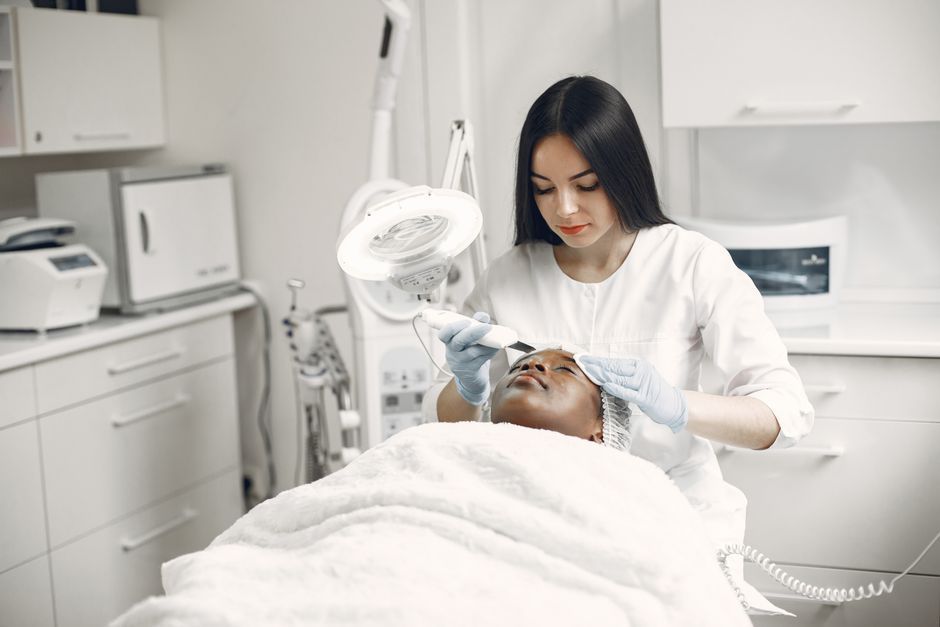
Softening the pores first means less pressure is needed during extraction. Illustrative photo.
Session and schedule
Deep pore cleansing step by step, and how long the results last
One session follows four steps in about 45–60 minutes. Your pores look clearest straight after treatment and stay that way for roughly two to four weeks, while your skin keeps producing oil and shedding cells into the pore. That refilling is normal, not a sign the treatment failed. It is why deep cleansing works best as regular maintenance, usually every three to four weeks, alongside a simple routine at home.
 Hommage · Gangnam
Hommage Women's Clinic · Gangnam, Seoul
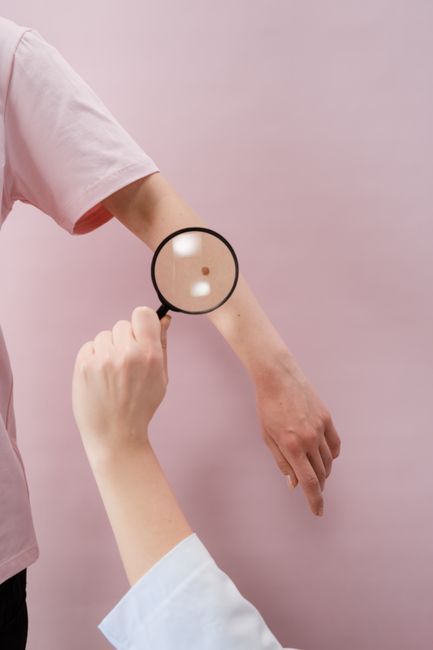
A close skin check comes before any extraction. Illustrative photo.
Compare
Clinic pore cleansing vs pore strips, scrubs and squeezing
Most people who book a deep pore cleansing have already tried pore strips, nose packs, scrubs or squeezing in front of the mirror. These can make the nose look clearer for a day or two, but they mainly remove the top of the plug and often leave redness behind. Here is how the common options compare.
Deep cleansing pore therapy
Pores are checked first, plugs are loosened with an oil-soluble acid and warmth, and only what releases easily is removed with sterile tools. Skin is calmed afterwards.
Pore strips and nose packs
Pull off the top of blackheads and sebaceous filaments. Results last days, deeper plugs stay, and frequent use can redden and irritate the nose.
Scrubs and brushes
Rough the surface but cannot reach inside the pore. Over-scrubbing strips the skin barrier, which can make skin oilier and more sensitive.
Squeezing with fingers or nails
Pressure on an unsoftened plug can push material deeper, break small vessels and leave brown marks or scars, especially on darker or sun-exposed skin.
The most effective long-term tools are often the simplest: a gentle cleanser, a leave-on product with salicylic acid or a retinoid if your doctor recommends one, a non-comedogenic moisturizer and daily sunscreen. Clinic cleansing adds a thorough reset every few weeks that is hard to do safely at home.
Who it suits
Is deep pore cleansing right for your skin type?
Deep cleansing pore therapy is adjusted to the skin in front of the doctor rather than delivered as one fixed routine. Oily and combination skin usually benefits most, because congestion builds quickly in the T-zone. Dry or sensitive skin can still be treated, but with milder exfoliants, fewer extractions and longer gaps between visits. When there are many red, inflamed spots, the priority shifts to acne treatment, and cleansing is added once the skin has calmed.
Oily skin
Congestion returns quickly, so regular cleansing every 3–4 weeks is common. Adding sebum control therapy can slow refilling.
Combination skin
Treatment concentrates on the nose, chin and forehead, while drier cheeks get lighter exfoliation and more hydration.
Dry or sensitive skin
A mild enzyme instead of a stronger acid, fewer extractions and longer intervals protect the barrier. Barrier care may come first.
Inflamed acne
Red, painful spots are not squeezed. Acne treatment comes first, and cleansing is added once inflammation settles.
Aftercare
After deep pore cleansing: do's and don'ts
For a day or two, freshly cleared pores and exfoliated skin are a little more sensitive than usual. Simple aftercare keeps redness short, lowers the chance of small breakouts and helps the result last longer.
Do
- Wash with lukewarm water and a gentle, low-foam cleanser
- Use a light, non-comedogenic moisturizer
- Apply sunscreen every morning, even indoors near windows
- Leave the skin bare for the rest of the day if you can
- Change your pillowcase and clean makeup brushes
- Restart your usual actives after a day or two, as advised
Don't
- Scrub, use pore strips or squeeze for at least a week
- Use strong acids or retinoids for 1–2 days
- Go to a sauna, hot bath or hot yoga for 24 hours
- Apply heavy, oily creams or thick makeup on day one
- Touch or pick at small bumps as pores settle
- Sunbathe or use a tanning bed while skin is sensitive
 Hommage · Gangnam
Hommage Women's Clinic · Gangnam, Seoul
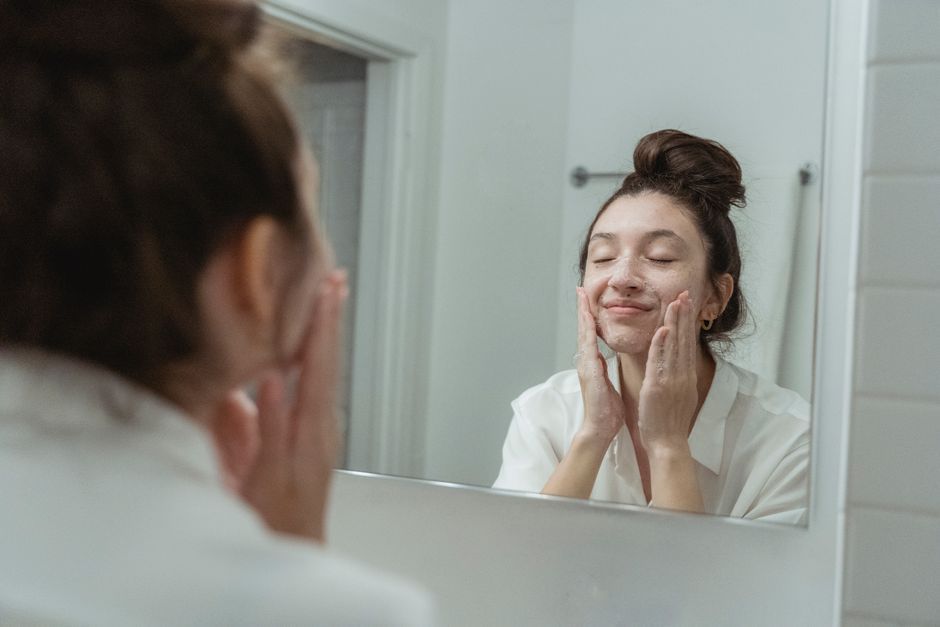
Gentle washing, a light moisturizer and sunscreen help pores settle. Illustrative photo.
Evidence
Does deep pore cleansing work? What the research says
There are no large clinical trials of the "deep cleansing facial" as a package, so it is fair to say that much of what is known comes from studies of its individual parts, mainly salicylic acid and other chemical peels, and from dermatology guidelines on treating comedones. The figures below come from that research. They show that exfoliating acids can reduce blackheads and whiteheads, but they also show how small and varied the studies are.
Peels for acne reviewed
A systematic review pooled 12 randomised trials with 387 participants comparing chemical peels.
Systematic review, BMJ Open, 2018Fewer comedones
Salicylic acid peels reduced comedones by 53.4%, compared with 26.3% for Jessner's solution, in one included trial.
BMJ Open, 2018Non-inflamed spots
Salicylic acid and lipohydroxy acid peels reduced non-inflamed lesions by 48.5% and 55.6%, with no significant difference.
BMJ Open, 2018Retinoids for acne
US guidelines strongly recommend topical retinoids for acne; salicylic acid receives a conditional recommendation.
Reynolds et al., J Am Acad Dermatol, 2024 Hommage · Seoul
Hommage Women's Clinic · Gangnam, Seoul
The clinic is in Gangnam, about three minutes on foot from Sinnonhyeon Station. Illustrative photo.
Traveling to Seoul
Deep pore cleansing in Seoul for international patients
Deep cleansing pore therapy is one of the easiest skin treatments to fit into a trip. It takes about an hour, needs no numbing and has little downtime, so you can go sightseeing the same day. Hommage Women's Clinic is in Gangnam, about a three-minute walk from Sinnonhyeon Station (Line 9 and Shinbundang Line).
Planning your visit
- Book early in your stay rather than on the morning of a flight, so any redness or small breakouts have time to settle.
- Message the clinic by WhatsApp, KakaoTalk or the contact form with your dates and any language needs; walk-ins are also welcome during opening hours.
- Bring your passport for registration and a list of the skincare products and medicines you use, especially retinoids, isotretinoin or blood thinners.
- Skip retinoids and strong acids for a few days before your visit unless told otherwise.
- If you want to combine it with a peel or laser, ask in advance; some combinations need more recovery time before a flight.
No follow-up visit is needed. Take your aftercare advice home, and keep up the routine your doctor recommends so the effect lasts.
Choosing well
How to choose a clinic for deep pore cleansing in Seoul
Pore cleansing is offered everywhere from beauty salons to dermatology clinics in Gangnam. The difference lies less in the products than in who looks at your skin and how carefully extraction is done. These questions help at any consultation, including ours:
- Does a doctor check my skin first? Blackheads, sebaceous filaments and acne need different handling.
- Are the instruments sterile and single-use where possible? Clean tools keep the infection risk low.
- Do they soften pores before extraction? Forcing unsoftened plugs causes redness and marks.
- Will they stop when a pore does not release? Restraint protects the skin, especially darker skin tones.
- Do they explain what cleansing cannot do? It does not shrink pores; an honest clinic says so.
- Is the price written down before treatment? You should know which steps and add-ons are included.
What affects the cost of deep pore cleansing in Seoul?
Cost depends on the steps included in your plan, whether a salicylic acid peel, laser carbon peel or LDM soothing is added, and how often you return. Medical home products, if prescribed, are separate. Cosmetic pore treatments are not covered by Korea's National Health Insurance, and you receive a written quote before treatment.
 Hommage · Gangnam
Hommage Women's Clinic · Gangnam, Seoul
Ask who plans your treatment and how extraction is done before you book. Illustrative photo.
Your visit
What to expect at your pore cleansing appointment
01
Pore check
Dr. Hwang looks at your pores, oiliness and any acne, and asks about your skincare routine and medicines.
02
Your plan
You agree on the steps that suit your skin and whether a peel, laser or home product should be added.
03
Treatment
Cleansing, exfoliation, gentle extraction and soothing care. Plan about an hour.
04
Maintenance
You leave with aftercare advice and a suggested interval, often every 3–4 weeks, adjusted to how your skin responds.

Your doctor
Dr. Hwang Seonhwa
Physician · Skin & Aesthetic Treatments
Dr. Hwang distinguishes true blackheads from normal sebaceous filaments and acne before planning pore cleansing, so the skin is not over-treated. Dr. Hwang adds oil control or collagen-building treatment when pores need more than cleansing.
Physician for face and skin procedures, including lifting, laser and skin-improvement treatments, planned around facial proportions and skin condition.
Deep pore cleansing: frequently asked questions
Can pores be unclogged permanently?
No. Pores keep producing oil and shedding cells, so they refill over a few weeks after any cleansing treatment. Regular gentle exfoliation, oil control and a topical retinoid slow how quickly blackheads come back. Clinic cleansing every few weeks keeps pores looking clearer, but it is maintenance rather than a cure.
Are the dark dots on my nose blackheads?
Often they are sebaceous filaments, a normal lining of oil inside every pore. They look flat, grey and evenly spaced, and they refill after being cleared. True blackheads are darker, firmer plugs. A doctor can tell the difference and suggest the right approach for each.
Do pore strips work?
Pore strips pull out the top of blackheads and sebaceous filaments, so the nose looks clearer for a few days. They do not reach deeper plugs, do not stop pores refilling and can irritate or redden the skin, especially if used often. Gentle chemical exfoliation is usually kinder to the skin.
Does deep pore cleansing make pores smaller?
Cleared pores can look smaller and smoother for a while because they are no longer stretched by plugs, but cleansing does not change the actual pore size. For pores that look enlarged even when clean, collagen-building treatments such as pore tightening laser are more suitable.
How often should I get a deep pore cleansing?
Every 3–4 weeks suits most people with oily or congested skin, which roughly matches the skin's renewal cycle. More frequent treatment can irritate the skin and weaken its barrier. If your skin is dry or sensitive, longer intervals and gentler steps are usually better.
Can I wear makeup after a pore cleansing treatment?
It is wiser to leave the skin bare for the rest of the day so freshly cleared pores can settle. Most people can wear light, non-comedogenic makeup the next day. Use clean brushes and remove makeup gently in the evening to avoid clogging pores again.
Can foreigners get deep pore cleansing in Seoul?
Yes. International patients and foreign residents can be treated at Hommage Clinic in Gangnam. Bring your passport for registration and tell us about any skincare products or medicines you use. Walk-ins are welcome, or book ahead for a set time, and contact us before your visit to arrange language support.
Does deep pore cleansing hurt?
Most people find it comfortable. The exfoliating solution tingles for a few minutes, and extraction feels like brief pressure or a small pinch on the nose and chin. No numbing is needed. Tell the team if anything feels sharp, and they will slow down or skip that area.
Will I break out after deep pore cleansing?
A few small spots in the following days are possible as pores settle, especially if your skin was very congested. They usually clear on their own within a week. Avoid squeezing them, keep your routine gentle, and contact the clinic if you notice painful, spreading redness or pus.
Is deep pore cleansing safe during pregnancy?
Gentle cleansing, enzyme exfoliation and soothing care are generally considered low risk. Tell the clinic if you are pregnant or breastfeeding, because the plan is adjusted: strong peels are avoided and the choice and strength of any salicylic acid product is discussed with you. Retinoids are not used during pregnancy.
What is the difference between deep pore cleansing and a HydraFacial?
Both clean and exfoliate the skin. Deep cleansing pore therapy focuses on loosening and clearing blackheads in congested areas, with careful manual extraction where needed. A HydraFacial-style facial uses a suction device with serums and puts more emphasis on hydration. Dr. Hwang can recommend which suits your skin, or combine elements of both.
Can deep pore cleansing be combined with a peel or laser?
Yes. On some visits a salicylic acid peel or laser carbon peel can be added for a stronger effect on oil and congestion. For pores that look enlarged even when clean, a course of pore tightening laser is planned separately. Combining steps can increase redness, so the order and timing are set at your consultation.
What should I use at home to keep pores clear?
Cleanse twice a day without over-washing, use a non-comedogenic moisturizer and daily sunscreen, and add one active product if your doctor recommends it, such as a leave-on salicylic acid or a topical retinoid. US dermatology guidelines strongly recommend topical retinoids for acne, which includes blackheads and whiteheads. Start slowly to avoid irritation, and skip scrubs and pore strips.
References
Sources used for this page, reviewed by Dr. Hwang Seonhwa. Read our editorial and medical review policy.
- Chemical peels for acne vulgaris: a systematic review of randomised controlled trials. BMJ Open. 2018;8(4):e019607. doi:10.1136/bmjopen-2017-019607. PubMed
- Reynolds RV, Yeung H, Cheng CE, et al. Guidelines of care for the management of acne vulgaris. J Am Acad Dermatol. 2024;90(5). PMID: 38300170.
- Review of clinical studies supporting 0.5% and 2% salicylic acid for mild to moderate acne (PubMed abstract 1535287). PubMed
This page is general information and does not replace a personal consultation. Illustrations are original works of Hommage Women's Clinic, Gangnam, Seoul; photos marked illustrative are not of patients.
Related pore and skin treatments
Extraction Facial
Hygienic extraction as part of acne care for whiteheads and breakout-prone skin.
Pore Tightening Laser
Collagen-building laser and energy treatments for pores that look enlarged.
Sebum Control Therapy
Medical and in-clinic options for oily skin and pores that refill quickly.
Salicylic Acid Peel
An oil-soluble peel that loosens blackheads and congestion in oily skin.
HydraFacial-Style Facial
Hydrating facial options for dull or dehydrated skin, and how they compare.
Skin Care for Hormonal Changes
How cycles, the pill, pregnancy and menopause affect oiliness, pores and breakouts.
Clear congested pores the gentle way
Book a pore and skin check with Dr. Hwang Seonhwa in Gangnam to find out whether you need cleansing, oil control or pore tightening.
Hommage Clinic · 4F, Building A, 509 Gangnam-daero, Seoul (near Sinnonhyeon Station) · Mon & Fri 10:00–20:00 · Tue–Thu 10:00–19:00 · Sat 10:00–15:00