
Skin & Aesthetics · Acne
Chemical Peels for Acne: Which Peel Suits Your Skin?
A chemical peel for acne is a doctor-applied acid solution that loosens dead skin cells and oil plugging the pores, which helps clear blackheads and whiteheads, calm breakouts and fade post-acne marks. At Hommage Clinic in Gangnam, Seoul, Dr. Hwang Seonhwa chooses the acid and strength for your acne type and skin tone, and adds prescription care when breakouts need it.
Quick answer
Chemical peels for acne use a doctor-chosen acid, such as salicylic, glycolic, mandelic or Jessner's solution, to loosen the dead skin and oil that clog pores. At Hommage Women's Clinic in Gangnam, Seoul, Dr. Hwang Seonhwa matches the acid and strength to your acne type and skin tone. Most plans are 3–6 superficial peels, 2–4 weeks apart, with redness for hours and light flaking for 2–5 days. Peels support, rather than replace, medical acne treatment.
Key takeaways
- Salicylic acid is usually first choice for oily skin with blackheads and whiteheads; gentler AHAs suit sensitive or darker skin.
- Acne peels are superficial; medium and deep peels are not used for active breakouts.
- Breakouts can briefly increase in the first weeks as clogged pores clear.
- The 2024 American Academy of Dermatology guideline found the evidence for peels too limited to make a formal recommendation, so they are used as add-ons.
Infographic
Acne peels in numbers
Peel time
Including cleansing and neutralizing; plan 30–45 minutes per visit.
Peels in a series
Superficial peels build results gradually.
Between peels
Strength is adjusted to how your skin responded.
Light flaking
Redness usually lasts only a few hours.
Peels to feel smoother
Fewer breakouts and faded marks take a full series.
Every day
The key step to avoid dark marks after a peel.
Acne peels at a glance
| Key fact | Details |
|---|---|
| Treatment time | Usually 20–30 minutes, including cleansing and neutralizing |
| Comfort | Tingling, warmth or stinging for a few minutes; a cooling fan helps |
| Sessions | Typically 3–6 superficial peels, 2–4 weeks apart |
| Downtime | Minimal to a few days of redness, dryness or light flaking |
| Results visible | Smoother, clearer skin often after 1–2 peels; acne improves over a series |
| How long results last | Varies; ongoing skincare or treatment keeps pores clear |
| Performed by | Applied under physician direction, who sets the acid and strength |
An acne peel may suit you if you have
- Blackheads, whiteheads and congested, oily skin
- Mild to moderate inflamed acne alongside clogged pores
- Red or brown marks left after breakouts
- Rough, uneven texture from repeated breakouts
Wait or ask about alternatives if you
- Take isotretinoin or have stopped it recently
- Have cold sores, an active skin infection, open wounds or sunburn on the face
- Are pregnant or breastfeeding: salicylic acid peels are generally avoided
- Have used strong retinoids or waxed the face in the past few days
How do chemical peels help acne?
Acne starts when dead skin cells and oil block a hair follicle, creating a comedone (blackhead or whitehead) that can then become inflamed. A chemical peel dissolves the bonds between dead cells on the surface and inside the pore opening, so the plug loosens and the skin renews faster.
Peels used for acne are almost always superficial , meaning they act on the outer layer of skin (the epidermis). Some acids also reduce oiliness or have mild anti-inflammatory and antibacterial effects. Over a series, this means fewer clogged pores, fewer new breakouts and gradual fading of marks.
Medium and deep peels are not used for active acne. A very targeted high-strength acid technique, TCA CROSS , is used later for ice-pick scars, not for breakouts.
Types of chemical peels for acne
The acid is chosen for your main concern and your skin type. Common choices include:
- Salicylic acid (BHA): oil-soluble, so it penetrates into oily pores. A first choice for blackheads, whiteheads and oily, inflamed skin. See our salicylic acid peel page.
- Glycolic acid (AHA): a small-molecule acid that smooths texture and helps fade marks. Useful for comedones and dull, uneven skin.
- Mandelic and lactic acid: larger or gentler AHAs that are often better tolerated by sensitive or darker skin.
- Jessner's solution: a blend of salicylic acid, lactic acid and resorcinol that gives a slightly stronger superficial peel for stubborn congestion. See Jessner peel .
- Combination or modified peels: lower-strength blends that balance effect and irritation for first-time patients.
For brown post-acne marks without active breakouts, a pigment correction peel may fit better.
Are peels enough to treat acne?
Peels work well for mild acne and as support for moderate acne, but moderate to severe acne usually needs prescription treatment as the base. Depending on your skin, this may include topical retinoids, benzoyl peroxide, a limited course of antibiotics, hormonal treatment for women, or isotretinoin for severe or scarring acne. Peels then help speed up clearing and smooth texture.
Women whose breakouts follow their cycle or come with irregular periods may benefit from a hormonal check, including assessment for PCOS . Our guide to skin care for hormonal changes explains this link, and Hommage Clinic can arrange both sides of care in one place.
What happens during an acne peel?
A peel visit usually takes about 30–45 minutes. Most people feel tingling or stinging for a few minutes, which settles quickly.
- Your skin is cleansed and degreased so the acid penetrates evenly. Sensitive areas such as the corners of the nose and lips are protected.
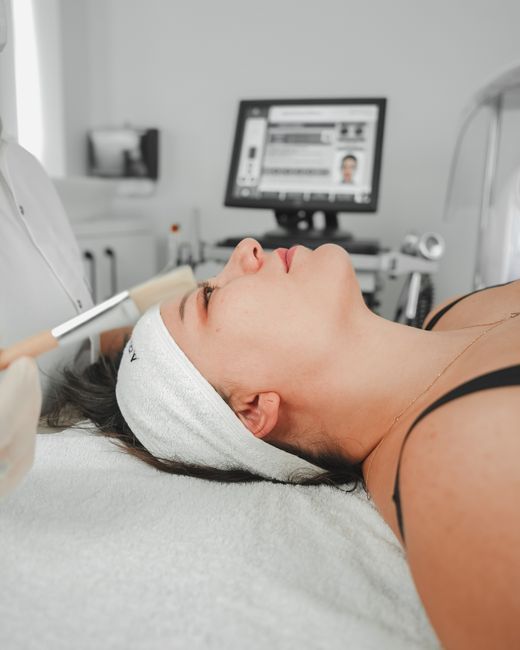
- The peel solution is applied in even layers and timed while your skin is watched closely.
- The peel is neutralized or removed at the right point, depending on the acid.
- Calming products and sunscreen are applied. Gentle extraction may be added after some peels.
How long does it take to recover from an acne peel?
Recovery from a superficial acne peel is usually short. You may have redness for a few hours and some dryness or light flaking for 2–5 days. Many people return to work the same day.
For about a week, use a gentle cleanser and moisturizer, apply SPF 30 or higher daily, avoid picking at flaking skin, and pause exfoliating products and retinoids until your doctor says to restart. Avoid saunas and intense sweating for a day or two. Breakouts may briefly increase in the first weeks as clogged pores clear.
Results build over a series of peels. Keeping pores clear afterward usually depends on a suitable home routine and, for many people, ongoing medical treatment.
Risks and possible side effects
Superficial peels are generally well tolerated, but side effects can occur. Common ones are stinging, redness, dryness, flaking and temporary sensitivity.
Less common risks include post-inflammatory hyperpigmentation (dark patches, more likely in darker skin or with sun exposure), blistering, crusting, cold sore flare-ups, allergic or irritant reactions and, rarely, scarring or infection. Salicylic acid should be avoided if you are allergic to aspirin, and large areas are not treated at once because of the small risk of salicylate toxicity.
Peels are usually postponed if you take isotretinoin or have stopped it recently, have an active infection or cold sore, or have sunburned or broken skin. In pregnancy, salicylic acid peels are generally avoided; some gentler acids may be considered after discussion. Contact the clinic if you notice blistering, oozing, increasing pain, swelling or dark patches.
Chemical peels for acne at Hommage Clinic
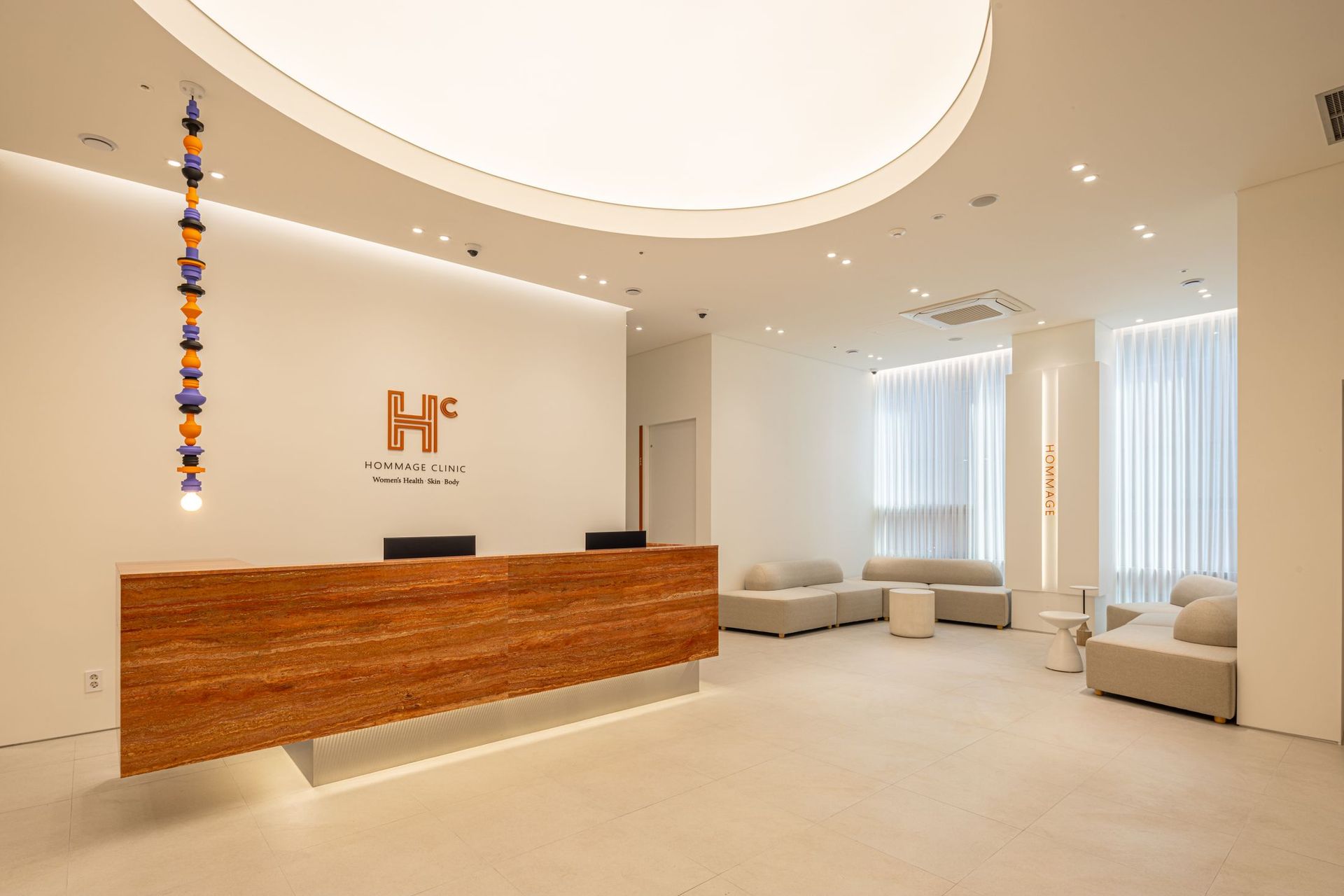
Hommage Clinic is a women's health and skin clinic in Gangnam, about a three-minute walk from Sinnonhyeon Station. Your skin is assessed by a physician before a peel is chosen, and peels can be combined withacne laser treatment, extraction or prescription care. See our full range ofskin and aesthetic treatments.
Cost depends on the acid, the number of sessions and any combined treatments. Medical consultations and prescriptions for acne may be covered by Korea's National Health Insurance for enrolled patients, while cosmetic peels are not covered. You receive a written quote before treatment, and walk-ins are welcome during opening hours.
Mechanism
How a chemical peel unclogs acne-prone pores
Every acne spot starts as a microcomedone: a tiny plug of sticky dead skin cells and oil in the pore opening. A superficial peel loosens the bonds that hold those cells together, both on the surface and inside the opening of the pore. The plug lifts out more easily, oil can flow, and the skin turns over faster, so new plugs are less likely to form.
Because acne peels stay in the outer layer of skin (the epidermis), recovery is short. The trade-off is that one peel does little on its own; results come from a series combined with a good daily routine.
Compare
Salicylic vs glycolic vs mandelic vs Jessner peel for acne
These are the four acne peels people search for most. They differ mainly in whether they dissolve in oil, how strong they feel, and how well sensitive or darker skin tolerates them. Dr. Hwang often starts with a gentler option for first-time patients and adjusts the acid or strength over the series.
| Compare | Salicylic (BHA) | Glycolic (AHA) | Mandelic / lactic | Jessner |
|---|---|---|---|---|
| Best for | Blackheads, whiteheads, oily inflamed skin | Comedones, dull texture, marks | Sensitive, reactive or darker skin | Stubborn congestion, uneven texture |
| Feel | Brief stinging; often frosts lightly | Tingling; timed and neutralized | Mild tingling | Stronger sting; more flaking |
| Avoid if | Aspirin allergy; pregnancy | Very reactive or recently waxed skin | Active infection or broken skin | Pregnancy; very sensitive skin |
| Learn more | Salicylic acid peel | Discussed at consultation | Discussed at consultation | Jessner peel |
Good candidates
Which acne peel is right for my skin?
The best peel depends on what your acne mostly looks like and how your skin reacts. Peels do the most for clogged pores and texture, and less for deep, painful cysts, which need prescription treatment first.
Salicylic acid
Blackheads, whiteheads and shiny T-zone with some inflamed spots.
Glycolic or lactic
Rough texture and lingering marks after breakouts.
Mandelic or modified blend
Gentler start with lower risk of irritation and dark marks.
Jessner
Persistent congestion once the skin has tolerated milder peels.
Cysts and nodules
Prescription care, and an acne injection for a single painful cyst.
 Hommage · Gangnam
Hommage Women's Clinic · Gangnam, Seoul
The peel is applied in even layers and timed for your skin. Illustrative photo.
Healing
Acne peel recovery: day by day
A superficial acne peel follows a short, predictable recovery. Knowing what to expect helps you plan peels around work, events and travel, and keeps you from picking at flaking skin, which is the most common way to cause a mark.
 Hommage · Gangnam
Hommage Women's Clinic · Gangnam, Seoul
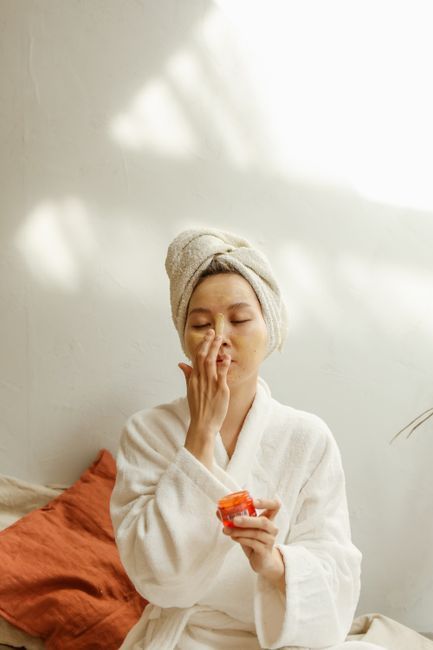
Moisturize, protect from the sun and let flaking skin shed on its own. Illustrative photo.
Aftercare
After a chemical peel for acne: do's and don'ts
Good aftercare matters more after a peel than after most acne treatments, because freshly exfoliated skin is more sensitive to sun and irritation. You receive these instructions in writing at the clinic.
Do
- Use a gentle cleanser and a plain moisturizer for about a week
- Apply SPF 30 or higher every morning
- Let flaking skin shed on its own
- Restart retinoids only when your doctor says so
- Message the clinic about blistering, oozing or dark patches
Don't
- Pick or peel flaking skin
- Use scrubs, acids or retinoids in the first days
- Use saunas or sweat heavily for a day or two
- Wax, thread or laser the area soon after a peel
- Sunbathe or tan between peels
Your skin
Chemical peels for acne on Asian and darker skin
Skin with more pigment, including many Korean and other Asian skin types, can develop dark patches (post-inflammatory hyperpigmentation) after irritation, sunburn or a peel that is too strong. That does not mean peels are off-limits; it means the plan should start gently and build up. Dr. Hwang often begins with a lower strength or a gentler acid such as mandelic or lactic, and may test a small area first.
Getting your skin ready
Daily sun protection from at least two weeks before your first peel, and throughout the series, is the single most useful step. Tell the doctor if you have melasma; a pigment correction peel or melasma treatment plan may fit better than a standard acne peel.
Combining peels with other treatments
Peels pair well with prescription skincare, extraction and blue light therapy. Laser and peels are usually spaced apart rather than done on the same day, so the skin is not over-treated.
 Hommage · Gangnam
Hommage Women's Clinic · Gangnam, Seoul
Sun protection is the most important step between peels. Illustrative photo.
Evidence
Do chemical peels work for acne? What the research says
Superficial peels have been used for acne for decades and many patients notice smoother, less congested skin. However, the 2024 American Academy of Dermatology guideline, which reviewed the published trials, judged the evidence for chemical peels insufficient to make a recommendation for or against them. Trials tend to be small, use different acids and strengths, and follow patients for short periods.
Chemical peels
Evidence judged insufficient for a recommendation either way.
Reynolds et al., J Am Acad Dermatol, 2024Topical retinoids and benzoyl peroxide
The foundation of acne treatment, alone or combined.
AAD acne guideline, 2024Topical salicylic acid
Conditionally recommended as a topical acne treatment.
AAD acne guideline, 2024Isotretinoin
For severe, scarring or treatment-resistant acne.
AAD acne guideline, 2024Systematic review of acne peels
A review of 12 randomised trials (387 participants, 8 different peels) found commonly used peels appear similarly effective for mild-to-moderate acne and well tolerated, but trial quality was very low to moderate.
Chen et al., BMJ Open, 2018Glycolic acid vs placebo
In the only placebo-controlled trial in that review, glycolic acid peels were more likely to give excellent or good improvement (RR 2.30, 95% CI 1.40–3.77). Side effects were mostly brief stinging, redness and flaking.
Chen et al., BMJ Open, 2018 Hommage · Seoul
Hommage Women's Clinic · Gangnam, Seoul
Plan your peel early in your trip and keep sun protection up while sightseeing. Illustrative photo.
Traveling to Seoul
Chemical peels for acne in Seoul for international patients
A superficial acne peel fits easily into a trip: a 30–45 minute visit with little downtime. A full series is 3–6 peels spaced 2–4 weeks apart, so short-stay visitors usually have one peel plus a skin assessment and a home plan, while foreign residents and longer stays can complete the series. Hommage Women's Clinic is in Gangnam, a short walk from Sinnonhyeon Station (Line 9 and Shinbundang Line).
Planning tips
- Have your peel early in your trip, not the day before a beach holiday or long outdoor tour.
- Stop strong retinoids and avoid facial waxing for a few days beforehand unless told otherwise.
- Bring your passport and a list of skincare and medicines, especially isotretinoin.
- Contact the clinic by WhatsApp, KakaoTalk or the contact form to book and arrange language support.
Choosing well
How to choose a clinic for acne peels in Seoul
Peels range from mild salon products to strong medical solutions. These questions help you judge any clinic, including ours:
- Does a physician choose the acid and strength? The peel should match your acne type and skin tone.
- Do they ask about isotretinoin, retinoids and pregnancy? These change whether and when you can peel.
- Do they start gently? Especially for first peels and darker skin.
- Is prescription care part of the plan? Peels support medical treatment rather than replace it.
- Do you get written aftercare? Sun protection and no-picking advice should be clear.
What affects the cost of an acne peel?
Cost depends on the acid and strength, the number of peels in your series, and whether extraction, light therapy or prescription treatment is added. Medical consultations and acne prescriptions may be covered by Korea's National Health Insurance for enrolled patients; cosmetic peels are not. You receive a written quote before treatment.
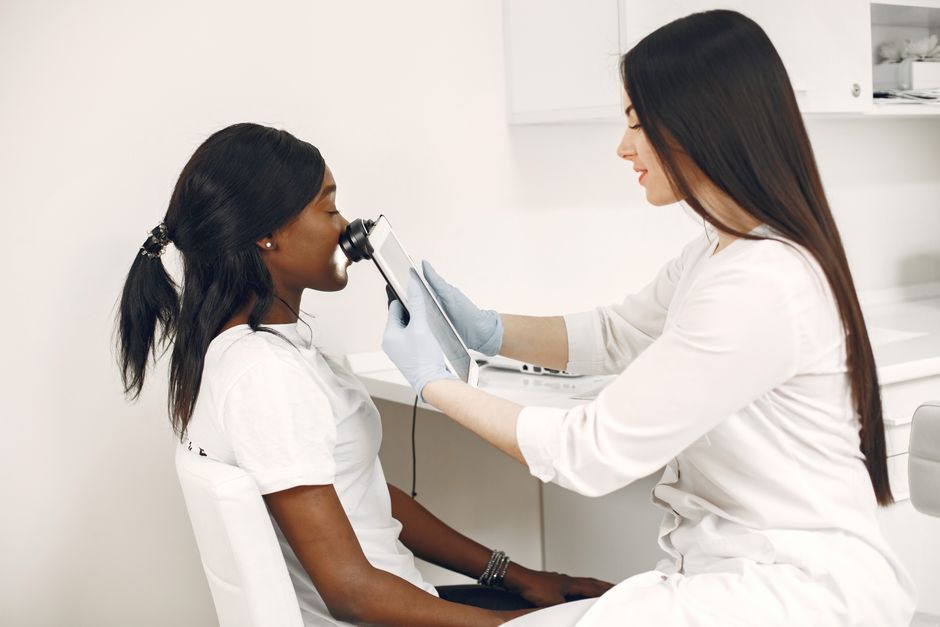 Hommage · Gangnam
Hommage Women's Clinic · Gangnam, Seoul
The acid and strength are chosen after a skin assessment. Illustrative photo.
Your visit
What to expect with an acne peel
01
Skin assessment
The doctor reviews your acne type, skin tone, medicines (including isotretinoin and retinoids) and pregnancy status.
02
Choosing the peel
You agree on the acid, strength, number of sessions and whether to combine it with other care.
03
Peel session
Cleansing, timed application, neutralizing and soothing. Plan about 30–45 minutes.
04
Aftercare and next peel
You follow written aftercare, and the strength is adjusted at the next visit based on how your skin responded.
Your doctor
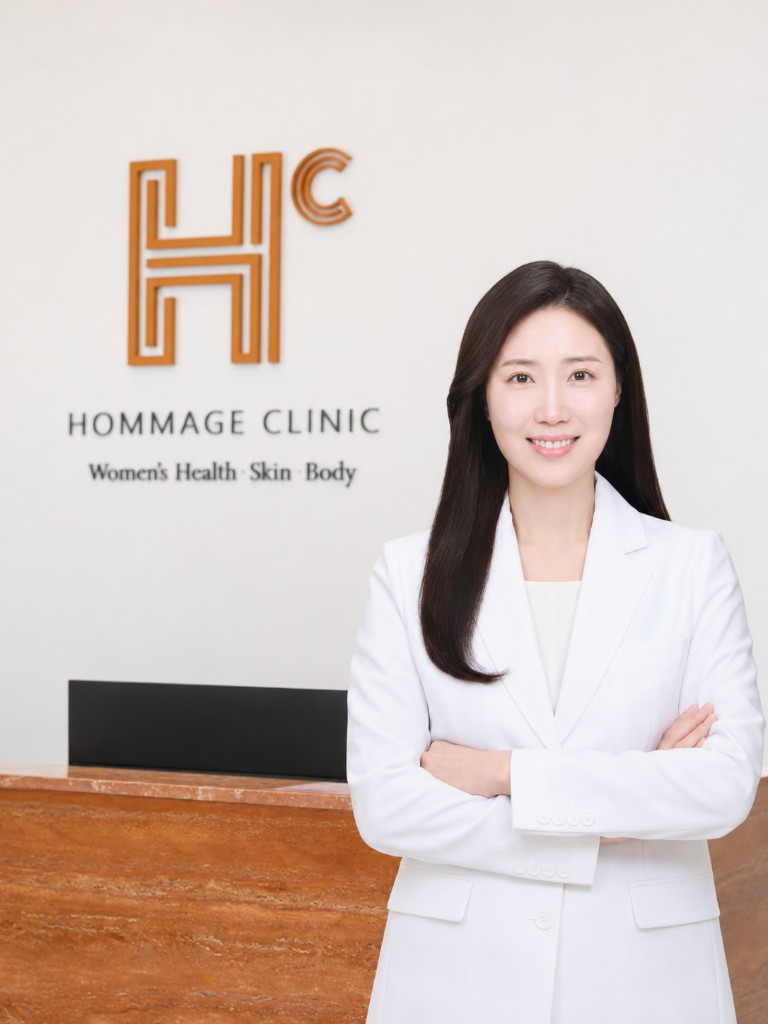
Dr. Hwang Seonhwa
Physician · Skin & Aesthetic Treatments
Dr. Hwang selects the acid and strength for each peel based on acne type, oiliness and skin tone, and starts gently with first-time patients. Dr. Hwang also checks medicines such as isotretinoin before scheduling a peel.
Physician for face and skin procedures, including lifting, laser and skin-improvement treatments, planned around facial proportions and skin condition.
Chemical peels for acne: frequently asked questions
Which chemical peel is good for acne?
Salicylic acid is often the first choice for oily skin with blackheads, whiteheads and inflamed spots, because it dissolves in oil and reaches into pores. Glycolic, mandelic or lactic acid suit texture and marks, and Jessner's solution gives a slightly stronger effect. The right peel depends on your skin type and tone.
Do chemical peels for acne hurt?
Most people feel tingling, warmth or stinging for a few minutes while the acid is on the skin. A fan or cool compress helps, and the sensation usually fades soon after the peel is removed. The skin may feel tight or sensitive for a day or two afterward.
How many peels do I need for acne?
Most people need a series of about 3–6 superficial peels spaced 2–4 weeks apart. Skin often feels smoother after one or two sessions, while fewer breakouts and faded marks build up over the series. Maintenance peels may be suggested, especially for oily, acne-prone skin.
Can I get a chemical peel after taking isotretinoin?
Tell the doctor if you take isotretinoin now or have stopped it recently. The skin heals more slowly during and shortly after this medicine, so peels are usually postponed. Recent guidance suggests some superficial peels may be possible sooner, but timing is decided case by case after examining your skin.
Can I wear makeup after an acne peel?
After a superficial peel, many people can wear light makeup the next day, once any stinging has settled. Use clean brushes and non-comedogenic products, and avoid scrubbing while the skin is flaking. If you had a stronger peel or have open or crusted areas, wait until the skin has healed.
Can foreigners get chemical peels for acne in Seoul?
Yes. Visitors and foreign residents can have acne peels at Hommage Clinic in Gangnam. Bring your passport for registration and a list of skincare and medicines you use. Plan for repeat visits if you want a series, avoid strong sun right after, and contact us before your visit to arrange language support.
Will my acne get worse after a chemical peel?
Some people notice a short-lived increase in breakouts in the first weeks, as clogged pores clear out. This usually settles over the series. Tell the clinic if spots become very painful or crusted, or if you develop blistering or dark patches.
Are chemical peels proven to treat acne?
The evidence is limited. The 2024 American Academy of Dermatology guideline found the evidence for chemical peels insufficient to make a recommendation for or against them. Peels are best used as an add-on to proven treatments such as topical retinoids and benzoyl peroxide.
Can chemical peels remove acne scars?
Superficial acne peels can soften texture and fade flat marks, but they do not lift indented scars. Pitted scars need other methods once breakouts are controlled, such as TCA CROSS for ice-pick scars or fractional laser.
Can I have a chemical peel while pregnant?
Salicylic acid peels are generally avoided in pregnancy. Some gentler acids may be considered after discussion with the doctor. Tell the clinic if you are pregnant, trying to conceive or breastfeeding before any peel.
Can I combine a peel with acne laser treatment?
Yes, but usually not on the same day. Peels and acne laser treatment are often alternated across a plan so the skin is not over-treated. The doctor spaces them according to how your skin responds.
What is the difference between a salicylic and a glycolic peel?
Salicylic acid is oil-soluble, so it reaches into oily pores and suits blackheads and oily skin. Glycolic acid is water-soluble and works mainly on the surface, helping texture and marks. Many plans use one or the other depending on what your skin needs most.
Is a chemical peel safe for darker or Asian skin?
Superficial peels can be used on darker and Asian skin, but the risk of dark patches is higher if the peel is too strong or the skin gets sun. Starting gently, using milder acids such as mandelic, and strict daily sunscreen lower the risk.
References
Sources used for this page, reviewed by Dr. Hwang Seonhwa. Read our editorial and medical review policy.
- Reynolds RV, Yeung H, Cheng CE, et al. Guidelines of care for the management of acne vulgaris. J Am Acad Dermatol. 2024. doi:10.1016/j.jaad.2023.12.017
- American Academy of Dermatology acne guideline summary, including the finding of insufficient evidence for chemical peels and lasers. Dermatology Times , 2024. Summary
- Chen X, Wang S, Yang M, Li L. Chemical peels for acne vulgaris: a systematic review of randomised controlled trials. BMJ Open. 2018;8(4):e019607. PubMed · Full text
This page is general information and does not replace a personal consultation. Illustrations are original works of Hommage Women's Clinic, Gangnam, Seoul; photos marked illustrative are not of patients.
Related acne treatments
Salicylic Acid Peel
The oil-soluble BHA peel most often used for blackheads and oily, acne-prone skin.
Jessner Peel
A blended superficial peel for stubborn congestion and uneven texture.
Acne Laser Treatment
Laser and light options that pair with peels for inflamed breakouts and redness.
Pigment Correction Peel
Peels focused on brown marks and uneven tone after acne has settled.
Blue Light Acne Therapy
A drug-free light treatment for mild to moderate inflamed acne.
Skin Care for Hormonal Changes
How cycles, PCOS, pregnancy and menopause affect acne and skin.
Find the right peel for your acne
Book a skin assessment with Dr. Hwang Seonhwa in Gangnam to choose a peel and plan it alongside any medical acne treatment you need.
Hommage Clinic · 4F, Building A, 509 Gangnam-daero, Seoul (near Sinnonhyeon Station) · Mon & Fri 10:00–20:00 · Tue–Thu 10:00–19:00 · Sat 10:00–15:00