
Skin & Aesthetics · Pigment & redness
IPL Photofacial in Seoul: How Light Treats Spots and Redness
IPL (intense pulsed light) is a non-laser light treatment that sends broad-spectrum flashes into the skin, where brown pigment and small red blood vessels absorb the energy and gradually fade. At Hommage Clinic in Gangnam, Seoul, Dr. Hwang Seonhwa checks your skin type, tan and the kind of spots you have before choosing IPL or a more targeted laser.

Quick answer
IPL (intense pulsed light) is a non-laser photofacial that uses filtered flashes of broad-spectrum light to fade sun spots, freckles and diffuse facial redness at the same time. At Hommage Women's Clinic in Gangnam, Seoul, Dr. Hwang Seonhwa first checks your skin type, tan and spot type, then sets the filter and energy. A full-face session takes about 20–30 minutes, most people need 3–5 sessions 3–4 weeks apart, and downtime is usually just pink skin and spots that flake off within about 7–10 days.
Key takeaways
- IPL treats brown and red together, which makes it a good fit for mixed sun damage.
- It is less precise than a single-wavelength laser for individual deep spots or larger vessels.
- Tanned skin, very dark skin and melasma raise the risk of burns or darkening; a physician check comes first.
- Results build over a series and need daily sunscreen to last.
Infographic
IPL in numbers
Full-face session
Including eye shields and cooling gel.
Sessions
About 3–4 weeks apart, then yearly maintenance.
Nanometers
Typical filtered light range reaching the skin.
Spots flake off
Darkened spots lift on their own.
Good pigment results
Rated good or excellent in a study of 97 Asian patients (2001).
No tanning
Before and after each session, with daily SPF 30+.
IPL at a glance
| Key fact | Details |
|---|---|
| Treatment time | Usually 20–30 minutes for the full face |
| Comfort | Quick warm snaps, like a rubber band flick; cooling gel helps and numbing cream is optional |
| Sessions | Typically 3–5 sessions about 3–4 weeks apart, then maintenance once or twice a year |
| Downtime | Mild redness for a few hours; brown spots darken and flake off over about 7–10 days |
| Results visible | Gradually after each session; clearest about 2–4 weeks after the final one |
| How long results last | Treated spots can stay lighter for years, but sun and aging form new ones |
| Reviewed by | Dr. Hwang Seonhwa, physician for skin and aesthetic treatments |
IPL may suit you if you have
- Sun spots, freckles or uneven brown patches from sun exposure
- Diffuse facial redness or fine red vessels on the cheeks and nose
- Mixed sun damage, with brown and red tones making your complexion uneven
- Light to medium skin that is not currently tanned
Wait or consider another option if you
- Are tanned, have used self-tanner recently, or have very dark skin, where burns and dark marks are more likely
- Have melasma, which heat-based light can make darker
- Are pregnant, or have an active skin infection or cold sore in the area
- Take isotretinoin or medicines that make skin light-sensitive, until your doctor has reviewed them
What is IPL and how does it work?
IPL is a light-based treatment, not a laser. A flashlamp releases a broad band of visible and near-infrared light, and a filter on the handpiece removes the shorter wavelengths, so the light reaching the skin typically falls between about 500 and 1,200 nanometers. That light is absorbed by two targets: melanin in brown spots and hemoglobin in small blood vessels.
The absorbed light turns into heat. Pigmented cells are damaged and rise to the surface, where they flake away as fine dark crusts, while small dilated vessels are heated, close down and are gradually cleared by the body. This principle is called selective photothermolysis. IPL works mainly in the outer skin and upper dermis, so it suits surface sun damage better than deep pigment or large vessels. Some people notice slightly smoother texture as mild heating stimulates collagen, but IPL is not a lifting or resurfacing treatment.
What can IPL treat?
IPL is most useful when you have several mild, surface-level concerns at once, which is why it is often called a photofacial. Common uses include:
- Sun spots and freckles on the face, neck, chest and hands. See sun spot treatment and freckle removal for options focused on individual spots.
- Diffuse redness and fine visible vessels , including the background redness of rosacea .
- Mixed sun damage , where brown and red tones together make the complexion look uneven.
IPL is less suitable for some concerns. Melasma can darken after heat-based light treatment, so it needs a gentler plan. Deep pigment, larger or bluish vessels, raised moles and acne scars also respond better to other treatments. Any spot that is changing, bleeding or irregular should be checked by a doctor before any cosmetic treatment.
IPL vs laser: which is right for you?
The main difference is the light itself. A laser emits one precise wavelength in a focused beam, so it can be tuned to a single target at a chosen depth. IPL emits many wavelengths at once over a wider area, so one session can address both brown spots and redness, but each target receives less selective energy.
- IPL often suits light to medium skin with scattered sun spots, freckles and diffuse redness together.
- A pigment laser such as pico laser is usually more precise for individual spots and for pigment in skin that darkens easily.
- A vascular laser is usually more effective for distinct broken capillaries or thicker vessels; see vascular laser treatment .
Skin tone matters too. Melanin in your normal skin also absorbs IPL light, so tanned or darker skin takes up more energy and is more likely to burn or develop dark marks. In those cases a longer-wavelength laser or a non-light option is often safer, and your doctor will explain why if IPL is not the right fit.
What happens during IPL, and does it hurt?
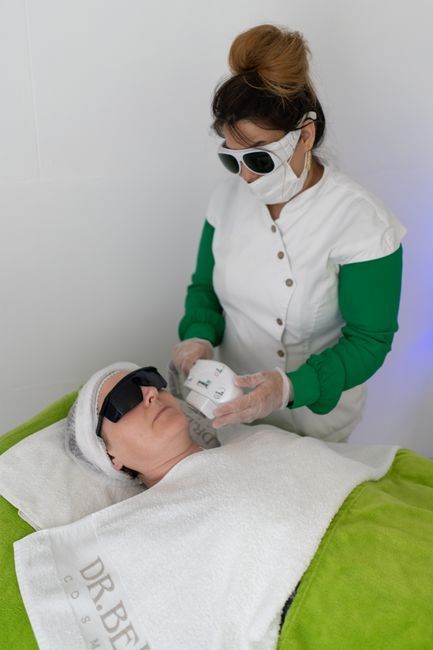
An IPL session for the full face usually takes 20 to 30 minutes. After cleansing, you wear protective eye shields, a layer of cool gel is applied and the handpiece is placed against the skin to deliver a series of flashes.
Each flash feels like a warm snap of a rubber band. Most people tolerate it without numbing, and a cooled tip or cold packs reduce the heat; numbing cream can be used if you are sensitive. Areas with many dark spots may sting more because they absorb more energy. Say so if any flash feels sharply hot, since settings can be adjusted during the session.
How long do IPL results last?
Results build gradually, so IPL is usually done as a series. Most people need 3 to 5 sessions about 3 to 4 weeks apart, with some improvement after each one and the clearest result about 2 to 4 weeks after the last.
Right after treatment the skin may look pink and slightly swollen for a few hours to a day. Brown spots typically turn darker, like coffee grounds, and flake off over about 7 to 10 days. Redness tends to fade more slowly across the series.
Treated spots can stay lighter for a long time, but IPL does not stop sun exposure and aging from creating new ones, and rosacea redness often returns. Many people book one or two maintenance sessions a year.
Aftercare
- Use a gentle cleanser and moisturizer; avoid scrubs, retinoids and acids for a few days.
- Do not pick the darkened spots; let them flake off on their own.
- Skip saunas, hot baths, intense exercise and alcohol for 24 to 48 hours if you flush easily.
- Use broad-spectrum sunscreen (SPF 30 or higher) daily and avoid tanning for at least 4 weeks before and after each session.
Risks and possible side effects of IPL
IPL is generally well tolerated when settings match your skin, but it is a medical treatment with real risks. Expected, short-lived effects are redness, mild swelling, a warm feeling like mild sunburn and darkening of treated spots before they flake.
Less common side effects include:
- Burns and blisters , sometimes in the shape of the handpiece, more likely on tanned or darker skin.
- Post-inflammatory hyperpigmentation: new dark patches weeks after treatment, which usually fade over months but can be slow in Asian skin.
- Light patches (hypopigmentation) , which can last a long time.
- Bruising or purple marks over vessels, and cold sore flare-ups in people prone to them.
- Reduced hair growth in treated areas, which is why eyebrows and beard areas are avoided.
- Scarring , which is rare.
Eye shields are worn throughout to prevent eye injury. Contact the clinic promptly if you notice blisters, oozing, increasing pain or swelling, signs of infection, or new dark or white patches in the weeks after treatment.
IPL at Hommage Clinic
Hommage Clinic is a women's health and skin clinic in Gangnam, a short walk from Sinnonhyeon Station, and welcomes walk-ins during opening hours. Before any IPL session, Dr. Hwang Seonhwa examines your skin to tell sun spots, freckles, melasma and redness apart, because the choice between IPL and a targeted laser depends on that diagnosis. Settings are planned by a physician, with conservative energy for skin that darkens easily.
Because the clinic also provides gynecology care, pigment and redness that change with pregnancy, the pill or menopause can be looked at together; seeskin care for hormonal changesor browse otherskin and aesthetic treatments. Cosmetic IPL is not covered by Korea's National Health Insurance. Cost depends on the area treated, the number of sessions and any combined treatment, and you receive a written quote before treatment.Book an appointmentfor a time when your skin is not tanned.
Mechanism
How IPL works: one flash, two targets
Think of IPL as a camera flash with a very precise filter in front of it. The flashlamp produces a wide band of light, and a cut-off filter blocks the short wavelengths that would only heat the skin surface. What remains is absorbed by two color targets in the skin: melanin, the brown pigment in sun spots and freckles, and hemoglobin, the red pigment inside small blood vessels.
Because both targets are hit by the same flash, a single session can lighten brown spots and reduce background redness together. That is the main advantage of IPL over a single-wavelength laser, and also its main limit: the energy is shared, so a stubborn individual spot or a thick vessel may need a more targeted device. Different filters shift the balance between pigment and vessels, which is why the settings are chosen after your skin is examined.
 Hommage · Gangnam
Hommage Women's Clinic · Gangnam, Seoul
Eye protection is worn for every IPL flash. Illustrative photo.
Compare
IPL vs pico laser vs vascular laser: side by side
IPL is often searched as an alternative to laser toning, pico laser or a vascular laser. All three use light, but they suit different problems. A broad IPL flash is best when brown and red concerns are spread across the face. Apico laseris a sharper tool for individual or deeper pigment and for skin that darkens easily. Avascular laserfocuses on distinct red vessels. Many plans combine them over time.
| Compare | IPL | Pico laser | Vascular laser |
|---|---|---|---|
| Light | Broad band, filtered | Single wavelength, ultra-short pulse | Single wavelength tuned to blood |
| Best for | Scattered spots plus diffuse redness | Individual or deeper pigment | Distinct broken capillaries |
| Skin that darkens easily | Needs conservative settings | Often the safer choice | Depends on device and settings |
| Typical course | 3–5 sessions, 3–4 weeks apart | Planned per spot type | Planned per vessel type |
Planning
IPL session schedule and results timeline
IPL is a course, not a one-off. Each session clears part of the pigment and redness, the skin recovers for three to four weeks, and the next session builds on the last. Brown spots usually respond earlier than redness. Planning the whole course at the start makes it easier to avoid summer sun, holidays and events during the weeks when spots are darkening and flaking.
 Hommage · Gangnam
Hommage Women's Clinic · Gangnam, Seoul
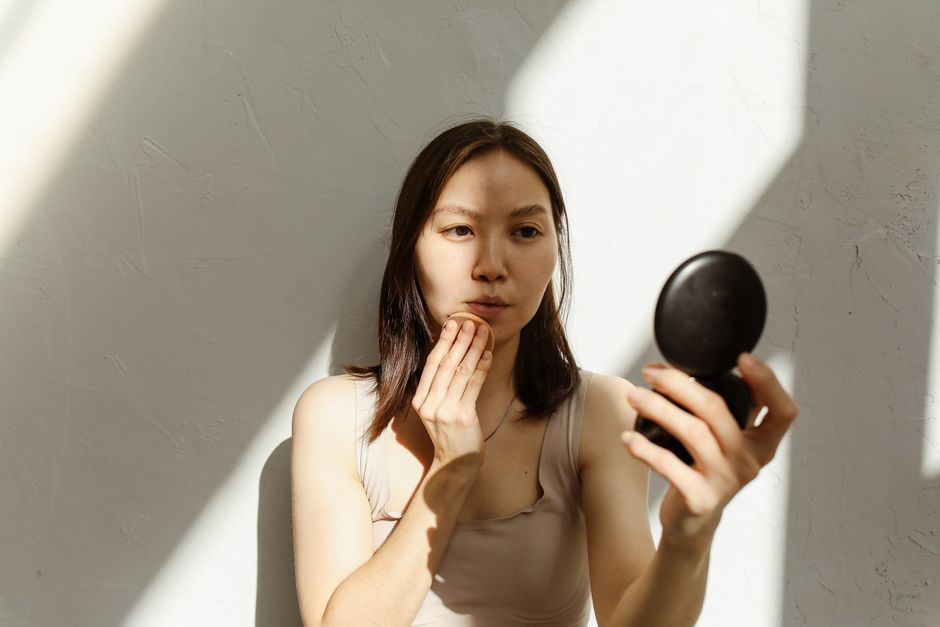
Your skin type and current tan decide whether IPL is the right tool. Illustrative photo.
Suitability
Is IPL safe for Asian skin? Who is a good candidate
IPL has been studied in East Asian patients for more than two decades, and it is widely used in Korea. The key is that normal skin pigment also absorbs the light. The more melanin in the surrounding skin, whether from natural skin tone or a recent tan, the more energy it takes up and the higher the risk of burns or post-inflammatory darkening. A careful assessment sorts people into three broad groups:
Light to medium, untanned
Scattered sun spots, freckles and diffuse redness together. Standard IPL course.
Darkens easily
History of dark marks after acne or injury. Lower energy, test area, or a pico laser instead.
Tanned, melasma, pregnancy
Wait for the tan to fade, treat melasma differently, and postpone during pregnancy.
Tell the doctor about medicines that increase light sensitivity, a history of cold sores, keloid scars, or recent sunbed or self-tanner use. If you are preparing for or recovering from a pregnancy, see our page onskin care for hormonal changes.
Before and after
IPL aftercare: do's and don'ts
Most problems after IPL come from sun exposure or heat in the days around treatment. Preparing your skin for four weeks beforehand and protecting it afterward makes the biggest difference to both safety and results.
Do
- Arrive untanned, with no self-tanner for about 4 weeks
- Use cool compresses if the skin feels warm that evening
- Cleanse gently and moisturize for the first few days
- Apply SPF 30+ every morning and reapply outdoors
- Let darkened spots flake off on their own
- Tell the clinic about blisters or new dark or white patches
Don't
- Sunbathe or use a sunbed before or after a session
- Scrub, peel or use retinoids and acids for a few days
- Use saunas, hot baths or intense exercise for 24–48 hours if you flush
- Pick or rub the coffee-ground spots
- Book waxing or another laser on the area without asking
 Hommage · Gangnam
Hommage Women's Clinic · Gangnam, Seoul
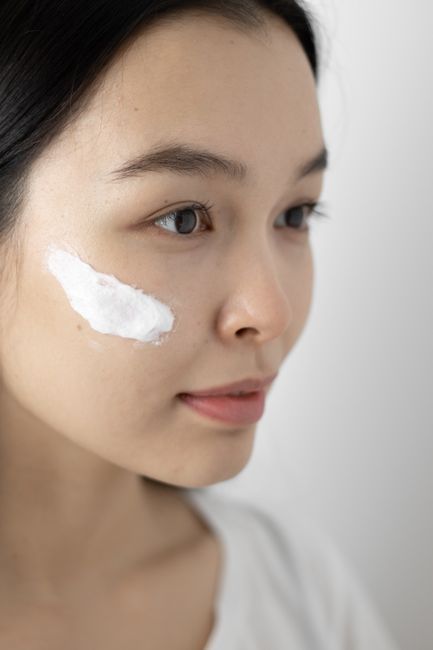
Sun protection before and after each session keeps IPL safe. Illustrative photo.
Evidence
Does IPL work? What the research says
IPL has a long track record, including early studies in Asian skin, but much of the research is small, uncontrolled and uses different devices and filters. The studies below show consistent improvement in brown spots and redness, with mostly short-lived side effects. They do not tell you exactly how your own skin will respond.
Pigment: good or excellent
97 Asian patients, 3–6 sessions; telangiectasia >83%, texture >65%.
Dermatol Surg, 2001;27(7):627–31Minor complications
One case of next-day redness and three small blisters that healed without marks.
Dermatol Surg, 2001Post-acne marks improved
60 Chinese patients with red and brown acne marks, 3–7 sessions.
Wu et al., Dermatol Ther, 2022Rosacea studies reviewed
Most showed less redness and visible vessels; side effects were temporary.
Martignago et al., IJDVL, 2024Traveling to Seoul
IPL in Seoul for international patients
A single IPL session fits easily into a short visit to Seoul, with little downtime. The challenge is that IPL works best as a series 3–4 weeks apart. Visitors usually choose one of two approaches: one session during the trip, with any further sessions back home or on a later visit, or a longer stay for residents and repeat travelers.
- Send recent face photos in daylight and your dates by WhatsApp, KakaoTalk or the contact form; ask for language support if needed.
- Arrive untanned. A beach holiday right before your visit may mean IPL has to be postponed.
- Book IPL early in your stay so spots can flake off before you fly, ideally with about a week left.
- Bring your passport and a list of your medicines, especially isotretinoin, antibiotics or other light-sensitizing drugs.
- Ask for a copy of your settings and filter so a doctor at home can continue the course safely.
 Hommage · Seoul
Hommage Women's Clinic · Gangnam, Seoul
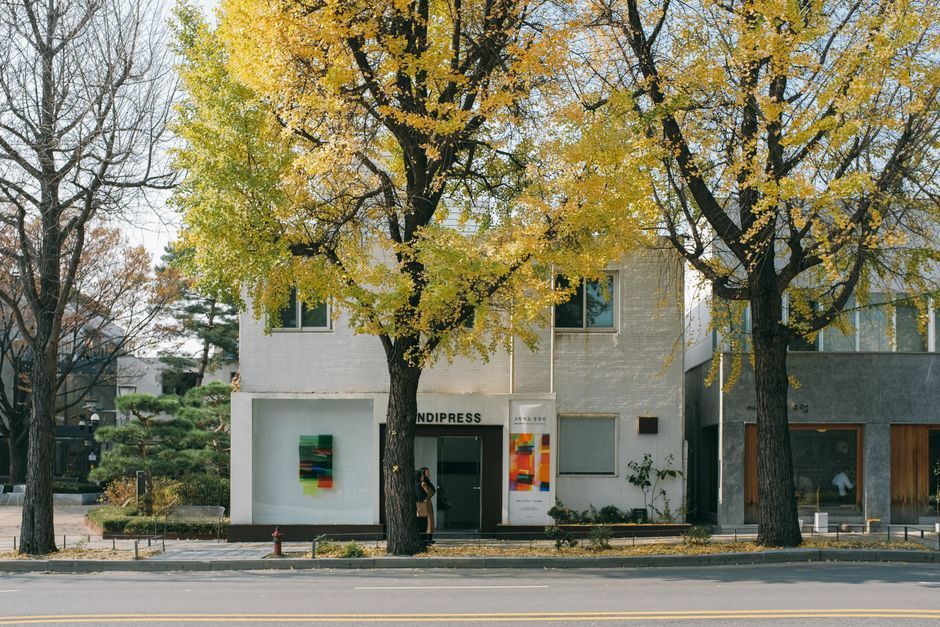
The clinic is in Gangnam, a short walk from Sinnonhyeon Station. Illustrative photo.
 Hommage · Gangnam
Hommage Women's Clinic · Gangnam, Seoul
A skin assessment comes before any IPL session. Illustrative photo.
 Hommage · Gangnam
Hommage Women's Clinic · Gangnam, Seoul
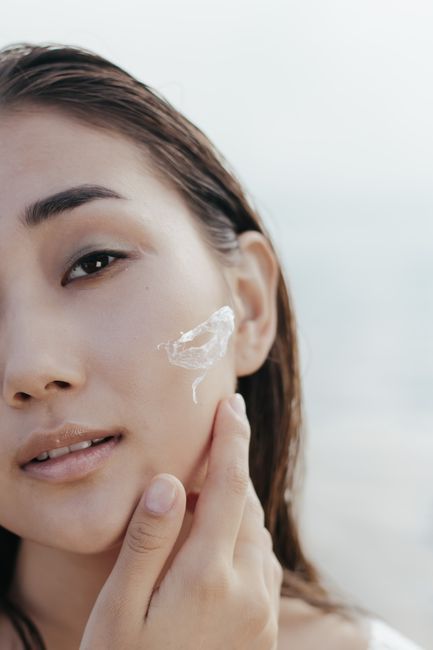
Keep skin care simple for a few days after each session. Illustrative photo.
Choosing well
How to choose an IPL clinic in Seoul
IPL devices are common, and results depend as much on assessment and settings as on the machine. Ask these questions at any clinic, including ours:
- Does a physician assess my skin first? Including melasma, tan and spot type.
- Will they say if IPL is the wrong tool? A pico or vascular laser may suit you better.
- How are settings chosen? Filter and energy matched to your skin, with a test area if needed.
- What is the full course? Number of sessions, spacing and maintenance, not just one session.
- Who handles side effects? A clear route back to the doctor for blisters or dark marks.
- Is the quote written? Area, number of sessions and any combined treatments.
What affects the cost of IPL?
Cost depends on the area (face only, or also neck, chest or hands), the number of sessions in your course, and whether IPL is combined with targeted treatments such aspico laserfor stubborn spots orage spot removalfor raised spots. Cosmetic IPL is not covered by Korea's National Health Insurance, and you receive a written quote after your skin assessment.
Your visit
What to expect at your IPL appointment
01
Skin assessment
Dr. Hwang examines your spots and redness, checks for melasma and tanning, and asks about medicines, cold sores and pregnancy.
02
Choosing the settings
The filter and energy are chosen for your skin type. A small test area may be suggested first if your skin darkens easily.
03
Treatment
After cleansing, you wear eye shields and cool gel is applied. The flashes take about 20–30 minutes for the full face.
04
Aftercare and follow-up
The skin is soothed, sunscreen is applied and the next session is usually booked 3–4 weeks later.

Your doctor
Dr. Hwang Seonhwa
Physician · Skin & Aesthetic Treatments
Dr. Hwang decides between IPL and a targeted laser only after identifying each spot and checking for tanning or melasma, and starts with conservative settings on skin that darkens easily.
Physician for face and skin procedures, including lifting, laser and skin-improvement treatments, planned around facial proportions and skin condition.
IPL: frequently asked questions
Does IPL hurt?
IPL feels like a series of quick, warm snaps, often compared to a rubber band flicking the skin. Most people manage without numbing cream, and cooling gel or a chilled tip reduces the heat. Areas with darker spots can sting a little more. Numbing cream can be applied beforehand if you are sensitive, and settings can be adjusted during the session.
How many IPL sessions will I need?
Most people need 3 to 5 sessions spaced about 3 to 4 weeks apart. A few light freckles may improve after one or two, while diffuse redness usually needs the full series. After that, one or two maintenance sessions a year help with new sun damage. Your doctor suggests a number after examining your skin.
Can I wear makeup after IPL?
Usually yes, from the next day, as long as there are no blisters or open areas. Use gentle products and remove them softly without scrubbing. Do not rub or pick the darkened spots while they flake off over about a week, and wear sunscreen under your makeup every day.
Is IPL safe for Asian or darker skin?
IPL can be used on many Asian skin types, but conservative settings are needed because normal skin pigment also absorbs the light and dark marks can follow treatment. On very dark or tanned skin the risk of burns and pigment changes is higher, so a longer-wavelength laser or another approach is often a better choice. A test area may be suggested first.
Can IPL treat melasma?
IPL is generally not recommended as a main treatment for melasma, because heat and light can make melasma darker or bring it back faster. Melasma usually needs strict sun protection, topical or oral medication and gentle low-energy treatments. If you have both melasma and sun spots, the plan is built around the melasma first. See our melasma treatment page.
What affects the cost of IPL in Seoul?
Cost depends on the treatment area, the number of sessions you need and whether IPL is combined with other treatments. Cosmetic IPL is not covered by Korea's National Health Insurance. Hommage Clinic gives you a written quote after your skin assessment and before any treatment, so you know what to expect.
Can foreigners get IPL in Seoul?
Yes. International visitors and foreign residents can book IPL at Hommage Clinic; bring your passport for registration. If you are traveling, allow about a week for spots to flake and plan to stay out of strong sun afterward. Contact us before your visit to arrange language support; you can walk in during opening hours or book ahead for a set time.
Is IPL a laser?
No. A laser produces a single wavelength in a narrow beam, while IPL uses a flashlamp and filters to deliver a broad band of light over a wider area. That lets IPL treat brown spots and redness at the same time, but it is less precise than a laser for one specific target.
What is the difference between IPL and laser toning?
Laser toning uses low-energy laser passes, often repeated weekly or every few weeks, and is commonly used for uneven tone and in skin that darkens easily. IPL uses stronger broad-spectrum flashes less often and also treats redness. See laser toning for comparison.
Can IPL help redness after acne?
It can. Red and brown marks left after acne often fade with a course of IPL; one retrospective study of 60 patients reported improvement in about 82%. Active acne and deep scars need other treatment, so your doctor first checks what kind of marks you have.
Can I do IPL in summer?
Yes, if you can avoid tanning for about four weeks before and after each session and wear sunscreen daily. Many people prefer autumn and winter because strong sun and holidays are less of a problem while the skin recovers.
Can IPL be done on the neck, chest and hands?
Yes. These areas also collect sun spots and redness. The skin there heals a little more slowly than the face and can be more sensitive, so settings are usually more conservative and a test area may be used first.
Can I get IPL while pregnant or breastfeeding?
Cosmetic IPL is usually postponed during pregnancy, partly because pregnancy hormones make pigment less predictable and melasma more likely. Discuss timing during breastfeeding with the doctor at your assessment.
References
Sources used for this page, reviewed by Dr. Hwang Seonhwa. Read our editorial and medical review policy.
- Photorejuvenation for Asian skin by intense pulsed light. Dermatol Surg. 2001;27(7):627–631. PubMed
- Wu X, Wang X, Wu X, et al. Intense pulsed light therapy improves acne-induced post-inflammatory erythema and hyperpigmentation: a retrospective study in Chinese patients. Dermatol Ther (Heidelb). 2022;12:1147–1156. Springer
- Martignago CCS, Bonifacio M, Ascimann LT, et al. Efficacy and safety of intense pulsed light in rosacea: a systematic review. Indian J Dermatol Venereol Leprol. 2024. PMID 39152889.
- Mardani et al. Treatment of solar lentigines: a systematic review of clinical trials. J Cosmet Dermatol. 2025. PMC
This page is general information and does not replace a personal consultation. Illustrations are original works of Hommage Women's Clinic, Gangnam, Seoul; photos marked illustrative are not of patients.
Related skin treatments
Vascular Laser
Single-wavelength lasers for distinct broken capillaries, redness and red spots.
Pico Laser Treatment
Ultra-short laser pulses for individual spots and pigment in skin that darkens easily.
Sun Spot Treatment
Options for flat brown spots caused by years of sun exposure.
Rosacea Laser Treatment
Light and laser care for rosacea redness, alongside medical treatment.
Freckle Removal
How freckles differ from other spots and which treatments lighten them.
Skin Care for Hormonal Changes
How pregnancy, the pill and menopause affect pigment, redness and acne.
Find out whether IPL suits your skin
Book a skin assessment with Dr. Hwang Seonhwa in Gangnam. Come untanned, and we will check whether IPL or a targeted laser fits your spots and redness.
Hommage Clinic · 4F, Building A, 509 Gangnam-daero, Seoul (near Sinnonhyeon Station) · Mon & Fri 10:00–20:00 · Tue–Thu 10:00–19:00 · Sat 10:00–15:00