
Women's health · Menopause
Hormone Replacement Therapy (HRT) in Gangnam: Benefits, Risks, Types
Hormone replacement therapy (HRT), also called menopausal hormone therapy, replaces the estrogen your ovaries stop making at menopause, usually with a progestogen to protect the uterus, to relieve hot flashes, night sweats and vaginal dryness and help prevent bone loss. At Hommage Clinic in Gangnam, Seoul, OB/GYN specialist Dr. Park Yuna weighs your personal benefits and risks before prescribing.
Quick answer
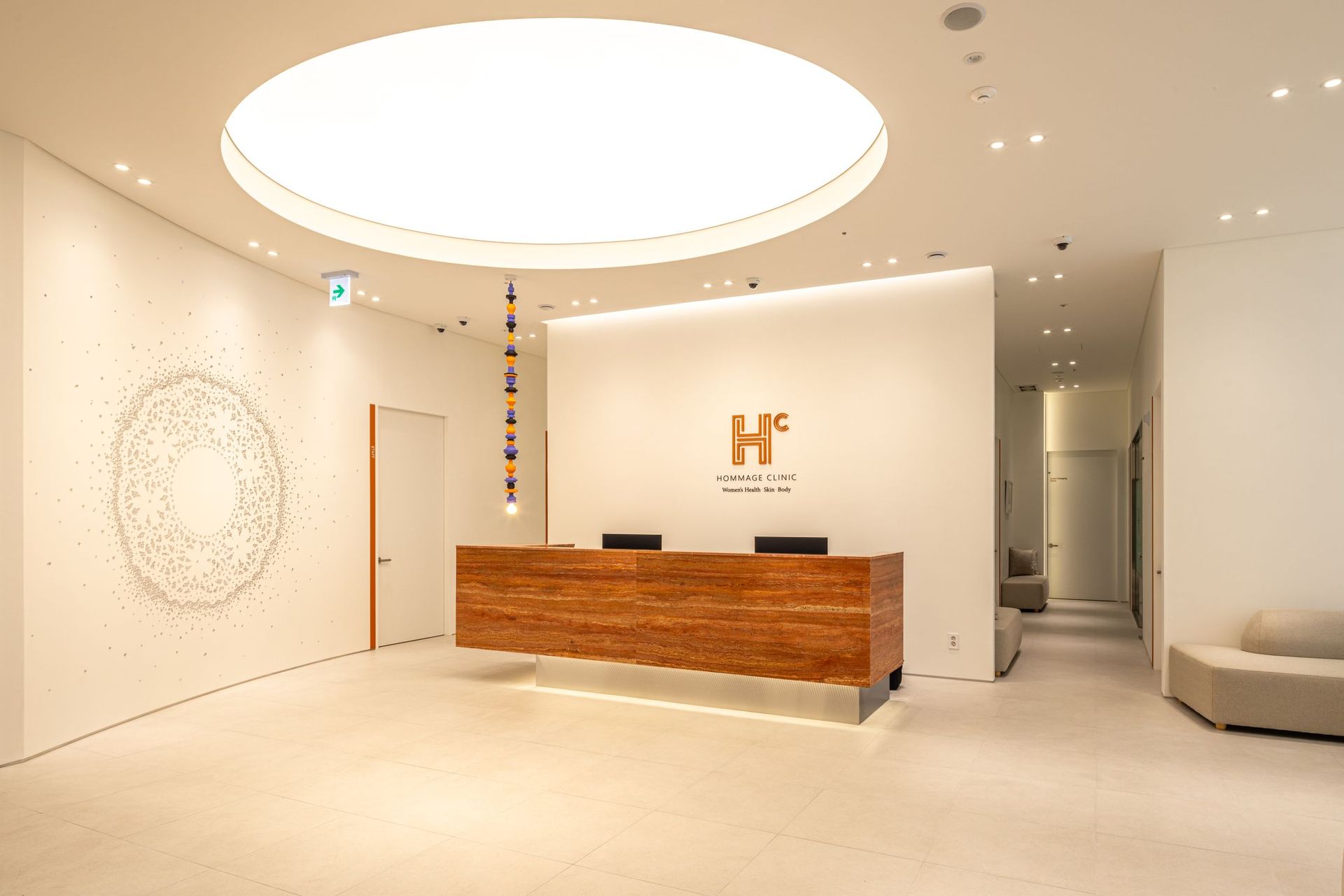
Hormone replacement therapy (HRT) replaces the estrogen lost at menopause, with a progestogen if you still have a uterus. It is the most effective treatment for hot flashes and night sweats and prevents bone loss. At Hommage Women's Clinic in Gangnam, Seoul, female OB/GYN specialist Dr. Park Yuna prescribes HRT as tablets, skin patches, gels or vaginal estrogen after a full health review, with follow-up at about 3 months and then yearly.
Key takeaways
- For healthy women under 60, or within 10 years of menopause, guidelines find the benefits outweigh the risks.
- Skin patches and gels did not raise blood clot risk in a large UK study, unlike tablets.
- The breast cancer risk is small and depends mainly on the type and length of use; estrogen-only HRT carries the least.
- Hot flashes often ease within weeks; review at 3 months allows the dose or type to be adjusted.
Infographic
HRT in numbers
Fewer hot flashes
Typical reduction at standard doses; about 65% at low doses.
Best window
Or within 10 years of the last period.
Patch clot risk
Odds ratio for transdermal estradiol: no clear rise (BMJ 2019).
Estrogen-only
Extra breast cancers over 20 years after 5 years' use from age 50.
First review
Check symptoms, bleeding and side effects, then yearly.
Progestogen days
Per month in a cyclical regimen, to protect the womb lining.
HRT at a glance
| Key fact | Details |
|---|---|
| What it is | Estrogen, with a progestogen if you have a uterus, to replace hormones lost at menopause |
| Forms | Tablets, skin patches, gels, and low-dose vaginal creams, tablets or rings |
| Who it suits | Most healthy women with bothersome symptoms who are under 60 or within 10 years of menopause |
| When it works | Hot flashes usually ease within a few weeks; full effect often by about 3 months |
| Main risks | Small rises in breast cancer, blood clot and stroke risk that depend on type, age and duration |
| Follow-up | Usually about 3 months after starting, then at least once a year |
| Prescribed by | Dr. Park Yuna, OB/GYN specialist |
HRT may suit you if you have
- Hot flashes, night sweats or sleep problems that affect daily life
- Menopause before age 45, or surgical removal of the ovaries
- Vaginal dryness or urinary symptoms (vaginal estrogen alone may be enough)
- A higher risk of osteoporosis and bothersome menopause symptoms
HRT is usually not suitable if you have
- Had breast cancer or another estrogen-sensitive cancer
- Had a blood clot, stroke or heart attack, or have active liver disease
- Unexplained vaginal bleeding that has not been checked
- A possible pregnancy
What is hormone replacement therapy and how does it work?
HRT tops up estrogen, the hormone whose fall causes most menopause symptoms. Estrogen calms the brain's temperature center, keeps the vaginal and urinary tissues moist and elastic, and slows bone loss.
If you still have your uterus, you also need a progestogen, such as micronized progesterone, dydrogesterone or a hormonal IUD. Estrogen alone makes the uterine lining grow, and the progestogen prevents this from turning into endometrial hyperplasia or cancer. Women who have had a hysterectomy usually take estrogen only. Tibolone, a single tablet that acts like a combination of hormones, is another option in Korea.
What are the benefits of HRT?
HRT is the most effective treatment for hot flashes and night sweats, and for many women it also improves sleep, mood, joint aches and quality of life. Other benefits supported by current guidance include:
- Vaginal and urinary health: less dryness and pain during sex. Vaginal estrogen is often the first choice for these symptoms; see vaginal dryness treatment .
- Bone protection: HRT prevents bone loss and lowers the risk of fractures while you take it.
- Early menopause: for women whose periods stop before 45, HRT until about the average age of menopause protects bones and heart. See low estrogen treatment .
HRT is not recommended solely to prevent heart disease or dementia, and it is not an anti-aging treatment.
Is HRT safe? Understanding the risks
For most healthy women under 60, or within 10 years of their last period, The Menopause Society (2022) and the International Menopause Society conclude that the benefits of HRT outweigh the risks. Risks are higher when HRT is started after 60 or more than 10 years after menopause, so the decision is always individual.
- Breast cancer: combined estrogen and progestogen therapy causes a small increase in risk that grows with longer use and falls again after stopping. Estrogen-only therapy carries little or no increase. Regular breast screening continues during HRT.
- Blood clots and stroke: estrogen tablets slightly raise the risk of clots in the legs or lungs and of stroke. Skin patches and gels, at standard doses, do not appear to raise clot risk.
- Endometrial cancer: raised only if estrogen is taken without a progestogen when you have a uterus.
- Common side effects: breast tenderness, bloating, headaches, mood changes and irregular spotting in the first 3–6 months, which usually settle or improve with a change of product.
Call the clinic if you have bleeding that continues after the first 6 months or starts after a bleed-free spell, a new breast lump, or migraines that change. Seek emergency care for chest pain, breathlessness, a painful swollen leg, or sudden weakness or slurred speech.
Types of HRT: tablets vs patches vs vaginal estrogen
The right type depends on your symptoms, your risk factors and whether you have a uterus.
- Tablets: convenient and widely used, but more likely to affect clotting and triglycerides because they pass through the liver.
- Skin patches and gels: estrogen is absorbed through the skin, which carries a lower clot risk. Often preferred if you have migraines, a higher BMI or other clot risk factors.
- Vaginal estrogen: a low-dose cream, tablet or ring for dryness, pain during sex and urinary symptoms. Very little is absorbed into the bloodstream, so a progestogen is not needed and it can usually be used long term. It does not treat hot flashes.
- Continuous vs cyclical regimens: if your periods stopped less than a year ago, a cyclical regimen with a monthly bleed is often used first; later, a continuous no-bleed regimen.
Custom-compounded “bioidentical” hormones are not recommended because their dose and purity are not regulated. Regulated body-identical estradiol and micronized progesterone are available.
How long can I take HRT?
There is no fixed time limit. Current guidance is to use the type and dose that controls your symptoms and to review the decision every year, rather than stopping automatically at a certain age. Many women take HRT for several years; some continue beyond 60 when the benefits still outweigh the risks for them.
When you decide to stop, symptoms can return in some women whether you taper slowly or stop at once. Dr. Park can plan the change with you and offer non-hormonal options if hot flashes come back. The wider menopause plan, including bone and heart checks, is covered on our menopause treatment page.
HRT at Hommage Clinic
At Hommage Clinic, near Sinnonhyeon Station in Gangnam, HRT is prescribed and followed up by Dr. Park Yuna, a female OB/GYN specialist. Before you start, she reviews your personal and family history, checks blood pressure and makes sure your cervical and breast screening are up to date, with a pelvic ultrasound if you have had unusual bleeding. If you would rather avoid hormones, see the options on our hot flashes treatment page, or browse all menopause and intimate health care at the clinic.
For patients enrolled in Korea's National Health Insurance, consultations, many tests and many HRT prescriptions are covered; visitors without coverage pay the clinic's fees directly. We explain the costs of tests and medicines before you decide.
Mechanism
How does HRT work in the body?
Estrogen receptors are found throughout the body, which is why falling estrogen at menopause causes such a wide mix of symptoms. HRT restores a steady, low level of estrogen. In the brain it stabilizes the temperature-control center that triggers hot flashes; in the vagina and bladder it keeps tissue thick, moist and elastic; and in bone it slows the breakdown that speeds up after menopause. The progestogen part has one main job: protecting the lining of the uterus.
Compare types
HRT tablets vs patches vs gel vs vaginal estrogen
The route matters as much as the hormone. Estrogen swallowed as a tablet passes through the liver first, which changes clotting factors; estrogen absorbed through the skin largely skips that step. In a UK study of more than 80,000 women with blood clots, oral estrogen was linked with a higher clot risk while transdermal estradiol was not (odds ratio 0.96). Vaginal estrogen works locally and needs no progestogen. The infographic summarizes the trade-offs Dr. Park discusses with you.
Regimens
Cyclical vs continuous combined HRT: which regimen is right?
If you still have a uterus, estrogen is always paired with a progestogen, but there are two ways to schedule it. In a cyclical (sequential) regimen , you take estrogen every day and add a progestogen for 10–14 days each month, which usually brings a planned, period-like bleed. In a continuous combined regimen , you take both every day and, once your body settles, there is usually no bleeding at all.
Cyclical regimens are often used in perimenopause or within the first year after your last period, because starting a no-bleed regimen too early tends to cause unpredictable spotting. Many women move to continuous combined HRT later. A third option is estrogen with a hormonal IUD , which protects the lining and also gives contraception in perimenopause. Women who have had a hysterectomy usually need estrogen alone.
Cyclical
Estrogen daily + progestogen 10–14 days a month. Monthly bleed. Often first in perimenopause.
Continuous combined
Both hormones daily. Usually bleed-free after settling. Often used a year or more after the last period.
Estrogen + hormonal IUD
The IUD protects the lining for years and adds contraception.
Estrogen only
For women without a uterus. No progestogen needed.
 Hommage · Gangnam
Hommage Women's Clinic · Gangnam, Seoul
Cyclical and continuous regimens follow different monthly schedules. Illustrative photo.
Risk in numbers
HRT and breast cancer risk: the numbers in perspective
Breast cancer is the risk women ask about most, and headlines often quote relative risks that sound alarming. Absolute numbers are more useful. A 2019 Lancet analysis of worldwide data estimated how many women out of 100 in Western countries would be diagnosed with breast cancer between ages 50 and 69 after 5 years of HRT starting at 50. The difference between regimens is real but small, and the risk falls after stopping, though some excess can persist for years. Baseline risk varies between countries, so Dr. Park relates these figures to your own family history and screening.
Results timeline
How long does HRT take to work? Your first months on HRT
HRT is not instant, and the first months are an adjustment period. Hot flashes usually start to ease within a few weeks, with the full effect often by about 3 months. Breast tenderness, bloating and irregular spotting are common early on and usually settle within 3–6 months. Vaginal estrogen typically improves dryness within 4–6 weeks. That is why your first review is at about 3 months: it is the right point to judge what is working and fine-tune the dose or type.
 Hommage · Gangnam
Hommage Women's Clinic · Gangnam, Seoul
Dr. Park explains HRT risks in plain numbers rather than headlines. Illustrative photo.
Clearing up confusion
HRT myths vs facts
Much of the fear around HRT dates from the first Women's Health Initiative reports in 2002, which studied older oral hormones in women whose average age was in their 60s. Later analyses by age and newer studies changed the picture. Here are the misunderstandings Dr. Park hears most often:
Your situation
HRT after hysterectomy, early menopause, migraine or a family history of cancer
After a hysterectomy. If your uterus has been removed, you usually need estrogen alone, without a progestogen. Estrogen-only HRT carried the smallest breast cancer signal in the Lancet 2019 analysis. If your ovaries were also removed, menopause starts suddenly and symptoms can be strong, so treatment is often started soon after surgery.
Early menopause or premature ovarian insufficiency. For women whose periods stopped before 40, or between 40 and 45, guidelines recommend hormone replacement until about the natural age of menopause, regardless of symptoms, to protect bones and heart. The usual age-based worries about HRT do not apply in the same way. See low estrogen treatment .
Migraine, higher weight or clot risk factors. A skin patch or gel is often preferred because transdermal estradiol did not raise clot risk at standard doses.
Family history of breast cancer. HRT is not automatically ruled out, but the decision is more individual and screening is especially important. Women who have had breast cancer themselves are usually advised against systemic HRT and offered non-hormonal options instead; see hot flashes treatment .
 Hommage · Gangnam
Hommage Women's Clinic · Gangnam, Seoul
HRT is tailored to your history and stage of life. Illustrative photo.
Evidence
Is HRT safe? What the research says
HRT is one of the most studied treatments in women's health. The key figures below come from the Korean Society of Menopause 2025 guideline, a large UK clot study and a worldwide analysis of breast cancer data. They describe averages, and your own balance of benefit and risk depends on age, timing, type of HRT and personal history.
Hot flash reduction
Standard-dose HRT; about 65% with low doses.
Korean Society of Menopause, 2025Oral estrogen clot odds
Estradiol 1.27, conjugated estrogens 1.49; transdermal 0.96. 80,396 cases.
Vinogradova et al., BMJ, 2019Breast cancer, daily combined
Extra cases ages 50–69 after 5 years from 50; +0.5 for estrogen-only.
Lancet, 2019Spine bone density
Increase with standard-dose combined HRT in the WHI trial.
WHI, cited in KSM 2025Symptoms return
Hot flashes recur in up to 87% after stopping.
Korean Society of Menopause, 2025Traveling to Seoul
HRT in Seoul for international patients and expats
Foreign residents and visitors can start or continue HRT at Hommage Women's Clinic in Gangnam, near Sinnonhyeon Station. Brand names and available strengths differ between countries, so the most useful thing you can bring is the exact product, dose and route you use now.
Before you come
- Contact us by WhatsApp, KakaoTalk or the contact form with your dates; ask for language support if needed.
- Bring your passport or residence card, your current HRT packaging or prescription, and recent mammogram, cervical screening and blood pressure records.
- Allow 1–2 days if blood tests or an ultrasound are needed before prescribing.
Continuing care
Ask how many months of supply can be dispensed and whether an equivalent product is sold in your home country. Keep your written plan for your home doctor, and book the 3-month review in Seoul or locally. Stop HRT and seek care at once for chest pain, breathlessness, a painful swollen leg or sudden weakness.
 Hommage · Seoul
Hommage Women's Clinic · Gangnam, Seoul
Seoul: the clinic is a short walk from Sinnonhyeon Station in Gangnam. Illustrative photo.
 Hommage · Gangnam
Hommage Women's Clinic · Gangnam, Seoul
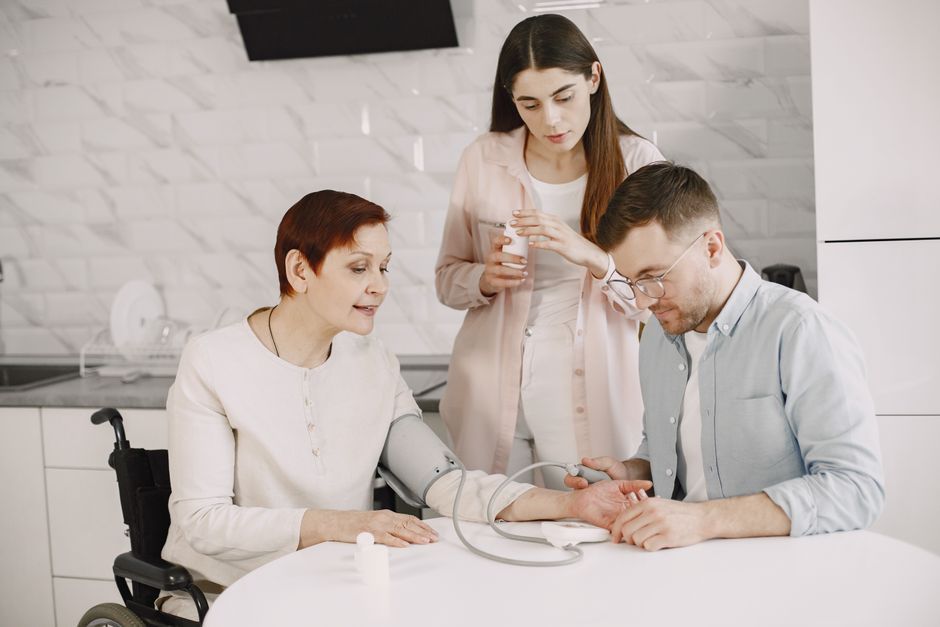
Blood pressure is checked before starting HRT and at each review. Illustrative photo.
Choosing well
How to choose an HRT doctor in Seoul
Good HRT care is less about a particular product and more about careful selection and follow-up. Ask these questions at any clinic, including ours:
- Does a specialist take a full history? Clots, migraine, breast and family history decide which HRT is safe.
- Are tablets, patches and gels all discussed? The route should match your risk profile.
- Is the progestogen part explained? If you have a uterus, endometrial protection is essential.
- Are licensed products used? Avoid unregulated compounded hormones.
- Is there a 3-month and yearly review? HRT is a plan, not a one-off prescription.
What affects the cost of HRT in Seoul?
The cost depends on the tests needed before starting (for example blood tests, pelvic ultrasound or hormone testing ), the product and route, the length of supply, and the number of follow-up visits. National Health Insurance covers many HRT consultations, tests and prescriptions for enrolled patients; visitors without coverage pay directly. Costs are explained before you decide.
Your visit
Starting HRT: what to expect
01
Health review
Dr. Park goes through your symptoms, periods, personal and family history of cancer, clots, stroke and heart disease.
02
Checks
Blood pressure, and a pelvic exam, ultrasound or blood tests when needed. Your breast and cervical screening status is confirmed.
03
Choosing a regimen
We agree on the type, dose and route, such as a tablet, patch or gel, and whether you need a progestogen.
04
Review
A follow-up after about 3 months to check symptoms, bleeding and side effects, then a yearly review.

Your doctor
Dr. Park Yuna
Medical Director · OB/GYN Specialist
Dr. Park explains HRT risks in plain numbers rather than headlines, and matches the type and dose to your own history. She reviews the plan with you every year so the decision stays right as your health changes.
OB/GYN specialist (Korea) and representative director of Hommage Clinic. Leads the clinic's women's health care, from screening and infections to hormones, contraception and fertility checks.
HRT: frequently asked questions
Does HRT cause breast cancer?
Combined estrogen and progestogen HRT causes a small increase in breast cancer risk, which grows the longer you take it and falls after stopping. Estrogen-only HRT, used after a hysterectomy, shows little or no increase. For most women under 60 the overall benefits outweigh this risk, but it is discussed individually, especially if breast cancer runs in your family.
Am I too old to start HRT?
HRT carries the lowest risk when started before 60 or within 10 years of menopause. Starting later carries higher risks of heart disease, stroke and blood clots, so it is usually considered only for severe symptoms after careful review. Low-dose vaginal estrogen for dryness can be started at any age.
Does HRT cause weight gain?
Studies have not shown that HRT causes weight gain. Many women gain weight around menopause because of aging and changes in fat distribution, whether or not they take HRT. Some women notice mild bloating in the first few months, which usually settles.
Are HRT patches safer than tablets?
Patches and gels deliver estrogen through the skin and, at standard doses, do not appear to raise the risk of blood clots, unlike tablets. They are often preferred if you have migraines, a higher body weight or other clot risk factors. Breast cancer risk depends mainly on the progestogen and duration rather than the route.
Is vaginal estrogen safe long term?
Low-dose vaginal estrogen is absorbed into the bloodstream in very small amounts and is considered safe for long-term use in most women, without needing a progestogen. If you have had breast cancer, it is discussed with your cancer team first. See vaginal dryness treatment for other options.
Can foreigners get HRT prescribed in Seoul?
Yes. International patients and foreign residents can get HRT after a consultation at Hommage Clinic. Bring your passport or residence card and the exact name and dose of any HRT you already use, since brands differ between countries. Contact us before your visit if you need language support.
How long does HRT take to work?
Hot flashes and night sweats usually start to ease within a few weeks, and the full effect is often reached by about 3 months. Vaginal estrogen typically improves dryness within 4–6 weeks. Your first review is at about 3 months so the dose or type can be adjusted if needed.
What is the difference between cyclical and continuous HRT?
Cyclical HRT adds a progestogen for 10–14 days each month and usually brings a monthly bleed; it is often used in perimenopause or soon after the last period. Continuous combined HRT gives both hormones every day and is usually bleed-free once settled. Women without a uterus take estrogen alone.
Is bleeding on HRT normal?
Planned bleeding on cyclical HRT is expected, and irregular spotting is common in the first 3–6 months of continuous HRT. Bleeding that continues beyond 6 months, starts after a bleed-free spell, or is heavy should be checked, usually with a pelvic ultrasound.
Are bioidentical hormones better than regular HRT?
Licensed body-identical hormones, such as estradiol patches or gels and micronized progesterone, are regulated and widely used. Custom-compounded 'bioidentical' mixtures are different: their dose and purity are not regulated, and guidelines do not recommend them. Dr. Park prescribes licensed products only.
Can I take HRT if I have migraines?
Often yes. Migraine with aura raises stroke risk, so a skin patch or gel at the lowest effective dose is usually preferred over tablets, because transdermal estradiol did not raise clot risk in large studies. Tell Dr. Park if your migraine pattern changes after starting HRT.
What happens when I stop HRT?
Hot flashes return in many women after stopping, in up to 87% according to the Korean Society of Menopause, and bone protection fades over the following years. There is no single best way to stop; Dr. Park plans the change with you and can offer non-hormonal options if symptoms come back.
Does HRT also work as contraception?
No. Standard HRT doses do not reliably prevent pregnancy. If you are still in perimenopause, you need contraception until periods have stopped for 12 months over age 50, or 2 years under 50. A hormonal IUD can provide both contraception and the progestogen part of HRT. See birth control.
References
Sources used for this page, reviewed by Dr. Park Yuna, OB/GYN specialist. Read our editorial and medical review policy.
- Korean Society of Menopause. The 2025 menopausal hormone therapy guidelines. J Menopausal Med. 2025;31(2):53–84. PMC
- The 2022 hormone therapy position statement of The North American Menopause Society. Menopause. 2022;29(7):767–794. doi:10.1097/GME.0000000000002028. PubMed
- Vinogradova Y, Coupland C, Hippisley-Cox J. Use of hormone replacement therapy and risk of venous thromboembolism: nested case-control studies using the QResearch and CPRD databases. BMJ. 2019;364:k4810.
- Collaborative Group on Hormonal Factors in Breast Cancer. Type and timing of menopausal hormone therapy and breast cancer risk: individual participant meta-analysis of the worldwide epidemiological evidence. Lancet. 2019;394(10204):1159–1168. doi:10.1016/S0140-6736(19)31709-X
- National Institute for Health and Care Excellence. Menopause: identification and management (NG23). Updated November 2024.
This page is general information and does not replace a personal consultation. Illustrations are original works of Hommage Women's Clinic, Gangnam, Seoul; photos marked illustrative are not of patients.
Related menopause care
Menopause Treatment
A complete menopause care plan covering symptoms, bone and heart health, and follow-up.
Hot Flashes Treatment
Hormonal and non-hormonal options compared for hot flashes and night sweats.
Low Estrogen Treatment
Hormone replacement for early menopause, premature ovarian insufficiency and other causes.
Vaginal Dryness Treatment
Moisturizers, vaginal estrogen and other options for dryness and painful sex.
Well-Woman Exam
Regular screening and check-ups that continue alongside HRT.
Pelvic Ultrasound
An ultrasound of the uterus lining and ovaries, used when bleeding needs checking.
Find out whether HRT is right for you
Book a consultation with Dr. Park Yuna in Gangnam for an individual review of HRT benefits, risks and alternatives.
Hommage Clinic · 4F, Building A, 509 Gangnam-daero, Seoul (near Sinnonhyeon Station) · Mon & Fri 10:00–20:00 · Tue–Thu 10:00–19:00 · Sat 10:00–15:00