
Skin & Aesthetics · Skin boosters
Skin Boosters in Seoul: Choosing the Right Injectable for Your Skin
Skin boosters are injectable treatments placed in many tiny amounts across the skin to improve hydration, texture, elasticity and fine lines, rather than to add volume or change face shape. At Hommage Clinic in Gangnam, Seoul, Dr. Kim Hyunbin matches the booster type, such as Rejuran, Skinvive or Juvelook, to your skin's main concern and plans the number of sessions with you.
Quick answer
Skin boosters are injectables placed in many tiny, shallow points to improve skin hydration, texture, elasticity and fine lines without changing your face shape. At Hommage Women's Clinic in Gangnam, Seoul, Dr. Kim Hyunbin matches the product, such as Rejuran, SKINVIVE or Juvelook, to your main skin concern. Injecting takes about 20–40 minutes after numbing cream, small bumps usually settle within 1–3 days, many people have 2–3 sessions 2–4 weeks apart, and results typically last about 6–12 months.
Key takeaways
- Skin boosters improve skin quality; fillers restore volume and Botox relaxes muscles. They solve different problems.
- 'Skin booster' is a category, not one product: hyaluronic acid, polynucleotides and collagen stimulators work in different ways.
- Hydration shows within days; collagen and repair effects build over 4–12 weeks, so judge results after the course, not after one session.
- Evidence is promising but mostly from small, short studies; a clear plan and realistic expectations matter more than the brand name.
Infographic
Skin boosters in numbers
Injecting time
After 30–40 minutes of numbing cream.
Typical sessions
Usually 2–4 weeks apart, depending on the product.
Bumps settle
Small raised points and redness fade quickly.
Results build
Texture and elasticity improve gradually.
How long it lasts
Varies by product and skin; maintenance about every 6 months.
Smoother at 6 months
Cheek smoothness improved by 1+ point in the SKINVIVE pivotal trial; manufacturer-reported figure (see references).
Skin boosters at a glance
| Key fact | Details |
|---|---|
| Treatment time | About 20–40 minutes of injecting, after 30–40 minutes of numbing cream |
| Comfort | Numbing cream; many small injections cause stinging that varies by product |
| Sessions | Often 2–3 sessions about 2–4 weeks apart, depending on the product |
| Downtime | Small bumps and redness for 1–3 days; bruising is possible |
| Results visible | Hydration within days; texture and elasticity build over 4–12 weeks |
| How long results last | Typically about 6–12 months, varying by product and skin condition |
| Performed by | A clinic physician from the skin & aesthetics team, such as Dr. Kim Hyunbin |
Skin boosters may suit you if you have
- Dry, dull or dehydrated skin that does not improve with skin care alone
- Fine lines, crepey texture or early loss of firmness
- Enlarged pores or uneven texture, including mild acne scarring
- Thin skin under the eyes or on the neck
Wait or choose another option if you
- Are pregnant or breastfeeding
- Have active acne, cold sores, eczema or infection in the treatment area
- Have an autoimmune disease or a history of keloid scars (discuss first)
- Have a fish allergy (relevant to salmon-derived polynucleotide boosters)
What are skin boosters?
Skin boosters are injectables designed to improve the quality of your skin. Instead of a few deep injections that lift or shape the face, they are placed in many small, shallow amounts across an area such as the cheeks, under-eyes or neck.
Depending on the product, a booster may draw water into the skin, support the cells that make collagen, or act as a scaffold for new collagen. The result is usually skin that looks more hydrated, smoother and more even, while your face shape stays the same. If you want to restore lost volume, dermal fillers are the more suitable tool.
Types of skin boosters used at Hommage Clinic
The boosters below are those the clinic lists on its Korean site. They work in different ways, so the right choice depends on your skin.
- Rejuran Healer (polynucleotides): DNA fragments derived from salmon that support skin repair. Often chosen for thin, sensitive or damaged skin, and for the under-eye area. See Rejuran .
- SKINVIVE (hyaluronic acid microdroplets): a light hyaluronic acid gel placed in the skin to improve smoothness and glow, mainly for hydration.
- Juvelook (polylactic acid with hyaluronic acid): a collagen-stimulating booster whose effect builds gradually over weeks. See collagen stimulators .
- Hilo Wave (dual-weight hyaluronic acid): combines high and low molecular-weight hyaluronic acid for hydration plus some volume in the mid-face.
- LITOO: a booster made from processed human dermal matrix, aimed at elasticity and texture.
- JUVGEN: a regenerative treatment using your own tissue, prepared with dedicated equipment, aimed at deep wrinkles and scars.
- Exosomes: stem-cell-derived exosome products used to support skin recovery and quality. Evidence for exosomes in skin rejuvenation is still early, and products vary in content and regulation.
Which skin booster is right for you?
The right booster depends on what bothers you most about your skin. As a general guide:
- Dehydrated, dull skin: hyaluronic acid boosters such as SKINVIVE.
- Thin, sensitive or post-procedure skin: polynucleotides such as Rejuran.
- Early laxity and fine lines: collagen-stimulating boosters such as Juvelook, usually as a course.
- Pores and texture after acne: boosters are often combined with energy-based treatments such as RF microneedling .
Many people benefit from combining a hydrating booster with a regenerative one over several months. Your doctor will explain why one product is suggested over another.
Do skin boosters hurt? What happens during treatment
Most people feel stinging with each small injection, but numbing cream makes it tolerable. Polynucleotide boosters are often described as stinging more than hyaluronic acid boosters.
- Your doctor examines your skin and agrees the product, area and number of sessions with you.
- Numbing cream is applied for 30–40 minutes, then the skin is disinfected.
- The booster is placed with a fine needle, a cannula or an injection device in many small points.
- A soothing step may follow, and you can usually return to normal activities the same day.
How long do skin boosters last?
Results typically last about 6–12 months, depending on the product and your skin. Hydrating boosters show an effect within days, while collagen-stimulating and regenerative boosters build gradually over 4–12 weeks and tend to last longer.
- Small bumps at injection points usually flatten within 1–3 days.
- Avoid makeup for the rest of the day, and saunas, strenuous exercise and alcohol for 1–2 days.
- Use gentle skin care and sunscreen; pause retinoids and exfoliating acids for a few days.
- Maintenance sessions are often suggested every 6 months or so.
Risks and possible side effects of skin boosters
Skin boosters are generally well tolerated, but they are medical injections and can cause side effects.
- Common: redness, small raised bumps, swelling, tenderness and pinpoint bruising for a few days.
- Less common: lumps or nodules, especially with collagen-stimulating products if placed unevenly; temporary uneven texture; infection.
- Rare: allergic reaction; with hyaluronic acid products, a very small risk of vascular occlusion.
Tell your doctor about fish allergies, autoimmune conditions, blood thinners and previous fillers. Contact the clinic if you notice increasing pain, spreading redness, warmth, pus, or a lump that does not settle after two weeks. Seek urgent care for skin color changes or any change in vision.
Skin boosters at Hommage Clinic
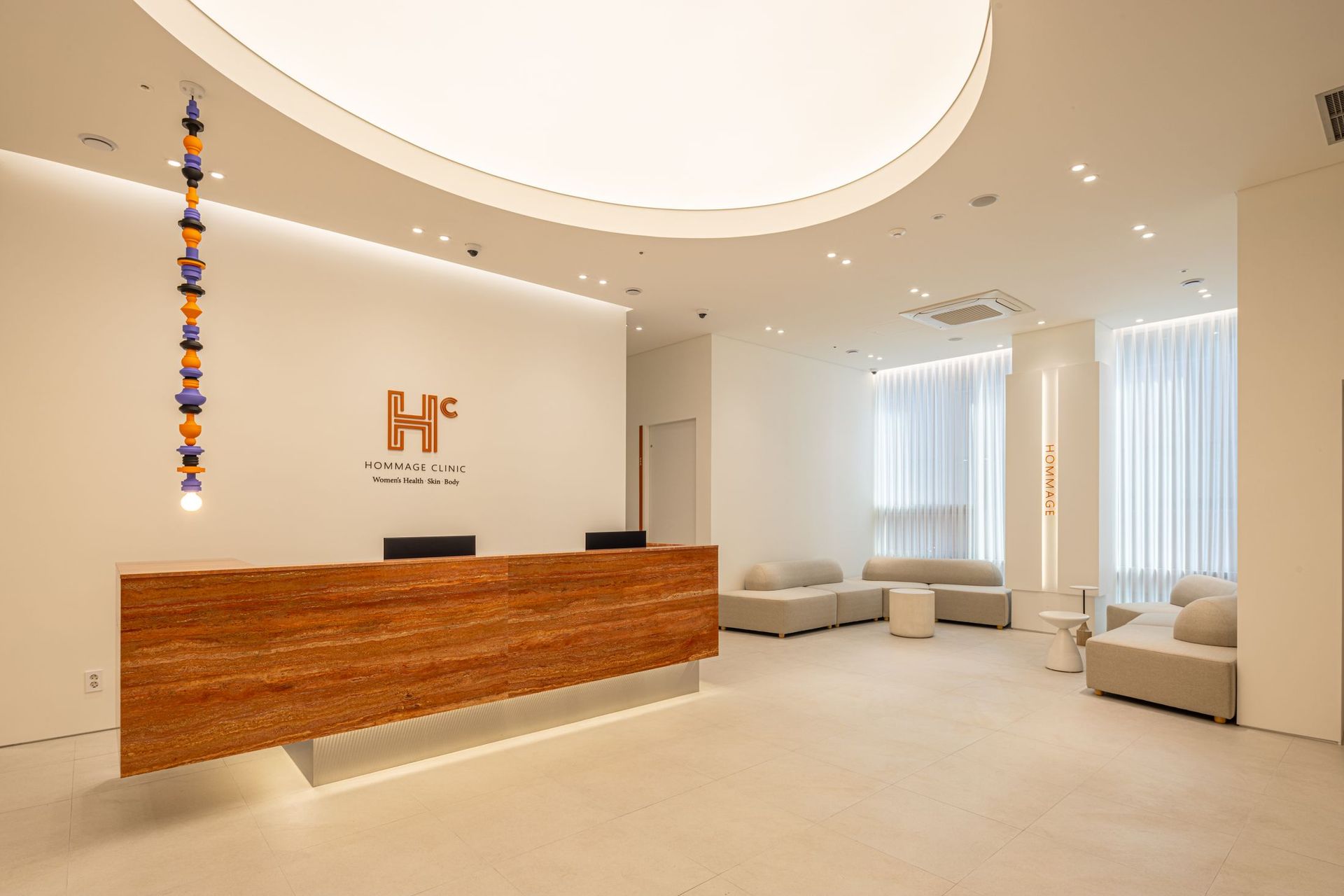
Hommage Clinic is a women's health and skin clinic in Gangnam, a short walk from Sinnonhyeon Station. Walk-ins are welcome, or book ahead for a set time, and a doctor assesses your skin before recommending a booster. Treatment can be combined with lifting or laser care in one plan, and skin changes linked to pregnancy, PCOS or menopause can be discussed alongside; seeskin care for hormonal changes.
Cost depends on the product, the area and the number of sessions. Skin boosters are cosmetic and not covered by Korea's National Health Insurance; you receive a written quote before treatment. More options are listed in ourskin and aesthetics guide.
Mechanism
How do skin boosters work?
Your skin has three main layers: the thin outer epidermis, the dermis underneath, which holds the collagen, elastin and natural hyaluronic acid that keep skin firm and plump, and the fat layer below. With age, sun exposure and dryness, the dermis holds less water and makes less collagen, so skin looks dull, crepey and finely lined. Skin boosters are designed to work in that dermal layer.
Instead of one deep injection, the product is spread across the area in many tiny deposits. A 2024 review in Skin Research and Technology describes skin boosters as a category that grew out of hyaluronic acid fillers repurposed to treat the dermis, with ingredients linked to hydration, elasticity and wrinkle reduction. In practice they work in three broad ways, and some products combine more than one.
Compare
Skin boosters vs fillers vs Botox: what is the difference?
These three injectables are often confused because they are all given with a needle in the same clinic. They answer different questions. Skin boosters ask how healthy and hydrated the skin itself looks. Dermal fillers ask whether an area has lost volume or needs shape, such as the cheeks, chin or temples. Botox asks whether a muscle is creasing the skin, as with frown lines and crow's feet.
Many people benefit from more than one, staged over time. For example, Botox softens movement lines, a filler restores a hollow, and a booster course improves the texture and glow over the top. Dr. Kim explains which problem each injection addresses before suggesting a plan, so you are not paying for a product that cannot fix your main concern.
| Compare | Skin booster | Dermal filler | Botox |
|---|---|---|---|
| Main goal | Hydration, texture, glow, fine lines | Restore volume, shape contours | Soften lines caused by movement |
| Where it goes | Shallow dermis, many small points | Deeper tissue, fewer larger amounts | Into the target muscle |
| Changes face shape? | No | Yes, that is the aim | Only where a muscle is slimmed, such as the jaw |
| Usual course | Often 2–3 sessions, 2–4 weeks apart | Usually one session, touch-up if needed | One session, repeated when it wears off |
Your skin
Rejuran, SKINVIVE or Juvelook? Matching the booster to your concern
Online, skin boosters are often compared by brand. In the clinic, the more useful question is what your skin needs most. A dehydrated, dull complexion, thin skin that reacts easily, and early loss of firmness each respond to a different type of product, and an assessment under good light usually shows which concern is dominant.
Dr. Kim looks at hydration, fine lines, pores, redness and laxity, asks about your skin care, sun exposure and previous treatments, and then explains which booster category fits and why. If more than one concern stands out, a staged plan usually works better than mixing everything in one session. You can read more about the repair-focused option on our Rejuran page and the collagen-building option on collagen stimulators.
Hyaluronic acid booster
Such as SKINVIVE. Mainly hydration and smoothness; often a single session.
Polynucleotide booster
Such as Rejuran. Chosen for fragile skin, under-eyes and after procedures. Avoid with fish allergy.
Collagen-stimulating booster
Such as Juvelook. Effect builds gradually over a course of sessions.
Booster plus energy device
Often combined with RF microneedling or laser for a more visible change.
 Hommage · Gangnam
Hommage Women's Clinic · Gangnam, Seoul
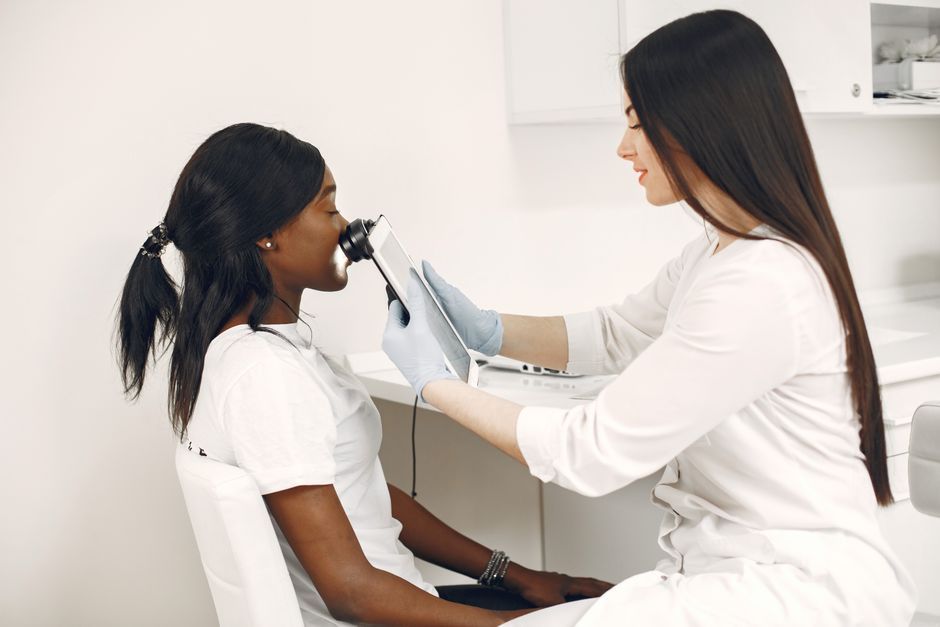
A skin assessment comes before any booster recommendation. Illustrative photo.
Planning
Skin booster sessions and results timeline
Most skin booster plans are a short course rather than a single visit. A common pattern is two or three sessions spaced two to four weeks apart, followed by maintenance roughly every six months. Some hyaluronic acid boosters are designed as a single treatment with an optional touch-up, while collagen-stimulating and regenerative boosters usually need the full course because their effect builds over weeks.
It helps to judge results at the end of the course, not the morning after. In the first few days, small bumps and slight swelling can make skin look plumper than it will be once they settle, and the deeper changes in texture and firmness tend to show between four and twelve weeks.
 Hommage · Gangnam
Hommage Women's Clinic · Gangnam, Seoul
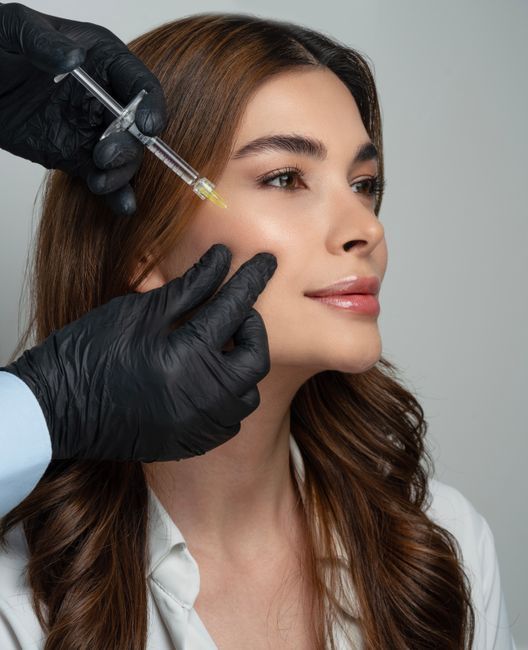
Boosters are placed in many small, shallow points after numbing cream. Illustrative photo.
Treatment day
Needle, cannula or injector device: how skin boosters are given
The way a booster is delivered matters almost as much as the product. A fine needle lets the doctor place each tiny amount precisely, which is useful around the eyes and on fine lines. A blunt cannula can cover a wider area through fewer entry points and may mean less bruising. Injector devices place many small, evenly spaced deposits quickly, which suits broad areas such as the cheeks.
Dr. Kim chooses the method for the product, the area and how easily you bruise. Whichever is used, the skin is numbed first with cream for 30–40 minutes and cleaned before injecting. Most people describe the feeling as a series of quick stings, stronger in some areas than others, and polynucleotide boosters tend to sting more than hyaluronic acid ones.
Before your appointment
- Tell the clinic about blood thinners, supplements such as fish oil, allergies (including fish and lidocaine) and any previous fillers.
- Reschedule if you have a cold sore, active breakout or rash in the area.
- Avoid booking right before an important event; allow a few days for bumps to settle.
- Come without makeup if you can, or allow time to remove it at the clinic.
Aftercare
Skin booster aftercare: do's and don'ts
Aftercare for skin boosters is simple, but the first 24–48 hours matter. The tiny injection points need to close, and heat, pressure and heavy exercise can increase swelling or bruising. The label for one hyaluronic acid booster, for example, advises avoiding strenuous exercise, extensive sun or heat and alcohol for 24 hours after treatment. You receive written instructions for your product before you leave.
Do
- Leave the skin clean and bare for the rest of the day
- Use a gentle cleanser and plain moisturizer from the next day
- Apply sunscreen every morning
- Use a cool compress briefly if swelling bothers you
- Sleep with your head slightly raised the first night
- Message the clinic with a photo if anything worries you
Don't
- Wear makeup until the next day
- Use saunas, hot baths or do hard exercise for 1–2 days
- Drink alcohol for at least 24 hours
- Rub, massage or press on the bumps
- Use retinoids or exfoliating acids for a few days
- Book a laser or peel without asking your doctor first
 Hommage · Gangnam
Hommage Women's Clinic · Gangnam, Seoul
From the next day, keep skin care gentle and use sunscreen. Illustrative photo.
 Hommage · Gangnam
Hommage Women's Clinic · Gangnam, Seoul
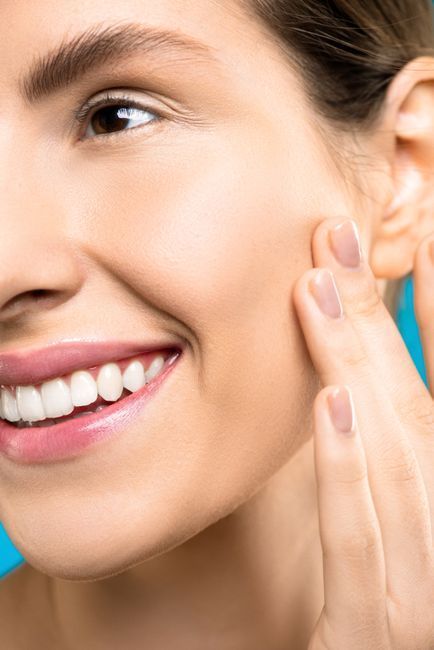
The goal is healthier-looking skin, not a different face. Illustrative photo.
Expectations
What results can you realistically expect?
Skin boosters are subtle by design. The usual change people notice is skin that looks more rested, hydrated and even, makeup that sits better, and fine crepey lines that are a little softer. Friends often say you look well rather than asking what you had done.
They do not lift sagging skin, fill deep folds or change your face shape. For those goals, lifting treatments such as HIFU or Thermage, or volume with dermal fillers, are more suitable, and boosters can be added for skin quality.
Who tends to notice the most change
- People whose main concern is dryness, dullness or fine texture rather than sagging
- Those who complete the planned course and protect their skin from the sun
- Skin that has been stressed by laser treatments, travel, or indoor heating and air conditioning
Results vary between people and products, and no clinic can promise a specific outcome.
Evidence
Do skin boosters work? What the research says
The evidence for skin boosters is real but uneven. A few products, especially hyaluronic acid boosters, have controlled trials behind them. For polynucleotides and many newer products, most studies are small, short and sometimes funded by manufacturers. With that caveat, the findings below are a fair summary of what is known.
Smoother at 1 month
73 of 125 adults improved by at least 1 point on a cheek smoothness scale after a hyaluronic acid microdroplet booster (manufacturer-reported).
Manufacturer-reported: SKINVIVE pivotal trial, AbbVie press release, 2023 [3]Still smoother at 6 months
69 of 124 kept that improvement, without a repeated series of treatments (manufacturer-reported).
Manufacturer-reported: SKINVIVE pivotal trial, AbbVie press release, 2023 [3]Felt more hydrated
Patient-reported satisfaction with skin hydration at 6 months, versus 24% before treatment (manufacturer-reported).
Manufacturer-reported: SKINVIVE pivotal trial, AbbVie press release, 2023 [3]Serious events reported
No serious adverse events in the polynucleotide studies reviewed; mostly mild redness, swelling and bruising.
Lee et al., Int J Mol Sci, 2024 [2]Traveling to Seoul
Skin boosters in Seoul for international patients
Skin boosters fit easily into a trip because there is little downtime. Hommage Women's Clinic is in Gangnam, a short walk from Sinnonhyeon Station (Line 9 and Shinbundang Line), and walk-ins are welcome, although booking ahead secures a time with Dr. Kim.
Planning around a short stay
- Have your first session early in the trip, so small bumps settle before you sightsee or fly.
- If you stay two weeks or more, a second session may fit before you leave; otherwise ask about a one-session plan or continuing the course at home.
- Bring your passport, a list of medicines and allergies, and the names of any fillers or boosters you have had.
- Contact the clinic by WhatsApp, KakaoTalk or the contact form to arrange language support.
Ask for the product name and amount in writing, so a doctor at home can continue or review your treatment.
 Hommage · Seoul
Hommage Women's Clinic · Gangnam, Seoul
Gangnam: the clinic is a short walk from Sinnonhyeon Station. Illustrative photo.
 Hommage · Gangnam
Hommage Women's Clinic · Gangnam, Seoul
Ask for the product, plan and quote in writing. Illustrative photo.
Choosing well
How to choose a skin booster clinic in Seoul
Gangnam has many clinics offering skin boosters, often advertised by brand. Use these questions at any consultation, including ours:
- Does a doctor assess my skin first? The product should follow from your concern, not from the promotion of the month.
- Will they name the exact product and amount? Ask to see the sealed box and get the name in writing.
- Who injects? The physician who assesses you should perform or directly supervise the treatment.
- Do they explain how many sessions and why? A course plan with intervals is a good sign.
- Do they ask about allergies and medicines? Fish allergy, lidocaine allergy and blood thinners matter.
- Is there follow-up? You should know who to contact if a bump or bruise does not settle.
What affects skin booster cost in Seoul?
The price depends on the product and its volume, the area treated (face, under-eyes, neck), the delivery method, the number of sessions in the course, and whether boosters are combined with laser or lifting treatments. Skin boosters are cosmetic and not covered by Korea's National Health Insurance. You receive a written quote at your consultation before you decide.
Your visit
What to expect at your skin booster appointment
01
Skin assessment
Dr. Kim looks at hydration, texture, pores and laxity, and agrees on a booster type and session plan with you.
02
Numbing
Numbing cream is applied for 30–40 minutes, then the skin is cleansed and disinfected.
03
Injection
The booster is placed in many small points by needle, cannula or device, depending on the product and area.
04
Aftercare and next session
You receive aftercare instructions, and the next session is usually planned 2–4 weeks later.
Your doctor
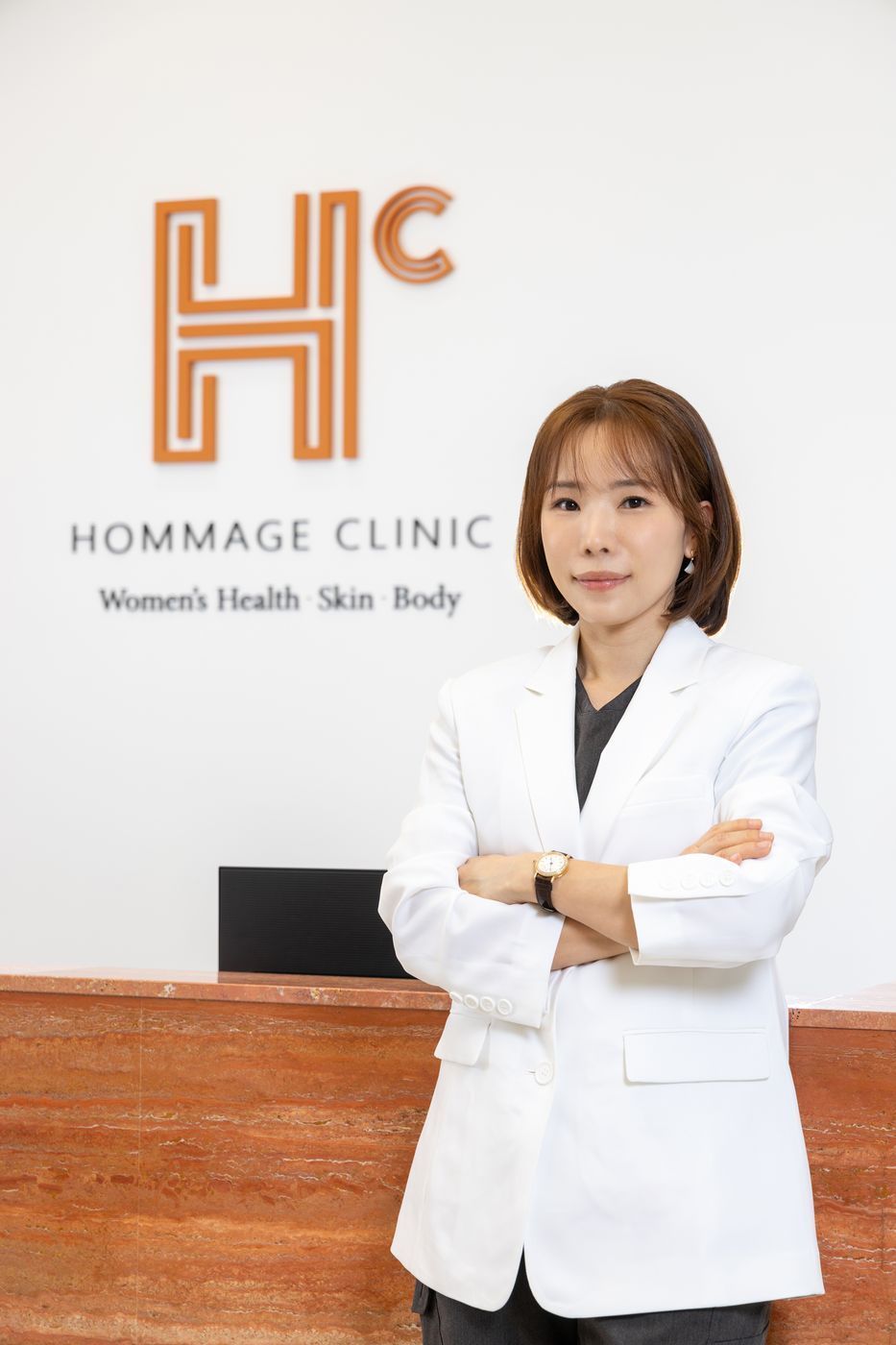
Dr. Kim Hyunbin
Associate Director · Skin & Aesthetic Treatments
Dr. Kim chooses a skin booster by first identifying whether dryness, thin skin, laxity or texture is the main concern, then explains why a particular product fits. Where a single booster is unlikely to be enough, Dr. Kim plans a staged course rather than combining everything at once.
Associate director dedicated to skin and aesthetic procedures, with extensive experience in lifting, botulinum toxin, fillers and laser treatments.
Skin boosters: frequently asked questions
What do skin boosters do?
Skin boosters improve skin quality rather than face shape. Depending on the product, they add hydration, support skin repair or stimulate collagen, so skin looks smoother, more even and more radiant. They are placed in many small, shallow injections and do not add noticeable volume the way fillers do.
Do skin boosters hurt?
Skin boosters cause stinging with each injection, but numbing cream applied for 30–40 minutes makes treatment tolerable for most people. Polynucleotide boosters such as Rejuran are often felt more than hyaluronic acid boosters. Tenderness usually fades within a day.
How many skin booster sessions do I need?
Many people have 2–3 sessions about 2–4 weeks apart, followed by maintenance every 6 months or so. Some hyaluronic acid boosters may need only one session. Your doctor will suggest a plan based on the product and how your skin responds.
Can I wear makeup after skin boosters?
It is better to wait until the next day before applying makeup, so the tiny injection points can close and the risk of infection stays low. Small bumps usually flatten within 1–3 days, and light makeup can usually cover any remaining redness from the next day.
Are skin boosters the same as fillers?
No. Fillers are placed deeper in larger amounts to add volume or shape areas such as the cheeks or chin. Skin boosters are placed shallowly in small amounts to improve skin quality. Some products sit between the two, and both can be combined. See dermal fillers.
Can foreigners get skin boosters in Seoul?
Yes. Visitors and foreign residents can have skin boosters at Hommage Clinic; bring your passport or residence card. Walk-ins are welcome during opening hours, or you can book ahead; contact us before your visit to arrange language support. If your stay is short, ask about a one-session plan.
When will I see results from skin boosters?
Hydrating hyaluronic acid boosters can make skin look smoother within days, once the small bumps settle. Repair and collagen-stimulating boosters work more gradually, with texture and elasticity improving over 4–12 weeks. It is best to judge the result at the end of the planned course.
Can skin boosters be combined with Botox, fillers or laser?
Yes, and they often are, because each treats a different problem. Botox softens movement lines, fillers restore volume and boosters improve skin quality. Your doctor will advise on order and spacing; energy treatments such as RF microneedling are usually planned on a different day or before the booster.
Are skin boosters safe?
Skin boosters are generally well tolerated. Expected effects are redness, small bumps, swelling and occasional bruising for a few days. Less common problems include lumps, infection or allergic reaction, and hyaluronic acid products carry a rare risk of blocking a blood vessel. Tell your doctor about allergies, medicines and previous fillers, and contact the clinic if pain, color change or a lump does not settle.
Is Rejuran a skin booster?
Yes. Rejuran is a polynucleotide skin booster made from purified DNA fragments derived from salmon. It is often chosen for thin, sensitive or stressed skin and for the under-eye area. People with a fish allergy should tell their doctor. See our Rejuran page for details.
Can I have skin boosters under the eyes?
Yes, with suitable products and careful technique. Thin under-eye skin is a common reason people choose a polynucleotide booster such as Rejuran. Skin boosters improve crepey texture, but they do not fill deep hollows; for that, an under-eye filler may be discussed.
Can I fly after skin boosters?
Most people can fly the day after treatment. Bumps and minor swelling usually settle within 1–3 days. If you are traveling, having the session early in your stay gives time for any bruising to fade and for a quick check if needed.
Are skin boosters covered by insurance in Korea?
No. Skin boosters are cosmetic treatments and are not covered by Korea's National Health Insurance, and travel insurance rarely covers them. The cost depends on the product, the area and the number of sessions, and you receive a written quote before treatment.
References
Sources used for this page, reviewed by Dr. Kim Hyunbin, aesthetic physician. Read our editorial and medical review policy.
- Yi KH, Winayanuwattikun W, Kim SY, Wan J, Vachatimanont V, Putri AI, Hidajat IJ, Yogya Y, Pamela R. Skin boosters: definitions and varied classifications. Skin Res Technol. 2024;30(3):e13627. PMID 38481069.
- Lee KWA, Chan KWL, Lee A, Lee CH, Wan J, Wong S, Yi KH. Polynucleotides in aesthetic medicine: a review of current practices and perceived effectiveness. Int J Mol Sci. 2024;25(15):8224. Full text
- Manufacturer-reported data: AbbVie / Allergan Aesthetics. SKINVIVE by JUVÉDERM receives U.S. FDA approval (pivotal trial results and safety information). Press release, May 15, 2023. Not an independent peer-reviewed source. Press release
This page is general information and does not replace a personal consultation. Product names are used for identification only. Illustrations are original works of Hommage Women's Clinic, Gangnam, Seoul; photos marked illustrative are not of patients.
Related skin treatments
Rejuran
Polynucleotide booster for thin, sensitive or damaged skin, including under the eyes.
Collagen Stimulators
Injectables that build your own collagen gradually for firmer, thicker skin.
Korean Glass Skin Facial
Facial treatments for a clear, hydrated, even-toned complexion.
PRP
Treatments using your own platelet-rich plasma to support skin quality.
Botox
Relaxes the muscles behind forehead lines, frown lines and crow's feet.
RF Microneedling
Radiofrequency microneedling for pores, texture, scars and firmness.
Find the right skin booster for your skin
Book a skin assessment with Dr. Kim Hyunbin in Gangnam. You will get a booster recommendation and a session plan before any treatment.
Hommage Clinic · 4F, Building A, 509 Gangnam-daero, Seoul (near Sinnonhyeon Station) · Mon & Fri 10:00–20:00 · Tue–Thu 10:00–19:00 · Sat 10:00–15:00