
Skin & Aesthetics · Wellness drips
Vitamin C Infusion Therapy: Benefits, Limits and Safety Screening
Vitamin C infusion therapy delivers vitamin C (ascorbic acid) directly into a vein by drip, reaching much higher blood levels than tablets; it is promoted for skin glow and energy, but evidence for those cosmetic benefits is limited. At Hommage Clinic in Gangnam, Seoul, Dr. Kim Hyunbin checks safety first, including G6PD and kidney health, and explains realistic expectations.

Quick answer
Vitamin C infusion therapy is a drip of vitamin C (ascorbic acid) into a vein over about 30–60 minutes, which briefly raises blood levels far above what food or tablets can reach. At Hommage Women's Clinic in Gangnam, Seoul, Dr. Kim Hyunbin screens for G6PD deficiency, kidney problems and iron overload before any high dose. Blood levels fall back within hours, and good evidence that drips brighten skin or boost energy is lacking, so it is offered as an optional wellness drip, not a proven skin treatment.
Key takeaways
- Most healthy adults already get enough vitamin C from food; women need about 75 mg a day.
- A drip reaches very high blood levels, but higher levels have not been shown to give extra skin benefits in people who are not deficient.
- Safety screening comes first: G6PD deficiency and kidney disease are the main reasons not to have high-dose IV vitamin C.
- For brightening, daily sunscreen and a topical vitamin C serum have stronger evidence than a drip.
Infographic
Vitamin C infusion in numbers
Drip time
Depends on the dose; you rest in a chair while it runs.
Daily need, women
Recommended dietary allowance for adult women (NIH).
Absorbed from food
At usual intakes of 30–180 mg a day; under 50% above 1 g.
How long levels stay high
The kidneys clear the excess after a drip.
Side effects reported
Mostly minor, in a large survey of IV vitamin C use (2010).
Downtime
Usually back to normal activities straight away.
Vitamin C infusion at a glance
| Key fact | Details |
|---|---|
| What it is | Vitamin C (ascorbic acid) given by IV drip at doses higher than food or tablets can reach |
| Evidence for skin | Limited; topical vitamin C and sunscreen have stronger evidence for brightening |
| Treatment time | Usually 30–60 minutes, depending on the dose |
| Safety checks | G6PD status, kidney health, kidney stones, iron overload and current medicines |
| Downtime | Usually none; possible bruising or soreness at the drip site |
| How long effects last | Blood levels fall within hours; any felt benefit is short-lived |
| Reviewed by | Dr. Kim Hyunbin, associate director, skin & aesthetics |
You might discuss a vitamin C drip if you
- Want a doctor's view on IV vitamin C before trying a wellness drip
- Accept that skin and energy benefits are uncertain and short-lived
- Have normal kidney function and a normal or tested G6PD status
- Will keep the basics in place: sunscreen, topical care and a balanced diet
Avoid it or check first if you
- Have G6PD deficiency or do not know your status and have a family history of it
- Have kidney disease or a history of kidney stones
- Have hemochromatosis or another iron-overload condition
- Are pregnant or breastfeeding, or have diabetes and use a fingerstick glucose meter
What is vitamin C infusion therapy?
Vitamin C (ascorbic acid) is an essential nutrient that the body cannot make. It is an antioxidant and is needed to build collagen, support the immune system and absorb iron from food.
When you swallow vitamin C, the gut absorbs only a limited amount, so blood levels stay within a narrow range however much you take. An IV infusion bypasses the gut and can briefly raise blood levels many times higher. The kidneys then clear the excess, so levels fall back within hours.
Most healthy people who eat fruit and vegetables have adequate vitamin C. A drip does not replace a balanced diet, and true deficiency (scurvy) is usually treated with tablets.
Does a vitamin C drip brighten skin or boost energy?
The honest answer is that there is little good evidence for cosmetic benefits from IV vitamin C. Most claims about skin brightening, glow or anti-aging come from laboratory research and from studies of vitamin C applied to the skin, not from controlled trials of drips.
- Skin brightening: topical vitamin C serums have reasonable evidence for antioxidant protection and modest brightening. Evidence that IV vitamin C lightens skin or fades pigment is weak.
- Collagen: vitamin C is essential for collagen production, but extra vitamin C has not been shown to build more collagen in people who are not deficient.
- Energy and immunity: some people report feeling better after a drip, but evidence of benefit in healthy adults is limited, and part of the effect may be hydration or expectation.
High-dose IV vitamin C is being researched in hospital settings for conditions such as sepsis and cancer, but those uses are outside the scope of a skin clinic and are not offered here.
Who should not have IV vitamin C? Safety screening
A doctor should check several things before a high-dose drip, because some conditions make it unsafe:
- G6PD deficiency: an inherited enzyme condition, more common in people of African, Mediterranean, Middle Eastern and Asian ancestry. High-dose IV vitamin C can cause hemolysis, a dangerous breakdown of red blood cells. A blood test is advised before high doses.
- Kidney disease or kidney stones: vitamin C is partly converted to oxalate, which can form kidney stones or, rarely, damage the kidneys.
- Iron overload: vitamin C increases iron absorption and may worsen hemochromatosis.
- Diabetes: high blood levels of vitamin C can make some fingerstick glucose meters show falsely high readings for several hours.
- Pregnancy and breastfeeding: high-dose drips have not been studied for cosmetic use, so they are not recommended.
Tell your doctor about every medicine and supplement you take, including blood thinners and chemotherapy, so interactions can be checked.
What happens during a vitamin C infusion?
If you and your doctor decide to go ahead, the session is short and you can usually return to normal activities straight afterward.
- Health review: your doctor goes through your medical history, medicines and the screening questions above, and arranges a G6PD or kidney blood test if needed.
- Preparation: the dose is chosen, and a pharmaceutical-grade product is diluted in fluid.
- Infusion: a fine cannula is placed in a vein in your arm, and the drip runs slowly over about 30–60 minutes while you rest.
- Afterward: the cannula is removed, and you are advised to drink water. If you have diabetes, do not rely on a fingerstick glucose reading for the rest of the day.
Vitamin C is sometimes combined with other drips, such as glutathione , which has its own limited evidence and risks.
How often can you have vitamin C infusions?
There is no evidence-based schedule for cosmetic or wellness vitamin C drips. Because blood levels return to normal within hours, any felt effect is short-lived, and regular infusions have not been shown to give lasting skin results.
If you choose a vitamin C drip as an occasional wellness option, your doctor will suggest a moderate dose and spacing, and review whether you notice any benefit. For lasting improvements in skin tone and texture, treatments with stronger evidence usually give better value, such as daily sunscreen, a topical vitamin C serum, laser toning or a brightening facial .
Risks and possible side effects of vitamin C infusion
Vitamin C is a familiar nutrient, but high doses given into a vein have specific risks.
- Common: soreness, bruising or irritation at the drip site, a cold feeling in the arm, mild nausea, lightheadedness and more frequent urination.
- Vein inflammation: phlebitis, a red, tender vein, especially with concentrated solutions or fast infusion.
- Hemolysis: in people with G6PD deficiency, a serious breakdown of red blood cells that can cause dark urine, tiredness, jaundice and kidney injury.
- Kidney stones and kidney injury: from oxalate, mainly with high or repeated doses or existing kidney problems.
- Allergic reactions: rare, usually to other ingredients or additives in the drip.
- False glucose readings: falsely high fingerstick results, which could lead to wrong insulin doses.
Seek urgent help if you develop dark or reduced urine, yellowing of the skin or eyes, severe back or side pain, or difficulty breathing. Contact the clinic if the drip site stays red, swollen or painful.
Vitamin C infusion at Hommage Clinic
Hommage Clinic is a women's health and skin clinic in Gangnam, a short walk from Sinnonhyeon Station, welcoming walk-ins during opening hours. Dr. Kim discusses vitamin C infusion as a wellness option with uncertain cosmetic benefit, checks safety first, and explains whether proven skin treatments would better match your goal. Because the clinic also offers gynecology, tiredness linked to heavy periods, low iron or thyroid problems can be checked with blood tests rather than masked by a drip; seehormone testing.
Cost depends on the dose, any screening tests and the number of sessions. Wellness drips are not covered by National Health Insurance, while diagnostic tests for a medical concern may be covered for enrolled patients. You receive a written quote first. Explore related options in ourskin and aesthetics services.
Mechanism
How a vitamin C drip works: IV vs oral vitamin C
The gut controls how much vitamin C enters the blood. At everyday intakes of 30–180 mg, about 70–90% is absorbed, but above 1 g a day absorption falls below 50%, and the kidneys pass the rest out in urine. That is why blood levels stay in a narrow range however many tablets you take.
An IV drip skips the gut entirely. According to figures summarized by the US National Institutes of Health, oral doses of 1.25 g a day give peak blood levels of about 135 µmol/L, while intravenous doses can reach about 26,000 µmol/L. The kidneys then clear the excess, so within hours levels drift back toward normal. The illustration shows the gap on a log scale; the important point for skin is that tissues such as skin stop taking up more vitamin C once blood levels are saturated.
Diet first
Do you actually need extra vitamin C?
Adult women need about 75 mg of vitamin C a day, rising to 85 mg in pregnancy and 120 mg while breastfeeding. One orange, a handful of strawberries, a red pepper or a serving of broccoli each provides a large share of that. In Korea, everyday foods such as kimchi, cabbage, peppers and seasonal fruit also contribute.
A 2017 review of vitamin C and skin health found that skin levels follow blood levels, and that extra vitamin C is only expected to raise skin levels in people whose blood levels were low to begin with. In other words, if your diet is already adequate, more vitamin C, by mouth or by drip, is unlikely to change your skin.
When low vitamin C is more likely
- Very restricted diets with little fruit or vegetables
- Smoking, which increases the body's vitamin C needs
- Some digestive conditions that reduce absorption
Even then, low vitamin C is usually corrected with diet and ordinary tablets. If tiredness is your main concern, Dr. Kim may suggest blood tests for causes such as low iron or thyroid problems through ourhormone testingservice.
 Hommage · Gangnam
Hommage Women's Clinic · Gangnam, Seoul
Fruit and vegetables cover the daily vitamin C needs of most healthy women. Illustrative photo.
Compare
Vitamin C drip vs vitamin C serum vs diet for skin
People often book a vitamin C drip hoping for brighter, more even skin. The route matters. A serum puts vitamin C directly into the outer skin, where it acts as an antioxidant and can modestly even out tone; this is the form with the most supporting research for appearance. Diet and tablets keep blood and skin levels normal. A drip raises blood levels dramatically for a few hours, but there are no good controlled trials showing it brightens skin, fades pigment or builds collagen in people who are not deficient.
| Compare | Diet / tablets | Topical serum | IV drip |
|---|---|---|---|
| Where it acts | Whole body, via the blood | Outer layers of the skin | Whole body, briefly at very high levels |
| Evidence for skin | Corrects low levels; no extra benefit once adequate | Most research for antioxidant protection and modest brightening | Little good evidence in people who are not deficient |
| Main cautions | Upper limit 2,000 mg a day by mouth for adults | Can sting or irritate sensitive skin | G6PD, kidney disease, iron overload, glucose meter errors |
| Needs a doctor? | No | No; ask if your skin is sensitive | Yes, with screening first |
 Hommage · Gangnam
Hommage Women's Clinic · Gangnam, Seoul
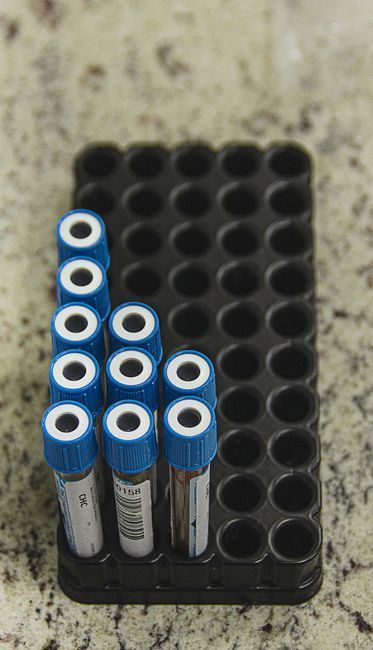
A G6PD or kidney blood test may be arranged before a high dose. Illustrative photo.
Safety first
Vitamin C IV safety screening, step by step
High-dose IV vitamin C is generally well tolerated by healthy people, but the serious problems that have been reported cluster in people with known risk factors, mainly G6PD deficiency and kidney disease. A 2010 survey of practitioners who give IV vitamin C noted published reports of serious harm, including two deaths, in patients at known risk. That is why Dr. Kim works through the same checklist before every first drip, and repeats it if your health or medicines change.
On the day
Before and after your vitamin C drip: do's and don'ts
A vitamin C infusion needs little preparation, but a few simple steps make it more comfortable and safer. Eat a normal meal beforehand, because a drip on an empty stomach can make some people lightheaded, and wear a top with sleeves that roll up easily. The drip runs slowly on purpose: fast infusion of concentrated solutions is more likely to irritate the vein.
Do
- Eat a light meal and drink water beforehand
- Bring a list of all medicines and supplements
- Mention any past G6PD, kidney or iron test results
- Tell the nurse at once if the arm hurts or burns
- Drink water afterward
- Use a lab test, not a fingerstick, if you need a glucose reading that day
Don't
- Have a drip if you are unsure of your G6PD status and have a family history of it
- Rely on fingerstick glucose readings for the rest of the day
- Book frequent drips expecting lasting skin change
- Skip sunscreen because you had a drip
- Combine several drips without asking the doctor
- Ignore dark urine or back pain afterward
 Hommage · Gangnam
Hommage Women's Clinic · Gangnam, Seoul
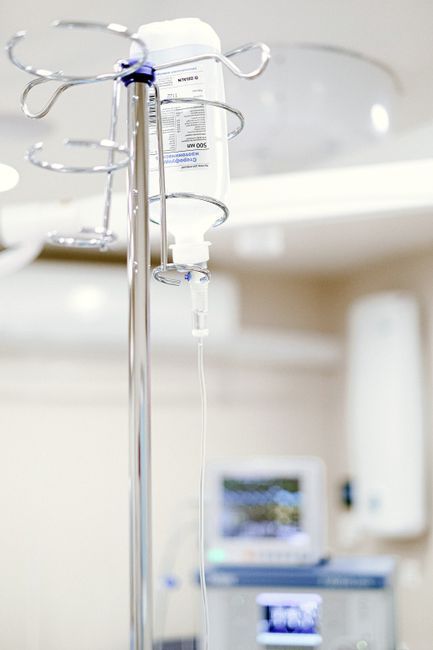
The drip runs slowly over about 30–60 minutes while you rest. Illustrative photo.
Evidence
Does IV vitamin C work? What the research says
Research on IV vitamin C is dominated by hospital studies in serious illness, not by trials of wellness or beauty drips. For cosmetic use, the honest summary is that the pharmacology is well understood, the safety record in screened, healthy adults looks reassuring, and the claimed skin benefits remain largely unproven.
µmol/L possible by IV
Compared with about 135 µmol/L from 1.25 g a day by mouth.
NIH Office of Dietary SupplementsAbsorbed above 1 g
Oral absorption drops sharply at high doses; 70–90% at normal intakes.
NIH Office of Dietary SupplementsOf 9,328 had side effects
Mostly minor: tiredness, changes in alertness and vein irritation.
Padayatty et al., PLoS One, 2010Limits skin benefit
Extra vitamin C raises skin levels mainly when blood levels were low.
Pullar et al., Nutrients, 2017Traveling to Seoul
Vitamin C drip in Seoul for international patients
Visitors to Seoul sometimes add a vitamin C drip to a skin or health appointment. Because there is no downtime, it fits into a single visit, but the safety checks still apply, and they are easier if you prepare before you travel. Hommage Women's Clinic is in Gangnam, a short walk from Sinnonhyeon Station (Line 9 and Shinbundang Line).
Before you book
- Message us on WhatsApp, KakaoTalk or the contact form with your dates, and ask for language support if needed.
- If you already know your G6PD status or have recent kidney blood results, bring a copy; if not, ask in advance whether a test is needed and how long results take.
- Bring your passport and a written list of medicines, supplements and allergies.
- Allow about half a day for a first visit with screening, and avoid booking right before a long flight so you can rest and drink water.
If you are in Seoul mainly for skin concerns such as pigmentation or dullness, ask aboutlaser toningorskin tone evenness therapy, which have stronger evidence for visible change.
 Hommage · Seoul
Hommage Women's Clinic · Gangnam, Seoul
Seoul: the clinic is in Gangnam, a short walk from Sinnonhyeon Station. Illustrative photo.
 Hommage · Gangnam
Hommage Women's Clinic · Gangnam, Seoul
A doctor, not a menu, should decide whether a drip is suitable for you. Illustrative photo.
Choosing well
How to choose a clinic for a vitamin C drip in Seoul
IV drips are widely advertised in Seoul, sometimes as menu items with no medical check. Use these questions at any clinic, including ours:
- Does a doctor see me first? A licensed physician should review your history before the drip is prepared.
- Do they ask about G6PD and kidneys? These are the key safety questions for high doses.
- Is the product pharmaceutical grade? Ask what is in the bag and in what dose.
- Are claims realistic? Be wary of promises of whiter skin or detox results.
- Is the drip run slowly with staff nearby? Someone should check on you during the infusion.
- Do I get a written quote? Including any tests, before anything starts.
What affects the cost of a vitamin C infusion?
The main factors are the dose, whether screening blood tests such as G6PD or kidney function are needed, whether other ingredients or drips such asglutathioneare added, and how many sessions you plan. Wellness drips are not covered by Korea's National Health Insurance. You receive a written quote before the drip is prepared, and Dr. Kim will tell you honestly if your budget would be better spent on sunscreen, a topical serum or an evidence-based skin treatment.
Your visit
What to expect at your consultation
01
Your goal
Tell Dr. Kim what you hope a drip will help with, such as skin glow, tiredness or general wellness.
02
Safety screening
Your history, medicines, kidney health and G6PD risk are reviewed, with blood tests if needed.
03
Honest options
You hear what IV vitamin C can and cannot do, alongside proven skin treatments, with a written quote.
04
Infusion or plan
If you go ahead, the drip runs slowly over about 30–60 minutes; otherwise a skin plan is agreed.

Your doctor
Dr. Kim Hyunbin
Associate Director · Skin & Aesthetic Treatments
Dr. Kim treats vitamin C infusion as a wellness option with uncertain cosmetic benefit, and puts safety screening for G6PD deficiency, kidney health and medicines first. For skin brightening, Dr. Kim usually recommends evidence-based care such as sunscreen, topical vitamin C and suitable laser or facial treatments.
Associate director dedicated to skin and aesthetic procedures, with extensive experience in lifting, botulinum toxin, fillers and laser treatments.
Vitamin C infusion: frequently asked questions
Does IV vitamin C make your skin brighter?
There is little good evidence that IV vitamin C brightens skin. Most brightening claims are based on topical vitamin C serums and laboratory studies, not on controlled trials of drips. Daily sunscreen, a topical vitamin C product and treatments such as laser toning have stronger evidence for a more even skin tone.
Is high-dose vitamin C infusion safe?
It is generally well tolerated in healthy people after proper screening, but it still carries risks. People with G6PD deficiency can develop serious red blood cell breakdown, and those with kidney disease or kidney stones are at higher risk of kidney problems. A doctor should check your history, and sometimes your blood, before high doses.
Why do I need a G6PD test before a vitamin C drip?
G6PD deficiency is an inherited condition that makes red blood cells vulnerable to damage from high doses of vitamin C. Many people do not know they have it. A simple blood test before high-dose infusion helps avoid hemolysis, a serious reaction that can cause anemia, jaundice and kidney injury.
Is IV vitamin C better than taking tablets?
IV vitamin C reaches much higher blood levels than tablets, but higher levels have not been shown to give extra skin or energy benefits in healthy people, and they fall within hours. For most people, a balanced diet or an ordinary supplement provides enough vitamin C, with fewer risks and lower cost.
How long does a vitamin C drip take?
The infusion usually takes about 30–60 minutes, depending on the dose, plus time for the health review and any screening tests at your first visit. You can usually return to normal activities straight afterward. Drink water after the drip, and do not rely on fingerstick glucose readings that day if you have diabetes.
Can foreigners get vitamin C infusion in Seoul?
International patients and foreign residents can book a consultation at Hommage Clinic; bring your passport for registration, a list of your medicines and any recent blood test results, including G6PD if you have one. Contact us before your visit to arrange language support; you can walk in during opening hours or book ahead for a set time.
How much vitamin C does a woman need each day?
The US National Institutes of Health recommends about 75 mg a day for adult women, 85 mg in pregnancy and 120 mg while breastfeeding. Most people reach this easily with fruit and vegetables. The upper limit for vitamin C taken by mouth is 2,000 mg a day for adults, mainly because higher doses can upset the stomach.
How long do the effects of a vitamin C drip last?
Blood levels rise very high during the drip and fall back toward normal within hours as the kidneys clear the excess. Any feeling of a boost is usually short-lived, and repeated drips have not been shown to give lasting skin changes.
Can a vitamin C drip lighten or whiten skin?
There is no good evidence that IV vitamin C lightens skin or fades melasma, freckles or sun spots. For pigmentation, sun protection plus treatments such as melasma treatment, pico laser or tranexamic acid therapy have stronger evidence, depending on the cause.
Can I combine vitamin C with glutathione in one drip?
Some clinics combine them, but each ingredient has its own limited evidence and risks, and combining does not make either one proven for skin. Dr. Kim reviews each ingredient separately. Read more on our glutathione injection page.
Can I have a vitamin C drip while pregnant or breastfeeding?
High-dose vitamin C drips have not been studied for cosmetic use in pregnancy or breastfeeding, so they are not recommended. Your needs are slightly higher at these times (85 mg and 120 mg a day), and they are usually met through diet and, if your doctor advises, a standard prenatal supplement.
What side effects should make me seek help after a drip?
Mild soreness at the drip site, a cold arm or mild tiredness usually pass quickly. Seek urgent care for dark or reduced urine, yellow skin or eyes, severe back or side pain, or trouble breathing, and contact the clinic if the vein stays red, swollen or painful.
Is a vitamin C drip covered by insurance in Korea?
Wellness and beauty drips are not covered by Korea's National Health Insurance, and travel insurance rarely covers them. Blood tests done for a medical concern may be covered for enrolled patients. You receive a written quote before anything is prepared.
References
Sources used for this page, reviewed by Dr. Kim Hyunbin. Read our editorial and medical review policy.
- National Institutes of Health, Office of Dietary Supplements. Vitamin C: Fact Sheet for Health Professionals. ods.od.nih.gov
- Padayatty SJ, et al. Vitamin C: intravenous use by complementary and alternative medicine practitioners and adverse effects. PLoS One. 2010;5(7):e11414. PubMed
- Pullar JM, Carr AC, Vissers MCM. The roles of vitamin C in skin health. Nutrients. 2017;9(8):866. PMC
This page is general information and does not replace a personal consultation. Illustrations are original works of Hommage Women's Clinic, Gangnam, Seoul; photos marked illustrative are not of patients.
Related skin and wellness treatments
Glutathione Injection
The antioxidant drip often paired with vitamin C, with its evidence and risks.
Brightening Facial
Gentle in-clinic care for dullness and uneven skin tone.
Laser Toning
Low-energy Korean laser facial for even tone and pigment.
Melasma Treatment
Long-term, evidence-based care for hormonal and sun-related pigmentation.
Skin Boosters
Injectables for hydration, texture and glow, compared side by side.
Hormone Testing
Blood tests for thyroid and other hormones when tiredness or skin changes persist.
Check whether a vitamin C drip is right for you
Book a consultation with Dr. Kim Hyunbin in Gangnam for safety screening, an honest view of the evidence and skin options that suit your goal.
Hommage Clinic · 4F, Building A, 509 Gangnam-daero, Seoul (near Sinnonhyeon Station) · Mon & Fri 10:00–20:00 · Tue–Thu 10:00–19:00 · Sat 10:00–15:00