
Skin & Aesthetics · Hair & scalp
PRP Therapy for Hair Loss in Seoul: How It Works and Who It Helps
PRP (platelet-rich plasma) therapy for hair loss concentrates platelets from a small sample of your own blood and injects them into thinning areas of the scalp, where their growth factors may help weakened follicles grow thicker hair. At Hommage Clinic in Gangnam, Seoul, Dr. Hwang Seonhwa first looks for treatable causes such as low iron or thyroid problems, then plans PRP alongside proven treatments like minoxidil.

Quick answer
PRP (platelet-rich plasma) therapy for hair loss injects a concentrate of your own platelets into thinning areas of the scalp. At Hommage Women's Clinic in Gangnam, Seoul, Dr. Hwang Seonhwa first checks for treatable causes such as low iron or thyroid problems, then usually plans 3 sessions about 4 weeks apart alongside minoxidil. Each visit takes about 45–60 minutes with little downtime. Changes in density usually show after 3–6 months, and maintenance is needed to keep them.
Key takeaways
- PRP suits pattern hair loss where thinning hair is still present. It does not create new follicles.
- It is an add-on to proven treatment such as minoxidil, not a replacement for it.
- A 2024 meta-analysis of randomized trials found higher hair density with PRP than placebo, but rated the certainty of that evidence as low.
- PRP is prepared in different ways in different clinics and studies, so it is worth asking how yours is made.
Infographic
PRP for hair loss in numbers
Per visit
Including the blood draw and preparation; injections take about 15–20 minutes.
Starting sessions
Usually about 4 weeks apart, then a review.
Scalp tenderness
Redness and soreness usually settle quickly.
Visible change
Less shedding often comes first, density later.
Maintenance interval
Gains fade gradually without top-up sessions.
Hairs/cm² vs placebo
Pooled result of 13 randomized trials; low-certainty evidence (Kieling 2024).
PRP for hair loss at a glance
| Key fact | Details |
|---|---|
| Treatment time | About 45–60 minutes, including the blood draw and preparation |
| Comfort | Numbing cream or cooling; injections feel like quick pinpricks and pressure |
| Sessions | Typically 3 sessions about 4 weeks apart, then maintenance every 3–6 months |
| Downtime | Minimal; scalp tenderness and redness usually settle within 1–2 days |
| Results visible | Usually after 3–6 months, as new hair growth cycles mature |
| How long results last | Gains fade gradually without maintenance sessions or ongoing medication |
| Performed by | Dr. Hwang Seonhwa, physician |
PRP may suit you if you have
- Female or male pattern hair loss: a widening part, a thinning crown or see-through areas
- Early to moderate thinning, where hair follicles are still active
- Thinning that has not improved enough with minoxidil alone
- Hormone-related thinning (for example with PCOS) that is already being treated medically
Wait or choose another option if you
- Are pregnant or breastfeeding
- Have a bleeding or platelet disorder, or take blood-thinning medicine
- Have an active scalp infection, open wounds or a flare of scalp inflammation
- Are being treated for cancer, or have smooth bald areas where follicles are no longer present
What is PRP hair therapy and how does it work?
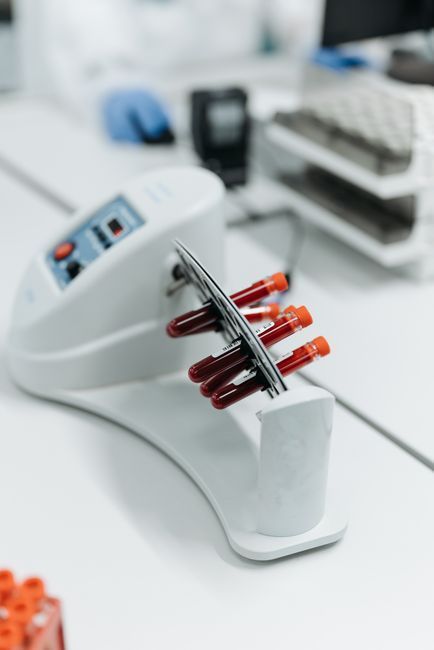
PRP is made by drawing a small amount of your blood and spinning it in a centrifuge, which separates the platelet-rich plasma from the red blood cells. Platelets carry growth factors that are involved in tissue repair and the formation of small blood vessels.
When PRP is injected into the scalp, these growth factors are thought to lengthen the growth (anagen) phase of hair follicles and help shrunken, miniaturized follicles produce thicker hair. Because PRP comes from your own blood, allergic reactions are very unlikely. PRP does not create new follicles, so it is most useful where thinning hair is still present.
Why is my hair thinning? Causes to check before PRP
PRP helps some types of hair loss and not others, so the first step is finding the cause. In women, the most common causes are:
- Female pattern hair loss: gradual thinning over the top of the head and a widening part, usually with the front hairline kept. It is partly genetic and partly hormonal.
- Telogen effluvium: sudden, diffuse shedding about two to three months after a trigger such as childbirth, illness, surgery, crash dieting or stopping the pill. Postpartum shedding usually recovers on its own within 6–12 months.
- Hormonal conditions: raised androgen levels in polycystic ovary syndrome (PCOS) can thin scalp hair, and the years around menopause can speed up pattern thinning.
- Thyroid problems and low iron: both are common, both can cause shedding, and both are treatable.
Dr. Hwang examines your scalp and can arrange blood tests for thyroid function and ferritin (iron stores), plus hormone testing if your periods are irregular or you have acne or excess hair growth. Patchy bald spots, scarring or a red, painful scalp need a different work-up, and you are referred to a dermatology specialist if a biopsy is needed.
What happens during a PRP session?
A PRP session takes about an hour, most of which is preparation. The injections themselves usually take around 15–20 minutes.
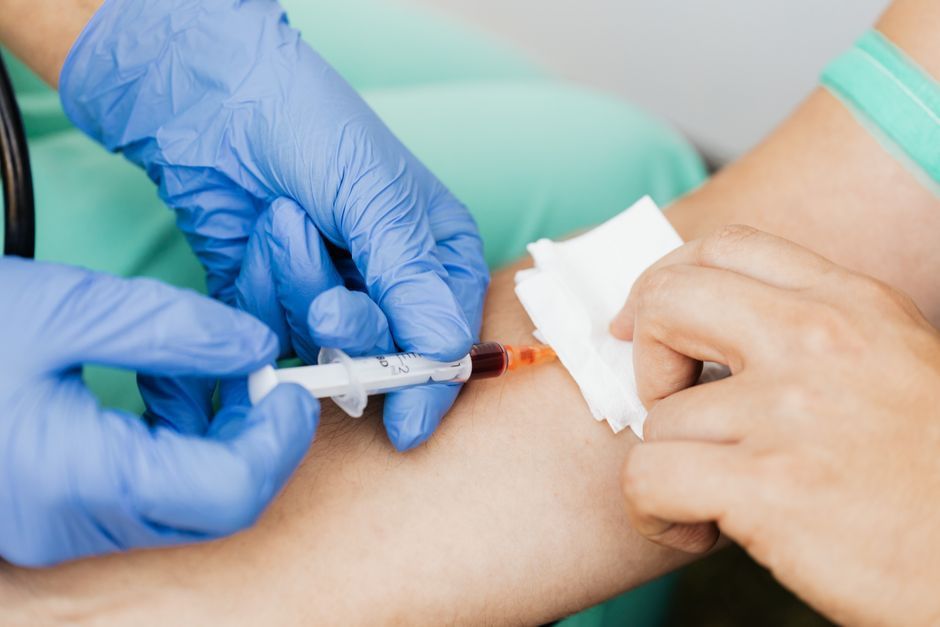
- A small blood sample is taken from your arm, much like a routine blood test.
- The blood is spun in a centrifuge to concentrate the platelets.
- Your scalp is cleansed and numbed with cream or cooling.
- PRP is injected with a fine needle in small amounts across the thinning area.
You can usually wash your hair the next day. Anti-inflammatory painkillers such as ibuprofen and aspirin reduce platelet activity, so tell us about every medicine you take. If you take aspirin or a blood thinner for a medical reason, do not stop it yourself; your doctor will advise whether PRP is suitable.
How long does PRP take to work, and how long do results last?
Most people notice less shedding first, and a visible change in density usually takes 3–6 months. A common plan is three sessions about a month apart, followed by a review.
Results are not permanent. Pattern hair loss is a long-term, slowly progressive condition, so gains fade over time without maintenance sessions, usually every 3–6 months, or ongoing medication. Clinical studies show that PRP can improve hair density and thickness in pattern hair loss, but results vary between people and preparation methods differ between studies, so the evidence is considered moderate rather than definitive.
PRP vs minoxidil: which should come first?
For most women with pattern hair loss, topical minoxidil is the first-line treatment because it has the strongest evidence. PRP is usually added to it, not used instead of it.
- Topical minoxidil is applied at home every day. It can cause temporary shedding in the first weeks and must be continued to keep its benefit.
- Oral options , such as low-dose oral minoxidil or, for some women, anti-androgen medicines, may be considered by your doctor. Many are not suitable during pregnancy or when you are planning one.
- PRP is an in-clinic option if you want more than medication alone, or if you cannot tolerate topical treatment.
PRP can also be combined with scalp microneedling or low-level laser therapy . Our hair density treatment plan explains how these options fit together.
Risks and possible side effects of PRP for hair
PRP is generally well tolerated because it uses your own blood, but it is still an injection treatment. Common, temporary effects include:
- Stinging during the injections and scalp tenderness for a day or two
- Redness, mild swelling or small bruises at the injection points
- A mild headache after treatment
- Temporary extra shedding in the weeks after treatment in some people
- Bruising or lightheadedness where blood was drawn
Rare risks include infection, a reaction to the numbing medicine and temporary numbness of part of the scalp. Call the clinic if you notice spreading redness, warmth, pus or fever, or pain that gets worse after the first two days.
PRP hair therapy at Hommage Clinic
Hommage Clinic is a women's health and skin clinic in Gangnam, a short walk from Sinnonhyeon Station. Dr. Hwang Seonhwa assesses your scalp and performs the injections. Because the clinic also offers gynecology, hormonal causes of thinning can be checked under one roof, and PRP sits alongside our other skin and hair treatments .
Cost depends on the number of sessions and whether PRP is combined with other treatments. PRP for hair is a cosmetic treatment and is not covered by National Health Insurance, while diagnostic blood tests for a medical cause may be covered for enrolled patients. You receive a written quote before treatment starts.
Candidacy
Who is a good candidate for PRP hair treatment?
PRP works best where hair is thinning but follicles are still alive. In practice that means early to moderate female or male pattern hair loss: a part that looks wider than it used to, a crown where the scalp shows through under bright light, or a ponytail that feels thinner. If you can still see fine, short hairs in the thinning area, there are follicles for PRP to support.
PRP is less likely to help where the scalp is smooth and shiny and no hairs remain, because the follicles have gone. It is also not the first answer for sudden shedding after childbirth, illness or a crash diet, which usually settles on its own once the trigger has passed, or for patchy, scarring or inflamed hair loss, which needs a diagnosis first. Dr. Hwang Seonhwa sorts out which pattern you have before recommending anything.
Good candidates
- Early to moderate pattern thinning
- Fine, short hairs still visible in the thin area
- Thinning despite minoxidil, or unable to tolerate it
- Causes such as low iron or thyroid already checked
Needs a work-up
- Sudden diffuse shedding after a trigger
- Irregular periods, acne or excess body hair
- Thinning that started after a new medicine
- Patchy bald spots
Wait or choose another option
- Pregnant or breastfeeding
- Bleeding or platelet disorder, or blood thinners
- Scalp infection or inflammation flare
- Smooth areas with no hair left
 Hommage · Gangnam
Hommage Women's Clinic · Gangnam, Seoul
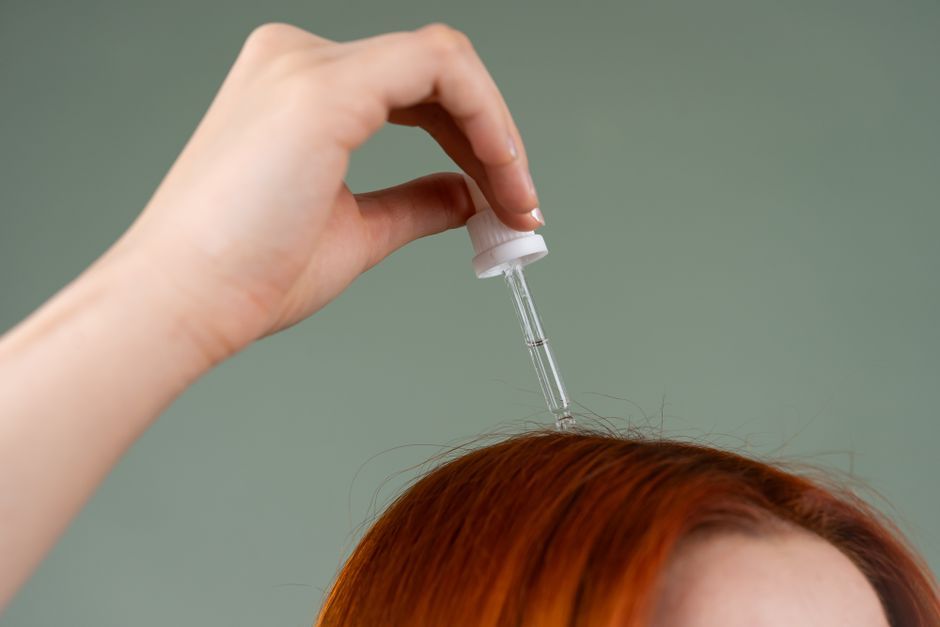
A widening part is one of the earliest signs of female pattern hair loss. Illustrative photo.
Mechanism
How does PRP for hair loss work? From blood draw to follicle
PRP hair treatment has four stages, and all of them happen in a single visit. The theory is that growth factors released by concentrated platelets act on the follicle and the small blood vessels around it, keeping hairs in their growing phase for longer and helping miniaturized follicles produce a thicker strand. That theory fits laboratory findings and the trial results described below, but scientists have not fully confirmed exactly how PRP acts on the human scalp.
 Hommage · Gangnam
Hommage Women's Clinic · Gangnam, Seoul
Your blood is spun in a centrifuge to collect the platelet-rich layer. Illustrative photo.
Preparation
How is PRP for hair prepared, and does the method matter?
There is no single standard recipe for PRP. Studies and clinics differ in how much blood is drawn, how fast and how many times it is spun, whether the platelets are activated before injection, and how much is injected per area of scalp. A 2024 meta-analysis of randomized trials noted that these differences make it hard to compare studies and are one reason the overall evidence is rated as low certainty. Most trials in that review injected PRP about once a month.
What this means for you: PRP from one clinic is not identical to PRP from another, and a good result in a study does not guarantee the same result with a different method. It is reasonable to ask how your PRP is prepared, and a clinic should be able to explain it simply.
- Is the kit made for PRP and single-use? Sterile, closed single-use tubes reduce the risk of contamination.
- How many times is the blood spun? Single and double spin methods give different concentrations.
- Is anything added to the PRP? Ask whether an activator is used, and what it is.
- Who prepares and injects it? A doctor should assess your scalp and supervise the procedure.
- How will progress be measured? Standardized photos at the start and at review make change easier to judge.
Compare
PRP vs minoxidil, laser and microneedling: how the options compare
People searching for PRP often want to know whether it is better than minoxidil. The honest answer is that they do different jobs. Topical minoxidil is used every day at home and has the strongest, longest track record, so it remains the first step in guidelines for pattern hair loss in women and men. PRP is an in-clinic treatment given every few weeks at first, and is usually added to minoxidil rather than used instead of it.
Other clinic options includelow-level laser therapy (LLLT), which uses red light, andscalp microneedling, which is often combined with PRP or minoxidil. Ourhair density treatment planshows how they are combined.
| Option | How it is used | Strength of evidence | Best for |
|---|---|---|---|
| Topical minoxidil | Daily at home, long term | Strongest; first-line in guidelines | Almost everyone with pattern thinning |
| PRP | In-clinic injections, then maintenance | Moderate to low; results vary by method | Adding to medication, or if topical treatment is not tolerated |
| Low-level laser (LLLT) | Red light in clinic or with a home device | Some trial support; mainly an add-on | People who want a non-invasive extra |
| Scalp microneedling | Fine needles in clinic, often with PRP or minoxidil | Limited; mostly studied as a combination | Boosting another treatment |
Getting ready
How to prepare for PRP hair treatment
A little preparation makes the visit more comfortable and gives the platelets the best chance to work. Because PRP relies on your own blood, anything that affects platelet function, such as anti-inflammatory painkillers, matters. Dr. Hwang reviews every medicine and supplement you take at the consultation and tells you what, if anything, to pause.
If you take aspirin or a blood thinner for a heart or clotting condition, never stop it on your own. In that case PRP may not be the right choice, and otherhair density optionscan be discussed instead.
Before your session, do
- Eat a normal meal and drink water, to avoid feeling faint during the blood draw
- Wash your hair the night before or that morning
- Bring a list of all medicines and supplements
- Bring any recent blood test results
- Wear a top with sleeves that roll up easily
Before your session, avoid
- Taking anti-inflammatory painkillers without checking with us first
- Stopping prescribed blood thinners yourself
- Heavy styling products, sprays or gels on the day
- Hair dye or a perm in the days around treatment
- Coming in with a scalp rash or infection; reschedule instead
 Hommage · Gangnam
Hommage Women's Clinic · Gangnam, Seoul
Each PRP session starts with a small blood sample from your arm. Illustrative photo.
Results
PRP hair results timeline: month by month
Hair grows slowly, so PRP needs patience. Each follicle moves through growing, resting and shedding phases over months, which means any effect of treatment takes time to show in the mirror. Most people notice less hair in the brush before they see more density. The illustration below shows a typical schedule; your own plan is adjusted at each review.
 Hommage · Gangnam
Hommage Women's Clinic · Gangnam, Seoul
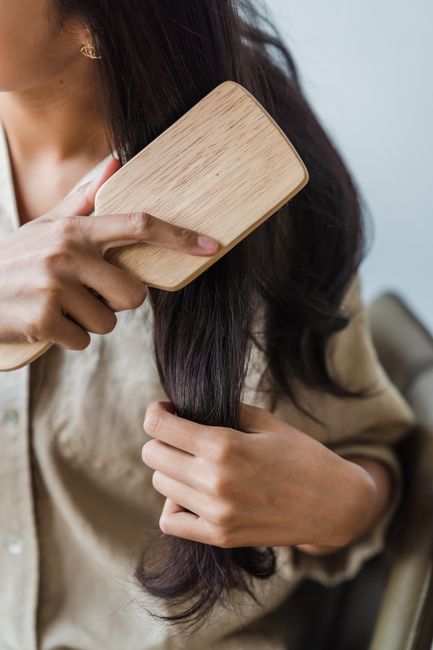
Be gentle with your scalp for the first day or two after PRP. Illustrative photo.
Aftercare
PRP hair aftercare: do's and don'ts
PRP has very little downtime, and most people go straight back to work. The small injection points close within a day or so, and the aim of aftercare is simply to keep them clean and avoid irritating the scalp while they do. You receive written instructions at the end of each session.
Do
- Wash your hair the next day with a mild shampoo and lukewarm water
- Use paracetamol (acetaminophen) for tenderness if needed
- Keep using minoxidil or other treatment as your doctor advises
- Sleep on a clean pillowcase the first night
- Call the clinic if redness spreads or you develop a fever
Don't (for about 24–48 hours)
- Dye, perm or chemically treat your hair
- Use saunas, steam rooms or swimming pools
- Do intense exercise that makes you sweat heavily
- Rub, scratch or massage the injection points hard
- Take anti-inflammatory painkillers without asking first
Evidence
Does PRP for hair loss work? What the research says
PRP for pattern hair loss has been tested in a growing number of randomized trials, and pooled analyses consistently show more hairs per square centimeter with PRP than with placebo injections. The same reviews are careful to point out the weaknesses: most trials are small, follow people for only 3–6 months, use different preparation methods, and include more men than women. That is why the evidence is described as promising but low in certainty, and why PRP is offered as an add-on rather than a first-line treatment.
Hairs/cm² vs placebo
Pooled from 13 randomized trials (95% CI 14.04–41.06). Certainty rated low.
Kieling et al., An Bras Dermatol, 2024Hair thickness
Small difference in 5 trials; the confidence interval included no effect.
Kieling et al., 2024Hairs/cm² (another review)
Five trials, 123 participants, about half of them men.
Evans et al., 2020, summarized in Am Fam Physician 2022Severe side effects
No severe adverse events reported; brief local pain was the most common.
Kieling 2024; Am Fam Physician 2022Traveling to Seoul
PRP hair treatment in Seoul for international patients
A PRP course is a series of visits about four weeks apart, so it fits best if you live in Seoul or come back regularly. If you can only visit once, a single session is unlikely to show much on its own, and it may make more sense to start proven home treatment and plan PRP around later trips. Hommage Women's Clinic is in Gangnam, a short walk from Sinnonhyeon Station.
Before you book
- Message the clinic by WhatsApp, KakaoTalk or the contact form with your dates, and ask for language support if you need it.
- Bring your passport, a list of medicines and supplements, and any recent blood tests (iron, thyroid, hormones).
- Allow 1–2 days in Seoul per visit: one for the consultation and blood tests if needed, one for PRP.
- Take photos of your part and crown in the same light before you travel, to compare later.
Between visits
Keep using the home treatment agreed with your doctor and send photos or questions by message. Flying the day after PRP is generally fine, since there is no wound to check.
 Hommage · Seoul
Hommage Women's Clinic · Gangnam, Seoul
Gangnam, Seoul: the clinic is a short walk from Sinnonhyeon Station. Illustrative photo.
 Hommage · Gangnam
Hommage Women's Clinic · Gangnam, Seoul
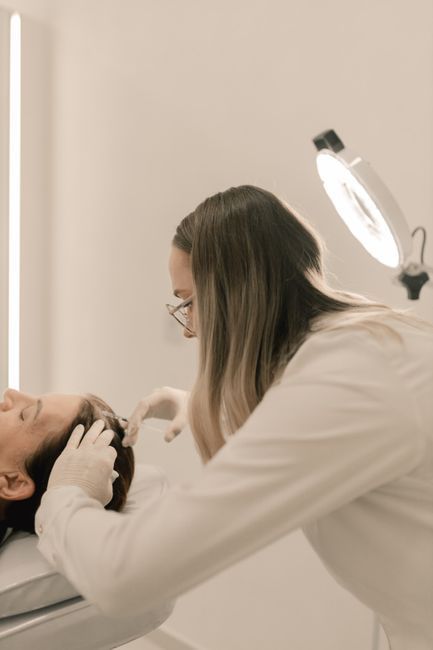
A proper scalp assessment should come before any PRP plan. Illustrative photo.
Choosing well
How to choose a PRP hair clinic in Seoul
Many clinics in Gangnam offer PRP for hair, and packages can look similar. These questions help you compare, including at our clinic:
- Do they look for the cause first? Iron, thyroid and hormonal causes should be considered before injections.
- Does a doctor assess and inject? You should know who examines your scalp and who performs the treatment.
- Is PRP offered with proven treatment? A plan that drops minoxidil entirely is a warning sign.
- Can they explain their preparation method? Kit, spin and any additives should be clear.
- Do they take baseline photos? Standardized photos are the fairest way to judge results.
- Are maintenance costs explained? Ask what happens after the first course, not just the package price.
What affects the cost of PRP for hair loss?
The total cost depends on how many sessions you need, the preparation kit used, the size of the area treated, and whether PRP is combined withscalp microneedlingorlow-level laser therapy. Maintenance sessions add to the long-term cost, so consider the whole plan. PRP for hair is cosmetic and not covered by National Health Insurance, though blood tests for a medical cause may be covered for enrolled patients. You receive a written quote before treatment starts.
Your visit
What to expect when you come in for hair loss
01
Consultation and scalp check
Dr. Hwang asks when the thinning started and about pregnancy, periods, diet, stress and medicines, then examines the pattern of hair loss.
02
Blood tests if needed
Iron stores, thyroid function and, when relevant, hormone levels help rule out treatable causes before any procedure.
03
Your plan
You agree on a plan, often minoxidil plus a course of PRP, with a written quote and dates for each session.
04
Treatment and review
Sessions are usually about four weeks apart, with a progress review at 3–6 months using standardized clinic photos.
Your doctor
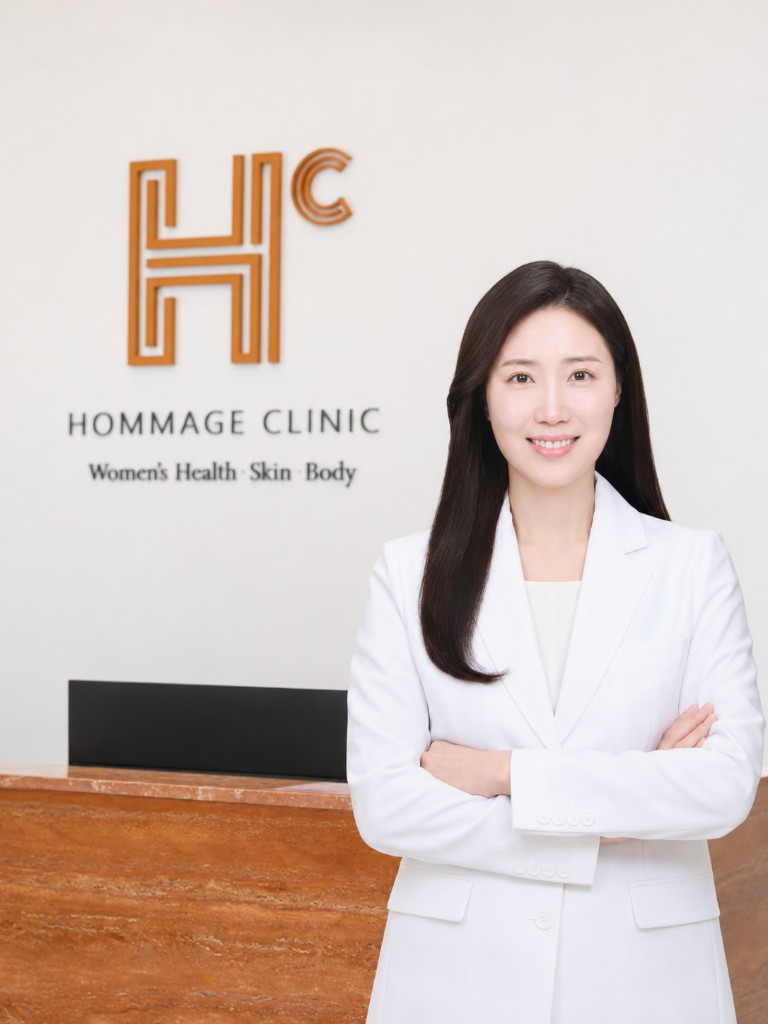
Dr. Hwang Seonhwa
Physician · Skin & Aesthetic Treatments
Dr. Hwang treats PRP as one part of a hair-loss plan rather than a stand-alone fix. Causes such as low iron, thyroid problems or hormonal changes are checked first, and PRP is recommended only when the scalp still has active follicles that can respond.
Physician for face and skin procedures, including lifting, laser and skin-improvement treatments, planned around facial proportions and skin condition.
PRP for hair loss: frequently asked questions
Does PRP for hair loss hurt?
PRP injections cause some discomfort, but most people find it manageable. The scalp is numbed with cream or cooling first, and you feel a series of quick pinpricks and pressure. Tenderness usually lasts a day or two. Let Dr. Hwang know if you are anxious about needles so the comfort plan can be adjusted.
How many PRP sessions do I need for hair loss?
Most plans start with three sessions about four weeks apart, followed by a review at three to six months. If PRP is helping, maintenance sessions every three to six months are usually needed to keep the benefit. The exact number depends on the cause and extent of your thinning and on whether you also use minoxidil.
Can PRP help postpartum hair loss?
Postpartum shedding usually stops and regrows on its own within 6–12 months of giving birth, so PRP is not normally needed. If heavy shedding lasts beyond a year, or your part keeps widening, it may have revealed underlying pattern hair loss, and iron and thyroid tests are worthwhile. PRP is usually postponed until after breastfeeding.
Is PRP better than minoxidil?
PRP is not a replacement for minoxidil. Minoxidil has the strongest evidence for female and male pattern hair loss and is usually the first step, while PRP is added for extra benefit or when topical treatment is not tolerated. Some studies suggest that using both together works better than either alone.
Can I wash my hair or exercise after PRP?
You can usually wash your hair the next day with a gentle shampoo. For about 24–48 hours, avoid hair dye, perms, saunas, swimming and intense exercise while the injection points close. Your doctor will give you written aftercare instructions at the end of the session.
Can foreigners get PRP hair treatment in Seoul?
Yes. International patients and foreign residents can book PRP at Hommage Clinic; bring your passport for registration. A course usually needs several visits about a month apart, so it suits people living in Seoul or returning regularly. Please contact us before your visit to arrange language support; you can walk in during opening hours or book ahead for a set time.
Does PRP for hair loss really work?
Pooled analyses of randomized trials show more hairs per square centimeter with PRP than with placebo injections in pattern hair loss, for example about 27.55 more hairs/cm² in a 2024 meta-analysis of 13 trials. The same review rated the certainty of the evidence as low because studies were small, short and used different methods. Results vary between people, so PRP is offered as an add-on to proven treatment rather than a guarantee.
Can PRP regrow hair on a completely bald area?
No. PRP does not create new hair follicles. It may help existing, thinning follicles produce thicker hair, so it works best in early to moderate thinning where fine hairs are still visible. Smooth areas with no hair left are unlikely to respond.
What happens if I stop PRP treatments?
Pattern hair loss is a long-term, slowly progressive condition. If you stop PRP, any gain is expected to fade gradually over the following months, and thinning continues at its natural pace. Continuing minoxidil or other prescribed treatment helps protect what you have.
Is PRP safe for women with PCOS or thyroid problems?
PRP can be used in women with hormonal conditions, but it does not treat the cause. Thinning linked to PCOS or a thyroid problem improves most when the condition itself is managed, so Dr. Hwang checks these first and may arrange hormone testing. PRP can then be added if thinning continues.
Can I have PRP while pregnant or breastfeeding?
PRP for hair is usually postponed during pregnancy and breastfeeding. Hair often sheds heavily after birth and recovers on its own, and many hair-loss medicines are not suitable at this time. Your options can be reviewed once you have finished breastfeeding.
Can PRP be combined with microneedling or laser?
Yes. PRP is often combined with scalp microneedling or low-level laser therapy, and with minoxidil at home. Combinations are planned to suit your scalp; the evidence for each combination is still limited, so your progress is checked with photos.
Is PRP the same as exosome or stem cell hair treatment?
No. PRP uses platelets from your own blood. Exosome and stem cell hair treatments use different products, and their evidence for hair loss is at an earlier stage than PRP. Ask any clinic exactly what product is being injected and what studies support it.
References
Sources used for this page, reviewed by Dr. Hwang Seonhwa. Read our editorial and medical review policy.
- Kieling L, Konzen AT, Zanella RK, Valente DS. Is autologous platelet-rich plasma capable of increasing hair density in patients with androgenic alopecia? A systematic review and meta-analysis of randomized clinical trials. An Bras Dermatol. 2024;99(6):847–862. PMC
- Georgiadis J, Phillips JH, Mott T. Platelet-rich plasma for androgenic alopecia. Am Fam Physician. 2022;105(1):84–85. AAFP
- Evans et al. Platelet-rich plasma as a therapy for androgenic alopecia: a systematic review and meta-analysis. 2020 (as summarized in reference 2).
- Gupta et al. Network meta-analysis of non-surgical treatments for androgenetic alopecia in men. 2020 (as summarized in reference 2).
- Evidence-based (S3) guideline for the treatment of androgenetic alopecia in women and in men – short version. PubMed
This page is general information and does not replace a personal consultation. Illustrations are original works of Hommage Women's Clinic, Gangnam, Seoul; photos marked illustrative are not of patients.
Related hair and hormone services
Scalp Microneedling
Fine needles create micro-channels in the scalp, often combined with PRP or minoxidil.
Low-Level Laser Therapy
Non-invasive red light for pattern hair loss, in clinic or with a home device.
Hair Density Treatment Plan
How medication, PRP and other procedures are combined into one plan for thinning hair.
Stem Cell Hair Therapy
Emerging regenerative scalp treatments, and what the evidence does and does not show.
Hormone Testing
Blood tests for androgens, thyroid and other hormones behind hair thinning.
PCOS Treatment
Diagnosis and care for PCOS, a common hormonal cause of scalp hair thinning in women.
Find out what is behind your hair thinning
Book a scalp assessment with Dr. Hwang Seonhwa in Gangnam. Blood tests and a PRP plan can be discussed in the same visit.
Hommage Clinic · 4F, Building A, 509 Gangnam-daero, Seoul (near Sinnonhyeon Station) · Mon & Fri 10:00–20:00 · Tue–Thu 10:00–19:00 · Sat 10:00–15:00