
Cosmetic Gynecology · Vaginal tightening
Laser Vaginal Tightening in Seoul: How It Works and What to Expect
Laser vaginal tightening is a non-surgical treatment that uses controlled heat from a laser or radiofrequency device to stimulate collagen in the vaginal wall, aiming to make mild looseness feel firmer. At Hommage Clinic in Gangnam, Seoul, female OB/GYN specialist Dr. Park Yuna assesses whether your looseness is mild enough to respond, and explains plainly that results are modest and evidence is limited.

Quick answer
Laser vaginal tightening uses laser or radiofrequency heat to stimulate collagen in the vaginal wall, aiming to make mild looseness feel firmer. At Hommage Women's Clinic in Gangnam, Seoul, it is assessed and performed by female OB/GYN specialist Dr. Park Yuna. Each session takes about 15–30 minutes, a course is usually 2–3 sessions 4–6 weeks apart, and you avoid sex for about 3–7 days. Results are modest and uncertain: sham-controlled trials have shown little difference.
Key takeaways
- Heat can firm the vaginal lining, but it cannot repair separated muscles, a stretched perineum or prolapse.
- Only mild looseness with reasonable pelvic floor tone is likely to respond.
- In the largest sham-controlled trial (VIVEVE II, 220 women), radiofrequency did not improve sexual function more than sham at 12 months.
- Pelvic floor training is the better-supported first step; vaginoplasty suits moderate or marked looseness.
Infographic
Laser vaginal tightening in numbers
Per session
Usually no anesthesia; numbing cream at the opening if needed.
Sessions in a course
About 4–6 weeks apart, then a review.
No sex or tampons
Mild discharge or spotting for a few days is common.
When change appears
If it occurs, it develops gradually as collagen remodels.
How long it may last
Maintenance sessions are often offered.
Studies reviewed
A 2024 meta-analysis found no improvement in laxity scores with RF vs sham.
Laser vaginal tightening at a glance
| Key fact | Details |
|---|---|
| Treatment time | Typically 15–30 minutes |
| Comfort | Usually no anesthesia needed; a warm or tingling feeling; numbing cream at the opening if needed |
| Sessions | Usually a course of 2–3 sessions about 4–6 weeks apart |
| Downtime | Minimal; avoid sex, tampons and swimming for about 3–7 days |
| Results | Gradual over 1–3 months if they occur; effects are modest and vary |
| How long results last | Often around 6–12 months; maintenance sessions may be offered |
| Performed by | Dr. Park Yuna, OB/GYN specialist |
Laser tightening may suit you if you
- Have mild looseness after childbirth and want a non-surgical option first
- Have already tried pelvic floor exercises and want to add another approach
- Accept that results are modest, vary between women and may need maintenance
- Also have mild dryness that you would like improved at the same time
Wait or choose another option if you
- Are pregnant, recently gave birth, or have unexplained vaginal bleeding
- Have an active infection, genital herpes outbreak or an abnormal Pap result not yet followed up
- Have marked looseness, a torn perineum or prolapse, which lasers cannot repair
- Have had mesh surgery or radiation to the pelvis, unless your doctor agrees
How does laser vaginal tightening work?
The devices used deliver controlled heat to the lining of the vagina. Two main types are used:
- Ablative fractional lasers (CO2 or erbium:YAG): create tiny columns of heat in the vaginal lining, a fraction of a millimeter deep, while leaving the tissue between them intact. Healing triggers new collagen and blood vessel growth.
- Non-ablative lasers and radiofrequency (RF): heat the deeper layer of the vaginal wall without breaking the surface, aiming to contract existing collagen and stimulate new collagen.
The idea is that firmer, thicker tissue makes the vagina feel tighter. Importantly, heat does not repair separated pelvic floor muscles or a stretched perineum, which is why lasers are only considered for mild looseness. This page covers the tightening goal, one of several cosmetic gynecology treatments ; for medical uses such as dryness after menopause, see vaginal laser therapy .
Does laser vaginal tightening work?
The honest answer is that evidence is limited. Some small studies report that women feel improved tightness and sexual satisfaction, but most studies are short, small and not compared with a sham (placebo) treatment, so it is hard to know how much of the change is real and lasting.
In 2018 the US Food and Drug Administration (FDA) warned that energy-based devices had not been cleared or approved for "vaginal rejuvenation" or tightening, and that marketing them for these claims could mislead patients and cause harm such as burns, scarring and pain. ACOG's position is similar: these treatments are not recommended as routine care, and women should be told about the limited evidence. For many women, pelvic floor treatment is a better-supported first step.
What happens during treatment?
Before your first session, Dr. Park examines you to confirm that looseness is mild and to rule out infection, prolapse or other problems. A Pap test may be done if one is due.
On the day, you lie on an exam couch as for a pelvic exam. A slim probe is inserted into the vagina and slowly rotated and withdrawn to treat the walls evenly. Treatment usually takes 15–30 minutes. Most women feel warmth, vibration or tingling rather than pain, and anesthesia is not usually needed; a numbing cream can be applied at the vaginal opening if that area is treated. You can go home or back to work straight away.
Results, recovery and aftercare
If you notice a change, it usually develops gradually over 1–3 months as collagen remodels. Effects tend to be modest and, when they occur, often last around 6–12 months, which is why maintenance sessions are commonly offered. Some women notice little or no difference.
After each session:
- Mild warmth, swelling, watery or pink discharge, or light spotting for a few days is common.
- Avoid sex, tampons, swimming, baths and hard exercise for about 3–7 days, or as advised.
- Use a pad rather than a tampon for any discharge, and wear breathable underwear.
Risks and possible side effects
Laser tightening is less invasive than surgery, but it still carries risks. Expected effects include mild discomfort, discharge and spotting for a few days. Less common risks include:
- Vaginal or vulvar burns, blistering or ulcers
- Scarring or narrowing, which can cause pain during sex
- Ongoing pain or increased sensitivity
- Infection, including a flare of genital herpes in women who carry the virus
- Little or no improvement, or effects that fade quickly
Contact the clinic promptly if you have severe or increasing pain, heavy bleeding, fever, foul-smelling discharge or blisters.
Laser tightening vs vaginoplasty: which is right for you?
The choice depends mostly on how much looseness there is and why. Laser and RF suit mild looseness with healthy muscle tone, have minimal downtime and need repeating, but results are modest and uncertain. Vaginoplasty repairs separated muscle and narrows the opening, so it suits moderate or marked looseness after childbirth; it gives a more noticeable, longer-lasting change but needs surgery and about 6–8 weeks before sex. Our vaginal rejuvenation guide compares every option, including vaginal fillers .
Laser vaginal tightening at Hommage Clinic
Hommage Clinic is a women's health and skin clinic in Gangnam, a short walk from Sinnonhyeon Station (Line 9 / Shinbundang Line). Dr. Park Yuna, a female OB/GYN specialist, examines you before any energy treatment, recommends the device type that suits your tissue after assessment, and tells you plainly if surgery or pelvic floor treatment is more likely to help. For a wider view, see our complete guide to cosmetic gynecology in Korea .
Laser vaginal tightening is cosmetic and is not covered by Korea's National Health Insurance. Cost depends on the device and the number of sessions, and you receive a written quote before starting.
Mechanism
CO2, erbium or radiofrequency: how vaginal tightening devices heat tissue
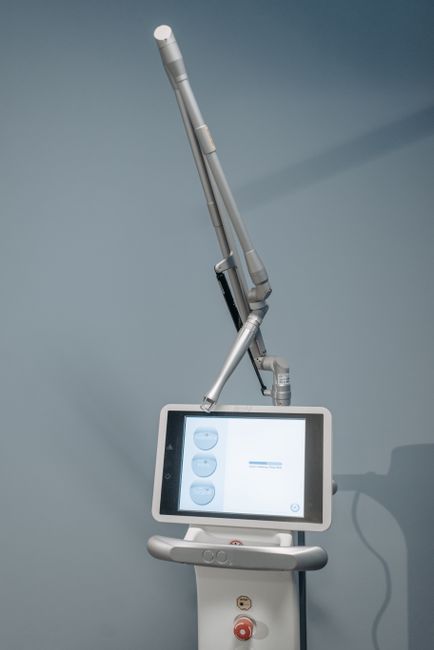
All vaginal tightening devices work by controlled heating, but they deliver the heat in different ways and to different depths. Ablative fractional lasers (CO2 and erbium:YAG) make tiny columns of injury in the surface lining, which heals by laying down new collagen. Non-ablative erbium modes and radiofrequency (RF) devices warm the deeper layer of the wall without breaking the surface, aiming to tighten existing collagen fibers and prompt new ones.
The diagram below shows where each type acts. None reaches the pelvic floor muscles, which sit outside the vaginal wall. That is why devices are only considered for mild looseness, and why pelvic floor training remains important even if you choose laser.
 Hommage · Gangnam
Hommage Women's Clinic · Gangnam, Seoul
The device type is chosen after an exam, based on your tissue and goals. Illustrative photo.
Compare
Laser vaginal tightening vs vaginoplasty vs pelvic floor training
These three options are often presented as competitors, but they act on different layers and suit different degrees of looseness. Pelvic floor training strengthens the muscles that surround the vagina. Laser and radiofrequency act on the lining and connective tissue of the wall. Vaginoplasty surgically repairs separated muscle and removes stretched tissue at the entrance.
The degree of looseness, found on examination, largely decides which is realistic. Many women with mild looseness do well with pelvic floor training alone or combined with laser; women with a clearly widened opening or a torn perineum usually need surgery for a noticeable change.
| Compare | Pelvic floor training | Laser / RF | Vaginoplasty |
|---|---|---|---|
| Acts on | Pelvic floor muscles | Vaginal lining and wall | Muscle, wall and entrance |
| Downtime | None | Avoid sex about 3–7 days | About 6–8 weeks before sex |
| Sessions | Daily exercise for months | 2–3 sessions, then maintenance | One operation |
| Evidence | Strong for leakage; supportive for tone | Limited; sham-controlled trials show little difference | Established for structural looseness |
| Main limitation | Needs consistent effort | Modest, temporary or no effect | Surgical risks; best after finishing childbearing |
Schedule
Laser vaginal tightening sessions: a typical course, week by week
A course is usually two or three sessions about four to six weeks apart, so that each round of healing and collagen formation can settle before the next. Any change develops gradually over one to three months after the last session. Dr. Park reviews you after each session and stops the course if you are not noticing a benefit, rather than continuing by default.
 Hommage · Gangnam
Hommage Women's Clinic · Gangnam, Seoul
Most women go back to normal daily activities the same day. Illustrative photo.
Aftercare
Laser vaginal tightening aftercare: do's and don'ts
Recovery after a session is short, but the treated lining needs a few days to heal. Following simple aftercare lowers the chance of irritation or infection and helps you judge the result fairly. Before your session, it also helps to avoid sex for a day or two and to schedule treatment away from your period.
Do
- Use a panty liner or pad for light discharge
- Wear loose, breathable cotton underwear
- Rinse the outer area gently with water
- Keep up pelvic floor exercises once comfortable
- Tell us if you have had genital herpes before
Avoid for about 3–7 days
- Sex and tampons
- Swimming, baths, saunas and hot tubs
- Hard exercise and cycling
- Douching or scented washes
- Ignoring fever, heavy bleeding or blisters; call us
Your situation
Laser vaginal tightening after childbirth: timing and realistic goals
Most women who ask about vaginal tightening have had one or more vaginal births. In the first months after birth, tissues are still healing and estrogen is low, especially while breastfeeding, so the vagina can feel looser and drier than it will later. Many women improve naturally over the first year, particularly with pelvic floor exercises.
For that reason, Dr. Park usually suggests waiting at least six to twelve months after birth, and until breastfeeding has stopped, before considering an energy treatment. At that point an exam shows whether the remaining looseness is mild, and therefore a reasonable candidate for laser, or whether muscle separation or a torn perineum means vaginoplasty or pelvic floor physiotherapy is the better route.
It also helps to be clear about the goal. Women most often describe wanting more friction or sensation during sex, or fewer episodes of air or water entering the vagina. Laser may give a small improvement in how the vagina feels, but sham-controlled trials suggest the effect on sexual function is small on average. If pain, dryness or low desire are part of the picture, these are treated directly; see painful intercourse treatment and low libido treatment .
 Hommage · Gangnam
Hommage Women's Clinic · Gangnam, Seoul
Timing after birth and realistic goals are discussed before any treatment. Illustrative photo.
Evidence
Does laser vaginal tightening work? What the research says
Early studies of vaginal tightening devices were mostly small and uncontrolled: women were treated and asked before and after how they felt, and most reported improvement. When researchers started comparing real treatment with a sham (a device that looks and feels similar but delivers no therapeutic energy), the differences became much smaller. This matters because looseness and sexual satisfaction are subjective, and expectations alone can change how women rate them.
Studies in a 2024 meta-analysis
RF did not improve vaginal laxity scores vs sham; sexual function improved in observational studies but not in randomized trials.
Pereira et al., J Sex Med, 2024Women in VIVEVE II
Sexual function at 12 months: change 9.8 with RF vs 9.0 with sham, not a significant difference.
Viveve trial results, 2020Earlier RF trial
One session made women three times as likely as sham to report no laxity at 6 months; manufacturer-sponsored.
Krychman et al., J Sex Med, 2017FDA safety communication
Safety and effectiveness of energy devices for vaginal rejuvenation not established; serious adverse events reported.
US FDA, July 2018Traveling to Seoul
Laser vaginal tightening in Seoul for international patients
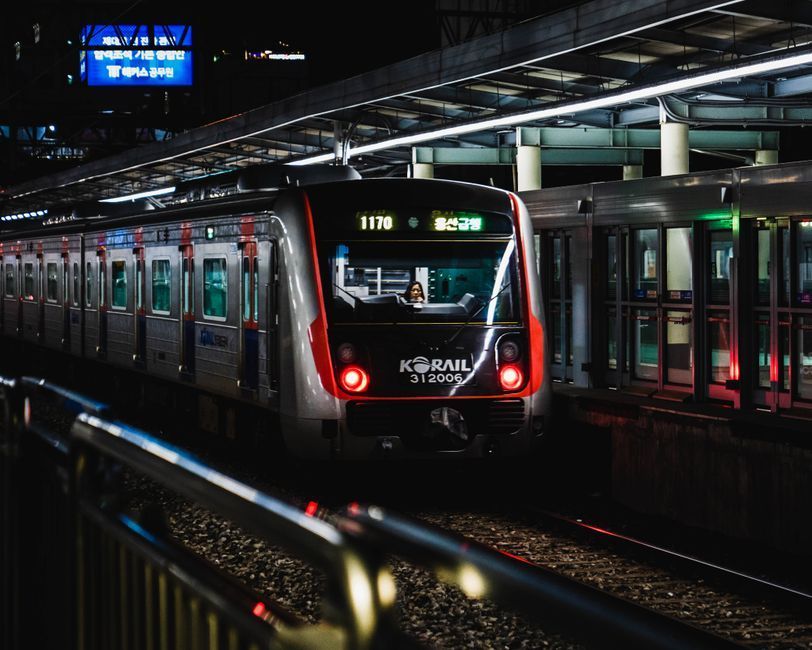
Because a course involves two or three sessions four to six weeks apart, laser tightening fits best for women who live in Korea or visit Seoul regularly. On a single short trip, you can have the consultation, exam and first session, and the healing period of a few days fits easily into a stay. Hommage Women's Clinic is in Gangnam, a short walk from Sinnonhyeon Station (Line 9 and Shinbundang Line).
Before you book
- Send your questions and travel dates by WhatsApp, KakaoTalk or the contact form, and ask for language support if you need it.
- Book away from your period, and avoid sex for a day or two before the session.
- Bring your passport, a list of medicines and allergies, recent Pap or HPV results, and details of any previous pelvic surgery or mesh.
- Allow two or three days after the session before flying, in case of discharge or questions.
After you fly home
Keep the written aftercare guide and send questions to the clinic if anything worries you. For fever, heavy bleeding, blisters or severe pain, see a local doctor straight away.
 Hommage · Seoul
Hommage Women's Clinic · Gangnam, Seoul
Seoul: the clinic is a short walk from Sinnonhyeon Station. Illustrative photo.
 Hommage · Gangnam
Hommage Women's Clinic · Gangnam, Seoul
You receive a written plan and quote before starting a course. Illustrative photo.
Choosing well
How to choose a clinic for laser vaginal tightening in Seoul
Energy-based vaginal treatments are widely advertised in Gangnam, often as packages. Use these questions at any consultation, including ours:
- Does a gynecologist examine me first? Only an exam shows whether looseness is mild enough for laser.
- Which device, and why for me? CO2, erbium and RF differ; the answer should be specific to you.
- Who performs the treatment? A doctor should perform or directly supervise it.
- Do they explain the sham-controlled evidence? Honest clinics mention that results are modest and uncertain.
- Can I stop after one session? Avoid being locked into a prepaid package before you know if it helps.
- Is there a written quote and aftercare plan? Both should come before you start.
What affects the cost of laser vaginal tightening in Seoul?
The cost depends mainly on the device used (CO2, erbium or radiofrequency), the number of sessions in your course, whether the vaginal opening or outer area is also treated, and whether tests such as a Pap smear or infection screening are needed first. Combining laser with other treatments, such as intimate area lightening , changes the total. Laser vaginal tightening is cosmetic and is not covered by Korea's National Health Insurance; you receive a written quote before starting.
Your visit
What to expect, session by session
01
Assessment
Dr. Park asks about your births and symptoms and examines you to confirm looseness is mild and there is no infection or prolapse.
02
Treatment session
A slim probe treats the vaginal walls in about 15–30 minutes. Most women feel warmth rather than pain.
03
Short recovery
Mild discharge or spotting for a few days. Avoid sex, tampons and swimming for about 3–7 days.
04
Review
Sessions are usually repeated every 4–6 weeks, with a review to decide whether further treatment is worthwhile.

Your doctor
Dr. Park Yuna
Medical Director · OB/GYN Specialist
Dr. Park offers laser tightening only when looseness is mild and pelvic floor tone is reasonable, and she is open about the limited evidence. She often combines it with pelvic floor training, and recommends against further sessions if they are not helping.
OB/GYN specialist (Korea) and representative director of Hommage Clinic. Leads women's health care, labiaplasty and other cosmetic gynecology procedures.
Laser vaginal tightening: frequently asked questions
Does laser vaginal tightening hurt?
Most women find it comfortable. You may feel warmth, vibration or a tingling sensation inside the vagina, and the vaginal opening can feel more sensitive, so a numbing cream can be used there. Anesthesia is not usually needed. Mild soreness or warmth afterward usually settles within a day or two.
How many laser vaginal tightening sessions do I need?
A typical course is 2–3 sessions about 4–6 weeks apart, followed by maintenance sessions about once a year if you feel it helped. The number varies with the device and your response. Dr. Park reviews progress after each session and will not recommend more sessions if you are not noticing a benefit.
How long do laser tightening results last?
When women do notice a change, it often lasts around 6–12 months, then gradually fades as tissue ages. Evidence on long-term results is limited. Keeping up pelvic floor exercises may help maintain muscle tone between sessions. For a longer-lasting structural change, surgery may be more suitable.
Is laser vaginal tightening FDA-approved?
No device is FDA-approved or cleared specifically for vaginal tightening or vaginal rejuvenation. In 2018 the US FDA warned companies against marketing energy devices for these claims. Some CO2 and erbium lasers are cleared for general gynecologic uses, such as treating certain tissue conditions, but not for tightening.
Can I have laser vaginal tightening after giving birth?
It is usually wiser to wait at least 6–12 months after birth and until you have stopped breastfeeding, because tissue and hormones are still recovering and many women improve naturally with pelvic floor exercises. An exam then shows whether looseness is mild enough for laser, or whether surgery or physiotherapy would help more.
Can foreigners get laser vaginal tightening in Seoul?
Yes. International patients and foreign residents can book at Hommage Clinic in Gangnam. Bring your passport and a list of your medicines, and contact us before your visit to arrange language support. Because a course involves several sessions weeks apart, tell us your travel dates so we can plan whether treatment fits your stay.
What is the difference between CO2, erbium and radiofrequency tightening?
CO2 and erbium:YAG lasers in ablative mode make tiny columns of injury in the surface lining that heal with new collagen. Non-ablative erbium modes and radiofrequency warm the deeper wall without breaking the surface. All work by heat, and none reaches the pelvic floor muscles. No device has been shown in sham-controlled trials to be clearly better than the others for tightening.
Is laser vaginal tightening better than Kegel exercises?
There is no good evidence that it is. Pelvic floor (Kegel) training is well studied, has no side effects and strengthens the muscles that laser cannot reach. Many women combine the two. See Kegel therapy and pelvic floor treatment.
Can laser vaginal tightening improve sexual satisfaction?
Some women report better sensation and confidence, but in the largest sham-controlled trial, 220 women treated with radiofrequency or sham reported similar improvements in sexual function at 12 months. Expectations, relationship factors, dryness and pain all affect satisfaction, and Dr. Park looks at these too.
Can laser vaginal tightening treat bladder leakage?
Some devices are promoted for mild stress leakage, but evidence is limited and the 2018 FDA warning included incontinence claims. Pelvic floor muscle training is the recommended first treatment. Read more on our urinary incontinence page.
Who should not have laser vaginal tightening?
Women who are pregnant, have unexplained bleeding, an active infection or herpes outbreak, an abnormal Pap result not yet followed up, marked looseness or prolapse, or previous pelvic radiation or mesh surgery (unless their doctor agrees) should wait or choose another option.
When can I have sex after laser vaginal tightening?
Most women wait about 3–7 days after each session, until any discharge or spotting has settled. Avoid tampons, swimming and baths for the same period. If sex is uncomfortable afterward, stop and contact the clinic.
Is laser vaginal tightening covered by insurance in Korea?
No. Laser vaginal tightening is a cosmetic treatment and is not covered by Korea's National Health Insurance. Cost depends on the device and the number of sessions, and you receive a written quote before starting.
References
Sources used for this page, reviewed by Dr. Park Yuna, OB/GYN specialist. Read our editorial and medical review policy.
- Pereira GMV, Cartwright R, Juliato CRT, Domoney C, Iglesia CB, Brito LGO. Treatment of women with vaginal laxity: systematic review with meta-analysis. J Sex Med. 2024. doi:10.1093/jsxmed/qdae028.
- Viveve Medical. Top-line results of the VIVEVE II randomized, sham-controlled trial. April 2020. Report (MD+DI)
- Krychman M, et al. Effect of single-treatment, surface-cooled radiofrequency therapy on vaginal laxity and female sexual function: the VIVEVE I randomized controlled trial. J Sex Med. 2017;14(2):215–225.
- US Food and Drug Administration. FDA warns against use of energy-based devices to perform vaginal 'rejuvenation' or vaginal cosmetic procedures: FDA Safety Communication. 30 July 2018. Summary (IUGA)
- American College of Obstetricians and Gynecologists. Elective female genital cosmetic surgery. Committee Opinion No. 795. Obstet Gynecol. 2020;135(1):e36–e42.
- Dumoulin C, Cacciari LP, Hay-Smith EJC. Pelvic floor muscle training versus no treatment, or inactive control treatments, for urinary incontinence in women. Cochrane Database Syst Rev. 2018;CD005654. Cochrane
This page is general information and does not replace a personal consultation. Illustrations are original works of Hommage Women's Clinic, Gangnam, Seoul; photos marked illustrative are not of patients.
Related treatments
Vaginal Laser Therapy
Laser for menopausal dryness and mild bladder leakage, and the current evidence.
Vaginoplasty
Surgical tightening that repairs muscle and narrows the vaginal opening.
Vaginal Rejuvenation
All surgical and non-surgical options for looseness and dryness, compared.
Get a realistic opinion on laser tightening
Book a private consultation with Dr. Park Yuna in Gangnam. She will examine you, explain whether laser, pelvic floor treatment or surgery fits your situation, and give you a written quote.
Hommage Clinic · 4F, Building A, 509 Gangnam-daero, Seoul (near Sinnonhyeon Station) · Mon & Fri 10:00–20:00 · Tue–Thu 10:00–19:00 · Sat 10:00–15:00