
Skin & Aesthetics · Hair & scalp
Hair Density Boost Treatment: A Combined Plan for Thinning Hair
A hair density boost treatment is a combined plan for thinning hair that pairs first-line medication such as minoxidil with in-clinic treatments like PRP, scalp microneedling, scalp boosters or low-level laser therapy. At Hommage Clinic in Gangnam, Seoul, Dr. Hwang Seonhwa checks for causes such as low iron, thyroid or hormonal changes first, then explains the evidence for each option.
Quick answer
A hair density boost treatment is a layered plan for thinning hair: treatable causes first, daily minoxidil as the foundation, then in-clinic add-ons such as PRP, scalp microneedling or low-level laser. At Hommage Women's Clinic in Gangnam, Seoul, Dr. Hwang Seonhwa builds the plan after a scalp check and blood tests if needed. Clinic visits are usually about monthly for 3–6 months, with photo reviews; results last only while treatment continues.
Key takeaways
- No single product boosts density on its own; a combination aimed at different steps of hair growth is the usual approach.
- In a Cochrane review of female pattern hair loss, minoxidil roughly doubled the chance of noticeable regrowth compared with placebo.
- Procedures are add-ons with weaker evidence than minoxidil, and they work only where follicles are still active.
- Standardized photos at the start and at each review are the fairest way to judge progress.
Infographic
Hair density treatment in numbers
Per clinic visit
Depends on which treatments are combined.
Clinic sessions
For about 3–6 months, then maintenance.
Scalp redness
Usually settles quickly after procedures.
First density review
Fuller results are judged at 6–12 months.
Hair growth per month
Why early progress looks slow.
Regrowth with minoxidil
Chance of moderate-to-marked regrowth vs placebo in women (Cochrane 2016).
Hair density treatment at a glance
| Key fact | Details |
|---|---|
| What it is | A personalized plan combining home medication with one or more in-clinic scalp treatments |
| First step | A cause check, then usually topical minoxidil as the evidence-based foundation |
| Treatment time | About 20–60 minutes per clinic visit, depending on the treatments combined |
| Sessions | Typically about monthly for 3–6 months, then maintenance every few months |
| Downtime | Minimal; scalp redness or tenderness usually settles within 1–3 days |
| Results visible | Less shedding first; density changes are usually assessed at 3–6 months |
| Performed by | Dr. Hwang Seonhwa, physician |
A combined plan may suit you if you have
- Female or male pattern thinning: a widening part, a thinning crown or see-through areas
- Thinning that has not improved enough with minoxidil alone
- Shedding that continues more than a year after childbirth, or thinning linked to PCOS that is being treated
- A wish for a structured plan with progress photos rather than one-off treatments
Wait or choose another option if you
- Are pregnant or breastfeeding, as most medicines and injections are postponed
- Have patchy bald spots, scarring, or a red, painful scalp that needs a diagnosis first
- Have a bleeding disorder or take blood-thinning medicine (relevant for PRP and needling)
- Have an active scalp infection or open wounds
What is a hair density boost treatment?
A hair density boost treatment is not a single product or machine. It is a plan that layers several treatments, each working in a different way, to help thinning hair grow thicker and to slow further loss. Most plans combine daily medication at home with a course of in-clinic scalp treatments.
Combining makes sense because each treatment targets a different step in hair growth. Minoxidil lengthens the growth (anagen) phase of the follicle. PRP and scalp microneedling deliver or trigger growth signals, low-level laser light supports the energy of follicle cells, and scalp boosters aim to improve the scalp environment. None of these creates new follicles, so the plan is most useful where thinning hair is still present.
Why is my hair thinning? Causes to check first
A density plan works only when the cause is known, because some causes need medical treatment rather than a procedure. In women, the most common are:
- Female pattern hair loss: gradual thinning over the crown and a widening part, partly genetic and partly hormonal, often more noticeable around menopause.
- Postpartum and other shedding (telogen effluvium): diffuse shedding two to three months after childbirth, illness, surgery or crash dieting. Postpartum shedding usually recovers by itself within 6–12 months.
- PCOS: raised androgens in polycystic ovary syndrome can thin scalp hair while causing acne or excess body hair.
- Low iron and thyroid problems: both are common in women, can cause or worsen shedding, and are treatable.
Dr. Hwang examines your scalp and can arrange blood tests for ferritin (iron stores) and thyroid function, plus hormone testing if your periods are irregular. An itchy, flaky or inflamed scalp is treated first, for example with seborrheic scalp treatment . Patchy bald spots or scarring need a specialist dermatology work-up, and you are referred if a biopsy is needed.
Which treatments are combined, and how strong is the evidence?
Hair-loss treatments differ a lot in how well they are proven, so it helps to see them side by side. Medication is the foundation, and procedures are add-ons.
- Topical minoxidil (strong evidence): the first-line treatment for female and male pattern hair loss, applied daily at home.
- Oral options (good and growing evidence): low-dose oral minoxidil or, for some women, anti-androgen medicine such as spironolactone, prescribed only after assessment and avoided in pregnancy.
- Low-level laser therapy(moderate evidence): needle-free red light, used in clinic or with a cleared home device.
- PRP for hair loss(moderate evidence): growth factors concentrated from your own blood and injected into thinning areas.
- Scalp microneedling(encouraging but limited evidence): fine needles stimulate the scalp and help topical treatments absorb; small studies show added benefit alongside minoxidil.
- Scalp boosters (limited or emerging evidence): hair filler injections of hyaluronic acid and peptides, and exosome or stem cell hair therapy .
A typical combination is minoxidil plus a course of PRP, sometimes with microneedling in the same visit, and LLLT for people who prefer to avoid needles. Studies of combined treatment are mostly small, so the realistic size of the benefit is discussed before you start.
What happens during a hair density treatment course?
A course usually runs over three to six months, followed by a review before any maintenance is planned.
- Assessment: questions about your shedding, cycle, pregnancies, diet and medicines, a scalp examination and standardized photos.
- Blood tests if needed: to find and treat causes such as low iron or a thyroid problem.
- Home treatment: usually minoxidil, started early because it takes months to work.
- Clinic sessions: often about monthly. Microneedling and PRP can be done in one visit of about 45–60 minutes, with numbing cream for comfort.
- Review: photos are compared at around three and six months, and the plan is adjusted.
How long does it take to see results, and do they last?
Most people notice less shedding first, and visible changes in density usually take three to six months, with fuller results judged at six to twelve months. Hair grows only about 1 cm a month, so early progress is slow.
Temporary extra shedding in the first weeks of minoxidil is common and usually means follicles are entering a new growth cycle. Pattern hair loss is long-term and progressive, so results last only while treatment continues: gains from medication are usually lost within months of stopping, and the benefit of procedures fades without maintenance sessions every few months. Slowing or stopping further thinning is itself a meaningful result.
Risks and possible side effects
Each part of a combined plan has its own side effects, and Dr. Hwang goes through those that apply to you before you start.
- Topical minoxidil: scalp itching or dryness, temporary early shedding, and unwanted fine hair on the face or forehead.
- Oral medicines: low-dose oral minoxidil can cause extra facial or body hair, ankle swelling, a faster heartbeat or dizziness. Spironolactone can cause irregular bleeding, breast tenderness and raised potassium, and must not be taken in pregnancy.
- Scalp procedures: stinging, tenderness, redness, pinpoint bleeding or small bruises for one to three days, a mild headache and, rarely, infection.
Call the clinic if you notice spreading redness, warmth, pus or fever after a procedure. Seek medical care promptly for chest pain, a racing heartbeat, fainting or marked swelling while taking oral medication.
Hair density treatment at Hommage Clinic
Hommage Clinic is a women's health and skin clinic in Gangnam, a short walk from Sinnonhyeon Station. Dr. Hwang Seonhwa assesses your scalp, explains the evidence for each option and performs the procedures. Because the clinic also offers gynecology, hormonal causes such as PCOS or perimenopause can be checked under one roof. Hair care sits within our wider skin and aesthetics services .
Cost depends on which treatments are combined and how many sessions you need. Hair density procedures are cosmetic and are not covered by National Health Insurance, while blood tests for a medical cause may be covered for enrolled patients. You receive a written quote before treatment starts.
Know your pattern
Shedding or thinning? Why it changes the plan
Women often describe two different problems as "hair loss". Shedding means more hairs than usual fall out, often in clumps in the shower or on the pillow, usually starting a few months after a trigger. Thinning means the hairs that remain become finer and shorter, so the part widens and the scalp shows more, even if you do not notice much falling out. Many women have a mix of both.
The difference matters because a density plan is built mainly for thinning. Shedding from childbirth, illness, crash dieting or low iron usually improves once the trigger is fixed, and procedures add little until then. Dr. Hwang Seonhwa looks at the pattern, pulls gently on the hair, examines the scalp and reviews your history to tell them apart.
Telogen effluvium
- Sudden increase in hairs falling out
- Starts about 2–3 months after a trigger
- Spread over the whole scalp
- Often recovers once the cause is fixed
- First step: find and treat the trigger
Pattern hair loss
- Hairs get finer and shorter over years
- Widening part or thinner crown
- Front hairline usually kept in women
- Progressive without treatment
- First step: minoxidil, then add-ons
 Hommage · Gangnam
Hommage Women's Clinic · Gangnam, Seoul
Thinning often shows first as a thinner ponytail or a wider part. Illustrative photo.
How the plan is built
The hair density treatment pyramid: four layers
A good hair density plan is built from the bottom up. The wide base is the part that matters most for everyone: finding and fixing causes such as low iron, thyroid problems or a hormonal condition. Above it sits daily medication, which has the strongest evidence. Clinic procedures come next, and newer treatments with emerging evidence sit at the narrow top, as optional extras. Skipping the lower layers and jumping straight to procedures is the most common reason combined plans disappoint.
 Hommage · Gangnam
Hommage Women's Clinic · Gangnam, Seoul
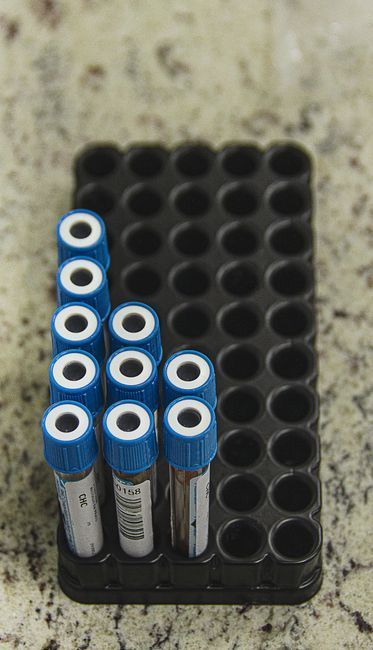
Simple blood tests can reveal treatable causes such as low iron. Illustrative photo.
Assessment
What a hair density assessment checks
The assessment is the part of the plan that most often changes what happens next. A woman with low iron stores, an underactive thyroid or undiagnosed PCOS may need a medical fix more than a procedure, and an itchy, flaky scalp should settle before injections or needling. Dr. Hwang combines your history, a close look at the scalp and, when useful, blood tests.
Because Hommage is also a women's health clinic, hormone questions can be followed up withhormone testingor a gynecology review in the same place.
- Your story When it started, recent childbirth, illness, dieting, stress, new medicines and your cycle.
- Pattern of loss Part width, crown, hairline and whether hairs come out easily.
- Scalp condition Flaking, redness, itch or scarring that needs treating first.
- Blood tests if needed Ferritin (iron stores), thyroid function and, when relevant, hormones.
- Baseline photos Standardized photos so progress can be compared fairly later.
Results
Hair density treatment results timeline: the first 12 months
Because hair grows about a centimeter a month and each follicle cycles slowly, a density plan is judged over a year, not weeks. The first months are often frustrating: minoxidil can cause temporary extra shedding, and new hairs are short and fine. Most people see shedding slow by around three months, density changes are reviewed at three to six months, and fuller results are judged at six to twelve months.
At home
Your home routine: what helps hair density and what does not
Most of a hair density plan happens at home, between clinic visits. Consistency matters more than any single product: minoxidil only works while it is used, and stopping and starting makes progress hard to judge. Gentle hair care protects the hairs you have while the follicles respond.
Do
- Apply minoxidil to a dry scalp exactly as prescribed, every day
- Eat enough protein and iron-rich foods, especially if you diet
- Take your iron or thyroid treatment if one was prescribed
- Use a mild shampoo and loose hairstyles
- Take monthly photos in the same light and angle
Don't
- Stop minoxidil because of early shedding; ask us first
- Wear tight ponytails, buns or extensions every day
- Use very hot styling tools on high settings daily
- Start hair supplements with high-dose biotin before blood tests without telling us, as biotin can affect some lab results, including hormone tests (US FDA safety communication, 2019)
- Judge results before 3–6 months
 Hommage · Gangnam
Hommage Women's Clinic · Gangnam, Seoul
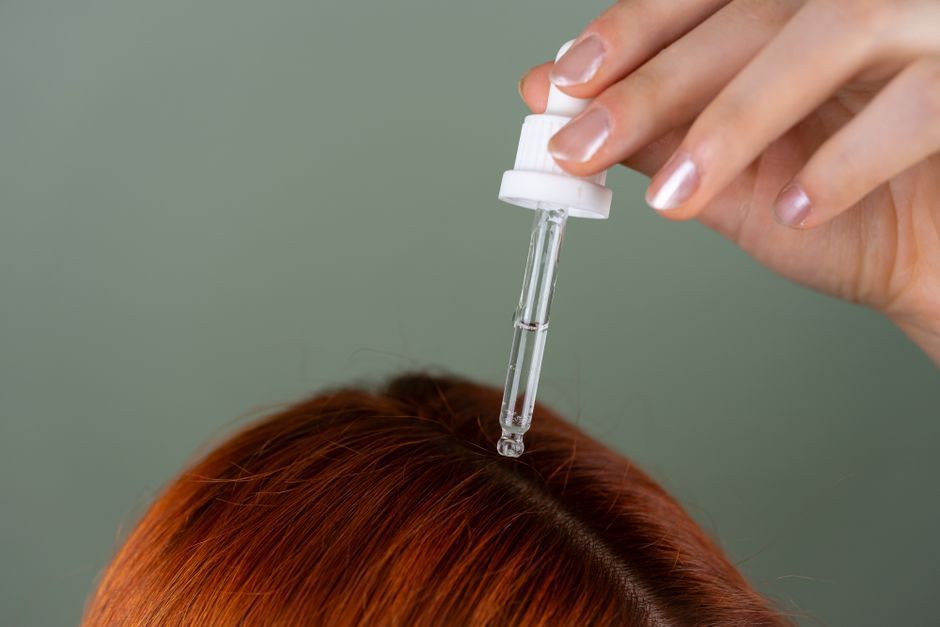
Daily treatment at home is the foundation of most density plans. Illustrative photo.
Evidence
Does a hair density plan work? What the research says
The best single source on treatments for women is a Cochrane systematic review of female pattern hair loss, which pooled 47 trials and 5,290 participants. It found good support for minoxidil, some support for low-level laser devices, and no clear benefit from finasteride in the women studied. Evidence for PRP comes mainly from smaller trials that include many men, and is summarized on ourPRP for hair losspage.
Regrowth with minoxidil
Moderate-to-marked regrowth vs placebo (RR 1.93; moderate-quality evidence).
Cochrane review, van Zuuren 2016Hairs/cm² with minoxidil
Mean 13.18 more hairs per cm² than placebo across 8 studies (low quality).
Cochrane review, 2016Strength of minoxidil
No meaningful difference in regrowth between 2% and 5% in women.
Cochrane review, 2016Hairs/cm² with laser comb
Hair counts rose vs sham in 2 studies, but women did not rate a clear difference.
Cochrane review, 2016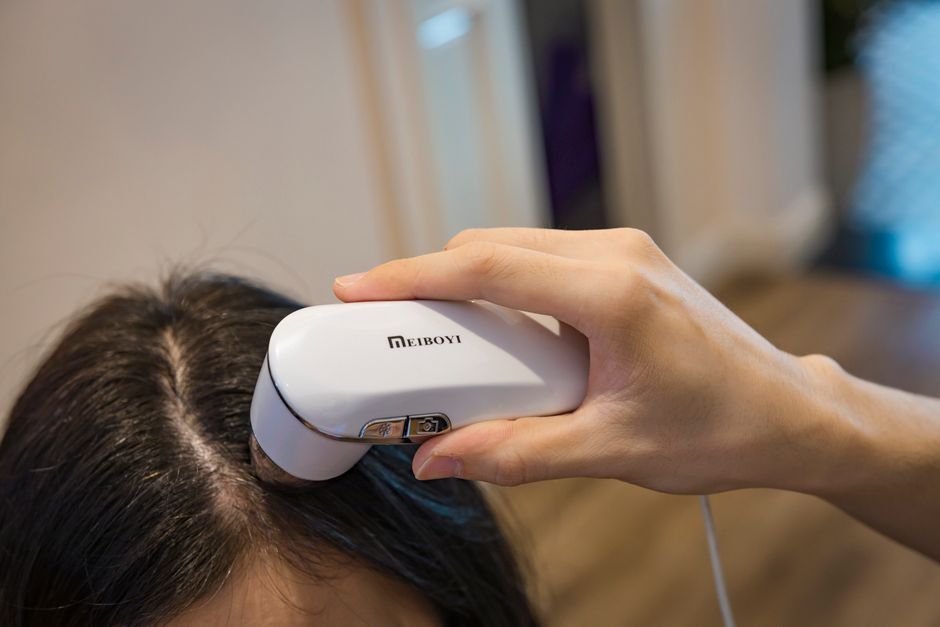 Hommage · Gangnam
Hommage Women's Clinic · Gangnam, Seoul
Close scalp checks and standardized photos help measure progress fairly. Illustrative photo.
 Hommage · Seoul
Hommage Women's Clinic · Gangnam, Seoul
The clinic is a short walk from Sinnonhyeon Station on Line 9 and the Shinbundang Line. Illustrative photo.
Traveling to Seoul
Hair density treatment in Seoul for international patients
A density plan is mostly home treatment with clinic visits about monthly at first, so it works best if you live in Seoul or visit regularly. On a single trip you can still have a full assessment, blood tests and a written plan, start home treatment, and add clinic sessions on later visits.
Before you book
- Send your dates and questions by WhatsApp, KakaoTalk or the contact form, and ask for language support if needed.
- Bring your passport, recent blood tests, a list of medicines and supplements, and photos showing how your hair has changed.
- Allow 1–2 days per visit: assessment and tests first, a clinic procedure on the same or next day.
- Ask whether prescribed home treatment can be continued in your country, since rules for medicines differ.
After you fly home
Keep your plan and photos, take monthly pictures in the same light, and message the clinic with questions. Scalp procedures leave no wound to check, so flying the next day is usually fine.
Choosing well
How to choose a hair density clinic in Seoul
"Hair density" packages in Gangnam can bundle very different treatments under one name. These questions help you see what you are actually paying for, at any clinic including ours:
- Is the cause checked before treatment? History, scalp exam and blood tests when needed should come first.
- Is minoxidil or other medication part of the plan? A package of procedures alone skips the best-proven step.
- What exactly is in each session? Ask for the name of every product and device.
- Is the evidence for each option explained? Honest clinics separate proven, add-on and experimental treatments.
- Are progress photos standardized? Same lighting, angle and parting each time.
- Is there a written plan and quote? Including what maintenance would involve.
What affects the cost of a hair density plan?
Cost depends on which treatments are combined (for example PRP with microneedling, or laser alone), how many clinic sessions are needed, the products used, and the size of the area treated. Home medication and maintenance sessions add to the long-term total, so it helps to look at a full year rather than one session. Procedures are cosmetic and not covered by National Health Insurance, while blood tests for a medical cause may be covered for enrolled patients. You receive a written quote first.
 Hommage · Gangnam
Hommage Women's Clinic · Gangnam, Seoul
You receive a written plan and quote before treatment begins. Illustrative photo.
Your visit
What to expect at your hair density consultation
01
History and scalp check
Dr. Hwang asks when the thinning started and about childbirth, periods, diet, stress and medicines, then examines the pattern of hair loss.
02
Baseline photos and tests
Standardized photos record your starting point. Blood tests for iron, thyroid and, when relevant, hormones are arranged if needed.
03
Your layered plan
You agree on home treatment and any clinic procedures, with the evidence for each explained and a written quote.
04
Sessions and review
Clinic sessions are usually about monthly, with photo reviews at around three and six months to adjust the plan.

Your doctor
Dr. Hwang Seonhwa
Physician · Skin & Aesthetic Treatments
Dr. Hwang builds hair density plans in layers: treatable causes first, an evidence-based foundation such as minoxidil next, and procedures added only where follicles are still active. Each option is explained with its realistic level of evidence, so you can decide how far to go.
Physician for face and skin procedures, including lifting, laser and skin-improvement treatments, planned around facial proportions and skin condition.
Hair density treatment: frequently asked questions
What is the most effective treatment for thinning hair in women?
For female pattern hair loss, topical minoxidil has the strongest evidence and is usually the first step. Low-dose oral minoxidil or an anti-androgen may be added for some women after assessment, and procedures such as PRP or low-level laser therapy can add benefit on top. If blood tests show low iron or a thyroid problem, treating that comes first, because no procedure can make up for it.
How long does hair density treatment take to work?
Most people see less shedding within about three months, and changes in density are usually assessed at three to six months. Fuller results are judged at six to twelve months, because hair grows slowly and follicles need several cycles to thicken. Some temporary extra shedding in the first weeks of minoxidil is common and usually settles.
Can PRP and microneedling be done in the same session?
Yes. Microneedling and PRP are often combined in one visit: the scalp is numbed and microneedled, then PRP is injected or applied while the tiny channels are open. Combining them adds little extra time, though tenderness may last a little longer. Dr. Hwang will advise whether the combination suits your scalp. Read more about PRP for hair loss.
Will my hair thin again if I stop treatment?
Usually, yes, if the cause is pattern hair loss. It is a long-term, progressive condition, so hair gained with minoxidil tends to shed within a few months of stopping, and the benefit of procedures fades gradually without maintenance. Shedding from a temporary cause, such as childbirth or low iron, often recovers fully once the trigger is resolved.
Can I have hair density treatment while pregnant or breastfeeding?
Most hair-loss medicines and scalp injection treatments are postponed during pregnancy and breastfeeding, because safety data are limited and some medicines can affect a baby. Postpartum shedding usually recovers by itself within 6–12 months. If it continues beyond that, iron and thyroid checks are worthwhile, and a density plan can begin once you have finished breastfeeding.
Can foreigners get hair density treatment in Seoul?
Yes. International patients and foreign residents can book hair density treatment at Hommage Clinic; bring your passport for registration. A course needs several visits about a month apart, so it suits people living in Seoul or returning regularly. Please contact us before your visit to arrange language support. Walk-ins are welcome during opening hours, or you can book an appointment for a set time.
Is 2% or 5% minoxidil better for women?
A Cochrane review of female pattern hair loss found no meaningful difference in regrowth between 2% and 5% minoxidil in women. The choice often comes down to how well your scalp tolerates the product and how easy it is to use daily. Dr. Hwang recommends a strength and form that suits you.
Does finasteride work for women with thinning hair?
In the trials included in the Cochrane review of female pattern hair loss, finasteride 1 mg was no more effective than placebo. It must also be avoided in pregnancy and by women who may become pregnant. Other options, such as minoxidil or, for some women, spironolactone, are usually considered first.
Does low-level laser therapy help hair density?
In two studies in the Cochrane review, laser comb devices increased hair counts compared with sham devices, but women did not rate a clear difference in their own hair. Low-level laser therapy is therefore a reasonable needle-free add-on, not a replacement for minoxidil.
Do hair supplements improve density?
Supplements help mainly when you are actually low in something, such as iron. For women with normal levels, there is little good evidence that hair vitamins increase density. High-dose biotin can interfere with some blood tests, so mention any supplements before tests are taken.
Can PCOS or thyroid problems cause thinning hair?
Yes. Raised androgens in PCOS can thin scalp hair, and both an underactive and an overactive thyroid can cause shedding. Treating the underlying condition is part of the density plan, and hormone testing can be arranged at the clinic.
How is progress measured during a hair density plan?
Standardized photos of your part and crown are taken at the start and compared at around three and six months, in the same light and position. Your own sense of shedding and ponytail thickness also counts. If a treatment is not helping, it is dropped rather than continued by default.
Are scalp boosters or exosomes worth adding?
They are optional extras with early evidence. Hair filler injections and exosome or stem cell hair therapy may be discussed once the foundation of your plan is in place, with an honest explanation of how much is known.
References
Sources used for this page, reviewed by Dr. Hwang Seonhwa. Read our editorial and medical review policy.
- van Zuuren EJ, Fedorowicz Z, Schoones J. Interventions for female pattern hair loss. Cochrane Database Syst Rev. 2016;(5):CD007628. Cochrane · PubMed
- Kieling L, Konzen AT, Zanella RK, Valente DS. Is autologous platelet-rich plasma capable of increasing hair density in patients with androgenic alopecia? A systematic review and meta-analysis of randomized clinical trials. An Bras Dermatol. 2024;99(6):847–862. PMC
- Georgiadis J, Phillips JH, Mott T. Platelet-rich plasma for androgenic alopecia. Am Fam Physician. 2022;105(1):84–85. AAFP
- Evidence-based (S3) guideline for the treatment of androgenetic alopecia in women and in men – short version. PubMed
- US Food and Drug Administration. UPDATE: The FDA warns that biotin may interfere with lab tests: FDA safety communication. November 5, 2019 (original communication November 28, 2017). Biotin in hair, skin and nail supplements can affect hormone tests and cardiac troponin tests. FDA
This page is general information and does not replace a personal consultation. Illustrations are original works of Hommage Women's Clinic, Gangnam, Seoul; photos marked illustrative are not of patients.
Treatments in a hair density plan
PRP for Hair Loss
Platelet-rich plasma from your own blood, injected into thinning areas; moderate evidence.
Scalp Microneedling
Fine needles stimulate the scalp and help minoxidil or PRP absorb more deeply.
Low-Level Laser Therapy
Needle-free red light for pattern hair loss, in clinic or with a home device.
Hair Filler Injection
Hyaluronic acid and peptide scalp injections, and what the limited evidence shows.
Stem Cell Hair Therapy
Exosome and cell-based scalp treatments: promising but still emerging.
Hormone Testing
Blood tests for androgens, thyroid and other hormones linked to hair thinning.
Build a hair density plan that starts with the cause
Book a scalp assessment with Dr. Hwang Seonhwa near Sinnonhyeon Station. You leave with a layered plan, the evidence for each step and a written quote.
Hommage Clinic · 4F, Building A, 509 Gangnam-daero, Seoul (near Sinnonhyeon Station) · Mon & Fri 10:00–20:00 · Tue–Thu 10:00–19:00 · Sat 10:00–15:00