
Cosmetic Gynecology · Vaginal tightening
Vaginoplasty in Seoul: Surgical Vaginal Tightening
Vaginoplasty, also called vaginal tightening surgery or perineoplasty, repairs stretched muscles and removes excess lining to narrow the vaginal canal and entrance, most often after childbirth. At Hommage Clinic in Gangnam, Seoul, female OB/GYN specialist Dr. Park Yuna assesses your pelvic floor first, explains non-surgical alternatives, and performs the surgery herself when it is the right choice.
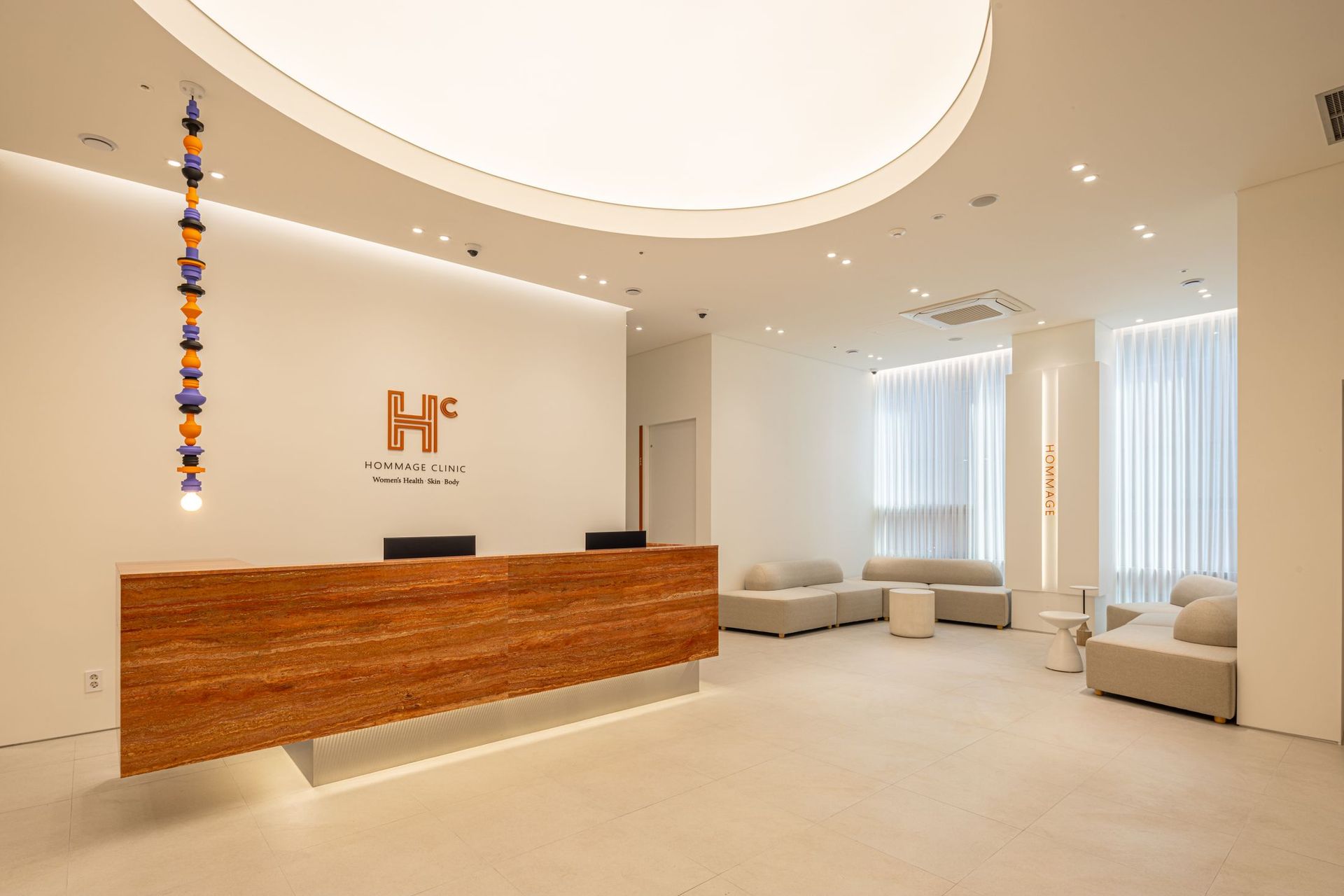
Quick answer
Vaginoplasty(vaginal tightening surgery, usually with perineoplasty) repairs pelvic floor muscles that separated during childbirth, removes a strip of excess lining and rebuilds the perineum to narrow the vaginal opening. At Hommage Women's Clinic in Gangnam, Seoul, female OB/GYN specialist Dr. Park Yuna performs it in about 1–2 hours under IV sedation and local anesthesia, as a same-day procedure. Desk work usually resumes after about 1 week, sex and exercise after 6–8 weeks, and international patients should stay about 10–14 days.
Key takeaways
- Pelvic floor training is the recommended first step for most women after childbirth.
- Surgery is the option that can correct a structurally widened opening or damaged perineum; lasers do not repair muscle.
- The goal is comfortable, functional tightness; over-tightening is a main cause of pain during sex afterwards.
- Bladder leakage or a bulge may be prolapse or incontinence, which need different treatment.
- Most women wait until they have finished having children, because a later vaginal birth can stretch the repair.
Infographic
Vaginoplasty in numbers
Surgery time
Depending on the extent of repair; home the same day.
Back to desk work
Soreness and swelling for the first 1–2 weeks.
Sex & exercise
Only after Dr. Park confirms the wound has healed.
Wait after birth
And until breastfeeding ends, so tissues can recover.
Procedure
Long-lasting, though aging and births can stretch tissue again.
Stay in Seoul
Recommended for international patients, for wound checks.
Vaginoplasty at a glance
| Key fact | Details |
|---|---|
| Treatment time | Typically 1–2 hours, depending on the extent of repair |
| Anesthesia | IV sedation with local anesthesia; outpatient, home the same day |
| Sessions | One procedure |
| Downtime | Desk work often after about 1 week; soreness and swelling for 1–2 weeks |
| Sex and exercise | Usually after about 6–8 weeks, once healing is confirmed |
| How long results last | Long-lasting, though aging and further vaginal births can stretch tissue again |
| Performed by | Dr. Park Yuna, OB/GYN specialist |
Vaginoplasty may suit you if you
- Notice a wide or loose feeling at the vaginal opening after one or more vaginal births
- Have tried pelvic floor exercises for several months without enough improvement
- Have a visibly stretched or torn perineum, or tampons that slip out
- Have finished having children, or plan no further vaginal births
Wait or choose another option if you
- Gave birth in the last 6–12 months or are still breastfeeding, as tissues are still recovering
- Mainly have bladder leakage or a bulge, which may be prolapse needing a different repair
- Have pain during sex, which surgery can worsen; the cause should be assessed first
- Have an active infection or an abnormal Pap result that has not been followed up
What is vaginoplasty?
Vaginal childbirth stretches the muscles and tissue around the vaginal opening and the lower part of the canal. For many women these recover well, but for some the vaginal opening stays wider, the perineum (the skin and muscle between the vagina and anus) is thinner, or the muscles have separated. This can feel like looseness, reduced friction during sex, or tampons that do not stay in place.
In cosmetic gynecology, vaginoplasty means surgery to tighten the vagina by repairing those muscles and removing a strip of excess lining. It usually includes perineoplasty, which rebuilds the perineum. It is different from gender-affirming vaginoplasty, which is a separate operation not performed at this clinic. To compare tightening options, read our vaginal rejuvenation guide or browse all cosmetic gynecology treatments .
How is vaginoplasty done?
The procedure is usually done under IV sedation with local anesthesia, so you are drowsy and comfortable, and you go home the same day. It typically takes 1–2 hours.
- A strip of excess lining is removed from the back wall of the lower vagina.
- The underlying pelvic floor muscles that separated during childbirth are brought back together with dissolvable stitches.
- The perineum is rebuilt so the vaginal opening is narrower and the tissue between the vagina and anus is firmer.
- The lining and skin are closed with fine dissolvable stitches.
The aim is a comfortable, functional tightness, not the narrowest possible result. Over-tightening is one of the main causes of pain during sex after surgery, so Dr. Park plans the degree of tightening with you in advance.
Vaginoplasty vs laser tightening: which is right for you?
Surgery and energy devices work in different ways, and they suit different situations.
- Vaginoplasty physically repairs separated muscle and removes excess tissue. It is the option that can correct a structurally widened opening or a damaged perineum, but it involves surgery and several weeks of recovery.
- Laser vaginal tightening heats the vaginal lining to stimulate collagen. It has little downtime but does not repair muscle, and evidence that it produces lasting tightening is limited.
- Pelvic floor treatment , such as guided exercises, strengthens the muscles themselves and is the recommended first step for most women after childbirth.
Many women try pelvic floor training first, and consider surgery if a structural problem remains.
How long is vaginoplasty recovery?
Most women return to desk work after about 1 week, but full healing takes around 6–8 weeks. Expect soreness, swelling and some discharge or light bleeding for the first 1–2 weeks.
- Take pain relief regularly for the first few days, and use a stool softener so you do not strain.
- Rinse with lukewarm water after the toilet and pat dry. Avoid baths, swimming and saunas until advised.
- Avoid heavy lifting, cycling, running and sex for about 6–8 weeks, or until Dr. Park confirms healing.
- Sitting may be uncomfortable at first; a soft cushion helps.
If you are traveling, plan to stay in Seoul for around 10–14 days so the wound can be checked before you fly, and avoid very long flights in the first week if possible.
Risks and possible side effects
Vaginoplasty is a more involved operation than labiaplasty, and its risks should be weighed carefully. Possible complications include:
- Bleeding or a collection of blood (hematoma), and infection
- Wound separation or slow healing
- Pain during sex (dyspareunia), especially if the vagina is made too narrow; this can be long-lasting
- Scar tissue that feels tight or tender
- Rarely, injury to the rectum or bladder, or a connection forming between them and the vagina (fistula), which needs further surgery
- Results that feel less tight over time, especially after another vaginal birth
Contact the clinic promptly if you have heavy bleeding, fever, severe or increasing pain, foul-smelling discharge, difficulty passing urine, or any leakage of stool or gas from the vagina.
Vaginoplasty at Hommage Clinic
Hommage Clinic is a women's health and skin clinic in Gangnam, a short walk from Sinnonhyeon Station (Line 9 / Shinbundang Line). Dr. Park Yuna, a female OB/GYN specialist, examines your pelvic floor, checks for prolapse or bladder leakage that might need a different approach, and performs the surgery herself. If urinary incontinence is part of the picture, it is assessed in the same visit. For an overview of every intimate option, see our complete guide to cosmetic gynecology in Korea .
Vaginoplasty done for tightening is cosmetic and is not covered by Korea's National Health Insurance. Cost depends on the extent of repair and the anesthesia, and you receive a written quote before you decide.
How it works
How vaginal tightening surgery works: three layers, one repair
It helps to think of the lower vagina and perineum as three layers. On the inside is the vaginal lining, a soft, stretchy surface. Beneath it are the pelvic floor muscles, which form a sling around the vaginal opening. On the outside is the perineum, the skin and muscle bridge between the vagina and anus. Childbirth can stretch the lining, pull the muscles apart so they no longer meet in the middle, and thin or tear the perineum.
Vaginoplasty addresses each layer. A strip of excess lining is removed from the back wall, the separated muscles are brought back together in the midline with dissolvable stitches, and the perineum is rebuilt. It is the muscle repair that does most of the work; removing lining on its own would make little lasting difference. Because the degree of tightening is set during surgery, Dr. Park agrees the goal with you beforehand and aims for comfort rather than the narrowest result.
Options compared
Vaginoplasty vs laser vs pelvic floor training: side by side
Women searching for vaginal tightening usually find three very different options. They are not interchangeable, and the right one depends on what the examination finds. Pelvic floor training strengthens the muscles you already have. Laser vaginal tightening heats the lining to stimulate collagen and has little downtime, but it does not repair muscle and the evidence for lasting tightening is limited. Surgery is the only one of the three that can rebuild separated muscle and a damaged perineum, and it carries the most recovery and risk. Many women start with training and consider surgery only if a structural problem remains.
| Compare | Pelvic floor training | Laser tightening | Vaginoplasty |
|---|---|---|---|
| Best suited to | Most women after childbirth; mild looseness or leakage | Mild looseness without muscle separation | Widened opening, separated muscle or damaged perineum |
| Recovery | None | Little downtime | Desk work ~1 week; sex and sport 6–8 weeks |
| Main limitation | Needs regular practice for months | Does not repair muscle; evidence limited | Surgical risks, including pain during sex |
After childbirth
Vaginoplasty after childbirth: is it the right time?
Most women who ask about vaginoplasty have had one or more vaginal births, sometimes with a large baby, a long pushing stage, an assisted delivery or a tear. Timing matters. Tissues keep recovering for many months after birth, and breastfeeding lowers estrogen, which makes the vaginal lining thinner and drier for a while. That is why surgery is usually postponed until at least 6–12 months after birth and until breastfeeding has finished.
That waiting time is not wasted. A structured course of pelvic floor training, ideally with guidance, often improves the sense of looseness enough that surgery is no longer wanted. If you have finished training and a clear structural problem remains, or if you have finished having children, vaginoplasty becomes a more reasonable choice. If you plan more children, it is usually better to wait, because another vaginal birth can stretch the repair. Read more on Kegel therapy .
Vaginoplasty may help
- Wide or loose feeling at the opening
- Tampons that slip out
- Visibly stretched or torn perineum
- Training tried without enough change
Assess separately
- Leaking urine: incontinence care
- A bulge or heaviness: possible prolapse
- Pain during sex: find the cause first
- Dryness while breastfeeding: often temporary
 Hommage · Gangnam
Hommage Women's Clinic · Gangnam, Seoul
Surgery is usually postponed until 6–12 months after birth and the end of breastfeeding. Illustrative photo.
 Hommage · Gangnam
Hommage Women's Clinic · Gangnam, Seoul
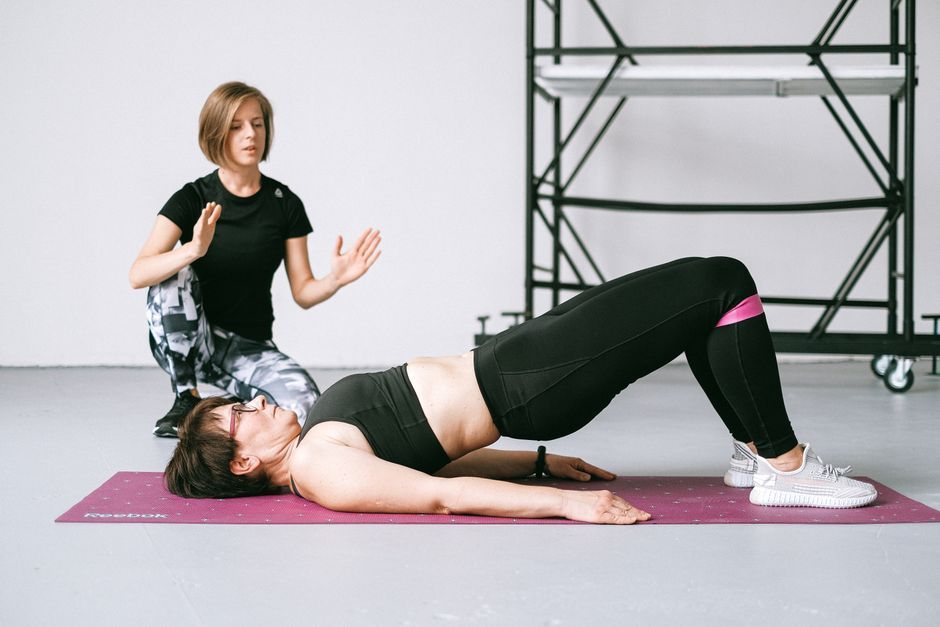
Guided pelvic floor training is the first step for most women after childbirth. Illustrative photo.
Before surgery
Why pelvic floor training comes first
The pelvic floor muscles form a sling that supports the bladder, vagina and bowel and wraps around the vaginal opening. After a vaginal birth, many women find these muscles weaker or harder to control, and that alone can feel like looseness. Training them, with exercises such as Kegels done correctly and consistently, can restore much of that tone. It also helps with bladder leakage, which surgery for tightening does not treat.
Training cannot, however, rejoin muscle that has physically separated or rebuild a perineum that was badly torn. That is where vaginoplasty has a role. At your consultation Dr. Park checks how well you can contract the pelvic floor, whether there is a gap in the muscle, and whether there is any prolapse. If training is likely to be enough, she will say so, and you can learn more on our Kegel therapy and pelvic floor treatment pages.
Healing
Vaginoplasty recovery timeline, week by week
Recovery from vaginoplasty takes longer than from labiaplasty, because the repair involves muscle as well as skin. The first two weeks bring soreness, swelling, some discharge or light bleeding, and discomfort when sitting. Most women are back at desk work after about a week. The repair needs around 6–8 weeks before it is strong enough for sex, running, cycling or heavy lifting, and tissue continues to soften over the following months, which is why the first few times having sex can feel tight. Avoiding straining on the toilet is one of the most important things you can do to protect the stitches.
 Hommage · Gangnam
Hommage Women's Clinic · Gangnam, Seoul
A soft cushion helps with sitting in the first weeks. Illustrative photo.
Aftercare
Vaginoplasty aftercare: do's and don'ts
Good aftercare protects the muscle repair and lowers the risk of infection, bleeding and the wound reopening. You receive these instructions in writing before you leave the clinic, and you can message the clinic with questions while you heal.
Do
- Take pain relief regularly for the first few days
- Use a stool softener and drink plenty of water
- Rinse with lukewarm water after the toilet and pat dry
- Sit on a soft cushion; walk gently every day
- Use pads, not tampons, for discharge
- Keep every wound check and the 6-week review
Don't
- Strain on the toilet or lift heavy objects
- Have sex or insert anything for about 6–8 weeks
- Take baths, swim or use saunas until advised
- Cycle, run or do squats before your review
- Ignore fever, heavy bleeding or foul discharge
- Smoke, which slows wound healing
Evidence
Is vaginoplasty safe? What professional guidance says
Repairing the perineum and pelvic floor after birth injury is established gynecological surgery. Vaginoplasty done to change how the vagina feels during sex is a different question, and the honest answer is that the evidence is limited. The American College of Obstetricians and Gynecologists (ACOG Committee Opinion 795, 2020) lists vaginoplasty among female genital cosmetic procedures and notes that there are few published studies, no standard terminology, and no high-quality data clearly supporting effectiveness when the aim is cosmetic or sexual. At the same time, ACOG recognizes clinical reasons for surgery, including previous obstetric injury, prolapse and incontinence.
Limited
Few published studies and no standard terminology; high-quality data do not clearly support cosmetic or sexual benefits.
ACOG Committee Opinion 795, 2020Sexual function score, 3 months
Median FSFI score before and 3 months after vaginoplasty for vaginal laxity in 50 women at one Turkish centre. No control group, short follow-up and complications were not reported (evidence level 4).
Aglamis et al., Aesthet Surg J 2024To discuss
Pain, bleeding, infection, scarring, adhesions, altered sensation, painful sex and possible reoperation.
ACOG Committee Opinion 795, 2020Recognized reasons
Previous obstetric injury, prolapse, incontinence and painful intercourse are treated as medical indications.
ACOG Committee Opinion 795, 2020Before surgery
Surgeons should disclose their experience and outcomes, and screen for depression, anxiety or body dysmorphic disorder when indicated.
ACOG Committee Opinion 795, 2020Traveling to Seoul
Vaginoplasty in Seoul for international patients
Because vaginoplasty involves a muscle repair, it needs a longer stay than labiaplasty. Plan around 10–14 days in Seoul after surgery, so the wound can be checked before you fly, and avoid very long flights in the first week if possible. Hommage Women's Clinic is in Gangnam, a short walk from Sinnonhyeon Station (Line 9 and Shinbundang Line).
Before you book
- Send your questions and dates by WhatsApp, KakaoTalk or the contact form, and ask for language support.
- Share your birth history and any bladder symptoms in advance so the consultation is focused.
- Bring your passport, a list of medicines and allergies, and your most recent Pap result if you have it.
- Choose dates away from your expected period, and arrange someone to accompany you home after sedation.
After you fly home
On the flight, wear loose clothing, sit on a cushion and walk the aisle when you can. Keep your aftercare guide and medicines in your hand luggage, and message the clinic with any concerns. For heavy bleeding, fever or leakage of stool or gas from the vagina, see a local doctor straight away.
 Hommage · Seoul
Hommage Women's Clinic · Gangnam, Seoul
Seoul: the clinic is in Gangnam, a short walk from Sinnonhyeon Station. Illustrative photo.
 Hommage · Gangnam
Hommage Women's Clinic · Gangnam, Seoul
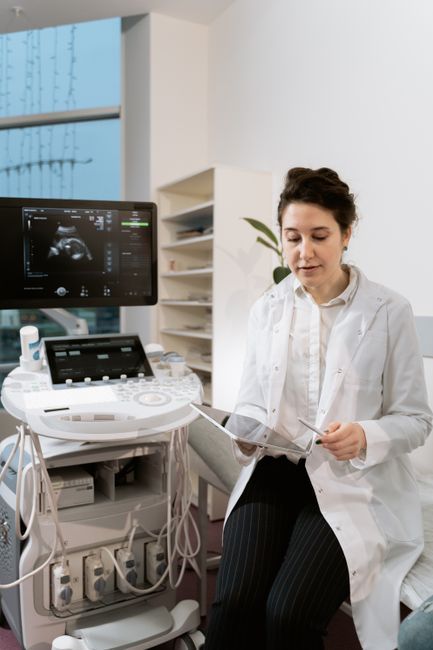
A pelvic floor exam and honest options come before any surgery plan. Illustrative photo.
Choosing well
How to choose a vaginoplasty surgeon in Seoul
Vaginoplasty is pelvic floor surgery, so the surgeon's gynecological training and judgment matter most. Ask these questions at any consultation, including ours:
- Is the surgeon an OB/GYN specialist? Pelvic floor anatomy and birth injuries are core gynecological training.
- Is there an internal pelvic exam first? The plan should follow what is found, not a standard package.
- Are prolapse and leakage checked? They may need a different or additional repair.
- Do they mention pelvic floor training? A good surgeon discusses non-surgical options honestly.
- Do they talk about over-tightening? Pain during sex is a key risk; the goal should be agreed with you.
- Is follow-up included? Wound checks and a 6-week review before sex and exercise.
What affects vaginoplasty cost in Seoul?
The price depends on the extent of the repair (perineum only, or muscle repair and lining reduction as well), the anesthesia, and whether other procedures such as labiaplasty are done at the same time. Medicines and follow-up checks are explained in your quote. Vaginoplasty done for tightening is cosmetic and not covered by Korea's National Health Insurance; you receive a written quote at your consultation before you decide.
Your visit
Your vaginoplasty, step by step
01
Consultation
Dr. Park asks about your births, symptoms, sex life, bladder control and plans for more children.
02
Pelvic exam
An internal exam checks muscle tone, the perineum and any prolapse, so the plan matches what is found.
03
Surgery day
Under sedation and local anesthesia, the repair takes about 1–2 hours. You rest, then go home the same day.
04
Follow-up
Wound checks in the first 1–2 weeks and a review at about 6 weeks before resuming sex and exercise.

Your doctor
Dr. Park Yuna
Medical Director · OB/GYN Specialist
Dr. Park treats vaginoplasty as pelvic floor surgery first and cosmetic surgery second. She checks for prolapse and bladder symptoms before planning, recommends pelvic floor training when that is likely to be enough, and agrees the degree of tightening with you to avoid an uncomfortably narrow result.
OB/GYN specialist (Korea) and representative director of Hommage Clinic. Leads women's health care, labiaplasty and other cosmetic gynecology procedures.
Vaginoplasty: frequently asked questions
How long after vaginoplasty can I have sex?
Most women wait about 6–8 weeks, until Dr. Park confirms that the wound has fully healed. Starting too early can reopen the wound or cause infection. The first few times may feel tight or tender, so go slowly and use a water-based lubricant; discomfort usually eases as tissue softens over the following months.
Is vaginoplasty painful?
You should not feel pain during surgery, which is done under sedation and local anesthesia. Afterward, soreness and swelling are expected for 1–2 weeks and are managed with regular pain relief, cold packs and rest. Sitting may be uncomfortable at first. Pain that gets worse instead of better should be checked promptly.
Can I have a baby after vaginoplasty?
Yes, vaginoplasty does not affect fertility. However, a vaginal birth afterward can stretch the repaired tissue again, so most women wait until they have finished having children. If you become pregnant after vaginoplasty, tell your obstetrician, who will discuss whether a vaginal birth or cesarean is better for you.
How long do vaginoplasty results last?
Results are long-lasting because the repair changes the muscle and tissue structure. Aging, menopause and further vaginal births can gradually loosen tissue again. Keeping up pelvic floor exercises after healing helps maintain muscle tone, and treatment for menopausal changes can help keep the vaginal lining healthy.
Does vaginoplasty help with bladder leakage?
Not directly. Vaginoplasty tightens the vaginal opening and perineum, while stress urinary incontinence usually needs pelvic floor training or a specific procedure for the bladder neck. If you have leakage, it should be assessed separately. See our page on urinary incontinence for options.
Can foreigners get vaginoplasty in Seoul?
Yes. International patients and foreign residents can have vaginoplasty at Hommage Clinic in Gangnam. Bring your passport and a list of your medicines, and contact us before your visit to arrange language support. Plan to stay in Seoul for around 10–14 days after surgery so the wound can be checked before you fly home.
How long does vaginoplasty surgery take?
The surgery typically takes 1–2 hours, depending on how much repair is needed. Including preparation, sedation and recovery time, plan for most of the day at the clinic. It is an outpatient procedure, so you go home the same day with someone to accompany you.
Should I try pelvic floor exercises before vaginoplasty?
For most women, yes. Guided pelvic floor training for several months is the recommended first step after childbirth and can improve looseness and bladder control without surgery. Surgery is usually considered if a structural problem, such as separated muscle or a damaged perineum, remains.
Is laser vaginal tightening as good as vaginoplasty?
They do different things. Laser tightening heats the vaginal lining and has little downtime, but it does not repair separated muscle, and evidence for lasting tightening is limited. Vaginoplasty repairs muscle and the perineum but involves surgery and several weeks of recovery.
Can vaginoplasty make sex painful?
Yes, this is one of its most important risks, especially if the vagina is made too narrow. ACOG lists painful sex among the risks women should be told about. Dr. Park agrees a comfortable degree of tightening with you before surgery, and the first few times after healing should be gentle with lubricant.
When is it too soon after childbirth for vaginoplasty?
Surgery is usually postponed until at least 6–12 months after birth and until you have finished breastfeeding. Tissues keep recovering for months, and breastfeeding temporarily thins the vaginal lining, so an earlier assessment may overestimate the problem.
Is vaginoplasty the same as gender-affirming vaginoplasty?
No. On this page, vaginoplasty means tightening surgery after childbirth or aging. Gender-affirming vaginoplasty is a different, more complex operation that is not performed at Hommage Women's Clinic.
Is vaginoplasty covered by insurance in Korea?
Vaginoplasty done for tightening is cosmetic and not covered by Korea's National Health Insurance, and travel insurance rarely covers elective surgery. Cost depends on the extent of repair and the anesthesia, and you receive a written quote at your consultation.
References
Sources used for this page, reviewed by Dr. Park Yuna, OB/GYN specialist. Read our editorial and medical review policy.
- Schnatz P, Boardman LA; American College of Obstetricians and Gynecologists Committee on Gynecologic Practice. Elective female genital cosmetic surgery. Committee Opinion No. 795. Obstet Gynecol. 2020;135(1):e36–e42. doi:10.1097/AOG.0000000000003616
- Royal College of Obstetricians and Gynaecologists. Ethical considerations in relation to female genital cosmetic surgery (FGCS). Ethical Opinion Paper. London: RCOG; 2013. Summarised in RACGP, statements from peak bodies.
- Aglamis SO, Asfuroglu A, Koudonas A. The impact of vaginoplasty on female and male sexual function and satisfaction. Aesthet Surg J. 2024;44(12):NP892–NP897. doi:10.1093/asj/sjae144
This page is general information and does not replace a personal consultation. Illustrations are original works of Hommage Women's Clinic, Gangnam, Seoul; photos marked illustrative are not of patients.
Related treatments
Vaginal Rejuvenation
Surgical and non-surgical options for vaginal looseness and dryness, compared.
Laser Vaginal Tightening
A non-surgical option for mild looseness, and what the evidence shows.
Pelvic Floor Treatment
Strengthening pelvic floor muscles after childbirth, the first step for most women.
Urinary Incontinence
Causes of bladder leakage and treatments that help.
Labiaplasty
Reducing or reshaping the inner labia, sometimes combined with tightening surgery.
Cosmetic Gynecology Guide
All intimate procedures in Korea compared: surgery vs non-surgical, safety and travel.
Find out whether vaginoplasty is right for you
Book a private consultation with Dr. Park Yuna in Gangnam. She will examine your pelvic floor, explain surgical and non-surgical options, and give you a written quote.
Hommage Clinic · 4F, Building A, 509 Gangnam-daero, Seoul (near Sinnonhyeon Station) · Mon & Fri 10:00–20:00 · Tue–Thu 10:00–19:00 · Sat 10:00–15:00