
Intimate health · Sexual comfort
Painful Intercourse (Dyspareunia): Causes and Treatment in Gangnam
Painful intercourse, or dyspareunia, is pain in the vulva, vagina or pelvis before, during or after sex. It is common and usually treatable once the cause is found, which may be dryness, infection, tight pelvic floor muscles, endometriosis or a skin condition. At Hommage Clinic in Gangnam, Seoul, OB/GYN specialist Dr. Park Yuna assesses you gently and privately, then treats the cause.
Quick answer
Painful intercourse treatment starts with finding the cause, because pain at the vaginal entrance and deep pelvic pain usually come from different problems. At Hommage Women's Clinic in Gangnam, Seoul, female OB/GYN specialist Dr. Park Yuna takes a private history, examines you at your pace and tests for infection or pelvic conditions. Treatment may combine lubricants or vaginal estrogen, pelvic floor physical therapy, dilators, medicine for the underlying condition and counseling. Most causes are treatable, but some need several months of care.
Key takeaways
- Recurring pain with sex is common and is a medical problem, not something you have to put up with.
- Where it hurts (entrance or deep) is the best first clue to the cause.
- Many women have more than one cause, and pain itself can tighten the pelvic floor muscles.
- In a large trial, multimodal pelvic floor physical therapy helped vestibular pain more than lidocaine ointment.
- You can stop the exam at any time; an internal exam can wait for a later visit.
Infographic
Painful intercourse in numbers
Of sexually active women
Reported painful sex lasting 3 months or more in a year (British national survey, Natsal-3).
Had severe symptoms
Of those women, about a quarter had pain very often or always, for 6 months or more, and found it distressing.
Felt much improved
After 10 weeks of multimodal pelvic floor physical therapy for vestibular pain, vs 39% with lidocaine ointment.
Typical therapy course
Weekly pelvic floor physical therapy sessions in that trial; real-world courses vary.
Follow-up at first
Reviews every 4–8 weeks at Hommage, so the plan can be adjusted.
Tests on the day
Swabs and pelvic ultrasound can usually be done at the same visit.
Painful sex at a glance
| Key fact | Details |
|---|---|
| What it is | Recurring pain at the entrance, inside the vagina or deep in the pelvis with sex |
| Common causes | Dryness, infection, vaginismus or tight pelvic floor, endometriosis, vulvodynia, scarring |
| How it's diagnosed | Detailed history, a gentle exam at your pace, swabs and pelvic ultrasound when needed |
| Treatment options | Treating the cause, lubricants, vaginal estrogen, pelvic floor therapy, dilators, counseling |
| Follow-up | Usually every 4–8 weeks at first, as treatments often take time to work |
| Reviewed by | Dr. Park Yuna, OB/GYN specialist |
Book an assessment if you have
- Pain with sex that has happened more than a few times
- Burning or stinging at the vaginal entrance, or pain with tampon use
- Deep pain during sex, especially with painful periods
- Pain or soreness after childbirth, surgery or menopause
- Tightness that makes penetration difficult or impossible
Seek prompt care instead if you have
- Sudden severe pelvic pain, fever or vomiting
- Heavy bleeding during or after sex
- Pain with a positive pregnancy test
What causes painful intercourse?
Where you feel the pain is the most useful clue. Pain at the entrance of the vagina usually has different causes from deep pain felt in the pelvis.
Pain at the entrance (superficial)
- Dryness and low estrogen after menopause, while breastfeeding or on some medicines. See vaginal dryness .
- Infections such as yeast, herpes or other vaginal infections .
- Vaginismus , an involuntary tightening of the pelvic floor muscles that makes penetration painful or impossible.
- Vulvodynia , long-lasting burning or soreness without another clear cause, often provoked by touch.
- Skin conditions and scarring , such as lichen sclerosus or a tear or stitches after childbirth.
Deep pain
- Endometriosis , often with painful periods. See endometriosis treatment .
- Pelvic infection , fibroids, ovarian cysts or adhesions after surgery.
- Tight or overactive pelvic floor muscles , bladder pain or bowel conditions.
How is the cause of painful sex diagnosed?
Diagnosis starts with a careful conversation about where and when it hurts, how long it has been happening, your periods, childbirth, menopause, medicines and any past difficult experiences. Many women have more than one cause, and pain itself can lead to muscle tightening and fear of pain.
The examination is done at your pace, and you can stop it at any time. Dr. Park may start with a look at the vulva and a gentle cotton-swab touch test before any internal exam. Swabs check for infection, and a pelvic ultrasound looks for endometriosis, cysts or fibroids when the pain is deep. If an internal exam is too uncomfortable, it can be postponed to a later visit.
Painful intercourse treatment options
Treatment targets the cause, and combining approaches often works better than one alone.
- For dryness: lubricants, vaginal moisturizers and low-dose vaginal estrogen. Options are compared on our vaginal dryness treatment page.
- For infection or skin conditions: targeted medicine, such as antifungals, antivirals or steroid ointments for lichen sclerosus.
- For vaginismus or a tight pelvic floor: pelvic floor physical therapy focused on relaxation, gradual vaginal dilator training and, in selected cases, botulinum toxin injections into the muscle. See pelvic floor treatment .
- For vulvodynia: topical numbing gel before sex, nerve-calming medicines, pelvic floor therapy and pain psychology.
- For deep pain: treating endometriosis, cysts or fibroids, and changing positions to limit deep penetration.
- Sex therapy or counseling: helps with anxiety, avoidance and low desire that often follow repeated pain, and can include your partner.
How long does treatment for painful sex take?
It depends on the cause. Pain from infection or dryness often improves within a few weeks of treatment, while vaginismus, vulvodynia and endometriosis-related pain usually need several months of combined care.
Improvement is often gradual: first less pain with touch or tampons, then with partial penetration, then with sex. It is fine to pause penetrative sex during treatment and focus on other forms of intimacy. Regular follow-up lets the plan be adjusted if progress slows.
Risks and possible side effects of treatment
Most treatments are low-risk, but each has possible side effects that Dr. Park explains before you start. Lubricants and creams can sting at first. Vaginal estrogen can cause mild discharge or spotting. Topical numbing gel can numb a partner if not wiped off, and some nerve-calming medicines cause drowsiness or dizziness. Botulinum toxin injections can rarely cause temporary bladder or bowel weakness.
Dilator training can cause mild soreness or light spotting; stop and contact us if pain is sharp or bleeding is more than light. Call the clinic if you develop fever, unusual discharge, heavy bleeding or new pelvic pain during treatment.
Painful intercourse care at Hommage Clinic
Hommage Clinic is a women's clinic in Gangnam, a short walk from Sinnonhyeon Station. Your assessment is with Dr. Park Yuna, a female OB/GYN specialist, in a private room, and the exam goes at your pace. Infection tests and ultrasound can be done in the same visit, and referrals for pelvic floor physical therapy or sex therapy are arranged when needed. Other intimate concerns are covered on our cosmetic and functional gynecology pages.
For patients enrolled in Korea's National Health Insurance, consultations, tests and many medical treatments for painful sex are covered, while elective procedures are not. We explain costs before any test or treatment.
Find the cause
Where does it hurt? Causes of painful intercourse by location
Doctors split painful sex into two broad groups. Superficial (entry) dyspareunia is felt at the vaginal opening or vulva as penetration starts, and often feels like burning, stinging or tearing. Deep dyspareunia is felt inside the pelvis with deeper thrusting, and is often described as an ache or a jolt that can last after sex. Some women have both. The map below is the starting point Dr. Park uses at your first visit; the exam and tests then confirm which causes apply to you.
Pelvic floor
Vaginismus and a tight pelvic floor: the hidden cause of painful sex
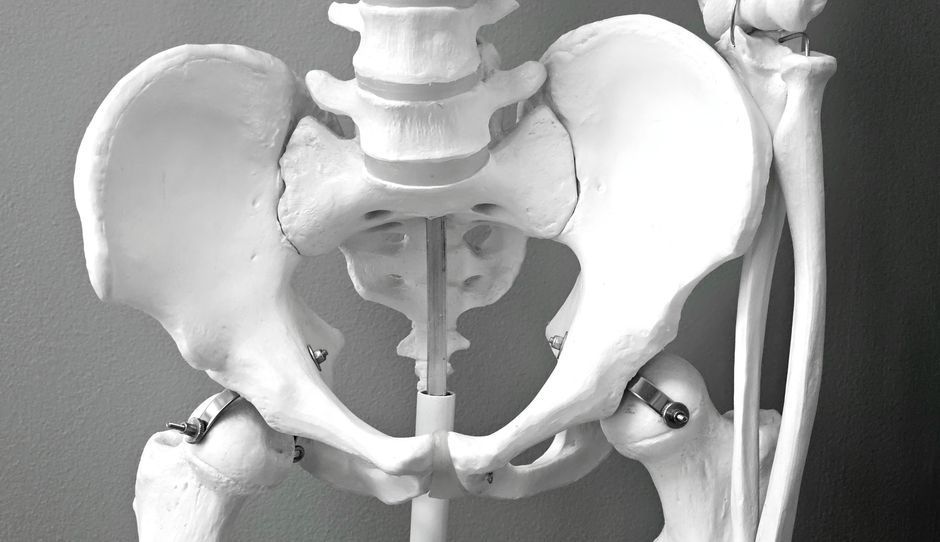
The pelvic floor is a sling of muscles that supports the bladder, uterus and bowel and surrounds the vaginal opening. When these muscles stay tense, or tighten automatically when penetration is attempted, sex, tampons or a speculum exam can be painful or impossible. This is called vaginismus, and in newer diagnostic language it falls under genito-pelvic pain/penetration disorder.
Muscle tension can be the first problem, or it can develop as a protective response after other pain, such as an infection, a birth injury or dryness. That is why treating the original cause sometimes does not fully stop the pain: the muscles have learned to guard. Pelvic floor physical therapy teaches them to relax again, using breathing, gentle stretches, biofeedback and gradual dilator practice.
Signs the pelvic floor may be involved
- Penetration feels like hitting a wall, or is impossible
- Pain with the first attempt at sex, tampons or a smear test
- Pain that continues after an infection has been treated
- Constipation, urgency or difficulty starting to pass urine
- Pain or a sense of tightness after sitting for long periods
Pelvic floor exercises that only strengthen (squeezing) are not the right approach when the muscles are already too tight. Our pelvic floor treatment and Kegel therapy pages explain the difference.
 Hommage · Gangnam
Hommage Women's Clinic · Gangnam, Seoul
Understanding how the pelvic floor works is part of treating vaginismus. Illustrative photo.
Why it keeps happening
The painful sex cycle: pain, fear and muscle tension
Once sex has hurt a few times, the body starts to expect pain. Anticipation makes it harder to relax and become aroused, so there is less natural lubrication, and the pelvic floor muscles tighten to protect you. Both make the next attempt more painful, which strengthens the fear. In the British Natsal-3 survey, women with painful sex were far more likely to report vaginal dryness and anxiety about sex, which fits this pattern. Good treatment works on every part of the cycle at once, not only on the original trigger.
 Hommage · Gangnam
Hommage Women's Clinic · Gangnam, Seoul
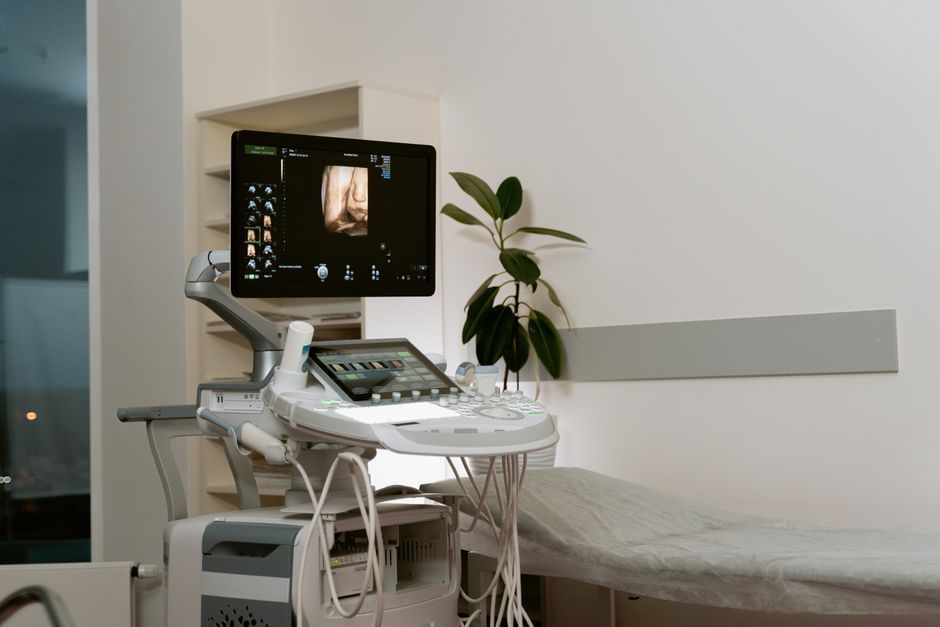
Pelvic ultrasound can usually be done at the same visit when pain is deep. Illustrative photo.
Diagnosis
Tests for painful intercourse: which ones, and when
No single test diagnoses dyspareunia. Routine blood tests or scans are not needed for everyone; instead, Dr. Park chooses tests based on your history and where the pain is. Many women need only a careful exam and a swab.
- Look and gentle touch test A visual check of the vulva and a cotton-swab touch test map where it hurts, for example in vestibulodynia.
- Vaginal swabs Check for yeast, bacterial vaginosis, trichomonas and, when relevant, sexually transmitted infections.
- pH and microscopy Help tell infections apart and spot thinning from low estrogen.
- Single-finger muscle check Shows whether the pelvic floor is tense or tender, if you are comfortable with it.
- Pelvic ultrasound For deep pain: looks for endometriomas, cysts, fibroids or a tilted, tender uterus.
- Biopsy or referral Only occasionally, for skin changes such as suspected lichen sclerosus, or for suspected deep endometriosis.
Treatment options
Dyspareunia treatment compared: what each option does
Most women need more than one of these. The cards below show what each treatment targets, so you can see why your plan may include, for example, a vaginal cream and pelvic floor sessions at the same time.
Lubricants, moisturizers, vaginal estrogen
- Lubricant during sex; moisturizer 2–3 times a week
- Low-dose vaginal estrogen for menopause-related thinning
- Usually first-line when dryness is the cause
Pelvic floor physical therapy and dilators
- Relaxation, biofeedback, manual therapy
- Graded dilators used at home
- Most consistent evidence for vestibular pain
Topical and oral medicine
- Numbing gel before sex (short-term)
- Steroid ointment for lichen sclerosus
- Nerve-calming medicines for vulvodynia
Counseling and sex therapy
- CBT or pain psychology for fear and avoidance
- Couples sessions if you wish
- Helps desire that dropped because of pain
 Hommage · Gangnam
Hommage Women's Clinic · Gangnam, Seoul
Partners can join counseling or education sessions if you wish. Illustrative photo.
Step by step
Vaginismus and dyspareunia treatment timeline
For muscle-related pain and vestibulodynia, recovery is usually gradual and follows a step-by-step ladder. Each step is repeated until it feels comfortable before moving to the next, and you set the pace. The timeline below is typical for combined pelvic floor therapy and dilator training; pain from infection or dryness often improves much faster.
 Hommage · Gangnam
Hommage Women's Clinic · Gangnam, Seoul
A short symptom diary helps your first visit. Illustrative photo.
Your situation
Painful sex after childbirth and after menopause
After childbirth
Pain with sex after having a baby is common in the first months. Healing tears or an episiotomy scar, low estrogen while breastfeeding, tiredness and a tense or weakened pelvic floor can all contribute. Waiting until bleeding has stopped and you feel ready, using plenty of lubricant and starting gently all help. If sex still hurts after about three to six months, or a scar feels tight or tender, an exam can find treatable causes. Scar tissue often responds to massage and pelvic floor therapy, and dryness while breastfeeding can be treated.
After menopause
Falling estrogen thins and dries the vaginal and vulvar tissue, a condition called genitourinary syndrome of menopause (GSM). The North American Menopause Society estimates it affects roughly 27–84% of postmenopausal women, and it tends to get worse without treatment rather than better. Lubricants and moisturizers are first-line for milder symptoms; low-dose vaginal estrogen and other prescription options are used when symptoms are moderate or severe. Read more on our vaginal dryness treatment and menopause treatment pages.
Before your visit
- Write down when the pain started and what triggers it
- Note whether it is at the entrance, deep, or both
- Bring a list of medicines, including birth control and antidepressants
- Avoid douching or new products for a few days before your exam
Evidence
Painful intercourse: what the research says
Dyspareunia is common, but research on its treatment is uneven. Some areas, such as vaginal estrogen for menopause-related dryness and physical therapy for vestibular pain, have reasonable trial evidence. Others, such as many vulvodynia medicines, rest on small or mixed studies. The figures below come from a national population survey, a randomized trial and a professional society position statement.
Prevalence
Of 6,669 sexually active women aged 16–74 reported painful sex for 3 months or more in the past year.
Mitchell et al., BJOG, 2017 (Natsal-3)Link with dryness
Women with painful sex had about 7.9 times the odds of reporting vaginal dryness, and 6.3 times the odds of anxiety about sex.
Mitchell et al., BJOG, 2017Much improved
Physical therapy vs lidocaine ointment in 212 women with provoked vestibulodynia, after 10 weeks.
Morin et al., Am J Obstet Gynecol, 2021Menopause dryness
Estimated share of postmenopausal women affected by genitourinary syndrome of menopause.
NAMS position statement, Menopause, 2020Traveling to Seoul
Painful intercourse treatment in Seoul for international patients
Many visitors and foreign residents in Seoul want to see a female gynecologist who speaks with them openly about sexual pain. At Hommage Women's Clinic in Gangnam, a first assessment, swabs and an ultrasound can usually be done in one visit. Because many causes need weeks of treatment, the visit is best used to get a clear diagnosis and a written plan you can continue at home.
Planning your visit
- Allow at least 2 visits a few days apart: one for assessment and tests, one to discuss results and the plan.
- Avoid booking during your period if possible, so swabs and the exam are easier.
- Bring your passport or residence card, a list of medicines, and any previous test or scan reports.
- Contact us by WhatsApp, KakaoTalk or the contact form before you come, and ask for a longer appointment or language support if you need it.
After you go home
Ask for a written summary of your diagnosis and plan that your local doctor or pelvic floor physical therapist can follow. Dilator programs and home exercises continue at home, and you can send follow-up questions to the clinic. For fever, heavy bleeding or sudden severe pelvic pain, see a local doctor straight away.
 Hommage · Seoul
Hommage Women's Clinic · Gangnam, Seoul
Seoul: the clinic is in Gangnam, a short walk from Sinnonhyeon Station. Illustrative photo.
 Hommage · Gangnam
Hommage Women's Clinic · Gangnam, Seoul
A private, unhurried consultation is the starting point. Illustrative photo.
Choosing well
How to choose a clinic for painful sex in Seoul
Sexual pain needs time, privacy and a doctor who looks for every cause. Use these questions at any clinic, including ours:
- Is the doctor an OB/GYN specialist? Sexual pain has many medical causes that need a gynecological exam.
- Will they let me control the exam? You should be able to stop at any time or postpone an internal exam.
- Do they look for more than one cause? Dryness, infection, muscles and endometriosis often overlap.
- Can they test on the same day? Swabs and ultrasound in one visit save time.
- Do they offer or refer for pelvic floor therapy and counseling? Medicine alone is often not enough.
- Are they cautious about quick fixes? Be wary of a single device or injection promised to cure all sexual pain.
What affects the cost of painful intercourse treatment?
Cost depends on which tests you need (swabs, ultrasound, biopsy), the medicines prescribed, how many pelvic floor therapy or counseling sessions you have, and whether procedures such as botulinum toxin injections are used. For patients enrolled in Korea's National Health Insurance, many tests and medical treatments are covered; for visitors without it, costs are explained before any test or treatment so there are no surprises.
Your visit
What to expect at your appointment
01
Private conversation
Dr. Park asks where and when it hurts, about your periods, childbirth, menopause and anything else you want to share.
02
Exam at your pace
A gentle external check first; an internal exam or ultrasound only if you are comfortable, and you can stop at any time.
03
Tests if needed
Swabs for infection and a pelvic ultrasound for deep pain.
04
Your plan
A step-by-step plan that may combine medicine, pelvic floor therapy and counseling, with regular follow-up.

Your doctor
Dr. Park Yuna
Medical Director · OB/GYN Specialist
Dr. Park takes pain during sex seriously and never rushes the examination. She looks for every contributing cause, physical and emotional, and builds a gradual plan you can follow at a pace that feels safe.
OB/GYN specialist (Korea) and representative director of Hommage Clinic. Leads the clinic's women's health care, from screening and infections to hormones, contraception and fertility checks.
Painful intercourse: frequently asked questions
Is it normal for sex to hurt?
Occasional mild discomfort can happen, for example with too little arousal or lubrication, but sex should not regularly hurt. Recurring pain is a medical problem called dyspareunia, and it is common and usually treatable. If sex has hurt more than a few times, it is worth seeing a gynecologist.
Why does sex hurt after giving birth?
After childbirth, healing tears or stitches, low estrogen while breastfeeding and tight or weak pelvic floor muscles can all make sex painful. Many women find it improves within a few months. If pain continues beyond about three to six months, a check-up can find treatable causes such as scar tissue or dryness.
What is vaginismus and can it be treated?
Vaginismus is an involuntary tightening of the muscles around the vagina that makes penetration painful or impossible, even when you want sex. It is very treatable. Treatment usually combines education, pelvic floor relaxation, gradual dilator training and support for anxiety, and most women improve with patient, step-by-step care.
Can endometriosis cause painful sex?
Yes. Endometriosis often causes deep pain during or after sex, especially with deep penetration, and is commonly linked with painful periods. Treating endometriosis with hormonal medicine or, sometimes, surgery can reduce the pain. See endometriosis treatment for diagnosis and care options.
Will the exam hurt if sex already hurts?
We do everything we can to keep it comfortable. You can ask for an external exam only at first, a small speculum, or to stop at any time. If an internal exam feels too much, it can wait until a later visit. Telling us what you are worried about helps us plan the visit.
Can foreigners see a female gynecologist in Seoul for painful sex?
Yes. At Hommage Clinic in Gangnam, consultations are with Dr. Park Yuna, a female OB/GYN specialist. Bring your passport or residence card and any previous test results. Contact us before your visit if you need language support or would like a longer appointment.
How common is painful intercourse?
Quite common. In a British national survey of more than 6,600 sexually active women aged 16–74, 7.5% reported painful sex lasting three months or more in the past year, and about a quarter of them had frequent, distressing symptoms. You are not alone, and it is worth asking for help.
What is the difference between entry pain and deep pain during sex?
Entry (superficial) pain is felt at the vaginal opening as penetration starts, often as burning or stinging, and is usually linked to dryness, infection, vaginismus or vulvodynia. Deep pain is felt inside the pelvis with deeper thrusting and is more often linked to endometriosis, pelvic infection, cysts or a tight pelvic floor. Many women have both.
Does pelvic floor physical therapy work for painful sex?
For pain at the vaginal entrance, it has some of the strongest evidence. In a randomized trial of 212 women with provoked vestibulodynia, 79% felt much or very much improved after 10 weeks of multimodal physical therapy, compared with 39% using lidocaine ointment. It is less studied for deep pain, where treating the underlying cause matters most. See pelvic floor treatment.
Can vaginal estrogen help painful sex after menopause?
Yes, when thinning and dryness from low estrogen are the cause. Lubricants and moisturizers are tried first for milder symptoms, and low-dose vaginal estrogen is a common prescription option for moderate to severe symptoms. Dr. Park reviews your medical history first. More options are on our vaginal dryness treatment page.
Does vaginal laser treatment help painful intercourse?
The evidence is not yet strong enough to recommend it routinely. The North American Menopause Society notes there are too few placebo-controlled trials to judge energy-based devices for menopause-related symptoms. Proven options such as lubricants, vaginal estrogen and pelvic floor therapy are usually tried first. Read more on our vaginal laser therapy page.
Can painful sex lower my sex drive?
Yes. When sex repeatedly hurts, it is natural to start avoiding it, and desire and arousal often drop as a result. Treating the pain usually helps, and counseling can support desire and intimacy in the meantime. See low libido treatment.
Should I stop having sex while I am being treated?
It is fine, and often helpful, to pause penetrative sex while you heal, especially during dilator training, so the body stops expecting pain. Other forms of intimacy are fine if they are comfortable. Dr. Park will tell you when it is a good time to try penetration again.
References
Sources used for this page, reviewed by Dr. Park Yuna, OB/GYN specialist. Read our editorial and medical review policy.
- Mitchell KR, Geary R, Graham CA, et al. Painful sex (dyspareunia) in women: prevalence and associated factors in a British population probability survey. BJOG. 2017;124(11):1689–1697. PMC
- Morin M, Dumoulin C, Bergeron S, et al. Multimodal physical therapy versus topical lidocaine for provoked vestibulodynia: a prospective, multicentre, randomized trial. Am J Obstet Gynecol. 2021;224(2):189.e1–189.e12. DOI
- The 2020 genitourinary syndrome of menopause position statement of The North American Menopause Society. Menopause. 2020;27(9):976–992. PubMed
- American Academy of Family Physicians. Dyspareunia and vulvodynia. FP Essentials No. 547: Female pelvic conditions. 2024.
- American Psychiatric Association. Genito-pelvic pain/penetration disorder. Diagnostic and Statistical Manual of Mental Disorders , 5th ed.
This page is general information and does not replace a personal consultation. Illustrations are original works of Hommage Women's Clinic, Gangnam, Seoul; photos marked illustrative are not of patients.
Related intimate and pelvic health care
Vaginal Dryness Treatment
Lubricants, moisturizers, vaginal estrogen and other options compared.
Pelvic Floor Treatment
Care for pelvic floor muscles that are too tight or too weak.
Endometriosis Treatment
Diagnosis and care for painful periods and deep pain during sex.
Vaginal Infections
How yeast, bacterial vaginosis and other infections are told apart and treated.
Low Libido Treatment
Treatment options when desire has dropped, including after painful sex.
Pelvic Pain Treatment
Assessment and treatment of ongoing pelvic pain outside of sex.
Sex should not hurt. Let's find out why it does
Book a private consultation with Dr. Park Yuna, a female OB/GYN specialist in Gangnam. The exam goes at your pace.
Hommage Clinic · 4F, Building A, 509 Gangnam-daero, Seoul (near Sinnonhyeon Station) · Mon & Fri 10:00–20:00 · Tue–Thu 10:00–19:00 · Sat 10:00–15:00