
Gynecology · Periods
Period Pain Treatment in Gangnam, Seoul: When Cramps Are Not Normal
Period pain (dysmenorrhea) is cramping in the lower abdomen just before or during a period, caused by chemicals called prostaglandins that make the uterus contract. At Hommage Clinic in Gangnam, Seoul, OB/GYN specialist Dr. Park Yuna checks whether your pain is ordinary or caused by a condition such as endometriosis or fibroids, then recommends treatment that fits your life.
Quick answer
Period pain treatment starts with finding out whether your cramps are ordinary (primary dysmenorrhea) or caused by a condition such as endometriosis, adenomyosis or fibroids. At Hommage Women's Clinic in Gangnam, Seoul, female OB/GYN specialist Dr. Park Yuna assesses your pain with a history and same-day pelvic ultrasound. Most women improve with well-timed anti-inflammatory painkillers, heat and exercise, a hormonal option such as the pill or a hormonal IUD, or treatment of the underlying cause, reviewed after about three cycles.
Key takeaways
- Period pain that stops you working, studying or sleeping is a reason to get checked, not something to put up with.
- Anti-inflammatory painkillers (NSAIDs) work best when started at the first sign of a period, or the day before, and taken regularly.
- If painkillers do not help, hormonal treatment is the usual next step, and a cause should be looked for.
- Pain that gets worse every year, starts after age 25 or comes with pain during sex is a warning sign for endometriosis or adenomyosis.
Infographic
Period pain treatment in numbers
Assessment
History, exam if needed and pelvic ultrasound on the same day.
Good relief with NSAIDs
Women reporting moderate or excellent relief on placebo vs NSAIDs in a Cochrane review.
Evidence base
5,820 women in the Cochrane review of NSAIDs for period pain (2015).
Peak cramps
Primary period pain is usually strongest at the start of the period.
Exercise that helped
Most trials used 45–60 minutes, three times a week (Cochrane, 2019).
Review point
Follow-up to check how well a new treatment is working.
Period pain care at a glance
| Key fact | Details |
|---|---|
| What it is | Cramping pain before or during a period; primary (no disease) or secondary (caused by a condition) |
| Common signs | Lower abdominal cramps, back or thigh pain, nausea, diarrhea, headache in the first 1–3 days |
| How it's assessed | Cycle and pain history, pelvic ultrasound, and an exam or swabs when needed |
| Treatment options | Anti-inflammatory painkillers, heat, exercise, birth control pill, hormonal IUD, treating the cause |
| Follow-up | Usually after 3 cycles of a new treatment to check how well it is working |
| Reviewed by | Dr. Park Yuna, OB/GYN specialist |
Book a period pain assessment if you have
- Cramps that make you miss work, school or plans most months
- Pain that is not controlled by over-the-counter painkillers
- Period pain that started or got worse after age 25
- Very heavy periods, bleeding between periods or pain during sex
- Pain that lasts beyond the first few days of your period
Seek urgent care instead if you have
- Sudden, severe pelvic pain that is different from your usual cramps
- Pain with fever, fainting or vomiting that will not stop
- Pain with a positive pregnancy test or a period that is late and unusual
What causes period pain?
Period pain is caused by prostaglandins, hormone-like chemicals released by the lining of the uterus as it sheds. They make the uterine muscle contract to push the lining out, which briefly reduces blood flow and causes cramping. Higher prostaglandin levels mean stronger cramps, and they can also cause nausea, loose stools and headaches.
Doctors separate period pain into two types:
- Primary dysmenorrhea is common period pain without an underlying disease. It usually starts within a year or two of your first period, is strongest in the first one to three days, and often eases with age or after childbirth.
- Secondary dysmenorrhea is caused by a condition in the pelvis, such as endometriosis , adenomyosis, uterine fibroids or pelvic infection. It often starts later in life, gets worse over time, or lasts longer than the period itself.
Are my period cramps normal?
Mild to moderate cramps that respond to painkillers and do not stop you living your life are common and usually normal. Pain that regularly disrupts your daily life is not something you simply have to accept, even if family members had the same experience.
Signs that your period pain may have an underlying cause include:
- Pain that is getting worse year after year
- Painkillers that no longer help
- Pain that starts days before your period or continues after it
- Heavy bleeding, clots or bleeding between periods
- Pain during sex, bowel movements or urination
- Difficulty getting pregnant
If your main concern is pain at other times of the month, our page on pelvic pain treatment covers causes beyond the period itself.
How is period pain assessed?
An assessment looks for any condition causing the pain, so treatment can target it rather than only masking symptoms. It usually takes one visit.
Dr. Park asks about your cycle, how long the pain lasts, how it affects your day, which painkillers you have tried and whether you have other symptoms. A pelvic ultrasound checks the uterus and ovaries for fibroids, adenomyosis, endometriomas and cysts. If you are sexually active, swabs for infection may be added, and a blood test can check for anemia if your periods are heavy.
A normal ultrasound is reassuring, but it does not completely rule out early endometriosis, which is why your symptom pattern matters as much as the scan.
Period pain treatment options
Most period pain improves with a combination of the right painkiller, used at the right time, and hormonal treatment when needed.
- Anti-inflammatory painkillers (NSAIDs): ibuprofen, naproxen or mefenamic acid block prostaglandins. They work better when started at the first sign of your period, or the day before, and taken regularly for the first two to three days.
- Heat and movement: a heat pack on the lower abdomen and regular exercise can reduce cramps and are worth using alongside medication.
- Combined birth control pill: makes the lining thinner, so fewer prostaglandins are released. It can also be taken continuously to skip periods. See birth control options .
- Hormonal IUD: a levonorgestrel IUD often makes periods much lighter and less painful over several months. See IUD insertion .
- Progestin-only options: such as dienogest, when estrogen is not suitable or endometriosis is suspected.
If a condition such as fibroids or endometriosis is found, it is treated directly, and Dr. Park refers you to a hospital if surgery is needed.
Risks and possible side effects of period pain treatment
Period pain medicines are widely used, but like all medicines they can have side effects, and Dr. Park checks your history before prescribing. NSAIDs can upset the stomach and should be taken with food; they are not suitable if you have a stomach ulcer, certain kidney problems or asthma triggered by aspirin. Combined pills can cause nausea, breast tenderness or spotting at first, and carry a small risk of blood clots, so they are not prescribed if you have migraine with aura, smoke over age 35 or have a clotting history.
A hormonal IUD can cause irregular spotting for the first few months. Call the clinic if you have severe or worsening pain, heavy bleeding, or leg swelling, chest pain or sudden headaches while on hormonal treatment.
Period pain care at Hommage Clinic
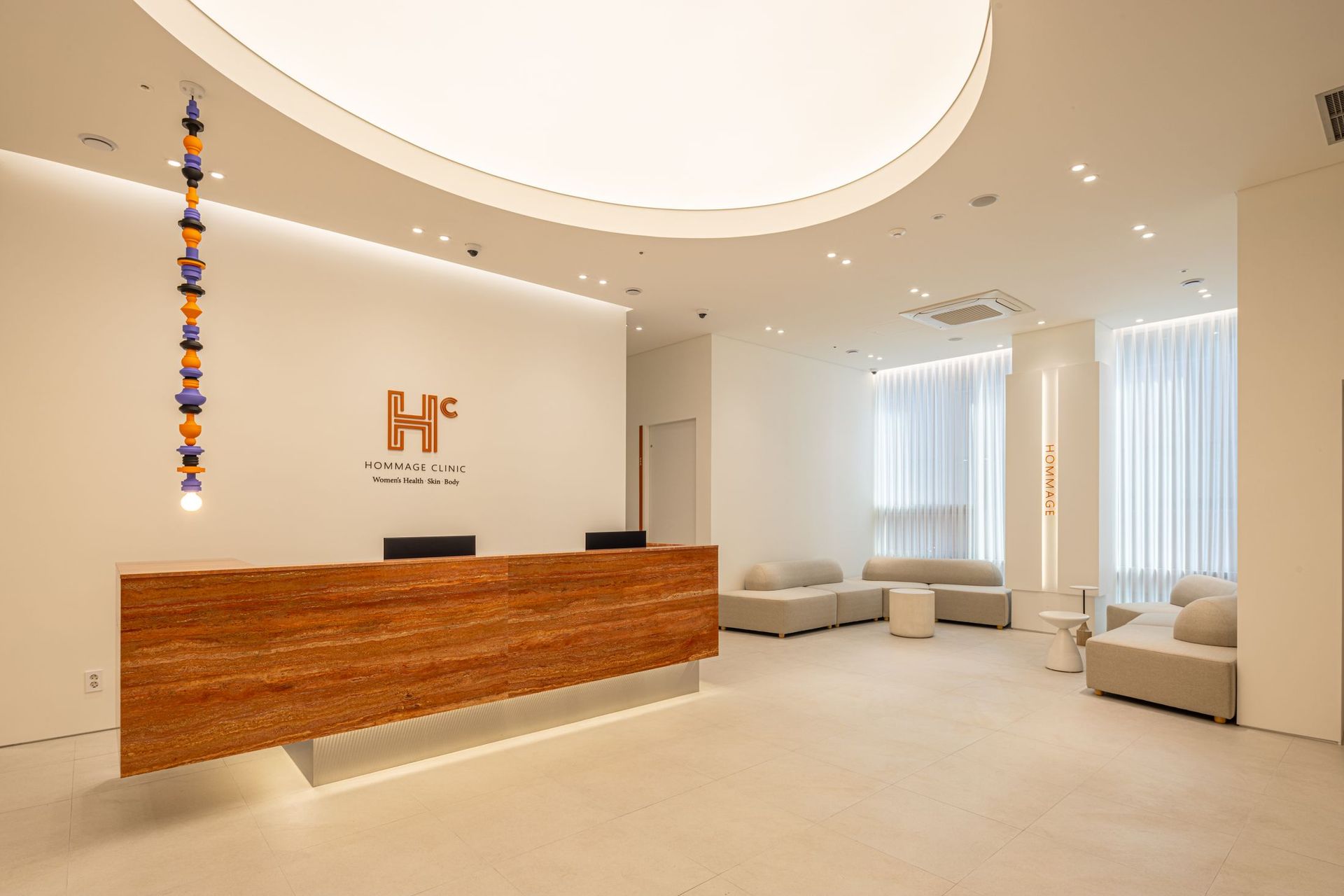
Hommage Clinic is a women's clinic in Gangnam, a short walk from Sinnonhyeon Station. Period pain assessments are led by Dr. Park Yuna, a female OB/GYN specialist, and the ultrasound is done during the same visit. We take painful periods seriously and look for a cause rather than telling you to put up with it.
If you are enrolled in Korea's National Health Insurance, consultations, ultrasound and many medications for period pain are covered when there is a medical reason; visitors without coverage pay the clinic's fees directly, and we explain costs before any test. See all our gynecology services .
How it works
Why do periods hurt? How period cramps happen
Period cramps start in the lining of the uterus. As the lining breaks down at the start of a period, its cells release prostaglandins, chemical messengers that tell the muscle wall of the uterus to squeeze. Strong squeezing briefly reduces blood flow to the muscle, and that shortage of oxygen is felt as cramping in the lower abdomen, often spreading to the lower back and thighs.
Women with painful periods tend to produce more prostaglandins, which is also why cramps can come with nausea, loose stools, headaches or feeling faint. Understanding this chain explains how treatment works: anti-inflammatory painkillers reduce the amount of prostaglandin made, while hormonal treatment thins the lining so there is less to release in the first place.
Know the difference
Primary vs secondary dysmenorrhea: normal cramps or a sign of something else?
The most useful question in period pain care is whether the pain comes from the period itself or from a condition in the pelvis. Primary dysmenorrhea is driven by prostaglandins alone, usually begins in the teenage years and is concentrated in the first days of bleeding. Secondary dysmenorrhea has an underlying cause, such as endometriosis, adenomyosis, fibroids or pelvic inflammatory disease, and tends to change over time.
No single feature proves which type you have, and the two can overlap. Dr. Park looks at the whole pattern, together with your ultrasound, before deciding whether painkillers and hormones are enough or whether a cause needs to be investigated further.
| Compare | Primary dysmenorrhea | Secondary dysmenorrhea |
|---|---|---|
| Typical age | Teens and twenties, soon after periods begin | Can start at any age; new or worsening pain after 25 is a reason to check |
| Other symptoms | Nausea, loose stools, headache, tiredness in the first days | Heavy bleeding, bleeding between periods, pain during sex, bowel or bladder pain, difficulty conceiving |
| Response to NSAIDs | Often good when timed well | Partial or fading over time |
| Ultrasound | Usually normal | May show fibroids, adenomyosis or ovarian endometriomas; a normal scan does not rule out early endometriosis |
| Main treatment | NSAIDs, heat, exercise, hormonal options | Treat the cause, plus pain relief and hormones; surgery in some cases |
Diagnosis
Tests for period pain: what each one can show
Most women need only a careful history and a pelvic ultrasound. Further tests are added only when your symptoms point to a specific cause, so you are not sent for scans you do not need.
Pain and cycle history
When pain starts and stops, how severe it is, what you have tried and how it affects work, study and sleep.
Pelvic ultrasound
Looks for fibroids, signs of adenomyosis, ovarian cysts and endometriomas. Done in the same visit.
Swabs and urine test
Checks for infection when pain is new, comes with discharge or fever, or you have a new partner.
Blood tests
A blood count checks for anemia when periods are heavy; a pregnancy test when relevant.
MRI or laparoscopy
Arranged through a hospital when deep endometriosis is suspected or surgery is being considered.
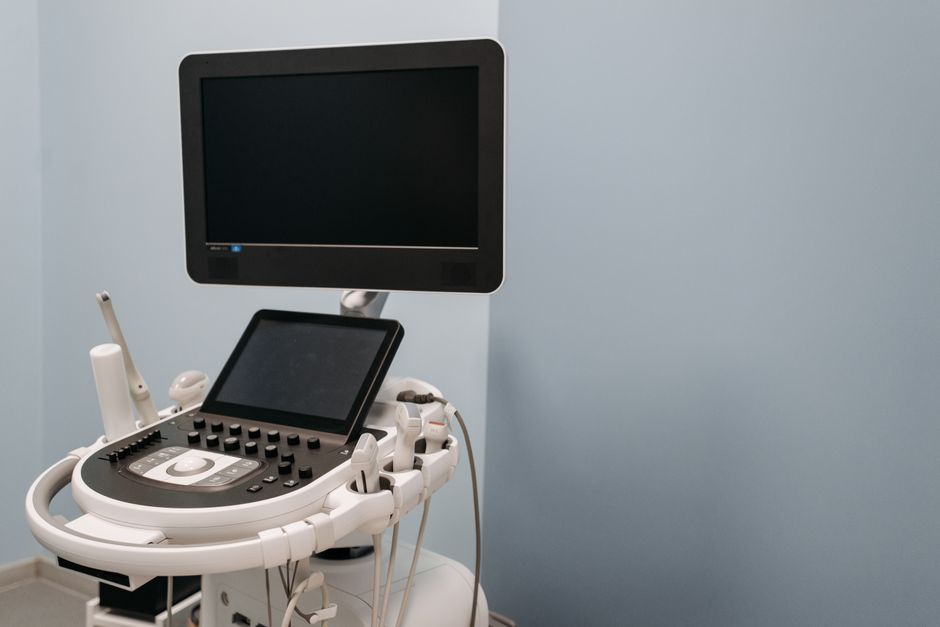 Hommage · Gangnam
Hommage Women's Clinic · Gangnam, Seoul
A pelvic ultrasound is done in the same visit as your consultation. Illustrative photo.
 Hommage · Gangnam
Hommage Women's Clinic · Gangnam, Seoul
Heat on the lower abdomen works well alongside a well-timed painkiller. Illustrative photo.
Self-care
Period cramp relief at home: what helps and what to skip
Self-care will not fix pain caused by endometriosis or fibroids, but it makes ordinary cramps easier and helps every other treatment work better. The most useful habit is to treat early: take your painkiller and start heat as soon as bleeding or the first cramp begins, rather than waiting until the pain is severe.
Regular exercise across the month is worth building in. In a Cochrane review of 10 trials and 754 women, exercise of low or high intensity, usually 45 to 60 minutes three times a week, reduced period pain compared with no exercise, although the evidence was rated low certainty.
Helps
- Start an anti-inflammatory painkiller at the first sign of your period, with food
- A heat pack or hot water bottle on the lower abdomen or back
- Gentle movement, stretching or walking on painful days
- Regular exercise through the whole month
- Enough sleep and fluids; light meals if you feel sick
- A symptom diary to bring to your appointment
Skip or check first
- Waiting until pain is severe before taking anything
- Taking more than the label dose, or two NSAIDs together
- Very hot packs directly on skin, or sleeping on a heat pad
- Expensive supplements with little evidence behind them
- Using painkillers for months to cover pain that keeps getting worse
- Ignoring fever, fainting or a positive pregnancy test
Step by step
The period pain treatment ladder
Period pain treatment is usually stepped. You start with the simplest option that matches your symptoms, give it a fair trial of about three cycles, and move up only if pain is still interfering with your life. Women who already know they want contraception may start on a hormonal option straight away, and anyone with warning signs is investigated early rather than left to work through every step.
Hormonal options
Pill, hormonal IUD or dienogest for period pain?
When painkillers are not enough, hormonal treatment is the usual next step. All three main options reduce the build-up of the uterine lining, so there is less tissue to shed and fewer prostaglandins. They differ in how they are taken, whether they also give contraception, and their side effects. The choice depends on whether you want contraception, how you feel about daily pills, your health history and whether endometriosis is suspected.
None of these options affects your long-term fertility. Periods and ovulation return after stopping, so they also suit women who plan a pregnancy later. Read more about birth control options and IUD insertion.
Combined pill
- Also a contraceptive
- Can skip periods if taken continuously
- Not for migraine with aura, smokers over 35 or clotting history
- Early nausea or spotting is common
Hormonal IUD
- Levonorgestrel released inside the uterus
- Periods often much lighter over several months
- Irregular spotting at first
- Also a long-acting contraceptive
Dienogest
- Daily progestin-only tablet
- Used when endometriosis is suspected or confirmed
- Suitable when estrogen is not
- Not a licensed contraceptive on its own
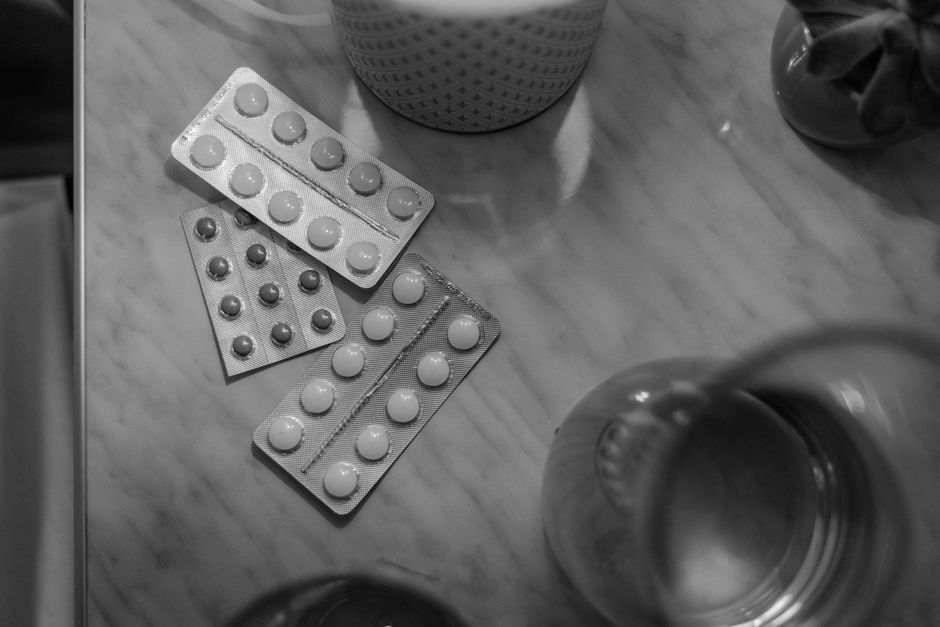 Hommage · Gangnam
Hommage Women's Clinic · Gangnam, Seoul
Hormonal treatment is chosen around your contraception plans and health history. Illustrative photo.
Evidence
Do period pain treatments work? What the research says
Period pain is common, but the research behind its treatments is more uneven than many people expect. Anti-inflammatory painkillers have the largest body of evidence. Exercise looks helpful, but the trials are small and varied. The figures below come from systematic reviews, which combine many trials, and are summarized honestly, including their limits.
Good relief with NSAIDs
Moderate or excellent pain relief, compared with 18% on placebo. 80 trials, 5,820 women.
Marjoribanks et al., Cochrane, 2015Side effects on NSAIDs
Mostly mild stomach or nervous system effects, versus 10% on placebo.
Marjoribanks et al., Cochrane, 2015Best NSAID
Not enough evidence to say which individual NSAID is safest or most effective.
Marjoribanks et al., Cochrane, 2015Pain with exercise
Average fall on a 10 cm pain scale across 29 trials; results varied widely between studies.
Xiang et al., Front Med, 2025Traveling to Seoul
Period pain assessment in Seoul for international patients and expats
A period pain assessment does not need a long stay. The consultation and pelvic ultrasound happen in one visit at Hommage Women's Clinic in Gangnam, a short walk from Sinnonhyeon Station (Line 9 and Shinbundang Line), and most women leave the same day with a written plan.
Before your visit
- Message the clinic by WhatsApp, KakaoTalk or the contact form with your preferred dates and any language support you need.
- Keep a simple pain diary for one or two cycles: start and end days, pain score from 0 to 10, painkillers used and days missed.
- Bring your passport or alien registration card, the names and doses of medicines you take, and any previous scan or surgery reports.
- An ultrasound can be done at any point in your cycle; tell us if you are bleeding on the day.
After you go home
Starting a new treatment usually means a review after about three cycles. If you live abroad, that review can be done by your local doctor using the written summary you receive; you can also message the clinic with questions. See a doctor promptly for sudden severe pain, fever or fainting.
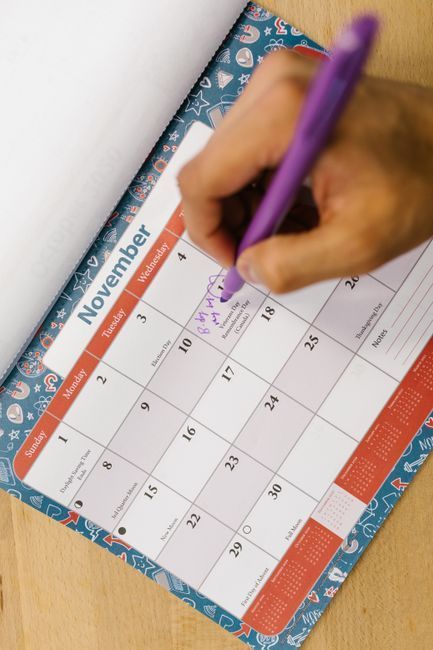 Hommage · Seoul
Hommage Women's Clinic · Gangnam, Seoul
A short pain diary makes a one-visit assessment more useful. Illustrative photo.
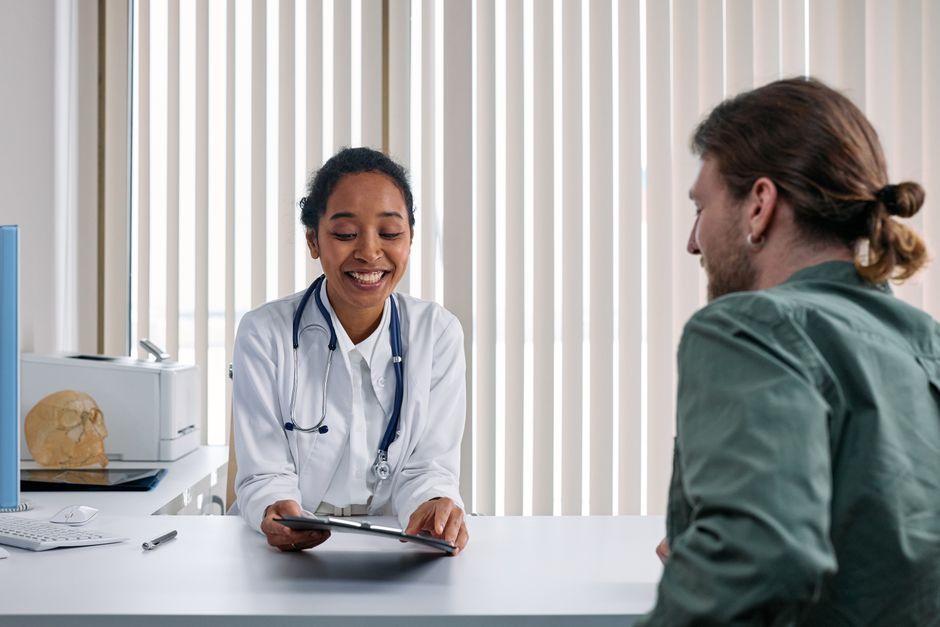 Hommage · Gangnam
Hommage Women's Clinic · Gangnam, Seoul
A good consultation looks for a cause and explains every option. Illustrative photo.
Choosing well
How to choose a clinic for period pain in Seoul
Whether you see us or another clinic, these questions help you judge whether your period pain is being taken seriously:
- Is the doctor an OB/GYN specialist? Gynecology training matters for spotting endometriosis, adenomyosis and fibroids.
- Is ultrasound available in the same visit? It saves a second trip and links the scan to your history.
- Do they ask about the pattern, not just the pain? Timing, progression, sex, bowel and bladder symptoms all matter.
- Do they offer non-hormonal and hormonal options? You should hear the pros and cons of each, including contraception.
- Is there a review plan? A follow-up after about three cycles shows whether treatment is working.
- Will they refer you if needed? Suspected deep endometriosis or surgery should be referred to a hospital.
What affects the cost of period pain treatment?
The cost depends on whether you are enrolled in Korea's National Health Insurance, which tests are needed (ultrasound, swabs, blood tests), which medicine is prescribed and how many follow-up visits you need. A hormonal IUD involves the device and an insertion visit. If you do not have Korean health insurance, you pay the clinic's fees directly, and we explain costs before any test or treatment.
Your visit
What to expect at your period pain appointment
01
Consultation
Dr. Park asks about your cycle, when the pain starts and stops, what you have tried and how it affects your daily life.
02
Ultrasound
A pelvic ultrasound checks for fibroids, adenomyosis, endometriomas and cysts. A transabdominal scan is available if you prefer.
03
Your plan
You leave with a plan that may include painkiller timing, a hormonal option or treatment for a cause found on the scan.
04
Review
A follow-up after about three cycles checks how well the treatment works and adjusts it if needed.

Your doctor
Dr. Park Yuna
Medical Director · OB/GYN Specialist
Dr. Park believes that period pain which disrupts daily life deserves a proper assessment. She looks for treatable causes first, then helps you choose between non-hormonal and hormonal options based on your plans for contraception and pregnancy.
OB/GYN specialist (Korea) and representative director of Hommage Clinic. Leads the clinic's women's health care, from screening and infections to hormones, contraception and fertility checks.
Period pain: frequently asked questions
How much period pain is normal?
Some cramping in the first one to three days of a period is common and normal. Pain is not considered normal if it regularly stops you working or studying, is not helped by over-the-counter painkillers, gets worse each year or comes with heavy bleeding or pain during sex. In these cases an assessment is worthwhile.
What is the most effective painkiller for period cramps?
Anti-inflammatory painkillers such as ibuprofen or naproxen are usually more effective than paracetamol for period pain because they block prostaglandins, the chemicals that cause cramps. Start them at the first sign of your period and take them regularly for the first days. Check with a doctor if you have stomach, kidney or asthma problems.
Can period pain be a sign of endometriosis?
Yes. Severe period pain that gets worse over time, lasts beyond your period or comes with pain during sex or bowel movements can be a sign of endometriosis. Not all painful periods mean endometriosis, but these features are worth checking. See our page on endometriosis treatment.
Does the birth control pill help period pain?
Yes. Combined birth control pills reduce period pain for many women by thinning the uterine lining and lowering prostaglandin levels. They can also be taken back to back to skip periods. The pill is not suitable for everyone, so a doctor checks your blood pressure, migraine history and smoking status first.
Will period pain get better after having a baby?
Primary period pain often eases with age and after childbirth, although this does not happen for everyone. Pain caused by conditions such as endometriosis, adenomyosis or fibroids does not reliably improve after pregnancy and may need specific treatment.
Can foreigners get treatment for period pain in Seoul?
Yes. Foreign residents and visitors can book at Hommage Clinic; bring your passport or alien registration card to register. If you are enrolled in National Health Insurance, many tests and treatments are covered. Please contact us before your visit to arrange language support, and bring the names of medicines you use.
When should I take painkillers for period cramps?
Take an anti-inflammatory painkiller at the first sign of your period or first cramp, or the day before if your periods are predictable, and continue regularly for the first two to three days. Prostaglandins are released early, so waiting until pain is severe makes the medicine less effective. Take it with food and stay within the label dose.
Does a heat pack really help period pain?
Yes, heat on the lower abdomen or back is a simple, low-risk way to ease cramps and works well alongside painkillers. Use a hot water bottle or heat patch at a comfortable temperature, with a layer of cloth between it and your skin, and do not fall asleep on a heating pad.
Can exercise reduce period pain?
Regular exercise through the month appears to reduce period pain. In a Cochrane review of 10 trials, exercise of about 45 to 60 minutes three times a week lowered pain compared with no exercise, although the evidence was rated low certainty. Gentle walking or stretching on painful days can also help.
What is the difference between primary and secondary dysmenorrhea?
Primary dysmenorrhea is period pain without an underlying disease; it usually starts in the teenage years and is worst in the first days of bleeding. Secondary dysmenorrhea is caused by a condition such as endometriosis, adenomyosis, fibroids or infection, and often starts later, worsens over time or lasts beyond the period. An ultrasound and your symptom pattern help tell them apart.
Will hormonal treatment for period pain affect my fertility?
No. The combined pill, a hormonal IUD and dienogest do not reduce long-term fertility. Ovulation and periods return after stopping, so they also suit women who plan a pregnancy later. Conditions such as endometriosis can affect fertility on their own, which is one reason to find the cause of severe pain.
How long should I try a treatment before changing it?
Most treatments are given about three cycles before deciding whether they work, which is why Hommage Women's Clinic reviews you after about three cycles. If pain is no better, the next step may be a different hormonal option or further investigation for a cause such as endometriosis.
When is period pain an emergency?
Seek urgent care for sudden, severe pelvic pain that is different from your usual cramps, pain with fever, fainting or vomiting that will not stop, or pain with a positive pregnancy test or a late, unusual period. These can be signs of an ectopic pregnancy, a twisted or burst ovarian cyst or infection.
References
Sources used for this page, reviewed by Dr. Park Yuna, OB/GYN specialist. Read our editorial and medical review policy.
- Marjoribanks J, Ayeleke RO, Farquhar C, Proctor M. Nonsteroidal anti-inflammatory drugs for dysmenorrhoea. Cochrane Database Syst Rev. 2015;(7):CD001751. Cochrane summary
- Armour M, Ee CC, Naidoo D, et al. Exercise for dysmenorrhoea. Cochrane Database Syst Rev. 2019;(9):CD004142.
- Xiang Y, Li Q, Lu Z, Yu Z, Ma G, Liu S, Li Y. Efficacy and safety of therapeutic exercise for primary dysmenorrhea: a systematic review and meta-analysis. Front Med. 2025;12:1540557. Full text
This page is general information and does not replace a personal consultation. Illustrations are original works of Hommage Women's Clinic, Gangnam, Seoul; photos marked illustrative are not of patients.
Related women's health services
Endometriosis Treatment
Diagnosis and care for endometriosis, a common cause of severe period pain.
Pelvic Pain Treatment
Assessment of pelvic pain that happens between periods or comes on suddenly.
Uterine Fibroid Treatment
Monitoring and treatment of fibroids that cause heavy, painful periods.
Irregular Periods
Causes of late, missed or unpredictable periods and when to get checked.
Birth Control
Pills, IUDs and other methods, including options that reduce period pain.
IUD Insertion
Hormonal IUDs that can make periods lighter and less painful.
Stop planning your month around period pain
Book an assessment with Dr. Park Yuna in Gangnam. The ultrasound is done in the same visit, so you leave with a plan.
Hommage Clinic · 4F, Building A, 509 Gangnam-daero, Seoul (near Sinnonhyeon Station) · Mon & Fri 10:00–20:00 · Tue–Thu 10:00–19:00 · Sat 10:00–15:00