
Gynecology · Contraception
Birth Control in Korea: Comparing Your Contraception Options
Birth control (contraception) is any method that prevents pregnancy, from daily pills and condoms to long-acting IUDs and implants that work for years. The most effective methods in real-world use are the ones you do not have to remember. At Hommage Clinic in Gangnam, Seoul, OB/GYN specialist Dr. Park Yuna helps you compare options against your health, periods and future pregnancy plans.

Quick answer
The most effective birth control methods are the implant and hormonal or copper IUDs, with fewer than 1 in 100 pregnancies a year, because they need no daily action. The pill, patch and ring prevent about 93 in 100 pregnancies with typical use, and condoms are the only method that also protects against STIs. At Hommage Women's Clinic in Gangnam, Seoul, female OB/GYN specialist Dr. Park Yuna checks your health history and helps you choose.
Key takeaways
- The best method is the one you can use correctly every time; ease of use explains most of the gap between methods.
- Many combined pills are sold over the counter in Korea, but a check of blood pressure, migraines and clot history is still worthwhile.
- Blood clot risk on the pill is low in healthy non-smokers and lower than in pregnancy, but it differs between pill types.
- Fertility returns quickly after most methods; the injection is the exception.
Infographic
Birth control in numbers
IUDs and implant
Pregnancies in the first year of typical use.
Pill, patch, ring
Typical use, including missed pills.
Pill, used perfectly
Effectiveness when taken correctly every day.
Male condoms
Typical use; the only method that also lowers STI risk.
Pill start window
Starting in the first 5 days of a period usually protects at once.
Clots per 10,000/yr
Non-users vs combined pill users, depending on pill type.
Birth control at a glance
| Key fact | Details |
|---|---|
| Most effective | Implant, hormonal IUD and copper IUD: fewer than 1 in 100 pregnancies a year |
| Short-acting hormonal | Pill, patch, ring: about 7 in 100 a year with typical use |
| Barrier methods | Male condoms: about 13 in 100 a year; the only option that also protects against STIs |
| Pill in Korea | Many combined pills are currently sold over the counter at pharmacies |
| Emergency option | Emergency pills currently need a prescription; a copper IUD works up to 5 days |
| Reviewed by | Dr. Park Yuna, OB/GYN specialist |
Book a contraception consultation if you
- Want to start, switch or stop a method and are unsure which suits you
- Get side effects such as spotting, headaches or mood changes on your current method
- Have migraines, high blood pressure, a clotting history or smoke and are over 35
- Also want help with heavy or painful periods, acne or PCOS
- Are interested in a long-acting option such as an IUD
Seek urgent care instead if, while on hormonal contraception, you have
- Sudden chest pain, shortness of breath or coughing up blood
- A painful, swollen calf in one leg
- A sudden severe headache, vision loss, or weakness or numbness on one side
How does birth control work?
Birth control prevents pregnancy by stopping ovulation, blocking sperm from reaching an egg, or making the uterus unsuitable for implantation. Different methods use one or more of these effects.
- Hormonal methods (pill, patch, ring, injection, implant, hormonal IUD) use estrogen and progestin, or progestin alone, to stop ovulation and thicken cervical mucus.
- The copper IUD contains no hormones; copper is toxic to sperm and eggs.
- Barrier methods such as condoms physically block sperm, and condoms also reduce the risk of sexually transmitted infections.
- Permanent methods (tubal ligation or vasectomy) are for people who are sure they do not want future pregnancies.
Which birth control is most effective?
Long-acting reversible contraception (LARC), meaning IUDs and the implant, is the most effective because it works without any daily action. Figures below show the approximate number of women out of 100 who become pregnant in the first year of typical use, which includes missed pills and other real-life mistakes:
- Fewer than 1 in 100: contraceptive implant, hormonal IUD, copper IUD, tubal ligation, vasectomy.
- About 4 in 100: contraceptive injection, if repeat doses are late.
- About 7 in 100: combined pill, progestin-only pill, patch and vaginal ring.
- About 13 in 100: male condoms; about 21 in 100 for female condoms.
- About 20 in 100: withdrawal; fertility-awareness methods range widely, from about 2 to 23 in 100 depending on the method and how strictly it is followed.
Taken correctly every day, the pill is over 99% effective, so the gap is mostly about how easy a method is to use consistently. Using condoms as well as another method adds both pregnancy and STI protection; see our STD testing page.
Birth control pills in Korea: do you need a prescription?
Currently, many combined birth control pills are sold over the counter at Korean pharmacies without a prescription, while some newer formulations, such as pills containing drospirenone, need one. Emergency contraceptive pills currently require a prescription; see emergency contraception .
Even when no prescription is needed, a consultation is worthwhile before you start. Combined pills are not suitable if you have migraine with aura, a history of blood clots, certain heart or liver conditions, uncontrolled high blood pressure or breast cancer, or if you smoke and are 35 or older. A doctor can check your blood pressure, review your medicines and suggest a pill whose side-effect profile suits you, or a progestin-only alternative.
If you start the pill within the first five days of your period, it usually protects you straight away; otherwise use condoms for the first 7 days. Pill packs differ, so follow the leaflet for missed pills.
Choosing a method: what to consider
The right method is the one that fits your body, your routine and your plans. These questions help narrow the choice:
- How long do you want protection? If you do not plan a pregnancy for a year or more, an IUD or implant avoids daily effort. Fertility returns quickly after removal.
- Do you want lighter or less painful periods? The hormonal IUD and combined pill often reduce bleeding and cramps, and can help with period pain and endometriosis. The copper IUD can make periods heavier.
- Do you prefer to avoid hormones? The copper IUD and condoms are hormone-free.
- Acne or PCOS? Some combined pills improve acne and regulate bleeding in PCOS .
- Breastfeeding or recently given birth? Progestin-only methods and IUDs are usually preferred over estrogen-containing methods in the first weeks after birth.
Side effects and risks of birth control
Most people use contraception without serious problems, but every method has possible side effects, and knowing them helps you choose. Irregular spotting is common in the first three months of most hormonal methods and usually settles. Pills, patches and rings can cause nausea, breast tenderness, headaches or mood changes; switching formulation often helps.
Estrogen-containing methods slightly increase the risk of blood clots, stroke and heart attack. The absolute risk is low in healthy non-smokers, and lower than the clot risk of pregnancy itself, but it is why your history is checked first. IUDs carry small risks at insertion, described on our IUD page. Condoms can cause irritation if you have a latex allergy; non-latex options exist. Seek urgent care for chest pain, breathlessness, a swollen painful leg, a sudden severe headache or one-sided weakness.
Birth control consultation at Hommage Clinic
Hommage Clinic is a women's clinic in Gangnam, a short walk from Sinnonhyeon Station. Contraception consultations are led by Dr. Park Yuna, a female OB/GYN specialist, who can also perform IUD insertion and a pelvic ultrasound when needed. If you would like a method the clinic does not provide, she will explain where to get it. You can also see our othergynecology services.
Walk-ins are welcome during opening hours. Contraception for its own sake is usually not covered by National Health Insurance, while treatment of a medical condition, such as heavy bleeding, may be partly covered for enrolled patients. Visitors without coverage pay the clinic's fees directly, and you receive a written quote before any procedure or prescription.
Effectiveness
Birth control effectiveness chart: typical use vs perfect use
Every birth control method has two effectiveness numbers. Perfect use is how well it works when used exactly as directed every time. Typical use is what happens in real life, with late pills, a forgotten ring or a condom put on too late. For the implant and IUDs the two numbers are almost the same, because once in place there is nothing to forget. For the pill, patch and ring, the gap is large: over 99% effective with perfect use, about 93% with typical use.
That is why doctors often describe contraception in tiers rather than by brand. The chart below shows roughly how many women out of 100 become pregnant in the first year of typical use. Published figures vary a little between sources and countries, so treat them as a guide to the size of the difference rather than exact rates.
Mechanism
How does birth control work? Three ways to prevent pregnancy
Pregnancy needs three things to happen in order: an egg is released, a sperm reaches it, and the fertilized egg settles in the lining of the uterus. Every method of birth control blocks one or more of those steps. Combined methods mainly stop ovulation. Progestin-only methods thicken cervical mucus so sperm cannot pass, and some also stop ovulation. The copper IUD makes the uterus hostile to sperm, and condoms block sperm physically.
Knowing how a method works also explains its side effects. Methods that stop ovulation tend to make periods lighter and more predictable. Methods that act mainly locally, such as the hormonal IUD, keep natural ovulation in many women. The copper IUD, which has no hormones, keeps your natural cycle but can make periods heavier.
 Hommage · Gangnam
Hommage Women's Clinic · Gangnam, Seoul
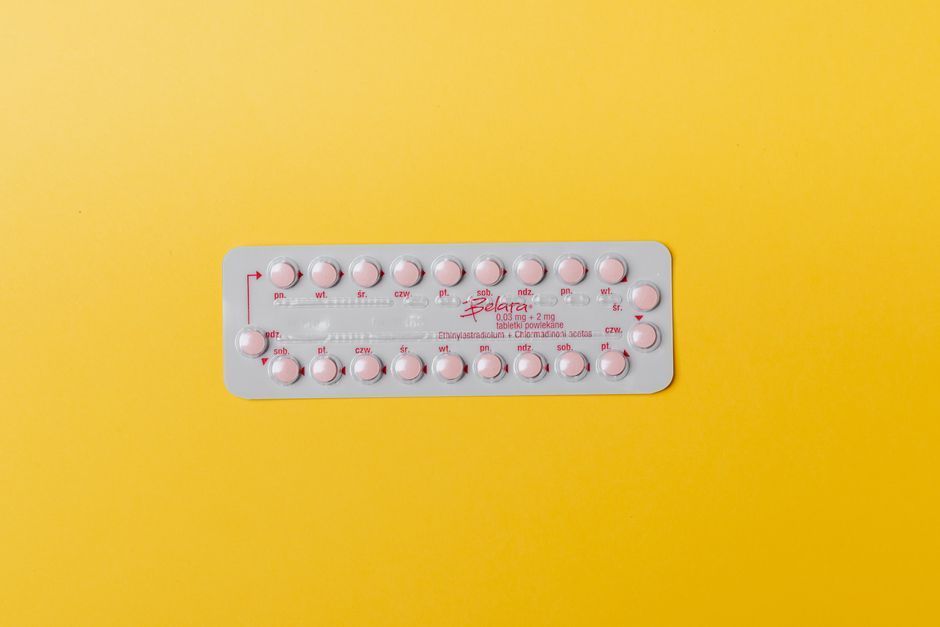
The combined pill mainly works by stopping ovulation. Illustrative photo.
Compare methods
Pill vs IUD vs implant vs condoms: which birth control is right for you?
Most women in Seoul who ask about birth control are choosing between four options: the combined pill, a hormonal IUD, a copper IUD and condoms. Each has a clear profile. The pill is familiar and easy to start or stop, but needs a daily habit. The IUDs are fitted once and then last for years, and fertility returns soon after removal. Condoms are the only method that also lowers the risk of sexually transmitted infections, which is why many women use them alongside another method with a new partner.
The implant is very effective too, but availability differs by clinic and country; Dr. Park explains where to get any method Hommage Women's Clinic does not provide. For details of fitting, see IUD insertion .
| Compare | Combined pill | Hormonal IUD | Copper IUD | Male condom |
|---|---|---|---|---|
| Typical-use pregnancies | About 7 in 100 a year | Fewer than 1 in 100 | Fewer than 1 in 100 | About 13 in 100 |
| What you do | One pill every day | Fitted once by a doctor | Fitted once by a doctor | Use every time |
| Periods | Lighter, regular; can skip | Often much lighter | Can be heavier | No change |
| Hormones | Estrogen + progestin | Low-dose progestin, local | None | None |
| STI protection | No | No | No | Yes, reduces risk |
| Not suitable if | Migraine with aura, clot history, smoker 35+ | Active pelvic infection | Active pelvic infection, very heavy periods | Latex allergy (use non-latex) |
 Hommage · Gangnam
Hommage Women's Clinic · Gangnam, Seoul
Blood pressure is checked before estrogen-containing methods are started. Illustrative photo.
Safety
Birth control pill and blood clots: the real risk in numbers
The most important serious risk of estrogen-containing birth control is a blood clot in a vein (venous thromboembolism, VTE). Relative-risk headlines can sound alarming, so absolute numbers help. According to the UK medicines regulator (MHRA), about 2 in 10,000 healthy women who are not pregnant and not using hormonal contraception develop a clot each year. For combined pills containing levonorgestrel, norethisterone or norgestimate the figure is about 5–7 in 10,000, and for those containing desogestrel, gestodene or drospirenone about 9–12 in 10,000. The risk during pregnancy and after birth is higher than with any of these pills.
The risk is highest in the first months of starting, or restarting after a break of a month or more, and rises with smoking, obesity, age over 35, a personal or family history of clots, and long immobility such as long-haul flights. Progestin-only methods and IUDs are not linked to the same increase, which is why they are offered if estrogen is unsuitable.
Getting it right
Starting, switching and stopping birth control safely
Most pregnancies on the pill happen in the gaps: the first week after starting, a late restart after the pill-free days, or a change of method without overlap. If you start a combined pill in the first five days of your period it usually protects you straight away; at any other time, use condoms for the first 7 days. When switching from one method to another, ask how to bridge the gap. Often the new method is started before the old one stops, so there is no unprotected window.
Vomiting within a few hours of a pill, severe diarrhea, and some medicines, including certain epilepsy and tuberculosis drugs and the herbal remedy St John's wort, can reduce how well the pill works. Tell any doctor who prescribes you medicine that you use hormonal contraception. If you are unsure whether you are protected after a missed or late pill, use condoms and ask; if you have had unprotected sex, see emergency contraception quickly.
Do
- Take the pill at the same time each day, with a phone reminder
- Use condoms for 7 days if you start mid-cycle
- Read the leaflet for your brand's missed-pill rules
- Tell doctors you use hormonal contraception
- Give a new method about 3 months for spotting to settle
- Use condoms with a new partner for STI protection
Don't
- Stop the pill mid-pack to switch without a plan
- Extend the pill-free break beyond the leaflet's limit
- Ignore chest pain, a swollen calf or a sudden severe headache
- Start an estrogen pill if you have migraine with aura
- Rely on the pill alone after vomiting or new medicines
 Hommage · Gangnam
Hommage Women's Clinic · Gangnam, Seoul
A daily reminder helps close the gap between perfect and typical use. Illustrative photo.
Evidence
Birth control safety and effectiveness: what the research says
Contraception is one of the most studied areas of medicine, with decades of data from millions of users. The broad conclusions are consistent: long-acting methods prevent the most pregnancies in real life, serious harms from modern methods are rare, and for most healthy women the risks of pregnancy are greater than the risks of contraception. The numbers below summarize the key points.
LARC failure, year 1
Implant and IUDs: under 1% with both typical and perfect use.
Guttmacher Institute fact sheet, 2020 (Contraceptive Technology data)Pill: perfect vs typical
Pill, ring and patch: the gap comes from missed or late doses, not the method itself.
Guttmacher Institute fact sheet, 2020 (Contraceptive Technology data)Clots per 10,000 a year
Non-users vs combined pill users, by progestin type.
MHRA Drug Safety Update, 2014Clot risk in pregnancy
Pregnancy and the weeks after birth carry more clot risk than the pill.
MHRA, 2014Traveling or living in Seoul
Birth control in Seoul for international patients and foreign residents
Brand names in Korean pharmacies are often different from those at home, and the pill you use may not be sold here. A consultation helps you find an equivalent with the same hormones and dose, so you can switch without a gap in protection. If you are in Seoul for a few weeks or more, it can also be a good time to consider an IUD, which is fitted in one visit and lasts for years.
Before your visit
- Bring the pack or leaflet of your current pill, or a photo of the ingredient list
- Note the first day of your last period and any recent unprotected sex
- Bring your passport, or residence card if you are enrolled in National Health Insurance
- For an IUD, allow a short follow-up check a few weeks later, in person or after you return home
Send your questions by WhatsApp, KakaoTalk or the contact form , and tell us if you need language support.
 Hommage · Seoul
Hommage Women's Clinic · Gangnam, Seoul
Many combined pills are sold over the counter in Korea, often under local brand names. Illustrative photo.
 Hommage · Gangnam
Hommage Women's Clinic · Gangnam, Seoul
A short consultation helps match the method to your health and plans. Illustrative photo.
Choosing well
How to choose a contraception clinic in Seoul
A good contraception consultation is about you, not a product. Use these questions at any clinic, including ours:
- Is the consultation with an OB/GYN specialist? A gynecologist can also fit IUDs and do an ultrasound if needed.
- Are all methods explained, not just one? You should hear the pros and cons of pills, IUDs, condoms and other options.
- Is my health history checked? Blood pressure, migraines, smoking and clot history matter for estrogen methods.
- Is there a plan for side effects? Ask who to contact and when to review.
- Is the quote written and clear? Know what the consultation, device or prescription includes.
What affects the cost of birth control in Korea?
Cost depends on the method: over-the-counter pills are bought at a pharmacy, prescription-only pills need a consultation, and an IUD includes the device, fitting and any ultrasound check. Contraception for its own sake is usually not covered by National Health Insurance, while treatment of a medical condition such as heavy bleeding may be partly covered. A long-acting method costs more at the start but nothing day to day for several years. You receive a written quote before any procedure.
Your visit
What to expect at your contraception appointment
01
Health history
Dr. Park asks about your periods, past methods, migraines, smoking, blood pressure, medicines and pregnancy plans.
02
Options explained
You compare methods by effectiveness, side effects and how they fit your life, and choose what suits you.
03
Check-up if needed
Blood pressure is measured, and a pregnancy test or pelvic ultrasound is done when relevant, for example before an IUD.
04
Start and follow-up
You start your method with clear instructions, and a review is planned to check side effects.

Your doctor
Dr. Park Yuna
Medical Director · OB/GYN Specialist
Dr. Park helps you compare contraception options by real-world effectiveness, side effects and your own plans, rather than recommending one method for everyone. She reviews your health history first so that the method you choose is suitable as well as convenient.
OB/GYN specialist (Korea) and representative director of Hommage Clinic. Leads women's health care, labiaplasty and other cosmetic gynecology procedures.
Birth control: frequently asked questions
Can I buy birth control pills without a prescription in Korea?
Currently, yes for many combined pills, which are sold over the counter at pharmacies. Some newer pills, such as those containing drospirenone, need a prescription, and emergency contraceptive pills also require one. A short consultation is still useful to check whether the pill is safe for you, for example if you have migraines or high blood pressure.
What is the most effective form of birth control?
The contraceptive implant and IUDs are the most effective reversible methods, with fewer than 1 in 100 women becoming pregnant each year. They work for several years without daily effort. Sterilization is similarly effective but permanent. With typical use, the pill, patch and ring are about 93% effective. See IUD insertion.
Does birth control cause weight gain?
Studies have not shown that combined pills, the patch, the ring or IUDs cause significant weight gain for most people. Some notice bloating or appetite changes in the first months. The contraceptive injection is the method most linked to weight gain. If you notice changes, a different method or formulation can be discussed.
How soon can I get pregnant after stopping birth control?
For most methods, fertility returns quickly. Ovulation can come back within weeks of stopping the pill, patch or ring, or removing an IUD or implant. After the contraceptive injection, return of fertility can take several months to a year. If you are planning pregnancy, a pre-pregnancy check and folic acid are recommended.
Is it safe to take the pill continuously to skip periods?
For most people taking a combined pill, yes. Skipping the hormone-free days is medically safe and can help with painful periods or migraines linked to the break. Breakthrough spotting is common at first. Ask your doctor which pills suit continuous use, because instructions differ between brands.
Can foreigners get birth control in Seoul?
Yes. International patients and foreign residents can book a contraception consultation or IUD insertion at Hommage Clinic. Bring your passport, or your residence card if enrolled in National Health Insurance, and the name of any method you currently use. Please contact us before your visit to arrange language support when you book an appointment.
What is the difference between perfect use and typical use?
Perfect use means using a method exactly as directed every time; typical use includes real-life mistakes such as late pills. For the pill the difference is large: over 99% effective with perfect use, about 93% with typical use. For IUDs and the implant the two figures are almost the same, because there is nothing to remember.
Does the birth control pill cause blood clots?
Estrogen-containing pills slightly raise the risk. According to the UK medicines regulator, about 2 in 10,000 non-users develop a clot each year, compared with about 5–12 in 10,000 pill users depending on the pill type. Pregnancy carries a higher risk than the pill. Smoking, obesity, age over 35 and a family history of clots add to the risk, so your history is checked first.
Can I use the pill if I get migraines?
It depends on the type of migraine. If you have migraine with aura, such as flashing lights or zigzag lines before the headache, estrogen-containing methods are not recommended because of a higher stroke risk. Progestin-only methods, a hormonal IUD or a copper IUD are usually suitable alternatives.
Do antibiotics stop the pill from working?
Most common antibiotics do not reduce the effect of the pill. The main exceptions are rifampicin-type medicines used for tuberculosis. Some epilepsy medicines and the herbal remedy St John's wort can also reduce effectiveness. Always tell the prescribing doctor that you take the pill, and use condoms if you are unsure.
What should I do if I miss a pill?
Rules differ between brands, so follow your pill leaflet. In general, take the missed pill as soon as you remember, even if that means two in one day. If you missed more than one pill or are unsure, use condoms for the next 7 days, and if you had unprotected sex in the days before, ask about emergency contraception.
Which birth control is best if I have heavy or painful periods?
The hormonal IUD and combined pill often make periods lighter and less painful, and the pill can be taken continuously to skip periods. The copper IUD can make periods heavier, so it is less suited to women who already bleed heavily. Dr. Park can check for causes such as fibroids with a pelvic ultrasound. See period pain treatment.
Do I still need condoms if I use the pill or an IUD?
For pregnancy prevention, no. But the pill and IUDs do not protect against sexually transmitted infections, so condoms are recommended with a new partner or more than one partner. Regular STD testing is also advised if your risk changes.
References
Sources used for this page, reviewed by Dr. Park Yuna, OB/GYN specialist. Read our editorial and medical review policy.
- Trussell J. Contraceptive failure in the United States. Contraception. 2011;83(5):397–404. doi:10.1016/j.contraception.2011.01.021. PubMed
- Hatcher RA, et al. Contraceptive Technology. 21st ed. 2018.
- Guttmacher Institute. Contraceptive effectiveness in the United States. Fact sheet, April 2020 (typical- and perfect-use first-year failure rates, based on Contraceptive Technology and Sundaram et al., 2017). Guttmacher
- Medicines and Healthcare products Regulatory Agency (MHRA). Combined hormonal contraceptives: risk of venous thromboembolism. Drug Safety Update. February 2014. Summary: GPnotebook
This page is general information and does not replace a personal consultation. Illustrations are original works of Hommage Women's Clinic, Gangnam, Seoul; photos marked illustrative are not of patients.
Related contraception and women's health services
IUD Insertion
Hormonal and copper IUDs: how insertion works, pain relief options and follow-up.
Emergency Contraception
Morning-after pills and the copper IUD after unprotected sex: timing and options in Korea.
STD Testing
Confidential testing for chlamydia, gonorrhea, HPV and other sexually transmitted infections.
Period Pain Treatment
Causes of painful periods and treatments, including hormonal options that ease cramps.
PCOS Treatment
Care for polycystic ovary syndrome, where the pill can regulate cycles and improve acne.
Acne Laser Treatment
Laser and light treatments for hormonal and persistent adult acne.
Find the birth control that fits your life
Book a contraception consultation with Dr. Park Yuna in Gangnam to compare the pill, IUDs and other options for your health and plans.
Hommage Clinic · 4F, Building A, 509 Gangnam-daero, Seoul (near Sinnonhyeon Station) · Mon & Fri 10:00–20:00 · Tue–Thu 10:00–19:00 · Sat 10:00–15:00