
Gynecology · Preventive care
Well-Woman Exam in Seoul: Your Yearly Gynecology Checkup
A well-woman exam is a preventive gynecology checkup that reviews your periods, sexual and reproductive health and screening needs, so problems can be found early, often before you notice symptoms. At Hommage Clinic in Gangnam, Seoul, OB/GYN specialist Dr. Park Yuna tailors each exam to your age and history, combining consultation, pelvic exam, ultrasound and screening tests in one visit.
Quick answer
A well-woman exam is a yearly preventive gynecology checkup: a consultation, a pelvic exam when it is useful, and screening tests chosen for your age, such as a Pap or HPV test, pelvic ultrasound and STI tests. At Hommage Women's Clinic in Gangnam, Seoul, it is done by female OB/GYN specialist Dr. Park Yuna in one visit of usually under an hour, with ultrasound findings on the day and lab results in about 1–2 weeks.
Key takeaways
- The visit is yearly, but each test follows its own schedule. A Pap test is usually repeated every 2–3 years and an HPV test every 5 years when results are normal.
- Korea's national program offers eligible women a Pap smear every 2 years from age 20 and a mammogram every 2 years from age 40.
- Cervical precancer, chlamydia, fibroids and ovarian cysts often cause no symptoms early, which is why checkups matter even when you feel well.
- You stay in control: every test is explained first, you can pause at any time, and an internal exam is not routine if you have never had sex.
Infographic
Well-woman exam in numbers
Visit length
Consultation, exam, ultrasound and samples in one appointment.
Korean Pap screening
National program: Pap smear every 2 years from age 20.
Korean mammography
National program: mammogram every 2 years from age 40.
US intervals
Pap every 3 years, or HPV every 5 years from age 30 (USPSTF).
Lab results
Pap, HPV and blood results; ultrasound is discussed on the day.
Took part
Share of eligible Korean women in national cervical screening, 2022.
Well-woman exam at a glance
| Key fact | Details |
|---|---|
| What it is | A yearly preventive checkup of your gynecological and reproductive health |
| What's included | Consultation, pelvic exam and tests matched to your age, such as Pap/HPV, ultrasound and STI tests |
| Visit length | Usually under an hour, depending on which tests you choose |
| Comfort | Brief pressure during the internal exam; you can ask to pause at any time |
| Results | Ultrasound findings on the day; Pap, HPV and lab results usually within 1–2 weeks |
| How often | Once a year for most women; screening tests follow their own schedule |
| Reviewed by | Dr. Park Yuna, OB/GYN specialist |
Book a well-woman exam if you
- Have not had a gynecology checkup or cervical screening in the last 1–2 years
- Recently moved to Korea and want to set up routine women's health care
- Are planning a pregnancy, starting a new relationship or reviewing contraception
- Are approaching menopause and want a full review of your health
Seek prompt or urgent care instead if you have
- Severe pelvic or abdominal pain, especially with fever
- Very heavy bleeding that soaks a pad or tampon every hour for several hours
- A positive pregnancy test with pain or bleeding
What is a well-woman exam?
A well-woman exam is a routine preventive visit with a gynecologist, separate from appointments for a specific problem. It gives you time to review your periods, contraception, sexual health, fertility plans and any symptoms you have been putting off, and to bring your screening tests up to date.
Many important conditions, including cervical precancer, sexually transmitted infections, fibroids and ovarian cysts, cause few or no symptoms in the early stages. A yearly check is a simple way to find them when they are easiest to treat. It is also a good starting point if you have recently moved to Korea and do not yet have a regular doctor here. You can see the full range of women's health services the clinic offers.
What does a well-woman exam include?
The exam is adjusted to your age, history and preferences, and every test is discussed with you first. A typical visit can include:
- Consultation: your cycle, contraception, pregnancy plans, past results, medications and any family history of breast, ovarian or bowel cancer.
- General checks: blood pressure and weight, and advice on breast cancer screening suited to your age.
- Pelvic exam: a look at the vulva, vagina and cervix, and a gentle check of the uterus and ovaries.
- Cervical screening: a Pap smear , an HPV test or both, when you are due.
- Ultrasound: a pelvic ultrasound to check the uterus, its lining and the ovaries for fibroids, polyps or cysts.
- Lab tests as needed: STD testing , a blood count for anemia, and thyroid or other hormone tests.
Which tests do you need at your age?
Screening needs change through life, so your exam should change too. As a general guide:
Your 20s
Cervical screening usually starts in your early 20s. Korea's national program invites women from age 20, while many international guidelines begin at 21 or 25. This is also a good time to review birth control, test for STIs if you have a new partner, and catch up on the HPV vaccine if you have not had it.
Your 30s and 40s
HPV-based screening becomes more useful from about age 30. If you are thinking about pregnancy, the visit can include preconception advice and, if helpful, an AMH test of ovarian reserve. Ultrasound is useful for fibroids and ovarian cysts, which become more common in these decades.
Your 50s and beyond
The focus shifts to menopause symptoms, bone health, any bleeding after menopause and continued cervical screening, usually until around age 65 if past results have been normal. See our guide to menopause care .
For screening schedules and how the Korean national program works, see cervical cancer screening in Korea .
Does a well-woman exam hurt? Comfort and possible side effects
A well-woman exam should not be painful. Most women feel brief pressure or mild discomfort during the speculum exam and Pap test, which take only a few minutes.
To make it easier, tell Dr. Park if you are nervous, have had a difficult exam before or have pain during sex. A smaller speculum can be used, and you can ask to pause or stop at any time. If you have never had vaginal intercourse, an internal exam is not routine and the ultrasound can be done through the abdomen instead.
Side effects are minor. Light spotting for a day after a Pap test, mild cramping, or a small bruise after a blood test are common and settle on their own. Screening tests can occasionally miss a problem or flag a change that turns out to be harmless, which is why regular follow-up matters. Contact the clinic if you have heavy bleeding, fever or worsening pain after your visit.
How to prepare for your well-woman exam
A little planning helps your results be as accurate as possible.
- If a Pap test is planned, book for a day when you are not on your period, ideally one to two weeks after it ends.
- For 48 hours beforehand, avoid sex, douching, tampons, vaginal medicines and lubricants, as they can affect cervical samples.
- Bring the date of your last period, a list of medicines and supplements, and any previous Pap, HPV or ultrasound results, including those from your home country.
- Write down your questions, such as changes in your cycle, discharge, pain during sex or contraception concerns.
Well-woman exams at Hommage Clinic
Hommage Clinic is a women's health and skin clinic in Gangnam, a short walk from Sinnonhyeon Station (Line 9 / Shinbundang Line). Your exam is done by Dr. Park Yuna, a female OB/GYN specialist, and the ultrasound and samples are taken in the same visit, so you do not need separate appointments. Skin concerns that often follow hormonal changes, such as acne or melasma, can be discussed in the same clinic.
On cost: if you are enrolled in Korea's National Health Insurance, you may be eligible for national cervical cancer screening, and many tests done to investigate symptoms are covered. Tests chosen purely for screening outside the national program are usually paid directly, as they are for visitors without coverage. We explain which tests you are having and what they cost before anything is done.
Step by step
What happens at a well-woman exam?
A well-woman exam follows a simple order: talk first, examine second, test third, and finish with a plan. Knowing the sequence in advance makes the visit feel shorter and less stressful, especially if it is your first gynecology checkup in Korea. The illustration below shows the five stages of a typical visit at Hommage Women's Clinic. Not every woman needs every stage, and you can postpone or decline any test after discussing it with Dr. Park Yuna.
Know the tests
Pelvic exam, Pap smear and pelvic ultrasound: what is the difference?
These terms are often used as if they mean the same thing, but they answer different questions. A pelvic exam is what the doctor sees and feels. A Pap smear or HPV test is a sample of cells from the cervix, sent to a laboratory to look for precancerous changes or the virus that causes most of them. A pelvic ultrasound uses sound waves to show the uterus and ovaries, which cannot be seen during a speculum exam. A complete well-woman exam may use one, two or all three, depending on your age, symptoms and last results.
Pelvic exam
- Checks the vulva, vagina and cervix, and the size and tenderness of the uterus and ovaries
- A few minutes; brief pressure
- Findings discussed on the day
Pap or HPV test
- Pap: abnormal cervical cells. HPV: high-risk virus types
- A small brush, taken in seconds
- Results in about 1–2 weeks
Pelvic ultrasound
- Fibroids, polyps, ovarian cysts and the uterine lining
- Transvaginal or abdominal; no radiation
- Findings explained on the day
 Hommage · Gangnam
Hommage Women's Clinic · Gangnam, Seoul
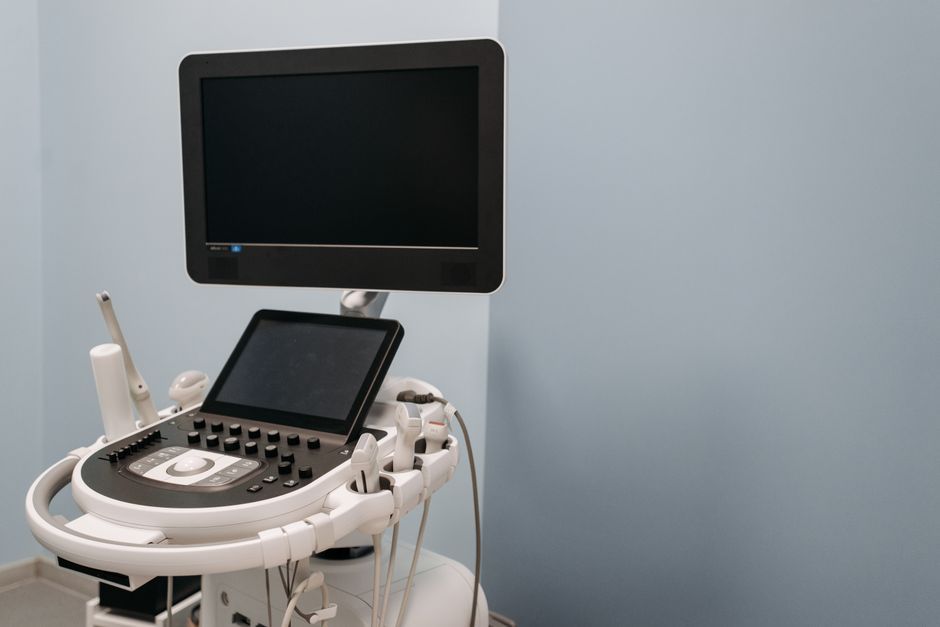
A pelvic ultrasound can be added to your checkup in the same visit. Illustrative photo.
By age
Well-woman exam checklist by age
Your yearly visit stays the same, but the tests inside it change as you get older. This checklist summarizes what is commonly reviewed in each stage of life, combining Korea's National Cancer Screening Program with international guidance such as the US Preventive Services Task Force (USPSTF). Your own list depends on your history: women living with HIV, with a weakened immune system or with previous treatment for cervical precancer usually need closer, individual follow-up.
 Hommage · Gangnam
Hommage Women's Clinic · Gangnam, Seoul
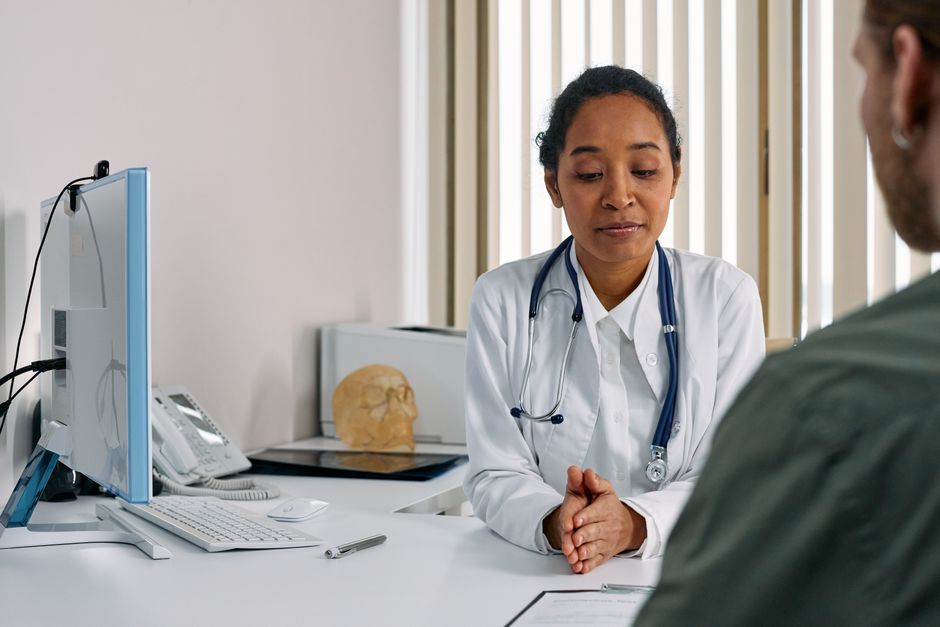
The consultation comes first, and every test is explained before it is done. Illustrative photo.
Your consultation
What to tell your gynecologist at a checkup
The conversation is the most useful part of a well-woman exam, and it is only as good as the information shared. Many women hold back symptoms they find embarrassing, such as unusual discharge, pain during sex, leaking urine or very heavy periods, yet these are exactly what a gynecologist is trained to help with. Everything you say is confidential. These are the points Dr. Park asks about most often, so it helps to think about them before you arrive:
- Your period pattern First day of your last period, cycle length, heavy or painful periods, bleeding between periods or after sex. See irregular periods.
- Contraception and pregnancy plans What you use now, any side effects, and whether you hope to conceive in the next year or so.
- Sexual health New partners, discharge, itching, sores or pain during sex.
- Past results Dates and results of earlier Pap, HPV or ultrasound tests, including from your home country.
- Family history Breast, ovarian, uterine or bowel cancer in close relatives, and any known BRCA result.
- Medicines and allergies Hormones, supplements, blood thinners and any allergy to latex or medicines.
Screening schedules
Cervical screening in Korea vs the US and WHO
If you have moved to Seoul from another country, Korea's schedule may look different from the one you know. Korea's National Cancer Screening Program offers a Pap smear every 2 years from age 20. The USPSTF recommends a Pap test every 3 years from 21 to 29, then a choice of a Pap test every 3 years, an HPV test every 5 years or both together every 5 years from 30 to 65. The World Health Organization (WHO) prefers HPV DNA testing from age 30, repeated every 5 to 10 years. All three approaches are evidence-based; they differ because of health-system design, cost and the tests available. At your well-woman exam, Dr. Park compares your past results with these schedules and suggests what is due now. For more detail, see cervical cancer screening in Korea .
After your visit
Well-woman exam results: what happens next
Most results from a well-woman exam are normal, and the only next step is your next checkup date. When a result is not normal, it usually means a closer look rather than a diagnosis. An abnormal Pap or positive HPV result most often leads to a repeat test or a colposcopy , a magnified look at the cervix. An ultrasound finding such as a small fibroid or a simple ovarian cyst is often just watched over time. A positive STI test is treated, and partners are advised to be tested too.
Dr. Park explains your results in plain language, gives you a written copy you can take home or send to your own doctor, and tells you when to come back. If you need treatment that is not offered at the clinic, you are referred to a hospital specialist.
Routine follow-up
Next yearly visit; cervical tests repeated on their usual schedule.
Treatment plan
Infections are treated; partners are advised to test. Larger problems are referred.
 Hommage · Gangnam
Hommage Women's Clinic · Gangnam, Seoul
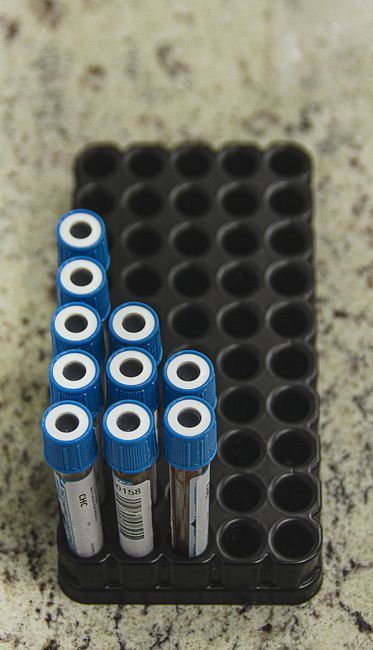
Pap, HPV and blood samples go to a laboratory; results usually take 1–2 weeks. Illustrative photo.
Evidence
Are yearly well-woman exams worth it? What the research says
The strongest evidence behind a well-woman exam is for the screening tests inside it, especially cervical screening, which has helped lower cervical cancer rates in Korea and worldwide. The evidence for a routine internal pelvic exam in women without symptoms is weaker: reviews have found too little data to recommend for or against it, so guidelines suggest deciding together with your doctor. That is why Dr. Park explains what each part of the visit is for, and why some steps are optional.
Yearly fall in cervical cancer
Incidence and deaths in Korea fell by almost 4% a year from 1993 to 2014 as screening grew.
WHO Western Pacific, 2018Korean screening uptake
Participation in national cervical screening, 2005 to 2022.
Lee, Suh & Choi, J Prev Med Public Health, 2025Deaths worldwide, 2020
Cervical cancer deaths, most in countries with little screening.
World Health Organization, 2021WHO screening goal
Target share of women screened with a high-performance test.
WHO elimination strategyTraveling to Seoul
Well-woman exam in Seoul for foreigners and visitors
Expats, students and visitors often use a stay in Seoul to catch up on a checkup they have postponed at home. A well-woman exam needs no recovery time, so it fits into a short trip. Hommage Women's Clinic is in Gangnam, a short walk from Sinnonhyeon Station (Line 9 and Shinbundang Line).
Plan your visit
- Message us by WhatsApp, KakaoTalk or the contact form with your preferred dates and the tests you are interested in; ask for language support if you need it.
- Book on a day when you are not on your period if a Pap test is planned.
- Bring your passport or residence card, your National Health Insurance details if enrolled, and earlier results from home.
- If you leave Seoul before lab results are ready, results can be sent to you securely and explained by message or a follow-up call.
Foreign residents
If you live in Korea and are enrolled in National Health Insurance, you may be eligible for the national cervical and breast screening programs. Ask us to check when you book.
 Hommage · Seoul
Hommage Women's Clinic · Gangnam, Seoul
Seoul: the clinic is a short walk from Sinnonhyeon Station in Gangnam. Illustrative photo.
 Hommage · Gangnam
Hommage Women's Clinic · Gangnam, Seoul
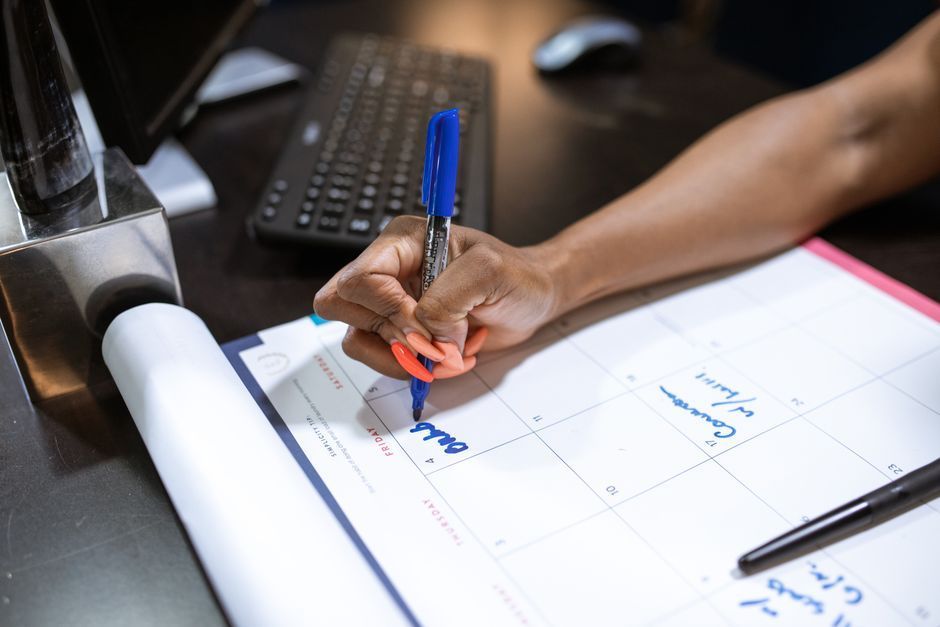
Plan your yearly checkup for a day when you are not on your period. Illustrative photo.
Choosing well
How to choose a gynecology clinic for your checkup in Seoul
Many clinics in Seoul offer women's health packages. These questions help you compare them, including ours:
- Is the exam done by an OB/GYN specialist? You can ask for a female doctor if you prefer.
- Are tests chosen for you, not sold as a fixed package? Tests you do not need add cost without adding benefit.
- Can ultrasound and samples be done in the same visit? It saves time, especially on a short stay.
- Will you get written results in English? Useful for your own doctor and future comparisons.
- Is the cost explained before testing? You should know what each test is for and what it costs.
What affects the cost of a well-woman exam in Seoul?
The cost depends mainly on which tests you have: a consultation alone costs less than a visit with a pelvic ultrasound, cervical screening, STI panel and blood tests. Whether you are enrolled in Korea's National Health Insurance also matters, because national screening and tests done to investigate symptoms may be covered, while screening chosen outside the program is usually paid directly. Visitors without Korean insurance pay directly and can ask for receipts and itemized statements for their own insurer. We explain each test and its cost before anything is done.
Your visit
What to expect at your well-woman exam
01
Health history
Dr. Park asks about your periods, contraception, sexual health, past results and family history. Tell us anything you would like checked.
02
Examination
Blood pressure and a gentle pelvic exam. You can ask to pause at any time, and an abdominal approach is available if you have never had sex.
03
Tests
Pap and/or HPV test, pelvic ultrasound, and STI or blood tests, as agreed with you beforehand.
04
Results and plan
Ultrasound findings are discussed on the day. Lab results follow, with advice on any next steps and your next checkup date.

Your doctor
Dr. Park Yuna
Medical Director · OB/GYN Specialist
Dr. Park tailors each well-woman exam to your age, history and plans rather than offering a fixed package. She explains each test before it is done, so you can choose what you need and understand your results.
OB/GYN specialist (Korea) and representative director of Hommage Clinic. Leads women's health care, labiaplasty and other cosmetic gynecology procedures.
Well-woman exam: frequently asked questions
How often should I have a well-woman exam?
Most women benefit from a well-woman exam once a year, even when they feel well. Not every test is needed annually: Pap and HPV tests follow their own schedule, typically every 2 to 5 years depending on your age and past results. The yearly visit lets your doctor decide which tests are due and review any changes in your health.
Do I need a Pap smear at every well-woman exam?
No. A Pap smear is only one part of the exam, and how often you need one depends on your age, previous results and whether you also have HPV testing. Women with normal results may not need cervical screening every year. See cervical cancer screening for typical schedules in Korea and abroad.
Can I have a well-woman exam during my period?
You can, but it is better to reschedule if a Pap test is planned, because heavy bleeding can make the sample harder to read. The consultation, blood tests and many other checks can still go ahead. If your period starts unexpectedly, call the clinic and we will help you decide whether to keep or move your appointment.
Do I need an internal exam if I have never had sex?
No. If you have never had vaginal intercourse, an internal exam is not routine. Your doctor can review your health, examine the outside of the vulva if needed and check the uterus and ovaries with an abdominal ultrasound. Cervical screening is discussed with you individually, because the risk of HPV is very low without any sexual contact.
Is a pelvic ultrasound part of a well-woman exam in Korea?
Often, yes. In Korea, a transvaginal or abdominal ultrasound is commonly added to a gynecology checkup because it can show fibroids, polyps, ovarian cysts and the thickness of the uterine lining. It is quick and uses no radiation. Learn more about pelvic ultrasound.
Can foreigners get a well-woman exam in Seoul?
Yes. International patients and foreign residents can book a well-woman exam at Hommage Clinic. Bring your passport or residence card, and your National Health Insurance details if you are enrolled. Contact us before your visit to arrange language support, and bring any previous results from your home country so we can compare them.
How long does a well-woman exam take?
Usually under an hour. The consultation and exam take a short time; adding a pelvic ultrasound, cervical samples and blood tests extends the visit a little. Ultrasound findings are discussed on the day, and lab results usually follow in about 1–2 weeks.
What is the difference between a well-woman exam and a Pap smear?
A Pap smear is one test: a sample of cells from the cervix. A well-woman exam is the whole preventive visit, which may include a Pap or HPV test when you are due, as well as a consultation, a pelvic exam when useful, a pelvic ultrasound and other tests. Read more about the Pap smear in Korea.
At what age should I have my first gynecology checkup?
Korea's national program offers cervical screening from age 20, and many international guidelines start at 21 or 25. A first gynecology visit can be useful earlier, for period problems, contraception or the HPV vaccine, and it does not have to include an internal exam.
Is a well-woman exam covered by insurance in Korea?
If you are enrolled in Korea's National Health Insurance, you may be eligible for free national screening, such as a Pap smear every 2 years from age 20 and a mammogram every 2 years from age 40. Tests done because of symptoms are often covered. Screening chosen outside the program, and visits by travelers without Korean insurance, are usually paid directly. We explain costs before testing.
Is a breast exam or mammogram part of the checkup?
Breast cancer screening is discussed at every well-woman exam. Korea's national program offers a mammogram every 2 years from age 40. A clinical breast exam is not a substitute for mammography, so Dr. Park advises you on breast screening suited to your age and family history, and refers you for imaging when it is due.
What happens if my results are abnormal?
Most abnormal results need a closer look, not urgent treatment. An abnormal Pap or positive HPV result usually leads to a repeat test or a colposcopy. Ultrasound findings such as small fibroids or simple cysts are often monitored. Infections are treated. Dr. Park explains your result and next steps in plain language.
Should I still have a checkup after menopause?
Yes. After menopause, the visit focuses on any bleeding, which should always be checked, vaginal dryness, bladder symptoms, bone health and continued cancer screening. Cervical screening usually continues until about 65 if past results were normal. See menopause care.
References
Sources used for this page, reviewed by Dr. Park Yuna, OB/GYN specialist. Read our editorial and medical review policy.
- Lee K, Suh M, Choi KS. Current status of the National Cancer Screening Program in Korea: history, achievements, and future directions. J Prev Med Public Health. 2025;58(4):337–347. PMC
- US Preventive Services Task Force. Screening for cervical cancer: recommendation statement. JAMA. 2018;320(7):674–686. USPSTF
- World Health Organization. New recommendations for screening and treatment to prevent cervical cancer. 6 July 2021. WHO
- World Health Organization Western Pacific. Cervical cancer prevention and control saves lives in the Republic of Korea. 2018. WHO
- Merck Manual Professional Version. Well-woman visits. Merck Manuals
- American College of Obstetricians and Gynecologists. Well-woman visit. Committee Opinion No. 755. Obstet Gynecol. 2018;132(4):e181–e186.
This page is general information and does not replace a personal consultation. Illustrations are original works of Hommage Women's Clinic, Gangnam, Seoul; photos marked illustrative are not of patients.
Related women's health services
Pap Smear
How the Pap test is done, how to prepare and what your cervical cell results mean.
HPV Testing
A cervical test for high-risk HPV types, with results explained and follow-up planned.
Pelvic Ultrasound
A quick scan of the uterus and ovaries to check for fibroids, polyps and cysts.
STD Testing
Confidential swab and blood tests for chlamydia, gonorrhea, syphilis, HIV and more.
Premarital Health Check
A women's health check before marriage or pregnancy, with screening and advice.
HPV Vaccine
HPV vaccination for adult women to lower the risk of cervical cancer and genital warts.
Book your yearly women's health check
See Dr. Park Yuna near Sinnonhyeon Station for an exam tailored to your age, with ultrasound and screening tests arranged in the same visit.
Hommage Clinic · 4F, Building A, 509 Gangnam-daero, Seoul (near Sinnonhyeon Station) · Mon & Fri 10:00–20:00 · Tue–Thu 10:00–19:00 · Sat 10:00–15:00